

 English
 русский
 عربى


Fang Xuelan — Customer After-Sales Supervisor
Home / Author / Fang Xuelan — Customer After-Sales Supervisor / DK80D Heavy-Duty CNC Large-Taper Wire-Cut EDM Machine for Oversized Workpieces
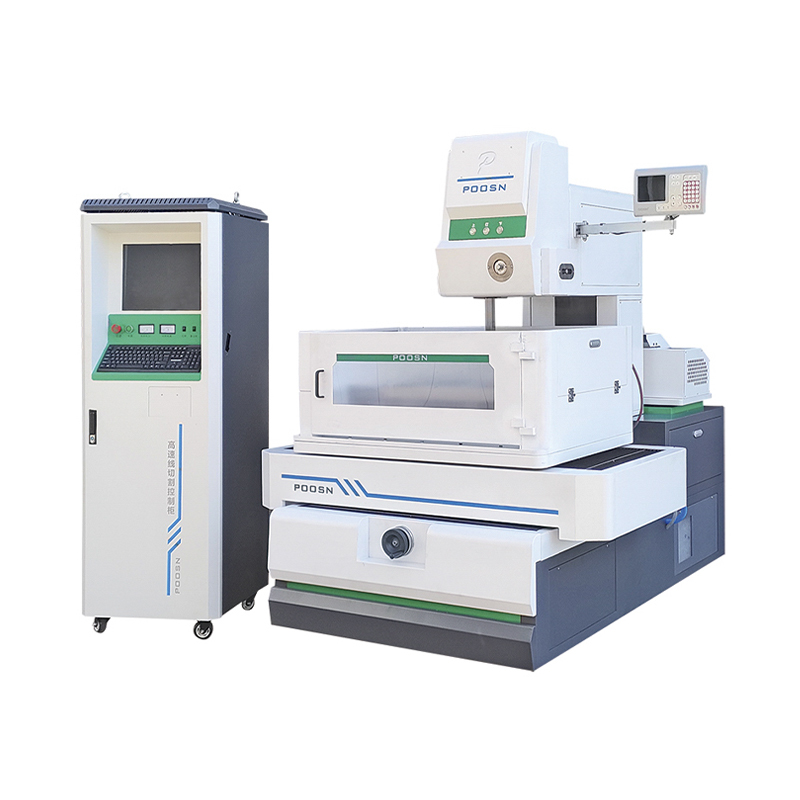
DK80D Heavy-Duty CNC Large-Taper Wire-Cut EDM Machine for Oversized Workpieces
2026-10-18
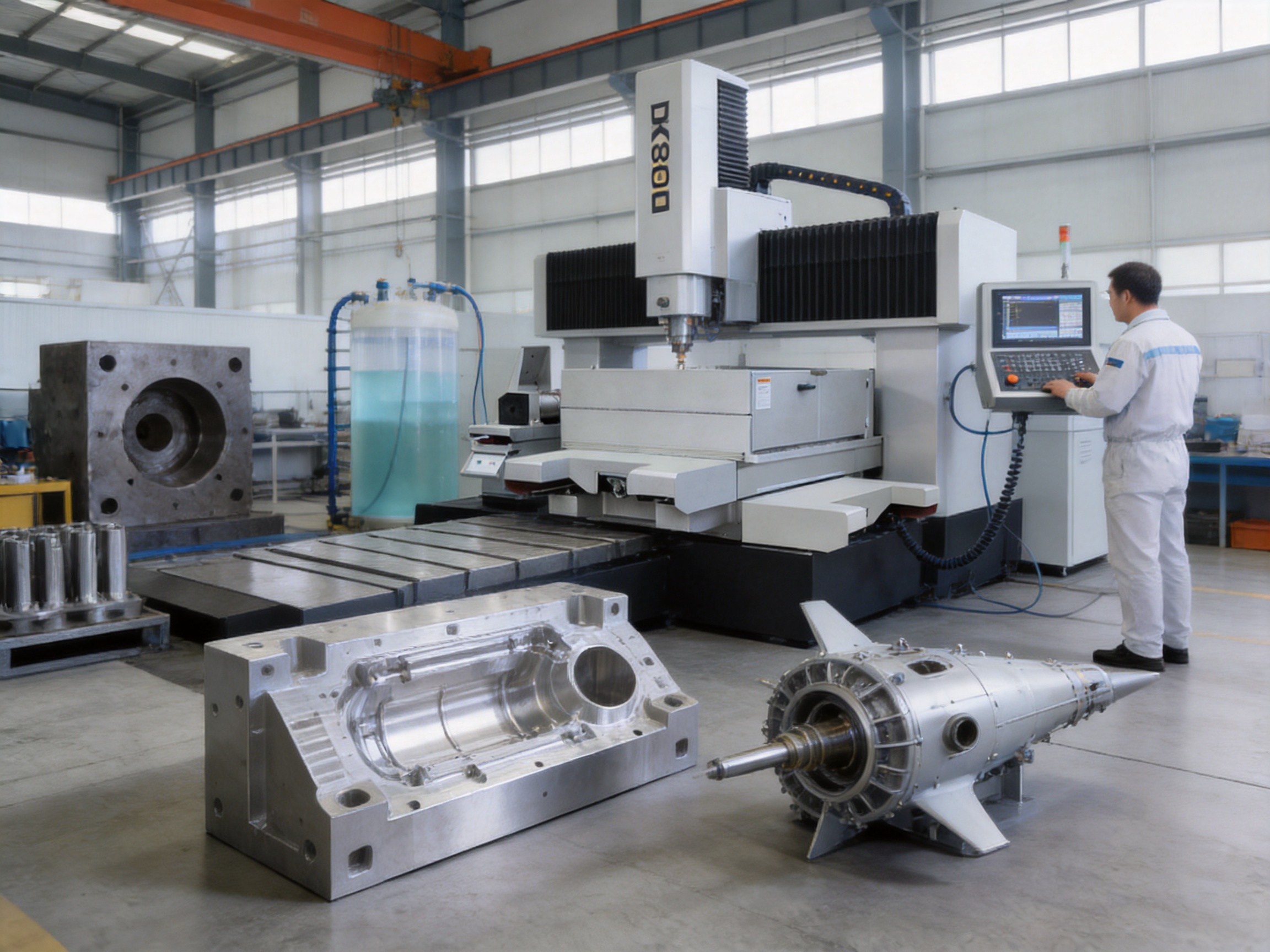
Modern mold manufacturing, aerospace production, heavy equipment engineering, and high-precision component processing increasingly require a wire-cut electrical discharge machining system that can combine large working dimensions, high load capacity, deep cutting capability, and controlled taper accuracy. Conventional wire-cut EDM machines are often designed around medium-sized workpieces and relatively limited taper angles. When the component becomes thicker, heavier, or more geometrically complex, restrictions in worktable travel, machine rigidity, wire stability, flushing performance, and taper compensation can reduce productivity and affect finished-part quality.
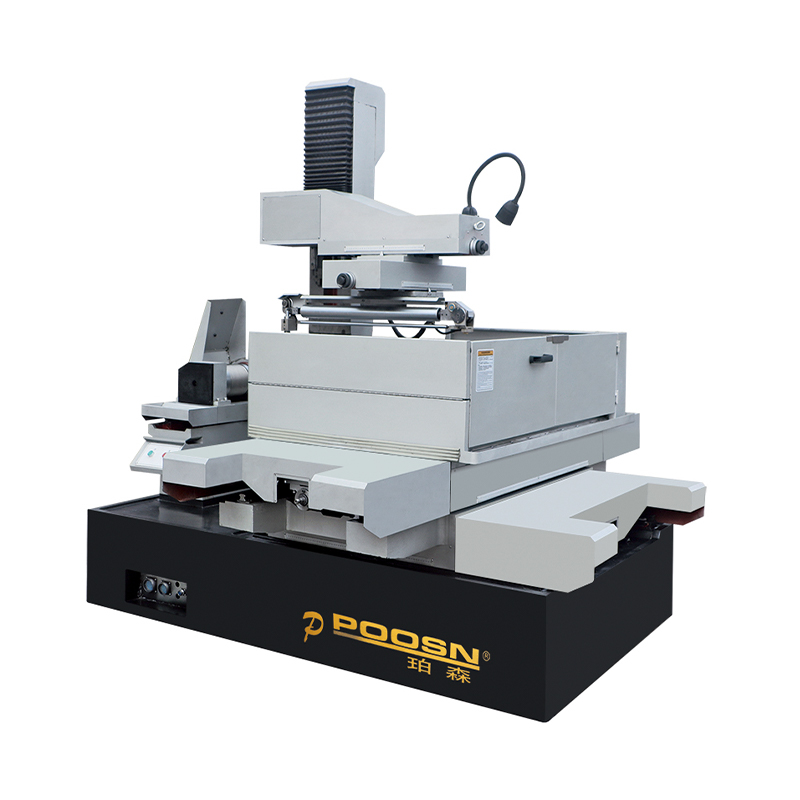
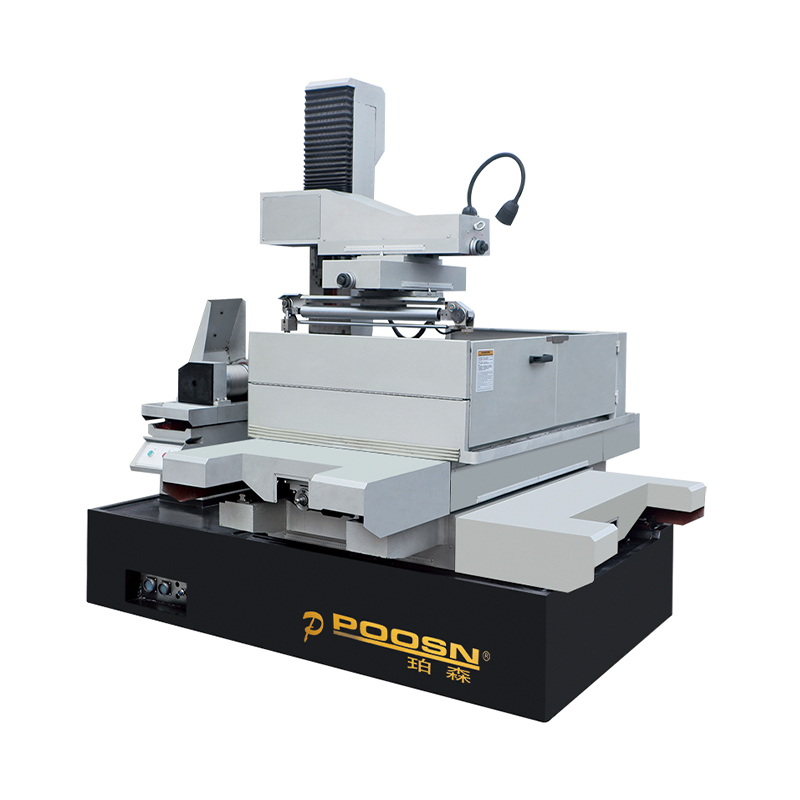
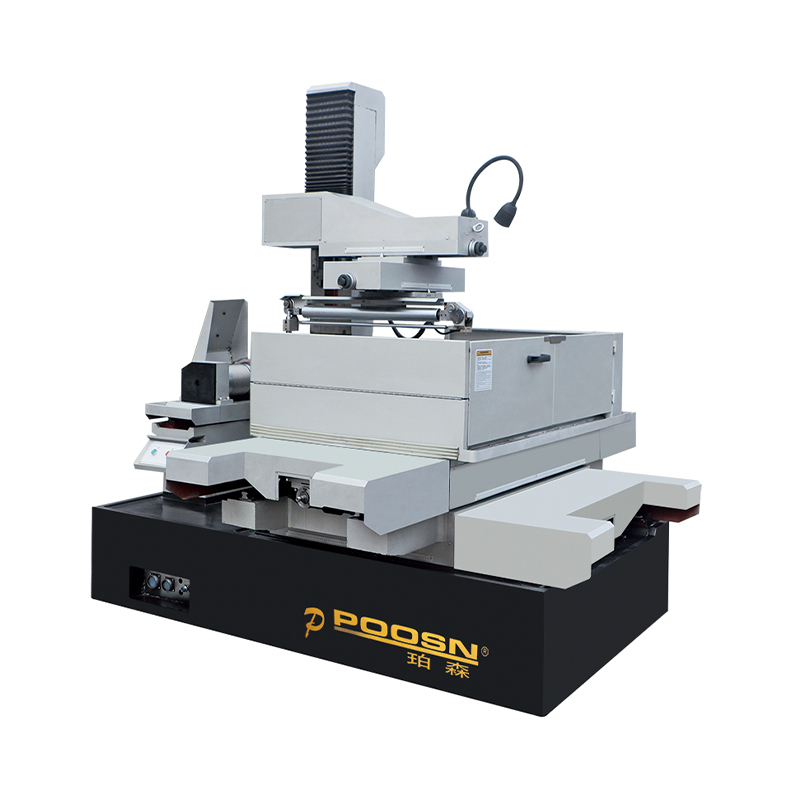
The DK80D Heavy-Duty CNC Large-Taper Wire-Cut EDM Machine is designed to address these demanding conditions. As the largest model in the DK-D large-cutting-taper WEDM family, it is intended for oversized workpieces, heavy-duty molds, complex mechanical components, and applications in which large-angle taper cutting is a central production requirement. Its configuration combines an 800 mm X-axis travel, 1,200 mm Y-axis travel, a maximum cutting thickness of 800 mm, and a maximum worktable load of 1,000 kg. The machine also supports a maximum cutting taper of up to ±45° over 80 mm, providing a capability that is difficult to obtain from ordinary medium-format wire-cut EDM equipment.
The DK80D is not simply a larger version of a standard wire-cut machine. Its value comes from the coordination of several systems: a reinforced structural base, high-precision linear guide support, a large-capacity worktable, coordinated X, Y, U, and V motion, a motorized Z-axis lift, controlled wire transportation, CNC taper compensation, and a power and flushing system configured for stable long-duration processing. These systems are intended to operate as an integrated platform rather than as isolated features.
For manufacturers comparing large-format EDM equipment, the machine offers a practical combination of capacity, adaptability, process stability, and production efficiency. It can support one-time machining of large and irregular components, reduce the need for secondary operations, and provide a more dependable solution for high-load and high-thickness cutting than smaller competitors.
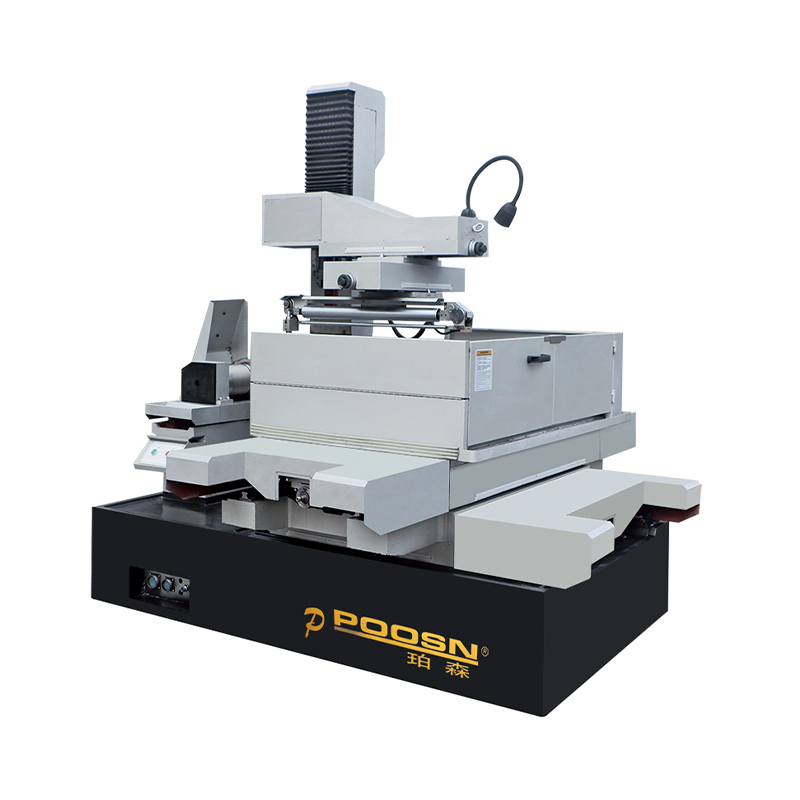
DK80D Heavy-Duty CNC Large Taper Wire Cut EDM Machine for Oversized Workpieces
Content
- 1 1. The Industrial Need for Large-Taper Wire EDM
- 2 2. Product Positioning and Main Advantages
- 3 3. Technical Configuration and Production Function
- 4 4. Structural Stability and Manufacturing Quality
- 5 5. Advantages Compared with Smaller and Conventional Competitors
- 6 6. Applications in High-Demand Industries
- 7 7. Productivity, Operating Cost, and Return on Investment
- 8 8. Operating Considerations and Process Preparation
- 9 9. Technical Support and Service Value
- 10 10. Model Selection within the Large-Taper Series
- 11 11. Why the DK80D Is a Strategic Equipment Choice
- 12 12. Questions and Answers
- 12.1 Q1: What is the main advantage of the DK80D over a conventional wire-cut EDM machine?
- 12.2 Q2: Can the DK80D process cemented carbide and hardened steel?
- 12.3 Q3: What industries are best suited to the DK80D?
- 12.4 Q4: How does the machine maintain stability during heavy-load cutting?
- 12.5 Q5: Does the DK80D support automated or extended unattended operation?
- 12.6 Q6: What optional configurations are available?
- 12.7 Q7: How does the machine improve production efficiency for large molds?
- 12.8 Q8: What should a customer prepare before installing the machine?
- 12.9 Q9: Is operator training necessary for large-taper cutting?
- 12.10 Q10: How should a buyer compare the DK80D with competing machines?
- 13 Conclusion
- 14 References
- 15 Product: DK80D Heavy-Duty CNC Large Taper Wire Cut EDM Machine for Oversized Workpieces
1. The Industrial Need for Large-Taper Wire EDM
Wire electrical discharge machining removes electrically conductive material through controlled spark erosion between a continuously moving electrode wire and the workpiece. Because the process does not depend on conventional cutting forces, it can machine hardened steels, cemented carbides, tool materials, and other difficult-to-cut metals after the material has reached a high hardness. This makes WEDM particularly valuable for precision molds, punches, dies, aerospace parts, and components with narrow slots or intricate profiles.
However, the basic advantages of wire EDM do not automatically guarantee successful production of oversized parts. A machine may possess good positioning accuracy but lack the worktable dimensions needed for a large mold. Another machine may have a sufficient table area but lack the structural rigidity necessary to support a 1,000 kg workpiece during a long cutting cycle. A third machine may offer basic taper cutting but not enough U- and V-axis travel to generate a large spatial angle through a thick section.
Large-taper machining creates additional technical challenges. The upper and lower wire guides must maintain a controlled relationship while the wire is inclined. Wire tension can change as the taper angle increases. The cutting gap may become more difficult to flush, particularly in an ultra-thick workpiece. Thermal and mechanical stability become increasingly important over extended processing periods. If the machine structure, control system, wire transport, and dielectric circulation system are not properly matched, the result may include taper errors, poor surface finish, wire breakage, unstable discharge, or excessive correction work.
The DK80D is designed around these challenges. Its large work envelope and high load rating allow production teams to position substantial workpieces without resorting to complicated fixtures or multiple setups. Its tapering system supports large-angle cutting, while its CNC control coordinates the relevant axes for programmed spatial movement. The reinforced machine structure and high-precision guide support are intended to preserve stability during heavy-load cutting and long production cycles.
For manufacturers, the practical benefit is not limited to the maximum specification. A machine with greater capacity provides additional process margin. A workpiece that is close to the limit of a smaller machine may be comfortably accommodated by the DK80D, leaving space for clamping, flushing, safe wire movement, and fixture access. This margin can simplify process planning and reduce the risk associated with borderline applications.
2. Product Positioning and Main Advantages
2.1 Extra-large taper capability
The central feature of the DK80D is its large-taper cutting capability. The machine is specified for a maximum cutting taper of ±45° over 80 mm. This enables it to process components that require sharply inclined walls, variable taper features, or complex upper-to-lower profile relationships. Compared with ordinary wire-cut EDM machines intended primarily for vertical cutting or moderate taper angles, the DK80D provides a much broader geometric operating range.
Large taper capability is especially important in heavy-duty mold production. Large die components may contain sloped walls, angled cavities, draft surfaces, and transition areas that cannot be produced efficiently through a simple vertical cut. With suitable programming and process preparation, the DK80D can perform these operations in a single setup, reducing alignment requirements between separate machining stages.
The machine’s taper system uses coordinated U- and V-axis movement to control the angular position of the wire relative to the X and Y axes. Its technical configuration lists four-axis linkage through X, Y, U, and V, while the vertical Z-axis lift supports workpiece accommodation and setup adjustment. The control system manages the programmed movement relationship so that the top and bottom profiles can be generated according to the intended geometry.
2.2 Oversized working envelope
The DK80D has a CNC worktable measuring approximately 1,020 × 1,620 mm. Its X- and Y-axis travel is 800 × 1,200 mm, and the stated processing slot size is approximately 1,050 × 1,660 mm. This working envelope is substantially larger than that of medium-format wire-cut EDM machines and is intended for large dies, molds, plates, frames, and mechanical components.
A larger working area improves more than simple part accommodation. It offers greater flexibility for fixture positioning and may allow several smaller parts to be arranged in one production setup. This can improve material utilization, simplify programming, and reduce the number of times an operator must interrupt production to reposition a component.
Large worktable dimensions are also important when a part includes irregular boundaries or requires additional clearance around the cutting path. In demanding taper applications, sufficient clearance may be needed for the wire guides, flushing nozzles, clamps, and workholding fixtures. A compact table can force the operator to compromise on setup orientation or use complex auxiliary fixtures. The DK80D’s larger platform provides more room for practical production arrangements.
2.3 High load capacity for heavy workpieces
The machine supports a maximum worktable load of 1,000 kg. This capacity is intended for heavy molds, thick steel plates, large mechanical components, and other workpieces that exceed the practical load range of smaller wire EDM systems.
A high load rating must be considered together with structural stiffness and motion stability. Supporting a heavy component is not sufficient if the table, guide system, or drive mechanism suffers from excessive deflection or vibration. The DK80D therefore combines the large load capacity with a reinforced machine structure, high-precision linear rail support, and a heavy-duty drive arrangement. These features help maintain a stable cutting relationship between the wire and the workpiece during long processing cycles.
For production departments, the load rating can reduce the need to divide large workpieces into separate sections. Fewer setups may improve dimensional consistency because the component remains referenced to the same machine coordinate system. It can also reduce handling time and the risk of alignment errors caused by repeated repositioning.
2.4 Maximum cutting thickness of 800 mm
The DK80D is specified for a maximum cutting thickness of 800 mm. This capability places it in a different operating category from many standard wire-cut EDM machines, which are commonly used for thinner plates and moderate-height components.
Ultra-thick cutting requires reliable wire guidance, controlled discharge conditions, and effective dielectric circulation. As the cutting depth increases, the difficulty of removing eroded particles from the gap also increases. The machine’s design addresses this requirement through a wire feed arrangement, guide components, and a circulation and filtration configuration intended to support stable discharge conditions. Optional high-pressure water equipment is available for applications requiring stronger flushing performance.
Processing thickness should always be evaluated together with material type, taper angle, geometry, flushing access, and required surface finish. Nevertheless, an 800 mm maximum thickness provides a significant level of process flexibility for heavy molds and large industrial parts.
2.5 High-precision machining
The stated linear accuracy of the DK80D is 0.08 mm, with machine accuracy referenced to GB/T 7926-2015. The machine is also specified for an optimal surface roughness of Ra≤2.5 μm under appropriate cutting conditions. Actual results depend on material, workpiece thickness, taper geometry, wire condition, programming, dielectric quality, and finishing strategy, but these specifications indicate that the machine is designed for precision production rather than rough profile removal alone.
Large workpieces can be particularly sensitive to thermal variation and structural movement. A stable machine base, carefully aligned guide rails, and controlled axis movement are therefore essential. The DK80D’s design emphasizes structural stability so that its large physical dimensions do not compromise the precision expected from wire EDM.
3. Technical Configuration and Production Function
| Item | DK80D Specification | Production Significance |
| Worktable size | Approximately 1,020 × 1,620 mm | Accommodates large molds, plates, and components |
| X/Y travel | 800 × 1,200 mm | Provides a large programmed cutting envelope |
| Processing slot size | Approximately 1,050 × 1,660 mm | Offers additional setup and fixture space |
| Maximum cutting thickness | 800 mm | Supports ultra-thick workpieces |
| Maximum worktable load | 1,000 kg | Suitable for heavy molds and large mechanical parts |
| Maximum cutting taper | Up to ±45°/80 mm | Supports demanding angled and variable-taper profiles |
| Electrode wire diameter | Approximately Φ0.18 mm with wire guider | Provides a stable standard wire configuration |
| Wire feed speed | 1–11 m/s, frequency controlled | Allows adjustment for different cutting conditions |
| Maximum wire storage length | Approximately 350 m | Supports extended cutting operations |
| Maximum cutting efficiency | 10,000–16,000 mm²/h | Supports productive rough and profile cutting |
| Surface roughness | Ra≤2.5 μm under suitable conditions | Reduces finishing and polishing requirements |
| Controlled axes | X, Y, U, and V four-axis linkage | Coordinates profile and taper movement |
| Programming system | X8/AUTOCUT control system | Supports CNC programming and process management |
| Machine weight | Approximately 3,500 kg | Provides mass and damping for heavy-duty cutting |
| Machine dimensions | Approximately 2,600 × 2,590 × 2,900 mm | Requires planned installation space |
3.1 Wire feed and electrode management
The wire feed system is a critical part of any WEDM machine because wire stability directly affects discharge consistency, dimensional accuracy, and the risk of wire breakage. The DK80D uses a frequency-controlled wire feed speed range of approximately 1–11 m/s and supports a standard electrode wire diameter of around 0.18 mm with a wire guider.
The machine is also designed around controlled wire transportation and tension management. During large-angle cutting, the wire path changes in three-dimensional space. If tension is unstable, the wire may vibrate or deviate from its intended position, creating profile errors or uneven surface texture. A controlled wire feed system helps maintain a more predictable electrode condition as the machine changes angle and cutting depth.
The stated wire storage length of approximately 350 m supports extended operations. This is useful in large workpieces where the cutting cycle may last many hours. Longer uninterrupted operation can reduce operator intervention and improve production continuity, provided that the consumables, dielectric system, and programmed parameters are correctly maintained.
3.2 Drive and axis control
The CNC worktable is available with standard X and Y stepper drives, while AC servo drives are offered as an option. The U and V axes use three-phase stepper drives for taper movement. The Z-axis lift is operated by an AC 220 V electric motor. This configuration provides a practical combination of standard equipment and upgrade flexibility.
Manufacturers with moderate production requirements may select the standard drive arrangement for cost-effective operation. Facilities requiring more demanding positioning behavior, higher automation potential, or greater process feedback may choose optional servo drives and linear scales. This adaptability allows the machine to be specified according to actual production priorities rather than forcing every customer into the same configuration.
Coordinate control is especially important when the top and bottom contours differ. The CNC system must calculate the relationship between the programmed profile and the wire’s inclined position. Compensation for wire offset, taper angle, workpiece thickness, and approach conditions helps the machine produce the intended geometry. Operators can use the control system and process software to prepare taper programs based on angular values or corresponding contour information.
3.3 Electrical and programming system
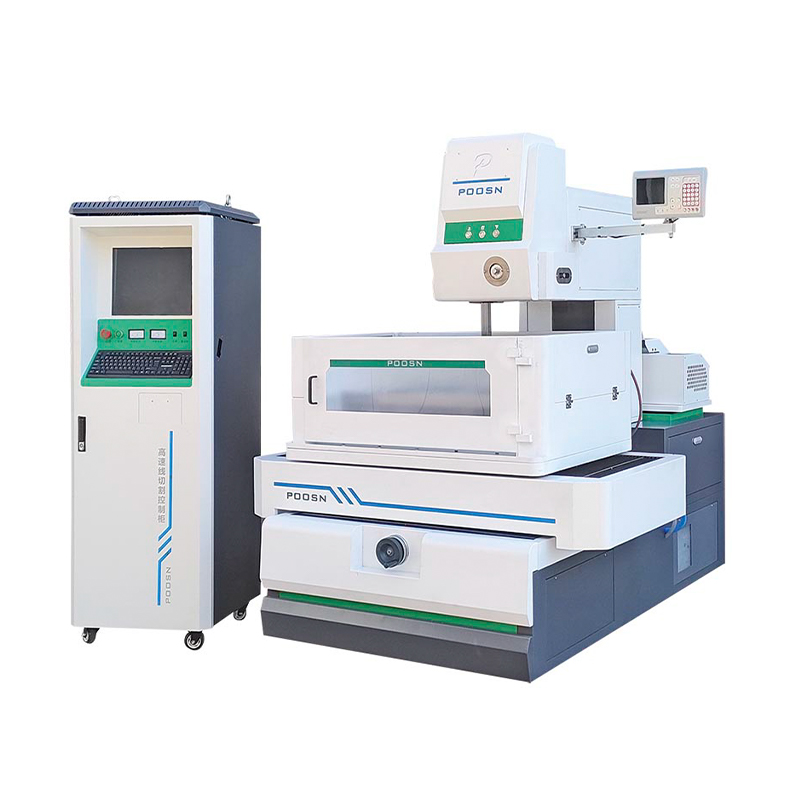
The DK80D uses an X8/AUTOCUT control system and is supplied with a standard ZHZK-03 control cabinet, with an optional ZHZ-09G cabinet configuration. The maximum processing current is specified as 6 A, and the electrical capacity is approximately 2.5 KVA. The power supply is listed as 3N 380 V±10 percent.
A suitable control system contributes to production efficiency in several ways. It allows the operator to organize profile data, define cutting conditions, manage taper parameters, and monitor the machine during extended operation. Clear programming and graphical process information are particularly valuable for large-taper work because the relationship between the upper profile, lower profile, taper angle, and workpiece thickness can be more complicated than in ordinary vertical cutting.
The machine’s control architecture also supports process repeatability. Once a proven program and cutting schedule have been established for a particular material and geometry, the production team can reuse the process with appropriate verification. This can shorten setup time and reduce reliance on individual operator experience.
4. Structural Stability and Manufacturing Quality
The performance of a large-format EDM machine begins with its mechanical structure. The DK80D uses a heavy-duty frame and reinforced guide rail arrangement intended to resist vibration under high workpiece loads and during coordinated taper movement. Its approximate machine weight of 3,500 kg provides substantial mass, which can improve damping and reduce the influence of dynamic movement on the cutting process.
Heavy machine construction is particularly useful for large-taper operations. When the U and V axes move through a wide range, the machine experiences changing dynamic forces. A rigid base helps preserve the relative position of the table, workpiece, wire guide, and drive assemblies. This is important for surface finish, taper consistency, and dimensional stability over long cycles.
The manufacturing process includes attention to the treatment and preparation of machine castings. High-strength aging treatment can be used to reduce residual internal stress in cast components. Stress relief is important because internal movement after assembly may affect alignment and positioning accuracy. By stabilizing the structural components before final assembly and testing, the manufacturer can improve the consistency of machine geometry over time.
High-precision linear rail support is included as a standard feature. Linear rails provide controlled movement with low friction and help maintain smooth axis travel. They also support the repeatability required for fine profile cutting. In large worktable machines, rail alignment and parallelism are especially important because small errors can become more noticeable across a long travel distance.
The manufacturer applies inspection and positioning accuracy testing before delivery. Such testing is intended to verify that the machine meets the applicable accuracy requirements and that the axes operate correctly across their travel ranges. For customers purchasing a large machine for critical production, this inspection stage provides additional confidence that the equipment has been checked as a complete system rather than assembled without final verification.
4.1 Supply chain and component control
Reliable machine performance also depends on the consistency of purchased and internally managed components. The manufacturer emphasizes supply chain control for materials such as specialized cast iron, precision lead screws, guide components, wire wheels, and nozzles. Stable sourcing can reduce variation between machines and support more predictable maintenance and process results.
Component selection is especially important in the wire path. Guide wheels and nozzles influence wire alignment, flushing, and discharge stability. If these parts wear prematurely or vary significantly in geometry, the operator may experience increased wire vibration, irregular flushing, or reduced cutting accuracy. Using suitable specifications and maintaining controlled replacement procedures can help preserve machine performance.
Vertical integration also supports cost control. When a manufacturer can coordinate raw materials, machining, assembly, inspection, and service, it may respond more quickly to configuration requests and replacement requirements. This is valuable for customers who need customized worktables, optional linear scales, high-pressure water systems, servo drives, or other adaptations for specialized applications.
4.2 Assembly and final testing
Precision assembly is not limited to installing components in their approximate locations. The relationship between the machine base, guide rails, worktable, wire guides, taper mechanism, and control system must be checked carefully. The manufacturer describes a delivery process that includes testing under demanding conditions, including large taper angles and high-intensity cutting scenarios.
Testing a large-taper machine under realistic conditions can reveal issues that may not appear during simple dry movement. The wire must remain stable while the U and V axes move. The table must support the intended load without abnormal vibration. The flushing arrangement must reach the cutting gap. The CNC system must correctly coordinate the programmed contours. These checks contribute to a more reliable installation at the customer’s facility.
The manufacturing company, Taizhou Xinchengyang Machinery Manufacturing Co., Ltd., has specialized in wire electrical discharge machining since 1999. Its POOSN brand originated in 2003, and the company established its own factory after forming Taizhou Xinchengyang Machinery Manufacturing Co., Ltd. in 2017. Its product development includes medium-speed, high-speed, and large-taper wire-cut EDM machines. This product breadth provides experience across several WEDM categories and supports the development of equipment for different levels of production demand.
5. Advantages Compared with Smaller and Conventional Competitors
5.1 Greater capacity than medium-format WEDM machines
The most obvious advantage of the DK80D over smaller machines is its ability to accept larger and heavier workpieces. A medium-format machine may be effective for precision molds, small plates, and general profile cutting, but it may not provide the table size, load rating, or cutting thickness needed for large industrial components.
The DK80D’s 1,000 kg load capacity and 800 mm maximum cutting thickness expand the range of jobs that can be completed in-house. Manufacturers can avoid outsourcing unusually large parts or dividing them into multiple operations. This may shorten delivery times and improve control over quality, scheduling, and intellectual property.
5.2 Larger taper range than basic taper machines
Many wire EDM systems can perform some taper cutting, but a limited taper range may prevent them from producing steep angled walls or complex transitions in thick workpieces. The DK80D is positioned for more demanding large-taper work, with a maximum stated angle of ±45° over 80 mm.
This capability can provide a competitive advantage when producing large die-casting molds, automotive molds, aerospace components, and custom mechanical parts. The ability to machine more complex geometry in one setup can reduce secondary milling, grinding, hand fitting, and manual correction. It can also improve consistency between related parts because the taper profile is generated through a coordinated CNC process.
5.3 Improved heavy-load stability
A machine that is physically capable of accepting a heavy workpiece is not necessarily optimized for heavy-load cutting. The DK80D distinguishes itself through its emphasis on mass, reinforced guide support, casting treatment, and structural stability. These features are intended to reduce vibration and preserve wire positioning during demanding operations.
Compared with lighter machines, the DK80D can provide a more stable foundation for long-duration cutting. This is important for large molds, where even a small deviation over a long cutting path can create substantial correction work. Improved stability can also support unattended or overnight operation when the cutting process has been carefully validated.
5.4 Better production continuity
The long wire storage capacity, controlled wire feed, and optional high-pressure water equipment support continuous production. Large workpieces often involve extended cutting cycles, so reducing avoidable interruptions can have a direct effect on output.
A larger work area can also improve job consolidation. Multiple smaller components may be arranged in one setup, or a complex component may be processed without repeated repositioning. These factors reduce non-cutting time and can improve machine utilization.
5.5 Flexible configuration and customization
The DK80D supports optional configurations such as AC servo drives, linear scales, and high-pressure water equipment. Customized worktables, cutting depths, and cutting angles can also be considered for specific requirements. This is an advantage over highly standardized machines that provide limited adaptation after purchase.
Customization is particularly valuable in specialized industries. An aerospace supplier may prioritize measurement feedback and stable precision. A mold manufacturer may require stronger flushing and a larger fixture arrangement. A heavy equipment producer may place greater emphasis on worktable load and deep cutting. A configurable platform allows the machine to be aligned with the customer’s actual process rather than used as a generic solution.
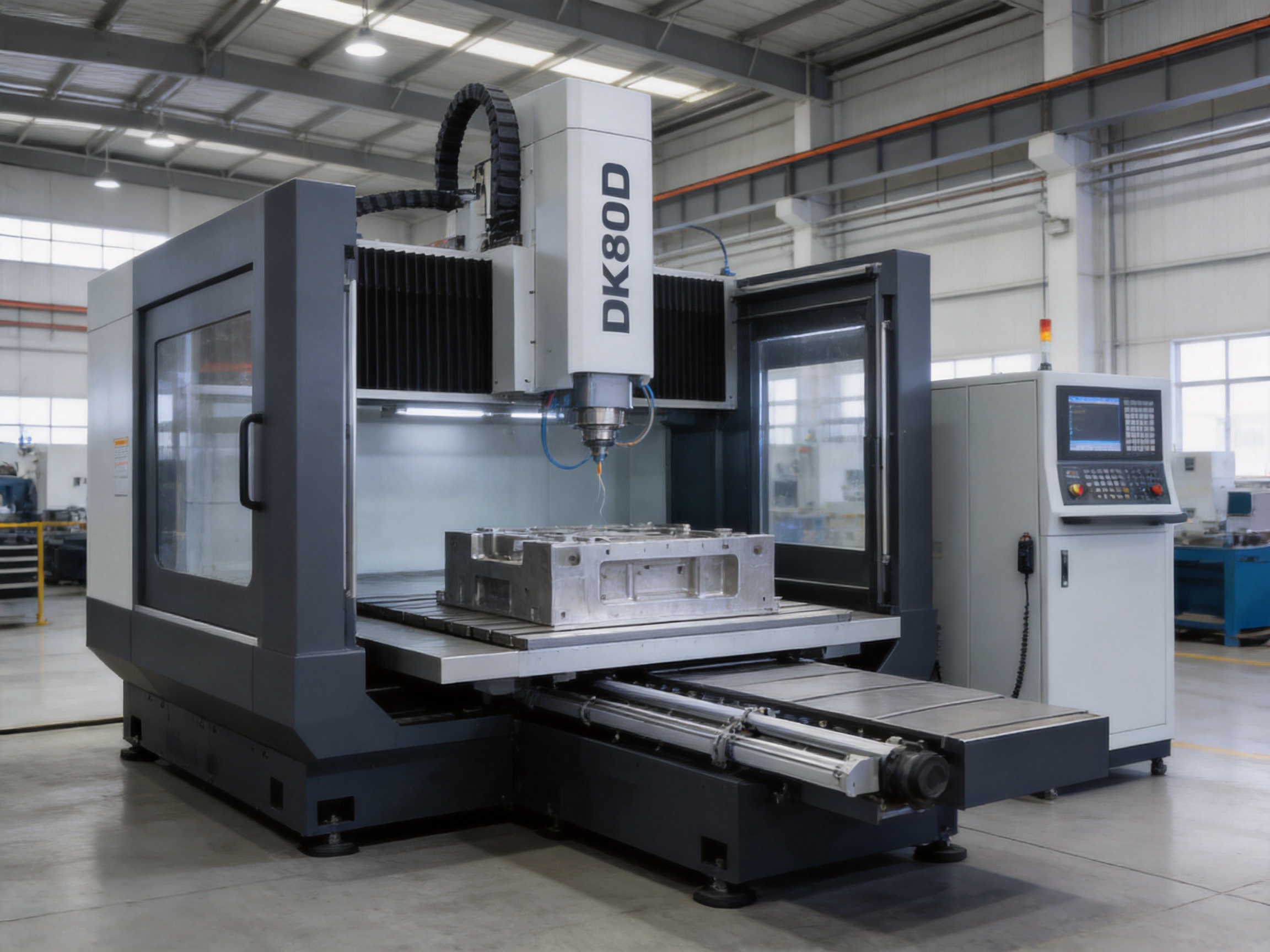
6. Applications in High-Demand Industries
6.1 Large mold manufacturing
Large molds are among the most suitable applications for the DK80D. Die-casting molds, injection molds, stamping dies, and forming tools may contain deep cavities, angled walls, narrow slots, and complex profiles. Their size and hardness can make conventional machining slow or difficult.
The DK80D can machine large mold inserts, plates, cavity components, and other conductive hardened parts. Its large taper capability supports draft surfaces and angled geometries, while its high load capacity accommodates heavy mold sections. By completing more features in a single setup, the machine can reduce alignment errors and improve the consistency of the final mold.
6.2 Aerospace components
Aerospace parts frequently require high dimensional control, lightweight structural geometry, difficult-to-machine alloys, and strict process traceability. Wire EDM can be used for intricate slots, profiles, thin sections, and components made from hard conductive materials.
The DK80D’s large work envelope is useful for oversized aerospace fixtures and structural parts. Its controlled taper movement can support components with inclined or changing profiles. When processing high-value parts, stable machine behavior and professional technical support are important because rework can be costly. The manufacturer provides process guidance for challenging materials and cutting conditions.
6.3 Heavy machinery and industrial equipment
Heavy machinery manufacturers often produce thick plates, large gears, specialized tooling, wear-resistant components, and custom mechanical assemblies. These parts may be too heavy or too thick for conventional medium-sized WEDM equipment.
The DK80D provides a suitable platform for high-load components and large profiles. Its 1,000 kg worktable capacity and 800 mm cutting thickness are particularly relevant to heavy equipment production. The machine can also support repair and replacement manufacturing, where a unique or obsolete component must be reproduced accurately from a drawing or existing sample.
6.4 Cemented carbide and hardened materials
Because wire EDM removes material through electrical discharge rather than direct mechanical cutting, it is well suited to materials that are difficult to machine with milling cutters or saws. The DK80D can process various metals and cemented carbide materials, provided that the workpiece is electrically conductive and the selected cutting parameters are appropriate.
High-hardness tool steels and carbide components are common in mold and tooling applications. The machine’s ability to process these materials after heat treatment can reduce distortion associated with later hardening. A manufacturer may rough-machine a component, heat-treat it, and then use WEDM to achieve the final profile with reduced mechanical cutting force.
6.5 Custom and low-volume production
Large-taper WEDM is also valuable for custom engineering, prototype work, repair components, and low-volume products. These jobs may not justify dedicated tooling or multiple specialized machines. A flexible CNC machine can accommodate different profiles and materials with software and process adjustments.
The DK80D’s large working range allows a job shop to accept unusually large parts that would otherwise require outsourcing. Its optional configuration choices also allow the shop to balance initial investment against future production requirements.
7. Productivity, Operating Cost, and Return on Investment
Productivity in wire EDM should be assessed by more than maximum cutting speed. A machine’s total production value depends on cutting efficiency, setup time, reliability, rework rate, labor requirements, consumable usage, and the ability to complete the job in one operation.
The DK80D is specified for maximum cutting efficiency in the range of approximately 10,000–16,000 mm²/h under suitable conditions. The actual rate will depend on material, thickness, taper, required accuracy, surface finish, wire type, and electrical parameters. Nevertheless, the combination of high cutting efficiency and a large working envelope can improve output for large production tasks.
One important economic benefit is the potential reduction in secondary operations. If a large-taper profile can be completed accurately in one setup, the manufacturer may reduce milling, grinding, hand polishing, fitting, and re-alignment. Every eliminated operation can reduce labor and shorten the delivery cycle.
Energy-saving design is another part of the machine’s cost-effectiveness. Efficient electrical operation, controlled wire transportation, and optimized cutting parameters can help reduce unnecessary consumption. Energy performance should be evaluated alongside cutting productivity and maintenance requirements rather than viewed as an isolated specification.
Equipment reliability also affects return on investment. A machine that can operate for extended periods with fewer interruptions can produce more parts within the same installed footprint. Stable guide rails, appropriate wire tension, robust structural components, and reliable flushing help reduce downtime associated with wire breakage, unstable discharges, or repeated adjustment.
For a production manager, the DK80D may be particularly attractive when the alternative is outsourcing large parts, purchasing several smaller machines, or performing multiple setups on equipment with limited taper capability. The correct choice depends on workload, part size, material range, local power conditions, operator skill, and required delivery volume, but the machine’s capacity can create a strong economic case for high-demand applications.
8. Operating Considerations and Process Preparation
Large-taper wire EDM requires careful preparation. Before cutting begins, the operator should confirm that the workpiece is conductive, securely clamped, properly aligned, and within the machine’s weight and size limits. The intended taper angle, cutting thickness, upper and lower profiles, wire offset, and flushing requirements should be reviewed in the program.
Workholding is especially important for heavy components. The fixture should support the workpiece without obstructing the wire path or creating unacceptable deformation. Clamping forces should be distributed appropriately, and the operator should verify that the workpiece remains stable during the full cutting cycle.
Dielectric fluid quality has a direct influence on cutting stability. Proper filtration helps remove eroded particles and reduces the risk of secondary discharges. For ultra-thick or large-angle cuts, the fluid must reach the cutting gap effectively. Optional high-pressure water equipment and multi-angle flushing arrangements may be beneficial when ordinary circulation is insufficient.
Wire condition should also be monitored. Wire guides, nozzles, wheels, and contact components are wear parts that influence accuracy and stability. Regular inspection helps prevent gradual deterioration from being mistaken for a control or structural problem. Maintaining appropriate wire tension and replacing worn guides according to the manufacturer’s recommendations can protect both quality and productivity.
Operators should validate parameters before starting a high-value workpiece. A test cut or sample section can confirm taper compensation, surface finish, flushing behavior, and material response. Once the process is established, the data can be recorded for repeat orders and similar materials.
9. Technical Support and Service Value
Large-format EDM equipment represents a significant investment, and technical support is an important part of its overall value. The manufacturer provides rapid response and professional technical assistance intended to maintain operational stability. Support may include installation guidance, programming instruction, process parameter recommendations, troubleshooting, and maintenance advice.
Process guidance is particularly important when cutting large tapers in high-hardness alloy steels, ultra-thick mold steels, or cemented carbide. The correct combination of wire speed, electrical parameters, flushing pressure, taper compensation, and cutting strategy may vary considerably between materials. Technical support can shorten the learning curve and help the customer achieve stable results more quickly.
Training also contributes to safe and efficient operation. Operators should understand axis movement, workpiece loading limits, wire path inspection, dielectric maintenance, emergency procedures, program verification, and routine maintenance. A well-trained team can make better use of the machine’s large capability while avoiding preventable downtime.
Long-term service is supported by the company’s experience in wire-cut EDM manufacturing and its range of related product families. Since the company develops medium-speed, high-speed, and large-taper models, it can provide equipment knowledge across different WEDM applications. This broad technical background can be useful when a customer operates multiple machine types or plans to expand its EDM capacity over time.
10. Model Selection within the Large-Taper Series
The DK80D is the largest and most capable model in the listed DK-D series, but it is not necessarily the correct choice for every application. Selecting the appropriate model requires consideration of workpiece size, weight, thickness, taper angle, production volume, and available installation space.
| Model | Typical positioning | Maximum cutting thickness | Maximum worktable load | XY travel |
| DK45D | Medium-sized components and precision molds | 450 mm | 400 kg | 450 × 650 mm |
| DK55D | Large workpieces and complex profiles | 600 mm | 600 kg | 550 × 800 mm |
| DK63D | Extra-large workpieces and heavy components | 600 mm | 800 kg | 630 × 1,000 mm |
| DK80D | Heavy-duty molds and oversized high-precision workpieces | 800 mm | 1,000 kg | 800 × 1,200 mm |
The DK45D may be appropriate when the workpieces are medium-sized but still require large-taper capability and precision. The DK55D offers a larger cutting area and increased load rating for more demanding components. The DK63D is suited to extra-large workpieces and heavy-duty applications, particularly in aerospace and mold production. The DK80D is intended for the most challenging jobs, including heavy molds, very thick components, large taper angles, and high-volume production involving oversized parts.
Customers should also consider the installation footprint. The DK80D measures approximately 2,600 × 2,590 × 2,900 mm and weighs around 3,500 kg. The foundation, access route, lifting equipment, electrical supply, working clearance, and dielectric service area must be prepared before delivery. Proper installation planning helps ensure that the machine can be operated, inspected, and maintained safely.
11. Why the DK80D Is a Strategic Equipment Choice
The strongest case for the DK80D is its ability to bring several high-level capabilities together in one platform. It combines large taper, large thickness, large worktable dimensions, high load capacity, controlled wire transportation, and precision CNC movement. Each feature is useful independently, but their combined effect is more significant for large and difficult workpieces.
Compared with purchasing separate equipment for ordinary profile cutting and large-taper work, a single versatile machine may simplify production planning. Compared with outsourcing oversized parts, in-house processing can improve schedule control and protect process knowledge. Compared with using a smaller machine for a borderline application, the DK80D provides greater capacity margin and reduces the risk of excessive setup complexity.
The machine’s value is also linked to manufacturing discipline. Heavy castings, guide rail alignment, component quality, assembly accuracy, and final testing all contribute to practical performance. The manufacturer’s experience since 1999, its own factory development, its product range, and its emphasis on technical support provide a foundation for supplying more than a nominal machine specification.
For companies serving aerospace, heavy machinery, mold manufacturing, and high-end equipment industries, the DK80D can become a central resource for challenging wire-cut operations. Its purpose is not merely to increase the maximum part size, but to make complex, thick, and heavy components more manageable, repeatable, and economically viable.
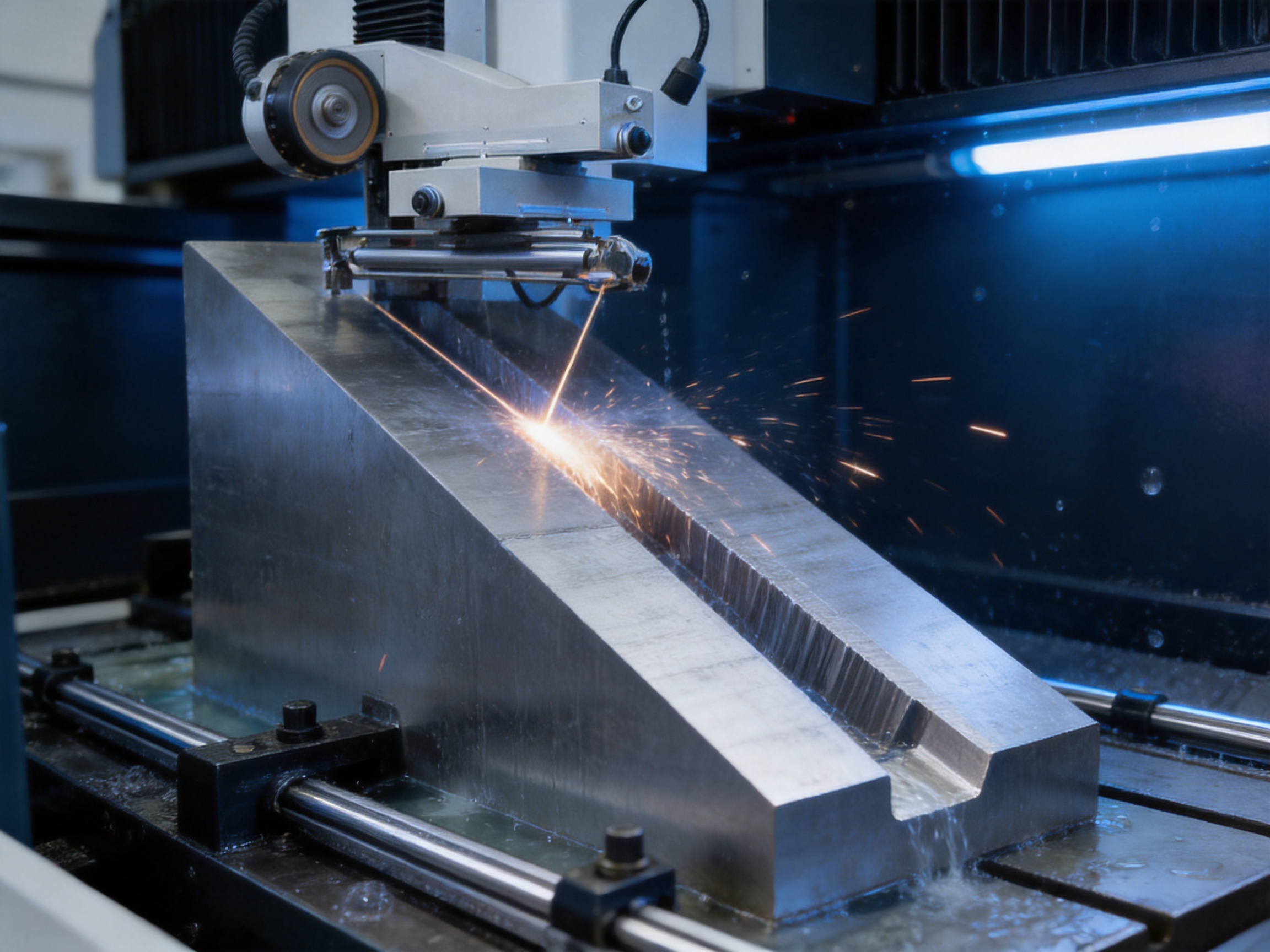
12. Questions and Answers
Q1: What is the main advantage of the DK80D over a conventional wire-cut EDM machine?
The principal advantage is its combination of extra-large taper capability and heavy-duty capacity. The machine supports a maximum cutting taper of up to ±45° over 80 mm, a maximum cutting thickness of 800 mm, a 1,000 kg worktable load, and X/Y travel of 800 × 1,200 mm. These capabilities allow it to process large, thick, heavy, and geometrically complex components that may exceed the practical limits of conventional medium-format equipment.
Q2: Can the DK80D process cemented carbide and hardened steel?
Yes. Wire EDM is suitable for electrically conductive hard materials, including various hardened steels and cemented carbides. The final results depend on material grade, thickness, geometry, flushing, wire condition, and selected electrical parameters. Process testing and appropriate parameter development are recommended for new materials.
Q3: What industries are best suited to the DK80D?
The machine is suitable for large mold manufacturing, aerospace component production, heavy machinery, high-end equipment parts, tooling, die-casting molds, automotive molds, and custom industrial components. It is especially useful where large dimensions, high workpiece weight, deep cutting, or complex taper geometry are involved.
Q4: How does the machine maintain stability during heavy-load cutting?
Stability is supported by the heavy machine structure, reinforced guide rail system, high-precision linear rail support, treated castings, and coordinated drive arrangement. The approximate 3,500 kg machine weight also contributes to damping. Correct installation, workholding, maintenance, and process preparation remain essential for achieving the best results.
Q5: Does the DK80D support automated or extended unattended operation?
The machine includes a controlled wire feed system, approximately 350 m of wire storage capacity, CNC programming, and a structure intended for long-duration cutting. These features can support extended or unattended operation after the program, workholding, flushing, wire path, and safety conditions have been fully verified. Actual unattended suitability depends on the part and production environment.
Q6: What optional configurations are available?
Optional configurations include AC servo drives for the X and Y axes, linear scales, high-pressure water equipment, and alternative control cabinet arrangements. Customized options can also be considered for the DK80D and larger machines, including worktable, depth, angle, and process-related requirements.
Q7: How does the machine improve production efficiency for large molds?
Its large working area and high load capacity can reduce the need for multiple setups. Its taper system can produce complex angled profiles in one coordinated operation, while its cutting efficiency, wire storage capacity, and controlled wire feed support longer production cycles. These factors may reduce secondary machining, alignment time, manual polishing, and outsourcing requirements.
Q8: What should a customer prepare before installing the machine?
The customer should confirm the foundation, access route, lifting equipment, electrical supply, drainage and dielectric service arrangements, ventilation, operating clearance, and maintenance access. The installation area must accommodate the machine’s approximate dimensions of 2,600 × 2,590 × 2,900 mm and its approximate weight of 3,500 kg.
Q9: Is operator training necessary for large-taper cutting?
Yes. Although the control system is designed to support practical CNC programming, large-taper cutting involves contour coordination, wire offset, workpiece setup, flushing, and parameter selection. Training helps operators understand the relationship between the upper and lower profiles, taper angle, material thickness, and cutting conditions. Professional technical guidance can shorten the learning period.
Q10: How should a buyer compare the DK80D with competing machines?
The buyer should compare complete operating capability rather than one isolated specification. Important factors include worktable dimensions, usable travel, maximum thickness, load rating, taper range, guide rail design, wire tension control, flushing performance, CNC compensation, accuracy testing, optional configurations, service response, spare parts, and total operating cost. The DK80D is particularly competitive when large-taper cutting, heavy workpieces, and ultra-thick sections are core requirements.
Conclusion
The DK80D Heavy-Duty CNC Large-Taper Wire-Cut EDM Machine is developed for manufacturers whose production requirements exceed the normal range of medium-sized wire EDM equipment. Its ±45°/80 mm taper capability, 800 mm maximum cutting thickness, 1,000 kg worktable load, large working envelope, and coordinated CNC axis control make it suitable for oversized and complex workpieces.
Its advantages are reinforced by a heavy-duty structural design, high-precision linear rail support, controlled wire transportation, optional servo and measurement systems, high-pressure flushing options, and a manufacturing process that emphasizes casting treatment, component control, precision assembly, and final testing. These qualities help position the machine as a practical solution for large molds, aerospace components, heavy machinery, high-hardness materials, and high-end equipment manufacturing.
For companies seeking to increase in-house capacity, reduce secondary operations, improve production continuity, and process difficult parts with greater confidence, the DK80D offers a comprehensive large-taper WEDM platform. Its greatest value lies in bringing size, taper, precision, stability, and customization together in a single machine designed for demanding industrial production.
References
1. Taizhou Xinchengyang Machinery Manufacturing Co., Ltd. Product information for the DK-D Large Cutting Taper WEDM Series.
2. Taizhou Xinchengyang Machinery Manufacturing Co., Ltd. DK80D technical parameters and configuration materials.
3. GB/T 7926-2015, Accuracy Inspection of Wire-Cut Electrical Discharge Machines.
4. General principles of electrical discharge machining and wire electrical discharge machining process engineering.
5. Technical guidance on CNC axis coordination, taper compensation, dielectric flushing, wire tension control, and hardened-material processing.
Product: DK80D Heavy-Duty CNC Large Taper Wire Cut EDM Machine for Oversized Workpieces

-
Phone
+86-0523-86268788 +86-13815960366 +86-13912191163Email
[email protected]Address
No. 366, Yusheng Road Jiulong Town, Hailing District Taizhou City, China
Copyright © Taizhou Xinchengyang Machinery Manufacturing Co., Ltd. All Rights Reserved.
Custom edm machine for sale
wholesale edm machine manufacturers
