

 English
 русский
 عربى
عربى

Lu Qianwen — Overseas Sales Manager
Home / Author / Lu Qianwen — Overseas Sales Manager / CNC High-Speed Wire EDM Machine for Precision Cutting and Production Efficiency
CNC High-Speed Wire EDM Machine for Precision Cutting and Production Efficiency
2026-07-04
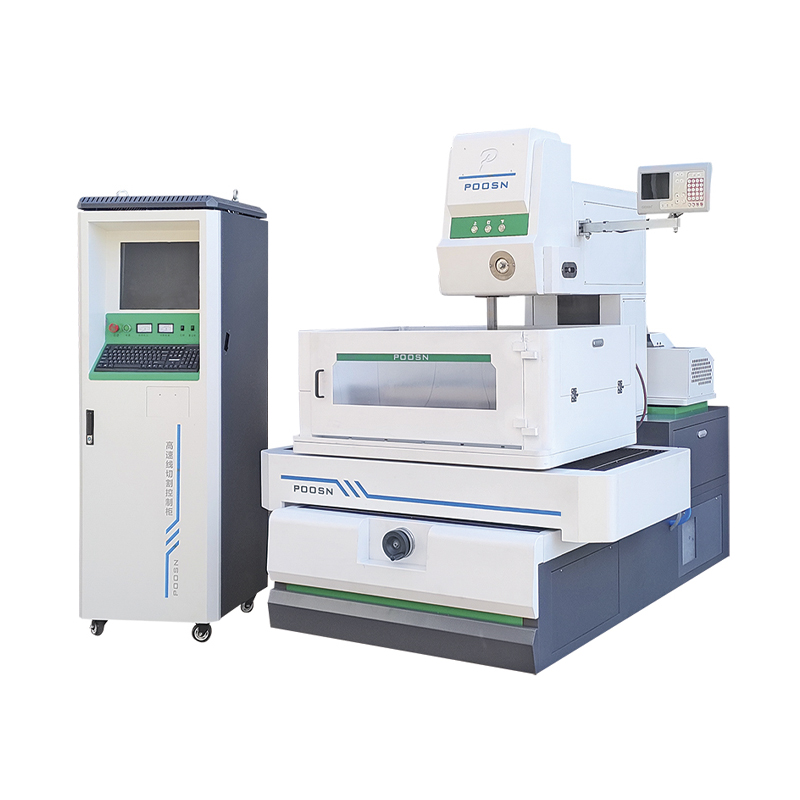
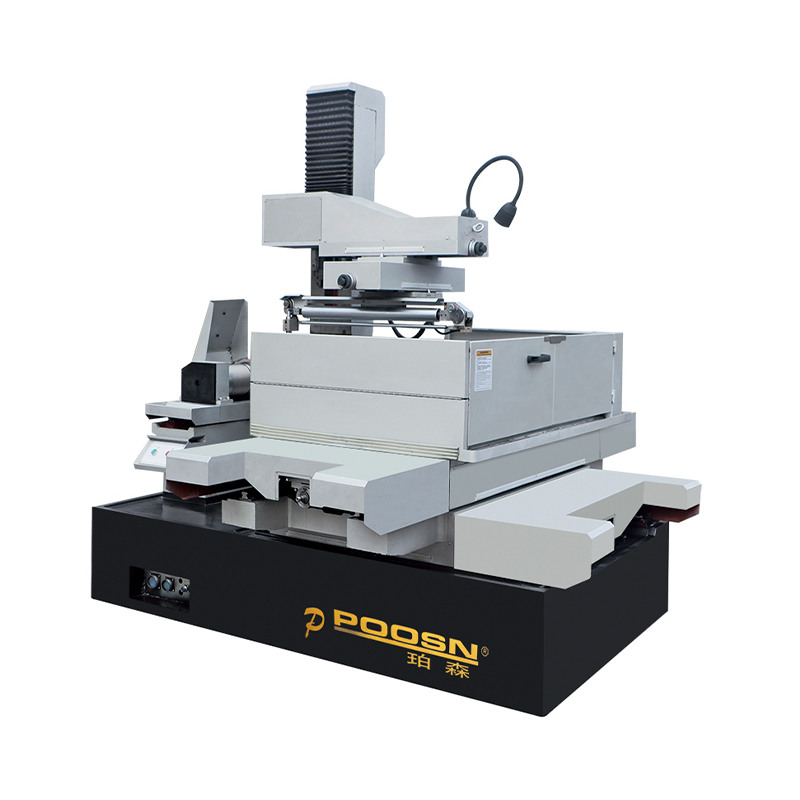
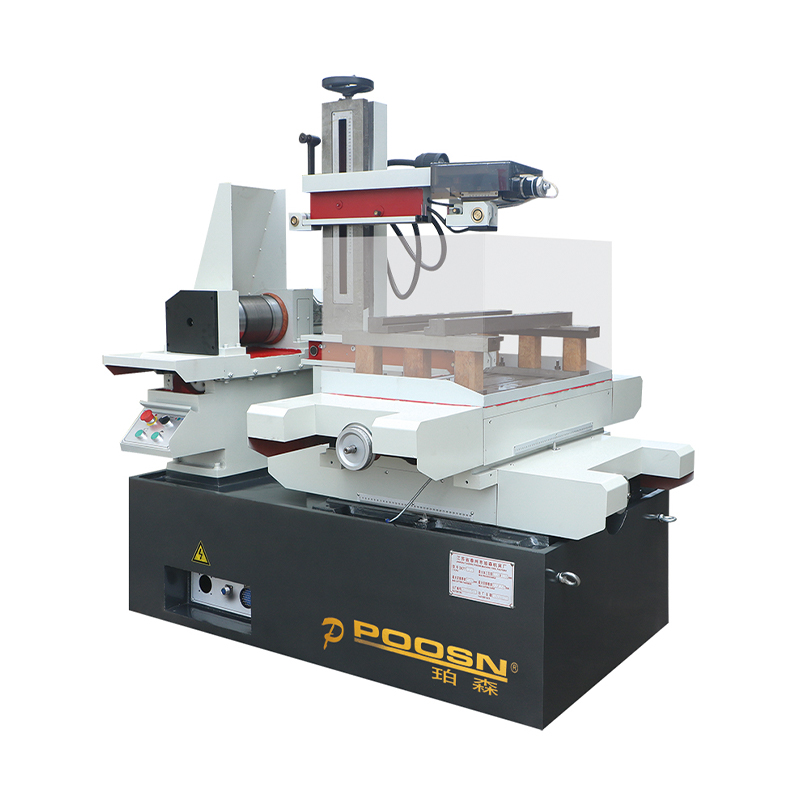
DK-7735 CNC High-Speed Wire EDM Machine (4-Axis, 300kg Load)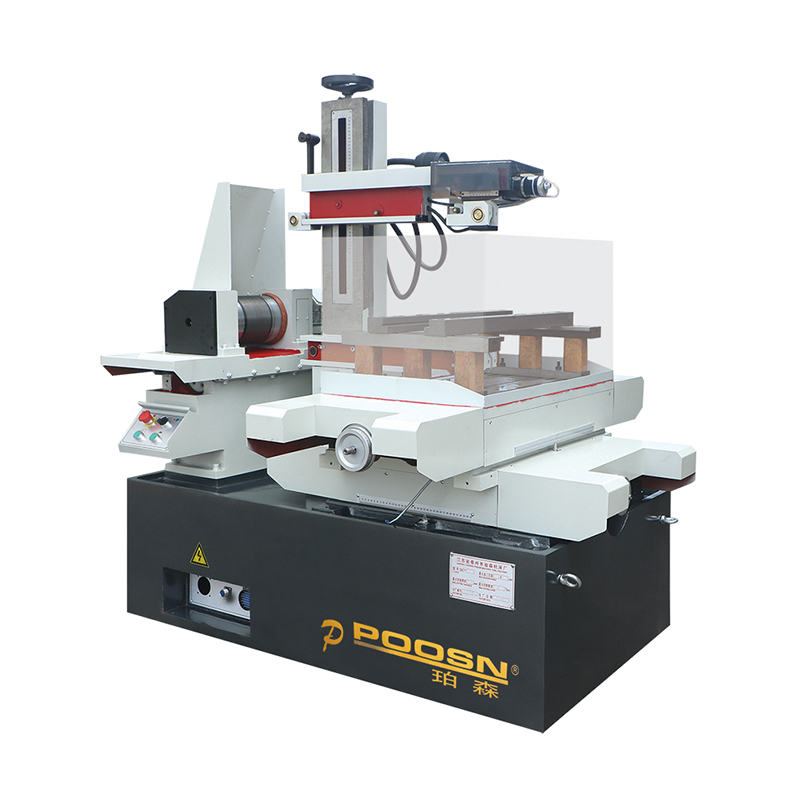
Content
- 1 Introduction: Precision Cutting for Modern Manufacturing
- 2 Product Overview of the DK-7735 CNC High-Speed Wire EDM Machine
- 3 Key Technical Specifications
- 4 Mechanical Structure Designed for Stability
- 5 Four-Axis Linkage for Complex Contours and Taper Cutting
- 6 High Cutting Efficiency for Production-Oriented Workshops
- 7 Precision Control and Surface Quality
- 8 Advantages Over Competing Wire EDM Machines
- 9 Advanced Manufacturing Processes Behind the Machine
- 10 Digital Pulse Discharge Control
- 11 Workpiece Adaptability and Material Range
- 12 Production Efficiency and Cost-Effectiveness
- 13 Operator-Friendly Control and Practical Use
- 14 Applications in Mold Manufacturing
- 15 Applications in Automotive Components
- 16 Applications in Aerospace and Precision Machinery
- 17 Comparison With Other Models in the Same Series
- 18 Why Company Strength Matters When Choosing Wire EDM Equipment
- 19 Customization and OEM/ODM Support
- 20 Reliability, Maintenance, and Long-Term Operation
- 21 Service and Technical Support
- 22 Practical Buying Considerations
- 23 Q&A Section
- 23.1 What is the main purpose of the DK-7735 CNC High-Speed Wire EDM Machine?
- 23.2 What is the worktable size of the DK-7735?
- 23.3 What is the maximum worktable load?
- 23.4 How fast can the DK-7735 cut?
- 23.5 Does the machine support taper cutting?
- 23.6 What surface roughness can the machine achieve?
- 23.7 Which materials can be processed?
- 23.8 Is the DK-7735 suitable for mass production?
- 23.9 What control cabinet options are available?
- 23.10 Why choose this machine instead of a lower-cost competitor?
- 24 Conclusion: A Balanced Solution for Precision and Productivity
- 25 References
- 26 Product: DK-7735 CNC High-Speed Wire EDM Machine (4-Axis, 300kg Load)
Introduction: Precision Cutting for Modern Manufacturing
In precision manufacturing, the demand for stable, efficient, and accurate cutting equipment continues to rise. Mold makers, automotive component suppliers, aerospace workshops, machinery manufacturers, and high-volume production plants all need equipment that can process conductive materials with reliable dimensional control and repeatable results. The DK-7735 CNC High-Speed Wire EDM Machine is designed for this environment. It combines a practical worktable size, four-axis linkage control, strong workpiece loading capacity, and high cutting efficiency to help manufacturers complete complex cutting tasks with confidence.
The DK-7735 belongs to the DK-77 high-speed WEDM category and is positioned as a powerful solution for medium-sized workpieces, precision molds, mechanical parts, and production-oriented machining. With a 500 by 750 millimeter worktable, 350 by 450 millimeter X and Y travel, up to 450 millimeters of cutting thickness, and a maximum worktable load of 300 kilograms, it provides a balanced combination of capacity, stability, and cost-effectiveness. For many workshops, this balance is more important than simply choosing the largest or most expensive machine available.
Wire electrical discharge machining, commonly known as wire EDM or WEDM, removes material through controlled electrical discharges between a moving wire electrode and a conductive workpiece. Because the process does not rely on traditional cutting forces, it is especially valuable for hard metals, intricate contours, thin walls, sharp internal corners, and precision mold cavities. The DK-7735 is built to take advantage of these strengths while maintaining the operating simplicity and production efficiency required by industrial users.
Taizhou Xinchengyang Machinery Manufacturing Co., Ltd. has long focused on the research, development, and production of electrical discharge machining equipment and related special processing technologies. The company’s manufacturing philosophy emphasizes quality, stability, customer value, and practical innovation. Its machines are produced according to national standards, and each machine tool undergoes positioning accuracy testing before delivery. This systematic approach supports the long-term reliability of the DK-7735 in demanding production conditions.
This article explores the technical characteristics, application value, manufacturing advantages, competitive strengths, and practical selection considerations of the DK-7735 CNC High-Speed Wire EDM Machine. It also explains why this model is suitable for customers seeking a dependable high-speed wire EDM machine for precision cutting, mold production, and mass manufacturing.
Product Overview of the DK-7735 CNC High-Speed Wire EDM Machine
The DK-7735 is a four-axis CNC high-speed wire EDM machine developed for users who require more travel and stronger loading capacity than smaller models, while still needing a compact and efficient machine footprint. It is particularly suitable for medium-sized molds, automotive components, precision mechanical parts, fixture plates, tool components, and conductive metal workpieces requiring accurate contour machining.
The machine’s core specification includes a worktable size of 500 by 750 millimeters and an X/Y travel size of 350 by 450 millimeters. This gives operators enough working area to handle a wide range of parts without moving directly into a larger machine class. Its maximum cutting thickness reaches 450 millimeters, which makes it useful for thicker plates, mold inserts, and special industrial components. The maximum worktable load of 300 kilograms allows the DK-7735 to process heavier workpieces than many entry-level wire EDM machines.
One of the strongest advantages of this model is its four-axis linkage structure. The X, Y, U, and V axes are driven by stepper control, enabling taper cutting and more complex machining paths. The machine supports a maximum cutting taper of plus or minus 6 degrees per 80 millimeters. For users producing die components, angled profiles, mold cavities, and components requiring upper and lower profile compensation, this capability improves flexibility and reduces the need for secondary machining.
The DK-7735 can achieve a maximum cutting efficiency of 10,000 to 16,000 square millimeters per hour, depending on the selected control cabinet and machining conditions. This efficiency level supports production environments where time, output, and cost control are critical. The optimal surface roughness can reach Ra less than or equal to 2.5 micrometers, helping manufacturers obtain clean cutting surfaces suitable for many industrial applications.
Its machine accuracy follows GB/T7926-2015, reflecting the manufacturer’s commitment to standardized production and inspection. The DK-7735 is available with a standard ZH-K68 desktop control cabinet and an optional ZHZK-03 vertical control cabinet. This gives users flexibility when selecting the operating configuration that best matches their workshop layout, programming habits, and production requirements.
Key Technical Specifications
| Specification | DK-7735 Data | Production Value |
| Worktable Size | 500 by 750 millimeters | Suitable for medium-sized workpieces, molds, plates, and precision components |
| X/Y Travel Size | 350 by 450 millimeters | Provides practical cutting range for many industrial applications |
| Maximum Cutting Thickness | 450 millimeters | Supports thick plates, mold inserts, and heavier conductive materials |
| Maximum Cutting Taper | Plus or minus 6 degrees per 80 millimeters | Enables taper cutting, mold profiles, and special contour machining |
| Maximum Cutting Efficiency | 10,000 to 16,000 square millimeters per hour | Improves productivity and supports batch production |
| Optimal Surface Roughness | Ra less than or equal to 2.5 micrometers | Provides clean cutting quality for precision components |
| Drive Type | X, Y, U, and V-axis stepper drive with four-axis linkage | Supports coordinated motion and complex cutting tasks |
| Maximum Worktable Load | 300 kilograms | Allows stable machining of medium and heavy workpieces |
| Machine Weight | 1100 kilograms | Contributes to machine rigidity and cutting stability |
| Machine Dimensions | 1650 by 1250 by 1830 millimeters | Compact enough for many workshops while offering useful cutting capacity |
Mechanical Structure Designed for Stability
The performance of a wire EDM machine depends heavily on mechanical rigidity. Even though wire EDM does not generate the same cutting forces as milling or turning, geometric stability remains essential. Wire movement, worktable positioning, thermal behavior, vibration, guide precision, and bed rigidity all influence final machining accuracy. The DK-7735 uses a reinforced mechanical structure designed to maintain stable geometry during long periods of operation.
The machine base is built from high-strength cast iron and undergoes aging treatment to reduce internal stress. This process helps prevent deformation after machining and assembly. A stable bed structure is particularly important for high-speed wire EDM because the wire transport system operates continuously, and the worktable must maintain precise positioning throughout the cutting path. A poorly stabilized bed can gradually lose geometric accuracy, leading to taper deviation, contour error, or inconsistent repeatability.
Compared with low-cost competitors that may focus mainly on outward appearance or basic motion capability, the DK-7735 emphasizes structural durability. Its 1100-kilogram machine weight is not simply a specification; it reflects the mass and mechanical foundation needed to support stable machining. A heavier and properly designed structure helps reduce vibration, maintain alignment, and improve long-term reliability.
In practical production, stability becomes more valuable as machining time increases. A mold insert, thick steel plate, or precision mechanical part may require extended cutting time. During this period, the machine must maintain wire alignment, pulse consistency, worktable position, and fluid circulation. The DK-7735 is designed to support these requirements, helping users reduce scrap, rework, and dimensional variation between parts.
Four-Axis Linkage for Complex Contours and Taper Cutting
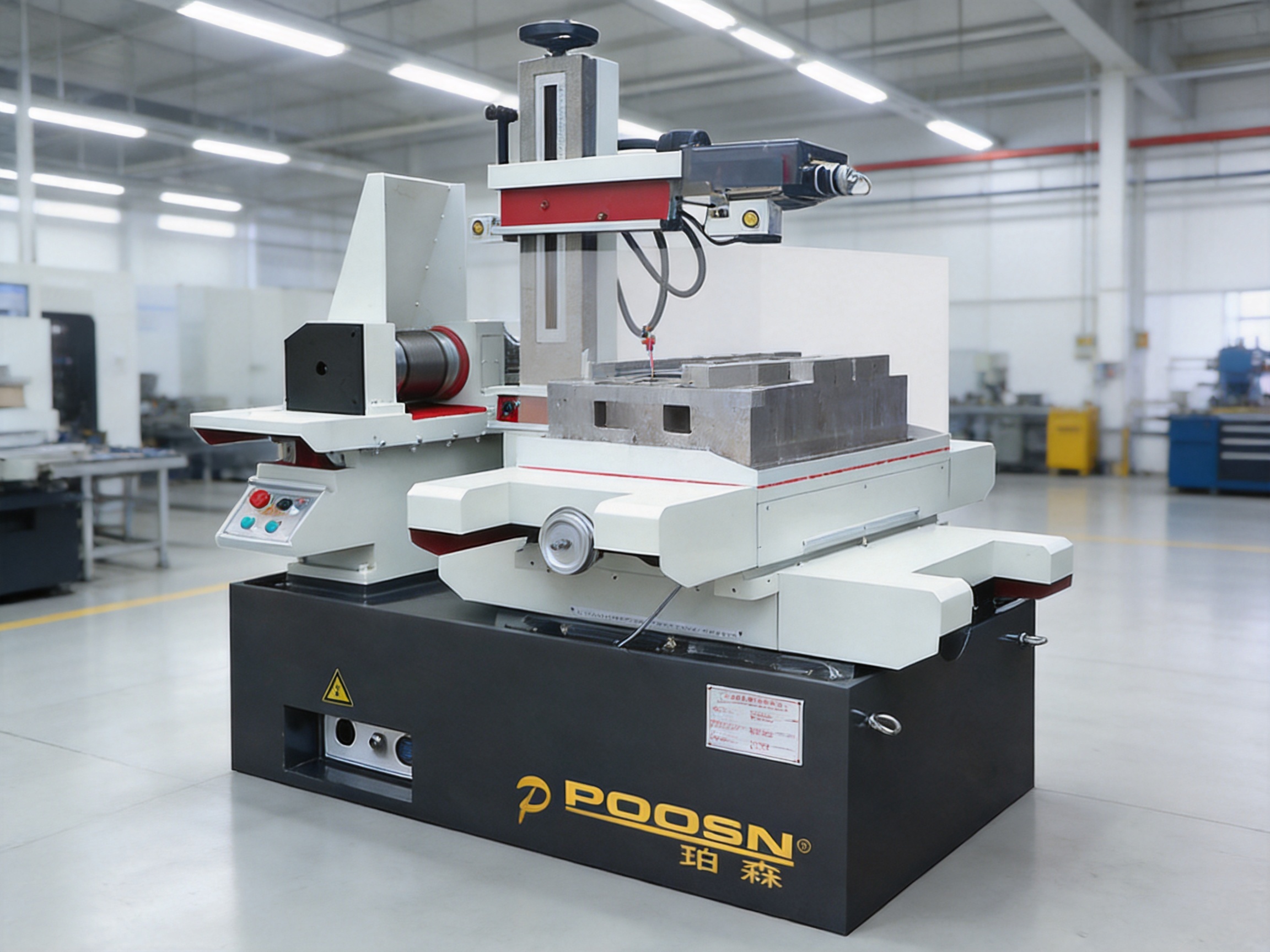
The DK-7735 uses X, Y, U, and V-axis coordinated control. This four-axis linkage design expands the machine’s capabilities beyond simple vertical profile cutting. The U and V axes allow the upper wire guide to move relative to the lower guide, enabling taper cutting and special contour processing. This is essential for molds, dies, punches, angled features, and components requiring different upper and lower profiles.
Many workshops initially purchase wire EDM equipment for basic cutting. However, as customer requirements become more complex, the need for multi-axis control becomes increasingly important. A machine limited to basic two-axis cutting may require additional manual operations, secondary machining, or outsourcing. The DK-7735 helps reduce this limitation by providing four-axis functionality as part of its standard machining architecture.
The maximum cutting taper of plus or minus 6 degrees per 80 millimeters gives users practical flexibility for many mold and mechanical part applications. For example, stamping dies may require angled clearance. Mold inserts may need tapered cavities. Special tooling parts may need upper and lower contour differences. With four-axis control, the DK-7735 can complete these tasks more efficiently and with better consistency than manual compensation methods.
The machine’s control system also simplifies programming and parameter adjustment. Operators can configure machining settings through an intuitive interface, reducing the complexity of setup. In production environments where multiple operators may use the same equipment, ease of operation is a significant advantage. A machine that is technically capable but difficult to program often becomes a bottleneck. The DK-7735 aims to combine cutting capability with practical usability.
High Cutting Efficiency for Production-Oriented Workshops
Cutting efficiency is one of the most important factors in evaluating a wire EDM machine. For manufacturers, higher efficiency means shorter cycle times, better machine utilization, improved delivery speed, and lower unit machining cost. The DK-7735 offers a maximum cutting efficiency of up to 16,000 square millimeters per hour, depending on the selected control cabinet model, workpiece material, thickness, and machining parameters.
This efficiency makes the machine suitable not only for single-piece precision work but also for batch production. In industries such as automotive components, hardware molds, mechanical processing, and tooling, many parts must be produced repeatedly with consistent dimensional quality. A stable high-speed WEDM machine can help manufacturers increase output without sacrificing accuracy.
Compared with slower or less stable machines, the DK-7735 offers an advantage in reducing machining time. When processing multiple components from plates or producing repeated mold elements, even a moderate reduction in cycle time can create significant savings over weeks and months of production. The machine’s strong load capacity and larger travel compared with smaller models also allow users to arrange workpieces more efficiently.
High cutting efficiency must be supported by stable discharge control. If a machine attempts to cut faster without maintaining discharge stability, it may suffer from wire breakage, poor surface finish, dimensional error, or unstable kerf quality. The DK-7735 uses a digital pulse control system designed to optimize discharge parameters according to material thickness and processing requirements. This helps balance speed, wire consumption, and surface quality.
The machine is therefore not designed merely for theoretical speed. Its value lies in practical production efficiency: stable operation, predictable cutting, manageable wire consumption, and repeatable results. These factors are especially important for manufacturers who calculate machine performance based on actual monthly output rather than brochure specifications alone.
Precision Control and Surface Quality
Precision machining requires more than a numerical accuracy claim. It depends on the interaction between machine structure, drive system, wire transport, guide components, pulse power supply, coolant management, operator setup, and maintenance discipline. The DK-7735 addresses these factors through a combination of mechanical stability and coordinated control.
The machine accuracy conforms to GB/T7926-2015, and each machine tool is tested for positioning accuracy before delivery. This inspection process gives customers confidence that the machine has been checked according to defined standards rather than shipped only after basic assembly. For users producing molds or precision components, this quality assurance process is an important part of equipment selection.
The optimal surface roughness of Ra less than or equal to 2.5 micrometers supports a wide range of industrial cutting requirements. While some ultra-fine finishing applications may require additional finishing methods or specialized EDM strategies, the DK-7735 provides a strong surface quality level for high-speed WEDM applications. Clean surfaces reduce the need for post-processing and help maintain functional performance of parts.
The use of precision transmission components, including ball screws and high-rigidity guiding structures, helps achieve accurate feed control. For complex curves, micro-features, and repeated contours, smooth motion is essential. Any backlash, vibration, or irregular movement can appear as contour error on the final part. The DK-7735 is designed to provide controlled movement across its 350 by 450 millimeter travel range.
The wire transport mechanism is also critical to precision. Stable wire tension helps maintain cutting accuracy, reduces wire vibration, and lowers the risk of wire breakage. For thick workpieces, wire stability is especially important because the wire must maintain a straight and controlled cutting path through greater material height. The DK-7735’s structural design and guide arrangement support verticality and cutting consistency when processing thicker materials.
Advantages Over Competing Wire EDM Machines
The DK-7735 stands out in several areas when compared with many competing machines in the same capacity range. First, it offers a strong balance between worktable size, travel, load capacity, and machine footprint. Some competitors may provide lower purchase prices but sacrifice rigidity, inspection discipline, control flexibility, or long-term durability. The DK-7735 is designed for customers who value actual production performance and service life.
Second, the 300-kilogram worktable load gives it a practical advantage over smaller or lighter high-speed WEDM machines. This capacity allows users to process heavier molds, fixture blocks, steel plates, and mechanical parts. A machine with insufficient load capacity may appear suitable at first but become restrictive as production requirements expand. The DK-7735 gives workshops more operational flexibility without requiring immediate investment in a larger machine category.
Third, its four-axis linkage capability supports more complex machining than basic two-axis machines. Manufacturers increasingly receive orders involving taper features, irregular contours, and precision profiles. The ability to complete these shapes on one machine reduces setup time and outsourcing cost. It also improves control over quality, because the workshop can manage more processes internally.
Fourth, the maximum cutting efficiency of up to 16,000 square millimeters per hour provides a productivity advantage. While actual cutting speed depends on material and parameters, the DK-7735 is built for efficient production. For batch processing, this can reduce lead times and improve cost competitiveness. A machine that cuts slowly may still meet accuracy requirements, but it can limit order capacity and reduce profit margins.
Fifth, the machine is supported by the manufacturing experience of Taizhou Xinchengyang Machinery Manufacturing Co., Ltd. The company specializes in EDM and wire cutting machines, with product lines covering medium-speed WEDM, high-speed WEDM, and large-taper WEDM. This specialization matters because wire EDM equipment requires specific knowledge in discharge control, mechanical structure, wire movement, fluid circulation, and accuracy inspection.
Sixth, the machine benefits from available control cabinet options. The standard ZH-K68 desktop cabinet offers practical operation, while the optional ZHZK-03 vertical cabinet provides another configuration for customers with different operating preferences. This level of choice helps users match the machine to their production habits and workshop layout.
Advanced Manufacturing Processes Behind the Machine
The quality of a wire EDM machine depends not only on design but also on manufacturing execution. Taizhou Xinchengyang Machinery Manufacturing Co., Ltd. has strong technical capabilities, advanced processing equipment, comprehensive testing methods, and rational product design. These strengths are reflected in how the DK-7735 is produced, assembled, tested, and delivered.
One important manufacturing process is the preparation of the machine structure. High-strength cast iron components must be properly cast, aged, machined, inspected, and assembled. Aging treatment helps reduce internal stress, while precision machining ensures that guide mounting surfaces, screw supports, worktable surfaces, and column alignment points meet required tolerances. If these processes are not controlled, the final machine may lose accuracy even if high-quality components are used.
Another key process is the installation and alignment of transmission components. Ball screws, linear guides, bearings, couplings, and motor assemblies must be positioned carefully to reduce backlash, friction, and misalignment. The DK-7735’s ability to maintain accurate motion depends on this assembly quality. Proper alignment improves smooth feed movement, supports repeatability, and reduces wear over time.
The electrical and control system assembly is equally important. Wire EDM machines rely on stable pulse power, motion control, discharge gap control, safety circuits, and operator interface functions. Taizhou Xinchengyang applies practical engineering experience to integrate these systems in a way that supports production reliability. The control cabinet options allow users to choose the configuration that best suits their needs while maintaining consistent machine performance.
Inspection is a major part of the company’s manufacturing strength. Each machine tool undergoes positioning accuracy testing to ensure quality output. This process reduces the risk of delivering machines that look complete but fail to meet machining expectations. For customers, this means the DK-7735 arrives with a stronger foundation for reliable operation.
The company’s production philosophy also emphasizes continuous improvement. Since its long-term specialization in electrical discharge wire cutting, the organization has developed practical knowledge from market feedback, service experience, and product iteration. The DK-7735 is not an isolated product; it is part of a broader wire EDM product system that includes multiple model sizes and categories. This gives the company a deeper understanding of different customer needs.
Digital Pulse Discharge Control
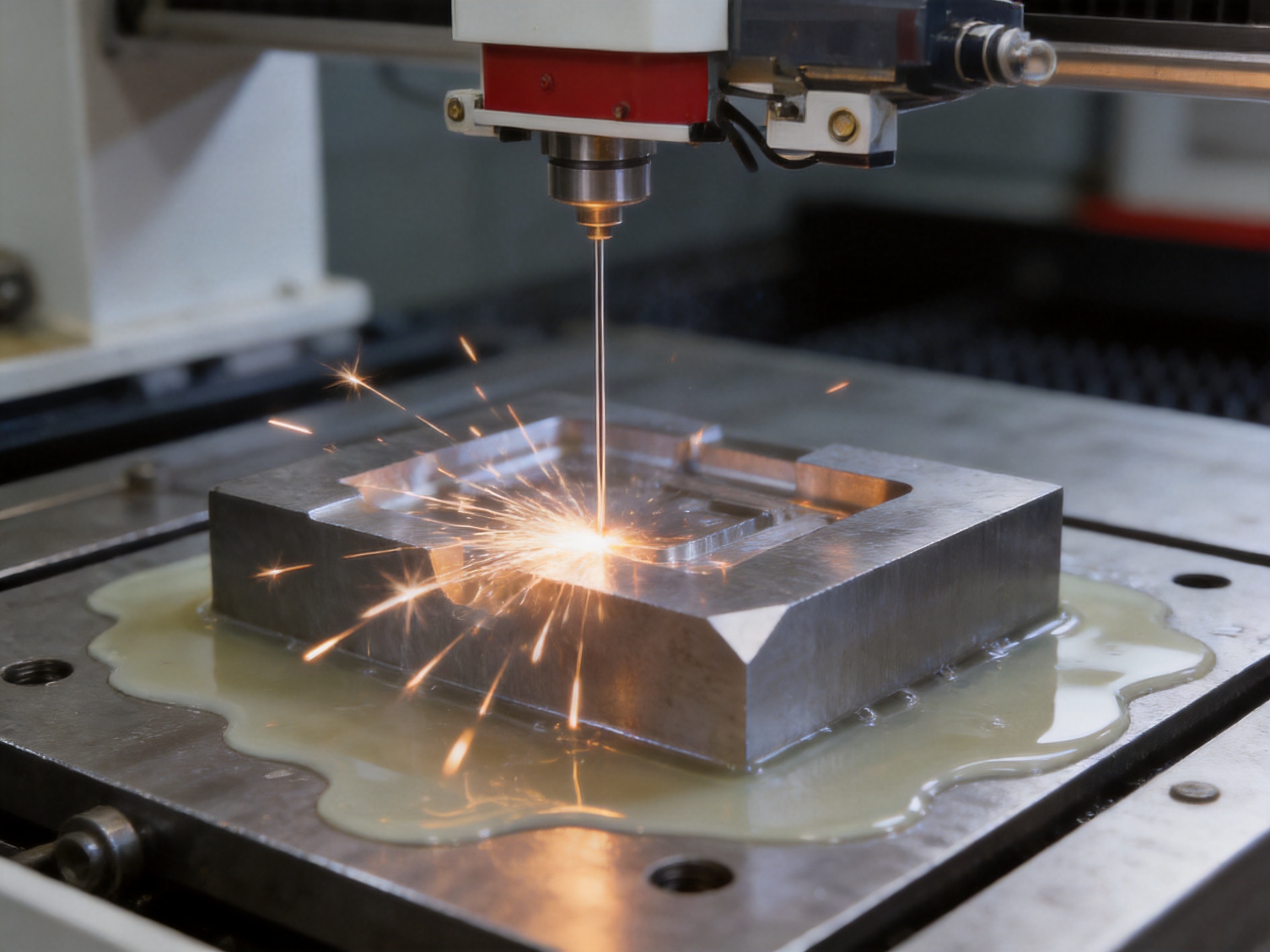
The discharge control system is the heart of a wire EDM machine. During machining, electrical pulses create controlled sparks between the wire electrode and the workpiece. These sparks remove material by melting and vaporization at microscopic points. The quality of discharge control determines cutting speed, surface finish, wire wear, stability, and dimensional accuracy.
The DK-7735 is equipped with an advanced digital pulse power supply designed to adjust discharge parameters according to material thickness and material characteristics. This helps the machine maintain stable cutting conditions in different applications. For example, cutting thick steel requires different pulse behavior than cutting thin copper or aluminum. A responsive control system helps operators obtain better results with less trial and error.
Stable discharge control also reduces wire breakage. Wire breakage interrupts production, wastes time, and may affect workpiece quality. In high-volume machining, frequent wire breakage can significantly reduce overall efficiency. By maintaining a more stable discharge gap and optimizing pulse output, the DK-7735 supports smoother machining and better productivity.
Another benefit of improved discharge control is surface quality. Excessively aggressive discharge may increase speed but leave rough surfaces or unstable kerf geometry. Conservative parameters may improve finish but reduce productivity. The DK-7735 is designed to support a useful balance between speed and surface finish, helping manufacturers meet production requirements without unnecessary compromise.
For operators, digital control can simplify parameter selection. Instead of depending only on manual experience, the control system can assist in adjusting cutting conditions. This is valuable for workshops that process varied materials and part thicknesses. It reduces dependency on a single highly experienced operator and makes production more consistent.
Workpiece Adaptability and Material Range
The DK-7735 can process a variety of conductive materials, including steel, stainless steel, aluminum, and copper. This broad material adaptability makes it useful across multiple industries. Because wire EDM removes material through electrical discharge rather than mechanical cutting, it is especially effective for hard materials and complex shapes that may be difficult to machine by conventional methods.
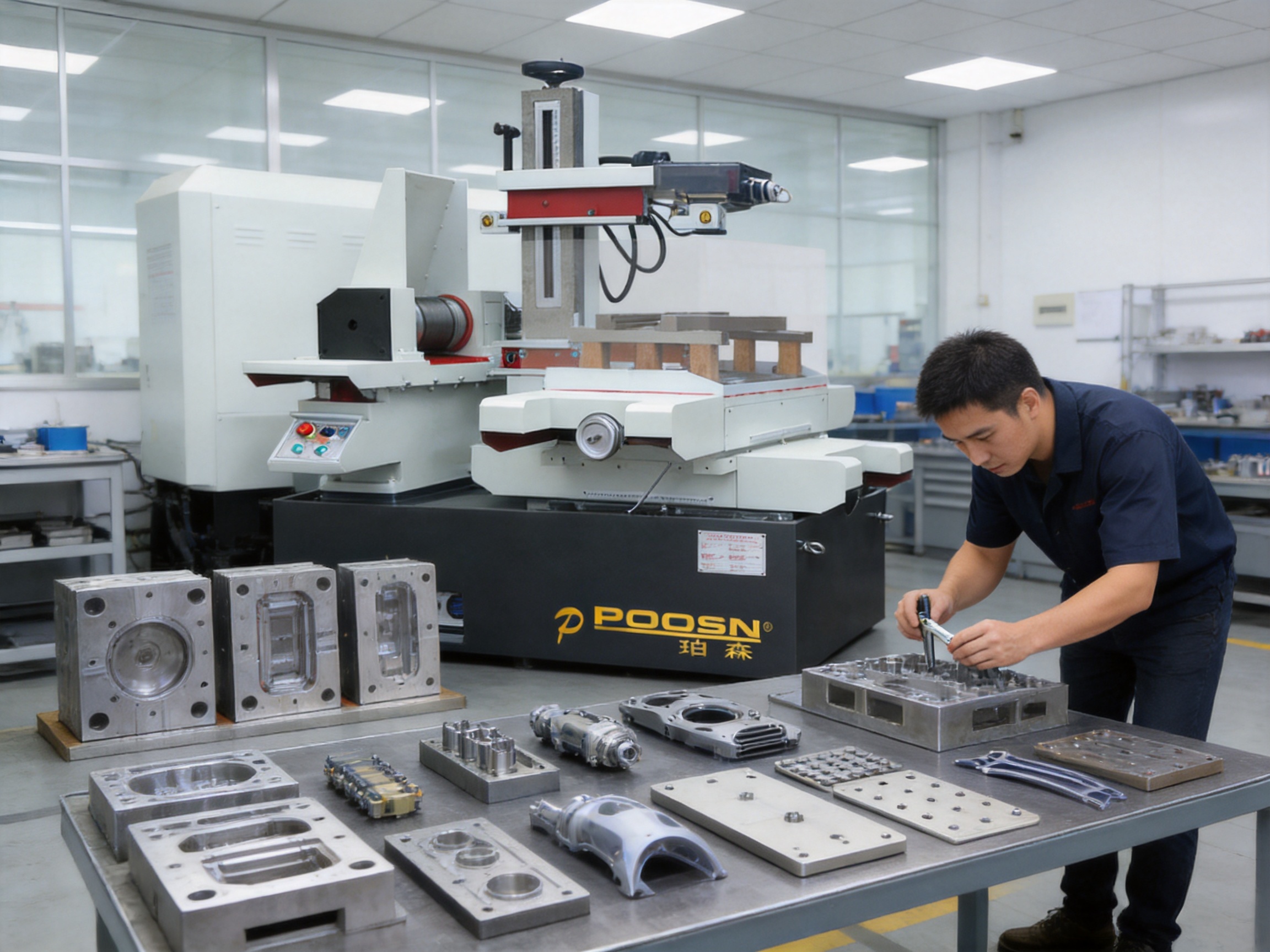
In mold manufacturing, the machine can cut die plates, inserts, punches, cavities, sliders, and precision components. Mold parts often require high dimensional accuracy, sharp corners, and intricate geometry. The DK-7735 supports these requirements through its four-axis control and stable cutting system.
In automotive manufacturing, the machine can be used for precision parts, tooling components, templates, and small-batch or batch production items. Automotive suppliers often require repeatability, cost control, and delivery speed. The DK-7735’s efficiency and load capacity help meet these demands.
In aerospace-related processing, the machine can contribute to the machining of precision conductive components, tooling, and specialized parts. Aerospace manufacturing typically emphasizes accuracy, process control, and material reliability. While each aerospace application requires proper process validation, the DK-7735 provides a capable platform for precision wire cutting tasks.
In precision machinery and hardware manufacturing, the machine can cut gears, plates, mechanical forms, fixtures, jigs, and special-shaped parts. Its 350 by 450 millimeter travel range is large enough for many industrial parts while keeping the machine efficient and manageable for everyday use.
The maximum cutting thickness of 450 millimeters expands its adaptability to thicker materials. This is especially useful for mold shops that process tall inserts or thick plates. Many smaller wire EDM machines may struggle with this type of workpiece due to limited height capacity, weaker structure, or unstable wire behavior. The DK-7735 is better suited for medium-thickness and thick-workpiece applications.
Production Efficiency and Cost-Effectiveness
Manufacturers must evaluate equipment not only by purchase price but also by total operating value. A lower-cost machine may become expensive if it produces frequent scrap, requires constant adjustment, cuts slowly, or lacks service support. The DK-7735 offers cost-effectiveness through efficiency, stability, load capacity, and broad application coverage.
Its high cutting efficiency reduces per-part machining time. When a workshop processes many similar components, time savings directly influence production cost. Shorter cycle times allow more parts to be completed per shift, increasing equipment utilization and improving delivery performance.
The 300-kilogram load capacity also improves cost-effectiveness because users can process heavier workpieces without outsourcing or investing in a larger machine prematurely. A machine that handles a wider range of jobs gives the workshop greater flexibility. This flexibility can help attract more orders and reduce production planning limitations.
Four-axis cutting capability adds further value. Complex parts that require taper cutting or different upper and lower contours can be machined more directly. This reduces manual intervention and secondary setup. Every additional setup introduces time, cost, and error risk. By completing more work in one controlled process, the DK-7735 improves both efficiency and quality.
Maintenance accessibility also influences long-term cost. The machine is designed with practical maintenance points, allowing operators to inspect lubrication, clean the working area, maintain fluid circulation, and perform routine care. Proper maintenance extends the life of moving components and helps preserve accuracy.
For mass production, the DK-7735 is especially valuable because stability over repeated cycles matters more than one-time cutting performance. A machine used for batch production must deliver consistent results from the first part to the last. The DK-7735’s structural rigidity, pulse control, and standardized manufacturing help support this requirement.
Operator-Friendly Control and Practical Use
A wire EDM machine must be technically capable, but it must also be practical for operators. The DK-7735 is equipped with an intuitive control system that allows operators to configure cutting parameters, programming settings, and machining operations with greater convenience. The use of a touchscreen or user-friendly interface helps simplify the transition from drawing to machining.
In many workshops, operators handle multiple machines or part types during a shift. Clear controls reduce setup errors and shorten training time. A complicated system can slow production even if the machine itself is capable. The DK-7735’s operating design supports productivity by making routine tasks more straightforward.
The optional control cabinet selection also improves practicality. Some users prefer a desktop cabinet for compact arrangement, while others prefer a vertical cabinet for standing operation and shop-floor visibility. By offering both standard and optional cabinet styles, the manufacturer gives customers more choice in how they organize their production environment.
Safety and cleanliness are also important. The machine’s enclosure design helps protect operators and reduce splashing of working fluid. A cleaner working environment improves operator comfort, reduces maintenance effort, and supports a more professional workshop layout. In production plants where multiple machines operate continuously, fluid control and cleanliness can significantly affect daily management.
The intelligent control system can automatically adjust cutting parameters according to workpiece requirements. This capability helps improve machining consistency and reduces the burden on operators when switching between materials or thicknesses. While skilled operation remains important, intelligent assistance improves repeatability and production efficiency.
Applications in Mold Manufacturing
Mold manufacturing is one of the most important application areas for the DK-7735. Modern molds require high precision, complex profiles, and excellent repeatability. Wire EDM is widely used to produce die components, punches, cavities, inserts, stripper plates, and high-precision mold details. The DK-7735 provides the capacity and accuracy needed for many of these tasks.
For high-precision mold processing, the machine’s four-axis linkage enables taper cutting and profile compensation. This is useful for stamping dies, extrusion tooling, plastic mold components, and special forming tools. The ability to cut complex shapes directly from hardened or difficult-to-machine materials gives mold makers greater process flexibility.
The machine’s 450-millimeter maximum cutting thickness is advantageous for large mold inserts and thick die plates. Mold shops often need to process components that are too thick for smaller equipment. The DK-7735 offers a practical solution without requiring the larger footprint and investment of extra-large models.
Surface quality is also important in mold production. With optimal surface roughness reaching Ra less than or equal to 2.5 micrometers, the DK-7735 can provide clean cut surfaces suitable for many mold components. Depending on the final application, additional polishing or finishing may still be used, but the machine helps reduce unnecessary post-processing.
Repeatability is especially valuable for mold makers producing matched sets of components. When punches and die openings must align precisely, inconsistent cutting creates assembly problems. The DK-7735’s stable structure and accuracy testing help support consistent production of matching parts.
Applications in Automotive Components
The automotive industry requires efficient production of accurate components, tooling, and fixtures. Suppliers often face strict delivery schedules and competitive cost pressure. The DK-7735 supports automotive-related manufacturing by offering efficient wire cutting for conductive parts and tooling elements.
Automotive tooling often includes complex profiles, die components, fixture plates, forming tools, and inspection tools. Many of these parts require high accuracy and repeatability. The DK-7735’s four-axis linkage and stable worktable movement help process these components efficiently.
For batch production, the machine’s cutting efficiency is a key benefit. When multiple parts must be produced repeatedly, a faster and stable wire EDM machine reduces production time. The maximum cutting efficiency of up to 16,000 square millimeters per hour helps automotive suppliers increase capacity while controlling cost.
The 300-kilogram worktable load allows machining of medium-sized automotive tooling components. This capacity is useful for die blocks, plates, and specialized fixtures. A machine with lower loading capacity may require workpiece redesign or outsourcing, while the DK-7735 provides more direct processing capability.
Automotive manufacturing also values consistency. A component that meets tolerance once is not enough; the process must continue to meet tolerance across repeated production. The DK-7735’s mechanical rigidity, pulse control, and standardized inspection support stable production performance.
Applications in Aerospace and Precision Machinery
Aerospace and precision machinery applications often involve complex conductive materials, strict dimensional requirements, and specialized geometries. While every aerospace part must be evaluated according to its own process standards, wire EDM is widely valued for producing accurate contours in difficult-to-machine materials. The DK-7735 provides a capable platform for such precision cutting tasks.
In aerospace-related workshops, the machine can be used for tooling, fixtures, precision plates, prototypes, and selected conductive components. Its 450-millimeter cutting thickness and four-axis linkage provide useful flexibility for complex part requirements. The stable discharge system helps maintain controlled cutting conditions for demanding materials.
Precision machinery manufacturers can use the DK-7735 for gears, machine components, special profiles, jigs, fixtures, and production parts. The machine’s ability to cut intricate shapes without heavy mechanical force helps preserve delicate features and thin sections. This is useful when producing small slots, internal profiles, or complex contours that would be difficult with conventional tools.
The machine also supports high-volume production in precision machinery sectors. Its efficiency, worktable size, and load capacity allow users to process multiple jobs or repeated parts. For workshops serving diverse industries, this versatility improves equipment utilization and return on investment.
Because the DK-7735 can handle steel, stainless steel, aluminum, copper, and other conductive materials, it is suitable for many precision manufacturing environments. Operators can adapt machining parameters to match material and thickness requirements, making the machine a flexible asset in mixed-production workshops.
Comparison With Other Models in the Same Series
The DK-7735 fits between smaller and larger models in the DK-77 high-speed WEDM product range. This position makes it a practical choice for customers who need more capacity than the DK-7725 but do not require the larger travel and load capacity of DK-7745 or DK-7745F models.
The DK-7725 is suitable for small and medium-sized parts, precision mold processing, and small-batch production. It offers a smaller worktable and lower load capacity. For users mainly processing compact workpieces, it may be sufficient. However, when larger parts or heavier workpieces are involved, the DK-7735 becomes more appropriate.
The DK-7735 offers a 500 by 750 millimeter worktable, 350 by 450 millimeter travel, and 300-kilogram load capacity. This makes it suitable for medium-sized components and mold processing requiring a larger workbench. It provides a strong balance of size, performance, and cost.
The DK-7745 and DK-7745F provide larger worktable dimensions and higher load capacities. These models are suitable for larger parts, high-precision molds, aerospace components, and heavy workpieces. However, not every workshop needs that level of capacity. Selecting too large a machine may increase floor space use and investment cost unnecessarily.
The DK-7735 is therefore a strategic middle choice. It gives users enough capacity for many demanding jobs while maintaining a manageable machine size and investment level. For workshops expanding from smaller wire EDM equipment, it represents a practical upgrade path.
Why Company Strength Matters When Choosing Wire EDM Equipment
Choosing a wire EDM machine is not only a technical decision; it is also a decision about supplier capability. Equipment reliability depends on design, manufacturing process, quality control, service support, spare parts availability, and long-term technical experience. Taizhou Xinchengyang Machinery Manufacturing Co., Ltd. brings specialized EDM experience to the DK-7735.
The company has years of experience in the research, development, and production of electrical discharge machining, special processing technologies, and related equipment. Its main product lines include PS-C and DK77-BC series medium-speed wire-cutting EDM machines, DK77-A and DK77-B series high-speed wire-cutting EDM machines, and DK77-D series large-taper wire-cutting EDM machines. This broad product coverage demonstrates an understanding of different user requirements.
The company follows the principle of quality first and customer supreme. This principle is reflected in strict manufacturing according to national standards and positioning accuracy testing for each machine tool. In the machine tool industry, consistent inspection is essential because small geometric errors can cause large machining problems over time.
Its development history also reflects long-term commitment to EDM technology. Since 1999, the company has specialized in electrical discharge wire cutting. The POOSN brand originated in 2003. In 2017, Taizhou Xinchengyang Machinery Manufacturing Co., Ltd. was established with a registered capital of 60 million yuan and built its own factory. In 2021, it was recognized as a High-Tech Enterprise in Taizhou. These milestones support confidence in the company’s technical foundation and market presence.
The company’s products are sold throughout China, with selected models exported to Southeast Asia, West Asia, Europe, and the Americas. This market reach indicates that the machines have been applied in different manufacturing environments. For customers, international and domestic usage experience can be an important signal of product adaptability.
Customization and OEM/ODM Support
Different manufacturers have different workpiece sizes, materials, accuracy requirements, and workshop conditions. The DK-7735 is supported by customization services that help customers align equipment performance with specific production needs. Taizhou Xinchengyang provides tailored solutions for workpieces with special specifications, helping ensure that machine configuration and customer requirements match effectively.
Customization may involve control cabinet selection, machine configuration consultation, application guidance, and model selection support. For customers who process unusual workpieces or operate in specialized industries, these services can reduce the risk of choosing an unsuitable machine.
The company also provides OEM and ODM support. This is valuable for distributors, machinery solution providers, and industrial customers seeking customized EDM equipment supply. A manufacturer with OEM/ODM capability must be able to manage design, production, inspection, packaging, and service coordination. Taizhou Xinchengyang’s manufacturing system supports these requirements.
For buyers, customization should not be seen only as optional modification. It is also a sign of supplier flexibility. A supplier that understands custom needs is more likely to provide practical recommendations and technical support. This is especially important for wire EDM applications because workpiece geometry, material, thickness, and production volume can vary greatly.
When selecting the DK-7735, customers can consult with the manufacturer about part size, material type, required accuracy, expected production volume, and available workshop space. This consultation helps determine whether the DK-7735 is the best choice or whether a smaller or larger model would be more suitable.
Reliability, Maintenance, and Long-Term Operation
The real quality of a wire EDM machine is proven not only during initial testing but also after thousands of hours of operation. The DK-7735 is designed for long-term reliability through a stable mechanical structure, practical maintenance access, and durable component selection. Proper maintenance helps preserve accuracy and reduce downtime.
Regular lubrication inspection is essential. Moving components such as guideways, screws, and bearings require proper lubrication to reduce wear and maintain smooth motion. Operators should follow the maintenance manual and inspect lubrication points regularly. A well-lubricated machine maintains better positioning accuracy and longer service life.
Working fluid quality is also important. Wire EDM relies on dielectric fluid circulation to remove debris, control temperature, and support stable discharge. Dirty or poorly maintained fluid can reduce cutting performance, increase wire breakage, and affect surface quality. The DK-7735’s circulation and filtration design helps maintain fluid condition, but operators must also perform routine cleaning and replacement as needed.
Wire transport components should be inspected for wear, alignment, and tension stability. Wire stability directly affects cutting accuracy. If guides, rollers, or tension elements are neglected, the machine may experience wire vibration or breakage. Regular inspection helps prevent these problems.
Environmental conditions also affect precision. The machine should be placed in a stable workshop environment, free from strong magnetic interference, excessive vibration, and extreme temperature variation. The floor should provide adequate load-bearing capacity and stable support. Good ventilation and a clean layout improve operator safety and machine performance.
By combining proper maintenance with the machine’s stable design, users can obtain reliable long-term performance. This long-term stability is one of the main reasons to choose a well-manufactured machine rather than a low-cost alternative with uncertain durability.
Service and Technical Support
After-sales support is a critical part of machine tool ownership. Even a well-built machine requires installation guidance, operator training, maintenance advice, spare parts support, and technical consultation. Taizhou Xinchengyang provides rapid response and professional technical support to help ensure stable equipment operation.
Technical support can help users optimize cutting parameters, troubleshoot abnormal discharge, improve surface quality, reduce wire breakage, and maintain accuracy. For new users of high-speed WEDM, this support can shorten the learning curve and improve productivity.
Service support also protects investment value. A machine that lacks supplier support may become difficult to maintain, especially if control components, mechanical parts, or software assistance are needed. By working with a specialized manufacturer, customers gain access to knowledge specific to the machine and its applications.
The company’s commitment is to guarantee the long-term effectiveness and reliability of every machine delivered. This service philosophy aligns with the needs of production users who cannot afford frequent downtime. In manufacturing, stable operation is often more valuable than small differences in purchase price.
Practical Buying Considerations
Before purchasing the DK-7735, customers should evaluate several key factors. First, they should confirm workpiece size. The machine offers a 500 by 750 millimeter worktable and 350 by 450 millimeter travel. If most workpieces fall within this range, the DK-7735 may be an excellent choice. If workpieces are consistently larger, a larger model may be more suitable.
Second, customers should consider workpiece weight. The DK-7735 supports a maximum worktable load of 300 kilograms. This is sufficient for many medium-sized molds and mechanical parts. If heavier components are common, the DK-7745, DK-7745F, or larger models may be considered.
Third, cutting thickness should be reviewed. The DK-7735 supports up to 450 millimeters of cutting thickness. This makes it suitable for thick plates and mold inserts. Users should compare this capacity with their current and future workpiece requirements.
Fourth, production volume matters. For mass production or frequent batch work, the machine’s maximum cutting efficiency of up to 16,000 square millimeters per hour is highly valuable. Users should also discuss control cabinet options and cutting parameter needs with the manufacturer.
Fifth, users should consider required taper cutting. If taper cutting, upper and lower profile cutting, or complex contour machining is required, the four-axis linkage design of the DK-7735 provides important capability. If only simple vertical profiles are needed, the machine still provides flexibility for future requirements.
Sixth, workshop conditions should be checked. The machine dimensions are 1650 by 1250 by 1830 millimeters, and the machine weight is 1100 kilograms. The installation area should provide sufficient space for operation, maintenance, fluid management, and safe movement around the machine.
Q&A Section
What is the main purpose of the DK-7735 CNC High-Speed Wire EDM Machine?
The DK-7735 is designed for precision cutting of conductive materials, especially medium-sized molds, mechanical parts, automotive components, tooling, and batch production workpieces. It provides four-axis linkage, strong load capacity, and high cutting efficiency for industrial manufacturing.
What is the worktable size of the DK-7735?
The worktable size is 500 by 750 millimeters. The X/Y travel size is 350 by 450 millimeters, which allows the machine to handle a wide range of medium-sized workpieces.
What is the maximum worktable load?
The maximum worktable load is 300 kilograms. This allows the machine to process medium and heavier workpieces, including mold components, steel plates, fixture blocks, and precision mechanical parts.
How fast can the DK-7735 cut?
The maximum cutting efficiency can reach 10,000 to 16,000 square millimeters per hour. Actual cutting efficiency depends on the control cabinet, workpiece material, thickness, wire condition, and selected machining parameters.
Does the machine support taper cutting?
Yes. The DK-7735 uses X, Y, U, and V-axis linkage control and supports a maximum cutting taper of plus or minus 6 degrees per 80 millimeters. This is useful for mold profiles, die clearance, and special contour machining.
What surface roughness can the machine achieve?
The optimal surface roughness can reach Ra less than or equal to 2.5 micrometers, making it suitable for many precision machining and mold manufacturing applications.
Which materials can be processed?
The DK-7735 can process conductive materials such as steel, stainless steel, aluminum, copper, and similar metals suitable for wire electrical discharge machining.
Is the DK-7735 suitable for mass production?
Yes. Its high cutting efficiency, stable mechanical structure, and 300-kilogram worktable load make it well suited for batch production and repeated machining tasks.
What control cabinet options are available?
The standard configuration includes the ZH-K68 desktop cabinet. The ZHZK-03 vertical cabinet is available as an optional configuration. Customers can choose according to workshop layout and operating preferences.
Why choose this machine instead of a lower-cost competitor?
The DK-7735 offers a stronger balance of rigidity, four-axis capability, cutting efficiency, load capacity, standardized manufacturing, and accuracy testing. Lower-cost machines may reduce initial investment but can create higher long-term costs through instability, slower cutting, more maintenance, and less reliable accuracy.
Conclusion: A Balanced Solution for Precision and Productivity
The DK-7735 CNC High-Speed Wire EDM Machine is a practical and capable solution for manufacturers that need precision cutting, efficient production, and reliable long-term operation. Its 500 by 750 millimeter worktable, 350 by 450 millimeter travel, 450-millimeter maximum cutting thickness, and 300-kilogram worktable load make it suitable for a broad range of medium-sized industrial applications.
Its four-axis linkage control expands machining possibilities by supporting taper cutting and complex contour processing. Its maximum cutting efficiency of up to 16,000 square millimeters per hour helps users improve productivity and reduce machining cost. Its stable cast iron structure, precision transmission system, digital pulse control, and standardized accuracy testing provide the foundation for reliable cutting performance.
Beyond the product itself, the manufacturing strength of Taizhou Xinchengyang Machinery Manufacturing Co., Ltd. adds important value. The company’s specialization in EDM equipment, advanced manufacturing processes, comprehensive inspection methods, customization support, and service commitment help customers obtain not just a machine, but a reliable production tool.
For mold makers, automotive suppliers, precision machinery manufacturers, aerospace-related workshops, and mass production facilities, the DK-7735 offers a strong combination of performance, flexibility, and cost-effectiveness. It is especially suitable for users who need more capability than small wire EDM machines can offer, while still seeking a compact and efficient solution for daily production.
In a competitive manufacturing environment, equipment choice directly affects product quality, delivery speed, and long-term profitability. The DK-7735 provides the stability, speed, and control required to help manufacturers meet modern precision machining challenges with confidence.
References
1. Industrial Wire Electrical Discharge Machining Principles and Applications, Manufacturing Technology Reference Series.
2. National Standard GB/T7926-2015, Accuracy Inspection Standards for Electrical Discharge Wire-Cutting Machine Tools.
3. Precision Machine Tool Design and Structural Stability, Mechanical Engineering Manufacturing Handbook.
4. Electrical Discharge Machining Process Optimization, Advanced Nontraditional Machining Methods.
5. Mold Manufacturing Technology and CNC Wire Cutting Applications, Tooling and Die Production Reference Manual.
6. Taizhou Xinchengyang Machinery Manufacturing Co., Ltd. Product and Technical Documentation for DK-77 Series High-Speed WEDM Machines.
Product: DK-7735 CNC High-Speed Wire EDM Machine (4-Axis, 300kg Load)
-
Phone
+86-0523-86268788 +86-13815960366 +86-13912191163Email
[email protected]Address
No. 366, Yusheng Road Jiulong Town, Hailing District Taizhou City, China
Copyright © Taizhou Xinchengyang Machinery Manufacturing Co., Ltd. All Rights Reserved.
Custom edm machine for sale
wholesale edm machine manufacturers
