

 English
 русский
 عربى
عربى

Lu Qianwen — Overseas Sales Manager
Home / Author / Lu Qianwen — Overseas Sales Manager / CNC High-Speed Wire EDM Machine for Heavy Precision Cutting
CNC High-Speed Wire EDM Machine for Heavy Precision Cutting
2026-07-08
The DK-7745F CNC high-speed wire EDM machine is designed for manufacturers that require a practical balance of cutting efficiency, precision stability, heavy-load capacity, and long-term production reliability. As a four-axis high-speed wire-cut electrical discharge machining system, it is especially suitable for precision mold manufacturing, aerospace parts, automotive components, heavy machinery parts, conductive metal profiles, and complex industrial workpieces that demand accurate contour cutting.
In modern manufacturing, the ability to process hard conductive materials without applying direct mechanical cutting force has become a major competitive advantage. Wire electrical discharge machining, commonly known as wire EDM or WEDM, removes material through controlled electrical discharge between a moving wire electrode and the workpiece. This method allows manufacturers to cut hardened steel, copper, aluminum, carbide, and other conductive metals with high dimensional consistency, narrow kerf width, and reduced mechanical deformation. The DK-7745F is developed for these requirements, offering a robust structure, four-axis linkage control, high cutting efficiency, and a worktable configuration suitable for large and heavy components.
Unlike conventional mechanical cutting machines that rely on tool pressure and cutting force, the DK-7745F uses electrical erosion to shape the workpiece. This makes it valuable for parts with complex profiles, fine internal corners, high hardness, or fragile geometric features. The machine is particularly useful where conventional milling, sawing, or grinding may cause tool wear, distortion, excessive clamping stress, or reduced repeatability. For manufacturers seeking an EDM machine for sale that can support industrial-scale production while maintaining cost control, the DK-7745F provides a dependable option.
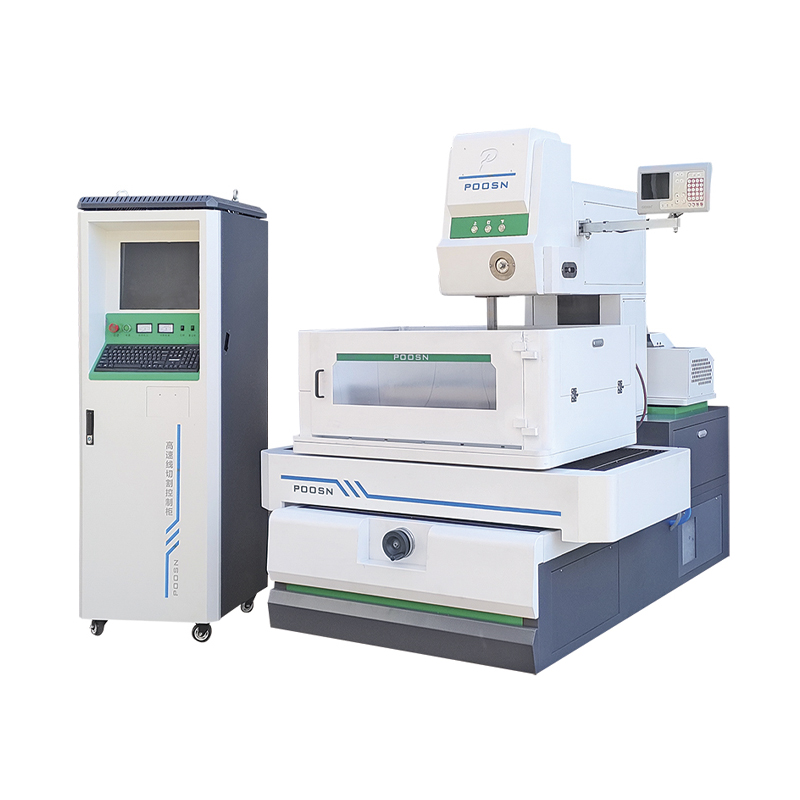
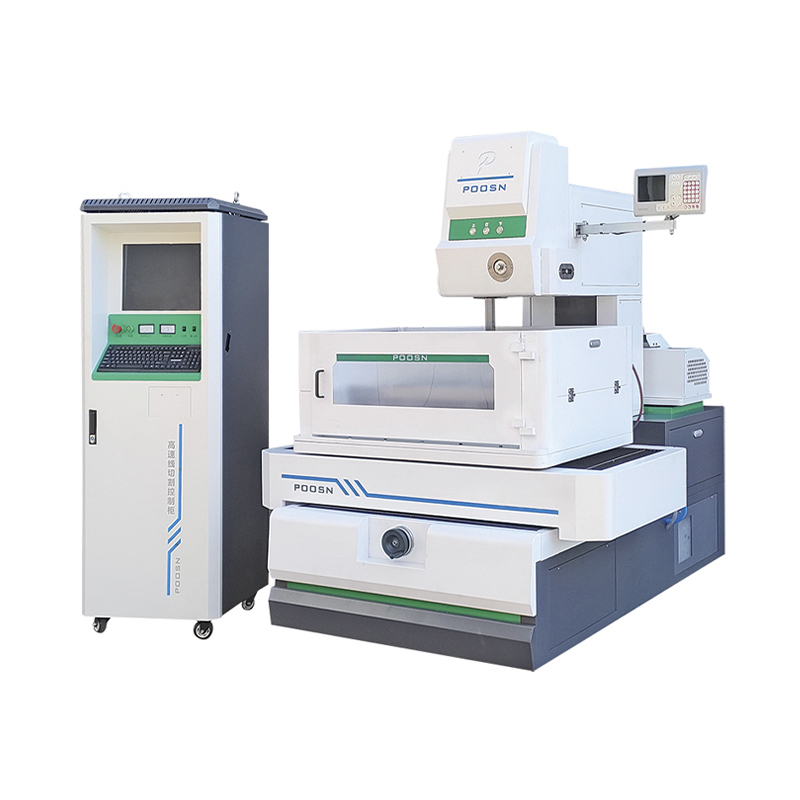
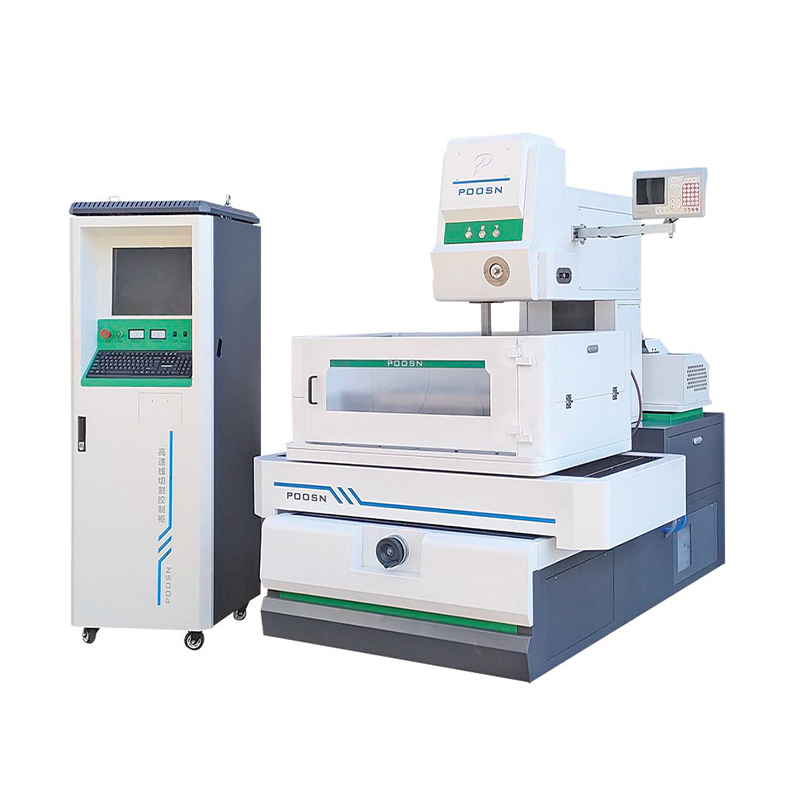
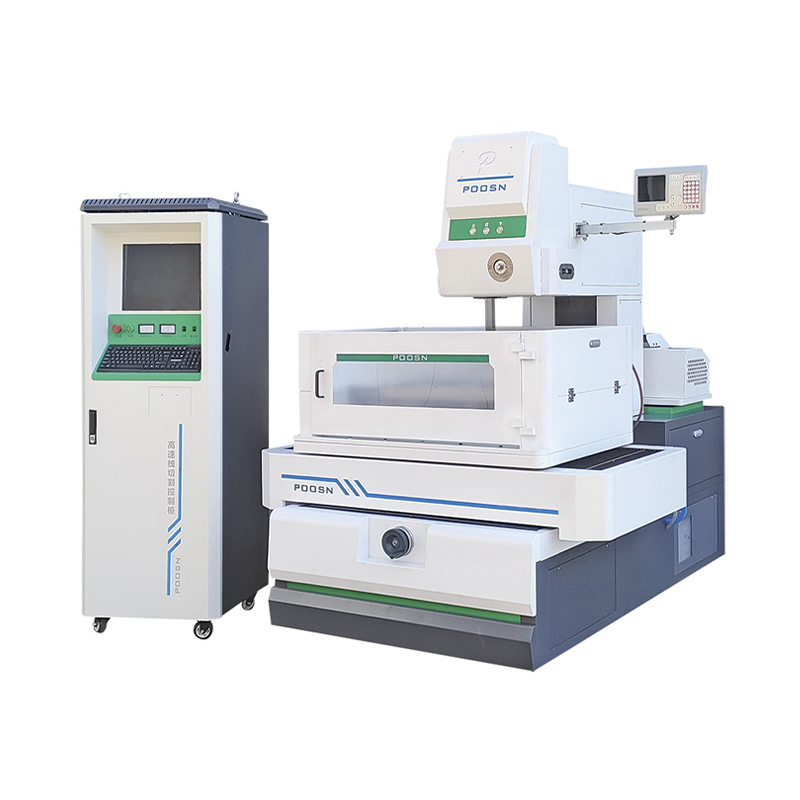
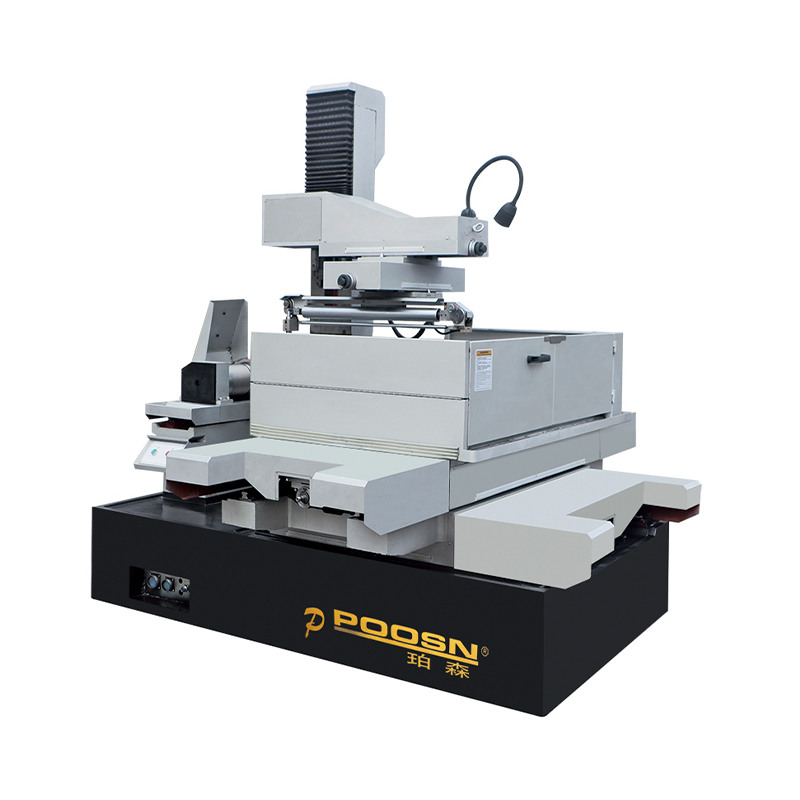
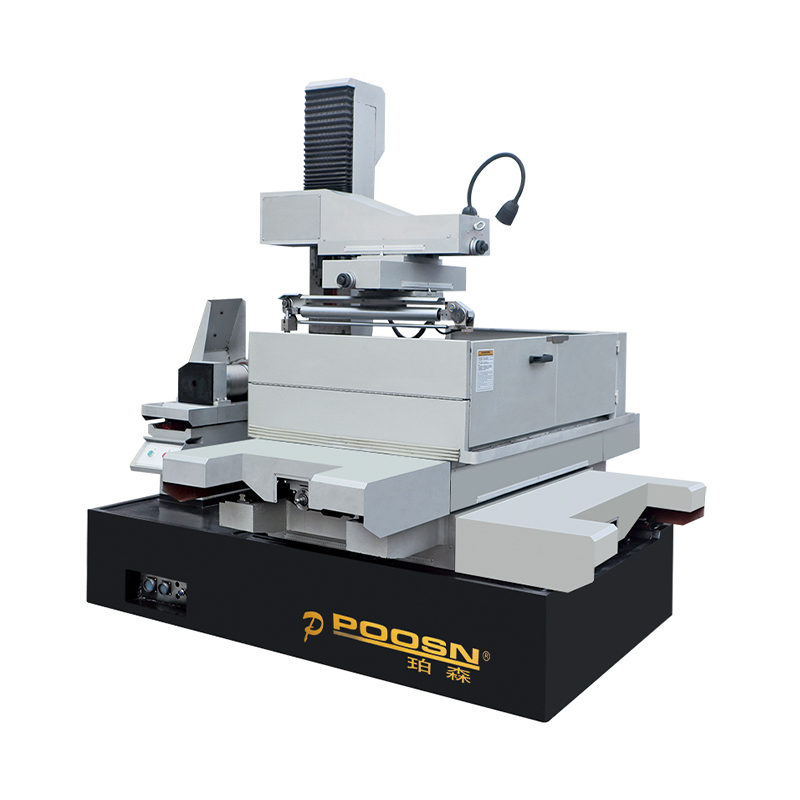
DK-7745F CNC High-Speed Wire EDM Machine (4-Axis, 500×700mm Travel)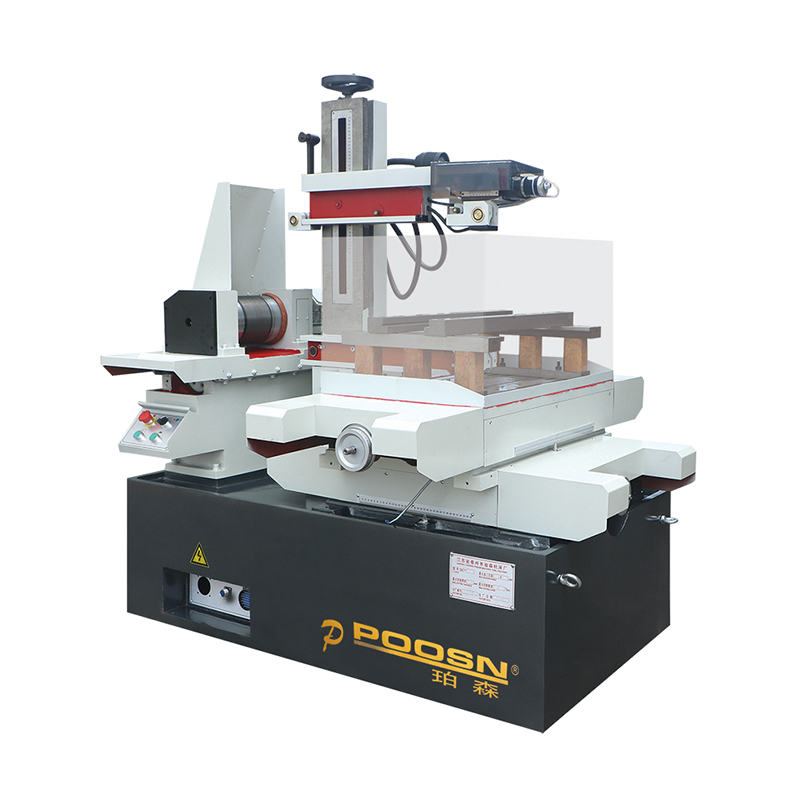
Content
- 1 Product Positioning and Application Value
- 2 Core Technical Specifications
- 3 Why High-Speed Wire EDM Matters in Precision Manufacturing
- 4 Structural Strength and Long-Term Stability
- 5 Four-Axis Linkage for Complex Cutting
- 6 High Cutting Efficiency and Cost Reduction
- 7 Surface Quality and Machining Accuracy
- 8 Wire Feeding, Cooling, and Circulation System
- 9 Control Cabinet Options and Operator Experience
- 10 Advantages Over Competing Machines
- 11 Manufacturing Strength Behind the Machine
- 12 Quality Control and Inspection Process
- 13 Materials and Workpieces Suitable for the DK-7745F
- 14 Customization Services for Special Production Needs
- 15 Automation and Production Line Integration
- 16 Service, Support, and Long-Term Reliability
- 17 Energy Efficiency and Sustainable Manufacturing
- 18 Model Selection Perspective
- 19 Practical Benefits for Factory Managers
- 20 Recommended Operating Considerations
- 21 Q&A Section
- 21.1 Q1: What type of manufacturer is the DK-7745F best suited for?
- 21.2 Q2: What is the worktable size and travel range of the DK-7745F?
- 21.3 Q3: What is the maximum worktable load?
- 21.4 Q4: How efficient is the cutting performance?
- 21.5 Q5: Does the machine support taper cutting?
- 21.6 Q6: What surface roughness can the machine achieve?
- 21.7 Q7: Is the DK-7745F difficult to operate?
- 21.8 Q8: What control cabinet options are available?
- 21.9 Q9: What materials can be processed?
- 21.10 Q10: How does the DK-7745F compare with smaller models?
- 21.11 Q11: Can the machine be integrated into automated production?
- 21.12 Q12: What support is provided after purchase?
- 22 Conclusion
- 23 References
- 24 Product: DK-7745F CNC High-Speed Wire EDM Machine (4-Axis, 500×700mm Travel)
Product Positioning and Application Value
The DK-7745F belongs to the DK-77 high-speed WEDM category and is positioned as a high-end model for large precision machining tasks. Its configuration is intended for users who need greater machining capacity than small and medium wire cutting machines can provide, but who also require a machine that remains economical, stable, and easy to operate. With a worktable size of 570×950 mm, X/Y travel of 450×650 mm, and a maximum worktable load of 500 kg, the machine is suitable for oversized molds, heavy-duty components, and complex profiles requiring reliable positioning.
One of the major strengths of the DK-7745F is its ability to support high-efficiency production. Depending on the selected CNC control cabinet and processing conditions, the machine can reach a maximum cutting efficiency of 10,000 to 16,000 mm²/h. This capability helps reduce cycle time, improve order delivery speed, and lower per-part machining costs. For factories engaged in batch mold production, mechanical component processing, or customized metal part manufacturing, these advantages directly support higher productivity and improved competitiveness.
The machine also supports four-axis linkage through X, Y, U, and V stepper-drive axes. This enables taper cutting and complex contour machining that cannot be completed efficiently by simple two-axis systems. Its maximum cutting taper reaches ±6°/80 mm, which is useful for die components, mold inserts, slanted profiles, and special tooling structures. By combining high-speed wire movement, accurate control, and a stable mechanical platform, the DK-7745F offers a practical solution for companies upgrading from smaller or less capable EDM equipment.
Core Technical Specifications
The following table summarizes the primary specifications of the DK-7745F high-speed WEDM machine. Actual performance may depend on workpiece material, thickness, coolant condition, wire condition, programming strategy, and control cabinet configuration.
| Item | DK-7745F Specification | Manufacturing Value |
| Worktable Size | 570×950 mm | Supports large molds and oversized precision parts |
| X/Y Travel Size | 450×650 mm | Provides a wide working range for industrial components |
| Maximum Cutting Thickness | 450 mm | Suitable for thick plates, mold blocks, and heavy workpieces |
| Maximum Cutting Taper | ±6°/80 mm | Enables tapered dies, angled profiles, and complex geometries |
| Maximum Cutting Efficiency | 10,000–16,000 mm²/h | Improves productivity in mass production and batch processing |
| Optimal Surface Roughness | Ra≤2.5 μm | Supports quality surface requirements in precision machining |
| Drive Type | X, Y, U, V-axis stepper drive with four-axis linkage | Allows accurate contour control and taper processing |
| Control Cabinet | Standard ZH-K68 desktop cabinet; optional ZHZK-03 vertical cabinet | Offers flexible operation and configuration choices |
| Power Supply | 3N 380V±10 | Matches standard industrial power environments |
| Maximum Worktable Load | 500 kg | Handles heavy-duty machining tasks with confidence |
| Machine Weight | 1350 kg | Provides structural mass for stable cutting |
| Machine Dimensions | 1825×1550×1830 mm | Balances large working capacity with manageable footprint |
Why High-Speed Wire EDM Matters in Precision Manufacturing
High-speed wire EDM is widely used because it solves problems that are difficult for conventional cutting methods. When a part is hardened, very thin, geometrically complex, or made from material that rapidly wears cutting tools, wire EDM becomes a reliable alternative. The process does not depend on direct physical cutting contact, so it can machine hard conductive materials with less mechanical stress. This is especially important in mold manufacturing, die making, precision machinery, and aerospace component production.
In mold and die production, dimensional stability is not optional. Small errors in a cavity, punch, insert, or profile can affect product quality, mold life, and assembly accuracy. The DK-7745F addresses this need through its rigid structure, high-precision transmission components, four-axis control capability, and stable cutting performance. Its machining accuracy conforms to GB/T7926-2015, reflecting a manufacturing standard appropriate for professional EDM equipment.
In aerospace and automotive applications, workpieces may include high-strength steel, alloy parts, tooling plates, brackets, and custom components requiring consistent geometry. The DK-7745F provides the travel range and load capacity required for many such parts. Because wire EDM can cut narrow slots, sharp corners, and intricate profiles without excessive tool force, it helps manufacturers produce parts that would otherwise require multiple machining steps or specialized tools.
For heavy machinery and industrial tooling, workpiece size and weight often become major limitations. A machine with insufficient load capacity may suffer from reduced stability, positioning issues, or increased wear. The DK-7745F is designed with a 500 kg worktable load capacity, allowing manufacturers to process heavier materials while maintaining confidence in machine stability. This makes it suitable for heavy-duty components, large plates, and mold bases that require precise cutting.
Structural Strength and Long-Term Stability
A wire EDM machine must do more than cut quickly. It must remain stable during long processing cycles, resist vibration, preserve geometric accuracy, and withstand changing workshop conditions. The DK-7745F is built around a high-rigidity machine structure intended to support heavy workpieces and continuous production. Its mechanical layout helps reduce unwanted vibration during cutting, which contributes to better surface finish and more consistent dimensional results.
The machine base is designed to maintain rigidity under load. In high-speed EDM, stable machine geometry is essential because even small deviations can influence cutting accuracy, taper consistency, and repeatability. The DK-7745F uses a solid structural design with precision guide support to help maintain accuracy during extended operation. For manufacturers operating multiple shifts, this stability reduces the risk of rework, scrap, and unplanned downtime.
Taizhou Xinchengyang Machinery Manufacturing Co., Ltd. emphasizes strict manufacturing and inspection procedures. Each machine tool is produced according to national standards, and positioning accuracy testing is performed to verify output quality. This focus on process control is important because EDM equipment depends on the alignment and coordination of multiple subsystems, including the mechanical frame, guide rails, ball screws, wire feed mechanism, pulse power supply, control cabinet, and cooling circulation system.
The DK-7745F also benefits from the company’s long experience in electrical discharge machining and special processing equipment. Since the company has specialized in electrical discharge wire cutting since 1999, its manufacturing approach reflects years of accumulated engineering knowledge. This experience helps ensure that the machine is not only designed for specifications on paper but also prepared for real workshop challenges such as continuous operation, material variety, operator differences, and maintenance demands.
Four-Axis Linkage for Complex Cutting
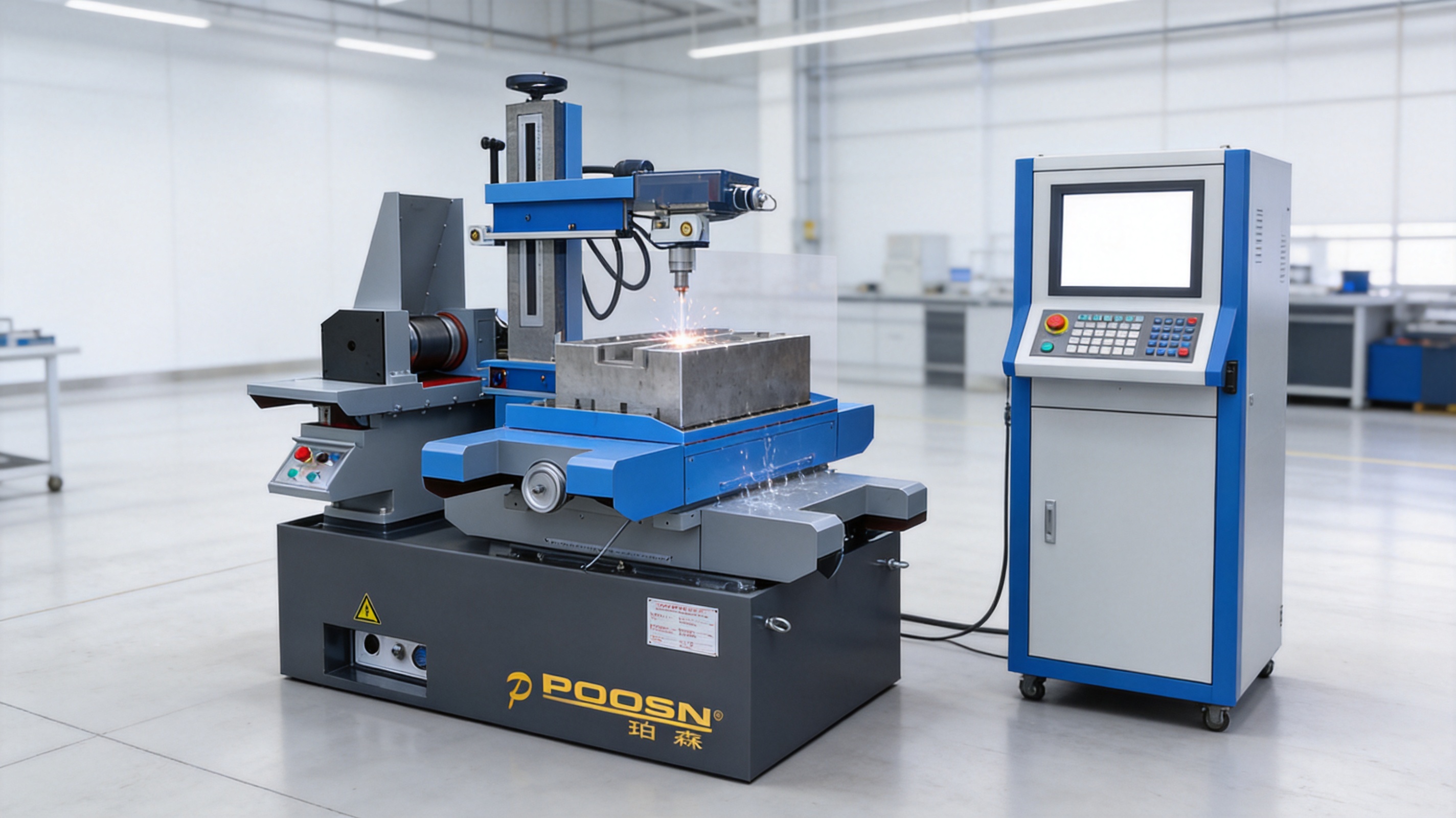
The DK-7745F uses X, Y, U, and V-axis stepper drive control with four-axis linkage. In practical terms, this means the machine can perform more than simple straight vertical cuts. It can create taper profiles and coordinate upper and lower wire guide movement to produce angled surfaces. This capability is valuable in mold manufacturing, stamping die production, extrusion tooling, and customized mechanical parts.
Compared with basic two-axis WEDM machines, a four-axis linkage machine gives manufacturers more process flexibility. Taper cutting is often needed for clearance angles, draft angles, special die openings, and components that must fit or release properly in assembly. The DK-7745F’s maximum cutting taper of ±6°/80 mm allows operators to process many common taper requirements without transferring the workpiece to another machine.
This integrated capability helps reduce setup time. When a part can be completed in fewer operations, the risk of cumulative positioning error is reduced. Operators spend less time reclamping, realigning, and transferring parts between machines. For factories producing precision dies or complex part profiles, four-axis linkage can improve consistency and reduce total production cost.
The control system is also designed for practical usability. The machine supports intelligent control functions and an intuitive operating interface, helping operators set machining parameters, interpret programs, and complete cutting tasks with less difficulty. In production environments where skilled labor availability can be a challenge, reducing the learning curve is an important advantage.
High Cutting Efficiency and Cost Reduction
The DK-7745F can achieve a cutting efficiency of 10,000 to 16,000 mm²/h under suitable conditions and with compatible CNC cabinet configuration. This performance level is one of its key advantages for manufacturers seeking higher output. Faster cutting speed directly reduces machining time, but the real value goes beyond speed alone. Higher efficiency means better machine utilization, shorter production cycles, improved delivery capability, and lower labor cost per component.
In competitive manufacturing, order lead time can determine whether a supplier wins or loses business. A wire EDM machine that processes parts faster while maintaining acceptable accuracy and surface roughness gives a factory more scheduling flexibility. The DK-7745F helps users manage urgent mold repair tasks, batch component production, and large workpiece processing with improved responsiveness.
Cost reduction also comes from stable operation. A machine that cuts quickly but frequently breaks wire, loses accuracy, or requires excessive maintenance may not truly reduce costs. The DK-7745F addresses this concern through optimized pulse power technology, stable wire feeding, a cooling and filtration circulation system, and a strong mechanical base. These features help maintain reliable discharge conditions and reduce interruptions caused by unstable machining.
The pulse power supply plays a central role in WEDM performance. It controls discharge energy, influencing cutting speed, surface condition, wire consumption, and machining stability. The DK-7745F’s optimized pulse power technology is designed to adapt discharge energy to workpiece thickness and material characteristics. This helps balance productivity with wire life and surface quality, allowing manufacturers to reduce consumable costs while preserving process reliability.
Surface Quality and Machining Accuracy
Surface roughness is a critical concern in EDM. The DK-7745F can achieve optimal surface roughness of Ra≤2.5 μm under suitable conditions. This level supports many industrial cutting tasks, especially those involving mold components, mechanical profiles, tooling plates, and precision parts that require dependable surface quality after cutting. While some parts may still require secondary finishing depending on final application, the machine’s surface performance helps reduce finishing workload.
Accuracy is supported by the machine’s mechanical structure, guide rail quality, control system, and transmission components. High-precision ball screws and guide systems contribute to repeatable movement. The rigid machine body helps control vibration and deformation. The four-axis control system coordinates movement for both normal and taper cutting. Together, these elements provide the foundation for consistent machining results.
The machine’s compliance with GB/T7926-2015 reflects adherence to established machine accuracy standards. For users, this matters because standardized accuracy evaluation provides a clearer basis for equipment acceptance and quality control. Taizhou Xinchengyang Machinery Manufacturing Co., Ltd. also performs positioning accuracy testing before machine delivery, reinforcing its commitment to dependable equipment quality.
In practical manufacturing, accuracy is not determined by a single specification. It depends on machine condition, workpiece clamping, operator skill, wire tension, fluid cleanliness, electrical parameters, thermal stability, and programming quality. The DK-7745F provides a strong platform by combining mechanical rigidity, control precision, and stable discharge systems, giving users the ability to achieve reliable results when proper processing methods are applied.
Wire Feeding, Cooling, and Circulation System
Stable wire movement is essential for high-speed wire EDM. During machining, the molybdenum wire moves continuously through the cutting zone while electrical discharges remove material from the workpiece. If wire tension is unstable, cutting accuracy, surface quality, and wire life may be affected. The DK-7745F incorporates an efficient wire feeding and circulation system designed to maintain stable wire movement during high-speed operation.
A balanced wire-feeding mechanism helps keep wire tension consistent. This is important when cutting thick materials or complex paths, where discharge conditions may vary. Stable wire tension reduces the risk of wire vibration, improves contour control, and supports more predictable machining outcomes. It also helps reduce wire breakage, which can otherwise cause delays and require operator intervention.
The cooling, filtration, and circulation system also plays a major role. During EDM cutting, erosion particles and heat are generated in the discharge gap. If these byproducts are not removed effectively, secondary discharge, unstable cutting, and reduced surface quality may occur. The DK-7745F’s circulation system helps flush the cutting area, remove debris, and maintain a cleaner working environment. This contributes to stable discharge performance and improved machining reliability.
For manufacturers running long cutting programs, these details are especially important. A large mold or thick workpiece may require extended processing time. The machine must maintain wire stability, fluid condition, and discharge control throughout the cycle. By integrating wire feed stability with effective cooling and filtration, the DK-7745F supports continuous machining with fewer interruptions.
Control Cabinet Options and Operator Experience
The DK-7745F is available with a standard ZH-K68 desktop cabinet and an optional ZHZK-03 vertical cabinet. This gives users flexibility based on workshop layout, operator preference, and production requirements. The control cabinet is the command center of the machine, managing motion control, cutting parameters, program execution, and user interaction.
A practical CNC interface is important because many factories need equipment that can be operated efficiently by technicians with varying levels of experience. The DK-7745F is equipped with an intuitive operating interface and intelligent control system designed to simplify operation. This reduces the learning curve and helps shorten the time between installation and productive use.
Compatibility with common CAD/CAM workflows is another advantage. In precision manufacturing, engineering departments often generate part profiles digitally, and shop-floor equipment must interpret these programs reliably. A control system that supports mainstream programming practices helps improve collaboration between design, programming, and production teams. This reduces manual input errors and improves process efficiency.
The intelligent control functions can also support parameter management. When operators can save and reuse proven processing settings, repeat jobs become easier to execute. This is useful for factories that produce recurring mold components, standard mechanical profiles, or repeat batch orders. Over time, a well-managed parameter library becomes a valuable production asset.
Advantages Over Competing Machines
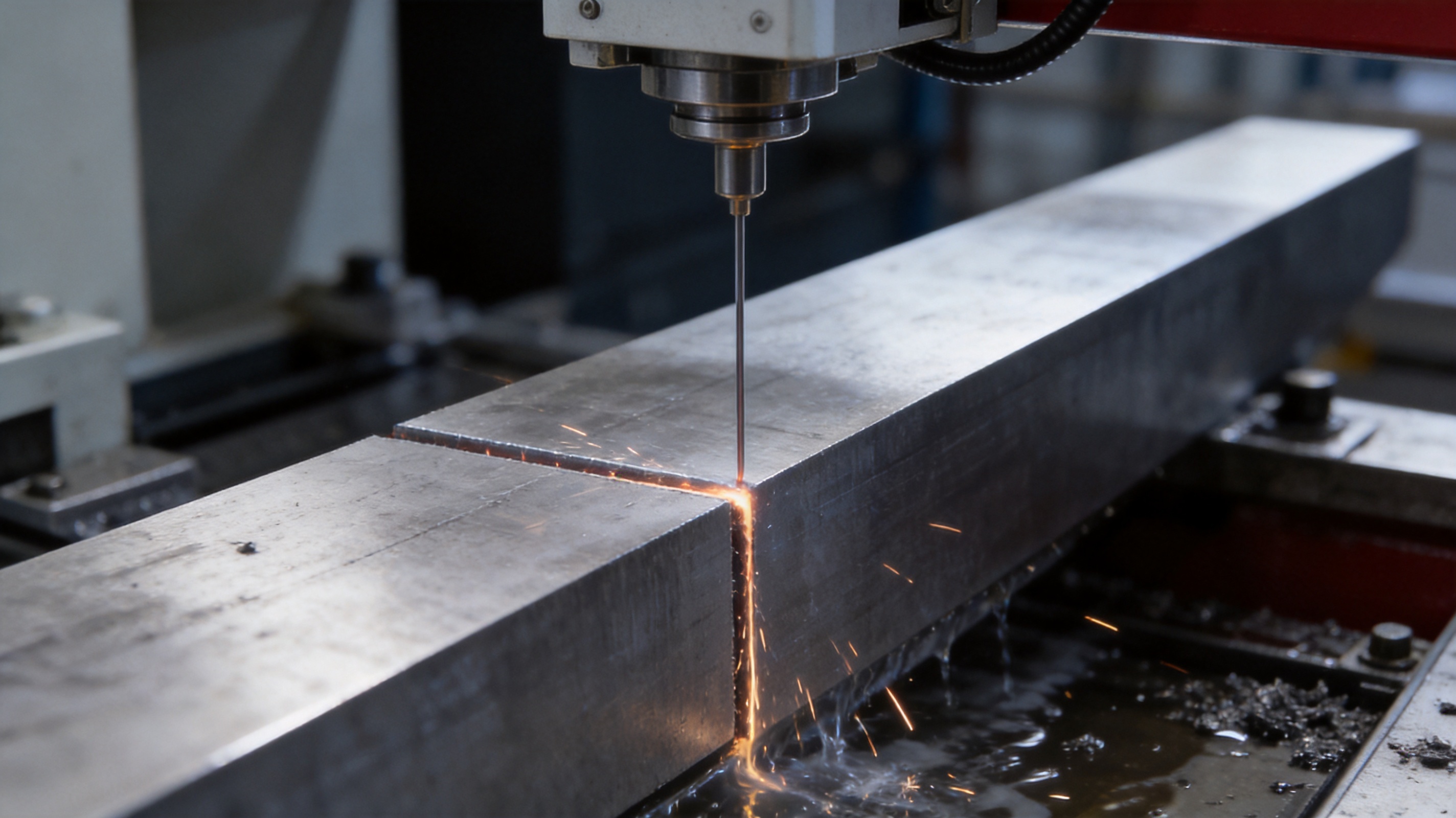
The DK-7745F offers several advantages over competing high-speed WEDM machines in its class. First, it combines a large 570×950 mm worktable with 450×650 mm travel and 500 kg load capacity. This makes it suitable for users who need to process larger and heavier workpieces without immediately moving to much larger and more expensive machines. The machine occupies a practical position between compact EDM units and oversized custom systems.
Second, the machine provides high cutting efficiency while maintaining a focus on cost-effectiveness. Some competing machines may offer high speed but require higher maintenance costs, more specialized consumables, or more complex operator training. The DK-7745F is designed to increase production output while keeping operation practical and maintenance manageable. Its optimized pulse power technology helps reduce unnecessary wire consumption, and its modular electrical design supports serviceability.
Third, the four-axis linkage capability provides meaningful process flexibility. Not all machines in comparable price categories offer dependable taper cutting performance. The DK-7745F’s X, Y, U, and V-axis stepper drive system allows users to handle more complex profiles and taper requirements. This can reduce the need for outsourcing or additional equipment.
Fourth, the machine is supported by a manufacturer with long-term specialization in EDM equipment. Taizhou Xinchengyang Machinery Manufacturing Co., Ltd. has accumulated experience in research, development, production, quality inspection, and market application of wire cutting machines. This background matters because successful EDM operation depends on the integration of multiple technologies rather than a single component. A manufacturer with deep EDM experience is better positioned to optimize the full machine system.
Fifth, the company offers customization services. Different users may have special requirements in workpiece size, production workflow, control configuration, operating environment, or processing application. The DK-7745F can be supported with tailored solutions that help the equipment operate at peak performance. This service orientation differentiates it from generic equipment suppliers that only provide standard machines without application support.
Manufacturing Strength Behind the Machine
The quality of a wire EDM machine depends heavily on the manufacturing process behind it. Taizhou Xinchengyang Machinery Manufacturing Co., Ltd. is a specialized manufacturer focused on electrical discharge machining, special processing technologies, and related equipment. The company has strong technical capabilities, advanced processing equipment, comprehensive testing methods, and rational product design. These strengths are reflected in the DK-7745F’s structure, accuracy, and reliability.
The company’s production philosophy emphasizes quality first and customer priority. All products are manufactured according to national standards, and every machine tool undergoes positioning accuracy testing. This inspection process helps verify that the machine delivered to the customer meets expected performance standards. For industrial users, this reduces risk during installation and acceptance.
The company’s product lines cover medium-speed wire-cutting EDM machines, high-speed wire-cutting EDM machines, and large-taper wire-cutting EDM machines. This broad product portfolio demonstrates experience across multiple EDM categories. Such experience allows the engineering team to understand different customer requirements, from small precision parts to large heavy-duty workpieces. The DK-7745F benefits from this broad technical foundation.
The company has developed its own factory and has invested in production capabilities. It has also obtained recognition as a high-tech enterprise in Taizhou and has a history of innovation, including patented machine tool technology. These strengths support continued product improvement and help ensure that the DK-7745F remains aligned with modern manufacturing requirements.
Quality Control and Inspection Process
Reliable EDM performance begins before the machine reaches the customer. During manufacturing, each key element must be controlled, including the bed structure, guide rail installation, drive alignment, electrical system assembly, wire transport system, lubrication and fluid systems, and final testing. Taizhou Xinchengyang Machinery Manufacturing Co., Ltd. applies comprehensive testing methods to support product quality.
Positioning accuracy testing is particularly important. In wire EDM, axis movement must match programmed geometry. If positioning error accumulates, part dimensions and profile quality suffer. By testing positioning accuracy before delivery, the manufacturer verifies that the machine is ready for precision work. This also provides a clearer foundation for customer acceptance and later maintenance checks.
Electrical cabinet assembly is another important area. EDM machines rely on stable electrical discharge and precise control signals. Modular circuit design and durable components help improve reliability and reduce maintenance downtime. A well-designed control cabinet should provide stable operation, safe electrical performance, and convenient service access.
Mechanical assembly quality is equally critical. Guide rails, ball screws, and axis alignment determine long-term motion stability. The DK-7745F is assembled with attention to geometric accuracy and structural integrity. When combined with a strong machine frame, this supports repeatable cutting performance under heavy workpiece loads.
Materials and Workpieces Suitable for the DK-7745F
The DK-7745F can process various conductive metallic materials, including steel, aluminum, copper, and tungsten carbide. Since EDM depends on electrical conductivity rather than material softness, it is especially useful for hardened materials and difficult-to-cut alloys. This versatility expands the range of parts a manufacturer can produce.
In mold manufacturing, the machine can cut punch shapes, die openings, inserts, cavities, mold plates, and profile components. Its large worktable and travel range make it suitable for large precision molds and heavy tooling components. The ability to perform taper cutting also supports mold release angles and special forming profiles.
In aerospace and automotive production, the machine can be used for high-precision mechanical parts, brackets, plates, fixtures, tooling, and complex contours. These industries often demand reliable dimensional control and consistent repeatability. The DK-7745F’s rigid structure and four-axis control provide practical support for such requirements.
In heavy machinery, the machine can cut thick plates and heavy components that are difficult to process using lighter machines. Its 500 kg worktable load capacity makes it suitable for many heavy-duty workpieces. The electrical erosion process also reduces direct mechanical force, helping preserve part geometry during cutting.
Customization Services for Special Production Needs
Manufacturers rarely have identical production environments. Some users need higher automation compatibility, others need special fixture support, and others require process optimization for specific materials or workpiece thicknesses. The DK-7745F is supported by customization services that help match the equipment to real production needs.
Customization may include consultation on control cabinet selection, machining parameter optimization, workflow planning, fixture strategy, and application support. For users processing large molds, the focus may be stability and clamping convenience. For batch part manufacturers, the priority may be cutting efficiency and repeatability. For specialized industries, the requirement may involve unusual materials, complex taper profiles, or strict surface quality.
By providing tailored solutions, the manufacturer helps customers achieve better equipment utilization. A machine that is correctly matched to the user’s application produces better value than one selected only by basic specifications. The DK-7745F’s combination of standard capability and application flexibility makes it a strong choice for users seeking both performance and adaptability.
Automation and Production Line Integration
The DK-7745F supports connection to automated production lines, making it suitable for high-volume and semi-automated part cutting. In modern factories, automation is increasingly important for improving productivity, reducing manual intervention, and maintaining consistent quality. Even when the machine is not fully automated, the ability to integrate with a broader production workflow adds long-term value.
Automated production can reduce waiting time between operations, improve scheduling, and support repeat batch processing. For wire EDM applications, automation may include program management, workpiece handling strategy, process monitoring, and integration with upstream or downstream manufacturing steps. The DK-7745F’s intelligent control system supports more efficient operation in these environments.
For users planning gradual factory upgrades, choosing a machine with automation compatibility is a forward-looking decision. A machine purchased only for current manual operation may become a limitation as production requirements grow. The DK-7745F offers a platform that can support both current machining needs and future process improvement.
Service, Support, and Long-Term Reliability
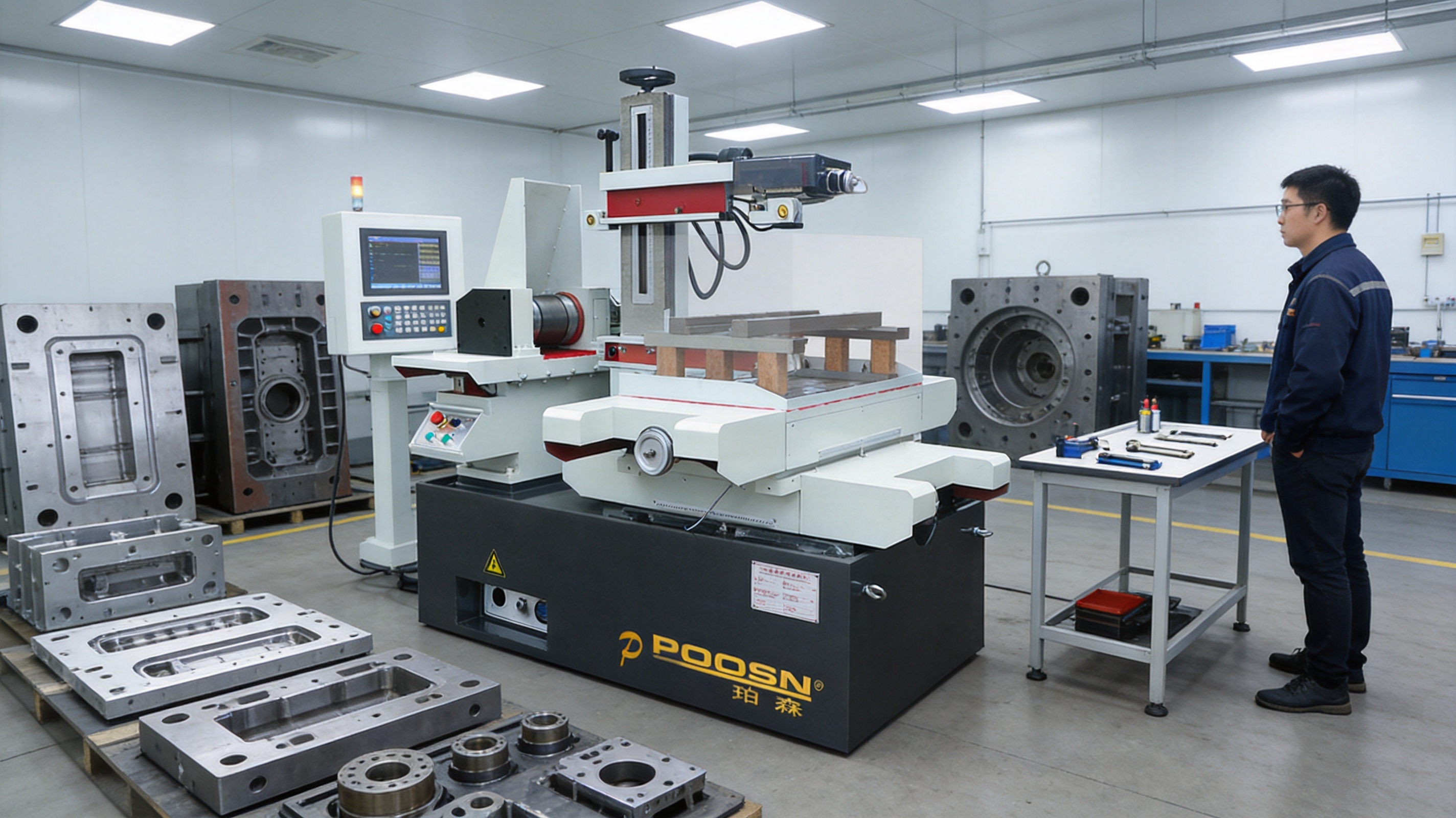
Industrial equipment must be supported after delivery. Taizhou Xinchengyang Machinery Manufacturing Co., Ltd. provides rapid response and professional technical support to ensure stable equipment operation. The company’s commitment is to guarantee the long-term effectiveness and reliability of each machine delivered to customers.
For domestic and overseas users, service support is a key factor when selecting EDM equipment. The company’s products are sold throughout China and exported to Southeast Asia, West Asia, Europe, and the Americas. This export experience demonstrates that the machines can adapt to different industrial environments, climate conditions, and user expectations.
Remote technical support and spare parts availability help reduce downtime. If a customer encounters parameter questions, maintenance needs, or operation issues, timely guidance can prevent minor problems from becoming production interruptions. A professional support system also helps customers train operators, optimize processes, and extend machine service life.
Long-term reliability is supported by durable components, modular electrical design, high-rigidity structure, and practical maintenance access. For many factories, the true cost of a machine is measured over years of use, not only by purchase price. The DK-7745F is designed to provide stable value through dependable operation and manageable maintenance demands.
Energy Efficiency and Sustainable Manufacturing
Energy conservation has become an important factor in equipment selection. The DK-7745F reflects sustainable manufacturing principles by improving the energy conversion efficiency of the pulse power supply and using efficient machine systems. Compared with older or less optimized equipment, this can reduce energy consumption while maintaining productive cutting performance.
Efficient discharge control not only saves energy but also contributes to better machining stability. When discharge energy is properly managed, wire consumption can be reduced, surface quality can be improved, and unnecessary heat generation can be limited. These benefits help users lower operating costs and support cleaner production practices.
The machine’s cooling and filtration circulation system also supports environmental performance by helping maintain fluid cleanliness and extending process stability. Cleaner circulation reduces waste, improves machining quality, and helps maintain a safer workshop environment. For companies pursuing efficiency and environmental responsibility, these features add practical value.
Model Selection Perspective
The DK-7745F is part of a broader machine selection range. Smaller models such as DK-7725 are suitable for small and medium-sized parts and precision mold processing, especially where high precision and small-batch production are required. The DK-7735 is suitable for medium-sized components and mold processing requiring a larger workbench. The DK-7745 is appropriate for large-sized parts and high-precision molds, including aerospace and automotive component processing.
The DK-7745F is positioned above these models for extra-large workpieces and high-precision heavy components. It is particularly suitable for aerospace applications, large-scale mold production, heavy machinery components, and industrial sectors demanding both efficiency and machining precision. Users who find smaller machines limiting in travel, worktable size, or load capacity should consider the DK-7745F as a more capable option.
For even larger applications, machines such as DK-7755F, DK-7763F, DK-7780F, and DK-77100F provide greater worktable size, travel, cutting thickness, and load capacity. Customizable options are available for machines at DK-77100 and above. However, the DK-7745F remains an attractive choice for users who require substantial capacity without moving into the largest machine category.
Practical Benefits for Factory Managers
From a management perspective, the DK-7745F offers advantages in productivity, cost control, process flexibility, and quality stability. Its high cutting efficiency helps increase output. Its large worktable and 500 kg load capacity support larger workpieces. Its four-axis linkage expands the types of jobs that can be accepted. Its stable design reduces production risk.
The machine can also help factories expand their business scope. A shop that previously handled only small parts may use the DK-7745F to accept larger molds and heavy components. A manufacturer that outsourced taper cutting may bring more work in-house. A company seeking to reduce lead time may use the machine’s high-speed capability to complete orders faster.
In addition, the machine supports better labor utilization. An intuitive interface and intelligent control system reduce dependence on highly specialized operators. While EDM expertise remains valuable, easier operation helps factories train staff more quickly and maintain consistent production when personnel changes occur.
Recommended Operating Considerations
To obtain the best performance from the DK-7745F, users should follow proper operating practices. Workpieces should be securely clamped to avoid movement during cutting. The wire should be installed correctly and maintained at proper tension. Cutting fluid should be filtered and replaced as needed to maintain discharge stability. Operators should select parameters according to workpiece material, thickness, required surface quality, and cutting path complexity.
Program verification is also important. Before cutting valuable workpieces, operators should confirm the geometry, coordinate system, taper settings, and machining path. This reduces the risk of programming errors and material waste. For repeat production, proven parameter sets should be saved and reused to improve consistency.
Preventive maintenance helps protect long-term machine accuracy. Guide rails, ball screws, wire feed components, electrical cabinets, and fluid circulation systems should be inspected according to recommended schedules. Cleaning the work area and removing erosion byproducts also supports stable operation. With correct use and maintenance, the DK-7745F can provide dependable service over extended production cycles.
Q&A Section
Q1: What type of manufacturer is the DK-7745F best suited for?
The DK-7745F is best suited for manufacturers that process large precision molds, heavy mechanical components, aerospace parts, automotive tooling, complex conductive metal profiles, and high-demand industrial workpieces. It is especially valuable for factories requiring a larger worktable, high cutting efficiency, four-axis linkage, and stable operation under heavy loads.
Q2: What is the worktable size and travel range of the DK-7745F?
The DK-7745F has a worktable size of 570×950 mm and an X/Y travel size of 450×650 mm. This configuration provides a practical working area for large and extra-large components while maintaining a manageable machine footprint.
Q3: What is the maximum worktable load?
The maximum worktable load of the DK-7745F is 500 kg. This makes it suitable for heavy-duty molds, thick plates, and large industrial workpieces that smaller wire EDM machines may not handle confidently.
Q4: How efficient is the cutting performance?
Depending on the selected control cabinet, workpiece material, thickness, and cutting conditions, the DK-7745F can reach a maximum cutting efficiency of 10,000 to 16,000 mm²/h. This supports high-efficiency mass production and helps reduce machining time.
Q5: Does the machine support taper cutting?
Yes. The DK-7745F supports four-axis linkage through X, Y, U, and V-axis control. Its maximum cutting taper is ±6°/80 mm, allowing it to process angled surfaces, tapered dies, and complex profiles.
Q6: What surface roughness can the machine achieve?
Under suitable machining conditions, the machine can achieve optimal surface roughness of Ra≤2.5 μm. Actual results depend on material, cutting parameters, wire condition, coolant quality, and required cutting speed.
Q7: Is the DK-7745F difficult to operate?
The machine is designed with an intuitive operating interface and an intelligent control system. Operators can learn basic operation with proper training, and experienced technicians can further optimize parameters for higher efficiency and improved quality.
Q8: What control cabinet options are available?
The standard configuration includes the ZH-K68 desktop cabinet, while the ZHZK-03 vertical cabinet is available as an optional configuration. This allows users to choose according to their production habits, workshop layout, and process requirements.
Q9: What materials can be processed?
The DK-7745F can process conductive metallic materials such as steel, aluminum, copper, tungsten carbide, and other suitable conductive workpiece materials. It is especially useful for hardened materials and parts with complex contours.
Q10: How does the DK-7745F compare with smaller models?
Compared with smaller models such as DK-7725, DK-7735, and DK-7745, the DK-7745F offers a larger worktable, greater Y-axis travel, and higher load capacity. It is better suited for extra-large workpieces, heavy components, and demanding industrial production.
Q11: Can the machine be integrated into automated production?
Yes. The DK-7745F supports connection to automated production lines. This makes it suitable for high-volume part cutting and production environments seeking reduced manual intervention and improved workflow efficiency.
Q12: What support is provided after purchase?
Taizhou Xinchengyang Machinery Manufacturing Co., Ltd. provides rapid response and professional technical support. The company focuses on helping users maintain stable equipment operation, optimize machining processes, and ensure long-term machine reliability.
Conclusion
The DK-7745F CNC high-speed wire EDM machine is a strong solution for manufacturers requiring large-capacity precision cutting, high cutting efficiency, four-axis machining flexibility, and dependable long-term operation. With a 570×950 mm worktable, 450×650 mm travel, 500 kg load capacity, maximum cutting efficiency of 10,000 to 16,000 mm²/h, and taper cutting capability of ±6°/80 mm, it offers practical advantages for mold manufacturing, heavy machinery, aerospace, automotive, and precision component industries.
Its competitive value comes not only from specifications but also from the manufacturing strength behind it. Taizhou Xinchengyang Machinery Manufacturing Co., Ltd. brings years of EDM expertise, strict production standards, positioning accuracy testing, advanced processing capability, customization services, and responsive technical support. These factors help transform the DK-7745F from a machine tool into a long-term productivity asset.
For factories seeking to improve production efficiency, reduce processing costs, expand workpiece capability, and maintain stable precision, the DK-7745F provides a reliable and cost-effective high-speed WEDM platform. It is especially appropriate for users who have outgrown smaller equipment and need a machine capable of handling heavier, larger, and more complex components without sacrificing operational practicality.
References
1. Jameson, E. C. Electrical Discharge Machining. Society of Manufacturing Engineers.
2. Ho, K. H., and Newman, S. T. State of the Art Electrical Discharge Machining. International Journal of Machine Tools and Manufacture.
3. Kunieda, M., Lauwers, B., Rajurkar, K. P., and Schumacher, B. M. Advancing EDM through Fundamental Insight into the Process. CIRP Annals.
4. GB/T7926-2015. Accuracy Standards for Electrical Discharge Wire Cutting Machine Tools.
5. Benedict, G. F. Nontraditional Manufacturing Processes. Marcel Dekker.
6. Klocke, F. Manufacturing Processes: Cutting. Springer.
Product: DK-7745F CNC High-Speed Wire EDM Machine (4-Axis, 500×700mm Travel)
-
Phone
+86-0523-86268788 +86-13815960366 +86-13912191163Email
[email protected]Address
No. 366, Yusheng Road Jiulong Town, Hailing District Taizhou City, China
Copyright © Taizhou Xinchengyang Machinery Manufacturing Co., Ltd. All Rights Reserved.
Custom edm machine for sale
wholesale edm machine manufacturers
