

 English
 русский
 عربى


Lu Qianwen — Overseas Sales Manager
Home / Author / Lu Qianwen — Overseas Sales Manager / DK45D CNC Large-Taper Wire-Cut EDM Machine for Precision Mold and Complex-Part Machining
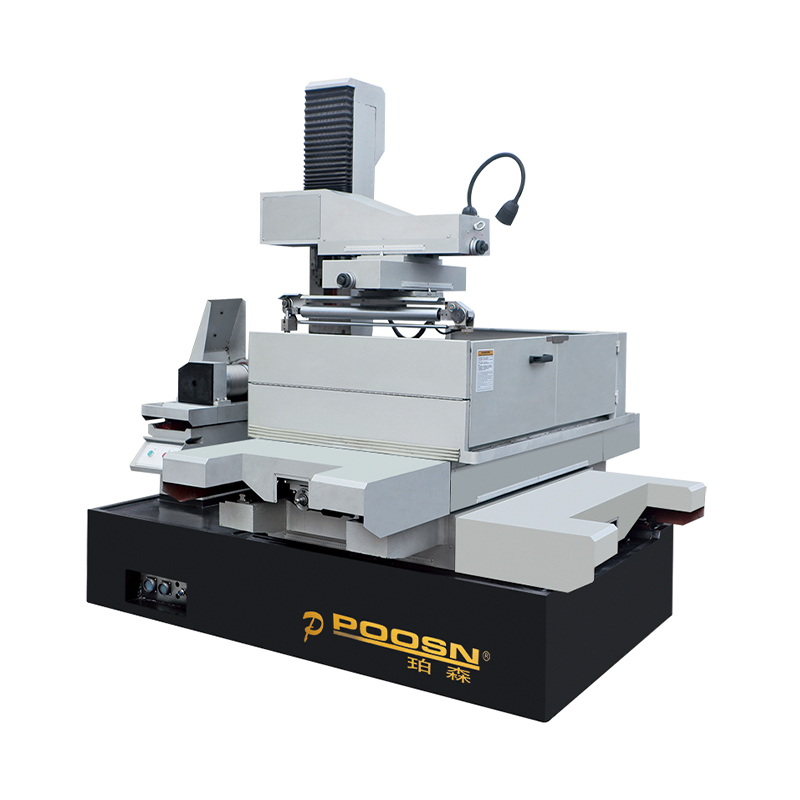
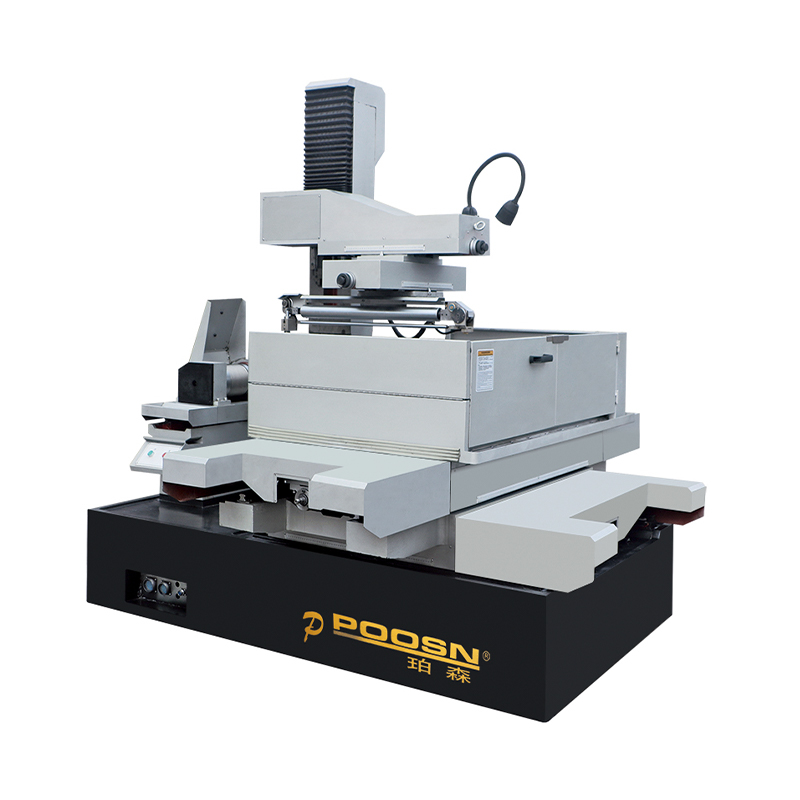
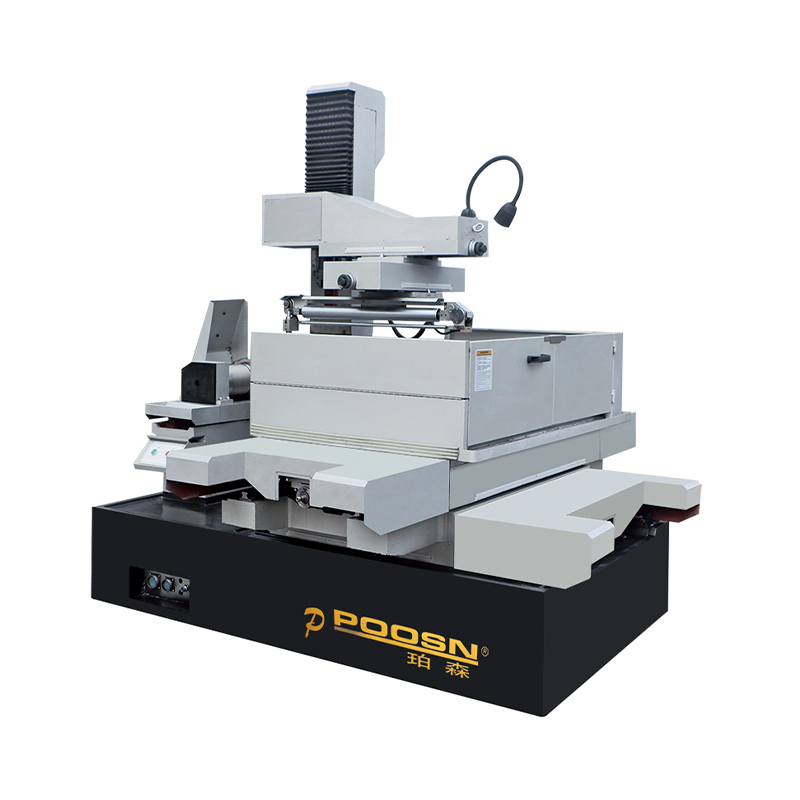
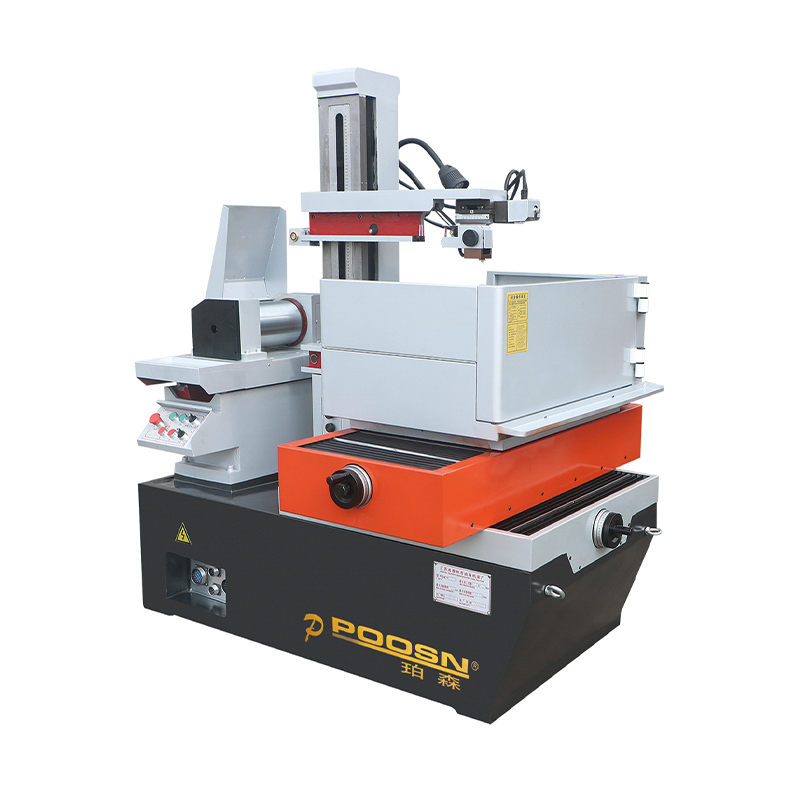
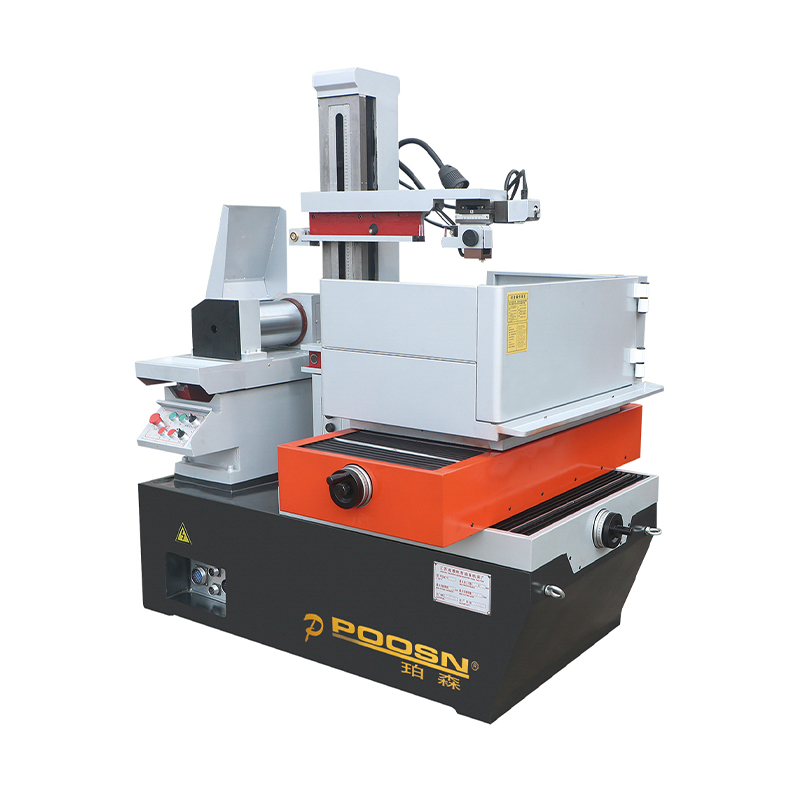
DK45D CNC Large-Taper Wire-Cut EDM Machine for Precision Mold and Complex-Part Machining
2026-09-12
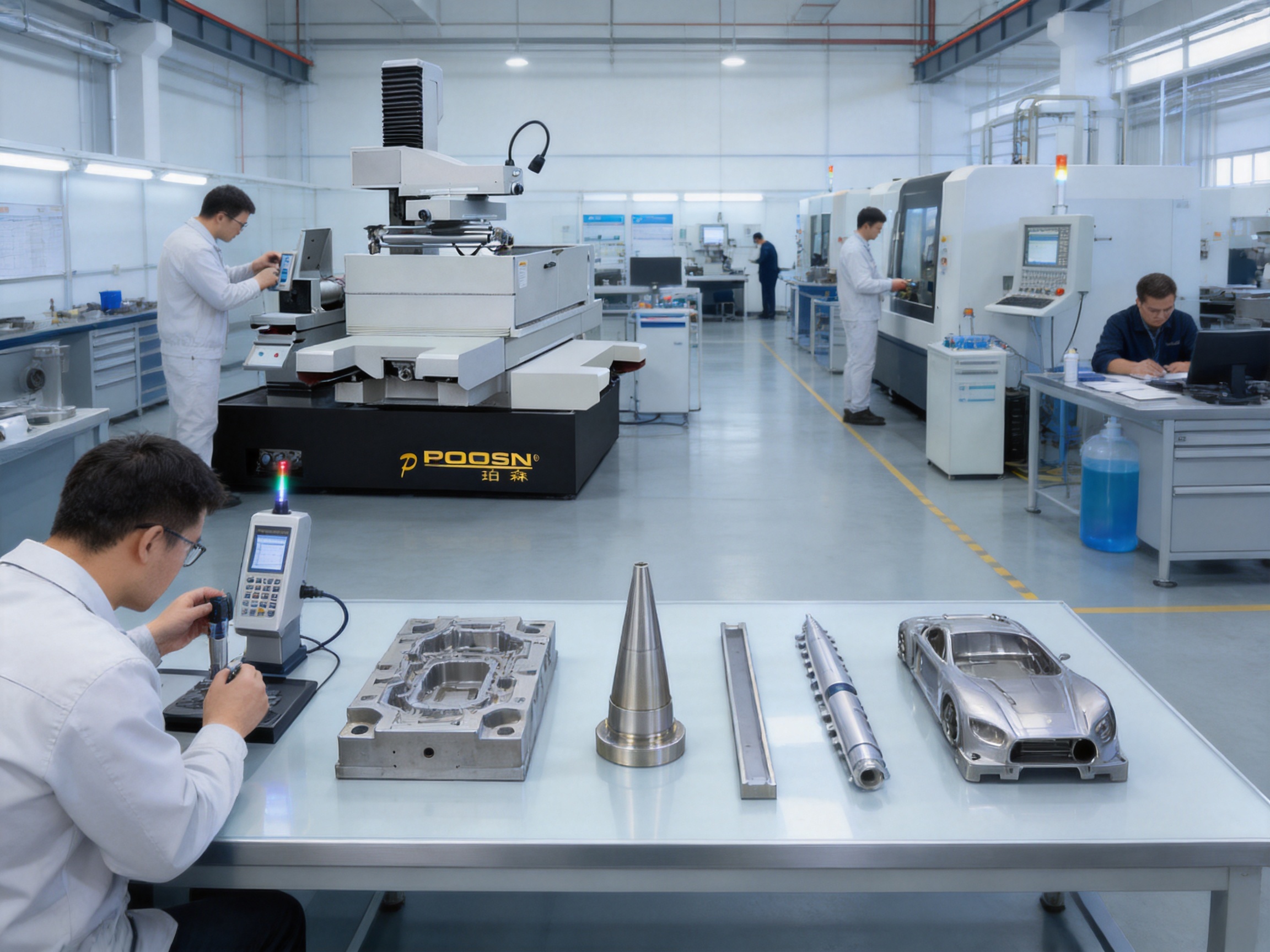
Modern mold manufacturing increasingly depends on equipment that can combine geometric flexibility, stable cutting performance, high accuracy, and efficient production. Conventional wire-cut electrical discharge machining machines are highly effective for planar profiles and moderate taper operations, but demanding applications often require significantly greater angular movement, deeper workpiece capacity, stronger structural stability, and more sophisticated compensation functions. The DK45D CNC Large-Taper Wire-Cut EDM Machine is designed to address these requirements.
Developed for precision mold machining, aerospace components, automotive parts, and specialized mechanical applications, the DK45D provides large-taper cutting capability, four-axis linkage, a maximum cutting thickness of 450 mm, and a maximum worktable load of 400 kg. Its tapering system supports cutting angles up to ±30°/40 mm, allowing manufacturers to produce complex profiles, inclined surfaces, and workpieces with different upper and lower contours.
The machine is part of the DK-D Large Cutting Taper WEDM series manufactured by Taizhou Xinchengyang Machinery Manufacturing Co., Ltd. The series is intended for customers who need more than basic two-dimensional wire cutting. Through coordinated X, Y, U, and V axis movement, the DK45D can control the electrode wire in three-dimensional space while maintaining a controlled discharge gap. This makes it suitable for high-precision and high-difficulty cutting tasks that would otherwise require multiple machines or additional secondary operations.
Beyond its headline taper specification, the DK45D is supported by a rigid cast structure, precision linear guide rails, a dedicated wire-guiding system, an intelligent X8/AUTOCUT control system, adjustable wire-feed speed, and a manufacturing process built around inspection and calibration. These features help improve repeatability and reduce the risk of dimensional errors during long-duration or high-load cutting.
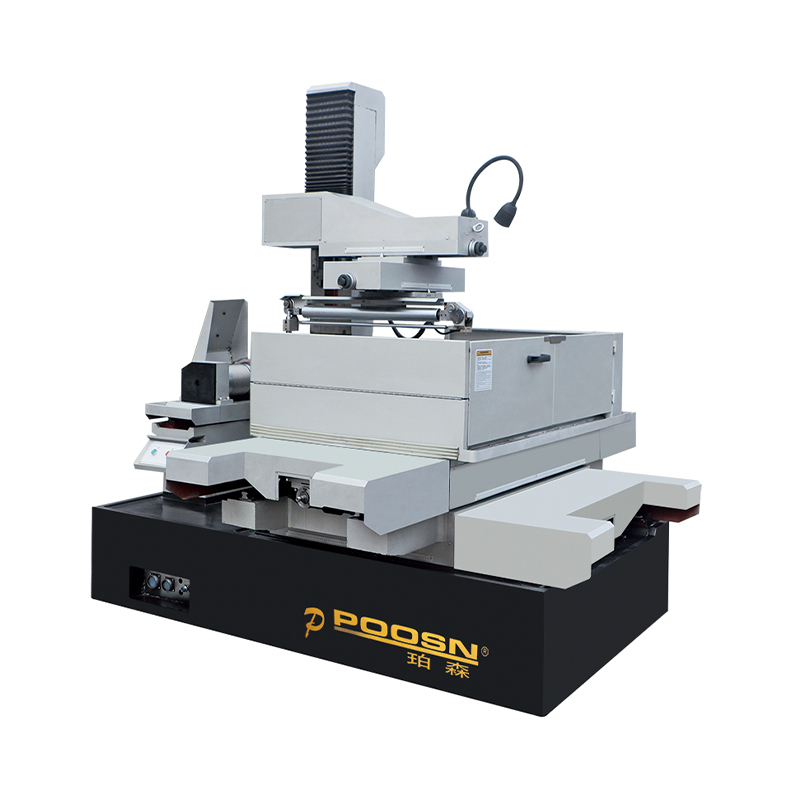
DK45D CNC Large Taper Wire Cut EDM Machine for Precision Mold Machining
Content
- 1 1. The Role of Large-Taper Wire EDM in Advanced Manufacturing
- 2 2. Core Product Capabilities
- 3 3. Engineering Design for Stability
- 4 4. Discharge Control and Machining Process Management
- 5 5. Technical Specifications
- 6 6. Advantages Compared with Conventional Wire EDM Equipment
- 7 7. Manufacturing Strengths and Quality Control
- 8 8. Application Areas
- 9 9. Material Compatibility and Production Flexibility
- 10 10. Configuration and Customization Options
- 11 11. Production Efficiency and Total Cost of Ownership
- 12 12. Recommended Operating Practices
- 13 13. Why Choose the DK45D for Precision Mold Machining?
- 14 14. Selecting between the DK-D Series Models
- 15 15. Questions and Answers
- 15.1 Q1: What is the maximum taper capability of the DK45D?
- 15.2 Q2: What is the maximum workpiece thickness?
- 15.3 Q3: How much weight can the worktable support?
- 15.4 Q4: Which axes are controlled during taper cutting?
- 15.5 Q5: Can the DK45D cut variable tapers?
- 15.6 Q6: What materials can the machine process?
- 15.7 Q7: Is the machine appropriate for inexperienced operators?
- 15.8 Q8: What surface roughness can the DK45D achieve?
- 15.9 Q9: What drive configurations are available?
- 15.10 Q10: How does the machine maintain accuracy during heavy-duty cutting?
- 15.11 Q11: What type of workpiece is best suited to the DK45D?
- 15.12 Q12: When should a customer select a larger model?
- 15.13 Q13: Does the manufacturer provide technical support?
- 15.14 Q14: What power supply does the machine use?
- 16 16. Conclusion
- 17 References
- 18 Product: DK45D CNC Large Taper Wire Cut EDM Machine for Precision Mold Machining
1. The Role of Large-Taper Wire EDM in Advanced Manufacturing
Wire-cut EDM removes material through controlled electrical discharges between a continuously moving electrode wire and a conductive workpiece. Because the cutting process is thermal and non-contact, it can machine hardened steels, carbide materials, alloys, and other electrically conductive metals without imposing the same mechanical cutting forces associated with milling, turning, or grinding.
In a basic wire EDM operation, the wire follows a programmed two-dimensional path. The upper and lower wire guides remain aligned, and the resulting cut is close to vertical. This arrangement is appropriate for many stamping dies, punches, precision plates, and flat-profile components. However, some molds and engineering parts require the wire to be inclined. The top and bottom profiles may differ, the sidewall may need a controlled slope, or the cutting path may vary continuously across the workpiece.
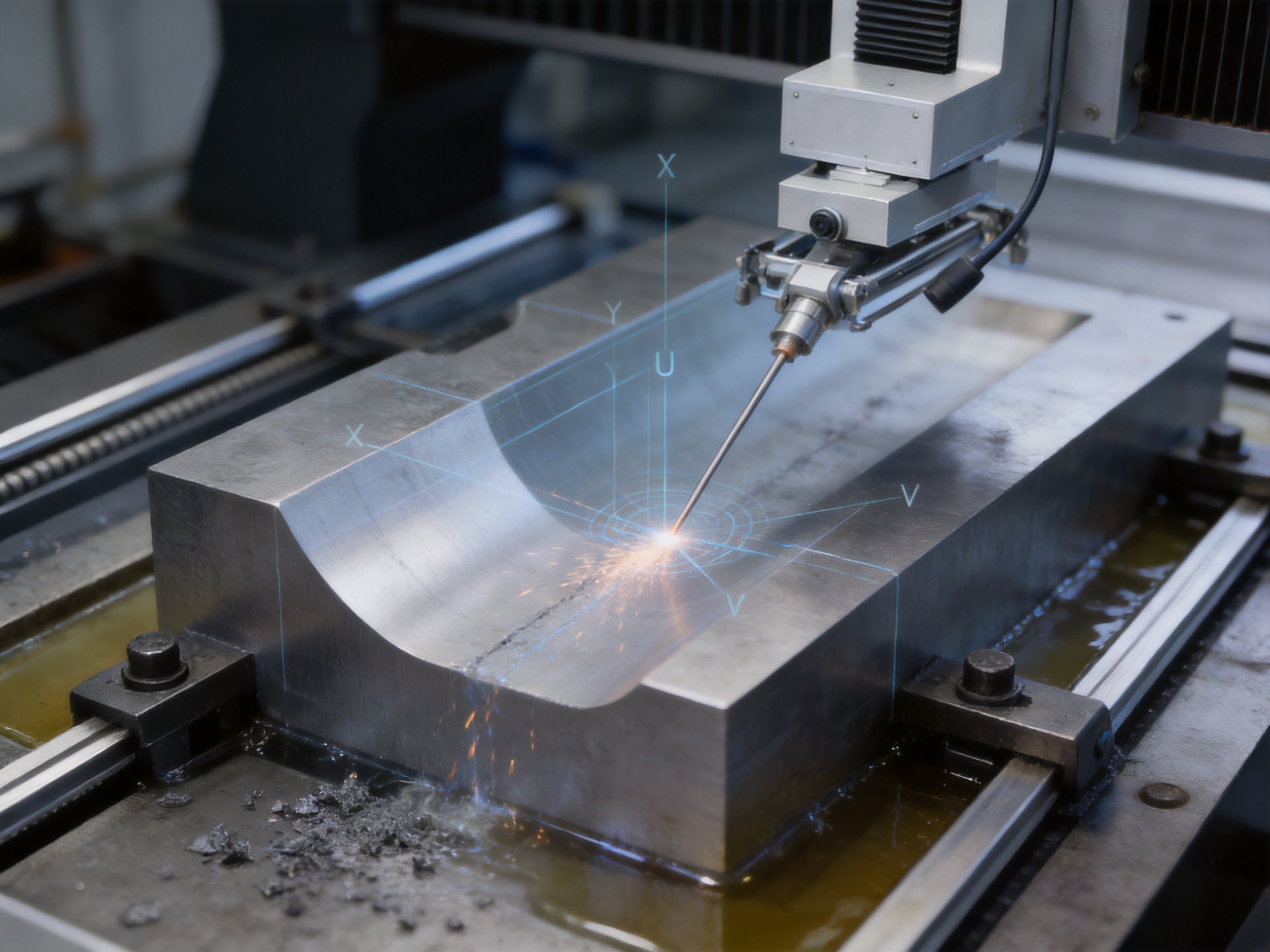
Large-taper wire EDM introduces coordinated movement between the main X and Y axes and the tapering U and V axes. By controlling these axes simultaneously, the machine changes the position of the upper and lower wire guides relative to one another. The wire therefore forms a programmed angle through the workpiece rather than remaining vertical.
This capability is especially valuable when machining:
• Deep mold inserts with inclined sidewalls.
• Large blanking and forming dies.
• Components with different upper and lower contours.
• Aerospace parts with complex spatial profiles.
• Precision automotive components with irregular geometries.
• Specialized gears, profiles, and mechanical components.
• Parts that would otherwise require secondary grinding or manual finishing.
The principal advantage is not simply the ability to cut at a larger angle. The machine must also maintain wire tension, flushing conditions, discharge stability, geometric compensation, and structural rigidity while the wire is inclined. The DK45D has been developed around these combined requirements rather than treating taper cutting as an isolated function.
2. Core Product Capabilities
2.1 Large-Taper Cutting
The DK45D provides a maximum cutting taper of ±30°/40 mm. This specification enables the machine to produce steep inclined surfaces and complex tapered shapes that are beyond the practical range of many conventional wire EDM systems.
Large-taper machining can be used for both constant-angle and variable-angle cutting. In a constant-taper operation, the wire maintains a programmed inclination through the workpiece. In a variable-taper operation, the control system continuously changes the relationship between the upper and lower wire positions as the cutting path progresses. This permits the production of parts in which the top and bottom contours are not identical.
The four-axis X, Y, U, and V linkage is central to this performance. X and Y control the primary worktable movement, while U and V adjust the tapering position. Coordinated movement allows the machine to follow a spatial cutting trajectory while maintaining the intended geometry.
2.2 Large Workpiece Capacity
The DK45D has a CNC worktable measuring 570 × 950 mm, an X/Y travel size of 450 × 650 mm, and a processing slot size of 630 × 990 mm. Its maximum cutting thickness is 450 mm, and its maximum worktable load is 400 kg.
These dimensions make the machine suitable for medium-sized components, substantial mold plates, and heavy workpieces that cannot be accommodated by smaller precision wire-cutting equipment. The load capacity also helps manufacturers process denser steel parts and larger die components without relying on improvised support arrangements.
Workpiece capacity is important in taper cutting because inclined wire movement may require additional clearance around the part. The processing area must provide sufficient room for the upper and lower wire guides, flushing arrangements, and the programmed motion of the tapering device. The DK45D’s configuration is designed to provide a practical balance between usable cutting area, machine footprint, rigidity, and investment cost.
2.3 Precision and Surface Quality
The product description identifies a machining accuracy of 0.08 mm for the DK45D. The technical parameter table specifies compliance with GB/T7926-2015, a standard associated with wire-cut EDM machine accuracy. The machine also lists an optimal surface roughness of Ra ≤ 2.5 μm and a maximum cutting efficiency of 10,000–16,000 mm²/h.
Actual results depend on material grade, workpiece thickness, flushing conditions, wire condition, programming strategy, taper angle, desired surface finish, and the number of finishing passes. Nevertheless, the combination of precision positioning, controlled discharge, wire guidance, and finishing capability gives the DK45D a strong foundation for high-quality production.
For mold manufacturers, precision is not limited to a single dimensional measurement. It also includes profile consistency, corner quality, taper accuracy, repeatability, surface integrity, and the ability to maintain results over extended operating periods. The machine’s structure and control system are intended to support these broader performance requirements.
2.4 Intelligent Control
The DK45D uses the X8/AUTOCUT control system. Its user-oriented interface is intended to reduce manual intervention and simplify the programming of complex cutting tasks. Large-taper machining requires the control system to coordinate multiple axes, account for wire diameter, apply geometric compensation, and maintain the programmed relationship between upper and lower profiles.
By managing these calculations within the CNC environment, the system reduces the need for operators to perform complex manual conversions. This is particularly beneficial when the operator is preparing a large-taper program or adjusting a process for a new workpiece.
The system also supports more efficient production management. Programs can be prepared systematically, machining parameters can be standardized, and repeated parts can be processed with less setup variation. For medium-sized manufacturers, this can improve equipment utilization and reduce the learning curve associated with advanced taper cutting.
3. Engineering Design for Stability
3.1 High-Rigidity Machine Bed
Large-taper wire cutting produces mechanical conditions that differ from standard vertical cutting. When the wire is inclined, the lateral component of wire tension becomes more significant. The position of the cutting zone also changes relative to the upper and lower guides. If the machine structure is insufficiently rigid, these forces can contribute to vibration, unstable discharge, dimensional deviation, or visible wire marks.
The DK45D uses a rigid cast machine bed and structural components designed to support heavy-duty machining. According to the supplied manufacturing information, the castings undergo a natural aging process intended to reduce internal stress. Stress relief is important because residual stress in large cast components can contribute to deformation over time or during temperature changes.
A stable machine base supports the accuracy of the guide system, table movement, tapering device, and wire path. It also reduces the risk that vibration will be transferred into the workpiece during long cutting cycles. This is particularly important in deep cuts, high-thickness operations, and workpieces requiring multiple finishing passes.
3.2 Precision Linear Guide Rails
High-precision linear rails are included as standard equipment. Linear guides help provide smooth axis movement, consistent positioning, and reduced friction. In wire EDM, even small irregularities in motion can influence the final contour, especially when the wire is cutting a fine profile or a large taper.
The guide system must remain stable under changing loads and repeated movement. It must also protect the machine’s positioning performance from contamination, moisture, and the demanding environment associated with dielectric fluid and eroded particles. The DK45D includes an eco-friendly waterproof cover as part of its standard configuration, helping protect the working area and important mechanical components.
3.3 Wire Guiding and Flushing Alignment
The wire guides and flushing nozzles require careful alignment during large-angle cutting. When the electrode wire is vertical, the flushing system can be arranged symmetrically around the cutting zone. As the wire tilts, the relationship between the wire, workpiece, and flushing nozzles becomes more complicated.
The DK45D’s wire-guiding system is calibrated for large-angle operations. The objective is to maintain accurate wire positioning and ensure that dielectric fluid reaches the discharge area effectively. Stable flushing helps remove eroded particles, control the discharge gap, and reduce the risk of short circuits or unstable machining.
Effective fluid circulation is particularly important in deep workpieces. As cutting thickness increases, debris has a greater distance to travel before leaving the cutting gap. Inadequate flushing can lead to particle accumulation, localized discharge instability, poor surface finish, and reduced machining efficiency. A properly aligned wire and flushing system helps address these challenges.
4. Discharge Control and Machining Process Management
4.1 Controlled Pulse Energy
Wire EDM depends on carefully controlled electrical pulses. Each discharge removes a small amount of material from the workpiece and the electrode wire. If pulse energy is too low, cutting speed may decrease and the process may become inefficient. If energy is too high for the cutting conditions, the workpiece may suffer thermal damage, corner degradation, unstable kerf formation, or excessive wire wear.
The DK45D uses a discharge control strategy that adapts to machining conditions. The system can regulate pulse energy in response to the discharge gap, helping maintain a more stable cutting process as the wire moves through different sections of a complex profile.
This adaptability is particularly useful in large-taper work because the effective cutting geometry changes as the wire inclination changes. Corners, narrow sections, thick areas, and variable profiles may all require different discharge behavior. Automated control reduces the need for constant operator intervention and helps achieve more consistent results.
4.2 Wire Diameter and Kerf Compensation
The listed electrode wire diameter is Φ0.18 mm with a wire guider. Because the wire has a finite diameter and the discharge gap extends beyond the physical wire surface, the programmed centerline cannot simply be treated as the final contour. The control system must account for wire diameter, spark gap, material conditions, and taper geometry.
Large-angle cutting adds another level of complexity. The actual intersection between the inclined wire and the workpiece changes through the thickness. The upper and lower portions of the cut may not correspond to the same two-dimensional position. Geometric compensation is therefore necessary to maintain profile accuracy.
The DK45D control architecture is designed to support this compensation. During four-axis operation, it coordinates the X/Y path and U/V movement to produce the intended upper and lower profiles. This helps reduce dimensional differences between the programmed geometry and the finished workpiece.
4.3 Debris Removal
Electrical discharge generates eroded particles that must be removed from the cutting gap. If debris accumulates, it can cause unwanted secondary discharges, unstable cutting, short circuits, surface defects, and reduced precision.
The DK45D uses a dielectric circulation and flushing arrangement intended to improve debris removal during large-taper operations. Consistent circulation helps maintain the electrical conditions required for controlled machining. It also contributes to surface quality and supports more reliable cutting of deep or complicated profiles.
For production users, debris control has a direct effect on process reliability. Fewer interruptions mean less operator intervention, more predictable cycle times, and reduced risk of scrapped workpieces. These benefits become more significant when the machine is used for expensive tool steels, complex molds, or high-value aerospace components.
5. Technical Specifications
The following table summarizes the principal DK45D specifications and selected configuration details for the DK-D series. The larger models are included for comparison and selection planning.
| Specification | DK45D | DK55D | DK63D | DK80D |
| Worktable Size | 570 × 950 mm | 740 × 1160 mm | 844 × 1360 mm | 1020 × 1620 mm |
| X/Y Travel Size | 450 × 650 mm | 550 × 800 mm | 630 × 1000 mm | 800 × 1200 mm |
| Processing Slot Size | 630 × 990 mm | 770 × 1180 mm | 890 × 1400 mm | 1050 × 1660 mm |
| Maximum Cutting Thickness | 450 mm | 600 mm | 600 mm | 800 mm |
| Maximum Worktable Load | 400 kg | 600 kg | 800 kg | 1000 kg |
| Maximum Cutting Taper | ±30°/40 mm | ±30°/80 mm; ±45°/80 mm | Series-dependent | Series-dependent |
| Electrode Wire Diameter | Φ0.18 mm with wire guider | Φ0.18 mm with wire guider | Φ0.18 mm with wire guider | Φ0.18 mm with wire guider |
| Wire Feed Speed | 1–11 m/s, frequency control | 1–11 m/s, frequency control | 1–11 m/s, frequency control | 1–11 m/s, frequency control |
| Maximum Wire Storage Length | Approximately 350 m | Approximately 350 m | Approximately 350 m | Approximately 350 m |
| Controlled Axes | X, Y, U, V four-axis linkage | X, Y, U, V four-axis linkage | X, Y, U, V four-axis linkage | X, Y, U, V four-axis linkage |
| Programming System | X8/AUTOCUT | X8/AUTOCUT | X8/AUTOCUT | X8/AUTOCUT |
| Maximum Cutting Efficiency | 10,000–16,000 mm²/h | 10,000–16,000 mm²/h | 10,000–16,000 mm²/h | 10,000–16,000 mm²/h |
| Optimal Surface Roughness | Ra ≤ 2.5 μm | Ra ≤ 2.5 μm | Ra ≤ 2.5 μm | Ra ≤ 2.5 μm |
| Standard Drive | XY stepper drives | XY stepper drives | XY stepper drives | XY stepper drives |
| Optional Drive | XY AC servo drives | XY AC servo drives | XY AC servo drives | XY AC servo drives |
| Machine Weight | 1600 kg | 2000 kg | 2500 kg | 3500 kg |
6. Advantages Compared with Conventional Wire EDM Equipment
6.1 Greater Geometric Freedom
Many conventional wire EDM machines are optimized for vertical cutting or limited taper angles. They can produce excellent results in their intended applications, but they may require additional setups when a part has a steep slope, non-matching upper and lower contours, or a variable taper.
The DK45D expands geometric capability through its large-taper system and four-axis linkage. A complex inclined profile can often be machined in one controlled setup. Reducing the number of setups lowers the risk of alignment errors and decreases the time associated with workpiece repositioning.
6.2 Improved Suitability for Deep Cuts
With a maximum cutting thickness of 450 mm, the DK45D is capable of processing substantially thick workpieces. Deep cutting creates challenges involving wire stability, dielectric circulation, heat management, and dimensional consistency. The machine’s rigid structure, wire guidance, and flushing strategy are designed to support these operations.
Compared with smaller wire machines, the DK45D gives production teams greater flexibility when accepting large mold plates, thick tool steels, and heavy precision components. It can also help companies avoid dividing a large job across multiple machines.
6.3 Lower Secondary-Operation Requirements
Large-taper machining can eliminate or reduce subsequent grinding, fitting, and manual correction. When the tapered surface is cut accurately in the primary EDM operation, the manufacturer can shorten the total process route.
Fewer secondary operations may result in lower labor costs, reduced work-in-process inventory, and faster delivery. It also supports more consistent quality because the final geometry is produced directly from a controlled CNC program rather than being dependent on extensive manual finishing.
6.4 Stable Production under High Load
Heavy workpieces and long cutting cycles can expose weaknesses in machine construction. A lightweight or insufficiently supported structure may be more vulnerable to vibration, thermal changes, and axis-positioning variation.
The DK45D uses a high-rigidity casting structure, precision linear rails, and a protected working area. These features are intended to maintain stable motion and cutting conditions during demanding operations. Stability is particularly valuable for customers running multiple finishing passes or processing parts that have high material value.
6.5 Practical Cost-Effectiveness
Cost-effectiveness in EDM is determined by more than the purchase price. Important factors include cycle time, machine availability, operator workload, wire consumption, rework, secondary processing, maintenance, and the ability to accept a wider range of jobs.
The DK45D addresses these factors through efficient cutting performance, intelligent control, a broad material range, substantial workpiece capacity, and reduced setup complexity. Its 400 kg table load and 450 mm maximum cutting thickness allow one machine to cover tasks that might otherwise require smaller equipment and additional outsourcing.
7. Manufacturing Strengths and Quality Control
Equipment performance depends on the consistency of the manufacturing process used to build the machine. Taizhou Xinchengyang Machinery Manufacturing Co., Ltd. has specialized in electrical discharge wire cutting since 1999. The company operates with research, development, production, testing, and technical support capabilities focused on EDM and special processing technologies.
7.1 Experienced EDM Manufacturing Background
The company’s development history includes the establishment of the POOSN brand in 2003, cooperation with Bingfeng CNC in 2007, recognition as an Advanced Unit for Quality and Reputation in 2009, and the establishment of Taizhou Xinchengyang Machinery Manufacturing Co., Ltd. with a registered capital of 60 million yuan in 2017.
In 2018, the company obtained a patent related to a fully automatic CNC machine tool featuring plate-type winding and suction-type adhesive technology. In 2021, it was recognized as a High-Tech Enterprise in Taizhou. These milestones reflect a continuing focus on equipment development, manufacturing capability, and process innovation.
7.2 Controlled Casting and Structural Preparation
Large machine tools require stable structural components. The bed and other major castings must be manufactured with appropriate material quality, dimensional control, stress management, and finishing processes. Natural aging is used in the structural preparation described for the DK45D to help reduce residual internal stress.
Stable castings provide a foundation for accurate guide installation and axis alignment. They also improve resistance to deformation during high-load machining. This structural approach is important because taper cutting can increase lateral forces and place additional demands on the machine frame.
7.3 Precision Assembly
Assembly quality influences the performance of every major subsystem. The relative alignment of the worktable, linear guides, wire guides, tapering device, flushing nozzles, and Z-axis lift must be carefully controlled.
For a four-axis taper machine, assembly errors can affect not only ordinary X/Y positioning but also the relationship between the upper and lower wire positions. A small misalignment may become more visible at a large cutting angle or over a deep workpiece. Precision assembly therefore supports the effectiveness of the machine’s compensation algorithms and programming system.
7.4 Measurement and Accuracy Verification
The company states that each machine tool undergoes positioning accuracy testing and is manufactured according to applicable national standards. The supplied technical information identifies GB/T7926-2015 as the machine accuracy standard.
The manufacturing process also includes metrological verification, simulated machining tests based on customer applications, full-load operational testing after final assembly, and laser interferometer calibration of precision parameters. These measures are intended to identify errors before delivery rather than leaving the customer to discover them during production.
Application-specific simulated trials are particularly useful for customers ordering specialized taper equipment. A test part can help verify the intended material range, taper angle, workpiece thickness, surface quality, and production method. It also provides an opportunity to refine programming and process parameters before installation at the customer’s facility.
7.5 Technical Support after Delivery
Reliable technical support is important for advanced wire EDM because successful operation depends on correct setup, wire threading, dielectric management, parameter selection, programming, and routine maintenance.
Xinchengyang Machinery provides rapid-response technical support and operator training. The DK45D’s interface is designed to help operators learn the system efficiently, while training assists users in understanding large-taper programming, machine preparation, safety procedures, and process optimization.
8. Application Areas
8.1 Precision Mold Manufacturing
Mold manufacturing is one of the principal applications for the DK45D. Complex molds frequently include deep cavities, inclined walls, tapered inserts, narrow slots, and profiles that must be held accurately over substantial thicknesses.
The machine can be used for stamping dies, blanking dies, forming tools, precision inserts, and other mold components. Large-taper capability is useful when the die requires a controlled clearance angle or when the upper and lower profiles must differ.
In large blanking dies, the DK45D can cut a tapered cutting edge in a single programmed operation. This may reduce the need for additional grinding and help preserve the intended geometry. The non-contact nature of EDM also makes the process suitable for hardened tool steel, where conventional cutting may be difficult or require extensive tooling.
8.2 Aerospace Components
Aerospace components often combine difficult materials, complex geometry, tight dimensional requirements, and high expectations for repeatability. The DK45D can support the machining of conductive aerospace parts featuring inclined or specialized profiles.
Its large-taper movement is suited to components in which the sidewall angle changes along the cutting path. The controlled EDM process can produce intricate forms without imposing significant mechanical cutting forces on delicate sections. Proper process validation remains essential, especially for high-value aerospace materials and safety-critical components.
8.3 Automotive Components
The machine is also suitable for precision automotive components, including irregularly shaped parts associated with steering, transmission, and other mechanical systems. Repeatability is important in these applications because production parts must maintain consistent fit, function, and interchangeability.
When a component requires a tapered profile or a complex contour, four-axis wire EDM can reduce the number of separate machining stages. This may improve process control and reduce the variation introduced by manual repositioning.
8.4 Precision Machinery
Precision machinery manufacturers can use the DK45D for metal components, special profiles, narrow slots, punches, and complex mechanical elements. The machine can process materials with different hardness levels, provided that they are electrically conductive and suitable for EDM.
Because the cutting force is minimal, the process is appropriate for small and medium-sized precision parts that could deform or shift under conventional cutting forces. The small kerf and controlled cutting path also support the machining of minute features and complex contours.
9. Material Compatibility and Production Flexibility
Wire EDM is generally used for electrically conductive materials. The DK45D can process a broad range of conductive metals and alloys, including hardened steels and other difficult-to-cut materials. The absence of direct mechanical contact between the wire and workpiece makes hardness less restrictive than in many conventional machining processes.
Material behavior still affects the process. Electrical conductivity, thermal properties, thickness, heat treatment, internal stress, and surface condition can influence cutting speed and surface quality. Operators should select parameters according to the material and verify the process on representative samples when introducing a new alloy.
The machine’s adjustable wire-feed speed ranges from 1 to 11 m/s with frequency control. This allows the process to be adapted to different production objectives. Higher efficiency may be prioritized during rough cutting, while lower or adjusted conditions may be selected for finishing and surface-quality requirements.
The maximum wire storage length is approximately 350 m. Combined with continuous wire movement, this supports extended machining cycles and reduces the need for frequent operator intervention. Wire consumption should still be monitored as part of overall process-cost management.
10. Configuration and Customization Options
The DK45D is available with standard XY stepper drives, while XY AC servo drives are offered as an option. Servo drives may be selected when customers require particular positioning behavior, production conditions, or integration preferences.
A high-pressure water tank and linear scale are also available as optional configurations. A high-pressure flushing arrangement can be useful in deep cutting and applications where debris removal is especially demanding. Linear scales may be considered when the customer requires enhanced position feedback and additional measurement capability.
The worktable size and cutting-angle requirements can be discussed according to the production application. The wider DK-D series includes DK55D, DK63D, and DK80D models for customers who require greater workpiece capacity, higher table load, increased cutting thickness, or more demanding production conditions.
The DK45D is recommended for medium-sized components and precision molds requiring large taper and high accuracy. The DK55D is more appropriate for larger workpieces and complex parts with higher load requirements. The DK63D is intended for extra-large workpieces and heavy components, while the DK80D is positioned for heavy-duty molds and very large workpieces.
Customization is particularly relevant for the largest machines, including DK80D and above. Customers should provide workpiece drawings, material information, maximum thickness, required taper, surface-finish target, load data, expected production volume, and available plant utilities when requesting a configuration review.
11. Production Efficiency and Total Cost of Ownership
A machine designed for complex taper cutting can improve manufacturing economics in several ways. First, it can reduce setup time by completing complex geometries in one fixture. Second, it can reduce the need for manual correction and secondary grinding. Third, it can expand the range of jobs that a manufacturer can accept internally.
The listed maximum cutting efficiency of 10,000–16,000 mm²/h provides a reference for production planning. Actual productivity depends on the material, thickness, cutting profile, taper angle, surface roughness requirement, wire condition, and finishing strategy. A production manager should evaluate not only the rough-cut speed but also the complete cycle, including threading, programming, workpiece preparation, flushing, inspection, and finishing passes.
Intelligent control can lower labor demand by automating coordinated-axis calculations and discharge adjustments. An intuitive interface allows operators to prepare programs with less manual calculation, while training helps less-experienced personnel become productive more quickly.
Maintenance also affects ownership cost. Regular cleaning, dielectric management, guide inspection, wire alignment checks, filter replacement, and accuracy verification help preserve the machine’s intended performance. A stable machine structure and protected working area can support long-term reliability when combined with an appropriate maintenance program.
12. Recommended Operating Practices
12.1 Workpiece Preparation
The workpiece should be securely supported on the table and checked for flatness, stability, and electrical conductivity. Heavy workpieces must be positioned to distribute the load properly and avoid unnecessary distortion. The operator should confirm that the workpiece remains within the specified 400 kg maximum load for the DK45D.
12.2 Program Verification
Large-taper programs should be reviewed carefully before cutting. The operator should confirm the upper and lower contours, taper angle, wire offset, cutting direction, lead-in and lead-out positions, and clearance around the wire guides and flushing nozzles.
Graphic simulation and trial cutting are recommended for unfamiliar geometries. When the component is expensive or difficult to replace, a test piece made from a similar material can help verify the intended process.
12.3 Dielectric and Flushing Management
Clean and appropriately managed dielectric fluid is essential for stable EDM. The fluid should be maintained according to the equipment supplier’s recommendations. Filters, pumps, tanks, and nozzles should be inspected regularly.
Flushing must be adjusted to the workpiece thickness and taper condition. Excessive flushing may disturb a delicate wire or affect the discharge gap, while insufficient flushing can cause debris accumulation. The correct balance improves both cutting stability and surface finish.
12.4 Wire and Guide Inspection
The electrode wire should be threaded correctly and monitored for signs of breakage, abnormal wear, or unstable tension. Wire guides should remain clean and properly aligned. Wear in the guides can affect taper accuracy and profile repeatability, particularly during steep-angle cutting.
12.5 Accuracy Monitoring
For high-value production, periodic accuracy checks should be included in the maintenance plan. Reference parts, measurement equipment, and documented inspection procedures can help identify changes in machine behavior before they affect a large batch of components.
13. Why Choose the DK45D for Precision Mold Machining?
The DK45D is not simply a larger version of a standard wire-cut EDM machine. Its value lies in the combination of large-angle movement, thick-workpiece capacity, intelligent control, structural stability, and process support.
For mold manufacturers, the machine can provide a direct solution to large-taper cutting requirements. For aerospace and automotive suppliers, it can process complex conductive components with reduced mechanical loading. For general precision-machinery producers, it offers flexibility for parts that are difficult to complete using conventional two-dimensional wire cutting.
Its position within the DK-D series also gives customers a clear upgrade path. A company can select the DK45D for medium-sized parts and later evaluate larger models if workpiece size, weight, or production requirements increase. This model-based approach simplifies equipment planning and allows the machine to be matched to actual manufacturing needs.
The company’s manufacturing strengths further support the product. Experience since 1999, in-house technical development, structured inspection, positioning-accuracy testing, simulated machining, full-load testing, and professional technical assistance provide customers with more than a machine purchase. They provide a production solution designed around practical operation and long-term use.
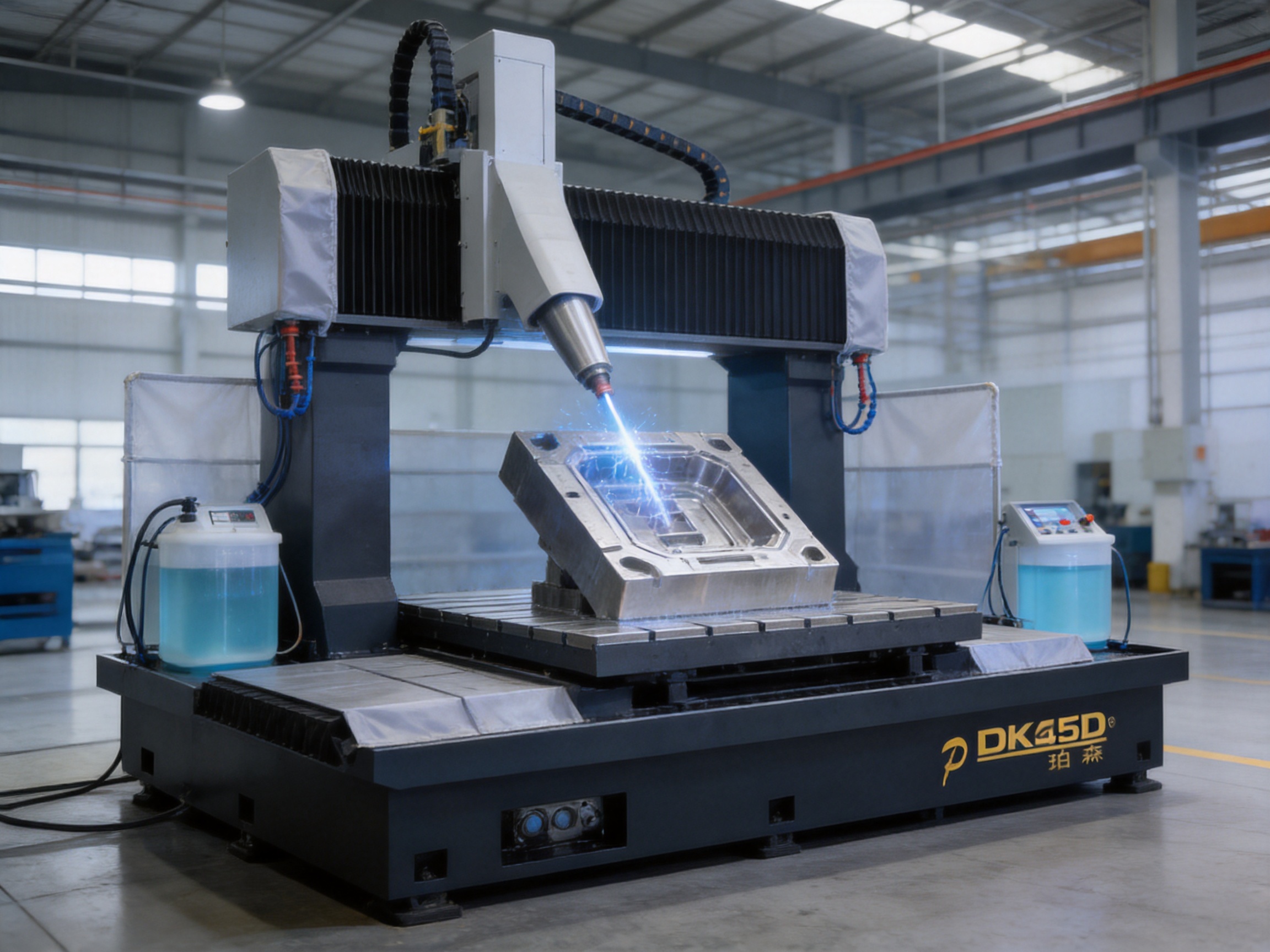
14. Selecting between the DK-D Series Models
Model selection should begin with the largest workpiece dimensions rather than the average part size. The customer should consider the maximum cutting length, width, thickness, workpiece weight, taper angle, and clearance required by the tapering device.
DK45D
The DK45D is suitable for medium-sized workpieces, precision molds, large-taper profiles, and high-accuracy components up to 450 mm in cutting thickness. Its 400 kg table load is appropriate for many mold and mechanical applications.
DK55D
The DK55D provides a larger worktable, 600 mm maximum cutting thickness, and 600 kg maximum load. It is a practical choice for customers processing larger dies, deeper workpieces, or heavier components than the DK45D can accommodate.
DK63D
The DK63D is intended for extra-large workpieces and heavy-duty components. Its 800 kg maximum load and larger X/Y travel make it suitable for demanding mold, aerospace, and precision-machinery applications.
DK80D
The DK80D is the largest model listed in the supplied series information. It offers an 800 mm maximum cutting thickness, a 1000 kg maximum worktable load, and a substantially larger working envelope. It is intended for heavy-duty molds, extra-large workpieces, and high-difficulty production tasks.
15. Questions and Answers
Q1: What is the maximum taper capability of the DK45D?
The DK45D provides a maximum cutting taper of ±30°/40 mm. This allows it to process steeply inclined profiles and large-taper workpieces that exceed the practical capability of many conventional vertical wire EDM machines.
Q2: What is the maximum workpiece thickness?
The maximum cutting thickness is 450 mm. The actual usable thickness may depend on workpiece shape, flushing access, material, wire condition, and the required taper angle.
Q3: How much weight can the worktable support?
The maximum worktable load is 400 kg. Customers with heavier workpieces should evaluate the DK55D, DK63D, or DK80D models according to the required load and working envelope.
Q4: Which axes are controlled during taper cutting?
The DK45D uses X, Y, U, and V four-axis linkage. X and Y control the primary cutting path, while U and V control the tapering movement of the upper and lower wire positions.
Q5: Can the DK45D cut variable tapers?
Yes. The four-axis CNC architecture is designed to support coordinated movement and variable taper cutting. The actual capability depends on the workpiece geometry, programmed path, machine setup, and selected process parameters.
Q6: What materials can the machine process?
The DK45D is intended for electrically conductive metals and alloys, including materials with different hardness levels. Material conductivity, thickness, heat treatment, and thermal characteristics influence cutting speed and final surface quality.
Q7: Is the machine appropriate for inexperienced operators?
The X8/AUTOCUT control system provides an intuitive operating interface, and the manufacturer offers operation training. Operators should still receive instruction in wire EDM safety, programming, dielectric management, taper setup, and preventive maintenance before independent production use.
Q8: What surface roughness can the DK45D achieve?
The listed optimal surface roughness is Ra ≤ 2.5 μm. The achieved value depends on the material, thickness, taper angle, cutting parameters, wire condition, and the number of finishing passes.
Q9: What drive configurations are available?
The standard configuration uses XY stepper drives. XY AC servo drives are available as an option. A high-pressure water tank and linear scale are also available as optional equipment.
Q10: How does the machine maintain accuracy during heavy-duty cutting?
Accuracy is supported by the rigid cast structure, natural aging of major castings, precision linear guide rails, calibrated wire guides, controlled flushing, four-axis coordination, and compensation functions within the CNC system. The manufacturer also conducts positioning tests, simulated machining, operational testing, and precision calibration.
Q11: What type of workpiece is best suited to the DK45D?
The DK45D is well suited to medium-sized molds, tapered inserts, stamping dies, aerospace profiles, automotive components, and precision mechanical parts requiring large-angle cutting or complex upper and lower contours.
Q12: When should a customer select a larger model?
A larger model should be considered when the workpiece exceeds the DK45D’s 450 mm thickness, 400 kg load, 450 × 650 mm X/Y travel, or available processing envelope. Customers should also consider future production growth and the clearance requirements of complex taper operations.
Q13: Does the manufacturer provide technical support?
Yes. The company provides rapid-response technical support, operation training, and assistance intended to maintain equipment stability and long-term effectiveness.
Q14: What power supply does the machine use?
The listed power supply is 3N 380 V ±10. Electrical installation should be reviewed and prepared by qualified personnel according to the machine documentation and local regulations.
16. Conclusion
The DK45D CNC Large-Taper Wire-Cut EDM Machine is engineered for manufacturers that need accurate and stable cutting of complex, thick, and inclined workpieces. Its maximum taper capability of ±30°/40 mm, 450 mm cutting thickness, 400 kg table load, four-axis X/Y/U/V linkage, and X8/AUTOCUT control system provide a practical solution for advanced mold machining and precision component production.
Compared with conventional wire EDM equipment limited to vertical or modest-angle cutting, the DK45D offers greater geometric freedom and the possibility of completing difficult profiles in fewer setups. Its rigid cast structure, natural aging process, precision linear guides, calibrated wire-guiding arrangement, discharge control, and optimized flushing support stable operation under demanding conditions.
The machine is backed by the manufacturing and technical capabilities of Taizhou Xinchengyang Machinery Manufacturing Co., Ltd., a company with a long history in electrical discharge wire cutting. Through structured production, accuracy testing, laser calibration, simulated machining, full-load operational testing, and technical support, the company aims to deliver equipment that performs consistently from installation through long-term production.
For precision mold manufacturers, aerospace suppliers, automotive component producers, and specialized machinery companies, the DK45D provides a combination of taper capability, workpiece capacity, process flexibility, and cost-effective production potential. It is a strong choice for organizations seeking to expand their wire EDM capabilities while reducing dependence on secondary operations and manual correction.
References
1. Technical product information for the DK-D Large Cutting Taper WEDM series, including DK45D, DK55D, DK63D, and DK80D model specifications.
2. Product information for the DK45D CNC Large Taper Wire-Cut EDM Machine supplied by Taizhou Xinchengyang Machinery Manufacturing Co., Ltd.
3. GB/T7926-2015, accuracy requirements and testing principles applicable to wire-cut electrical discharge machining machines.
4. General principles of wire electrical discharge machining, including discharge-gap control, electrode-wire movement, dielectric circulation, and wire compensation.
5. Manufacturer information concerning structural casting, natural aging, precision assembly, machine calibration, simulated machining trials, and full-load testing.
6. Manufacturer company profile and development history concerning electrical discharge machining research, development, production, inspection, and technical support.
Product: DK45D CNC Large Taper Wire Cut EDM Machine for Precision Mold Machining

-
Phone
+86-0523-86268788 +86-13815960366 +86-13912191163Email
[email protected]Address
No. 366, Yusheng Road Jiulong Town, Hailing District Taizhou City, China
Copyright © Taizhou Xinchengyang Machinery Manufacturing Co., Ltd. All Rights Reserved.
Custom edm machine for sale
wholesale edm machine manufacturers
