

 English
 русский
 عربى


Lu Qianwen — Overseas Sales Manager
Home / Author / Lu Qianwen — Overseas Sales Manager / PS60C Heavy-Duty Medium-Speed Wire-Cut EDM Machine for Oversized Workpieces
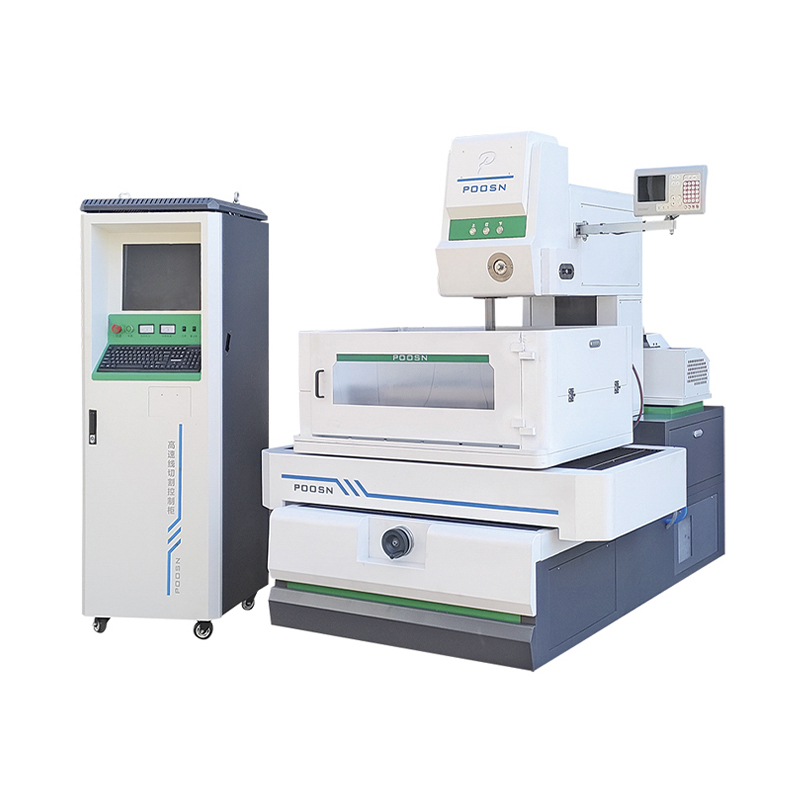
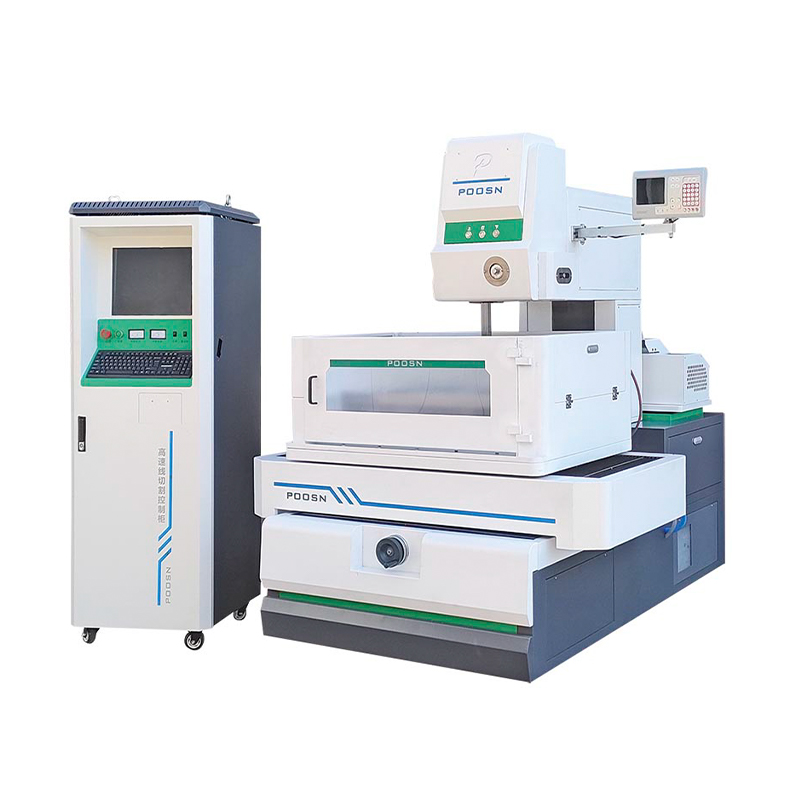
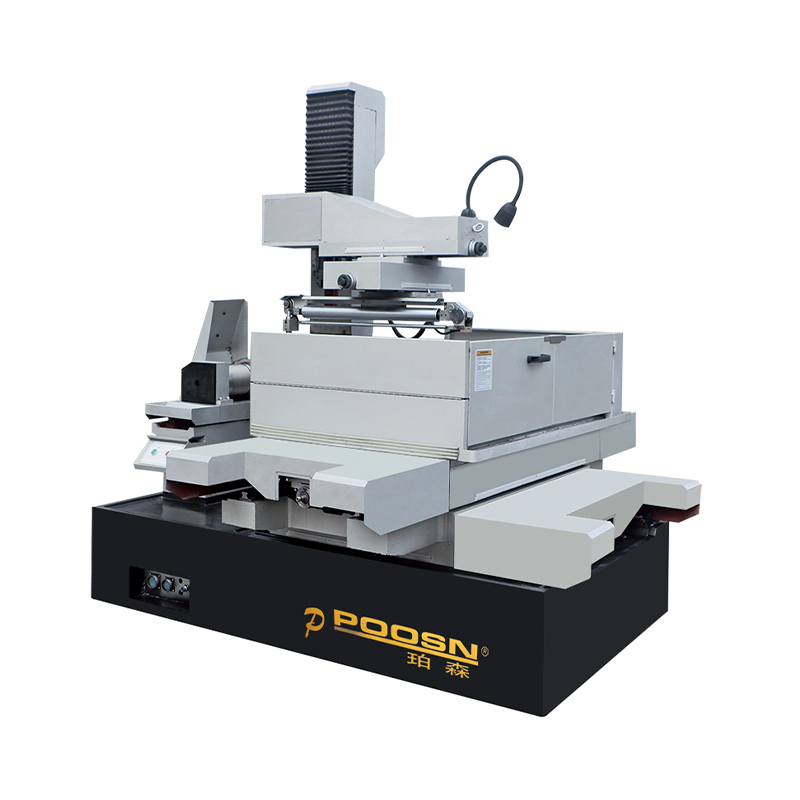
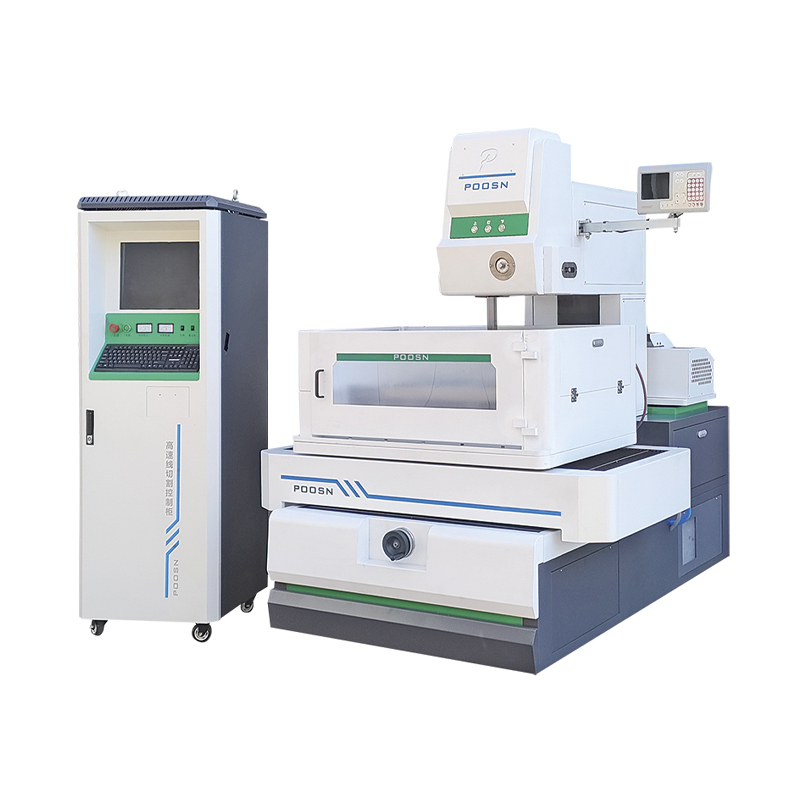
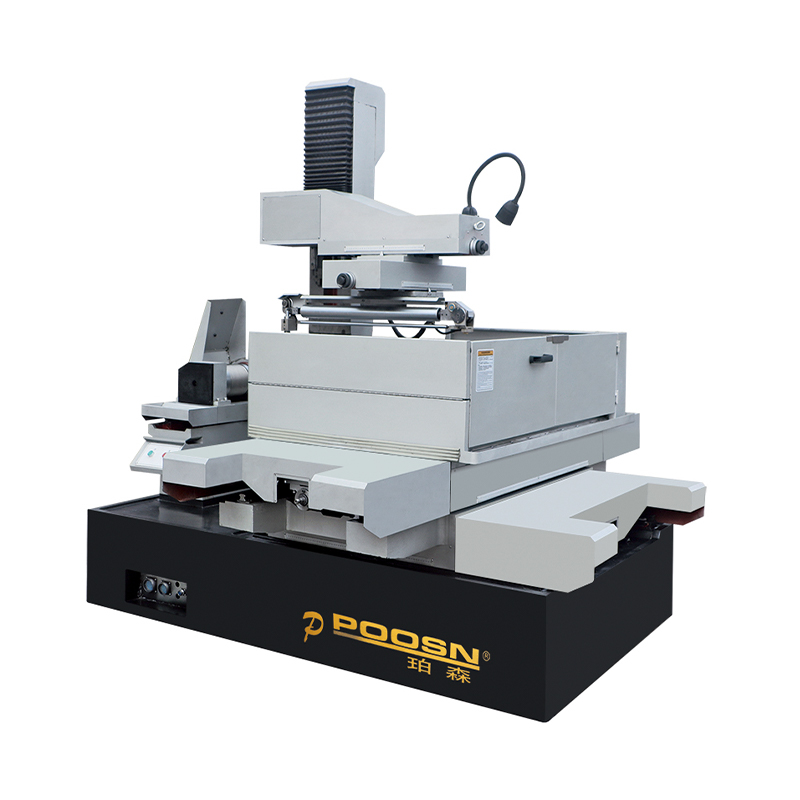
PS60C Heavy-Duty Medium-Speed Wire-Cut EDM Machine for Oversized Workpieces
2026-09-10
The PS60C is a heavy-duty CNC medium-speed wire-cut electrical discharge machining machine developed for oversized workpieces, large molds, thick conductive materials, and high-load precision cutting. It is the largest model in the PS-C series and is designed for manufacturers that require more than a conventional wire-cut EDM machine can provide. Its large machining envelope, substantial worktable capacity, high cutting thickness, multi-pass cutting capability, and stable mechanical structure make it suitable for demanding production environments in aerospace, heavy machinery, automotive manufacturing, precision mold production, and large-scale industrial equipment.
Unlike standard wire-cut EDM equipment designed mainly for small or medium-sized components, the PS60C combines a 600 mm × 800 mm XY travel range with an 840 mm × 1,160 mm worktable and an 800 kg maximum worktable load. It can accommodate workpieces with a maximum cutting thickness of up to 430 mm, providing a practical solution for large and heavy components that may exceed the working range of ordinary machines.
The machine is manufactured by Taizhou Xinchengyang Machinery Manufacturing Co., Ltd., a specialist producer of electrical discharge machining equipment with a history of wire-cut EDM development extending back to 1999. The company integrates casting, mechanical assembly, electrical control, precision testing, software configuration, and customized engineering into its production system. This integrated capability allows the PS60C to be supplied not only as a standard machine but also as a configurable processing platform for special workpiece dimensions, materials, cutting conditions, and automation requirements.
For users comparing medium-speed wire EDM machines, the PS60C is distinguished by its combination of heavy-load capacity and precision-oriented construction. It is not simply a larger worktable mounted on a conventional machine body. Its bed structure, guideway arrangement, wire tensioning system, power supply, control system, taper mechanism, and fluid management system are all configured to maintain machining stability when large workpieces place greater demands on the equipment.
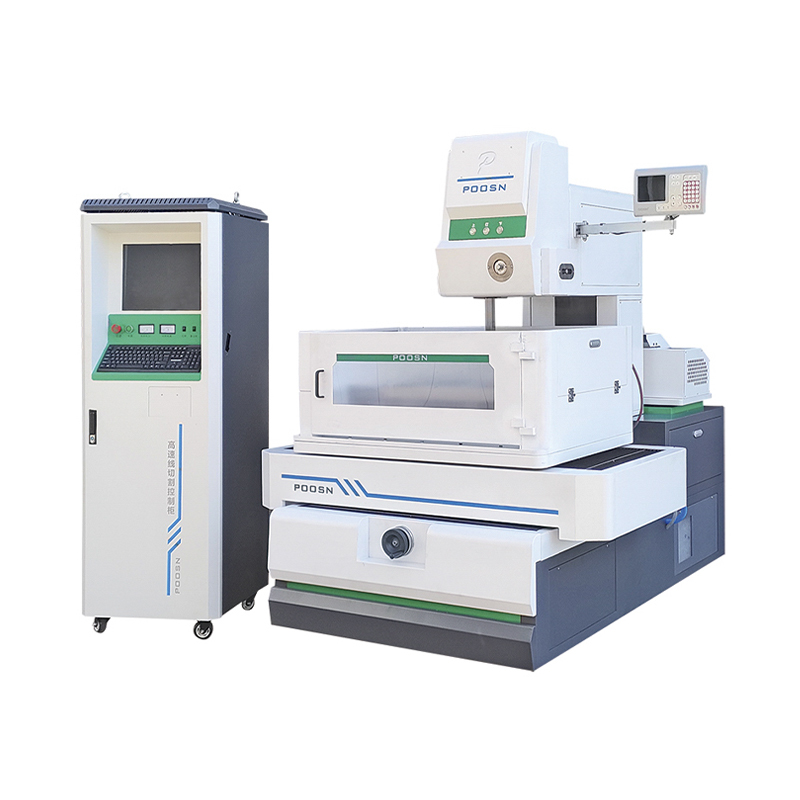
PS60C Heavy-Duty CNC Wire Cut EDM Machine for Oversized Workpieces
Content
- 1 1. Product Positioning and Core Value
- 2 2. Large Machining Capacity for Oversized Components
- 3 3. Precision Architecture and Mechanical Stability
- 4 4. Advanced Wire Management and Tension Control
- 5 5. Pulse Power Supply and Electrical Performance
- 6 6. Multi-Pass Cutting for Precision and Surface Quality
- 7 7. Intelligent CNC Control System
- 8 8. Working Fluid, Flushing, and Clean Processing
- 9 9. Manufacturing Strengths of the Producer
- 10 10. Comparison with Conventional Medium-Speed Wire EDM Machines
- 11 11. Typical Applications
- 12 12. Technical Specification Summary
- 13 13. Installation, Operation, and Maintenance Considerations
- 14 14. Customer-Specific Engineering and Customization
- 15 15. Why Choose the PS60C for Heavy-Duty Wire EDM?
- 16 16. Frequently Asked Questions
- 16.1 Q1: What types of workpieces are suitable for the PS60C?
- 16.2 Q2: What is the maximum cutting thickness of the PS60C?
- 16.3 Q3: What is the maximum worktable load?
- 16.4 Q4: How accurate is the PS60C?
- 16.5 Q5: Can the PS60C perform taper cutting?
- 16.6 Q6: Is the machine suitable for mass production?
- 16.7 Q7: What are the advantages of multi-pass cutting?
- 16.8 Q8: Can the machine be customized?
- 16.9 Q9: What maintenance is required?
- 16.10 Q10: How does the PS60C compare with smaller PS-C models?
- 17 17. Conclusion
- 18 References
- 19 Product: PS60C Heavy-Duty CNC Wire Cut EDM Machine for Oversized Workpieces
1. Product Positioning and Core Value
Wire-cut EDM removes electrically conductive material through controlled electrical discharges between a moving electrode wire and the workpiece. Because the tool does not make direct mechanical contact with the material, the process is especially valuable for hardened steel, tool steel, carbide, alloys, and components with complex contours. The absence of conventional cutting forces also makes EDM suitable for parts that would be difficult to machine with milling cutters, saws, or broaches.
However, large-scale wire EDM introduces additional engineering challenges. A heavier workpiece places greater loads on the worktable and machine foundation. A thicker workpiece increases the distance over which the wire must remain stable and accurately positioned. Long cutting cycles amplify the effects of thermal changes, guidewheel wear, wire vibration, contaminated working fluid, and mechanical backlash. A machine intended for such work must therefore provide rigidity, accurate motion control, dependable flushing, stable wire tension, and long-term repeatability.
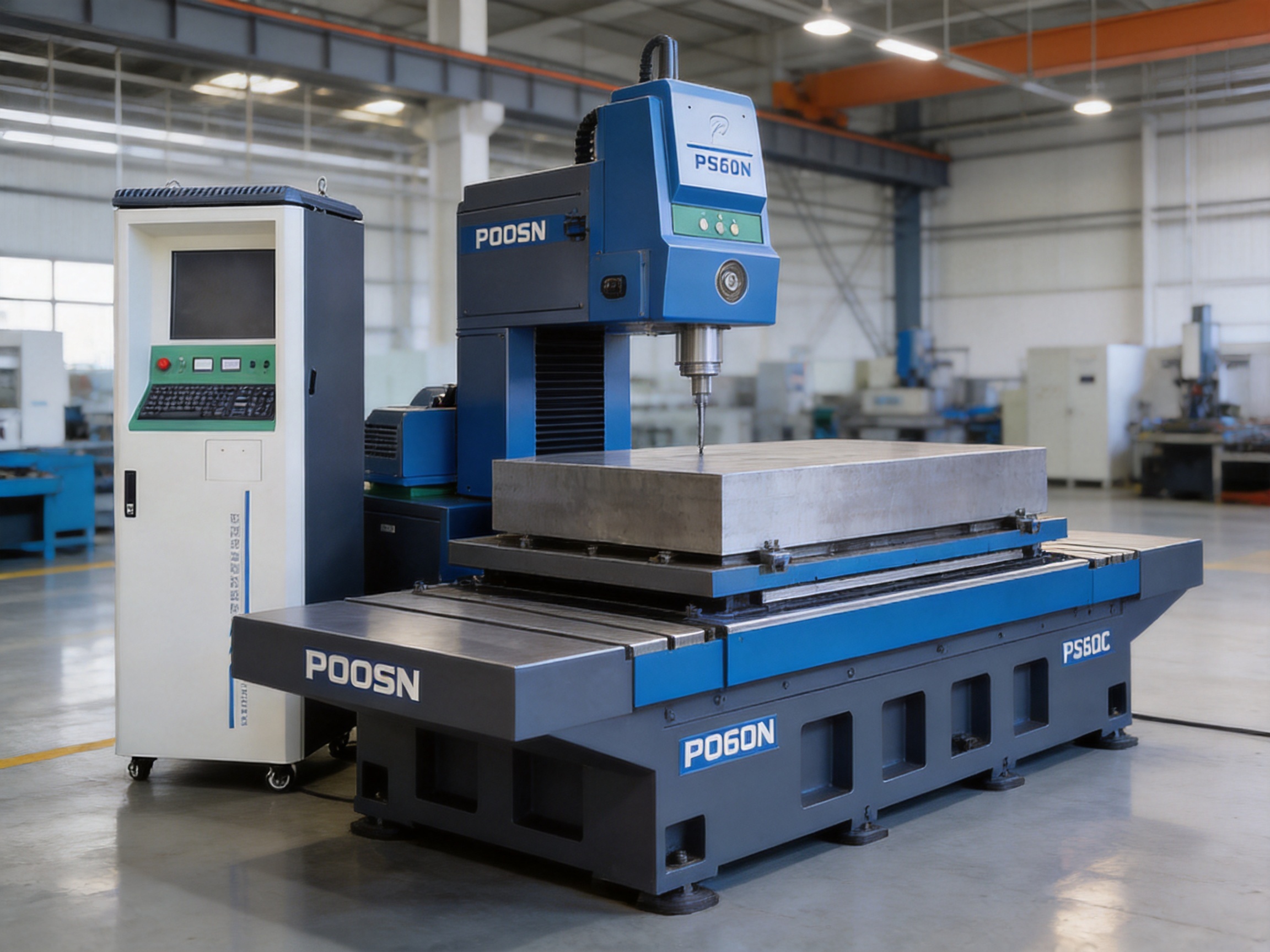
The PS60C addresses these requirements through a heavy-duty T-shaped bed, high-strength resin sand castings, aging treatment, precision linear guides, ball screws, imported bearings, a four-axis CNC system, and a high-performance pulse power supply. The standard configuration includes X, Y, U, and V axis linkage, allowing the machine to perform straight cutting, taper cutting, and multi-pass operations.
Its main value can be summarized in five areas:
1. Large-scale machining: The machine provides a 600 mm × 800 mm XY travel range and an 840 mm × 1,160 mm worktable.
2. Heavy-load capability: The maximum worktable load is 800 kg, allowing the processing of substantial molds and mechanical components.
3. Thick-material cutting: A maximum cutting thickness of 430 mm supports demanding workpieces that exceed the capacity of many conventional medium-speed machines.
4. Precision and surface quality: Multi-cut processing, servo control, precision guideways, and a stable wire system support a listed processing accuracy of 0.01 mm and multi-cut surface roughness of Ra ≤ 1.2 μm.
5. Configuration flexibility: The manufacturer can customize worktable dimensions, cutting depth, power supply settings, cutting modes, control functions, and automation scripts according to project requirements.
2. Large Machining Capacity for Oversized Components
The primary advantage of the PS60C is its ability to handle large workpieces without forcing users to divide the component into multiple setups. Its worktable measures 840 mm × 1,160 mm, while the XY travel reaches 600 mm × 800 mm. The processing slot size is listed as 840 mm × 1,250 mm. This geometry gives manufacturers more freedom when positioning large molds, thick plates, mechanical structures, and other conductive components.
Keeping a large workpiece in a single setup offers several benefits. It reduces the need for repositioning, minimizes alignment errors, decreases fixture preparation time, and supports more consistent dimensional accuracy across the entire contour. For complex molds, a single setup can also help preserve the relationship between multiple cavities, holes, reference surfaces, and taper features.
The large worktable is supported by a high-strength machine structure rather than a lightweight frame. A T-shaped bed helps constrain table movement within the base area, reducing the risk of deformation associated with conventional strip-shaped bed designs. This structural approach is important for heavy workpieces because the machine must maintain stable relative positioning between the worktable, guide system, wire frame, and workpiece throughout the cutting cycle.
For heavy-duty applications, load capacity is just as important as table dimensions. The PS60C supports a maximum worktable load of 800 kg. This allows users to install large tool inserts, die blocks, large mold sections, hardened plates, and heavy mechanical components while maintaining a practical safety margin for fixtures and auxiliary supports. The actual permissible load should always be evaluated together with load distribution, fixture design, workpiece center of gravity, and machine installation conditions.
The machine’s maximum cutting thickness is listed as 430 mm. Thick-section cutting requires effective flushing, reliable wire guidance, stable electrical discharge conditions, and accurate compensation for wire deflection. The PS60C is designed to address these requirements through automatic tracking water spraying, a precision wire guide system, constant wire tension, and a power supply capable of supporting stable cutting conditions.
Compared with smaller medium-speed wire EDM machines, the PS60C offers a larger operating range without abandoning the advantages of multi-pass machining. It is therefore suitable for manufacturers that need both large-scale capacity and a controlled finishing process rather than rough cutting alone.
3. Precision Architecture and Mechanical Stability
3.1 High-Strength Cast Machine Body
The machine body uses high-quality HT250 castings and a T-shaped bed design. HT250 cast iron provides a practical balance of strength, vibration damping, machinability, and dimensional stability. These characteristics are valuable in EDM because even small mechanical vibrations can affect wire stability, contour accuracy, surface uniformity, and the risk of wire breakage.
The cast components undergo aging treatment to relieve internal stresses generated during casting and machining. Without adequate stress relief, a large machine structure may gradually change shape as internal stresses are released over time. Such movement can influence guideway alignment and geometric accuracy. By applying aging treatment as part of the manufacturing process, the manufacturer improves the long-term consistency of the machine structure.
The rigid body also helps support stable operation when the worktable carries a large load. A machine that flexes under load may still appear accurate during an unloaded inspection but produce inconsistent results during actual production. The PS60C is designed with the load-bearing capacity of large workpieces in mind, allowing the mechanical system to maintain a more stable relationship between the workpiece and the electrode wire.
3.2 Linear Guides and Ball Screws
The motion system uses precision linear guides and ball screws. These components provide smooth movement, controlled positioning, and lower friction compared with less precise sliding arrangements. The taper mechanism also uses linear guides and ball screw pairs, supporting stable U and V axis motion during angular cutting.
The U and V axes provide coordinated movement of the upper wire guide. This enables the wire to be inclined relative to the lower guide, creating tapered contours. The standard CNC stroke for the U and V axes is listed as 60 mm × 60 mm in the specification table, while the broader taper device performance references selectable ranges of 400 mm × 400 mm at ±30 degrees and 590 mm × 590 mm at ±45 degrees. Because taper performance can depend on the specific configuration, workpiece height, guide arrangement, and software settings, final application parameters should be confirmed during technical evaluation.
Linear guides contribute to low-friction movement and predictable positioning. Ball screws convert motor rotation into controlled linear motion while helping reduce backlash and positioning errors. Together with pitch error compensation, these elements support the machine’s ability to reproduce programmed profiles over long cutting distances.
3.3 Imported Bearings and Servo Drive Options
The motion mechanisms use Japanese EZO bearings. High-quality bearings help reduce rotational runout, friction, and vibration in critical mechanical assemblies. They also support longer service life when the machine operates for extended periods or under repeated acceleration and deceleration.
The standard XY drive configuration uses stepper drives, while AC servo drives are available as an option. Servo drives can provide advantages in dynamic response, positioning control, acceleration management, and multi-cut repeatability. For users processing complex contours, large workpieces, or high-value molds, the optional servo configuration may offer additional process security and greater flexibility in demanding production schedules.
The wire frame is driven by Panasonic servo technology, and the manufacturer combines this drive system with high-precision linear guides, ball screws, and a C-type wire frame. This coordinated architecture is intended to maintain smooth wire movement and stable directional changes. Imported frequency converters support smoother reversal of the wire drive system, which can reduce mechanical shock and help extend the service life of drive components.
4. Advanced Wire Management and Tension Control
4.1 Adaptive Constant-Tension Mechanism
Wire tension is one of the most important factors in medium-speed wire EDM. Excessive tension may increase the risk of wire breakage, while insufficient or unstable tension can increase vibration, reduce contour accuracy, and produce inconsistent surface quality. The problem becomes more significant when cutting thick materials or performing taper cutting because the wire is subjected to changing electrical, mechanical, and flushing conditions.
The PS60C can be equipped with an adaptive constant-tension wire tightening mechanism. This system is designed to respond more quickly to tension fluctuations than a simple weight-based tensioning arrangement. By actively managing wire tension, it helps reduce variations during high-speed reciprocating movement and supports a more stable discharge gap.
Constant tension is particularly valuable during multi-pass cutting. The roughing pass removes most of the material, while finishing passes follow the previously generated contour. Any instability in wire position can be reflected in the final dimensional result. A more stable wire therefore contributes to better repeatability from one pass to the next.
4.2 Automatic Double-Sided Tightening
The automatic double-sided tightening mechanism is designed to reduce molybdenum wire vibration and prevent single-sided loosening. Balanced tightening helps keep the wire centered within the intended machining path and supports stable cutting on both sides of the workpiece.
This feature is useful during long cutting operations because wire behavior may change as the wire travels through the machining zone. Double-sided control can reduce the likelihood that one side of the wire system becomes loose while the opposite side remains excessively tight. Stable wire behavior is especially important for thick workpieces, taper profiles, and contours requiring multiple changes in direction.
4.3 Gemstone Guide Wheels
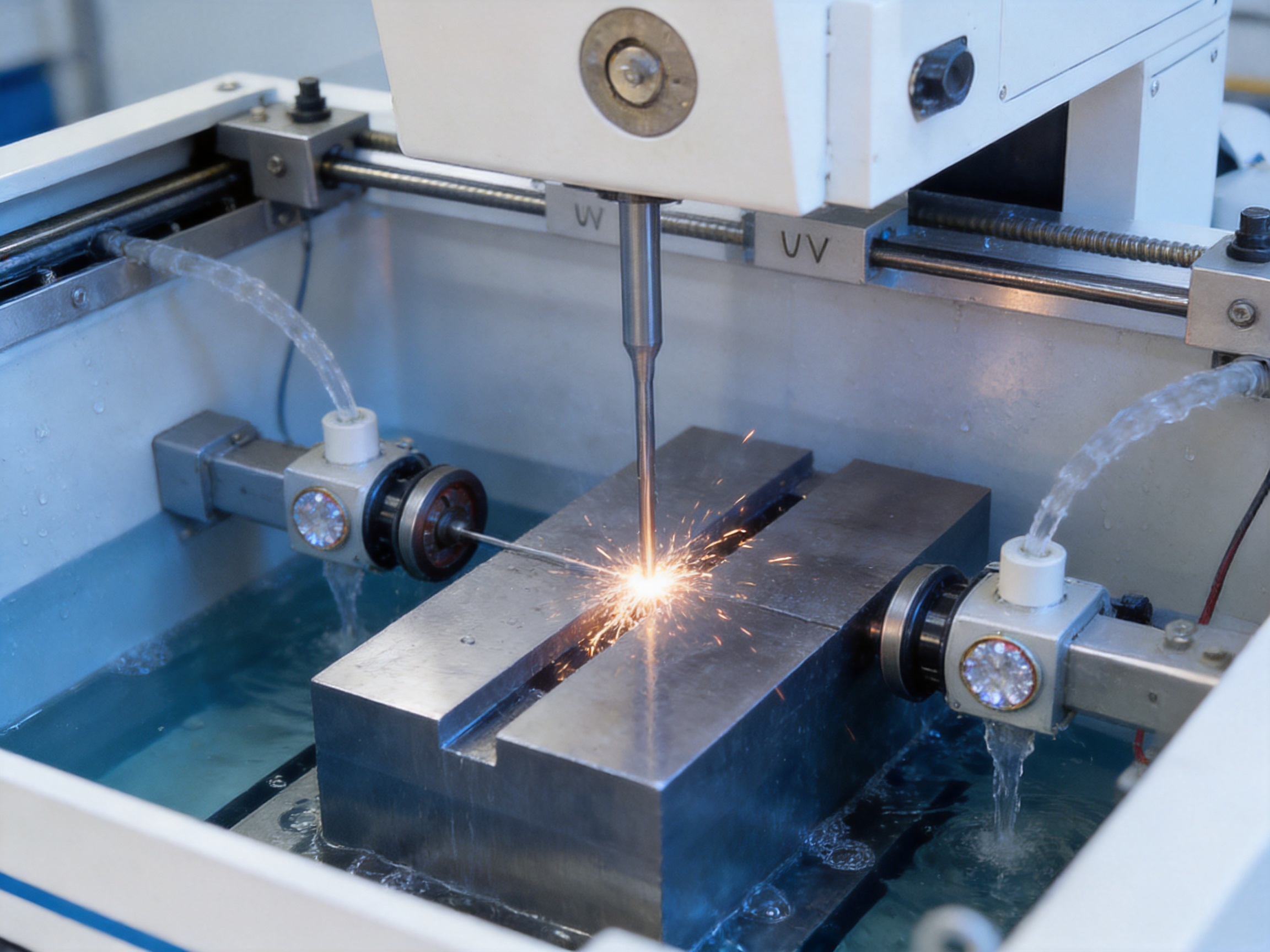
The machine uses a waterproof 40 mm single-sided gemstone guide wheel. The guide wheel is designed for easy threading, long service life, and high precision. Because the guide wheel directly influences the position and direction of the electrode wire, its dimensional quality and wear resistance are important to machining stability.
The guide wheel arrangement also makes replacement more convenient. Simplified replacement reduces maintenance time and allows operators to restore the machine to production more quickly when a consumable component reaches its service limit. Regular inspection remains necessary because guide wheel wear can influence wire alignment, taper accuracy, surface finish, and wire breakage frequency.
4.4 Liftable Gem Wire Guide
The liftable gem wire guide provides two practical benefits. First, it allows the guide to move close to the workpiece surface during machining. Reducing the distance between the guide and the workpiece can help reduce wire vibration and improve cutting accuracy and surface finish.
Second, the cutting height can be adjusted without rethreading the wire. This simplifies setup for operators and improves work efficiency when processing workpieces with different heights or when adjusting the cutting position during preparation. The function is particularly helpful in production environments where setup time must be minimized without sacrificing wire alignment.
5. Pulse Power Supply and Electrical Performance
The PS60C uses an advanced patented eco-friendly pulse power supply. Medium-speed wire EDM performance depends heavily on the interaction between pulse duration, peak current, voltage, off-time, flushing conditions, wire speed, and material characteristics. The power supply must generate controlled discharges while preventing unstable arcing and excessive electrode wear.
The machine is designed to achieve low electrode wear, high-speed processing, low surface roughness, and improved energy efficiency. These benefits are important because wire consumption and machining time directly affect operating cost. A power supply that removes material efficiently while controlling wire wear can improve productivity and reduce process interruptions.
The listed maximum cutting efficiency is 10,000 to 16,000 mm² per hour. Actual efficiency depends on material type, workpiece thickness, flushing conditions, programmed parameters, wire speed, desired surface quality, and the number of finishing passes. The range nevertheless indicates that the machine is intended for productive rough cutting as well as precision finishing.
The maximum processing current is listed as 6 A, and the electrical capacity is 2.5 kVA. The standard power supply requirement is 3N 380 V ±10. Electrical installation should be completed by qualified personnel, with proper grounding, protection, ventilation, and power quality control according to local regulations and the final machine configuration.
The power supply can be configured with high-speed or nanosecond technology. High-speed settings support efficient material removal during roughing. Nanosecond pulse configurations can provide additional control over discharge energy and surface condition during finishing operations. The ability to select or customize power supply characteristics is beneficial for manufacturers working with different grades of tool steel, hardened alloys, carbide, and other conductive materials.
For special materials, Taizhou Xinchengyang’s technical team can optimize discharge parameters to balance processing speed, surface quality, dimensional accuracy, and electrode wear. This engineering service is particularly valuable when the workpiece material or required surface condition falls outside ordinary production experience.
6. Multi-Pass Cutting for Precision and Surface Quality
Medium-speed wire EDM is commonly associated with multi-pass cutting. The first pass removes the majority of the material at a relatively high cutting rate. Subsequent skim or finishing passes refine the contour, reduce the thickness of the recast layer, improve surface uniformity, and achieve a closer final dimension.
The PS60C is configured to support this process logic. Its precision mechanical structure, four-axis linkage, stable wire tension, and intelligent control system work together to maintain a consistent tool path across multiple passes.
Multi-pass cutting provides several advantages over a single rough cut:
It improves dimensional consistency by correcting small deviations generated during the roughing stage.
It produces a more uniform surface texture and can reduce the need for manual polishing or secondary finishing.
It improves the quality of complex mating surfaces, mold cavities, punches, and precision inserts.
It helps control the affected surface layer produced by electrical discharges.
It allows the operator to prioritize cutting speed during roughing and surface quality during finishing.
The listed optimal surface roughness is Ra ≤ 1.2 μm with multi-cutting. The achievable result depends on material, thickness, wire condition, flushing, parameter selection, and measurement method. Even so, the specification demonstrates that the machine is designed for more than basic profile cutting. It is intended to support precision manufacturing where surface finish and dimensional stability have commercial importance.
The company can also optimize pulse frequency and width through software algorithms to meet customer requirements for surface texture. This customization capability can be useful when a component requires a particular functional surface, controlled visual appearance, reduced polishing, or a specific post-processing condition.
7. Intelligent CNC Control System
The PS60C uses an industrial control computer designed for long-term stable operation. Industrial control hardware is important in a production machine because wire EDM cycles may run for many hours, and unexpected interruptions can cause material loss, wire breakage, or incomplete workpieces.
The machine is equipped with an X8 or AUTOCUT control system, while CAXA CAM2019 or TCAM may be available as optional programming solutions. The intelligent programming system simplifies the generation of G-code programs and supports the preparation of complex contours, taper profiles, offsets, and multi-pass strategies.
LAN and USB interfaces support data transfer between the machine and external computers. This is useful for transferring programs, backing up machining data, updating process files, and maintaining organized production records. A practical data management system can reduce manual transcription errors and improve traceability in mold and component production.
The system supports four-axis linkage across X, Y, U, and V. This allows coordinated movement for taper cutting and other geometries that require the upper wire guide to move independently from the worktable axes. Taper cutting is valuable for punches, dies, angled surfaces, draft features, and components that must mate with another tapered part.
The Z-axis lift is powered by an AC 220 V electric motor. One-click depth setting through linear guides simplifies preparation for different workpiece heights. This reduces setup complexity and helps operators establish the cutting depth more efficiently.
8. Working Fluid, Flushing, and Clean Processing
Effective flushing is essential for wire EDM. The working fluid removes eroded particles from the cutting gap, stabilizes the discharge process, cools the workpiece, and helps prevent short circuits or unstable arcing. Poor flushing can reduce cutting efficiency, increase wire breakage, and affect surface quality.
The PS60C includes automatic tracking water spraying during the cutting process. This function helps direct working fluid toward the active machining zone as the wire follows the programmed contour. Tracking spray is particularly useful when the workpiece shape changes or when the cutting path moves across a large surface.
The high-pressure water tank has a capacity of 80 liters and uses a paper core filtration method. Filtration removes machining debris from the fluid and supports more stable cutting conditions. Operators should monitor filter condition, fluid cleanliness, pump performance, and tank contamination according to the maintenance schedule.
The machine also incorporates an anti-splash design intended to minimize working-fluid splatter and maintain a cleaner processing environment. A clean machine interior improves visibility, reduces contamination around electrical and mechanical components, and makes routine inspection easier.
Working-fluid management is not only a maintenance issue; it is a quality-control issue. Fluid contamination can influence discharge stability, cutting speed, surface finish, and wire breakage. For this reason, operators should establish clear procedures for filtration, fluid replacement, tank cleaning, and inspection of spray nozzles and pumps.
9. Manufacturing Strengths of the Producer
The PS60C benefits from the manufacturing capabilities of Taizhou Xinchengyang Machinery Manufacturing Co., Ltd. The company specializes in electrical discharge machining, special processing technologies, and related equipment. Its product range includes PS-C and DK77-BC medium-speed wire-cut EDM machines, DK77-A and DK77-B high-speed wire-cut EDM machines, and DK77-D large-taper wire-cut EDM machines.
The company’s manufacturing approach combines product development with practical process experience. It maintains processing equipment, testing methods, mechanical design capabilities, electrical engineering resources, and technical support services. Each machine tool undergoes positioning accuracy testing before delivery, helping verify that the equipment meets the intended quality requirements.
Experience accumulated since 1999 provides a foundation for understanding the practical problems encountered in wire-cut EDM. These problems include wire breakage, guide wheel wear, worktable deformation, unstable discharge, poor flushing, inadequate taper accuracy, and inconsistent multi-pass results. Product improvements such as constant-tension wire management, liftable guides, tracking water spray, high-precision guideways, and stable machine castings are directly related to these production challenges.
The company also operates a customized development model. Customers may provide engineering drawings, workpiece samples, material information, or process requirements. The technical team can then evaluate the geometry, conductive material, workpiece weight, required cutting thickness, surface finish, and production volume before recommending a machine configuration.
Customization may include worktable dimensions, effective travel range, cutting depth, fixture arrangements, special power supply parameters, automation scripts, and cutting modes. For special materials, the company can perform parameter optimization to achieve an appropriate balance between removal rate, wire wear, surface quality, and dimensional precision.
Reverse engineering support is available for customers who provide physical samples. The technical team can analyze material characteristics, measure geometry, evaluate functional surfaces, and determine how the PS60C should be configured or programmed. This approach is useful when a customer needs to reproduce an existing component, improve an established production process, or develop a new part based on a sample rather than a complete drawing.
10. Comparison with Conventional Medium-Speed Wire EDM Machines
The PS60C competes with medium-speed wire EDM machines in several dimensions: machining envelope, load capacity, cutting thickness, precision stability, wire control, automation potential, and engineering support. Its main advantage is not necessarily that every individual component is unique, but that multiple capabilities are integrated into one heavy-duty platform.
| Comparison factor | Conventional smaller medium-speed machine | PS60C heavy-duty configuration | Practical benefit |
| XY travel | Typically intended for small or medium components | 600 mm × 800 mm | Supports larger contours and reduces the need for multiple setups |
| Worktable size | Limited table area | 840 mm × 1,160 mm | Provides more room for large workpieces and fixtures |
| Maximum worktable load | Lower load rating | Up to 800 kg | Suitable for heavy molds, plates, and mechanical components |
| Maximum cutting thickness | Often limited for thick sections | Up to 430 mm | Improves access to thick and oversized conductive materials |
| Wire tension control | May rely on basic tensioning | Adaptive constant-tension and double-sided tightening options | Reduces vibration and supports more consistent cutting |
| Guide system | Standard guide components | Precision linear guides, ball screws, and gemstone guide wheels | Improves motion smoothness, wire stability, and service life |
| Control and communication | Basic CNC functions | Industrial computer, four-axis linkage, LAN and USB interfaces | Supports complex programming and production data management |
| Customization | Usually limited to standard options | Worktable, power supply, cutting modes, and automation can be customized | Better fit for special processes and customer-specific production |
Compared with a smaller machine, the PS60C can reduce the operational compromises associated with oversized workpieces. Operators are less likely to need multiple repositioning operations, external support structures, or a second machine for the same component. This can improve setup efficiency and reduce the risk of accumulated alignment errors.
Compared with a basic large-table machine, the PS60C offers more attention to wire tension, taper control, precision guideways, power supply flexibility, and multi-pass surface quality. These details are important because large capacity alone does not guarantee precision. The machine must also control the factors that influence the electrode wire and discharge gap during long and demanding cuts.
11. Typical Applications
11.1 Large Mold Manufacturing
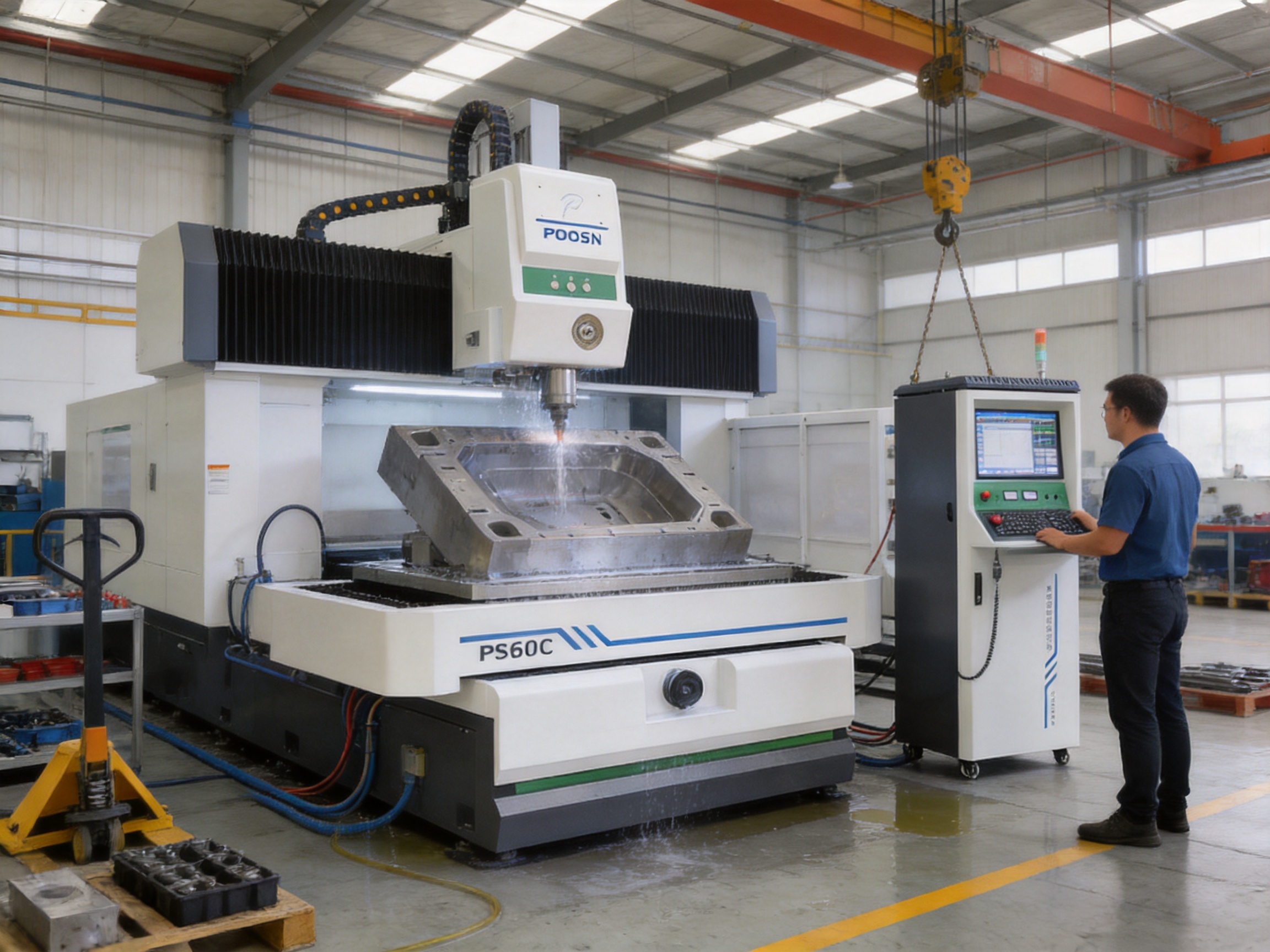
The PS60C is suitable for large punches, dies, inserts, mold bases, cavity components, and hardened mold steel sections. Wire EDM can produce complex profiles, narrow slots, sharp internal corners, and geometries that are difficult to create with conventional tools after hardening.
The large worktable and 800 kg load capacity are valuable when the mold component cannot be divided into smaller pieces. Multi-pass cutting can produce the surface consistency and dimensional accuracy required for mating mold components.
11.2 Aerospace Components
Aerospace manufacturing often involves hard, heat-resistant, and conductive alloys. Components may contain complex contours, narrow openings, lightweighting structures, and precision mating features. The non-contact EDM process can cut these materials without imposing the same mechanical cutting forces associated with milling or broaching.
The PS60C’s stable control system, large working range, and customized discharge parameters make it suitable for aerospace-related components that require careful control of dimensional accuracy and surface condition. Process validation, material qualification, and customer-specific inspection requirements should be completed before production use.
11.3 Heavy Machinery and Industrial Equipment
Large mechanical components, wear-resistant plates, guide components, and special tooling can often exceed the size or weight capacity of ordinary wire EDM machines. The PS60C provides a platform for processing such parts while maintaining CNC contour control.
Its heavy-duty construction is especially useful in production environments where machines operate for extended cycles and where workpieces are loaded repeatedly. Proper foundation preparation, lifting procedures, fixture design, and workpiece support remain essential for safe and accurate operation.
11.4 Automotive Tooling
Automotive stamping dies, forming tools, precision inserts, and hardened components may require large cutting capacity and controlled taper features. The PS60C can support the production of complex profiles and mating die components while reducing dependence on manual finishing.
Multi-cut operation is beneficial when the final part requires a uniform surface and close dimensional matching. The ability to transfer programs through LAN or USB also supports production environments where multiple design revisions must be managed efficiently.
11.5 Precision Machinery and Special Components
Precision machinery manufacturers may use the PS60C for gears, slots, profiles, fixtures, blades, mechanical templates, and conductive parts requiring intricate contours. The machine is also suitable for prototype work when a customer needs a large component produced from a drawing or physical sample.
12. Technical Specification Summary
| Specification | PS60C |
| Worktable size | 840 mm × 1,160 mm |
| XY travel size | 600 mm × 800 mm |
| Processing slot size | 840 mm × 1,250 mm |
| Maximum cutting thickness | 430 mm |
| Maximum worktable load | 800 kg |
| UV travel size | 60 mm × 60 mm |
| Maximum cutting taper | ±6 degrees per 80 mm |
| Electrode wire diameter | 0.18 mm with wire guide |
| Wire feed speed | 1–11 m/s, frequency controlled |
| Maximum wire storage length | Approximately 320 m |
| Fluid tank capacity | 80 L |
| Filtration method | Paper core filter |
| Processing accuracy | 0.01 mm, according to test-piece conditions |
| Maximum cutting efficiency | 10,000–16,000 mm²/h |
| Optimal surface roughness | Ra ≤ 1.2 μm with multi-cutting |
| Controlled axes | X, Y, U, and V four-axis linkage |
| Programming system | X8 or AUTOCUT control system |
| Maximum processing current | 6 A |
| Electrical capacity | 2.5 kVA |
| Power supply | 3N 380 V ±10 percent |
| Machine weight | Approximately 2,700 kg |
| Machine dimensions | Approximately 2,500 mm × 2,065 mm × 2,300 mm |
Specifications may vary according to selected drive systems, power supply options, guide configurations, automation requirements, and customer-specific customization. Buyers should confirm the final technical specification, installation requirements, acceptance standard, and processing capability before placing an order.
13. Installation, Operation, and Maintenance Considerations
A large wire EDM machine requires appropriate site preparation. The installation area should provide adequate floor strength, working clearance, power supply, water management, ventilation, lighting, and access for loading equipment. Because the PS60C weighs approximately 2,700 kg, lifting and positioning must be planned with suitable handling equipment and qualified personnel.
The machine should be leveled and aligned according to the manufacturer’s installation procedure. Stable leveling helps preserve geometric accuracy and reduces unnecessary stress on the bed and guide system. The foundation should be evaluated for vibration and load-bearing capacity, particularly when the machine is installed near presses, heavy mills, forging equipment, or other vibration-producing machinery.
Operators should inspect the wire path before each production cycle. Guide wheels, wire guides, tensioning components, nozzles, and the automatic threading mechanism should be kept clean and correctly aligned. Damaged or worn guide components should be replaced promptly.
The working fluid should be monitored for contamination and filtration performance. Paper core filters should be replaced when pressure, flow, or fluid quality indicates restriction. The tank should be cleaned at suitable intervals to prevent accumulated debris from returning to the machining zone.
Lead screws, linear guides, bearings, and other motion components should be lubricated according to the maintenance schedule. Excessive lubrication can attract debris, while insufficient lubrication can increase friction and wear. Maintenance personnel should use the recommended lubricant and follow the manufacturer’s instructions.
Electrical cabinets should be kept dry and clean. Cooling and ventilation systems should be checked regularly, and electrical connections should be inspected by qualified technicians. Software, programs, and parameter data should be backed up through the available LAN or USB interfaces.
Safe operating practices are essential. Operators should confirm that the workpiece is securely supported, the fixture is clear of the wire path, the working fluid level is adequate, and all doors and safety devices are functioning before starting an automatic cycle.
14. Customer-Specific Engineering and Customization
One of the most important advantages of the PS60C platform is its adaptability. Customers may have requirements that cannot be met by a standard catalog machine. These requirements may include unusual workpiece dimensions, extra-thick material, special taper geometry, unique fixture arrangements, automated loading, dedicated cutting modes, or integration with a factory production system.
The manufacturer can evaluate the customer’s drawings or physical samples and propose a configuration based on the actual process. The evaluation may cover workpiece material, conductivity, hardness, maximum dimensions, weight distribution, required tolerances, surface finish, taper angle, production volume, and expected cycle time.
Customization can involve the worktable size, effective cutting range, machine travel, wire guide arrangement, power supply, servo drive selection, software functions, automation scripts, and process parameters. For an oversized workpiece, the correct design must consider more than table dimensions. The loading path, fixture support, flushing access, wire travel, operator access, and maintenance space must all be evaluated.
For customers processing special materials, discharge parameter development can help prevent unstable cutting. The manufacturer can adjust pulse frequency, pulse width, current, off-time, wire speed, and flushing conditions to establish a practical process window. This is particularly important for difficult-to-machine alloys, carbide, hardened tool steel, and materials with unusual thermal or electrical properties.
Customization also supports product development. A customer may send a sample that must be reproduced, a damaged component that needs reverse engineering, or a prototype that requires a new cutting strategy. By combining geometric measurement, material analysis, and machine capability assessment, the technical team can help transform the sample into a workable EDM process.
15. Why Choose the PS60C for Heavy-Duty Wire EDM?
The PS60C is an appropriate choice when a manufacturer requires a large machining envelope, high worktable load, thick-section cutting, and precision-oriented multi-pass performance in the same machine. Its value is strongest in applications where the cost of multiple setups, manual finishing, inaccurate repositioning, or outsourcing would be significant.
The machine’s large structure and T-shaped bed provide a foundation for heavy workpieces. Its guideways, ball screws, imported bearings, servo options, and pitch compensation support accurate movement. Its constant-tension and double-sided tightening systems help stabilize the wire. Its pulse power supply supports productive cutting and controlled finishing. Its industrial CNC system provides four-axis linkage and practical data exchange. Its fluid system helps maintain a stable discharge environment.
The manufacturer’s experience adds another layer of value. Customers receive access to technical consultation, customized configuration, process parameter development, installation guidance, maintenance support, and long-term service. This is important because machine performance depends not only on hardware but also on correct application engineering.
When comparing competitors, buyers should look beyond nominal travel size or maximum current. They should evaluate the complete system: actual load capacity, bed rigidity, guideway quality, wire tension stability, taper performance, multi-pass accuracy, filtration, control reliability, service response, and customization capability. The PS60C is designed to compete across these complete-machine criteria.
16. Frequently Asked Questions
Q1: What types of workpieces are suitable for the PS60C?
The PS60C is designed for oversized and heavy workpieces, including large molds, die components, hardened plates, aerospace parts, heavy machinery components, automotive tooling, and complex conductive materials. It is especially suitable when the workpiece requires a large machining area, substantial table load capacity, thick-section cutting, or precise multi-pass finishing.
Q2: What is the maximum cutting thickness of the PS60C?
The PS60C specification table lists a maximum cutting thickness of 430 mm. Actual cutting capability depends on workpiece material, flushing conditions, wire condition, required surface quality, cutting strategy, and the selected machine configuration. Customers should confirm the final capability through a technical review or sample test for critical applications.
Q3: What is the maximum worktable load?
The maximum listed worktable load is 800 kg. This value includes the workpiece and should be evaluated together with fixture weight, load distribution, center of gravity, and support conditions. Heavy workpieces must be loaded with suitable lifting equipment and securely positioned before machining.
Q4: How accurate is the PS60C?
The listed processing accuracy is 0.01 mm under test-piece conditions. The machine also uses precision linear guides, ball screws, imported bearings, pitch error compensation, stable wire tension, and multi-pass control to support accurate cutting. Final accuracy depends on material, workpiece thickness, thermal conditions, wire condition, parameter selection, measurement method, and machine maintenance.
Q5: Can the PS60C perform taper cutting?
Yes. The PS60C uses U and V axis movement for taper cutting and supports X, Y, U, and V four-axis linkage. The listed maximum taper is ±6 degrees per 80 mm. Taper capability may vary with workpiece height, guide configuration, machine settings, and the required contour. Technical confirmation is recommended for unusual taper geometries.
Q6: Is the machine suitable for mass production?
Yes. The PS60C can support batch and mass production, especially for large or heavy components. Its cutting efficiency is listed at 10,000–16,000 mm²/h, and its CNC programming, multi-pass strategies, automatic threading, stable wire tension, and data-transfer interfaces support repeatable production. Actual cycle time depends on material, geometry, thickness, surface finish, and the number of finishing passes.
Q7: What are the advantages of multi-pass cutting?
Multi-pass cutting improves dimensional consistency, surface finish, contour accuracy, and control of the electrically affected surface layer. The roughing pass prioritizes material removal, while finishing passes refine the profile. This approach may require more machining steps, but it can reduce scrap, manual polishing, and secondary correction work.
Q8: Can the machine be customized?
Yes. Customization options may include worktable dimensions, cutting depth, power supply, servo drive configuration, wire guide arrangement, cutting modes, automation scripts, software functions, and special fixture requirements. The manufacturer can also evaluate drawings or physical samples for special applications.
Q9: What maintenance is required?
Important maintenance tasks include checking wire guides and guide wheels, monitoring wire tension, cleaning and replacing filters, maintaining working-fluid quality, lubricating guideways and ball screws, inspecting bearings, keeping the electrical cabinet clean and dry, and backing up CNC programs. A regular maintenance schedule helps preserve accuracy and reduce unplanned downtime.
Q10: How does the PS60C compare with smaller PS-C models?
The PS60C is the largest model in the PS-C series. Compared with the PS35C, PS45C, and PS50C, it provides the largest worktable, the greatest XY travel, the highest load capacity, and the greatest maximum cutting thickness. Smaller models may be more economical for small or medium components, while the PS60C is intended for extra-large workpieces and high-load industrial applications.
17. Conclusion
The PS60C Heavy-Duty Medium-Speed Wire-Cut EDM Machine is engineered for manufacturers that require large-scale capacity without compromising precision-oriented cutting. Its 600 mm × 800 mm XY travel, 840 mm × 1,160 mm worktable, 430 mm maximum cutting thickness, and 800 kg load capacity position it as a specialized solution for oversized molds, thick conductive materials, heavy industrial components, aerospace parts, and large automotive tooling.
Its competitive advantages come from the combined performance of its mechanical, electrical, and control systems. The HT250 T-shaped bed and aging-treated castings provide structural stability. Precision linear guides, ball screws, imported bearings, and servo drive options support controlled movement. Adaptive constant-tension wire management, double-sided tightening, gemstone guide wheels, and liftable guides improve wire stability. The eco-friendly pulse power supply supports efficient cutting and controlled electrode wear. Automatic tracking water spray and paper-core filtration help maintain a stable machining environment.
Beyond standard specifications, the machine is supported by a manufacturer with long-term EDM experience, in-house technical development, precision testing capabilities, and customized engineering services. Customers can request application analysis, process optimization, configuration adjustments, sample-based development, and technical support throughout the equipment lifecycle.
For a factory seeking a reliable wire erosion machine for oversized and high-load workpieces, the PS60C provides a strong combination of capacity, stability, precision, customization, and industrial practicality. Its design makes it suitable not only for individual complex components but also for repeatable production in demanding sectors where machine reliability and process consistency directly influence manufacturing cost and product quality.
References
1. Taizhou Xinchengyang Machinery Manufacturing Co., Ltd., PS-C Series Medium-Speed Wire-Cut EDM Machine Technical Specifications.
2. Taizhou Xinchengyang Machinery Manufacturing Co., Ltd., PS60C Product Configuration and Application Materials.
3. International Organization for Standardization, ISO 230 Series, Test Code for Machine Tools.
4. International Organization for Standardization, ISO 2768, General Tolerances for Technical Drawings.
5. Society of Manufacturing Engineers, Electrical Discharge Machining: Process Principles and Industrial Applications.
6. American Society for Metals, ASM Handbook, Volume 16: Machining.
7. Manufacturing Engineering and Machine Tool Design References, Wire Electrical Discharge Machining, Process Control, and Surface Integrity.
Product: PS60C Heavy-Duty CNC Wire Cut EDM Machine for Oversized Workpieces

-
Phone
+86-0523-86268788 +86-13815960366 +86-13912191163Email
[email protected]Address
No. 366, Yusheng Road Jiulong Town, Hailing District Taizhou City, China
Copyright © Taizhou Xinchengyang Machinery Manufacturing Co., Ltd. All Rights Reserved.
Custom edm machine for sale
wholesale edm machine manufacturers
