

 English
 русский
 عربى
عربى

Lu Qianwen — Overseas Sales Manager
Home / Author / Lu Qianwen — Overseas Sales Manager / DK63D Heavy-Duty CNC Large-Taper Wire-Cut EDM Machine for Large Mold Machining
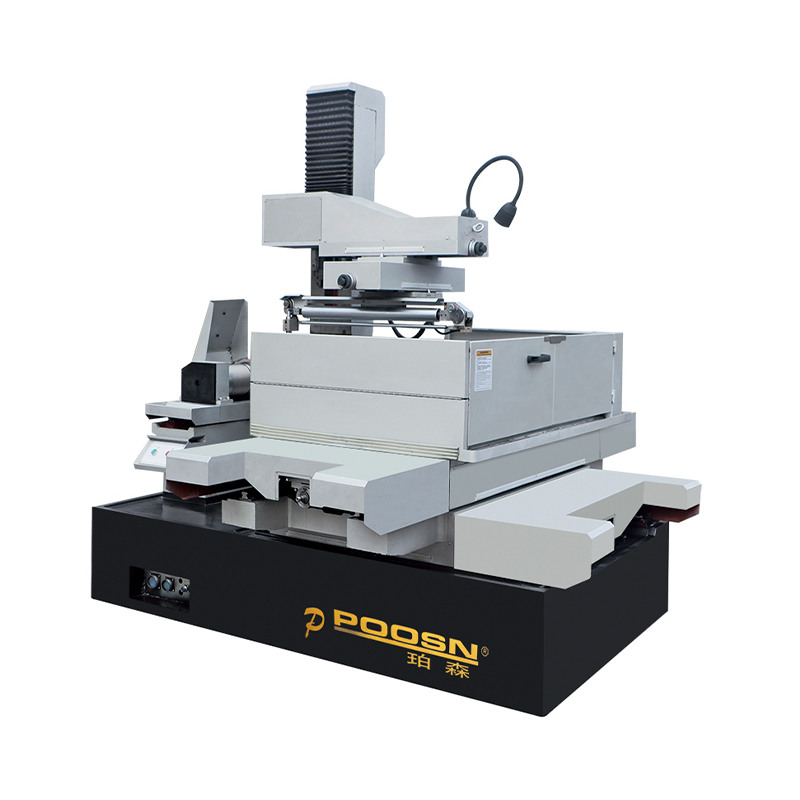
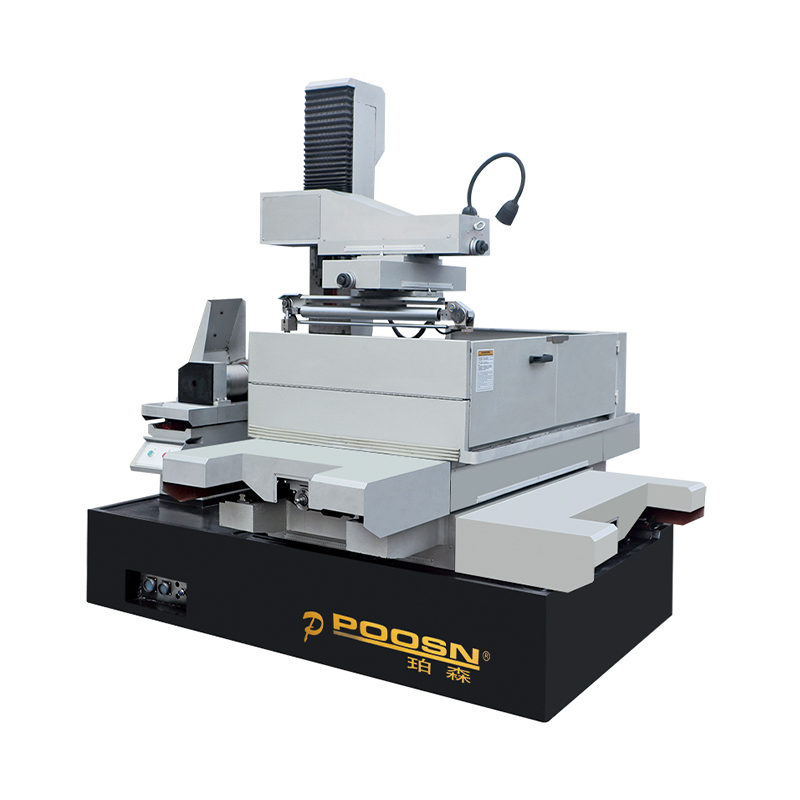
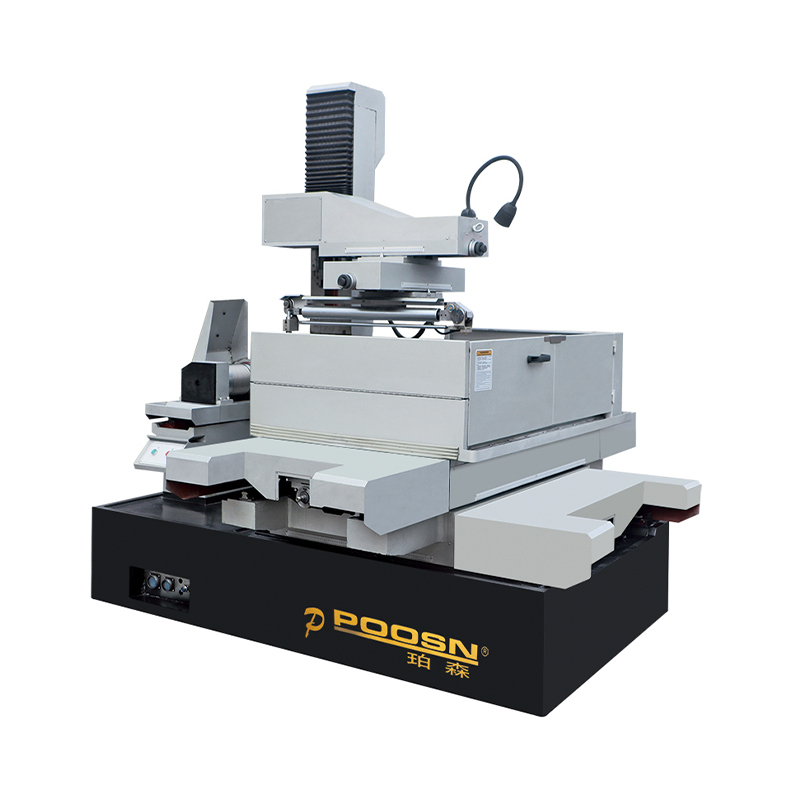
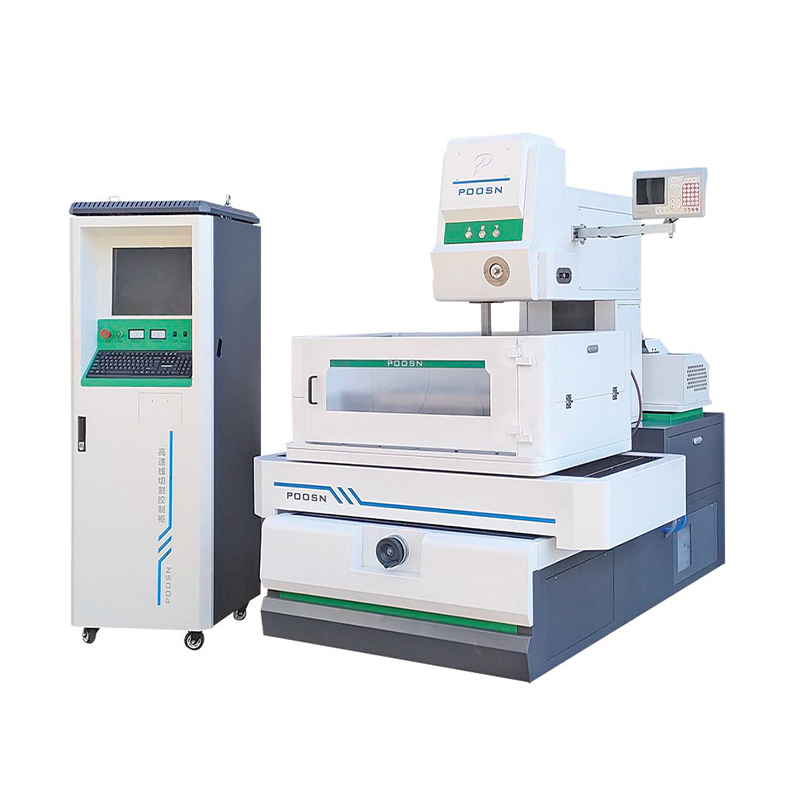
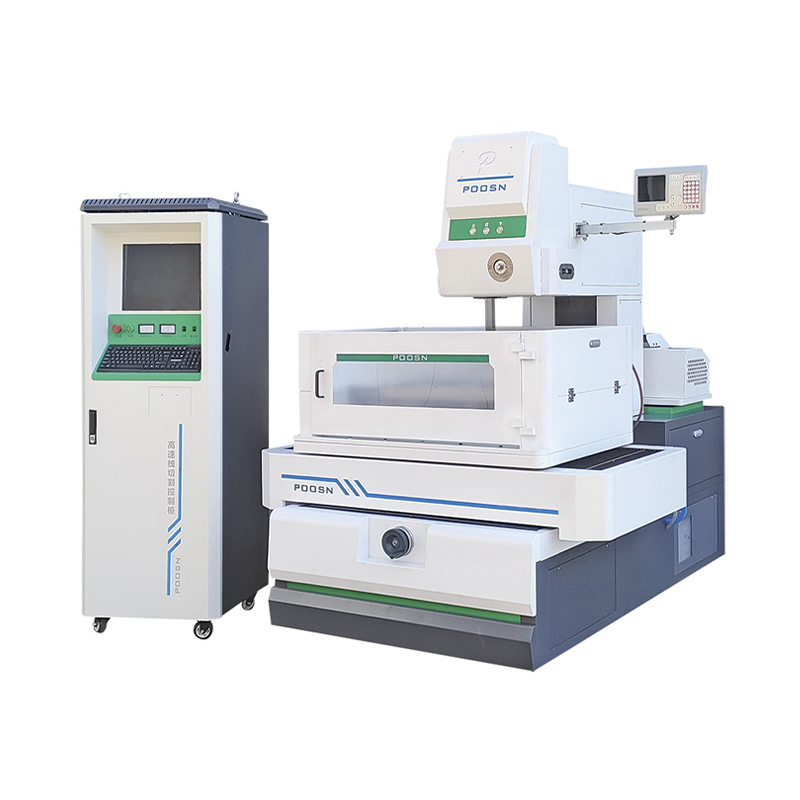
DK63D Heavy-Duty CNC Large-Taper Wire-Cut EDM Machine for Large Mold Machining
2026-07-22
Large and complex workpieces place demands on a wire-cut electrical discharge machining system that go far beyond ordinary two-dimensional cutting. A machine must provide sufficient table capacity, stable movement under heavy loads, reliable wire guidance, accurate four-axis interpolation, and the ability to maintain dimensional consistency when the wire is deliberately tilted through a substantial angle. The DK63D Heavy-Duty CNC Large-Taper Wire-Cut EDM Machine has been developed for this demanding class of work.
Designed for large molds, aerospace components, heavy mechanical parts, and other precision components, the DK63D combines a spacious work envelope with large-taper cutting capability, high load capacity, automated control, and a reinforced mechanical structure. Its purpose is not simply to cut larger parts than a standard wire EDM machine. It is engineered to preserve accuracy, cutting stability, and production efficiency when the workpiece is large, thick, heavy, hard, or geometrically complicated.
Manufactured by Taizhou Xinchengyang Machinery Manufacturing Co., Ltd., the DK63D belongs to the DK-D large-cutting-taper WEDM series. It is positioned between conventional medium-size wire-cut machines and the largest heavy-duty systems in the series, offering a practical combination of machining capacity, taper performance, precision, and operating cost. For users who need more workspace and load capacity than a DK45D or DK55D can provide, but do not require the full envelope of a DK80D, the DK63D offers a balanced and highly capable solution.
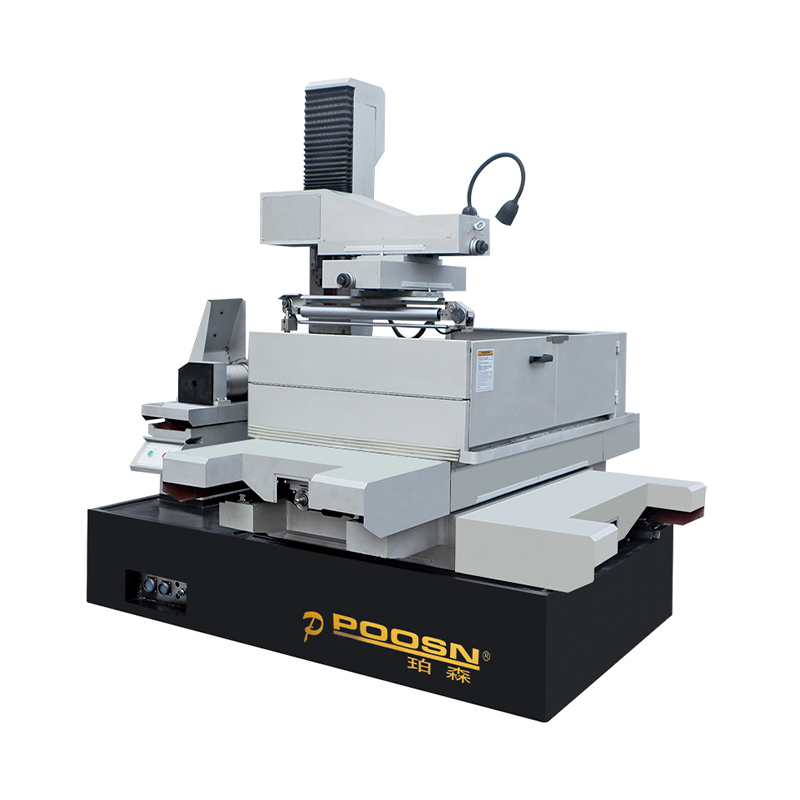
DK63D Heavy-Duty CNC Large Taper Wire Cut EDM Machine for Large Mold Machining
Content
- 1 1. The Role of Large-Taper Wire EDM in Modern Manufacturing
- 2 2. Product Positioning and Principal Advantages
- 3 3. Mechanical Architecture for Large and Heavy Workpieces
- 4 4. Control System and Intelligent Process Management
- 5 5. Manufacturing Strengths of the Producer
- 6 6. Process Assurance from Installation to Production
- 7 7. Comparison within the DK-D Large-Taper Series
- 8 8. Technical Specification Summary
- 9 9. Applications in Precision Mold Manufacturing
- 10 10. Aerospace and Heavy Machinery Applications
- 11 11. Efficiency, Cost Control, and Total Value
- 12 12. Process Recommendations for Reliable Results
- 13 13. Q&A
- 13.1 Q1: What is the main advantage of the DK63D over a conventional straight-cut wire EDM machine?
- 13.2 Q2: How does the DK63D compare with the DK45D?
- 13.3 Q3: How does the DK63D compare with the DK55D?
- 13.4 Q4: Can the DK63D cut very thick materials?
- 13.5 Q5: What taper angle can the DK63D achieve?
- 13.6 Q6: What materials can be machined?
- 13.7 Q7: What surface finish can be expected?
- 13.8 Q8: Is the machine suitable for mass production?
- 13.9 Q9: What control system does the DK63D use?
- 13.10 Q10: Are servo drives available?
- 13.11 Q11: What maintenance areas require the most attention?
- 13.12 Q12: Does the manufacturer provide installation and training?
- 14 14. Why Choose the DK63D for Large Mold Machining?
- 15 References
- 16 Product: DK63D Heavy-Duty CNC Large Taper Wire Cut EDM Machine for Large Mold Machining
1. The Role of Large-Taper Wire EDM in Modern Manufacturing
Wire-cut electrical discharge machining removes conductive material through controlled electrical discharges between a continuously moving electrode wire and the workpiece. Because the process does not rely on conventional cutting forces, it can machine hardened steels, carbide-related materials, high-hardness alloys, and other difficult materials that may be challenging for milling, turning, or sawing.
In a standard straight-cut operation, the wire remains approximately vertical as it travels through the workpiece. Large-taper machining introduces coordinated movement between the X, Y, U, and V axes so that the wire is inclined while cutting. This allows the upper and lower profiles of a component to differ. The result may be a tapered die opening, an angled punch, a complex transition surface, or a component with changing geometry through its thickness.
Large-taper cutting is technically demanding because the wire must remain stable while its position changes at both ends. Any error in synchronization, guide alignment, compensation, or workpiece setup can produce angular deviation, dimensional distortion, poor surface quality, or wire breakage. These challenges become more serious as the workpiece becomes thicker and heavier.
The DK63D addresses these requirements with a four-axis linkage system, an extended U/V-axis operating range, high-precision linear guide support, an X8/AUTOCUT control system, and a rigid machine structure. These elements work together to support large-angle cutting while maintaining a reliable wire trajectory and stable discharge conditions.
2. Product Positioning and Principal Advantages
The DK63D is intended for customers who require a large worktable, high workpiece capacity, deep cutting capability, and substantial taper flexibility. Its principal advantages can be summarized in five areas: capacity, taper performance, structural stability, process automation, and lifecycle value.
2.1 Large machining envelope
The DK63D provides an X-axis travel of 630 mm and a Y-axis travel of 1,000 mm. Its CNC worktable measures approximately 844 × 1,360 mm, while the processing slot is approximately 890 × 1,400 mm. This envelope enables the machine to accommodate large mold plates, stamping-die components, heavy mechanical structures, and large precision profiles without forcing the operator to divide a component into multiple setups.
Reducing the number of setups is especially important in taper machining. Every repositioning operation introduces the possibility of alignment error, reference error, or inconsistency between cut sections. A larger work envelope allows more components to be completed in one clamping arrangement, supporting better geometric continuity and reducing non-productive preparation time.
2.2 Heavy-duty load capacity
The DK63D has a maximum worktable load of 800 kg. This capacity gives it a clear advantage over medium-size machines intended primarily for lighter molds and smaller components. The higher load rating allows users to process thick mold bases, large die inserts, heavy tooling plates, and substantial aerospace or machinery components while maintaining a stable relationship between the workpiece and the cutting system.
Load capacity is not merely a question of whether the table can physically support a workpiece. A heavy component can influence machine movement, positioning response, vibration behavior, and the consistency of the discharge gap. The DK63D is therefore built around a reinforced bed, precision linear guides, and a mechanical configuration intended to resist deformation and instability under demanding conditions.
2.3 Large-angle taper capability
The DK63D is designed for large-taper applications, with a maximum cutting capability specified at up to ±45°/80 mm under the applicable configuration. This capability is suitable for die openings, inclined profiles, wedge-shaped sections, and other components in which the upper and lower contours are not identical.
Compared with a conventional straight-cut wire EDM system, the DK63D provides a much wider range of geometric possibilities. Compared with smaller taper models, it combines large-angle capability with a larger work envelope and higher load capacity. This makes it particularly valuable when a component is both physically large and geometrically complex.
2.4 High cutting efficiency
The stated maximum cutting efficiency of the DK-D series is approximately 10,000 to 16,000 mm² per hour, depending on the control cabinet configuration, workpiece material, thickness, flushing conditions, taper geometry, and selected process parameters. This performance supports production environments in which large areas must be removed while maintaining an acceptable balance between speed, accuracy, and surface finish.
Cutting efficiency should always be evaluated together with process stability. A theoretical speed advantage has limited value if it creates repeated wire breaks, excessive recutting, poor surface quality, or extensive manual correction. The DK63D is intended to improve effective production output by combining a stable discharge process with automated parameter adjustment and a rigid mechanical platform.
2.5 Precision and surface quality
The machine is specified with a linear accuracy of approximately 0.08 mm and an optimal surface roughness of Ra ≤ 2.5 μm under appropriate machining conditions. Actual results depend on material, thickness, taper angle, programming strategy, wire condition, machine calibration, and finishing passes. Nevertheless, these specifications position the DK63D for precision mold work and other applications where dimensional control and surface quality are essential.
For many mold components, consistent surface quality reduces the amount of hand finishing, fitting, polishing, and secondary correction required after wire cutting. A stable process can therefore provide value beyond the nominal cutting rate by shortening the complete manufacturing cycle.
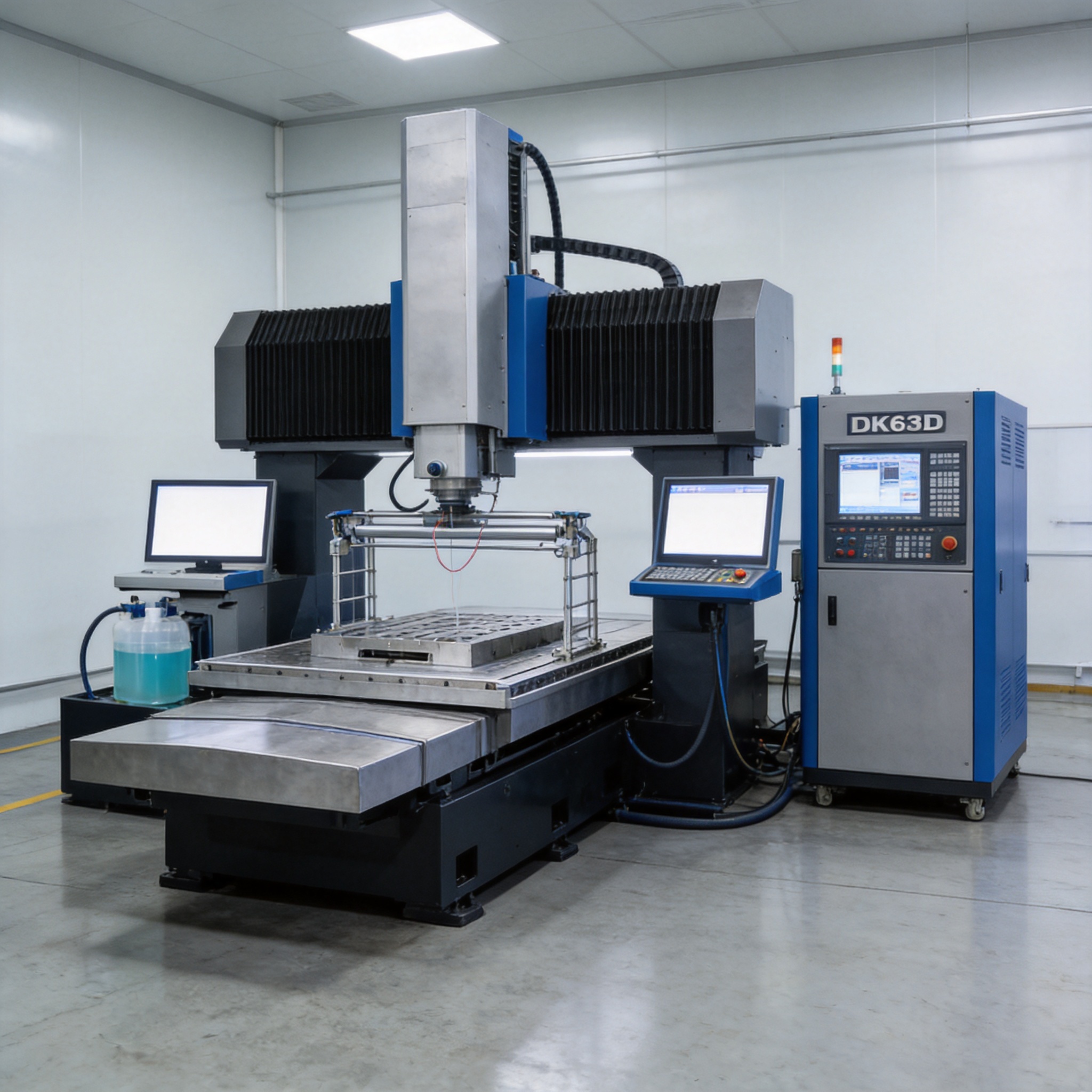
3. Mechanical Architecture for Large and Heavy Workpieces
3.1 Reinforced machine bed
Large-taper cutting generates lateral forces and changing mechanical loads as the wire moves away from a vertical position. The DK63D uses a high-strength cast-iron bed designed to provide a stable foundation for the worktable, wire frame, guide system, and drive components. The bed is subjected to an extended natural aging process intended to reduce the effects of internal material stress.
A stable bed is fundamental to long-term accuracy. If the base changes shape or responds unevenly to load and temperature, the resulting errors may appear as taper deviation, dimensional drift, or inconsistent accuracy across the work area. By emphasizing structural stiffness and stress management, the manufacturing process seeks to preserve geometric relationships during extended operation.
3.2 Precision guide rails and lead screws
The main motion system uses precision ball screws and high-precision linear guide rails. Linear guides provide controlled movement with reduced friction and improved resistance to unwanted lateral motion. Ball screws support accurate positioning and repeatable movement of the worktable.
Assembly quality is particularly important in a large-taper machine. The X and Y axes must coordinate accurately with the U and V axes. Even a small alignment error can become more significant when the wire is inclined through a large angle or when a thick workpiece magnifies the difference between the upper and lower cutting positions. For this reason, the manufacturer emphasizes careful parallelism alignment and precision verification during assembly.
3.3 Extended U/V-axis linkage
The U and V axes control the relative position of the wire guides and make taper cutting possible. The DK63D incorporates a large-span U/V-axis linkage system intended to provide the movement range necessary for substantial wire inclination and complex variable-taper profiles.
Four-axis interpolation allows the machine to coordinate X, Y, U, and V movement. The worktable follows the programmed two-dimensional path while the upper and lower wire guides shift in a controlled relationship. This makes it possible to generate a family of shapes through the material thickness rather than a single identical profile.
For complex components, the system can support changing taper conditions along the programmed contour. The exact limits depend on the workpiece thickness, taper angle, guide position, programmed path, and machine configuration. Users should therefore evaluate their actual geometry during technical review rather than relying only on the maximum headline angle.
3.4 Wire guidance and wire movement
The standard electrode wire diameter is Φ0.18 mm with a wire guider. The wire feed speed is adjustable from approximately 1 to 11 m/s through frequency control, and the maximum wire storage length is approximately 350 m. The wire drum has a maximum travel size of approximately 180 mm.
Continuous wire movement is essential for carrying away eroded particles and maintaining a fresh electrode surface in the discharge zone. Stable wire tension, correct guide alignment, and suitable flushing help maintain cutting accuracy and reduce the risk of wire breakage. In large-taper work, the guide system must also accommodate the changing angle without introducing excessive friction or deflection.
4. Control System and Intelligent Process Management
4.1 X8/AUTOCUT programming environment
The DK63D is equipped with the X8/AUTOCUT control system. The control system manages programmed movement, coordinate relationships, cutting parameters, taper geometry, and machining sequences. Its purpose is to reduce manual intervention while helping the operator create stable and repeatable cutting conditions.
Large-taper machining often requires more than a simple contour program. The operator may need to define upper and lower profiles, account for wire offset, specify taper direction, manage lead-in and lead-out paths, and select suitable discharge parameters for different portions of the contour. A guided control environment can reduce programming complexity and make advanced functions more accessible to operators with basic wire EDM experience.
4.2 Automatic parameter adjustment
The built-in automation functions can adjust cutting parameters according to the machining task. The objective is to maintain a suitable discharge condition as material thickness, contour shape, flushing behavior, and cutting direction change.
Automatic adjustment does not eliminate the need for process knowledge. Operators must still select appropriate wire, workpiece preparation, flushing arrangements, cutting strategy, and finishing sequence. However, automated control can reduce the number of repetitive manual adjustments and help maintain more consistent production conditions across multiple parts.
4.3 Four-axis simultaneous control
The DK63D uses X, Y, U, and V four-axis linkage. This arrangement is central to its large-taper capability. The system coordinates the movement of the worktable and the upper and lower wire guides so that the electrode follows the programmed three-dimensional relationship through the workpiece.
Accurate interpolation is particularly important for irregular holes, stepped profiles, impeller-related components, tapered die openings, and parts with steep gradients. The control system must calculate the required guide positions while compensating for wire diameter, cutting gap, wire deflection, and the selected taper geometry.
4.4 Compatibility with CAD/CAM workflows
The machine is designed for industrial programming workflows and can be integrated with mainstream CAD/CAM practices. This is important because large molds and aerospace components are generally developed from digital models rather than manually drafted two-dimensional drawings.
A smooth transition from CAD geometry to machine instructions helps shorten programming lead times and reduce transcription errors. It also allows the operator to compare the programmed upper and lower profiles with the intended model before machining begins. For companies producing multiple variations of similar components, digital programming supports the reuse of proven strategies and standard operating procedures.
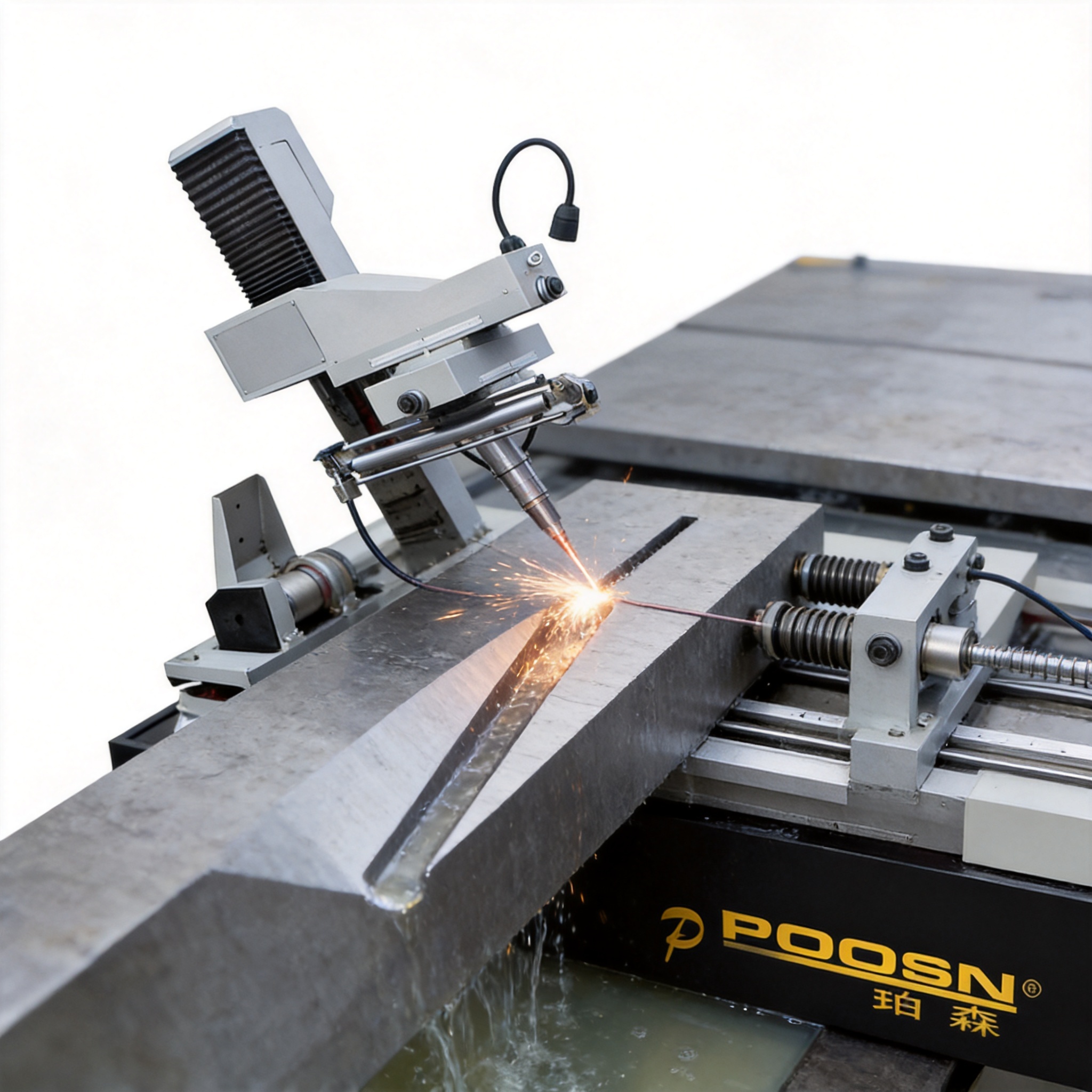
5. Manufacturing Strengths of the Producer
The performance of a large CNC wire EDM machine depends on more than its published specifications. The quality of casting, machining, alignment, electrical integration, inspection, commissioning, and technical support all influence actual production results. Taizhou Xinchengyang Machinery Manufacturing Co., Ltd. has specialized in electrical-discharge wire-cutting technology since 1999 and has developed product lines covering medium-speed, high-speed, and large-taper wire EDM equipment.
5.1 Long-term specialization
Long-term specialization gives a manufacturer practical experience in the problems that occur during real wire EDM operation. These problems may include wire breakage, unstable discharge, taper distortion, insufficient flushing, guide wear, axis backlash, surface inconsistency, and differences between programmed and actual geometry.
The company’s product range includes PS-C and DK77-BC medium-speed wire-cutting EDM machines, DK77-A and DK77-B high-speed wire-cutting EDM machines, and DK77-D large-taper wire-cutting EDM machines. This range allows the manufacturer to apply experience from different machine classes to the design and refinement of the DK63D.
5.2 In-house technical and production capabilities
The company reports strong technical capabilities, advanced processing equipment, comprehensive testing methods, and rational product design. Its machines are manufactured according to national standards, and each machine tool undergoes positioning accuracy testing before delivery.
For a large-taper machine, inspection is not limited to checking whether the axes move. Verification should also consider positioning accuracy, repeatability, guide alignment, worktable movement, taper-axis response, wire travel, and the relationship between the control system and the mechanical structure. A systematic inspection process helps identify assembly or calibration issues before the machine reaches the customer’s production floor.
5.3 Product development and innovation
The company has continued to develop special processing equipment and related technologies. Its development history includes a patent obtained in 2018 for a fully automatic CNC machine tool featuring plate-type winding and suction-type adhesive technology. The company was also recognized as a High-Tech Enterprise in Taizhou in 2021.
These developments reflect an ongoing emphasis on automation, process improvement, and the practical requirements of industrial users. For customers purchasing a DK63D, this background is relevant because a complex machine benefits from a manufacturer that can continue to provide software improvement, hardware adaptation, and application support after installation.
5.4 Quality-focused production philosophy
The manufacturer follows a quality-oriented approach in which equipment reliability and customer service are treated as connected responsibilities. The company’s stated purpose is to provide wire-cutting products and services that help customers improve efficiency, reduce costs, and optimize manufacturing processes.
In practice, this philosophy is reflected in the attention given to machine leveling, accuracy verification, operator training, process consultation, remote support, and maintenance recommendations. These services are particularly valuable for large-taper machining, where correct installation and programming have a direct effect on the final result.
6. Process Assurance from Installation to Production
6.1 Customized installation and commissioning
A heavy-duty wire EDM machine must be installed on a suitable foundation and leveled carefully. Floor conditions, ambient temperature, electrical supply, coolant management, lifting access, and workspace arrangement can all influence machine operation.
After delivery, the DK63D can be leveled and checked according to the customer’s facility conditions. Accuracy verification during commissioning establishes a reliable baseline for future maintenance and process evaluation. It also helps ensure that the machine is operating in a condition consistent with its intended geometric performance.
6.2 Application training
Large-taper cutting requires a different level of operator understanding than simple straight cutting. Operators must consider workpiece thickness, wire direction, upper and lower profile relationships, taper angle, flushing, clamping, offset, wire condition, and finishing passes.
Xinchengyang Machinery provides technical training ranging from basic commands to advanced taper strategies. Training can be tailored to the customer’s material, thickness, part geometry, and production objectives. This helps operators move from machine operation to process control, which is essential for obtaining consistent results.
6.3 Maintenance guidance
Maintenance should focus on the components that most directly influence motion accuracy and wire stability. The U/V-axis guide blocks should be kept clean and correctly lubricated. The lead-screw system should be inspected and maintained at suitable intervals. Wire guides, wire rollers, tension-related components, flushing systems, and the worktable should also be checked regularly.
Because the wire frame moves through a larger range during taper machining, moving joints and guide mechanisms require particular attention. Contamination, inadequate lubrication, or mechanical looseness can affect taper accuracy and increase the risk of wire breakage.
6.4 Software updates and technical upgrades
Manufacturing requirements change over time. Customers may begin processing new materials, adopt more complex CAD models, or seek higher levels of automation. The manufacturer provides continuing technical support that may include software updates, process guidance, and hardware upgrade solutions where applicable.
This ongoing support helps protect the customer’s investment. Instead of treating the machine as a static asset, the customer can develop its application capability as its production needs expand.
7. Comparison within the DK-D Large-Taper Series
The DK63D is one model within a family of large-taper wire EDM machines. Choosing the correct model requires consideration of workpiece size, required taper, maximum thickness, table loading, production volume, and future capacity requirements.
| Model | Typical Positioning | XY Travel | Maximum Table Load | Maximum Cutting Thickness |
| DK45D | Medium-sized components and precision molds | 450 × 650 mm | 400 kg | 450 mm |
| DK55D | Large workpieces and complex-shaped components | 550 × 800 mm | 600 kg | 600 mm |
| DK63D | Extra-large molds and heavy-duty precision components | 630 × 1,000 mm | 800 kg | 600 mm in the technical table; confirm application-specific configuration |
| DK80D | Very large molds and the heaviest workpieces | 800 × 1,200 mm | 1,000 kg | 800 mm |
Compared with the DK45D, the DK63D offers a substantially larger work envelope and twice the listed table load. It is therefore more appropriate for heavy mold plates, large die components, and parts that would require repositioning on a smaller machine.
Compared with the DK55D, the DK63D provides an additional 80 mm of X-axis travel, 200 mm of Y-axis travel, and 200 kg of additional table capacity. These differences can be decisive when a workpiece is close to the upper limit of the DK55D or when heavy clamping fixtures and auxiliary tooling must be included in the load calculation.
Compared with the DK80D, the DK63D is more compact and has a lower maximum load and smaller working envelope. This can be an advantage for customers who need large-capacity performance without investing in the largest model in the range. The DK80D remains more suitable for extremely large molds, very heavy components, and high-capacity production environments.
8. Technical Specification Summary
| Specification Category | DK63D Reference Value |
| Worktable size | Approximately 844 × 1,360 mm |
| XY travel | 630 × 1,000 mm |
| Processing slot | Approximately 890 × 1,400 mm |
| Maximum worktable load | 800 kg |
| Maximum cutting thickness | 600 mm in the series technical table; application materials also state up to 650 mm, subject to configuration and process conditions |
| Maximum cutting taper | Up to ±45°/80 mm under the applicable taper configuration |
| Electrode wire diameter | Φ0.18 mm with wire guider |
| Wire feed speed | Approximately 1–11 m/s, frequency controlled |
| Maximum wire storage length | Approximately 350 m |
| Maximum cutting efficiency | Approximately 10,000–16,000 mm²/h |
| Optimal surface roughness | Ra ≤ 2.5 μm |
| Controlled axes | X, Y, U, and V four-axis linkage |
| Programming system | X8/AUTOCUT |
| Standard drive system | XY stepper drives |
| Optional drive system | XY AC servo drives |
| Optional equipment | High-pressure water tank and linear scale |
| Machine weight | Approximately 2,500 kg |
| Machine dimensions | Approximately 2,420 × 2,240 × 2,370 mm |
| Power supply | 3N 380 V ±10% |
| Electrical capacity | Approximately 2.5 kVA |
Specifications may vary according to control cabinet, options, regional standards, and customer requirements. In particular, maximum thickness and taper performance should be confirmed against the actual workpiece material, thickness, contour, and required accuracy before placing an order.
9. Applications in Precision Mold Manufacturing
9.1 Large stamping dies
Large stamping dies frequently contain openings, inserts, and cutting edges that require a controlled taper. The DK63D can produce angled die profiles while accommodating the substantial dimensions and weight of industrial tooling.
Its large table and load capacity reduce the need to separate a die component into smaller sections. The four-axis system can generate the required difference between the upper and lower contours, while the control system helps manage wire offset and taper compensation.
9.2 Injection and compression molds
Injection and compression molds may include deep cavities, lifter-related features, inserts, and complex shutoff surfaces. Wire EDM is particularly useful when these features are made from hardened tool steel and require a fine, accurate profile.
The DK63D’s deep cutting capability and large work envelope make it suitable for large mold components. Where the design includes angled walls or variable taper, the machine can reduce reliance on multiple machining methods and minimize the number of secondary operations.
9.3 Precision inserts and complex profiles
Mold inserts often demand repeatable geometry, accurate corner definition, and controlled surface finish. The DK63D can be used for profile cutting, insert preparation, and the machining of complex openings that are difficult to produce with conventional tooling.
When several identical inserts are required, the machine’s automation and digital programming workflow can support repeatable production. Operators can preserve proven programs and process parameters, helping reduce variation between production batches.
10. Aerospace and Heavy Machinery Applications
10.1 Aerospace components
Aerospace components often combine difficult materials, complex contours, strict dimensional requirements, and high reliability expectations. The non-contact nature of wire EDM can be beneficial for hardened or heat-treated conductive alloys because it avoids the direct cutting forces associated with mechanical tools.
The DK63D is suitable for precision components with angled profiles, irregular openings, and complex transitions. Its structural stability and four-axis control support the controlled machining of geometries that require different upper and lower profiles.
Turbine and impeller-related parts may include steep gradients, narrow sections, and complex angular relationships. Wire EDM can provide an effective solution for profiles where tool access is restricted or where a hardened material would make conventional machining inefficient.
The DK63D’s large-span U/V system and automated control are valuable in these applications because the wire must follow a precise path while remaining stable through the workpiece thickness. Actual suitability should be evaluated through sample cutting when the component has especially complex variable-taper geometry.
10.3 Heavy mechanical parts
Heavy machinery components often require large openings, hardened profiles, wear-resistant inserts, or accurately positioned taper surfaces. An 800 kg worktable capacity gives the DK63D the ability to process larger parts and fixtures than machines designed for light-duty work.
The reinforced structure and linear guide support help maintain movement stability under high load. This is important when the workpiece itself is heavy, when a large fixture is required, or when a thick section produces significant discharge debris that must be removed effectively.
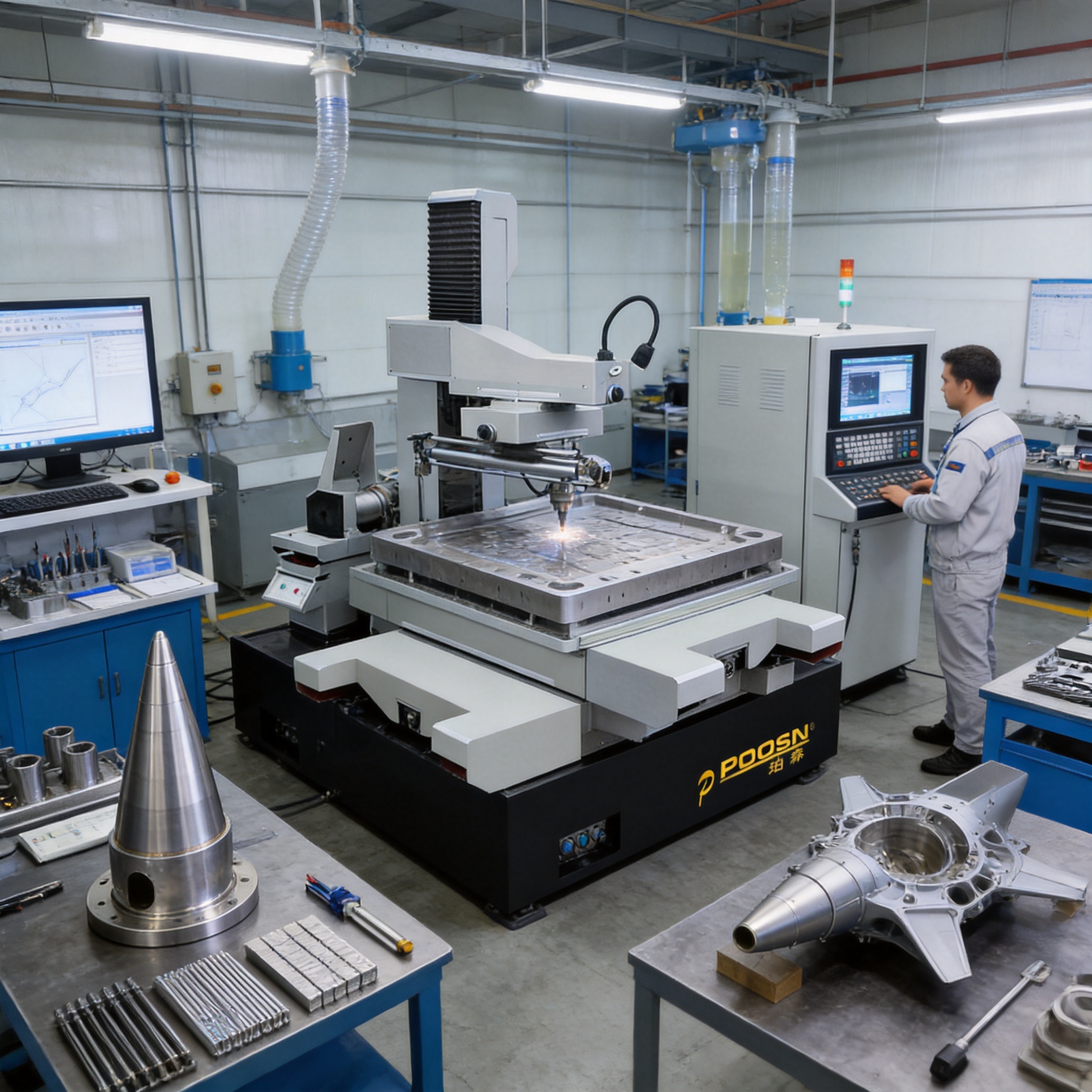
11. Efficiency, Cost Control, and Total Value
Purchasing a large wire EDM machine should be evaluated through total production value rather than purchase price alone. Relevant factors include usable capacity, setup time, cutting speed, wire consumption, rework, surface finishing, maintenance, energy use, operator requirements, and technical support.
11.1 Fewer setups and lower handling time
The DK63D’s large work envelope allows more workpieces to be completed in a single setup. This can reduce material handling, fixture preparation, alignment, and inspection time. It also reduces the risk that separate machining stages will introduce mismatched profiles or angular errors.
11.2 Reduced secondary processing
High-precision wire cutting and a surface finish of up to Ra ≤ 2.5 μm under suitable conditions can reduce the amount of manual finishing required. In mold production, every reduction in hand fitting or polishing contributes to shorter lead time and more predictable delivery.
11.3 Energy-conscious operation
The machine uses an optimized drive and electrical design intended to reduce non-processing losses. Energy-saving operation helps lower running costs, particularly in facilities where machines operate for extended periods or where multiple production shifts are scheduled.
Energy consumption is influenced by the control cabinet, cutting current, wire feed, flushing equipment, workpiece material, and duty cycle. Customers should evaluate these factors together when estimating the machine’s operating cost.
11.4 Automation and labor productivity
The X8/AUTOCUT control system can reduce repetitive manual adjustments and make advanced cutting strategies easier to apply. This does not replace skilled operators, but it allows experienced personnel to manage more jobs and helps new operators reach productive performance more quickly.
Automation is especially valuable when production includes multiple parts with similar geometries. Standardized programs, parameter libraries, and documented setup procedures can improve consistency between operators and shifts.
12. Process Recommendations for Reliable Results
12.1 Workpiece preparation
The workpiece should be inspected for flatness, residual stress, material condition, and electrical conductivity before cutting. Large plates should be supported correctly to prevent movement or deformation during machining. Clamping should secure the workpiece without interfering with the wire path or creating unnecessary stress.
12.2 Flushing and debris removal
Effective flushing is critical in thick-section and large-taper machining. Eroded particles must be removed from the discharge gap to maintain stable electrical conditions. A high-pressure water tank is available as an option and may be beneficial for applications involving thick materials, deep sections, or difficult debris removal.
12.3 Taper programming
Before machining, the operator should verify the relationship between the upper and lower profiles, the desired taper direction, and the available U/V-axis movement. The programmed angle must be evaluated together with workpiece thickness because the physical offset between the upper and lower wire positions increases as thickness increases.
12.4 Roughing and finishing strategy
For demanding mold and aerospace applications, a roughing pass followed by one or more finishing passes may provide a better balance between productivity and final accuracy. Roughing removes the majority of material efficiently, while finishing passes correct minor dimensional deviations and improve surface quality.
12.5 Accuracy verification
Critical components should be inspected after machining using appropriate measurement equipment. Verification may include contour measurement, taper-angle inspection, upper-to-lower profile comparison, surface-finish measurement, and dimensional checks at multiple locations.
Regular inspection also provides feedback for machine maintenance. If a gradual change in taper accuracy or dimensional consistency is detected, the cause may involve guide wear, lubrication, calibration, wire condition, environmental temperature, or workholding rather than the cutting program alone.
13. Q&A
Q1: What is the main advantage of the DK63D over a conventional straight-cut wire EDM machine?
The DK63D combines large workpiece capacity with large-taper four-axis cutting. It can process components in which the upper and lower profiles differ, while also supporting workpieces up to approximately 800 kg and an X/Y travel of 630 × 1,000 mm. A conventional straight-cut machine may be suitable for identical upper and lower profiles but cannot provide the same range of tapered geometry.
Q2: How does the DK63D compare with the DK45D?
The DK63D has a larger work envelope, higher load capacity, and greater suitability for extra-large components. The DK45D is intended for medium-sized components and precision molds, while the DK63D is designed for heavy-duty parts, large mold components, and applications requiring greater workspace.
Q3: How does the DK63D compare with the DK55D?
The DK63D provides an X-axis travel of 630 mm compared with 550 mm, a Y-axis travel of 1,000 mm compared with 800 mm, and a maximum table load of 800 kg compared with 600 kg. It is therefore better suited to larger and heavier workpieces. Both models belong to the large-taper series, but the DK63D offers greater capacity for demanding production.
Q4: Can the DK63D cut very thick materials?
Yes. The series technical table lists a maximum cutting thickness of 600 mm for the DK63D, while product application information also refers to thicknesses up to 650 mm. Because the practical limit depends on material, taper, flushing, wire condition, and required accuracy, the exact thickness capability should be confirmed with the manufacturer for the specific job.
Q5: What taper angle can the DK63D achieve?
The product information specifies a maximum cutting capability of up to ±45°/80 mm under the applicable configuration. The actual usable angle depends on workpiece thickness, profile dimensions, guide travel, and the required accuracy. Technical review is recommended for complex or variable-taper parts.
Q6: What materials can be machined?
The DK63D can process a wide range of conductive materials, including high-hardness steels, alloys, mold materials, and other metals suitable for wire EDM. Material thickness, conductivity, heat treatment, and internal stress can influence cutting conditions, so process parameters should be selected accordingly.
Q7: What surface finish can be expected?
The optimal surface roughness is specified as Ra ≤ 2.5 μm under suitable conditions. The final result depends on the material, thickness, roughing and finishing strategy, electrical parameters, wire condition, flushing, and machine setup. Finer finishes may require additional finishing passes.
Q8: Is the machine suitable for mass production?
Yes. Its cutting efficiency is specified at approximately 10,000–16,000 mm²/h, and the automated control system can reduce manual parameter adjustments. The machine is particularly suitable for repeated production of large mold components, inserts, and precision profiles. Actual output should be estimated from the complete part cycle, including setup, threading, inspection, and finishing.
Q9: What control system does the DK63D use?
The machine uses the X8/AUTOCUT control system. It supports programming and control of the X, Y, U, and V axes and is designed to assist with automatic cutting-parameter adjustment, taper machining, and repeatable production workflows.
Q10: Are servo drives available?
The standard configuration uses XY stepper drives, while XY AC servo drives are available as an option. Customers should select the drive configuration according to their accuracy, response, production volume, and automation requirements.
Q11: What maintenance areas require the most attention?
The U/V-axis guide blocks, lead screws, wire guides, moving joints, flushing system, and worktable should receive regular attention. Cleaning and lubrication are particularly important because large-taper cutting involves substantial movement of the wire frame. Maintenance intervals should follow the operating environment and production intensity.
Q12: Does the manufacturer provide installation and training?
The manufacturer provides technical support covering installation, leveling, accuracy verification, operator training, process guidance, remote technical assistance, and on-site support when necessary. Training can be adapted to the customer’s materials, workpiece thickness, taper requirements, and production objectives.
14. Why Choose the DK63D for Large Mold Machining?
The DK63D is a strong candidate for manufacturers whose existing wire EDM equipment has reached its limits in size, weight, thickness, or taper angle. Its 630 × 1,000 mm XY travel, approximately 844 × 1,360 mm worktable, 800 kg load capacity, and large-angle cutting capability provide the physical and geometric capacity required for demanding work.
Its value is further strengthened by the combination of a reinforced cast-iron bed, precision ball screws, linear guides, extended U/V-axis linkage, four-axis interpolation, automated control, and professional application support. These features are not isolated specifications. Together, they create a platform intended to make large-taper machining more stable, repeatable, and commercially practical.
Compared with smaller machines, the DK63D reduces the need for multiple setups and supports heavier workpieces. Compared with the largest machines in the series, it offers a more moderate footprint and investment level while retaining substantial production capacity. For many mold manufacturers, aerospace suppliers, and heavy-machinery producers, this balance makes the DK63D an effective long-term addition to the workshop.
Taizhou Xinchengyang Machinery Manufacturing Co., Ltd. supports the machine with manufacturing experience, accuracy inspection, commissioning, training, maintenance guidance, and continuing technical service. This full-lifecycle approach is important because the best results in large-taper wire EDM depend on both machine construction and process discipline.
For customers evaluating the DK63D, the next step should be a technical review based on actual part drawings, material, thickness, taper angle, tolerance, surface-finish requirement, production volume, and desired automation level. With the correct configuration and process plan, the DK63D can provide a dependable solution for large, heavy, and geometrically complex conductive components.
References
1. Taizhou Xinchengyang Machinery Manufacturing Co., Ltd., DK-D Large Cutting Taper WEDM Technical Parameters.
2. Taizhou Xinchengyang Machinery Manufacturing Co., Ltd., DK63D Product Description and Application Information.
3. GB/T 7926-2015, Accuracy of Wire-Cut Electrical Discharge Machines.
4. General principles of electrical discharge machining, wire electrode control, flushing, and pulse power supply technology.
5. Industrial practices for CNC machine installation, leveling, accuracy verification, lubrication, and preventive maintenance.
Product: DK63D Heavy-Duty CNC Large Taper Wire Cut EDM Machine for Large Mold Machining
-
Phone
+86-0523-86268788 +86-13815960366 +86-13912191163Email
[email protected]Address
No. 366, Yusheng Road Jiulong Town, Hailing District Taizhou City, China
Copyright © Taizhou Xinchengyang Machinery Manufacturing Co., Ltd. All Rights Reserved.
Custom edm machine for sale
wholesale edm machine manufacturers
