

 English
 русский
 عربى
عربى

Lu Qianwen — Overseas Sales Manager
Home / Author / Lu Qianwen — Overseas Sales Manager / PS60C Heavy-Duty CNC Wire-Cut EDM Machine for Oversized Workpieces
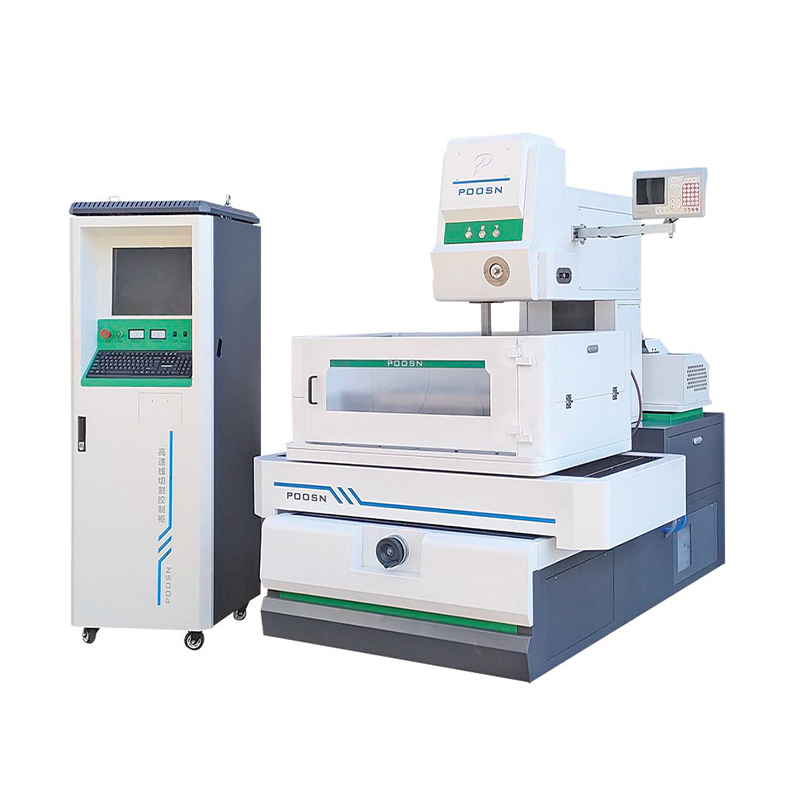
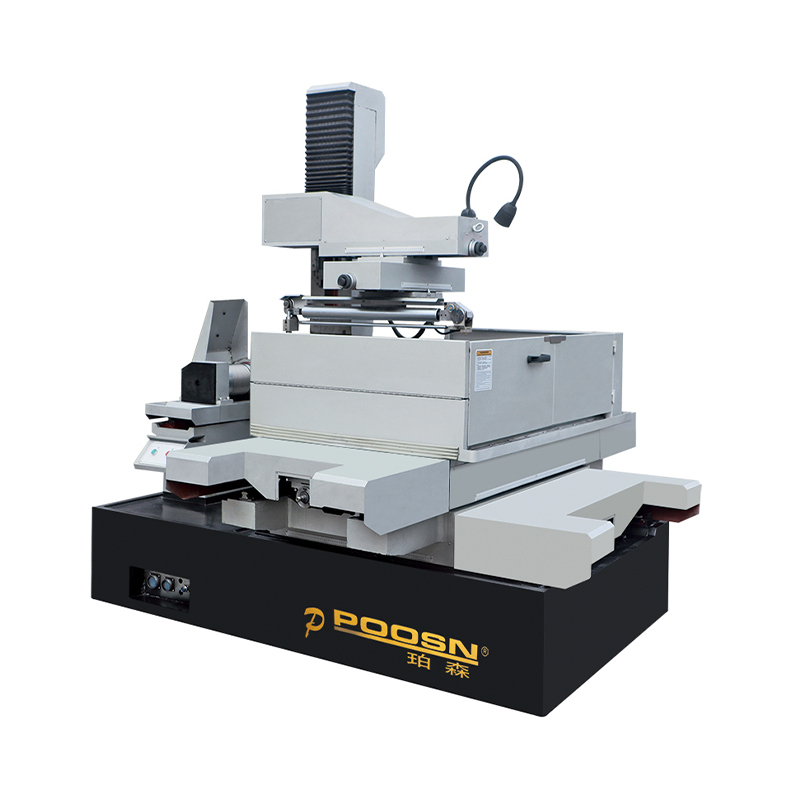
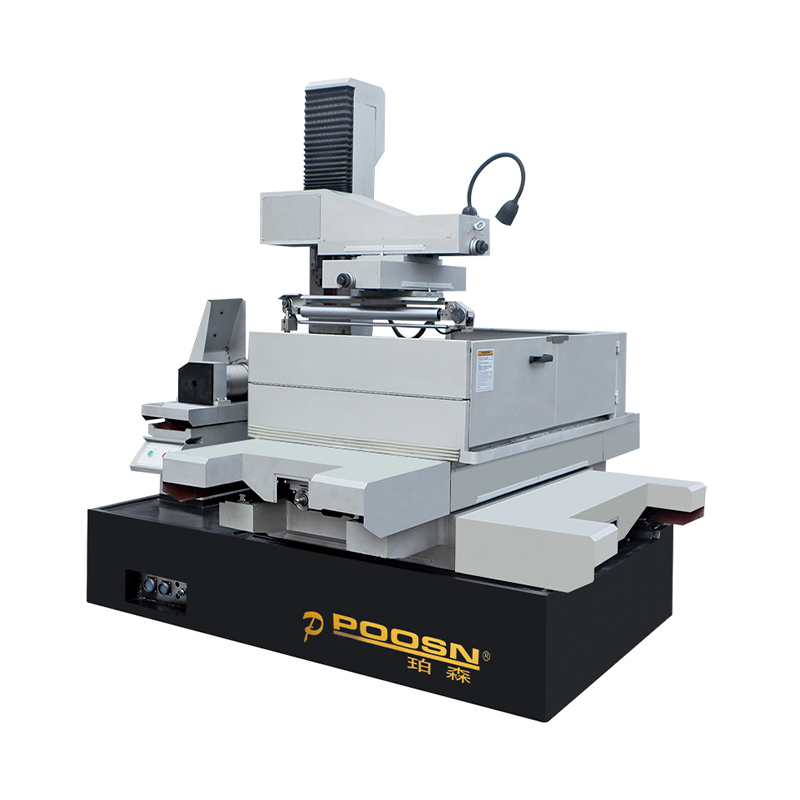
PS60C Heavy-Duty CNC Wire-Cut EDM Machine for Oversized Workpieces
2026-08-05
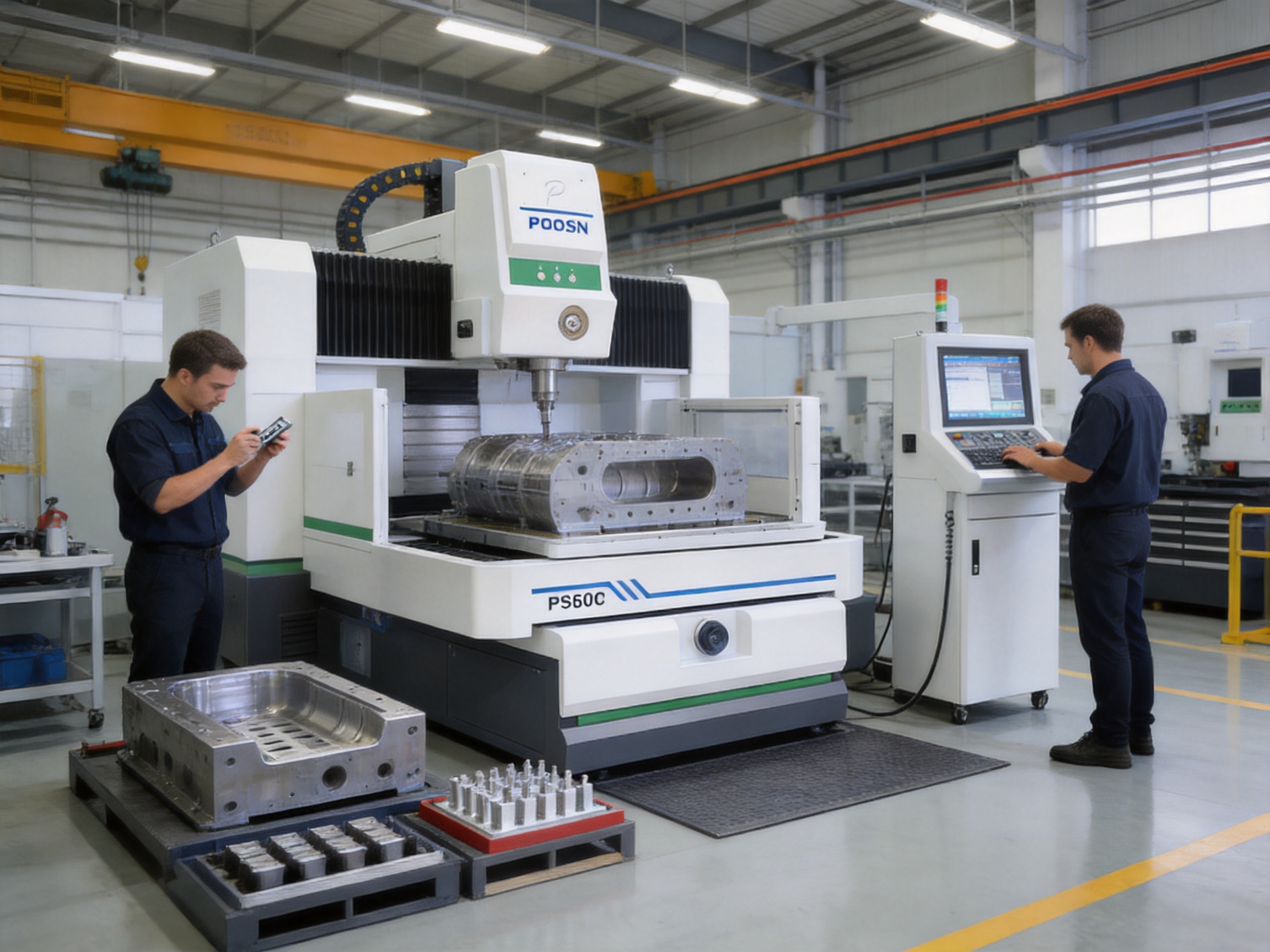
Modern mold manufacturing, aerospace production, heavy equipment manufacturing, and precision component processing increasingly require machining systems that can combine large working capacity with dependable accuracy. Oversized conductive workpieces present a particular challenge because the machine must support substantial weight, maintain geometric stability over a large travel range, control electrode-wire vibration, and preserve cutting quality during long production cycles. The PS60C medium-speed wire-cut electrical discharge machining machine is designed specifically for these demanding conditions.
As the high-end model in the PS-C medium-speed wire-cut EDM series, the PS60C is engineered for large molds, heavy mechanical components, thick metal sections, and precision parts that exceed the practical capacity of conventional small and medium wire-cut machines. Its combination of a large CNC worktable, high load capacity, substantial cutting thickness, multi-pass machining capability, precision motion components, and customizable configurations gives manufacturers a practical solution for large-scale wire erosion machining.
The machine is developed and manufactured by Taizhou Xinchengyang Machinery Manufacturing Co., Ltd., a specialized Chinese producer of electrical discharge machining equipment with experience dating back to 1999. The company integrates mechanical design, casting, electrical control, precision assembly, process development, testing, and technical service within its manufacturing system. This integrated capability allows the PS60C to be adapted to customer requirements involving workpiece dimensions, materials, cutting depth, taper, automation, power supply, and production processes.
Content
- 1 1. Positioning of the PS60C in Large-Format Wire EDM
- 2 2. Large Work Envelope and Heavy-Duty Capacity
- 3 3. Precision Motion Architecture
- 4 4. Wire-Tension and Wire-Guidance Stability
- 5 5. Power Supply and Multi-Pass Cutting Performance
- 6 6. Robust Machine Body and Manufacturing Process
- 7 7. Intelligent Control and User Operation
- 8 8. Comparison with Conventional Competitor Configurations
- 9 9. Customization and Application Engineering
- 10 10. Application Areas
- 11 11. Technical Specifications
- 12 12. Installation, Maintenance, and Operating Reliability
- 13 13. Why Choose the PS60C for Oversized Production
- 14 14. Frequently Asked Questions
- 14.1 Q1: What types of workpieces are suitable for the PS60C?
- 14.2 Q2: What is the maximum cutting thickness?
- 14.3 Q3: How much weight can the worktable support?
- 14.4 Q4: Can the PS60C perform taper cutting?
- 14.5 Q5: What surface finish can the machine achieve?
- 14.6 Q6: Is the PS60C suitable for batch production?
- 14.7 Q7: What control systems are available?
- 14.8 Q8: Can the machine be customized?
- 14.9 Q9: What maintenance is most important?
- 14.10 Q10: What information should be provided when requesting a quotation?
- 15 15. Conclusion
- 16 References
- 17 Product: PS60C Heavy-Duty CNC Wire Cut EDM Machine for Oversized Workpieces
1. Positioning of the PS60C in Large-Format Wire EDM
Wire-cut EDM removes conductive material by controlled electrical discharges between a continuously moving electrode wire and the workpiece. Because the wire does not make direct mechanical contact with the workpiece, the process is suitable for hardened steel, tool steel, carbide, and other difficult-to-machine conductive materials. It can produce internal profiles, narrow slots, intricate contours, sharp corners, and tapered geometries without imposing conventional cutting forces on the part.
However, the advantages of wire EDM can be difficult to maintain when workpieces become very large or heavy. A larger part increases the demands placed on the machine bed, worktable, linear guides, ballscrews, servo system, wire frame, dielectric circulation system, and control software. Any weakness in rigidity or thermal stability may lead to geometric errors, wire vibration, inaccurate taper, poor surface finish, or inconsistent results between roughing and finishing passes.
The PS60C addresses these requirements as a heavy-duty medium-speed wire-cut EDM platform. Its 600 mm by 800 mm X-Y travel and 840 mm by 1,160 mm standard worktable provide a substantially larger machining envelope than the smaller models in the same series. The machine is rated for a maximum worktable load of 800 kg and a maximum cutting thickness of 430 mm, making it suitable for production conditions in which workpiece size and mass are as important as contour complexity.
The machine is not limited to rough cutting. Its multi-pass processing method, precision motion architecture, high-speed or nanosecond power supply options, grating-scale feedback, and stable wire-tension system support finishing operations that require controlled dimensional accuracy and improved surface quality. This broadens the PS60C’s role from a large-format cutting machine to a complete production platform for demanding wire erosion applications.
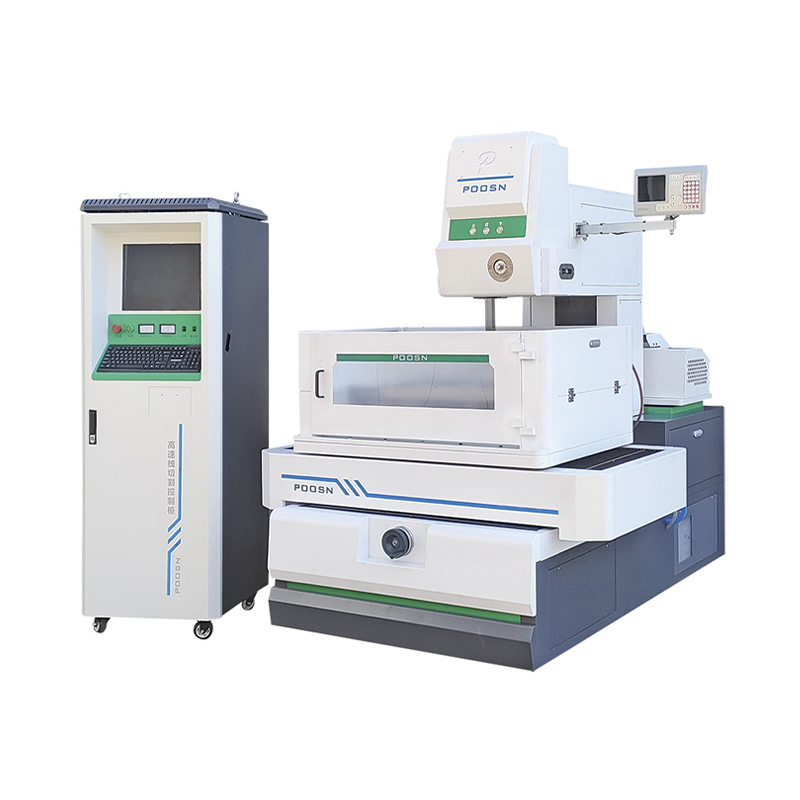
PS60C Heavy-Duty CNC Wire Cut EDM Machine for Oversized Workpieces
2. Large Work Envelope and Heavy-Duty Capacity
The most visible advantage of the PS60C is its large machining capacity. The standard CNC worktable measures 840 mm by 1,160 mm, while the X-Y travel reaches 600 mm by 800 mm. The processing slot is listed at 840 mm by 1,250 mm, providing additional flexibility when fixtures, clamps, or irregularly shaped workpieces must be accommodated.
A large worktable reduces the need to divide a component into multiple setups. Fewer setups can improve positional consistency, reduce fixture-related errors, shorten loading and unloading time, and simplify the production of large cavities, punches, templates, plates, and structural components. For manufacturers producing large molds or high-value aerospace parts, avoiding unnecessary repositioning can also reduce the risk of scrapping an expensive workpiece.
The 800 kg maximum worktable load is another major feature. Heavy workpieces require more than a powerful drive motor. The machine structure must distribute the load without excessive deformation, and the guideways and transmission elements must maintain smooth movement under changing force conditions. The PS60C uses a rigid cast machine structure and a T-shaped bed arrangement intended to support the worktable within the boundaries of the base. This configuration helps limit deformation and contributes to long-term geometric stability.
The large capacity is especially useful for heavy-duty molds, large progressive dies, press tooling, turbine-related components, industrial machine parts, and thick plates made from hardened conductive materials. The machine can also be configured for customer-specific worktable dimensions and cutting depths when the standard arrangement does not fully match a production requirement.
2.1 Cutting thickness for thick and difficult workpieces
With a maximum cutting thickness of 430 mm in the PS60C configuration shown in the product specification, the machine is suited to thick sections that cannot be efficiently processed on ordinary medium-size wire EDM equipment. Large cutting thickness is valuable in mold bases, die components, thick tool plates, hardened blocks, and heavy mechanical parts.
Cutting thick workpieces requires stable flushing, reliable discharge control, accurate wire guidance, and carefully optimized electrical parameters. As thickness increases, the discharge gap and flushing conditions can vary along the cutting path. The PS60C’s high-pressure water system, paper-core filtration, controlled wire feed, and multi-pass process logic help operators maintain more consistent cutting conditions throughout the workpiece.
Actual maximum thickness depends on material, workpiece geometry, flushing conditions, wire type, machine configuration, cutting strategy, and required surface finish. For this reason, users should confirm the final process capability with the manufacturer through a sample test or technical review before placing an order for an unusually thick or complex part.
3. Precision Motion Architecture
Large-format machining requires a motion system that remains accurate over a long stroke. The PS60C uses high-precision linear guides and ballscrews in its motion mechanisms. The worktable is equipped with imported linear guides as standard, while Taiwan-brand precision linear guides, ballscrews, imported bearings, and Panasonic servo motor technology are used within the machine’s motion and drive architecture according to the specified configuration.
Japanese EZO bearings are used in the motion mechanisms. High-quality bearings reduce unwanted play, support smooth movement, and help maintain the repeatability of the worktable and wire frame. When combined with accurate guideways and properly aligned ballscrews, they create a motion platform capable of supporting multi-pass cutting and complex contour interpolation.
The machine’s standard control architecture includes four-axis linkage for X, Y, U, and V. X and Y control the primary cutting path, while U and V control the upper wire-guide movement for taper cutting. Coordinated control of these axes allows the machine to produce tapered profiles and compensate for changes in the upper and lower contour positions.
The tapering device uses linear guides and ballscrew pairs. The listed CNC travel for the U and V axes is 60 mm by 60 mm, with a maximum cutting taper of approximately ±6 degrees per 80 mm under the stated configuration. Optional arrangements can include a U and V combination driven by servo motors, linear guides, and ballscrews. These options are useful when the customer’s parts demand more sophisticated taper interpolation, improved dynamic response, or higher automation.
3.1 Grating-scale feedback
The worktable is equipped with a grating scale for real-time, full-stroke position monitoring. Direct position feedback helps the control system identify the actual location of the table rather than relying only on motor rotation or calculated ballscrew movement. This can improve the machine’s ability to compensate for positioning deviations and maintain accuracy throughout the travel range.
Full-stroke monitoring is particularly valuable on large machines. On a smaller machine, a minor positioning deviation may affect a limited area. On a large machine, the same deviation can influence a long contour or an entire mold profile. Real-time feedback therefore supports greater confidence when cutting large workpieces that require consistent dimensional control from one end of the table to the other.
4. Wire-Tension and Wire-Guidance Stability
Electrode-wire behavior is one of the most important factors in wire EDM performance. A wire that vibrates, loosens, or fluctuates in tension can produce dimensional errors, poor straightness, rougher surfaces, and wire breakage. These problems become more serious when cutting thick materials, making deep cuts, or producing tapered profiles.
The PS60C incorporates an adaptive constant-tension wire-tightening mechanism as an optional configuration. Unlike a simple weight-based tensioning system, an adaptive mechanism can respond more quickly to tension fluctuations during high-speed reciprocation. Maintaining a more stable wire condition helps the machine control the discharge gap and improves the consistency of the cut.
The constant-tension approach is also beneficial during taper cutting. When the upper and lower wire guides move in different positions, the wire experiences changing geometric conditions. Dynamic tension control helps reduce the influence of these changes and supports better perpendicularity and taper accuracy.
The automatic double-sided tightening mechanism is designed to prevent molybdenum-wire vibration and one-sided loosening. Balanced tightening reduces instability in the wire path and helps maintain reliable cutting performance during long operations.
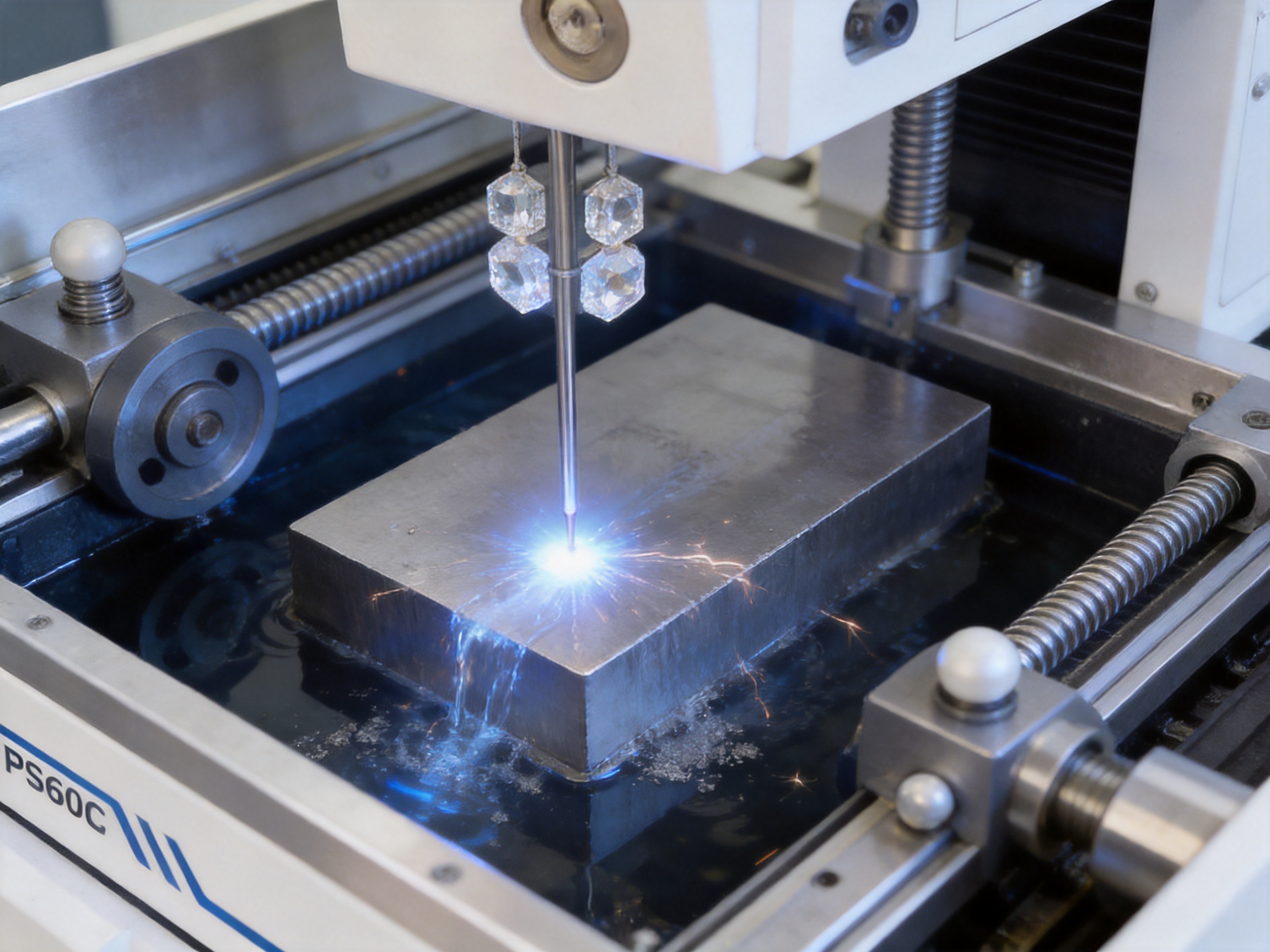
The machine also uses a waterproof gemstone guide wheel. The 40 mm single-sided gemstone guide wheel is designed for easy threading, long service life, and high guiding precision. The guide wheel can be replaced conveniently, helping reduce maintenance time when wear eventually occurs.
4.1 Liftable gemstone wire guide
The liftable gemstone wire guide provides two practical benefits. First, it allows the wire guide to move close to the workpiece surface during machining. A shorter effective wire span can reduce wire vibration and improve cutting accuracy and surface finish. Second, the cutting-height range can be adjusted without rethreading the wire. This simplifies manual operation and makes it easier to process workpieces with changing heights or stepped surfaces.
Automatic one-touch threading further reduces setup effort. The operator can thread the electrode wire efficiently, reducing manual labor intensity and improving workplace safety. In production environments where multiple workpieces are processed each day, easier threading can contribute to shorter preparation times and greater machine availability.
5. Power Supply and Multi-Pass Cutting Performance
The electrical power supply is central to the performance of a wire EDM machine. It controls discharge energy, pulse duration, pulse interval, current, wire wear, cutting speed, and surface finish. The PS60C series is equipped with an advanced patented eco-friendly pulse power supply and is available with either a high-speed power supply or a nanosecond power supply as a standard series configuration, according to the selected machine specification.
The power system is designed to deliver low electrode wear, high processing speed, low surface roughness, and improved energy efficiency. Reduced wire wear helps stabilize long cutting cycles and may reduce operating costs. Efficient pulse generation also limits unnecessary energy consumption and reduces the environmental impact associated with the machining process.
Imported frequency converters support smooth directional switching in the wire-drive system. Smooth reversal reduces mechanical shock and helps extend the service life of the wire transport components. It also contributes to more stable wire movement during repeated forward and reverse travel.
Medium-speed wire EDM differs from basic high-speed wire cutting through its use of multi-pass machining. The first pass rapidly removes most of the material, while later passes refine the contour and improve surface quality. The PS60C uses intelligent parameter switching to balance productivity and finish quality. Roughing parameters can prioritize cutting speed, while finishing passes can prioritize dimensional accuracy, surface texture, and reduced altered-layer thickness.
The product specification lists a maximum cutting efficiency of approximately 10,000 to 16,000 square millimeters per hour and an optimal multi-cut surface roughness of Ra ≤ 1.2 micrometers under stated test conditions. Actual performance depends on workpiece material, thickness, profile complexity, wire condition, flushing, pulse parameters, and the number of finishing passes.
5.1 Advantages of multi-pass processing
Multi-pass machining can provide several advantages over a single rough cut. It improves dimensional consistency, reduces the influence of initial wire deflection, refines the cut surface, and helps control the surface altered layer caused by electrical discharge. These benefits are important for mold components, precision inserts, carbide parts, and aerospace components where the final surface condition may influence service life or assembly accuracy.
Although multi-pass machining requires additional cutting stages, it does not necessarily reduce overall production efficiency. A controlled finishing strategy can reduce manual polishing, grinding, rework, and scrap. For high-value components, the reduction in downstream processing may provide a greater productivity benefit than a simple comparison of rough-cut time.
6. Robust Machine Body and Manufacturing Process
The performance of a large wire EDM machine depends heavily on the quality of its machine body. A rigid structure minimizes vibration, supports stable guideway alignment, and helps the machine preserve accuracy under heavy loading. The PS60C uses high-quality HT250 castings and a T-shaped bed structure. Resin sand casting is used to produce high-strength structural components with controlled geometry and adequate rigidity.
After casting, the machine components undergo aging treatment. Aging reduces the risk of dimensional movement caused by residual stress in the casting. This is an important manufacturing step because a large machine bed can contain substantial internal stress after casting and rough machining. Without adequate stress relief, the structure may gradually change shape during operation, affecting alignment and precision.
The company’s manufacturing system includes advanced processing equipment and comprehensive testing methods. Each machine tool undergoes positioning accuracy testing before delivery. These tests are intended to verify the performance of the axes, motion system, and overall machine geometry against defined manufacturing requirements.
Precision assembly is equally important. Linear guides, ballscrews, bearings, wire guides, worktable components, and the taper system must be assembled with careful alignment. Errors introduced during assembly can reduce the benefits of high-quality purchased components. The integrated manufacturing approach allows the company to coordinate machining, assembly, electrical installation, control-system integration, and final inspection as one process.
6.1 Structural design for long-term stability
The T-shaped bed differs from a conventional narrow or strip-shaped bed by allowing the worktable to move within the support area of the base. This arrangement is intended to reduce deformation and improve long-term stability. Stable support is particularly important when the worktable carries a large mold or heavy steel block and when the cutting process continues for many hours.
Machine rigidity also supports better surface finish. Electrical discharge itself is a non-contact process, but the wire remains sensitive to vibration and flushing forces. A rigid machine body reduces the transmission of vibration into the wire frame and worktable, helping the control system maintain a more consistent discharge gap.
7. Intelligent Control and User Operation
The PS60C uses a professional industrial control computer designed for continuous and reliable operation. The control system supports data exchange through LAN and USB interfaces, making it easier to transfer programs, back up machining data, and integrate the machine into a production environment.
The X8 or AUTOCUT control system provides a programming environment for generating and managing G-code programs. CAXA CAM2019 and TCAM are available as optional programming solutions. These systems can assist with contour preparation, program generation, and the management of complex wire-cut paths.
An intelligent programming system reduces the amount of manual code editing required from operators. This is helpful when the workpiece contains multiple contours, internal holes, taper features, or a sequence of roughing and finishing passes. Consistent program preparation can also reduce operator-dependent variation between different shifts.
The machine includes one-click depth setting through the Z-axis lifting system. The Z-axis uses an electric motor and is designed to simplify adjustment of the wire guide height. This is useful when changing workpiece thickness, setting a new job, or preparing to cut a part with a stepped or uneven profile.
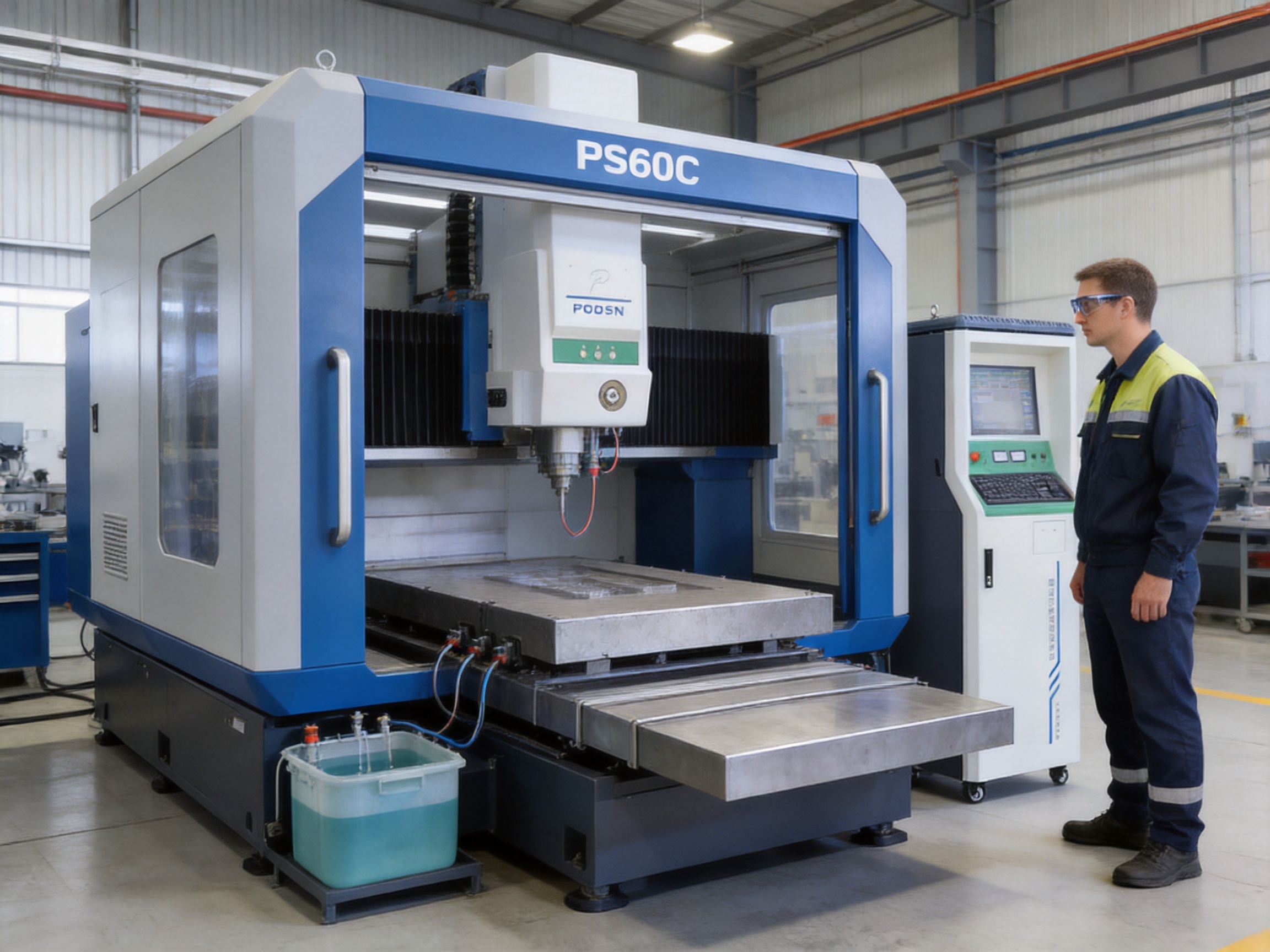
Automatic water spraying during the cutting process supports flushing and helps remove eroded particles from the machining gap. The high-pressure water tank has a stated capacity of 80 liters and uses a paper-core filter. Proper filtration is important because contaminated dielectric fluid can reduce discharge stability, lower surface quality, and increase wear on pumps and valves.
8. Comparison with Conventional Competitor Configurations
The PS60C competes in a segment where manufacturers often choose between small medium-speed wire EDM machines, high-speed wire-cut machines, low-speed wire EDM systems, or general-purpose machining equipment. Each category has strengths, but the PS60C offers a balance of capacity, precision, customization, and operating cost for customers who require a large work envelope without necessarily investing in a more expensive low-speed wire EDM platform.
| Evaluation Area | PS60C Capability | Practical Customer Advantage |
| Workpiece size | 600 mm × 800 mm X-Y travel with an 840 mm × 1,160 mm worktable | Supports large molds, plates, and mechanical components with fewer setups |
| Maximum worktable load | Up to 800 kg | Suitable for heavy-duty components and large steel workpieces |
| Maximum cutting thickness | Up to 430 mm in the listed PS60C configuration | Handles thick sections that exceed the capacity of many standard machines |
| Cutting method | Multi-pass medium-speed wire EDM | Combines productive rough cutting with improved finishing capability |
| Position feedback | Full-stroke grating-scale monitoring | Supports better positioning control over a large travel range |
| Wire stability | Adaptive constant tension and double-sided tightening options | Reduces vibration, tension fluctuation, and wire-breakage risk |
| Taper machining | Four-axis X-Y-U-V linkage with linear guides and ballscrews | Enables controlled tapered profiles and complex contour compensation |
| Customization | Worktable, cutting depth, power supply, cutting modes, and automation options | Allows the machine to be matched to specialized production requirements |
| Serviceability | Convenient guide-wheel replacement, automatic threading, and accessible interfaces | Reduces setup and maintenance effort |
Compared with smaller medium-speed wire EDM machines, the PS60C offers a much larger work envelope and higher load capacity. Compared with basic high-speed wire-cut machines, it provides stronger support for multi-pass finishing, larger components, and high-precision mold work. Compared with many low-speed wire EDM systems, it can offer a more economical approach for customers who require strong productivity and repeatable precision but must control equipment investment and operating costs.
Low-speed wire EDM machines may provide excellent surface finish and very high accuracy, but they can involve higher purchase prices, higher consumable costs, and more demanding operating requirements. The PS60C is positioned as a practical alternative for applications in which a robust medium-speed process, multi-cut capability, and large capacity provide the best balance between performance and cost.
9. Customization and Application Engineering
Large workpieces are rarely identical from one customer to another. A standard machine may provide the right travel range but require a different fixture layout, power supply, worktable dimension, cutting depth, automation sequence, or control strategy. The PS60C is therefore offered with customization services intended to adapt the equipment to specific production environments.
Worktable dimensions and cutting depth can be adjusted for oversized workpieces. Specialized power supplies can be considered for materials with unusual discharge characteristics. Cutting modes and automation scripts can be developed for customers who need repetitive production cycles, specialized process sequences, or reduced operator intervention.
The company can also conduct technical benchmarking based on customer drawings or physical samples. Reverse engineering analysis may include material identification, geometric measurement, evaluation of required tolerances, and review of the customer’s existing production process. The resulting information can be used to adjust discharge parameters, fixture arrangements, travel requirements, and software settings.
For difficult materials, the discharge pulse frequency and pulse width can be optimized to balance cutting efficiency, surface quality, and electrode-wire wear. For parts with complicated geometries, the fixturing scheme and effective travel range can be reviewed before the machine is finalized. This engineering approach is particularly useful in aerospace, mold, automotive, and specialized mechanical production, where a machine must be evaluated as part of a complete manufacturing process rather than as an isolated piece of equipment.
10. Application Areas
10.1 Large mold manufacturing
Large molds often include hardened steel blocks, deep cavities, narrow slots, angled surfaces, and intricate profiles. The PS60C can process large mold components with reduced dependence on mechanical cutting forces. Its large worktable and high load rating allow moldmakers to mount heavy blocks securely, while its multi-pass process supports finishing operations after rough cutting.
Applications may include injection mold components, die-casting tooling, stamping dies, large press tools, and precision inserts. The ability to cut hardened material can reduce or eliminate the need for soft machining followed by extensive hardening and correction operations.
10.2 Aerospace components
Aerospace parts frequently demand tight dimensional control, repeatability, and reliable processing of high-strength conductive alloys or hardened materials. Wire EDM can be used for brackets, profiles, tooling, structural elements, and special components that require non-contact cutting. The PS60C’s large capacity is suitable for parts that are too heavy or too large for conventional medium-size machines.
For aerospace production, process documentation and verification are essential. Users should establish validated parameters, inspection procedures, and material-specific cutting schedules. The machine’s grating-scale monitoring, four-axis linkage, multi-pass capability, and technical support can contribute to a more controlled production process.
10.3 Heavy mechanical components
Heavy machinery manufacturers often process thick plates, wear-resistant components, large gears, structural parts, and custom mechanical assemblies. These workpieces may be difficult to fixture on small equipment and may require large internal profiles or precision slots. The PS60C provides the worktable size, load capacity, and cutting thickness required for these applications.
10.4 Precision component production
Wire EDM is suitable for components requiring sharp internal corners, narrow openings, complex contours, and high dimensional consistency. The PS60C can support both prototype work and batch production. Its cutting efficiency of 10,000 to 16,000 square millimeters per hour, combined with automated threading and repeatable program control, makes it suitable for production environments where machine utilization is important.
11. Technical Specifications
The following specifications summarize the principal PS60C configuration provided for this product. Certain values may vary according to customization, regional electrical requirements, optional drive systems, and final acceptance conditions. Buyers should request a confirmed technical specification sheet before ordering.
| Item | PS60C Specification |
| Worktable size | 840 mm × 1,160 mm |
| X-Y travel | 600 mm × 800 mm |
| Processing slot size | 840 mm × 1,250 mm |
| Maximum cutting thickness | 430 mm |
| Maximum worktable load | 800 kg |
| U-V travel | 60 mm × 60 mm |
| Maximum taper | Approximately ±6° per 80 mm |
| Electrode wire diameter | Approximately 0.18 mm with wire guider |
| Wire-feed speed | 1–11 m/s, frequency controlled |
| Maximum wire storage length | Approximately 320 m |
| Fluid tank capacity | 80 L |
| Filtration method | Paper-core filter |
| Processing accuracy listed in test specification | 0.01 mm |
| Linear cutting accuracy referenced in product information | Up to 0.003 mm under defined conditions |
| Maximum cutting efficiency | 10,000–16,000 mm²/h |
| Optimal surface roughness | Ra ≤ 1.2 μm with multi-cutting |
| Controlled axes | X, Y, U, and V four-axis linkage |
| Programming system | X8/AUTOCUT; CAXA CAM2019 or TCAM optional |
| Maximum processing current | 6 A |
| Electrical capacity | 2.5 kVA |
| Power supply | 3N 380 V ±10% |
| Machine weight | Approximately 2,700 kg |
| Machine dimensions | Approximately 2,500 mm × 2,065 mm × 2,300 mm |
The product materials contain different figures in several general descriptions and frequently asked questions, including alternative values for cutting thickness, load capacity, and accuracy. The detailed PS-C comparison table identifies the PS60C as the 430 mm, 800 kg model. Since machines can be customized, customers should confirm whether a quotation refers to the standard PS60C, a modified configuration, or another PS-series model.
12. Installation, Maintenance, and Operating Reliability
Reliable wire EDM performance depends on correct installation and disciplined maintenance. The PS60C should be installed on a suitable foundation with adequate space for loading large workpieces, accessing the control cabinet, servicing the wire-drive system, and maintaining the fluid tank and filtration system.
The working fluid must be kept clean and circulated correctly. Operators should inspect the paper-core filter regularly, replace it when necessary, and prevent excessive contamination from entering the pump and flushing circuit. Stable water quality and adequate flushing help maintain the discharge gap and reduce the risk of unstable cutting.
Wire guides and guide wheels should be inspected for wear. A worn guide can affect wire position, taper accuracy, straightness, and surface quality. The guide wheel should be replaced or serviced according to the manufacturer’s recommendations. The automatic tightening mechanism should also be checked to ensure that it applies balanced and consistent tension.
Linear guides and ballscrews require appropriate lubrication. Insufficient lubrication can increase friction and wear, while excessive or unsuitable lubricant may attract debris. Operators should follow a scheduled lubrication plan and keep the working area clean.
Electrical connections, cooling components, servo drives, pumps, sensors, and control interfaces should be inspected at regular intervals. Preventive maintenance is particularly important for a large machine because an unexpected stoppage can interrupt a long cutting cycle and tie up a high-value workpiece.
Taizhou Xinchengyang provides technical support intended to help customers establish standardized operating procedures. Training should include program preparation, workpiece alignment, wire threading, flushing adjustment, tension inspection, parameter selection, taper setup, filter maintenance, and emergency response.
13. Why Choose the PS60C for Oversized Production
The PS60C is best suited to manufacturers whose workpieces exceed the practical size or weight limits of ordinary wire-cut machines. Its central advantage is not one isolated specification but the way its capacity, structure, motion system, wire control, power supply, and customization options work together.
The large work envelope reduces the need for multiple setups. The 800 kg load capacity supports heavy components. The 430 mm cutting thickness accommodates thick sections. The rigid HT250 casting and T-shaped bed provide a stable foundation. Grating-scale feedback supports accurate movement over the full stroke. Linear guides, ballscrews, imported bearings, and servo technology improve motion response. The constant-tension and double-sided tightening systems stabilize the electrode wire. The multi-pass process delivers a practical balance between cutting speed and surface finish.
Compared with equipment designed primarily for small parts, the PS60C offers greater production flexibility for large molds and mechanical components. Compared with basic high-speed wire machines, it provides a more advanced platform for precision multi-cut work. Compared with higher-cost low-speed wire EDM equipment, it can offer an attractive combination of large capacity, productivity, customization, and operating economy.
The company’s manufacturing background is also an important advantage. Taizhou Xinchengyang has specialized in electrical discharge wire cutting for many years and has developed product lines covering medium-speed, high-speed, and large-taper wire-cut EDM machines. Its experience in research, development, casting, assembly, testing, and application support helps it respond to customers who need more than a standard catalog machine.
14. Frequently Asked Questions
Q1: What types of workpieces are suitable for the PS60C?
The PS60C is designed for oversized and heavy workpieces, including large molds, hardened die components, aerospace tooling, thick plates, heavy mechanical components, and precision parts with complex contours. It is particularly suitable when the workpiece requires a large table, high load capacity, substantial cutting thickness, or reduced setup frequency.
Q2: What is the maximum cutting thickness?
The detailed PS-C specification lists a maximum cutting thickness of 430 mm for the PS60C. The achievable thickness in production depends on workpiece material, geometry, flushing conditions, wire type, cutting parameters, and the required surface finish. Customers processing unusually thick or difficult materials should request a process test or written confirmation.
Q3: How much weight can the worktable support?
The listed maximum worktable load is 800 kg. The workpiece must be distributed and clamped appropriately, and the customer should consider the combined weight of the part, fixtures, auxiliary supports, and any special tooling. Final loading requirements should be confirmed during machine selection.
Q4: Can the PS60C perform taper cutting?
Yes. The machine uses X, Y, U, and V four-axis linkage for taper cutting. The standard specification lists U-V travel of 60 mm by 60 mm and a maximum taper of approximately ±6 degrees per 80 mm. Optional servo-driven U-V configurations may be available for applications requiring specific dynamic or positioning performance.
Q5: What surface finish can the machine achieve?
The product specification lists an optimal surface roughness of Ra ≤ 1.2 micrometers with multi-cutting under test conditions. Actual results depend on material, thickness, pulse parameters, wire condition, flushing, contour geometry, and the number of finishing passes. A sample test is recommended for critical surface requirements.
Q6: Is the PS60C suitable for batch production?
Yes. Its large worktable, automated threading, programmable control system, cutting efficiency of approximately 10,000 to 16,000 square millimeters per hour, and multi-pass process make it suitable for batch production. Production efficiency will depend on workpiece size, loading time, number of passes, inspection requirements, and material.
Q7: What control systems are available?
The machine is specified with the X8 or AUTOCUT control system. CAXA CAM2019 and TCAM are listed as optional programming solutions. LAN and USB interfaces support program transfer and data exchange.
Q8: Can the machine be customized?
Yes. Customization may include worktable dimensions, cutting depth, specialized power supplies, cutting modes, automation scripts, wire-tension arrangements, servo configurations, taper mechanisms, and software parameters. The manufacturer can also evaluate customer drawings or physical samples for application-specific development.
Q9: What maintenance is most important?
Operators should regularly check dielectric-fluid cleanliness, paper-core filter condition, wire-guide and guide-wheel wear, electrode-wire tension, ballscrew and linear-guide lubrication, pump operation, electrical connections, and machine alignment. A documented preventive-maintenance schedule helps protect accuracy and reduce unplanned downtime.
Q10: What information should be provided when requesting a quotation?
Customers should provide workpiece dimensions, material, maximum thickness, weight, contour complexity, taper requirements, surface-finish target, dimensional tolerances, expected production volume, preferred power supply, automation requirements, local electrical standards, and installation conditions. Drawings or physical samples can help the technical team recommend the most appropriate configuration.
15. Conclusion
The PS60C heavy-duty CNC wire-cut EDM machine is developed for manufacturers that require more capacity, stability, and adaptability than a conventional medium-size wire-cut system can provide. Its 600 mm by 800 mm X-Y travel, 840 mm by 1,160 mm worktable, 800 kg load rating, and listed 430 mm cutting thickness establish a strong foundation for oversized workpiece machining.
Its value is reinforced by a rigid HT250 casting structure, T-shaped bed, aging treatment, precision linear guides, ballscrews, imported bearings, grating-scale feedback, four-axis taper control, automatic threading, gemstone wire guides, double-sided tightening, and adaptive constant-tension options. The high-speed or nanosecond power supply and multi-pass cutting logic allow the machine to combine productive roughing with controlled finishing.
For aerospace, heavy-duty mold manufacturing, large mechanical components, precision tooling, and high-end industrial production, the PS60C provides a flexible platform capable of being adapted to demanding process conditions. Taizhou Xinchengyang’s experience in EDM research, manufacturing, testing, customized development, and technical support further strengthens the machine’s suitability for specialized applications.
When correctly configured, installed, and maintained, the PS60C can help manufacturers reduce multiple setups, improve production stability, process heavy and thick conductive materials, reduce secondary finishing work, and achieve reliable results on large and high-value workpieces.
References
1. Taizhou Xinchengyang Machinery Manufacturing Co., Ltd., PS-C Medium-Speed Wire-Cut EDM Machine Product Specifications.
2. Taizhou Xinchengyang Machinery Manufacturing Co., Ltd., PS60C Product Information and Application Materials.
3. International technical literature on electrical discharge machining principles, wire erosion, flushing, pulse control, and multi-pass cutting.
4. Technical guidance on CNC machine-tool positioning accuracy, geometric inspection, linear-guide systems, ballscrew transmission, and servo control.
5. Manufacturing engineering references concerning mold steel, hardened conductive materials, carbide machining, aerospace components, and precision wire EDM applications.
Product: PS60C Heavy-Duty CNC Wire Cut EDM Machine for Oversized Workpieces
-
Phone
+86-0523-86268788 +86-13815960366 +86-13912191163Email
[email protected]Address
No. 366, Yusheng Road Jiulong Town, Hailing District Taizhou City, China
Copyright © Taizhou Xinchengyang Machinery Manufacturing Co., Ltd. All Rights Reserved.
Custom edm machine for sale
wholesale edm machine manufacturers
