

 English
 русский
 عربى
عربى

Lu Qianwen — Overseas Sales Manager
Home / Author / Lu Qianwen — Overseas Sales Manager / DK-7735 CNC High-Speed Wire EDM Machine: Precision, Productivity, and Large-Workpiece Capability
DK-7735 CNC High-Speed Wire EDM Machine: Precision, Productivity, and Large-Workpiece Capability
2026-08-07
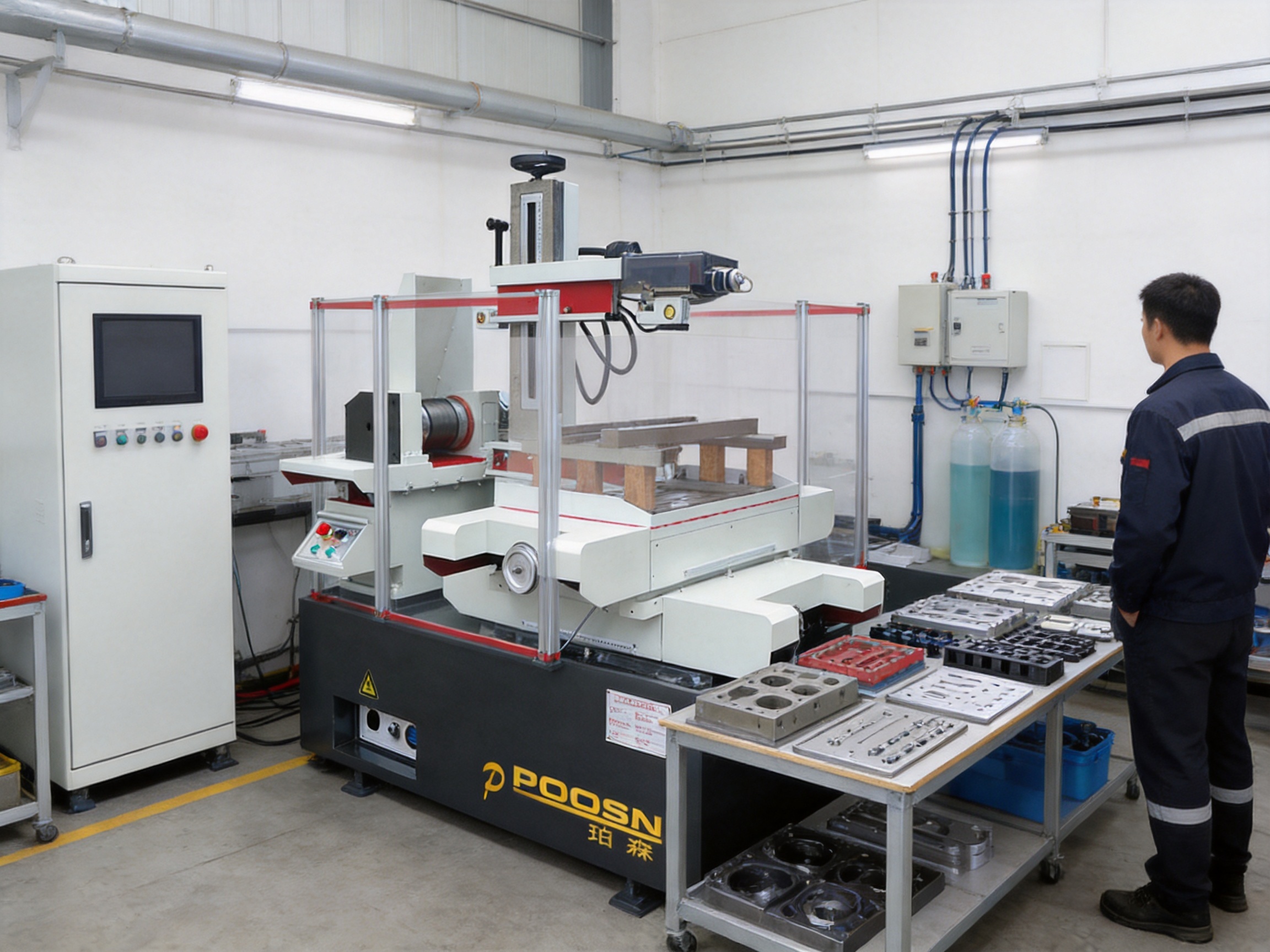
Modern mold manufacturing, automotive component production, aerospace machining, and precision mechanical processing increasingly depend on equipment that can combine accuracy, productivity, stability, and flexibility. Wire electrical discharge machining, commonly known as wire EDM or WEDM, is especially valuable when manufacturers need to cut hardened conductive materials, intricate profiles, narrow slots, sharp internal corners, or tapered contours that are difficult to produce with conventional cutting tools.
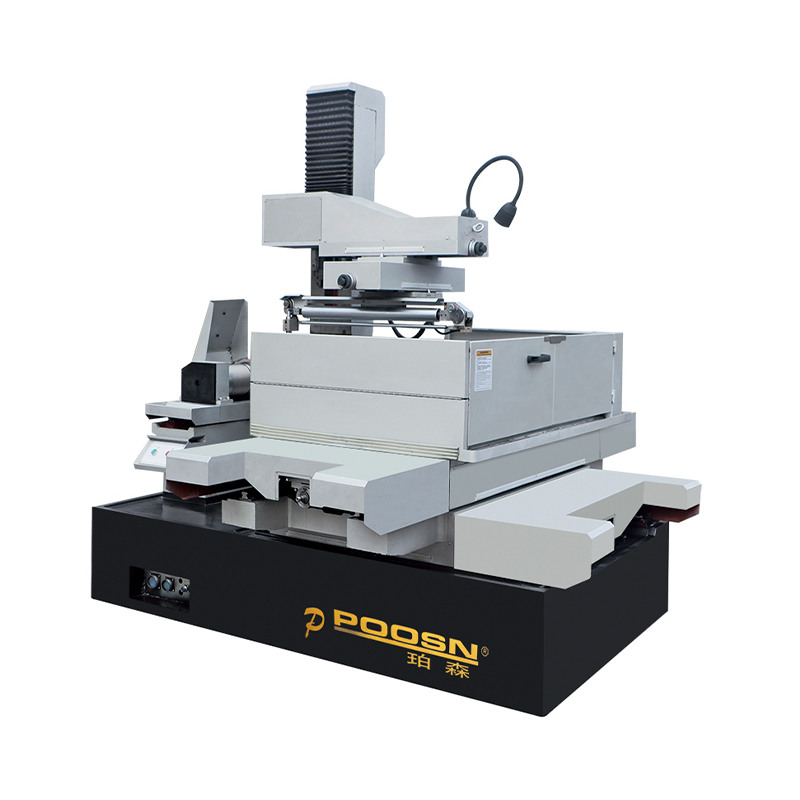
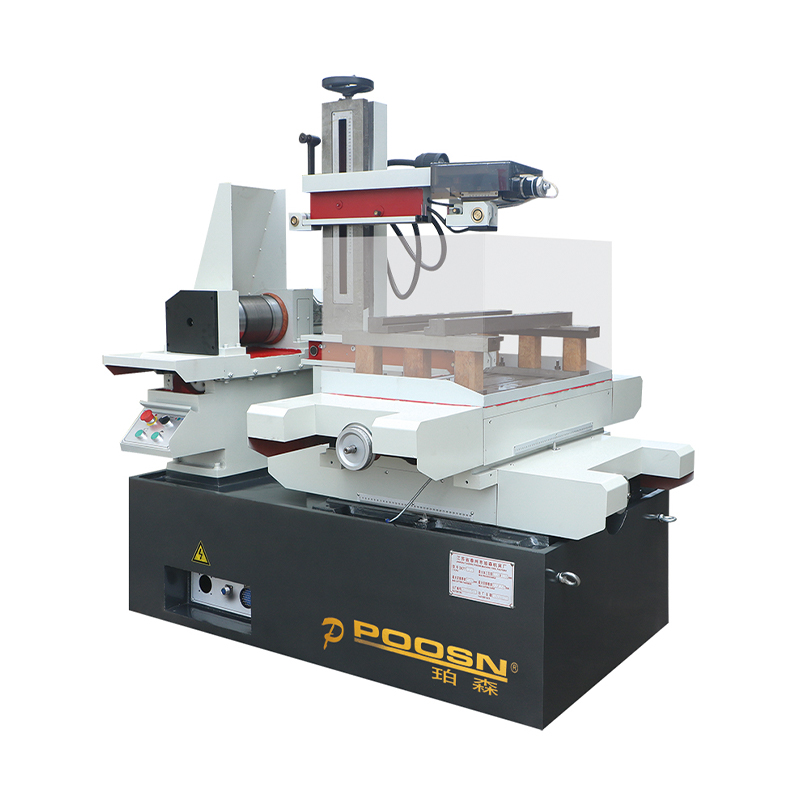
The DK-7735 CNC High-Speed Wire EDM Machine is designed for these demanding applications. With four-axis linkage, a 350 mm X-axis travel, a 450 mm Y-axis travel, a maximum cutting thickness of 450 mm, and a maximum worktable load of 300 kg, it occupies an important position between compact precision machines and larger heavy-duty models. Its configuration is intended for manufacturers that need more working space and load capacity than a small-format wire-cut machine can provide, while still requiring efficient cutting, reliable operation, and controlled production costs.
The machine delivers a maximum cutting efficiency of up to 16,000 mm²/h, depending on the selected control cabinet and machining conditions. Its four-axis simultaneous control system supports straight cutting, taper cutting, and complex contour processing. A reinforced mechanical structure, digital pulse power supply, precision transmission components, working-fluid circulation, and operator-oriented control interface contribute to its suitability for both individual high-precision parts and repeated production work.
Content
- 1 1. The Role of High-Speed Wire EDM in Modern Manufacturing
- 2 2. DK-7735 Configuration at a Glance
- 3 3. Four-Axis Linkage for Advanced Profile Machining
- 4 4. High Cutting Efficiency for Production-Oriented Machining
- 5 5. Mechanical Structure and Long-Term Accuracy
- 6 6. Digital Pulse Power and Discharge Stability
- 7 7. Wire Transport, Tension Control, and Guide Performance
- 8 8. Working-Fluid Filtration and Thermal Management
- 9 9. User Interface, Programming, and Operator Convenience
- 10 10. Product Advantages Compared with Alternative Machine Types
- 11 11. Applications Across Key Industries
- 12 12. Manufacturing Strength and Quality-Control Approach
- 13 13. Selecting the Appropriate Model in the Product Family
- 14 14. Operating and Maintenance Recommendations
- 15 15. Economic Value and Return on Investment
- 16 16. Why the DK-7735 Is a Balanced Competitive Choice
- 17 17. Frequently Asked Questions
- 17.1 Q1: What type of machine is the DK-7735?
- 17.2 Q2: What are the X-axis and Y-axis travels?
- 17.3 Q3: What is the maximum worktable load?
- 17.4 Q4: What is the maximum cutting thickness?
- 17.5 Q5: Can the DK-7735 perform taper cutting?
- 17.6 Q6: Is the machine suitable for mass production?
- 17.7 Q7: What cutting efficiency can users expect?
- 17.8 Q8: What control cabinets are available?
- 17.9 Q9: What surface finish can the machine achieve?
- 17.10 Q10: Does the machine automatically adjust cutting parameters?
- 17.11 Q11: What materials can be processed?
- 17.12 Q12: How does the machine support thick-workpiece accuracy?
- 17.13 Q13: What maintenance is required?
- 17.14 Q14: Can customized solutions be provided?
- 17.15 Q15: How should buyers decide between the DK-7735 and other models?
- 18 18. Conclusion
- 19 References
- 20 Product: DK-7735 CNC High-Speed Wire EDM Machine (4-Axis, 300kg Load)
1. The Role of High-Speed Wire EDM in Modern Manufacturing
Wire EDM removes material through controlled electrical discharges between a continuously moving wire electrode and a conductive workpiece. The wire does not make direct mechanical contact with the material. Instead, a dielectric working fluid surrounds the cutting zone, while precisely controlled electrical pulses generate a sequence of microscopic discharges. Each discharge melts or vaporizes a very small amount of material, and the working fluid carries away the resulting debris.
This process offers several important advantages. Because the cutting force is extremely low, delicate or slender components can be processed without the deformation commonly associated with mechanical cutting. Hardened steels and other difficult-to-machine conductive materials can be cut without requiring the workpiece to be softened first. In addition, the wire can follow highly complex programmed paths, allowing the production of narrow openings, fine contours, intricate profiles, and precision mold features.
However, wire EDM performance depends on much more than the nominal movement range of a machine. Stable discharge control, wire tension, working-fluid cleanliness, thermal management, guide accuracy, mechanical rigidity, and CNC interpolation all affect final results. A machine with a large work envelope but weak discharge stability may produce inconsistent surfaces. Similarly, a machine with excellent electrical performance but insufficient structural rigidity may experience positioning deviations during long-duration machining.
The DK-7735 is developed around the principle that mechanical, electrical, fluid, and control systems must work together. Its design is therefore not limited to a high cutting-speed claim. It combines a reinforced cast-iron structure, digital pulse control, precision ball screws, linear guides, four-axis linkage, filtration and cooling functions, and a safety enclosure to provide a more complete production solution.
2. DK-7735 Configuration at a Glance
The DK-7735 is part of a high-speed wire EDM platform that includes multiple machine sizes. This platform allows users to select a model according to workpiece dimensions, cutting thickness, load requirements, and production scale. Within the range, the DK-7735 is suited to medium-sized components and molds that require a larger worktable and longer travel than entry-level models.
| Specification | DK-7735 Configuration |
| Machine type | CNC high-speed wire-cut EDM |
| Control mode | Four-axis simultaneous linkage |
| Worktable size | 500 × 750 mm |
| X-axis travel | 350 mm |
| Y-axis travel | 450 mm |
| Maximum cutting thickness | 450 mm |
| Maximum cutting taper | ±6°/80 mm |
| Maximum cutting efficiency | 10,000–16,000 mm²/h, depending on configuration and conditions |
| Optimal surface roughness | Ra ≤ 2.5 μm |
| Maximum worktable load | 300 kg |
| Drive type | X, Y, U, and V stepper drive with four-axis linkage |
| Control cabinet | ZH-K68 desktop cabinet as standard; ZHZK-03 vertical cabinet optional |
| Power supply | 3N 380 V ±10% |
| Approximate machine weight | 1,100 kg |
| Approximate machine dimensions | 1,650 × 1,250 × 1,830 mm |
| Accuracy standard | GB/T7926-2015 |
The 500 × 750 mm worktable gives operators additional space for workholding, positioning, and the processing of larger components. The 350 × 450 mm X/Y travel allows the machine to handle medium-sized parts while retaining a relatively compact footprint compared with larger industrial wire EDM systems.
The 300 kg maximum worktable load is particularly useful for mold plates, tooling components, mechanical parts, and other workpieces that exceed the practical capacity of smaller high-speed models. Load capacity is not only a matter of placing a heavier part on the table. It also affects how confidently the machine can support fixtures, workholding arrangements, and workpieces during extended cutting cycles.
3. Four-Axis Linkage for Advanced Profile Machining
One of the central advantages of the DK-7735 is its four-axis linkage system. The X and Y axes control the primary movement of the worktable or cutting path, while the U and V axes control the relative offset of the upper and lower wire guides. By coordinating these axes, the machine can produce tapered surfaces and upper-lower profiles that are not possible with a simple two-axis path.
Four-axis interpolation is important in mold production because many components require a controlled taper, draft angle, or variation between the upper and lower contours. It is also valuable in applications where the top and bottom shapes must be intentionally different. The listed maximum cutting taper is ±6° over 80 mm, providing a useful range for many mold, die, and mechanical-part applications.
A four-axis system can reduce the need for secondary operations. Instead of cutting a basic profile and then manually correcting the geometry, the operator can program the desired taper directly into the machining process. This helps reduce handling, improve repeatability, and shorten the total manufacturing route.
The system is also suitable for complex irregular trajectories. Sharp corners, curved contours, narrow openings, slotted features, and intricate mold profiles can be programmed through the CNC interface. Path optimization and automatic gap compensation help maintain a stable electrical gap as the wire follows changes in geometry and material conditions.
Compared with a conventional two-axis high-speed wire-cut machine, the DK-7735 therefore offers broader geometric capability. Compared with a larger four-axis machine, it can provide a more economical solution for manufacturers whose parts fit within the 350 × 450 mm travel range and whose load requirements remain within 300 kg.
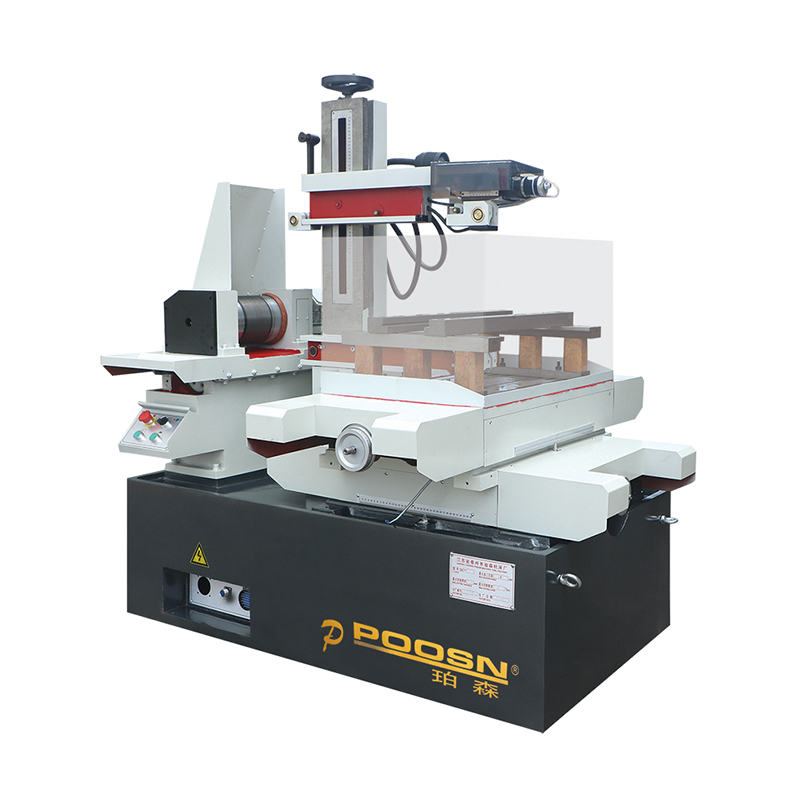
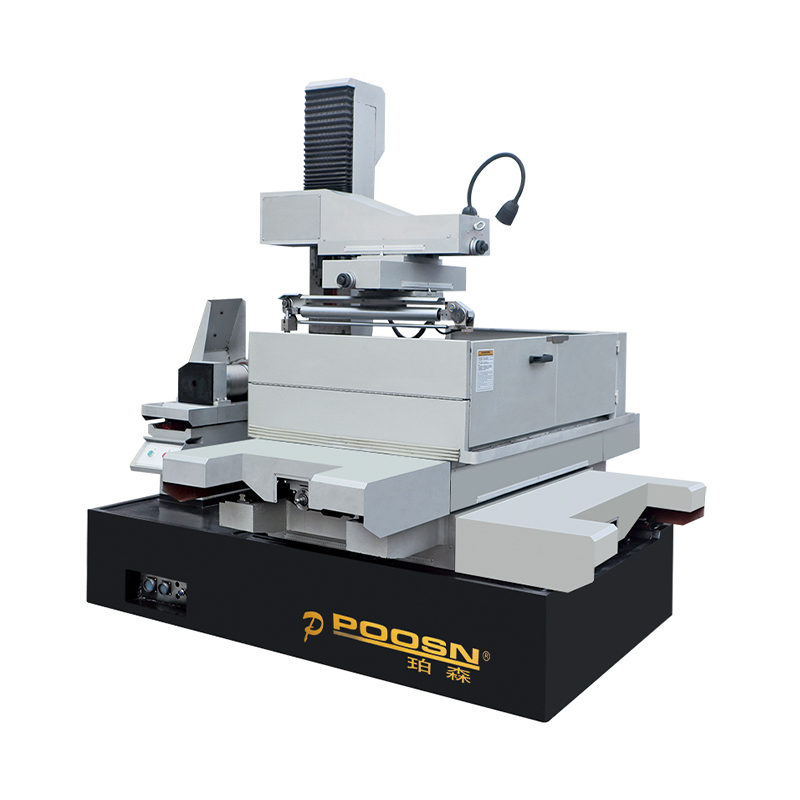
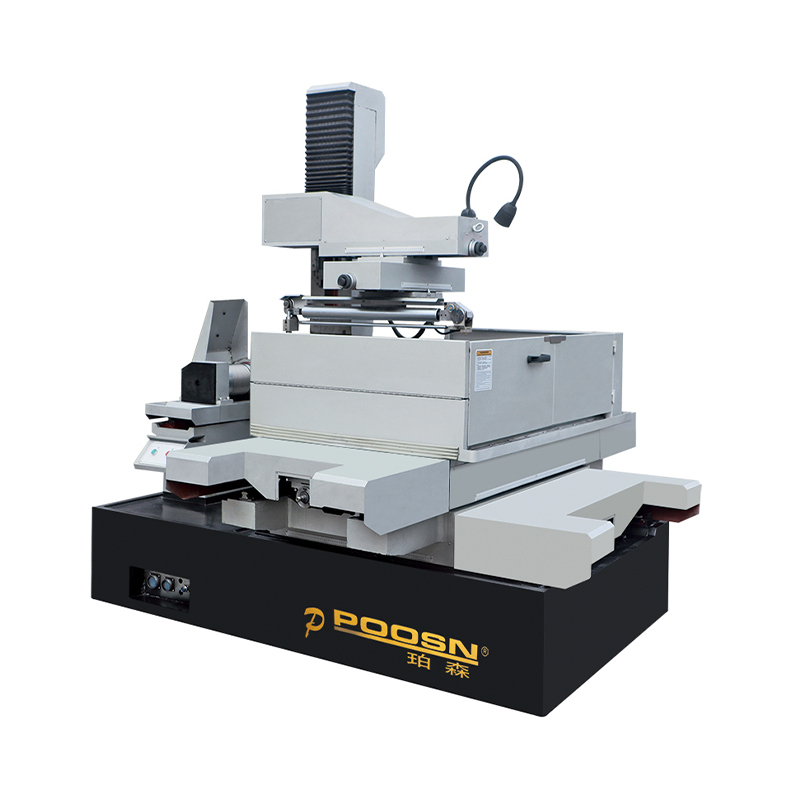
DK-7735 CNC High-Speed Wire EDM Machine (4-Axis, 300kg Load)
4. High Cutting Efficiency for Production-Oriented Machining
For production users, cutting efficiency has a direct effect on machine utilization, delivery schedules, and cost per component. The DK-7735 has a maximum cutting efficiency of up to 16,000 mm²/h. Actual performance depends on workpiece material, thickness, cutting height, flushing conditions, wire selection, surface-finish requirements, and the selected control cabinet. The stated range for the platform is 10,000–16,000 mm²/h.
High-speed performance is supported by the coordinated operation of the pulse power supply, wire transport system, servo or stepper movement, dielectric circulation, and CNC control. When these systems remain balanced, the machine can remove material efficiently while maintaining appropriate discharge conditions. If the discharge energy is too aggressive, wire breakage and poor surface quality may result. If it is too conservative, cutting time increases unnecessarily. The control system must therefore manage the relationship between speed, stability, wire consumption, and surface finish.
The DK-7735 uses a digital pulse power supply capable of adjusting discharge parameters according to material thickness and material characteristics. This automatic optimization helps the machine respond to different machining conditions. During rough cutting, the system can prioritize material removal. During finishing operations, it can use more controlled pulse conditions to improve surface quality and dimensional consistency.
For mass production, the benefits extend beyond the cutting rate itself. A stable machine reduces unexpected stoppages, limits the need for repeated operator intervention, and makes cycle-time planning more predictable. When several identical parts are required, repeatable positioning and consistent discharge performance can reduce variation from one workpiece to the next.
High efficiency also contributes to cost control. Shorter machining cycles can improve output from the same machine investment. Reduced rework and fewer secondary operations can lower labor requirements. In addition, automatic parameter adjustment can help prevent excessive wire consumption and reduce the risk of damage caused by unstable cutting conditions.
Factors Affecting Real-World Cutting Efficiency
The maximum published cutting efficiency should be viewed as a reference value rather than a universal production guarantee. The actual rate is influenced by the following factors:
Workpiece material: Different conductive materials have different thermal and electrical characteristics. Steel, stainless steel, aluminum, and copper may require different pulse conditions and flushing strategies.
Material thickness: As thickness increases, flushing and debris removal become more difficult. The operator may need to balance cutting speed with discharge stability and verticality.
Surface-finish requirements: A rough cut designed for rapid stock removal is normally faster than a finishing pass intended to achieve a lower roughness value.
Wire type and tension: Wire diameter, material, tension, and transport stability affect cutting behavior and the likelihood of wire breakage.
Working-fluid condition: Clean, adequately cooled dielectric fluid supports stable discharges and helps protect the wire guides, pump, and internal components.
Program geometry: Sharp corners, small radii, narrow slots, and frequent direction changes can require moderated speeds to maintain accuracy.
Control cabinet selection: The machine is available with different control cabinet configurations, and the selected cabinet can affect operating functions and cutting efficiency.
5. Mechanical Structure and Long-Term Accuracy
Long-term accuracy depends heavily on the machine bed and supporting structure. The DK-7735 uses a high-strength cast-iron base that undergoes aging treatment. This process is intended to reduce internal casting stress and improve dimensional stability. A stable base helps maintain geometric accuracy during prolonged reciprocating movement and reduces the likelihood of deviations caused by structural deformation.
Rigidity is especially important when machining thick workpieces or processing heavy mold components. A rigid structure resists vibration and helps maintain the relative position of the wire guides and workpiece. This contributes to more consistent straightness, taper accuracy, surface quality, and repeat positioning.
The DK-7735 combines the reinforced bed with high-rigidity linear guides and precision ball screws. Linear guides support smooth movement and help limit unwanted play. Ball screws convert motor rotation into controlled linear motion, allowing the machine to execute small programmed increments and maintain predictable movement over long cutting cycles.
Precision transmission is valuable not only when producing a single high-precision part, but also when repeating the same program. If the machine returns to a programmed location consistently, operators can reduce correction time and improve batch uniformity. This is particularly important in mold inserts, stamping dies, precision plates, and mechanical components that must match other parts in an assembly.
The specified machine accuracy follows GB/T7926-2015. Compliance with an established accuracy standard gives users a defined basis for evaluating machine performance. Actual results still depend on installation, foundation quality, environmental temperature, maintenance, workholding, programming, and operator practices. For high-precision production, proper installation and regular inspection remain essential.
Environmental Stability and Installation
A wire EDM machine should be installed on a stable foundation capable of supporting its weight and operating loads. The work area should provide adequate space for loading, unloading, electrical access, working-fluid maintenance, and safe operator movement. Stable temperature control is recommended because thermal changes can influence machine geometry and workpiece dimensions.
The operating environment should be free from strong magnetic interference and excessive vibration. Ventilation is important for maintaining a suitable workshop environment, especially during long machining cycles. Operators should also follow the equipment manual regarding grounding, power requirements, working-fluid management, lubrication, and safety enclosure operation.
6. Digital Pulse Power and Discharge Stability
In wire EDM, the pulse power supply is responsible for delivering controlled electrical energy to the cutting zone. Each pulse must be sufficiently powerful to remove material, but not so aggressive that it causes unstable arcing, excessive wire wear, poor surface quality, or workpiece damage. The DK-7735 uses a digital pulse power supply designed to optimize discharge parameters according to machining conditions.
Automatic adjustment is useful when cutting workpieces with different thicknesses or materials. A thick hardened steel component may require different settings from a thin copper part. The control system can help operators manage these variations rather than relying entirely on manual trial and error.
Stable discharge also supports verticality during thick cutting. When the wire is exposed to inconsistent electrical forces, thermal effects, or poor flushing conditions, it can vibrate or deflect. The resulting cut may deviate from the intended path, particularly near the upper or lower portion of a thick workpiece. The DK-7735 uses a rigid mechanical arrangement, precision wire-guide assemblies, and controlled pulse output to suppress these influences as far as practical.
Discharge control contributes to surface quality as well. The stated optimal surface roughness is Ra ≤ 2.5 μm under suitable conditions. Achieving a specific finish may require multiple passes, appropriate wire and fluid settings, stable workpiece clamping, and careful programming. The machine’s digital control architecture provides the foundation for these finishing operations.
7. Wire Transport, Tension Control, and Guide Performance
The wire transport mechanism is a critical part of any WEDM system. The electrode wire must travel continuously through the machining zone at a controlled speed and tension. Excessive tension can increase the risk of wire breakage, while insufficient tension may allow vibration, inaccurate cutting, and poor corner definition.
The DK-7735 incorporates a high-sensitivity tension control design intended to stabilize wire travel. Stable movement helps the wire maintain a predictable position relative to the programmed path. It also reduces the risk of interruptions during extended cuts.
Wire guides must maintain accurate alignment while allowing the wire to pass smoothly. The machine’s precision wire-guide assemblies support the requirements of thick-workpiece machining, taper cutting, and detailed profile processing. Proper guide maintenance is essential, since contamination, wear, or incorrect adjustment can reduce accuracy and increase wire breakage.
Operators should inspect guide components regularly, clean the relevant areas, and replace consumable parts according to usage and maintenance recommendations. A well-maintained wire transport system supports the machine’s broader advantages in stability, repeatability, and operating cost.
8. Working-Fluid Filtration and Thermal Management
Working fluid performs several functions in wire EDM. It provides the dielectric medium required for controlled discharge, cools the machining zone, and carries eroded particles away from the cut. If the fluid becomes contaminated or its temperature changes excessively, discharge stability and surface quality may decline.
The DK-7735 uses a multi-stage integrated circulation and cooling approach. Filtration helps maintain fluid purity, while circulation supports the removal of debris from the cutting area. Cooling helps control thermal conditions during long production cycles. Together, these functions protect the process and may extend the service life of pumps, guides, electrical components, and other internal systems.
Good fluid management also contributes to more consistent machining. Debris that remains in the cutting gap can cause unwanted arcing or short circuits. Adequate flushing helps maintain the intended electrical gap and allows the CNC system to regulate the process more effectively.
Maintenance personnel should monitor filters, fluid condition, pump operation, and cooling performance. The appropriate working fluid should be selected and maintained according to the machine documentation. Regular cleaning and timely replacement of filtration components are practical measures for preserving accuracy and reducing unplanned downtime.
9. User Interface, Programming, and Operator Convenience
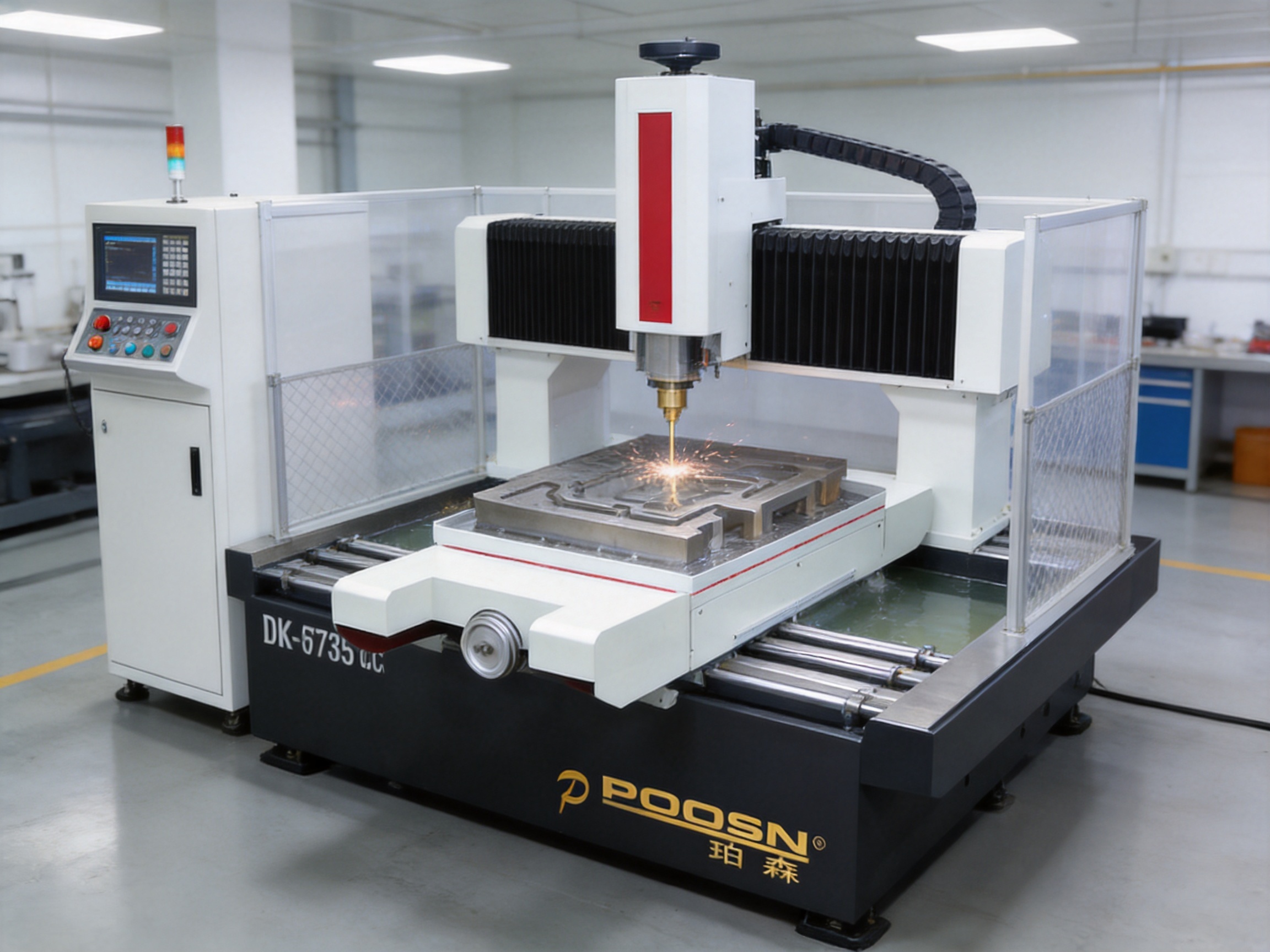
A high-performance machine must also be practical to operate. The DK-7735 is equipped with a user-oriented control interface and touchscreen operation. This allows operators to configure machining settings, access programs, monitor process conditions, and manage cutting parameters through a more direct workflow.
The transition from a technical drawing to an actual cut involves several stages, including geometry preparation, coordinate selection, workpiece alignment, technology selection, cutting-path programming, and process verification. An intuitive interface can reduce the time required for these tasks and make it easier for operators to manage different part families.
The four-axis control system supports the programming of taper cuts and upper-lower profile differences. Automatic gap compensation helps adapt the cutting process to changing conditions. Path optimization can improve movement efficiency and help the wire negotiate corners and intricate contours more smoothly.
The machine is also designed with a comprehensive safety enclosure. The enclosure helps protect operators from moving components, electrical hazards, and working-fluid splashing. It contributes to a cleaner workshop by containing fluid and cutting debris. Safety devices should never be bypassed, and operators should receive appropriate training before using the equipment.
10. Product Advantages Compared with Alternative Machine Types
Compared with Compact Small-Format WEDM Machines
Compact machines can be attractive for small parts, limited floor space, and low-volume precision work. However, their smaller worktables and shorter strokes may restrict workpiece size. The DK-7735 provides a 500 × 750 mm worktable, 350 mm X-axis travel, and 450 mm Y-axis travel, giving users more flexibility for medium-sized components and larger mold features.
Its 300 kg load capacity also allows the use of heavier workpieces and fixtures than many compact machines can practically accommodate. This makes it more suitable for manufacturers whose work has outgrown entry-level equipment but does not justify the cost and footprint of a large-format industrial machine.
Compared with Basic Two-Axis Wire-Cut Machines
A basic two-axis machine may be adequate for simple profiles, but it cannot provide the same level of geometric flexibility as a four-axis linkage system. The DK-7735 supports taper cutting and complex upper-lower profiles through coordinated X, Y, U, and V movement. This can reduce secondary operations and expand the range of parts that can be produced in one setup.
Four-axis capability also gives moldmakers greater freedom when designing draft angles and tapered features. Instead of treating taper as an additional manual process, the operator can incorporate it into the CNC program and maintain better repeatability from part to part.
Compared with Conventional Mechanical Cutting
Mechanical cutting generates cutting forces and may require specialized tools for hardened materials. It can also be difficult to produce narrow internal slots, intricate cavities, or sharp internal profiles without tool deflection or repeated operations. Wire EDM uses a non-contact electrical process, making it well suited to hardened conductive materials and delicate geometries.
The process is especially useful when dimensional precision and profile complexity are more important than rapid bulk material removal. Manufacturers can use the DK-7735 for features that would be expensive, slow, or difficult to produce through milling, sawing, or broaching alone.
Compared with Larger Heavy-Duty WEDM Equipment
Large-format machines provide greater travel and load capacity, but they normally require more floor space, higher investment, and increased operating resources. For medium-sized parts, an oversized machine may not provide an efficient return on investment. The DK-7735 offers a balanced configuration for users who need a substantial work envelope and 300 kg load rating without moving to the largest platform sizes.
This balance can be valuable for job shops, mold manufacturers, automotive suppliers, and precision-part producers that process varied workpieces. The machine provides room for future production growth while maintaining a practical overall footprint.
11. Applications Across Key Industries
Mold and Die Manufacturing
Complex molds and dies frequently contain hardened steel, narrow slots, intricate cavities, and precision contours. Wire EDM can process these features after heat treatment, reducing concerns about mechanical tool wear. The DK-7735 is suitable for mold inserts, stamping dies, precision plates, forming tools, and components requiring controlled taper.
The 450 mm maximum cutting thickness is useful for thicker mold components, while the four-axis system supports draft and profile requirements. Its 300 kg load capacity helps accommodate substantial mold assemblies and fixtures within the machine’s working range.
Automotive Components
Automotive production requires repeatable components with accurate profiles and reliable dimensional control. The DK-7735 can be used for precision tooling, stamping components, prototype parts, and selected production components made from conductive materials such as steel, stainless steel, aluminum, and copper.
Its production-oriented cutting efficiency is suitable for repeated machining, while four-axis functionality supports parts with tapered or complex profiles. Stable positioning and repeatable process control help manufacturers maintain consistency across batches.
Aerospace Parts
Aerospace manufacturing often involves demanding materials, complex geometries, and strict quality requirements. The DK-7735 can support the production of selected aerospace tooling, structural components, fixtures, and precision parts when their dimensions and material characteristics match the machine’s working envelope.
Large-scale aerospace components may require the larger models in the same platform. The DK-7735 is most appropriate for medium-sized components and high-precision features that fit within its travel, thickness, and load specifications.
Precision Machinery
Manufacturers of precision machinery can use the machine for gears, mechanical plates, guide components, special brackets, slots, and irregular profiles. Its non-contact cutting process is valuable when the workpiece is thin, delicate, hardened, or difficult to fixture for conventional machining.
Mass Production
In high-volume production, the machine’s combination of efficiency, repeatability, automatic adjustment, and load capacity can help shorten processing time and control unit cost. Production users should establish standardized workholding, programs, wire settings, fluid maintenance routines, and inspection procedures to obtain the best results.
12. Manufacturing Strength and Quality-Control Approach
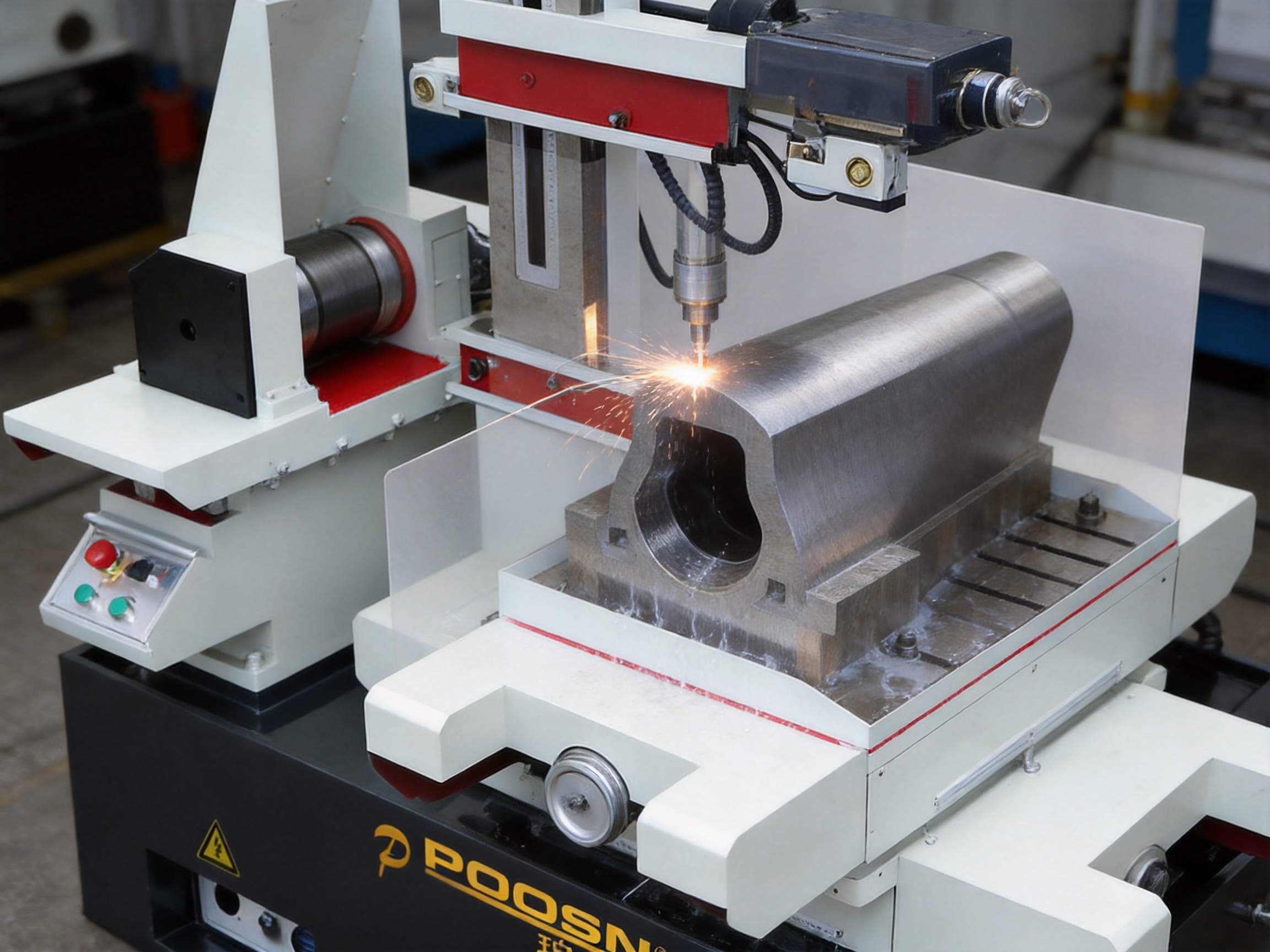
The performance of a wire EDM machine is closely related to the manufacturer’s engineering capability and production discipline. The producer of the DK-7735 has specialized in electrical discharge wire cutting since 1999 and has developed experience in research, development, manufacturing, and special-processing technologies. Its product lines include medium-speed wire-cut EDM machines, high-speed wire-cut EDM machines, and large-taper models.
The company operates with advanced processing equipment, comprehensive testing methods, and a product-development approach focused on accuracy, stability, and production efficiency. Rational structural design is combined with national manufacturing standards. Each machine tool undergoes positioning-accuracy testing before delivery, helping verify the quality of the finished equipment.
Manufacturing a wire EDM machine requires coordination across many disciplines. The machine bed must be cast and treated for structural stability. Linear guides and ball screws must be installed with appropriate alignment. Wire-guide assemblies must be positioned accurately. The pulse power supply and control cabinet must be integrated with the mechanical system. Pumps, filters, tanks, sensors, and safety devices must operate as a complete unit.
Quality control should therefore cover incoming materials, machining accuracy, component assembly, electrical wiring, software and control functions, geometric inspection, operating tests, and final positioning tests. This systematic approach helps prevent a machine from relying on one excellent component while neglecting the performance of the overall system.
Product Development and Technical Experience
Long-term specialization in wire cutting provides practical knowledge of the problems encountered in real production environments. These problems include wire breakage, unstable discharge, inadequate flushing, guide wear, thermal drift, positioning errors, poor surface quality, and maintenance complexity. Product improvements can be directed toward these recurring challenges.
The company’s development history includes the establishment of its own manufacturing facility, patent activity related to CNC machine-tool technology, and recognition as a high-tech enterprise. Such experience supports continued refinement of mechanical structures, control systems, electrical functions, and service processes.
OEM and Customization Capability
Some users require special worktable arrangements, control cabinet configurations, workholding solutions, machine dimensions, or processing adaptations. The manufacturer provides customized solutions for workpieces with special specifications. Customization should be assessed according to the required cutting range, material, thickness, loading method, automation level, control preferences, and workshop conditions.
The standard DK-7735 configuration includes a ZH-K68 desktop control cabinet, while a ZHZK-03 vertical cabinet is available as an option. This provides users with a choice according to shop-floor layout and operating preferences. Larger models in the product family also offer additional customization possibilities for very large workpieces and heavy components.
13. Selecting the Appropriate Model in the Product Family
The DK-7735 is one model within a broader series. Selecting the correct size helps prevent both under-capacity and unnecessary over-investment.
| Model | Typical Positioning | X/Y Travel | Maximum Load |
| DK-7725 | Small and medium parts, precision molds, small-batch work | 250 × 320 mm | 250 kg |
| DK-7735 | Medium-sized components and molds requiring more working space | 350 × 450 mm | 300 kg |
| DK-7745 | Large parts, high-precision molds, selected aerospace and automotive work | 450 × 550 mm | 400 kg |
| DK-7745F | Extra-large workpieces and heavy precision components | 450 × 650 mm | 500 kg |
| DK-7755F and above | Large-format industrial processing and heavier workpieces | 550 × 800 mm and above | 600 kg and above |
The DK-7735 is appropriate when the workpiece requires more capacity than the DK-7725 offers, but does not require the larger travel and load rating of the DK-7745 or DK-7745F. Buyers should evaluate the maximum diagonal dimensions of their parts, fixture requirements, cutting thickness, loading method, and future production plans before making a selection.
It is also important to distinguish table size from effective cutting travel. A worktable may be larger than the actual X/Y travel, and the part must be positioned so that the programmed contour remains within the usable machining range. Allowance should be made for clamping, wire access, flushing, and safe movement.
14. Operating and Maintenance Recommendations
Correct operation and regular maintenance are essential for preserving the machine’s advantages. Operators should begin with accurate workpiece positioning and secure clamping. The workpiece must be electrically connected according to the operating procedure, and the cutting path should be checked for collisions, excessive travel, and unsuitable taper conditions.
Before machining, verify the wire path, wire tension, guide condition, working-fluid level, filter status, pump operation, and control settings. During cutting, monitor discharge stability, wire consumption, fluid circulation, and abnormal sounds or alarms. If the machine experiences repeated wire breakage or unstable cutting, the operator should stop and investigate rather than continuously restarting the process.
Daily cleaning helps prevent debris and working fluid from accumulating around guides, covers, tanks, and moving components. Lubrication points should be serviced according to the maintenance schedule. Ball screws and linear guides should be protected from contamination, and worn wire guides or contact components should be replaced when necessary.
The filtration system requires particular attention. Clogged filters reduce circulation and can affect flushing pressure. Dirty fluid may reduce cutting stability and accelerate wear. Regular inspection of pumps, hoses, seals, and cooling components helps maintain reliable operation.
Periodic accuracy checks should be included in the maintenance plan. Inspection may include positioning repeatability, straightness, squareness, taper behavior, and test-piece results. Early detection of deviations allows corrective action before large batches are affected.
15. Economic Value and Return on Investment
Purchasing a wire EDM machine involves more than comparing the initial price. The economic value of the DK-7735 should be considered through productivity, usable capacity, versatility, maintenance requirements, labor efficiency, and the ability to complete complex work without outsourcing.
Its 300 kg capacity and 350 × 450 mm travel can allow a manufacturer to accept a wider range of jobs than a compact machine. Four-axis capability may reduce secondary processing and manual rework. High cutting efficiency can increase daily output. Automatic parameter adjustment can support consistent results across different workpieces.
A machine that remains stable over long operating periods also helps reduce hidden costs. Unexpected wire breakage, repeated setup, poor surface finish, excessive inspection, and dimensional corrections can consume significant production time. Structural rigidity, wire-tension control, filtration, and digital pulse management all contribute to lowering these risks.
Manufacturers should calculate expected utilization, average cutting hours, workpiece mix, labor cost, wire and filter consumption, maintenance requirements, and potential revenue from new types of work. The machine is particularly attractive when the company frequently processes conductive hardened materials, complex profiles, medium-sized molds, or repeated production components.
16. Why the DK-7735 Is a Balanced Competitive Choice
The strongest competitive feature of the DK-7735 is the balance among working range, load capacity, four-axis capability, cutting efficiency, and machine size. Some machines focus primarily on compactness. Others prioritize extreme workpiece size or heavy-duty construction. The DK-7735 is designed for the broad middle segment where manufacturers need substantial capacity without moving to the largest and most expensive class of equipment.
Its 500 × 750 mm worktable and 450 mm Y-axis travel provide useful room for medium-sized workpieces. The 300 kg load rating supports heavier fixtures and components. The 450 mm maximum cutting thickness broadens its application range. Four-axis linkage supports taper and complex profiles. Digital discharge control and a maximum efficiency of up to 16,000 mm²/h support production-oriented operation.
The machine also benefits from a product-family approach. Users can select smaller or larger models from the same general platform as their production needs change. This can simplify technology transfer, operator training, spare-parts planning, and process standardization across multiple machines.
Finally, the manufacturer’s experience in wire-cut EDM, positioning-accuracy testing, customized solutions, and technical support gives buyers more than a standalone machine. It provides access to a manufacturing partner capable of discussing application requirements, configuration options, installation conditions, maintenance, and long-term service.
17. Frequently Asked Questions
Q1: What type of machine is the DK-7735?
The DK-7735 is a CNC high-speed wire-cut electrical discharge machining machine with four-axis simultaneous linkage. It is designed for precision cutting of conductive materials, including steel, stainless steel, aluminum, and copper.
Q2: What are the X-axis and Y-axis travels?
The X-axis travel is 350 mm and the Y-axis travel is 450 mm. The machine has a 500 × 750 mm worktable, allowing it to process medium-sized workpieces within the effective travel range.
Q3: What is the maximum worktable load?
The maximum worktable load is 300 kg. This capacity makes the DK-7735 suitable for heavier mold components, tooling plates, mechanical parts, and workholding fixtures, provided that the total load and installation requirements are respected.
Q4: What is the maximum cutting thickness?
The maximum listed cutting thickness is 450 mm. Actual cutting results depend on material, flushing, wire condition, workpiece geometry, machine setup, and the required accuracy and surface finish.
Q5: Can the DK-7735 perform taper cutting?
Yes. The four-axis X, Y, U, and V linkage system supports taper cutting, with a listed maximum cutting taper of ±6° over 80 mm. The actual achievable result depends on workpiece thickness, material, wire condition, programming, and cutting parameters.
Q6: Is the machine suitable for mass production?
Yes. Its high cutting efficiency, repeatable positioning, automatic parameter adjustment, and 300 kg load capacity make it suitable for repeated production. Production users should establish standardized programs, workholding methods, inspection procedures, and maintenance schedules.
Q7: What cutting efficiency can users expect?
The maximum cutting efficiency is up to 16,000 mm²/h, while the platform specification lists a range of 10,000–16,000 mm²/h. Actual efficiency depends on the control cabinet, material, thickness, surface-finish requirements, wire, flushing, and cutting strategy.
Q8: What control cabinets are available?
The standard configuration uses a ZH-K68 desktop cabinet. A ZHZK-03 vertical cabinet is available as an optional configuration. Users can select the cabinet according to workspace arrangement and operating preferences.
Q9: What surface finish can the machine achieve?
The listed optimal surface roughness is Ra ≤ 2.5 μm under suitable machining conditions. Achieving this result may require finishing passes, stable working fluid, suitable wire settings, accurate workholding, and controlled cutting parameters.
Q10: Does the machine automatically adjust cutting parameters?
The machine is equipped with an intelligent control system capable of automatically adjusting cutting parameters according to workpiece and machining conditions. Operators should still verify settings and monitor the process, especially when working with unfamiliar materials or unusual geometries.
Q11: What materials can be processed?
The DK-7735 is suitable for conductive materials such as steel, stainless steel, aluminum, and copper. Material thickness, electrical characteristics, workpiece geometry, and required finish should be evaluated before production.
Q12: How does the machine support thick-workpiece accuracy?
Thick-workpiece accuracy is supported by the reinforced machine structure, precision wire-guide assemblies, controlled wire tension, stable pulse output, and effective working-fluid circulation. Proper installation and process adjustment are also essential.
Q13: What maintenance is required?
Maintenance includes cleaning the machine, checking wire guides and tension components, inspecting the working-fluid system, replacing or cleaning filters, lubricating moving components, checking pumps and hoses, and performing periodic accuracy inspections. Operators should follow the specific maintenance manual.
Q14: Can customized solutions be provided?
Customized solutions are available for workpieces with special specifications. The required customization may involve machine configuration, control cabinet selection, workholding, processing range, or other application-related requirements. Technical details should be confirmed before ordering.
Q15: How should buyers decide between the DK-7735 and other models?
Choose the DK-7735 when workpieces require approximately 350 × 450 mm of X/Y travel and up to 300 kg of worktable load. Choose a smaller model for compact parts and a larger model when greater travel, thickness, or load capacity is required. Future production plans should also be considered.
18. Conclusion
The DK-7735 CNC High-Speed Wire EDM Machine is designed for manufacturers seeking a capable and balanced solution for medium-sized precision machining. Its four-axis linkage expands the range of profiles and taper operations. Its 350 mm X-axis travel, 450 mm Y-axis travel, 450 mm maximum cutting thickness, and 300 kg load capacity support a broad range of molds, tooling components, mechanical parts, automotive components, and selected aerospace applications.
Its production value is strengthened by digital pulse discharge control, high-sensitivity wire-tension management, precision ball screws, high-rigidity linear guides, integrated filtration and cooling, a touchscreen operating interface, and a protective safety enclosure. Together, these systems support efficient cutting, stable operation, repeatable accuracy, and controlled maintenance requirements.
Compared with smaller two-axis or compact wire-cut machines, the DK-7735 provides more capacity and greater geometric flexibility. Compared with oversized heavy-duty equipment, it offers a more practical configuration for users whose work fits within its travel and load range. This combination makes it a competitive choice for job shops, mold manufacturers, precision-part producers, and industrial suppliers seeking to improve productivity without sacrificing process control.
Behind the product is a manufacturer with long-term experience in wire-cut EDM, dedicated production facilities, testing capabilities, national-standard manufacturing practices, customization services, and technical support. For companies evaluating a new wire EDM investment, the DK-7735 offers a practical path toward higher cutting efficiency, broader application capability, and more reliable long-term manufacturing performance.
References
1. Technical Specification Sheet for DK-77 High-Speed Wire-Cut EDM Machines, including DK-7725, DK-7735, DK-7745, and DK-7745F models.
2. Product Information for the DK-7735 CNC High-Speed Wire EDM Machine, including machine configuration, control systems, applications, and maintenance guidance.
3. GB/T7926-2015, Machine Tools—Inspection of the Accuracy of Wire-Cut Electrical Discharge Machines.
4. General Principles of Electrical Discharge Machining Technology, covering pulse discharge, dielectric circulation, electrode-wire transport, and process control.
5. Manufacturing and Quality-Control Information for Taizhou Xinchengyang Machinery Manufacturing Co., Ltd., including company development history, product lines, testing methods, and customization capability.
Product: DK-7735 CNC High-Speed Wire EDM Machine (4-Axis, 300kg Load)
-
Phone
+86-0523-86268788 +86-13815960366 +86-13912191163Email
[email protected]Address
No. 366, Yusheng Road Jiulong Town, Hailing District Taizhou City, China
Copyright © Taizhou Xinchengyang Machinery Manufacturing Co., Ltd. All Rights Reserved.
Custom edm machine for sale
wholesale edm machine manufacturers
