

 English
 русский
 عربى


Lu Qianwen — Overseas Sales Manager
Home / Author / Lu Qianwen — Overseas Sales Manager / DK-7735 CNC High-Speed Wire EDM Machine: Precision, Productivity, and Large-Workpiece Capability
DK-7735 CNC High-Speed Wire EDM Machine: Precision, Productivity, and Large-Workpiece Capability
2026-09-24
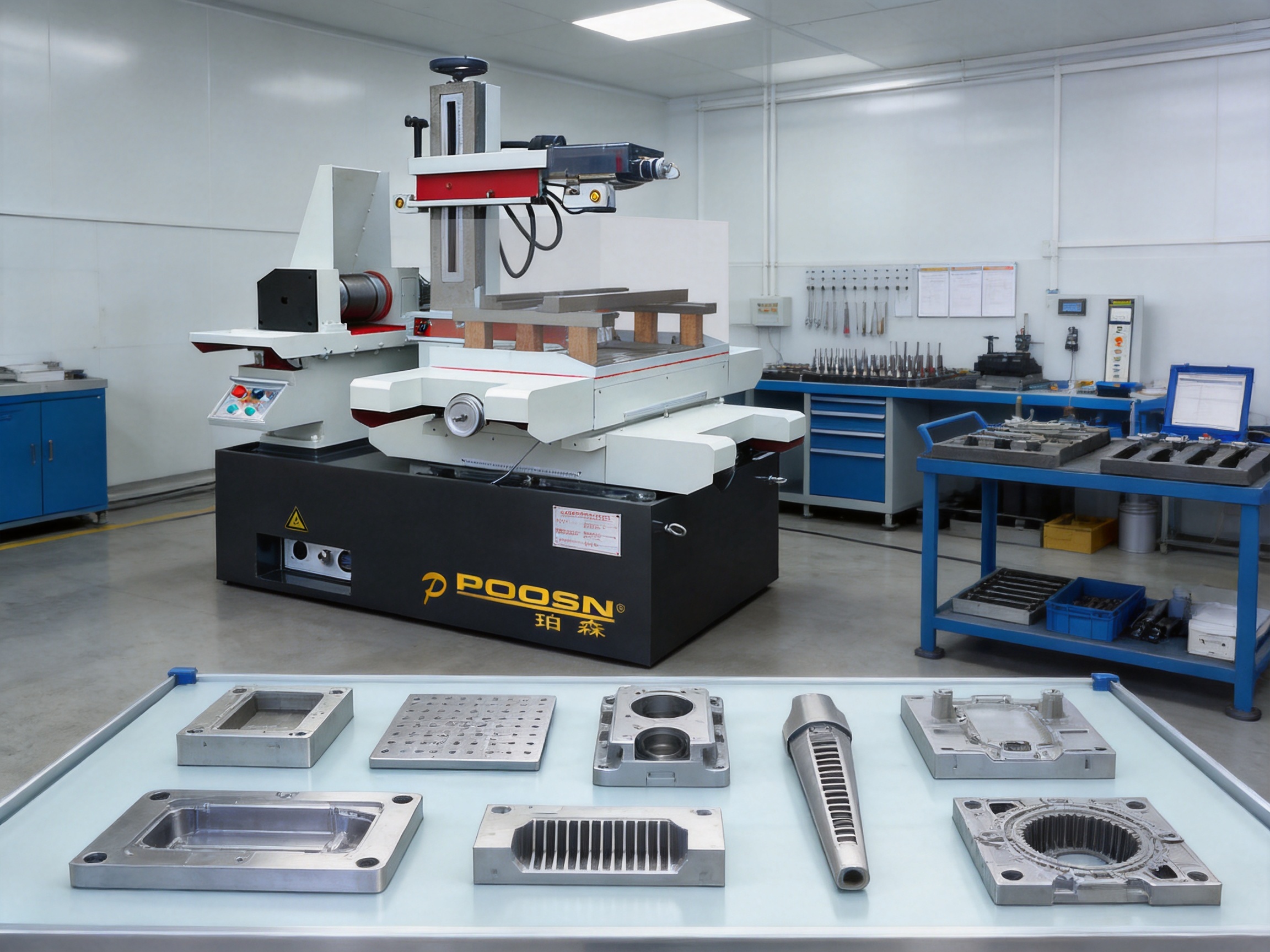
Modern manufacturers increasingly require machining equipment that can combine precision, flexibility, productivity, and dependable long-term operation. Molds, automotive components, aerospace parts, precision mechanical elements, and complex conductive workpieces often include narrow slots, intricate contours, sharp corners, taper features, and difficult internal profiles. Conventional cutting tools may struggle with these requirements, especially when the workpiece is hard, thick, delicate, or geometrically complex. Wire electrical discharge machining provides an effective solution because it removes conductive material through controlled electrical discharges rather than direct mechanical contact.
The DK-7735 CNC High-Speed Wire EDM Machine is designed for manufacturers that need a larger working range, a stronger load capacity, and efficient four-axis cutting in a compact industrial platform. With an X-axis travel of 350 mm, a Y-axis travel of 450 mm, and a maximum worktable load of 300 kg, the machine is positioned for medium-sized and relatively heavy workpieces. Its maximum cutting efficiency can reach 16,000 mm²/h, depending on the selected control cabinet and processing conditions. The machine is therefore suitable not only for prototype and toolroom applications but also for repetitive production environments.
Compared with smaller high-speed wire-cut EDM machines, the DK-7735 provides greater travel and workpiece capacity. Compared with larger machines in the same product family, it offers a balance between floor-space requirements, investment cost, load capacity, and usable machining envelope. This balance makes it an attractive option for manufacturers that need more capability than a small precision machine can provide but do not require the physical size or operating cost of an extra-large model.
Content
- 1 1. Product Positioning and Main Value
- 2 2. Why Wire EDM Is Important for Complex Manufacturing
- 3 3. Core Technical Specifications
- 4 4. Enlarged Machining Envelope for Medium and Heavy Workpieces
- 5 5. Four-Axis Linkage and Taper-Cutting Capability
- 6 6. High-Speed Cutting and Production Efficiency
- 7 7. Mechanical Structure and Long-Term Stability
- 8 8. Precision Transmission and Positioning
- 9 9. Digital Pulse Power and Discharge Control
- 10 10. Wire Transport, Tension, and Breakage Prevention
- 11 11. Working Fluid, Filtration, and Thermal Management
- 12 12. User Safety and Operating Convenience
- 13 13. Manufacturing Processes and Quality Strengths
- 14 14. Advantages Over Smaller and Conventional Configurations
- 15 15. Application Areas
- 16 16. Production Planning and Return on Investment
- 17 17. Installation, Training, and Maintenance
- 18 18. Customization and OEM/ODM Support
- 19 19. Recommended Selection Approach
- 20 20. Frequently Asked Questions
- 20.1 Q1: What are the X-axis and Y-axis travels of the DK-7735?
- 20.2 Q2: What is the maximum worktable load?
- 20.3 Q3: What is the maximum cutting efficiency?
- 20.4 Q4: Is the DK-7735 suitable for mass production?
- 20.5 Q5: What materials can the machine process?
- 20.6 Q6: Can the DK-7735 perform taper cutting?
- 20.7 Q7: What surface roughness can be achieved?
- 20.8 Q8: Which control cabinets are available?
- 20.9 Q9: Is the machine suitable for heavy workpieces?
- 20.10 Q10: Does the machine support automatic adjustment?
- 20.11 Q11: How should the machine be installed?
- 20.12 Q12: What support is available after purchase?
- 21 21. Conclusion
- 22 References
- 23 Product: DK-7735 CNC High-Speed Wire EDM Machine (4-Axis, 300kg Load)
1. Product Positioning and Main Value
The DK-7735 belongs to a high-speed wire-cut EDM range developed for demanding industrial machining. Its four-axis linkage structure coordinates the X, Y, U, and V axes to support straight cutting, contour cutting, taper cutting, and other complex trajectories. The combination of long X/Y travel, digital control, and a strong worktable enables the machine to process components that may exceed the practical capacity of smaller wire-cut EDM equipment.
The machine is particularly valuable where the production process requires a repeatable combination of accuracy and throughput. In a mold shop, for example, it can cut inserts, punches, dies, templates, and precision plates. In automotive manufacturing, it can process stamping-die components and intricate tooling elements. In aerospace production, it can support the machining of larger conductive components with complex profiles. In general mechanical manufacturing, it can be used for slots, gears, profiles, special holes, and other shapes that are difficult to produce economically through conventional milling or grinding.
Its principal advantages can be summarized in five areas:
First, the machine offers an expanded working range. The 350 mm X-axis travel and 450 mm Y-axis travel provide more usable space than many entry-level high-speed wire EDM machines.
Second, the 300 kg maximum worktable load allows the machine to accommodate heavier fixtures and workpieces. This is important when cutting steel plates, mold bases, thick components, or multiple parts arranged for batch processing.
Third, the four-axis simultaneous control system supports more than simple two-dimensional profiling. Coordinated U and V movement allows the wire to form controlled taper angles and upper-to-lower profile relationships.
Fourth, the cutting efficiency can reach up to 16,000 mm²/h. Actual performance depends on material, thickness, wire condition, flushing, cutting strategy, and control cabinet configuration, but the specification demonstrates the machine’s orientation toward efficient production.
Fifth, the machine is supported by a manufacturing organization with experience in wire-cut EDM development, production, testing, and service. The manufacturer has been involved in electrical-discharge wire cutting since 1999 and maintains product lines covering medium-speed, high-speed, large-taper, and related special-processing equipment.
2. Why Wire EDM Is Important for Complex Manufacturing
Wire EDM is a thermal machining process in which a continuously moving wire electrode removes conductive material through controlled electrical discharges. The wire does not normally make direct mechanical contact with the workpiece. This non-contact principle eliminates cutting forces that might otherwise deform thin parts, damage delicate edges, or deflect small tools.
Because the process does not depend on conventional tool hardness in the same way as milling or drilling, it is suitable for many difficult conductive materials, including hardened steel, stainless steel, aluminum, copper, and other electrically conductive alloys. The workpiece does not need to be softened before machining, which can simplify the manufacturing sequence for dies, punches, inserts, and hardened components.
Wire EDM is also useful for internal shapes. After a starting hole is prepared, the wire can pass through the workpiece and cut a closed contour, slot, or irregular profile. This capability is valuable for precision openings, punch profiles, narrow channels, and components with geometries that are difficult to reach using rotating tools.
However, the performance of a wire EDM process depends heavily on mechanical stability, wire transport, electrical control, flushing, filtration, and software. A machine with a large nominal travel but unstable motion may not deliver reliable results. The DK-7735 addresses these factors through an integrated design that combines a rigid machine structure, precision transmission components, digital pulse control, wire-tension management, working-fluid circulation, and four-axis movement control.
3. Core Technical Specifications
The DK-7735 has been designed as the medium-sized model within a broader high-speed wire EDM series. The following table summarizes the main specifications relevant to the DK-7735 configuration and places them in the context of related models.
| Specification | DK-7725 | DK-7735 | DK-7745 | DK-7745F |
|---|---|---|---|---|
| Worktable size | 410 × 600 mm | 500 × 750 mm | 570 × 850 mm | 570 × 950 mm |
| X/Y travel | 250 × 320 mm | 350 × 450 mm | 450 × 550 mm | 450 × 650 mm |
| Maximum cutting thickness | 350 mm | 450 mm | 450 mm | 450 mm |
| Maximum worktable load | 250 kg | 300 kg | 400 kg | 500 kg |
| Machine weight | 800 kg | 1,100 kg | 1,250 kg | 1,350 kg |
| Machine dimensions | 1,300 × 1,080 × 1,625 mm | 1,650 × 1,250 × 1,830 mm | 1,825 × 1,400 × 1,830 mm | 1,825 × 1,550 × 1,830 mm |
Across the series, the listed maximum cutting thickness is up to 450 mm for the DK-7735 and larger standard models. Actual achievable thickness depends on workpiece material, wire diameter, flushing conditions, workholding, electrical parameters, and the required accuracy or surface finish. The maximum cutting taper is listed as ±6° over 80 mm, while optimal surface roughness is stated as Ra ≤ 2.5 μm under appropriate machining conditions.
The machine uses X, Y, U, and V-axis stepper drives with four-axis linkage. It is available with a standard ZH-K68 desktop control cabinet, while a ZHZK-03 vertical cabinet is offered as an option. The stated power supply is 3N 380 V ±10 percent. Before installation, users should confirm local electrical standards, grounding conditions, transformer requirements, and site-specific safety provisions with the manufacturer.
4. Enlarged Machining Envelope for Medium and Heavy Workpieces
One of the clearest advantages of the DK-7735 is its larger X/Y travel compared with smaller machines in the series. A 350 mm X-axis travel and 450 mm Y-axis travel can reduce the need for repeated repositioning or multiple setups. Fewer setups generally make it easier to preserve dimensional relationships between features, especially when a component includes several profiles, slots, or reference surfaces.
The 500 × 750 mm worktable provides a practical platform for fixtures, support plates, and workpieces of different shapes. The table is sufficiently large for many mold components and mechanical parts while remaining smaller than the platforms of extra-large industrial machines. This balance can help manufacturers make better use of workshop space and avoid purchasing more machine capacity than their normal production requires.
A 300 kg maximum worktable load is also significant. Workpiece weight is not limited to the raw component itself. Fixtures, clamping plates, risers, support blocks, and auxiliary tooling all contribute to the total load. The DK-7735 allows users to plan more robust workholding arrangements without approaching the capacity of a small machine too quickly.
For batch production, the larger table can also support multiple smaller components in a single setup, subject to available travel, wire path planning, flushing requirements, and safe clamping. This can reduce loading and unloading frequency and improve the ratio of cutting time to handling time.
Proper load distribution remains essential. The maximum load specification should not be interpreted as permission to place any weight at any location on the table without considering center of gravity, fixture rigidity, table condition, and manufacturer instructions. Stable support helps maintain geometric accuracy and reduces vibration during long cutting cycles.
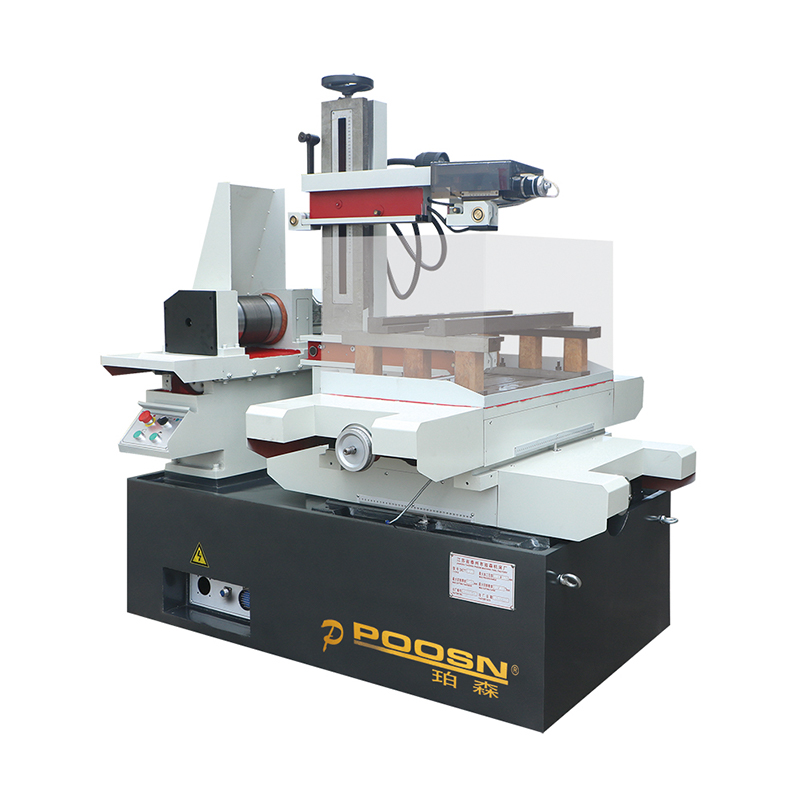
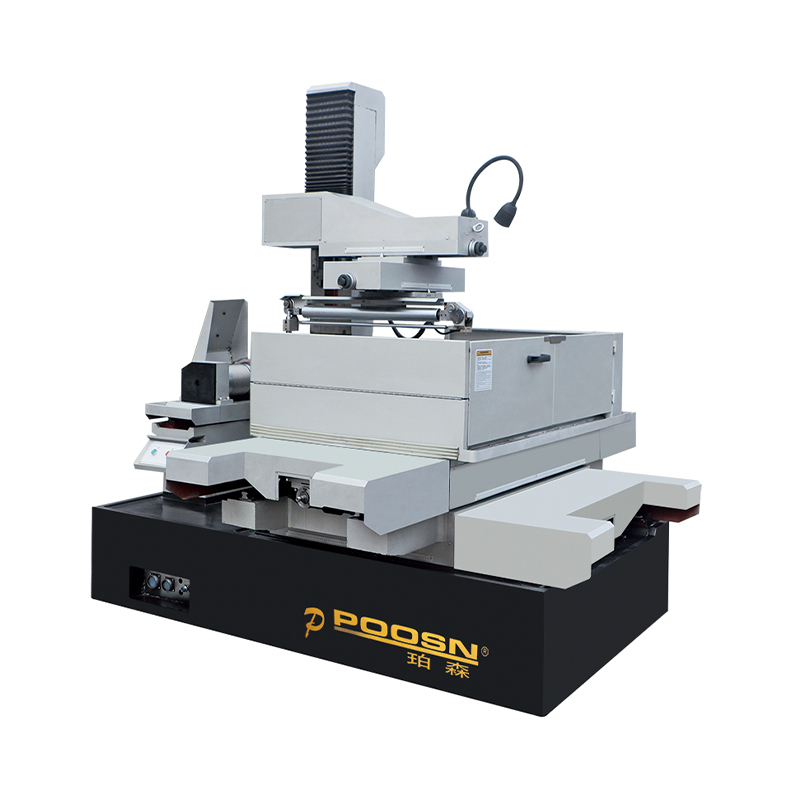
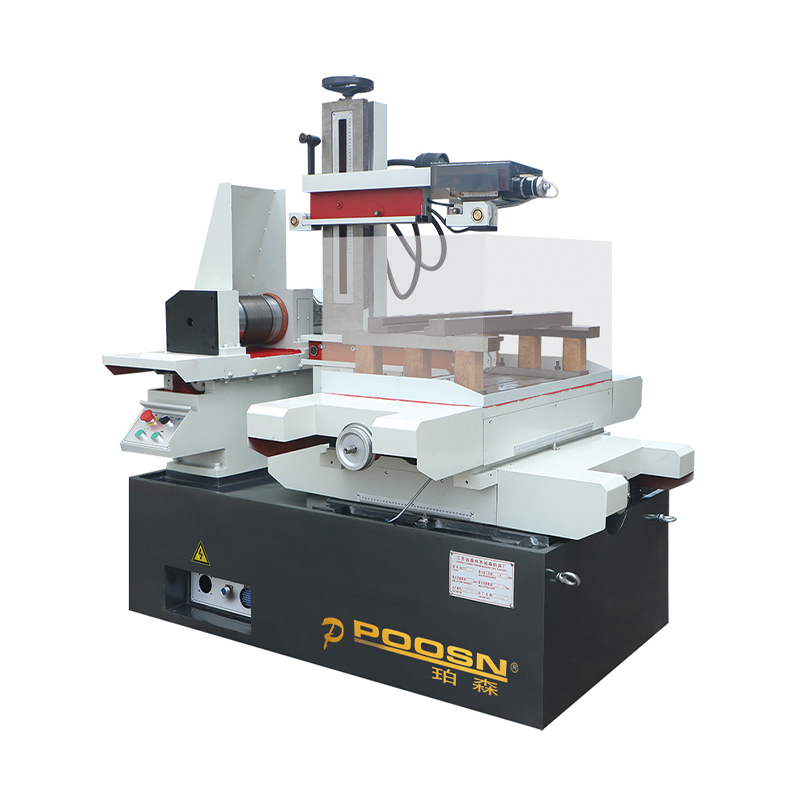
DK-7735 CNC High-Speed Wire EDM Machine (4-Axis, 300kg Load)
5. Four-Axis Linkage and Taper-Cutting Capability
The DK-7735 uses a four-axis simultaneous control system based on X, Y, U, and V movement. In a basic wire-cut operation, X and Y control the primary contour on the workpiece plane. U and V coordinate the upper and lower wire-guide positions. By moving these axes together, the machine can create controlled taper geometries and upper/lower profiles that are not identical.
This capability is important in die manufacturing, where a punch or die may require a clearance angle. It is also useful for tapered slots, angled surfaces, special inserts, and components in which the upper and lower contour must be offset. The listed maximum cutting taper is ±6° over 80 mm, although the practical result depends on material thickness, wire alignment, guide condition, programming strategy, and the desired surface quality.
Four-axis control provides an advantage over machines limited to simple two-dimensional movement. It reduces the need for secondary machining operations when a taper can be produced directly during wire cutting. Fewer secondary operations can lower handling time and reduce the risk of errors caused by transferring a workpiece between machines.
The control system is also intended to simplify programming through a touchscreen operating interface. A user can configure machining parameters, coordinate movement, and process settings through the control cabinet. The actual workflow depends on the selected software configuration and operator training, but the objective is to make the transition from technical drawing to machine operation more direct.
For complex work, programming should include careful verification of wire paths, lead-in and lead-out locations, corner conditions, taper direction, upper and lower profile relationships, and collision risks. The machine’s control functions can support the process, but successful results still depend on accurate drawing interpretation, correct workpiece alignment, suitable electrical settings, and disciplined process planning.
6. High-Speed Cutting and Production Efficiency
The DK-7735 is specified with a maximum cutting efficiency of up to 16,000 mm²/h. This figure is a useful indication of the machine’s production potential, but it should not be treated as a guaranteed result for every application. Cutting efficiency varies according to workpiece material, thickness, wire type, flushing, electrical discharge parameters, required surface roughness, corner geometry, workpiece stability, and selected control cabinet.
The manufacturer offers three control cabinet options or configurations across the relevant product information, including the standard ZH-K68 desktop cabinet and the optional ZHZK-03 vertical cabinet. Users should discuss the intended materials, typical thicknesses, surface-finish requirements, and production volumes when selecting the appropriate control configuration.
High cutting efficiency has several potential benefits. It can shorten the machining time for each component, increase daily output, and reduce the proportion of machine time assigned to a single order. In mass production, even a small reduction in cutting time per part can create a meaningful improvement in annual capacity.
Efficiency must be evaluated together with stability. A machine that cuts quickly but experiences frequent wire breakage, inconsistent flushing, or dimensional drift may produce less output in real operation than a slower but more stable machine. The DK-7735’s technical architecture therefore combines discharge control with wire transport, fluid circulation, mechanical rigidity, and motion control.
For production planning, manufacturers should consider the complete cycle rather than only the active spark-cutting period. Setup, workholding, wire threading, workpiece measurement, flushing-fluid maintenance, filter replacement, unloading, and inspection all affect productivity. The larger worktable and higher load capacity of the DK-7735 can help reduce the frequency of setup changes for suitable jobs.
7. Mechanical Structure and Long-Term Stability
Mechanical stability is fundamental to wire EDM accuracy. During extended cutting cycles, the machine must maintain alignment while the table and workpiece are exposed to motion, dielectric circulation, temperature changes, and repeated electrical discharge activity. The DK-7735 uses a reinforced cast-iron machine bed that undergoes aging treatment intended to reduce internal casting stress.
A properly stabilized bed can help preserve geometric precision over time. Cast iron is widely used in machine tools because it combines rigidity, damping, and structural mass. These properties are valuable in wire EDM, where small deviations in guide alignment or table motion can influence profile accuracy and surface consistency.
The DK-7735 has a listed machine weight of approximately 1,100 kg. This mass, together with the reinforced structure, supports stable movement and helps resist unwanted vibration. Stability is particularly important when machining thick workpieces, where the wire is exposed to a longer discharge zone and the process may become more sensitive to flushing and wire vibration.
The machine’s structural design also contributes to repeatability. When a production job is repeated over multiple shifts, consistent geometric relationships between the worktable, guides, drive components, and workholding system are essential. A rigid structure does not eliminate the need for calibration and maintenance, but it provides a more dependable foundation for those processes.
Installation quality remains an important part of machine performance. The equipment should be placed on a stable foundation with adequate load-bearing capacity. Temperature variation, direct sunlight, strong magnetic interference, workshop vibration, and poor ventilation can affect precision and reliability. Site preparation should be completed according to the manufacturer’s technical requirements before commissioning.
8. Precision Transmission and Positioning
The DK-7735 incorporates precision ball screws and high-rigidity linear guides for controlled axis movement. These components support smooth feed motion, accurate positioning, and repeatable contour generation. The X and Y axes are especially important for maintaining the programmed path, while the U and V axes must coordinate accurately when taper cutting is required.
Precision transmission is not only about the nominal resolution of an axis. It also involves backlash control, guide straightness, screw alignment, bearing condition, lubrication, drive tuning, and feedback or control behavior. Any deviation in these areas can appear as dimensional error, corner distortion, uneven taper, or inconsistencies between repeated parts.
The product information describes a closed-loop or semi-closed-loop feedback approach within the machine’s functional architecture. Feedback helps the control system monitor and manage movement, improving repeatability during long-stroke machining operations. The exact configuration may vary by machine and control cabinet, so technical specifications should be confirmed before purchase.
In practical production, the positioning system is supported by correct maintenance. Lubrication points should be serviced according to the operating manual. Linear guides and ball screws should be protected from contamination, and abnormal noise, resistance, or movement should be investigated promptly. Scheduled inspection is generally more effective than waiting until a dimensional problem becomes visible in finished parts.
9. Digital Pulse Power and Discharge Control
The electrical discharge system determines how energy is transferred from the wire to the workpiece. The DK-7735 uses a digital pulse power supply designed to optimize discharge parameters according to material thickness and material characteristics. Appropriate pulse control can improve cutting speed while managing wire consumption, surface condition, and process stability.
Wire EDM requires a balance between energy, speed, flushing, and accuracy. Excessive energy may accelerate cutting but can increase surface damage, recast effects, wire stress, or instability. Insufficient energy may produce slow cutting or incomplete flushing. A digital control system helps operators select and maintain suitable conditions for different materials and thicknesses.
The machine is intended to process steel, stainless steel, aluminum, copper, and other conductive materials. Each material behaves differently during discharge. Steel may require different parameter combinations from aluminum because of differences in conductivity, melting behavior, thermal properties, and debris generation. Thickness also changes the flushing and discharge requirements.
For precision finishing, operators may use roughing and finishing passes rather than attempting to achieve the final result in a single cut. Finishing passes can improve surface quality and dimensional accuracy, although they increase total cycle time. The stated optimal surface roughness of Ra ≤ 2.5 μm should be understood as a performance reference under suitable conditions rather than an unconditional result for every workpiece.
The system can also support automatic adjustment of cutting parameters based on workpiece requirements. Intelligent adjustment can help maintain machining accuracy and efficiency as material thickness or process conditions change. Nevertheless, process verification remains important for new materials, unusual geometries, very thick parts, and applications with strict metallurgical or dimensional requirements.
10. Wire Transport, Tension, and Breakage Prevention
Stable wire transport is essential to surface quality and dimensional accuracy. The DK-7735 incorporates a high-sensitivity wire-tension control design intended to maintain stable wire travel and reduce the risk of wire breakage. Consistent tension helps the wire follow the programmed path while minimizing vibration in the cutting zone.
Wire breakage can interrupt a machining cycle, create a visible mark on the part, and increase operator intervention. It can be caused by unsuitable electrical parameters, poor flushing, excessive wire tension, contaminated working fluid, incorrect threading, material-related instability, or an obstruction in the cutting path. A responsive tension system is one part of a broader strategy for stable machining.
Operators should also monitor wire condition, spool handling, guide wear, contact components, and threading accuracy. Wire guides and related components gradually wear during service. If they are not inspected or replaced when necessary, the machine may experience poorer verticality, inconsistent taper, increased breakage, or reduced surface quality.
Stable wire movement is especially important when processing thick workpieces. A longer cutting zone increases the importance of wire alignment and flushing. The DK-7735’s high-rigidity structure, precision guides, and discharge control work together to help maintain a reliable process through the material thickness.
11. Working Fluid, Filtration, and Thermal Management
Working fluid performs several functions in wire EDM. It helps remove machining debris, supports electrical discharge control, cools the cutting area, and influences the consistency of the process. If the fluid becomes excessively contaminated or its properties drift, cutting stability and surface quality may decline.
The DK-7735 uses a multi-stage integrated circulation and cooling approach. Filtration helps maintain fluid purity and can extend the service life of internal components. Effective circulation is particularly important for large or thick workpieces because debris must be removed from a relatively deep cutting gap.
Fluid maintenance should include regular checking of filtration performance, circulation pressure, tank cleanliness, fluid condition, and cooling behavior. Filters should be replaced or cleaned according to the maintenance schedule. Operators should also observe changes in cutting sound, surface finish, wire breakage, and machining speed, as these may indicate a fluid or flushing problem.
Thermal management contributes to dimensional stability. Temperature changes in the working fluid, machine structure, and workshop can influence the relative position of the wire and workpiece. Stable environmental conditions are therefore recommended for high-precision applications. The machine should be installed in a location with suitable temperature control, adequate ventilation, and protection from severe environmental disturbances.
12. User Safety and Operating Convenience
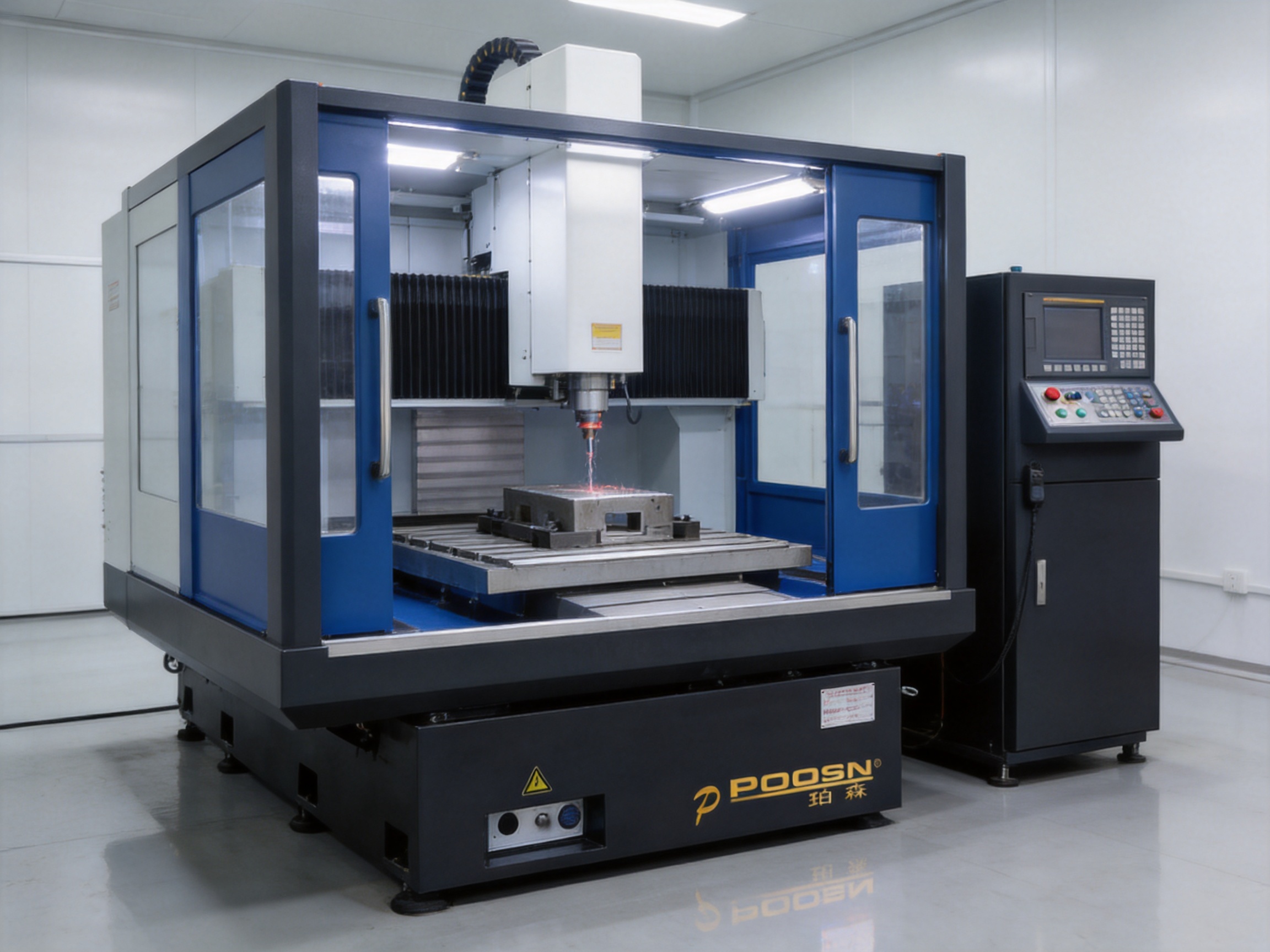
The DK-7735 includes a safety enclosure designed to protect the operator and help contain working fluid. Enclosure design contributes to a cleaner workshop environment by reducing fluid splash during operation. It also establishes a controlled area around moving components and the machining zone.
Safety features should always be used together with proper procedures. Operators should understand electrical-discharge hazards, moving-axis risks, hot workpieces, fluid handling, wire hazards, and maintenance lockout requirements. The control system and enclosure are important safeguards, but they do not replace training or responsible operation.
The touchscreen interface is intended to simplify daily use. A clear interface can make it easier to select programs, set cutting conditions, monitor machine status, and respond to alarms. Ease of use is valuable for experienced programmers as well as production operators who must manage recurring jobs consistently.
Programming should follow a controlled process. Technical drawings should be reviewed before data entry, coordinate systems should be confirmed, workpiece alignment should be checked, and the wire path should be simulated or verified when possible. Trial cutting on a representative workpiece can be useful for new materials and complex profiles.
13. Manufacturing Processes and Quality Strengths
The performance of a machine tool depends not only on its design but also on how the machine is manufactured, assembled, adjusted, and tested. The manufacturer of the DK-7735 has developed wire-cut EDM equipment for many years and maintains dedicated experience in electrical discharge machining, special processing technologies, and related equipment.
The company operates with technical capabilities covering product research, development, production, testing, and process improvement. Its manufacturing approach includes advanced processing equipment, comprehensive testing methods, and product designs structured around national standards. Machine tools undergo positioning accuracy testing to verify the quality of their motion and alignment before delivery.
Machine-bed preparation is an important stage. A high-strength cast-iron bed must be carefully cast, aged, machined, and inspected. Aging treatment is used to reduce internal stress and support long-term stability. Precision machining of mounting surfaces creates the foundation for linear guides, ball screws, worktables, columns, and other critical assemblies.
Mechanical assembly also requires controlled alignment. Linear guides and ball screws must be installed with attention to parallelism, straightness, preload, and movement smoothness. Wire-guide components must be positioned accurately because even a small alignment error can affect taper, verticality, and surface quality.
Electrical and control integration is another major manufacturing stage. The pulse power system, axis drives, touchscreen interface, sensors, wire transport, pump system, filtration, and safety circuits must function as a coordinated unit. Testing should include axis movement, control response, wire transport, discharge behavior, fluid circulation, safety interlocks, and machine accuracy.
Quality control continues after assembly. Positioning tests help verify axis accuracy and repeatability. Functional testing helps confirm that the machine can perform the operations expected by the customer. The manufacturer’s emphasis on testing supports more reliable commissioning and reduces the likelihood of unresolved assembly problems reaching the end user.
The company’s product history also demonstrates a continuing focus on wire-cutting technology. Its product families include PS-C and DK77-BC medium-speed wire-cut EDM machines, DK77-A and DK77-B high-speed wire-cut EDM machines, and DK77-D large-taper wire-cut EDM machines. This range provides practical experience across different machine sizes, cutting requirements, and customer applications.
14. Advantages Over Smaller and Conventional Configurations
The DK-7735 is not intended to replace every type of machine. Its advantages are most apparent when compared with smaller high-speed wire EDM units, basic two-axis configurations, and conventional cutting methods used for difficult conductive parts.
Compared with a smaller wire EDM machine, the DK-7735 offers a larger work envelope and a higher load capacity. This can reduce the need to divide a job into multiple setups. The larger table also provides more space for fixtures and batch arrangements, while the 300 kg load rating accommodates heavier components.
Compared with a basic two-axis wire-cut system, the four-axis linkage capability provides greater flexibility for taper cutting and upper/lower profile control. This can reduce the need for secondary operations, especially where the required geometry can be produced directly through coordinated wire-guide movement.
Compared with conventional milling, the non-contact EDM process reduces mechanical cutting forces. This is useful for hardened materials, narrow slots, thin walls, delicate profiles, and geometries that are difficult to access with a rotating tool. It can also eliminate the need for certain special cutting tools.
Compared with manual or less integrated processes, the digital control system supports repeatable parameter management and programmed movement. Repeatability is particularly valuable in batch production, where consistent results across multiple parts are more important than the success of a single trial cut.
Compared with purchasing an oversized machine, the DK-7735 can offer a more balanced investment for manufacturers whose normal workpieces fall within the medium-sized range. A correctly matched machine can reduce unnecessary floor-space consumption, installation requirements, and capital expenditure while still providing substantial cutting capacity.
15. Application Areas
15.1 Precision Mold Manufacturing
Moldmaking is one of the most important applications for the DK-7735. The machine can process mold inserts, punches, dies, templates, ejector-related components, and other conductive parts requiring complex profiles. Four-axis taper cutting is useful when clearance or angled geometry is necessary.
High-precision mold components often require consistent dimensions, clean corners, and controlled surface quality. The machine’s precision transmission, digital pulse control, and stable wire transport support these requirements. Depending on the material and process plan, roughing and finishing passes can be combined to achieve the required result.
15.2 Automotive Components and Tooling
Automotive production relies heavily on dies, fixtures, forming tools, precision inserts, and special mechanical components. The DK-7735 can support the production and maintenance of these parts, particularly when profiles are complex or materials are hardened.
The 300 kg load capacity is useful for medium-sized die components and robust fixtures. The larger travel range can help accommodate parts with multiple features, while the high cutting efficiency supports the repetitive production needs of automotive suppliers and tooling departments.
15.3 Aerospace Components
Aerospace manufacturing often involves complex conductive materials, strict dimensional requirements, and components with difficult geometries. Wire EDM can be useful for profiles, slots, precision openings, and components that must be produced without substantial mechanical cutting force.
The DK-7735 is suitable for medium-sized aerospace-related workpieces within its travel and load limits. For exceptionally large parts, the manufacturer’s larger DK77 models may be more appropriate. Application evaluation should consider material behavior, certification requirements, traceability, surface integrity, and inspection procedures.
15.4 Precision Machinery
Precision machinery manufacturers can use the DK-7735 for gears, special plates, guide components, mechanical profiles, and other conductive parts. The machine’s repeatable programmed movement is valuable when multiple identical components must be produced with consistent geometry.
For small-batch production, the machine can reduce the need for dedicated cutting tools. For higher-volume production, its cutting efficiency and larger table can support a more organized workflow, especially when several parts can be arranged in one setup.
15.5 General Industrial Production
Many industrial sectors require customized slots, profiles, punches, inserts, and special components. The DK-7735 can serve as a flexible production resource because it can process different conductive materials and accommodate a wide range of part shapes.
Its versatility is especially useful for manufacturers that handle changing orders. Instead of relying on a single specialized process, the production team can use the machine for tooling, repair work, prototype components, and recurring production parts.
16. Production Planning and Return on Investment
Purchasing a wire EDM machine should be evaluated through the complete manufacturing process. Cutting speed is important, but so are setup time, operator workload, maintenance, consumables, machine utilization, inspection requirements, and the cost of outsourced processing. The DK-7735 can contribute to return on investment by bringing more work in-house and reducing dependence on external suppliers.
The machine’s high cutting efficiency can shorten cycle times for appropriate jobs. Its larger table and load capacity can reduce the number of setups. Four-axis cutting can reduce secondary operations. Digital parameter control can improve repeatability. Together, these features can lower the cost per component when the machine is correctly matched to the production mix.
Manufacturers should identify the typical workpiece dimensions, maximum weight, common materials, thickness range, required taper, target surface finish, expected monthly hours, and likely batch sizes before selecting the machine. This information helps determine whether the DK-7735 is the best fit or whether a smaller or larger model would be more economical.
The product family includes the DK-7725 for smaller and medium-sized precision parts, the DK-7735 for medium-sized parts requiring a larger worktable, the DK-7745 for larger components, and the DK-7745F for extra-large workpieces and heavy-duty applications. Selecting the correct size avoids both capacity shortages and unnecessary overspending.
17. Installation, Training, and Maintenance
Correct installation is essential for achieving the machine’s intended performance. The site should have a stable floor, adequate lifting and handling arrangements, suitable electrical capacity, sufficient space for operation and maintenance, and an environment that supports temperature stability. The machine should be protected from excessive dust, severe vibration, direct sunlight, and strong magnetic interference.
Operator training should cover machine setup, workpiece clamping, wire threading, program loading, coordinate setting, cutting-parameter selection, fluid management, alarm response, safety procedures, and routine maintenance. Training is particularly important when the machine is used for taper cutting or thick workpieces because these applications require careful process planning.
Routine maintenance should include inspection and lubrication of moving components, cleaning of the work area, monitoring of working fluid, filter maintenance, checking wire guides, examination of electrical connections, and verification of safety functions. Maintenance intervals should follow the machine manual and should be adjusted when operating hours, material conditions, or workshop contamination are unusually high.
The manufacturer provides rapid response and professional technical support intended to maintain operational stability. Technical support is valuable during installation, process development, troubleshooting, spare-part planning, and operator training. Reliable support can extend equipment service life and help customers maintain consistent production after commissioning.
18. Customization and OEM/ODM Support
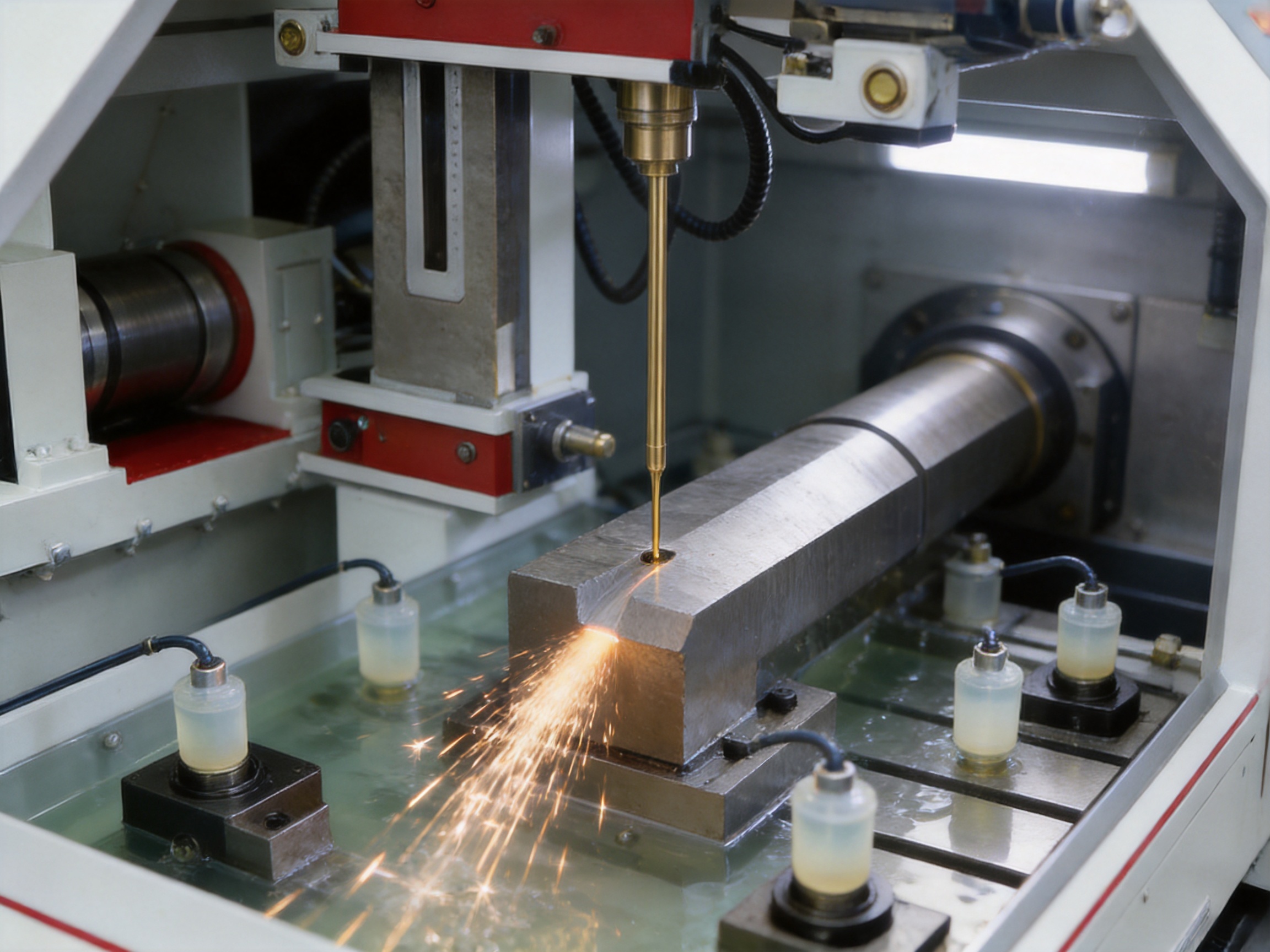
Different manufacturers may have different requirements for workpiece size, control cabinet layout, automation, workholding, electrical standards, software functions, and production workflow. The manufacturer offers customized solutions for workpieces with special specifications, helping customers align machine performance with their actual production needs.
Customization may involve selecting the most suitable model, configuring the control cabinet, adapting electrical requirements, discussing fixture arrangements, or evaluating special cutting conditions. Any customized option should be confirmed in a technical agreement before production so that capacity, accuracy, safety, installation, and delivery expectations are clearly defined.
OEM and ODM support can be valuable for distributors, industrial equipment integrators, and customers with specific market requirements. A manufacturer with its own product development and production capabilities can coordinate design, assembly, testing, documentation, and service more efficiently than an organization that only resells standard equipment.
For large machines such as DK77100 and above, additional customization options are available according to the product information. These options should be evaluated according to transportation, workshop layout, foundation requirements, workpiece handling, and production objectives.
19. Recommended Selection Approach
The DK-7735 is generally a suitable choice when the production profile includes medium-sized components, larger mold parts, workpieces up to 300 kg, and a need for four-axis taper or profile cutting. It is especially appropriate when a smaller machine would create setup limitations but an extra-large model would be excessive.
Customers should review five questions before ordering:
What are the largest workpiece dimensions, including fixture and support requirements?
What is the combined weight of the workpiece, fixture, and auxiliary tooling?
What materials and thicknesses will be processed most frequently?
Is taper cutting or upper/lower profile control required?
What combination of cutting efficiency, surface finish, accuracy, and production volume is expected?
Answers to these questions will help determine the most appropriate control cabinet and machine configuration. Sample cutting or technical review may be recommended for unusual materials, very thick workpieces, complex taper profiles, or exceptionally strict surface requirements.
20. Frequently Asked Questions
Q1: What are the X-axis and Y-axis travels of the DK-7735?
The DK-7735 has an X-axis travel of 350 mm and a Y-axis travel of 450 mm. These dimensions provide a larger machining range than the smaller DK-7725 and make the DK-7735 suitable for medium-sized components and larger mold parts.
Q2: What is the maximum worktable load?
The maximum worktable load is 300 kg. This figure includes the workpiece and should be considered together with the weight and arrangement of fixtures, support plates, and other tooling. Proper load distribution and secure clamping remain necessary.
Q3: What is the maximum cutting efficiency?
The maximum listed cutting efficiency is up to 16,000 mm²/h. Actual efficiency depends on the control cabinet, workpiece material, thickness, wire condition, flushing, electrical parameters, surface-finish requirements, and cutting strategy.
Q4: Is the DK-7735 suitable for mass production?
Yes. Its high cutting efficiency, larger worktable, 300 kg load capacity, programmed four-axis movement, and repeatable digital control make it suitable for mass production and recurring batch work. Production results depend on effective scheduling, maintenance, workholding, and process optimization.
Q5: What materials can the machine process?
The machine is suitable for conductive materials such as steel, stainless steel, aluminum, and copper. The exact process parameters should be adjusted according to material type, thickness, conductivity, required accuracy, and surface finish.
Q6: Can the DK-7735 perform taper cutting?
Yes. The X, Y, U, and V axes work through four-axis linkage to support taper cutting and upper/lower profile control. The listed maximum cutting taper is ±6° over 80 mm, subject to workpiece thickness and process conditions.
Q7: What surface roughness can be achieved?
The listed optimal surface roughness is Ra ≤ 2.5 μm under suitable machining conditions. Actual results depend on the material, thickness, electrical settings, number of passes, wire condition, flushing, and inspection method.
Q8: Which control cabinets are available?
The standard configuration is the ZH-K68 desktop cabinet, and the ZHZK-03 vertical cabinet is available as an option. The appropriate configuration should be selected according to operator preference, workshop layout, control requirements, and production application.
Q9: Is the machine suitable for heavy workpieces?
Yes, within the 300 kg maximum worktable load and the machine’s dimensional limits. It is suitable for many medium-sized and relatively heavy mold, machinery, and tooling components. Very large or exceptionally heavy workpieces may require a larger model.
Q10: Does the machine support automatic adjustment?
The intelligent control system is designed to adjust cutting parameters according to workpiece and process requirements. Operators should still verify settings and monitor the process, especially when cutting unfamiliar materials or complex geometries.
Q11: How should the machine be installed?
The machine should be installed on a stable foundation with appropriate load-bearing capacity. The site should provide suitable electrical power, adequate ventilation, temperature stability, maintenance clearance, and protection from severe vibration and strong magnetic interference.
Q12: What support is available after purchase?
The manufacturer provides technical support intended to assist with installation, operation, maintenance, troubleshooting, and long-term equipment stability. Support arrangements, response times, spare parts, training, and warranty terms should be confirmed in the purchase agreement.
21. Conclusion
The DK-7735 CNC High-Speed Wire EDM Machine offers a practical combination of precision, capacity, efficiency, and flexibility for modern industrial manufacturing. Its 350 mm X-axis travel, 450 mm Y-axis travel, 300 kg worktable load, four-axis linkage, taper-cutting capability, and maximum listed cutting efficiency of 16,000 mm²/h make it well suited to medium-sized molds, automotive tooling, precision machinery, aerospace-related components, and batch production.
Its advantages are not limited to headline specifications. A reinforced cast-iron structure supports long-term stability. Precision ball screws and linear guides contribute to controlled movement. Digital pulse power helps manage discharge conditions. High-sensitivity wire-tension control supports stable wire travel. Multi-stage filtration and circulation help maintain working-fluid quality. The touchscreen interface and safety enclosure improve daily operating convenience.
The machine’s position within a broader product family also gives customers a structured selection path. Smaller models are available for compact precision work, while larger models address greater travel and load requirements. This allows manufacturers to select capacity according to actual workpiece demand rather than adopting a one-size-fits-all approach.
Behind the equipment is a manufacturer with long-term experience in wire-cut EDM research, development, production, accuracy testing, and technical service. Its focus on structural quality, process control, national-standard manufacturing, and customer-oriented support provides an important foundation for dependable machine-tool performance.
For manufacturers seeking a high-speed wire EDM solution that can bridge the gap between compact equipment and large industrial platforms, the DK-7735 represents a balanced option. When properly installed, programmed, maintained, and matched to the application, it can help reduce machining time, improve repeatability, support complex profiles, and increase the efficiency of precision manufacturing operations.
References
1. Product technical information for the DK-7735 CNC High-Speed Wire EDM Machine, including dimensional, load, control, efficiency, and application data.
2. Product-family specifications for DK-7725, DK-7735, DK-7745, and DK-7745F high-speed wire EDM machines.
3. Technical information concerning X, Y, U, and V four-axis linkage, taper cutting, wire transport, filtration, and digital pulse control.
4. Manufacturer-provided information regarding electrical discharge machining products, manufacturing capabilities, testing procedures, and technical support.
5. General principles of wire electrical discharge machining, including discharge control, dielectric circulation, wire tension, workpiece conductivity, and surface-finish optimization.
6. General machine-tool installation and maintenance practices for precision electrical-discharge machining equipment.
Product: DK-7735 CNC High-Speed Wire EDM Machine (4-Axis, 300kg Load)

-
Phone
+86-0523-86268788 +86-13815960366 +86-13912191163Email
[email protected]Address
No. 366, Yusheng Road Jiulong Town, Hailing District Taizhou City, China
Copyright © Taizhou Xinchengyang Machinery Manufacturing Co., Ltd. All Rights Reserved.
Custom edm machine for sale
wholesale edm machine manufacturers
