

 English
 русский
 عربى


Lu Qianwen — Overseas Sales Manager
Home / Author / Lu Qianwen — Overseas Sales Manager / DK-7745F Four-Axis High-Speed Wire-Cut EDM for Large-Scale Precision Manufacturing
DK-7745F Four-Axis High-Speed Wire-Cut EDM for Large-Scale Precision Manufacturing
2026-10-26
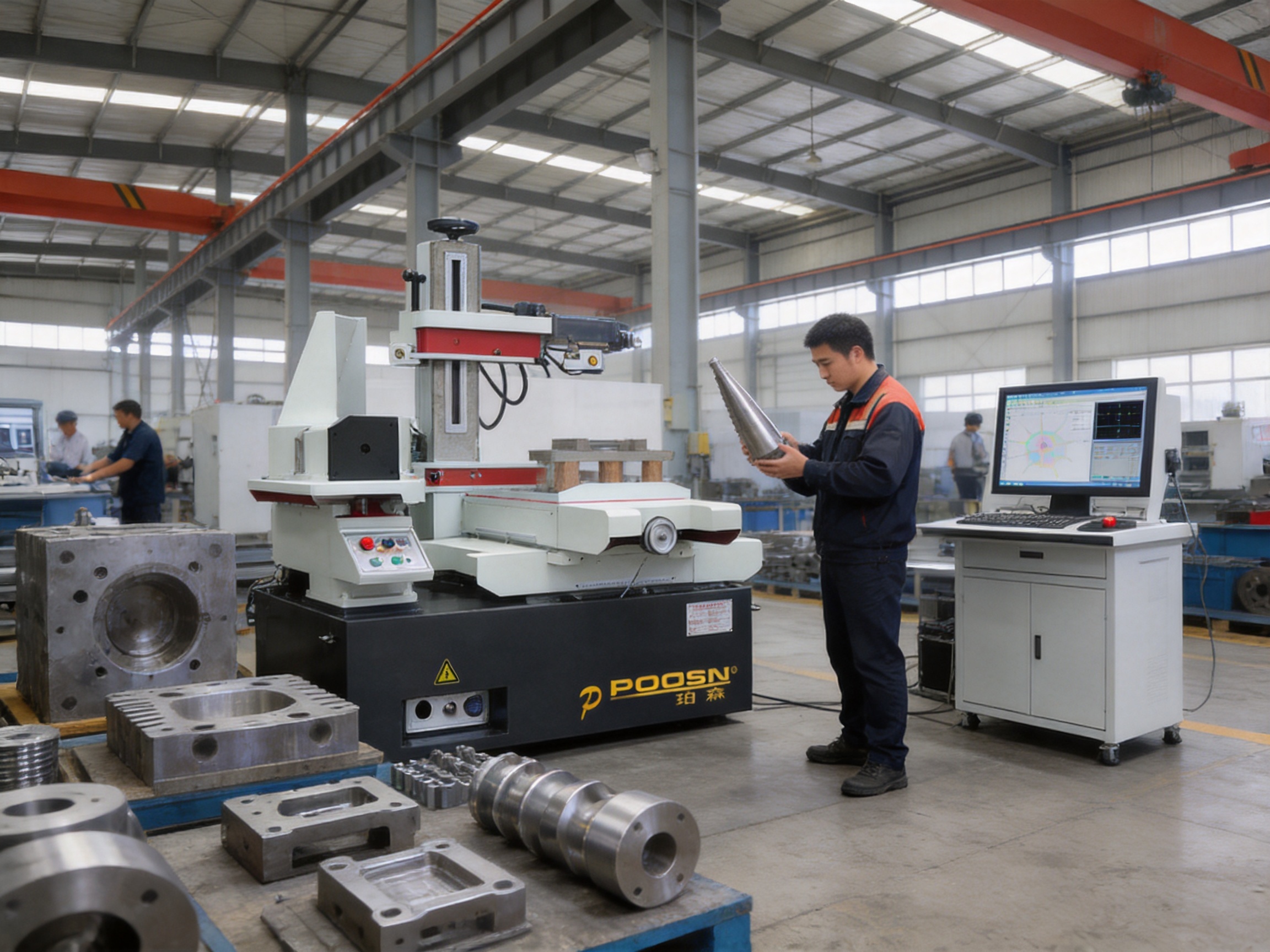
Modern manufacturing increasingly depends on equipment that can combine high productivity, stable accuracy, flexible programming, and dependable long-term operation. Large molds, aerospace components, automotive parts, heavy machinery elements, and complex conductive workpieces often require a cutting process that can produce intricate profiles without imposing excessive mechanical force on the material. Wire Electrical Discharge Machining, commonly known as WEDM, is especially valuable in these applications because it removes material through controlled electrical discharges rather than direct mechanical contact.
The DK-7745F CNC High-Speed Wire EDM Machine is developed for demanding production environments where workpiece size, cutting efficiency, precision, and operating stability are equally important. As a high-end model within the DK-77 high-speed WEDM series, it provides four-axis linkage control, a large working area, a maximum worktable load of 500 kilograms, and cutting efficiency of up to 10,000–16,000 square millimeters per hour when matched with an appropriate control cabinet.
Its design is intended to serve manufacturers that need more than a general-purpose wire-cutting machine. The DK-7745F is configured for extra-large workpieces, heavy components, deep cutting operations, complex profiles, and high-precision mold production. At the same time, the machine is designed to support practical factory requirements, including simplified operation, reduced consumable costs, easy maintenance, process customization, and integration into automated production lines.
Content
- 1 Overview of the DK-7745F High-Speed Wire EDM
- 2 Large Workpiece Capacity for Demanding Industrial Applications
- 3 High-Speed Cutting and Production Efficiency
- 4 Four-Axis Linkage for Complex Profiles and Tapered Cutting
- 5 Mechanical Structure and Precision Stability
- 6 Optimized Wire Feeding, Cooling, and Filtration
- 7 Intelligent Control and Operator Accessibility
- 8 Material Versatility and Application Range
- 9 Cost Advantages Compared with Conventional Processing
- 10 Manufacturing Strengths Behind the Machine
- 11 Quality Control and Production Reliability
- 12 Customization and Process Support
- 13 Comparison with Smaller and Conventional Wire EDM Machines
- 14 Installation, Operation, and Maintenance Considerations
- 15 Environmental and Energy Considerations
- 16 Technical Service and Global Customer Support
- 17 Recommended Model Selection
- 18 Frequently Asked Questions
- 18.1 What is the main purpose of the DK-7745F?
- 18.2 What are the X and Y axis travels?
- 18.3 What is the maximum worktable load?
- 18.4 How thick a workpiece can the machine cut?
- 18.5 What cutting efficiency can the DK-7745F achieve?
- 18.6 Does the machine support tapered cutting?
- 18.7 Which materials can be processed?
- 18.8 What surface finish can be achieved?
- 18.9 Is the DK-7745F suitable for automated production?
- 18.10 What control cabinet options are available?
- 18.11 What power supply does the machine require?
- 18.12 How does the machine reduce wire breakage risk?
- 18.13 Is operator training required?
- 18.14 What service does the manufacturer provide?
- 19 Conclusion
- 20 References
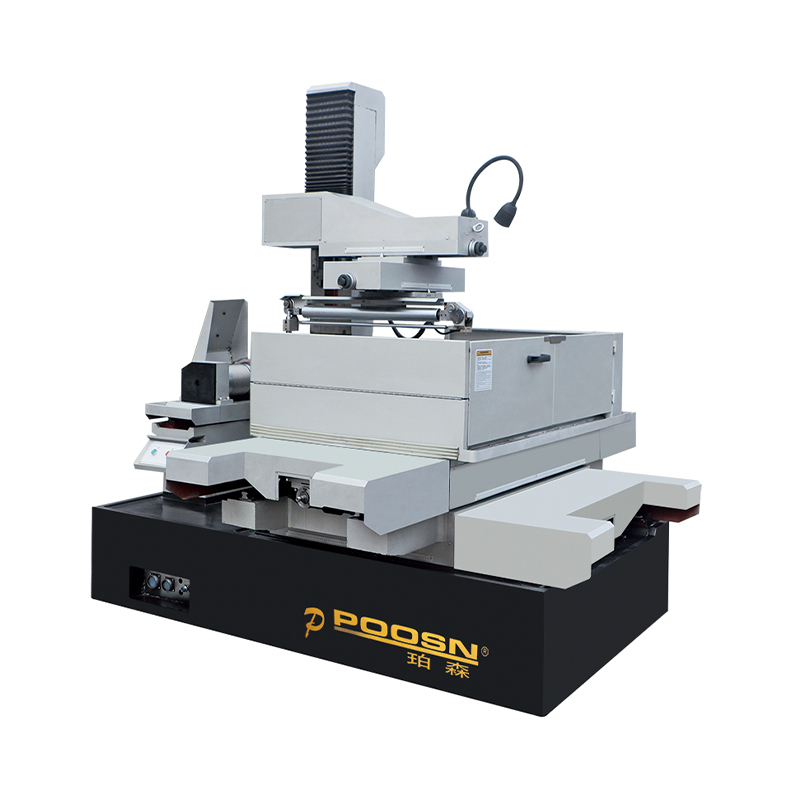
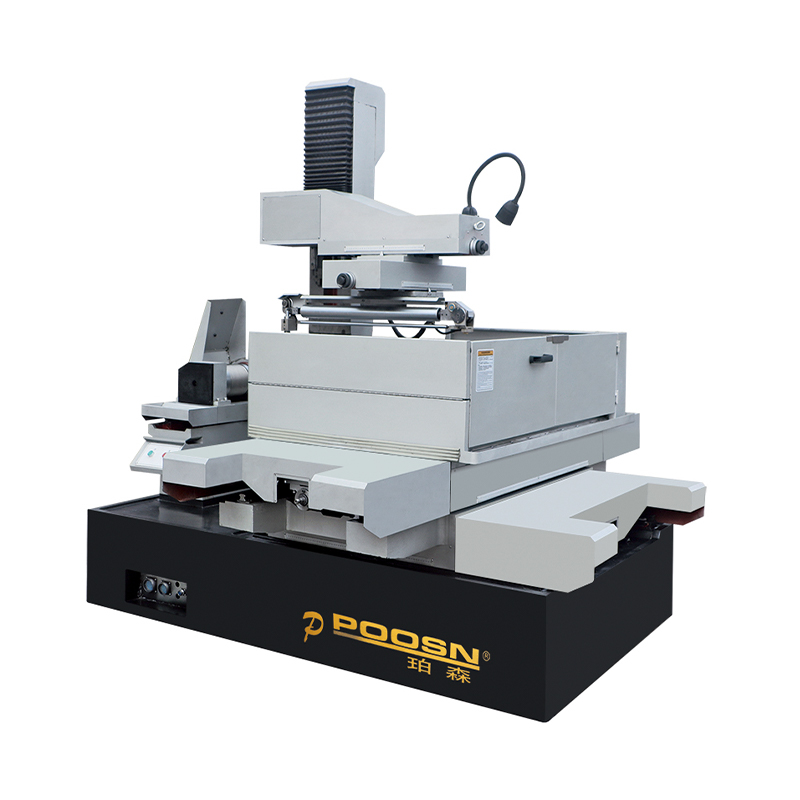
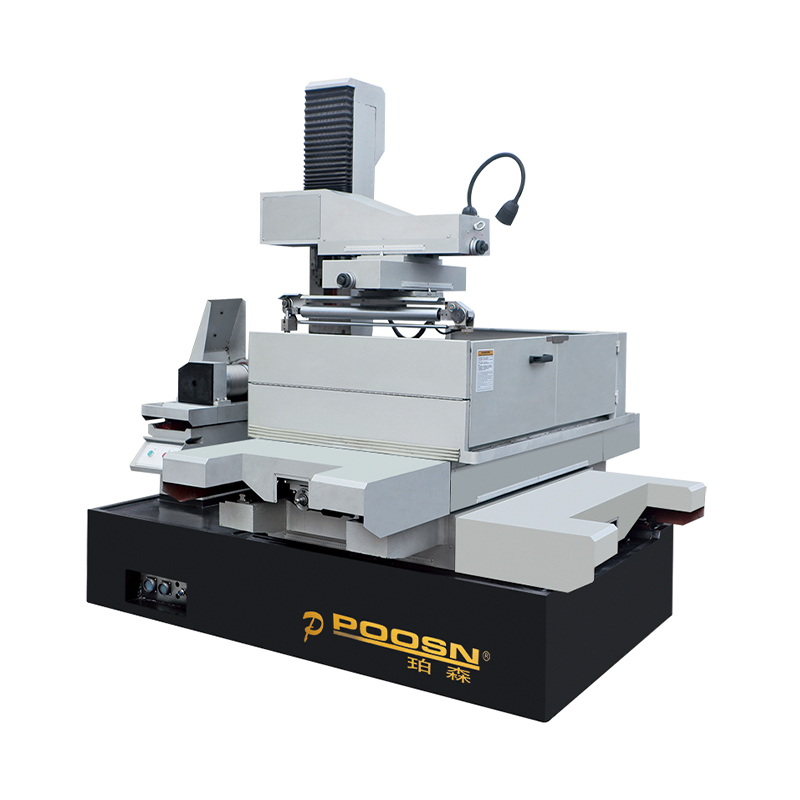
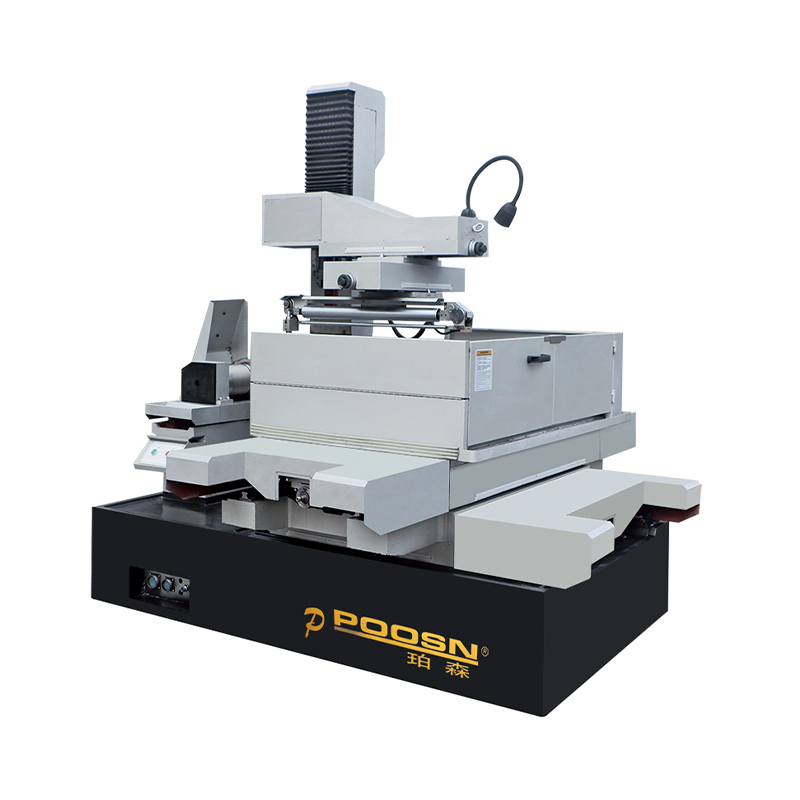
- 21 Product: DK-7745F CNC High-Speed Wire EDM Machine (4-Axis, 500×700mm Travel)
Overview of the DK-7745F High-Speed Wire EDM
The DK-7745F uses a CNC-controlled electrical discharge process to cut conductive materials with a continuously moving molybdenum wire. During machining, controlled electrical pulses create localized discharges between the wire electrode and the workpiece. The resulting thermal energy melts and vaporizes a small amount of material, while the working fluid removes the eroded particles from the cutting zone.
Because the wire does not apply conventional cutting pressure to the workpiece, the machine can process complex contours, narrow slots, sharp internal corners, precision openings, and profiles that would be difficult or costly to produce with milling, sawing, or other mechanical methods. This non-contact cutting principle is particularly useful for hardened steels, tool steels, carbide, aluminum, copper, and other conductive metals.
The DK-7745F is designed around a large 570 × 950 millimeter worktable and an X/Y travel range of 450 × 650 millimeters. Its maximum cutting thickness is 450 millimeters, while the maximum worktable load is 500 kilograms. These specifications place the machine in a category suitable for large and heavy components rather than only small mold inserts or precision samples.
The machine also provides four-axis linkage through X, Y, U, and V axes. This arrangement allows the upper and lower wire guides to move according to programmed requirements, supporting tapered cutting and more complicated three-dimensional profiles. The maximum cutting taper is specified as ±6 degrees over 80 millimeters, providing useful flexibility for dies, punches, inclined surfaces, and components requiring a controlled taper angle.
| Specification | DK-7745F Value | Production Benefit |
| Worktable size | 570 × 950 millimeters | Accommodates large workpieces and multiple setups |
| X/Y travel | 450 × 650 millimeters | Supports extensive cutting profiles and larger component sizes |
| Maximum cutting thickness | 450 millimeters | Suitable for deep and heavy-duty applications |
| Maximum cutting taper | ±6 degrees over 80 millimeters | Enables tapered dies and complex inclined profiles |
| Maximum cutting efficiency | 10,000–16,000 square millimeters per hour | Helps improve throughput in production environments |
| Optimal surface roughness | Ra ≤ 2.5 micrometers | Reduces subsequent finishing requirements |
| Maximum worktable load | 500 kilograms | Supports large and heavy components |
| Drive configuration | X, Y, U, and V stepper drive; four-axis linkage | Provides coordinated contour and taper control |
| Machine weight | Approximately 1,350 kilograms | Provides a substantial foundation for stable cutting |
Large Workpiece Capacity for Demanding Industrial Applications
A major advantage of the DK-7745F is its ability to handle workpieces that exceed the practical limits of smaller wire-cut EDM machines. The combination of a large worktable, extended Y-axis travel, deep cutting capability, and high load capacity gives manufacturers greater freedom when planning production processes.
In many workshops, large components must be divided into several operations because the available machine cannot accept the complete workpiece. Multiple setups increase alignment time and create additional opportunities for positioning errors. They may also require special fixtures, intermediate inspection, or manual rework. By providing a 570 × 950 millimeter worktable and a 500-kilogram load rating, the DK-7745F can reduce the need for unnecessary repositioning and make it easier to process larger components in one setup.
One-piece processing can provide important quality benefits. When a workpiece remains clamped throughout the main cutting operation, the risk of cumulative alignment error is reduced. The operator can also maintain a more consistent reference system from rough cutting through finishing. This is particularly valuable for large precision molds, punch and die components, aerospace brackets, structural elements, and heavy industrial parts with demanding positional relationships.
The machine’s 450-millimeter maximum cutting thickness further expands its application range. Deep workpieces can create challenges related to flushing, wire stability, discharge control, and cutting perpendicularity. The DK-7745F addresses these requirements through its pulse power system, wire-feeding arrangement, circulation system, and coordinated CNC control. When the process is correctly configured for material type and thickness, the machine can maintain stable cutting performance across substantial sections.
Compared with compact machines designed primarily for small inserts and thin plates, the DK-7745F offers a more suitable platform for manufacturers whose production includes heavy parts, large dies, and oversized precision components. Its larger mechanical structure also provides space for practical workholding arrangements and safer loading of substantial workpieces.
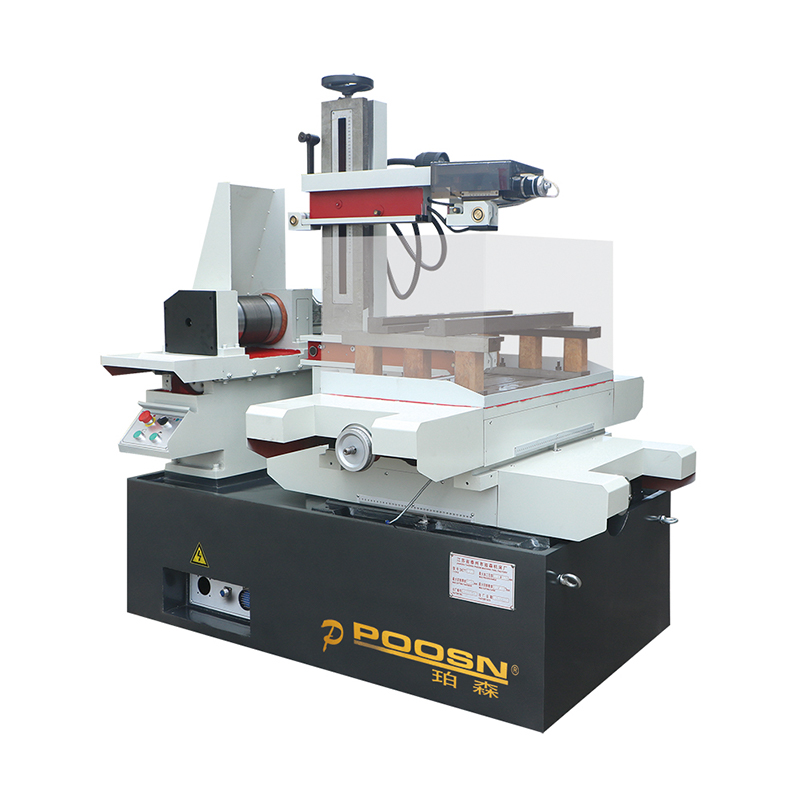
DK-7745F CNC High-Speed Wire EDM Machine (4-Axis, 500×700mm Travel)
High-Speed Cutting and Production Efficiency
Production efficiency is determined by more than nominal axis speed. In wire EDM, actual productivity depends on discharge energy, material characteristics, workpiece thickness, wire condition, flushing performance, control parameters, and the stability of the complete electrical and mechanical system. The DK-7745F is designed as an integrated high-speed solution in which these factors work together.
When paired with a suitable CNC control cabinet and appropriate machining parameters, the machine can achieve a maximum cutting efficiency of 10,000–16,000 square millimeters per hour. This performance is intended for manufacturers that need to shorten cycle times while maintaining consistent quality. Faster cutting can increase daily output, reduce work-in-process inventory, and improve the utilization rate of the machine investment.
The optimized pulse power system is central to this performance. Electrical discharge energy must be carefully matched to workpiece thickness, material composition, cutting speed, and required surface quality. Excessive energy may reduce surface quality or increase wire consumption, while insufficient energy may cause unstable cutting and unnecessary cycle-time increases. The DK-7745F is designed to adjust discharge conditions according to changes in the machining task.
Controlled pulse technology can also help reduce the frequency of wire breakage. Wire breakage interrupts the process, requires operator intervention, and may leave a visible mark on the workpiece if the cut must be restarted. By maintaining more stable discharge conditions and supporting effective removal of eroded particles, the machine helps operators protect continuity during long cutting cycles.
High productivity does not mean that the machine is limited to rough cutting. The DK-7745F can be used for a process strategy that combines high-speed roughing with finishing passes. The operator can select different electrical parameters, wire conditions, and feed settings to balance material removal rate with surface quality. The specified optimal surface roughness of Ra ≤ 2.5 micrometers demonstrates its suitability for precision finishing requirements within the capabilities of high-speed wire EDM technology.
For large-scale production, the economic value of high-speed cutting is significant. A shorter cycle time can reduce direct labor allocation per part, improve machine availability, and allow a workshop to produce more components without immediately adding additional equipment. When combined with reliable operation and manageable maintenance requirements, productivity improvements contribute directly to lower cost per part.
Four-Axis Linkage for Complex Profiles and Tapered Cutting
The four-axis X, Y, U, and V configuration is one of the most important functional features of the DK-7745F. Conventional two-axis wire movement is suitable for many flat profiles, but more advanced components require coordinated movement between the upper and lower wire guides. Four-axis linkage enables the machine to control the wire path in a way that supports tapered, inclined, and three-dimensional geometries.
The upper and lower guide positions can be programmed to differ according to the desired profile. This allows the machine to produce components in which the top contour and bottom contour are not identical. Such capability is useful for extrusion dies, stamping dies, taper punches, inclined openings, precision templates, and parts requiring controlled angular surfaces.
The specified maximum taper of ±6 degrees over 80 millimeters gives production teams a practical range for many industrial applications. Although the actual result depends on material, thickness, wire condition, flushing, programming, and machine setup, the four-axis system provides the coordinated movement required to control taper accurately.
Four-axis capability also improves flexibility when a component contains different profile requirements at different heights. Instead of relying on additional mechanical operations to create an angled wall or variable contour, the part may be completed more directly through a programmed wire EDM process. This can reduce setup changes and improve consistency between batches.
The control system is designed to interpret complex geometric patterns and support code generated by mainstream CAD and CAM software. This compatibility makes it easier for a manufacturer to connect design data with production. Operators can create or prepare the required geometry digitally, transfer the program to the CNC system, verify the cutting strategy, and then execute the job with less manual profile creation.
For manufacturers working with molds and complex mechanical parts, the combination of four-axis linkage and large workpiece capacity is especially valuable. A small machine may provide taper control but lack sufficient table space, while a large conventional machine may lack the coordinated control needed for complex profiles. The DK-7745F brings these capabilities together in one platform.
Mechanical Structure and Precision Stability
Precision in wire EDM must be maintained throughout the entire machining cycle. A machine may be accurate during initial setup but produce inconsistent results if its structure is vulnerable to thermal changes, vibration, deformation, or long-term mechanical wear. For this reason, the DK-7745F is built around a rigid structure intended to support stable geometry during extended operation.
The machine uses a high-rigidity cast iron base and a structure designed to reduce the effects of vibration. Cast iron provides mass and structural stability, which are important when machining heavy workpieces or operating at elevated cutting speeds. A heavier and more rigid machine foundation can help reduce the transfer of small disturbances from moving components into the workpiece.
Artificial aging and stress-relief treatment are used to improve the stability of the machine structure. Internal stress in cast or fabricated components can gradually release over time, potentially affecting geometric accuracy. Proper aging treatment helps minimize this risk before final assembly, allowing the machine to maintain its designed alignment more reliably during service.
Precision guide rails and ball screw systems support controlled movement of the machine axes. These components influence positioning repeatability, smooth travel, and long-term accuracy. The drive arrangement uses stepper drives for the X, Y, U, and V axes, coordinated through a four-axis control system. Correct assembly, inspection, lubrication, and adjustment of these components are essential to achieving dependable cutting results.
The machine is manufactured according to the GB/T7926-2015 machine accuracy standard. Compliance with a recognized accuracy standard provides a structured basis for inspection and positioning verification. It also gives customers a clearer reference when evaluating machine performance during acceptance, installation, and routine maintenance.
Stable mechanical performance is particularly important for large workpieces. A small positioning error can become more noticeable across a long cutting path or a tall workpiece. By combining a rigid base, precision transmission components, controlled assembly, and inspection procedures, the DK-7745F is designed to protect dimensional accuracy across extended machining operations.
Optimized Wire Feeding, Cooling, and Filtration
The wire transport system has a direct influence on cut quality, wire breakage, surface condition, and operating cost. A wire that moves with unstable tension may deviate from the programmed path, resulting in dimensional errors, taper variation, or rougher surfaces. The DK-7745F uses a balanced wire-feeding mechanism intended to maintain consistent molybdenum wire tension during high-speed reciprocating movement.
Stable wire tension helps the electrode remain correctly positioned between the upper and lower guides. This is especially important when cutting thick workpieces, where the wire is exposed to a longer machining zone and greater flushing demands. Consistent tension also supports more predictable corner performance and reduces the chance of sudden wire deflection during changes in cutting direction.
The machine incorporates a cooling, filtration, and circulation system to manage the working fluid and remove electrical erosion byproducts. During WEDM, small particles are continuously generated in the cutting gap. If these particles remain in the machining zone, they may cause secondary discharges, unstable cutting, reduced surface quality, and increased wire-breakage risk.
Effective circulation carries debris away from the work area, while filtration helps maintain a cleaner dielectric environment. Cooling is equally important because the electrical discharge process generates heat. Maintaining a suitable working-fluid condition contributes to more stable machining and helps reduce thermal effects on the workpiece and machine structure.
For long production cycles, the condition of the filtration and circulation system should be monitored as part of routine maintenance. Filters, pumps, nozzles, seals, and fluid quality all influence the final machining result. The DK-7745F provides the underlying system required for stable operation, while a disciplined maintenance program ensures that the system continues to perform effectively.
Intelligent Control and Operator Accessibility
A high-performance machine must be usable by production personnel with different levels of experience. The DK-7745F is equipped with a digital control system and an intuitive graphical interface intended to reduce the learning curve. Clear operating logic, organized parameter management, and compatibility with CAD/CAM output help operators move efficiently from job preparation to production.
Modern wire EDM programming involves more than entering a basic contour. Operators may need to define workpiece coordinates, cutting direction, taper requirements, electrical parameters, flushing conditions, wire speed, compensation values, and finishing passes. A structured control interface helps users manage these settings without relying on complicated manual procedures for every new job.
The parameter library can also support process standardization. When a workshop develops reliable settings for common materials, thicknesses, and surface requirements, those settings can be recorded and reused. This reduces dependence on individual operator memory and helps create more consistent results across different shifts.
Compatibility with mainstream CAD/CAM software is important for manufacturers that process complex components. Digital transfer reduces the risk of manual transcription errors and makes it easier to revise designs. A design engineer can update the geometry, regenerate the machining code, and provide the revised program to the operator through an established production workflow.
The control system also supports automated production concepts. The machine can be connected to automated lines or coordinated with upstream and downstream equipment where the factory layout and process requirements permit. Automation can reduce manual intervention, improve job repeatability, and help manufacturers increase output when operating multiple machines or extended production shifts.
Although the DK-7745F is designed for accessible operation, operator training remains important. Correct workpiece clamping, wire threading, fluid management, parameter selection, safety inspection, and program verification are essential to protect both equipment and product quality. The machine’s interface simplifies these tasks but does not eliminate the need for responsible process management.
Material Versatility and Application Range
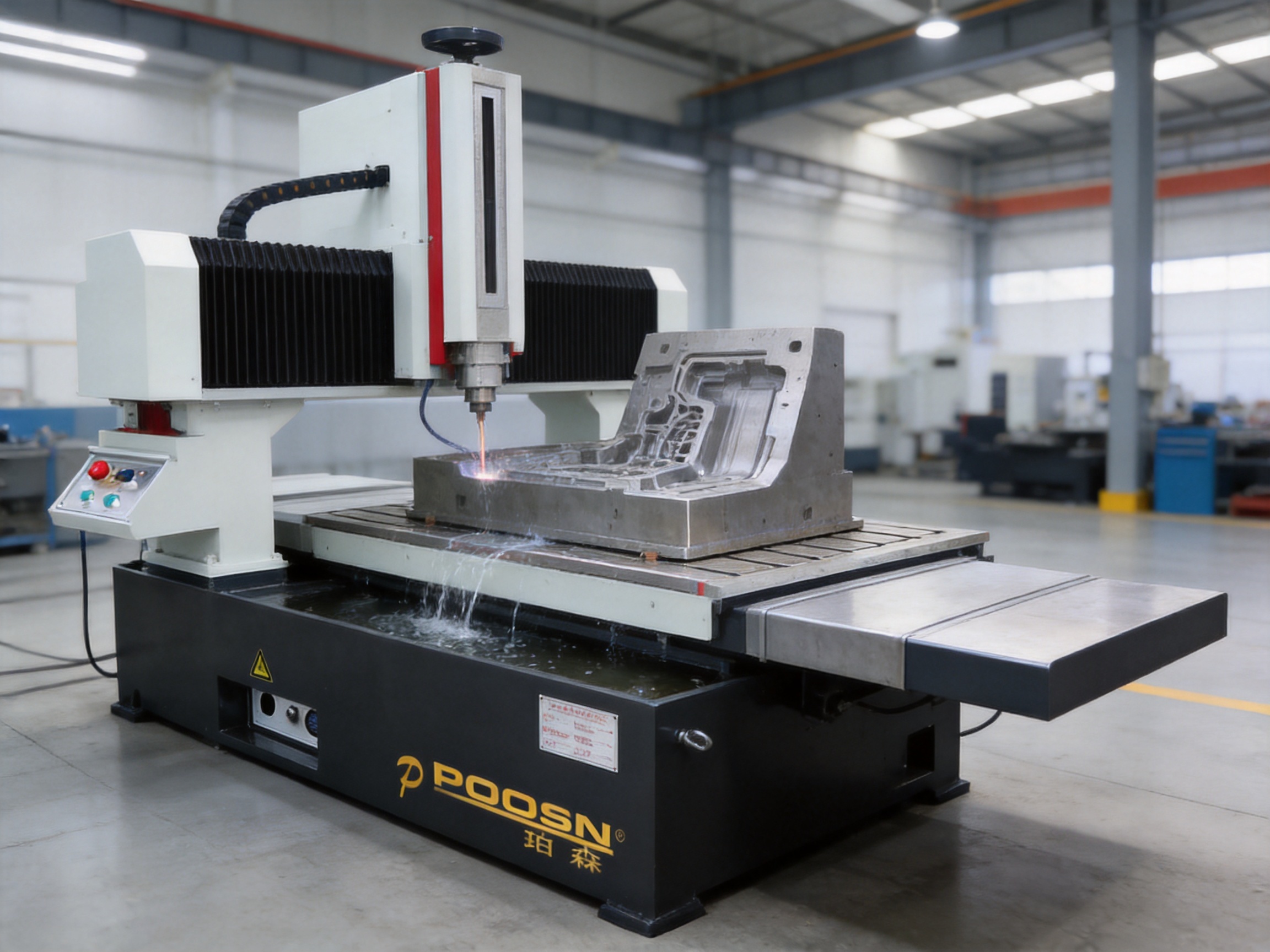
Wire EDM is valued for its ability to machine conductive materials regardless of their hardness, provided that the material and process conditions are suitable. The DK-7745F can be applied to steel, aluminum, copper, tungsten carbide, tool steel, and other conductive metallic materials. This material flexibility allows one machine to serve multiple production departments or product categories.
Hardened materials are a typical application. Conventional cutting tools may suffer rapid wear when machining hardened die steel or carbide, while wire EDM removes material through thermal discharge. This reduces dependence on tool hardness and cutting-force resistance. As a result, manufacturers can often complete intricate profiles after heat treatment, helping to preserve the final geometry of the component.
Large precision molds are among the most suitable applications for the DK-7745F. Mold components may include cavities, cores, inserts, guide openings, lifter profiles, and intricate internal contours. Four-axis taper control can be used for specialized die structures, while the large table and load capacity support larger mold bases and heavy inserts.
The machine is also suitable for aerospace component processing. Aerospace parts often involve high-strength materials, complex contours, strict dimensional requirements, and small production quantities. Wire EDM can provide a practical way to produce difficult profiles without developing a dedicated cutting tool for each geometry.
Automotive manufacturing is another major application area. The DK-7745F can process stamping dies, forming tools, precision fixtures, motor components, and specialized parts used in vehicle production. Its high cutting efficiency is beneficial for production environments in which many similar components must be produced with consistent quality.
Heavy machinery manufacturers can use the machine for large plates, wear-resistant components, gear-related elements, guide parts, and complex brackets. The 500-kilogram worktable load allows a wider range of heavy components to be processed without dividing the job into smaller sections.
Precision machinery producers can also benefit from the machine’s ability to create narrow slots, profiles, keys, gears, punches, and custom openings. In research, tooling, and low-volume production, its programming flexibility makes it possible to manufacture complex parts without investing in expensive special tooling.
| Application | Typical Workpieces | Relevant DK-7745F Capability |
| Precision mold manufacturing | Large dies, punches, inserts, cavities, and mold plates | Large table, four-axis linkage, taper cutting, and stable finishing |
| Aerospace manufacturing | High-strength brackets, templates, structural components, and tooling | Non-contact cutting and flexible CAD/CAM programming |
| Automotive production | Stamping dies, forming tools, fixtures, and precision components | High throughput and repeatable contour control |
| Heavy machinery | Large plates, wear parts, guides, and complex mechanical elements | 500-kilogram load capacity and 450-millimeter cutting thickness |
| Precision engineering | Slots, profiles, gears, openings, and custom components | Fine contour capability and adaptable process parameters |
| Automated production | Repeated batches of standardized conductive parts | CNC operation and connection to automated production lines |
Cost Advantages Compared with Conventional Processing
The cost performance of a wire EDM machine should be evaluated across the complete production cycle rather than only by purchase price. A machine that cuts quickly, reduces setup changes, limits rework, and maintains stable quality can provide greater value than a lower-cost machine with restricted capacity or inconsistent performance.
The DK-7745F can reduce the unit machining cost in several ways. First, its high cutting efficiency helps shorten production cycles. Second, its large work area can reduce the need for multiple setups. Third, its four-axis capability can eliminate some secondary operations for tapered or complex profiles. Fourth, its control system and parameter management can reduce the time needed to prepare and repeat jobs.
Consumable management is another area of potential savings. The optimized pulse power system is designed to balance cutting speed and molybdenum wire consumption. Excessive wire consumption increases operating cost, while unstable discharge conditions can create additional waste through wire breakage, rejected parts, and repeated threading operations. By supporting stable cutting, the machine helps production teams manage these costs more effectively.
Maintenance costs are also influenced by machine design. The DK-7745F uses modular circuit design and long-life components to support easier troubleshooting and service. When a system is organized into identifiable modules, technicians can locate faults more efficiently and reduce unnecessary downtime. Regular inspection remains essential, but a service-friendly architecture can simplify corrective maintenance.
The machine’s solid structure and precision components are intended for long-term operation under high-load conditions. Durable guide systems, robust construction, and proper fluid management help reduce the risk of premature performance decline. The actual service life will depend on operating practices, maintenance quality, environment, and workload, but the design is aimed at industrial production rather than occasional laboratory use.
Manufacturing Strengths Behind the Machine
The performance of a machine tool is closely connected to the manufacturing capabilities of its producer. Taizhou Xinchengyang Machinery Manufacturing Co., Ltd. specializes in electrical discharge machining, special processing technologies, and related equipment. The company has developed experience in the research, design, production, testing, and support of wire-cut EDM products.
Its product portfolio includes the PS-C and DK77-BC medium-speed wire-cutting EDM series, the DK77-A and DK77-B high-speed wire-cutting series, and the DK77-D large-taper wire-cutting series. This range allows the company to address different workpiece sizes, cutting speeds, taper requirements, precision levels, and production conditions.
A broad product portfolio can strengthen product development because experience gained from one machine family can contribute to improvements in another. Knowledge of wire transport, pulse power, control systems, machine structures, cooling, filtration, and accuracy inspection can be applied across multiple models. For customers, this may also simplify model selection and future expansion.
The company operates with advanced processing equipment and comprehensive testing methods. Machine tools are manufactured according to applicable national standards, and each machine undergoes positioning accuracy testing. Such testing is important because the final performance of a wire EDM machine depends not only on the quality of individual components but also on assembly precision, axis alignment, guide adjustment, electrical calibration, and system integration.
Manufacturing a large four-axis wire EDM machine requires close control of the complete production chain. The base and structural parts must be properly processed and stress relieved. Guide rails and transmission components must be installed with accurate alignment. The wire path must be checked for correct positioning. Electrical cabinets, motors, pulse systems, pumps, filters, and control interfaces must be tested as an integrated system.
The company’s experience since 1999 in electrical discharge wire cutting provides a long technical foundation for product development. The POOSN brand was introduced in 2003, and the company later expanded its market presence through cooperation with CNC industry partners. In 2017, Taizhou Xinchengyang Machinery Manufacturing Co., Ltd. was established with registered capital of 60 million yuan and its own factory. The company obtained a patent in 2018 for a fully automatic CNC machine tool featuring plate-type winding and suction-type adhesive technology, and it was recognized as a high-tech enterprise in Taizhou in 2021.
These milestones reflect a manufacturing organization that combines product development, factory production, technical improvement, and market service. They also indicate that the DK-7745F is part of a continuing equipment program rather than an isolated product concept.
Quality Control and Production Reliability
Quality control begins with material selection and continues through machining, assembly, electrical installation, calibration, testing, packaging, and after-sales support. For a large precision machine, every stage influences the final result. Structural deformation, incorrect guide alignment, unstable electrical connections, poor fluid sealing, or inaccurate wire-guide installation can all affect cutting quality.
The DK-7745F is produced with attention to structural rigidity, precision guide systems, ball screws, electrical system integration, and final accuracy inspection. The machine’s positioning accuracy is tested against the applicable standard, providing an objective basis for evaluating its mechanical performance before delivery.
Testing should include axis movement, positioning behavior, wire transport, flushing, electrical discharge stability, control response, and sample cutting. A complete commissioning process helps identify problems before the machine reaches the customer’s factory. It also provides an opportunity to verify that the control cabinet, drive system, pump system, and cutting parameters operate together correctly.
Reliability is especially important for overseas customers and production sites operating multiple shifts. The company exports selected models to Southeast Asia, West Asia, Europe, and the Americas. Exposure to different climates, workshop standards, electrical conditions, and production practices requires attention to equipment adaptability and technical support.
Long-term reliability also depends on customer service. Taizhou Xinchengyang provides technical support, application recommendations, remote assistance, and spare-parts access for users in different regions. Rapid response can help reduce downtime when customers need guidance with setup, parameter selection, maintenance, or troubleshooting.
Customization and Process Support
Different industries often require different combinations of workpiece size, cutting thickness, control configuration, automation level, electrical specifications, and process support. The DK-7745F can be discussed as part of a customized solution rather than only as a fixed standard machine.
The standard control configuration uses the ZH-K68 desktop cabinet, while the ZHZK-03 vertical cabinet is available as an option. This gives customers a choice based on available floor space, operator preference, workshop layout, and integration requirements. The machine uses a 3N 380-volt power supply with a permitted variation of ±10 percent, subject to local installation conditions and electrical compliance.
Customization may also involve workholding recommendations, wire specifications, cutting parameter development, automation interfaces, software workflow, operator training, and production-line layout. A manufacturer processing extra-thick aerospace plates may require a different process strategy from a mold producer cutting hardened die steel. Technical consultation helps ensure that the machine is configured around the real production objective.
For customers purchasing several machines, the supplier can support standardized process management. Common parameter libraries, operator procedures, maintenance schedules, and quality inspection methods can be developed to improve consistency across the factory. This is particularly useful when production is distributed among multiple machines or locations.
Large models beyond the DK-7745F are also available in the DK-77F range. The DK-7755F, DK-7763F, DK-7780F, and DK-77100F provide progressively larger worktable sizes, travel ranges, load capacities, and machine dimensions. Customizable options are available for the DK-77100 and larger machines, giving users a path for future expansion when their production requirements grow beyond the capacity of the DK-7745F.
Comparison with Smaller and Conventional Wire EDM Machines
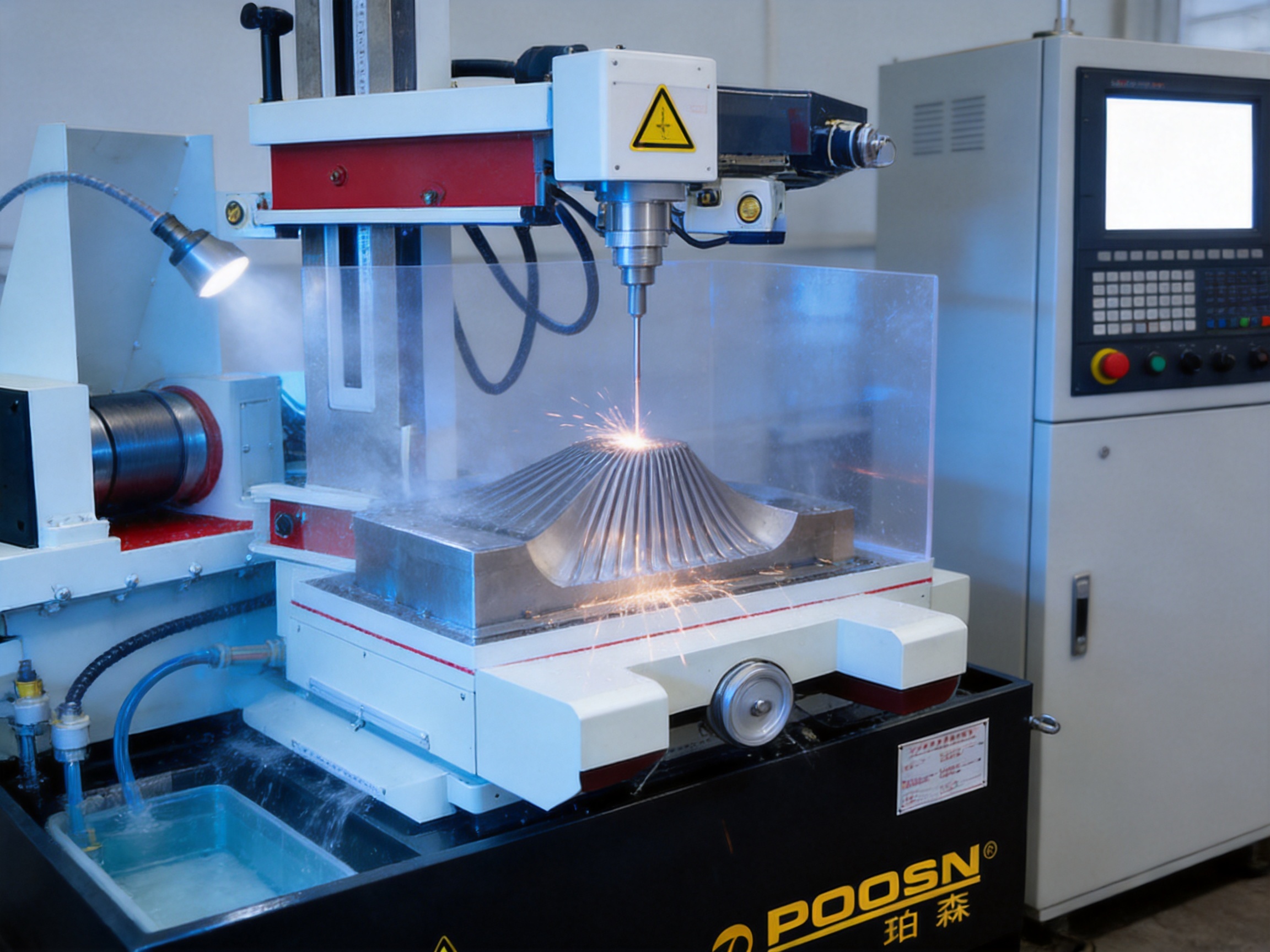
Choosing a wire EDM machine involves balancing workpiece size, precision, speed, taper capability, investment, and floor space. The DK-7745F is not intended to replace every smaller machine. Instead, it is designed for applications where large capacity and high production performance justify a more substantial platform.
Compared with the DK-7725, the DK-7745F provides a significantly larger worktable, greater X/Y travel, higher load capacity, deeper cutting capability, and greater machine mass. The DK-7725 may be more suitable for small and medium-sized parts, while the DK-7745F is designed for extra-large workpieces and heavy precision components.
Compared with the DK-7735 and DK-7745, the DK-7745F provides a 500-kilogram maximum worktable load and a 450 × 650 millimeter X/Y travel range. It is therefore better suited to large-scale mold work, aerospace tooling, heavy components, and production tasks involving substantial workpiece weight.
Compared with machines that provide only two-axis contour control, the DK-7745F offers four-axis linkage and taper capability. This can reduce the need for secondary operations on inclined or tapered profiles. Compared with machines that focus only on high speed, its large structure and load rating make it more suitable for heavy industrial applications.
The most appropriate comparison is therefore based on application requirements. A smaller machine may be more economical for compact parts and limited production volumes. However, purchasing a machine with insufficient capacity can create hidden costs through additional setups, outsourcing, special fixtures, reduced productivity, and limited future flexibility. The DK-7745F is intended for customers who want to avoid these constraints.
Installation, Operation, and Maintenance Considerations
Proper installation is essential to achieving the machine’s designed accuracy. The foundation should be prepared according to the machine’s weight and dimensional requirements. The workshop should provide suitable power, ventilation, working space, lifting access, and environmental control. The machine should be leveled and checked before production begins.
Operators should verify the workpiece clamping system before each job. The component must be securely supported without interfering with the wire path, flushing nozzles, or axis movement. Heavy workpieces should be loaded with appropriate lifting equipment and carefully positioned to protect the table, guide system, and operator.
Wire threading and guide inspection are important daily tasks. The wire should pass correctly through the guide system, and the upper and lower guides should be kept clean. Any abnormal wear, contamination, or misalignment can influence cut accuracy and wire stability.
The working fluid should be monitored for cleanliness, temperature, circulation, and filtration performance. Filters should be cleaned or replaced according to operating conditions. Pumps and nozzles should be inspected to ensure that flushing reaches the cutting area effectively. Poor fluid management can reduce efficiency even when the electrical and mechanical systems are functioning correctly.
Ball screws, guide rails, moving components, and other lubrication points should follow the recommended maintenance schedule. Electrical cabinets should be kept clean and protected from excessive dust, moisture, and heat. Periodic checks should include cables, connectors, motors, drive systems, sensors, emergency stops, and control functions.
A preventive maintenance program is more effective than waiting for a failure. Scheduled inspection allows technicians to identify gradual changes in cutting performance, wire consumption, surface finish, axis noise, fluid pressure, and positioning behavior. Early correction can protect product quality and reduce unplanned downtime.
Environmental and Energy Considerations
Manufacturers are increasingly evaluating machine tools according to energy use, waste generation, consumable consumption, and overall environmental impact. The DK-7745F incorporates energy-efficiency considerations into its pulse power system and drive configuration. Optimized energy conversion can help reduce unnecessary power consumption while maintaining effective cutting performance.
The machine’s non-contact cutting principle can also reduce mechanical tool wear compared with conventional cutting processes. Because no rotating cutting tool is forced through the material, there is less dependence on tool replacement for hardened workpieces. The process still uses wire, working fluid, filters, and electrical energy, but careful parameter management can help control consumption.
Improved cutting stability can contribute to sustainability by reducing rejected parts and repeat operations. Every scrapped large component represents wasted material, energy, labor, and production time. Stable accuracy, consistent flushing, reliable wire movement, and controlled pulse conditions help improve first-pass yield.
Responsible operation requires proper handling of used filters, contaminated working fluid, wire remnants, and machining debris. Customers should follow local environmental regulations and establish procedures for collection, treatment, and disposal. Energy-saving operation is most effective when combined with preventive maintenance, efficient job planning, and appropriate machine utilization.
Technical Service and Global Customer Support
Technical support is an important part of the value of an industrial machine. Customers may need assistance with installation, electrical connection, CNC programming, workholding, wire selection, cutting parameters, taper compensation, fluid management, and troubleshooting. Access to experienced technical personnel can shorten the time required to bring a new machine into production.
Taizhou Xinchengyang Machinery Manufacturing Co., Ltd. provides professional technical support for its equipment. Remote assistance can help users identify operating conditions, review alarm information, adjust process parameters, and plan maintenance. Overseas customers can also benefit from spare-parts distribution and guidance designed to reduce the impact of distance.
Application support is especially valuable for customers moving from smaller machines or conventional processes to a large four-axis WEDM platform. The manufacturer can provide recommendations based on material type, workpiece dimensions, thickness, required surface quality, taper angle, production volume, and available automation.
Customer feedback also supports continuous product development. Information from mold manufacturers, aerospace suppliers, automotive factories, and general engineering workshops can help identify opportunities to improve software, mechanical systems, wire transport, pulse control, service procedures, and user documentation.
Recommended Model Selection
The DK-77 series includes models for different workpiece sizes and production objectives. Model selection should consider maximum part dimensions, required travel, workpiece mass, cutting thickness, taper requirements, available floor area, production volume, and future expansion plans.
The DK-7725 is suitable for small and medium-sized components, precision mold inserts, and small-batch production. The DK-7735 is intended for medium-sized parts requiring a larger worktable. The DK-7745 serves larger components and high-precision molds, including applications in automotive and aerospace production.
The DK-7745F is appropriate when workpieces are especially large, heavy, thick, or complex. Its higher worktable load and extended Y-axis travel make it a strong choice for heavy molds, large aerospace components, substantial automotive tooling, and industrial parts requiring high precision together with high output.
For even larger requirements, the DK-7755F, DK-7763F, DK-7780F, and DK-77100F offer progressively greater table sizes, travel ranges, load capacities, and cutting thicknesses. Customers should compare not only the maximum workpiece size but also the actual space required for clamping, flushing, wire movement, operator access, and maintenance.
Frequently Asked Questions
What is the main purpose of the DK-7745F?
The DK-7745F is a four-axis high-speed wire-cut EDM machine designed for large, heavy, thick, and complex conductive workpieces. It is suitable for precision molds, aerospace components, automotive tooling, heavy machinery parts, and high-demand industrial production.
What are the X and Y axis travels?
The DK-7745F provides an X-axis travel of 450 millimeters and a Y-axis travel of 650 millimeters. Its worktable measures 570 × 950 millimeters, giving operators room to position large components and fixtures.
What is the maximum worktable load?
The maximum worktable load is 500 kilograms. The actual workholding arrangement should still be planned carefully so that the load is properly distributed and does not interfere with machine movement or flushing.
How thick a workpiece can the machine cut?
The stated maximum cutting thickness is 450 millimeters. Actual cutting performance depends on material, workpiece geometry, wire condition, flushing, electrical parameters, and the required dimensional and surface quality.
What cutting efficiency can the DK-7745F achieve?
When paired with a suitable control cabinet and correct process parameters, the maximum cutting efficiency can reach approximately 10,000–16,000 square millimeters per hour. Production results vary according to material, thickness, geometry, surface requirements, and operating conditions.
Does the machine support tapered cutting?
Yes. The X, Y, U, and V four-axis linkage system supports tapered and more complex profiles. The maximum specified cutting taper is ±6 degrees over 80 millimeters.
Which materials can be processed?
The machine is suitable for conductive materials including steel, hardened tool steel, aluminum, copper, tungsten carbide, and other conductive metals. Process settings should be selected according to the material’s electrical and thermal characteristics.
What surface finish can be achieved?
The stated optimal surface roughness is Ra ≤ 2.5 micrometers. The final result depends on material, thickness, cutting parameters, wire condition, flushing, finishing passes, and the accuracy of workpiece preparation.
Is the DK-7745F suitable for automated production?
Yes. The CNC control system can support connection to automated production lines where the factory layout, loading system, software, and process requirements are compatible. Automation can reduce manual intervention and improve repeatability in high-volume production.
What control cabinet options are available?
The standard configuration uses the ZH-K68 desktop cabinet. The ZHZK-03 vertical cabinet is available as an option. The appropriate choice depends on workshop layout, available floor space, operator access, and integration plans.
What power supply does the machine require?
The listed power supply is 3N 380 volts with a tolerance of ±10 percent. Electrical installation should be completed by qualified personnel in accordance with local regulations and the manufacturer’s installation requirements.
How does the machine reduce wire breakage risk?
The DK-7745F combines controlled pulse power, balanced wire feeding, stable wire tension, effective circulation, and filtration. These systems help maintain a cleaner and more stable discharge gap. Correct parameter selection and routine maintenance are also essential for reducing wire breakage.
Is operator training required?
Yes. The graphical interface and parameter library simplify operation, but operators should still receive training in programming, workpiece clamping, wire threading, flushing, electrical safety, maintenance, and process verification.
What service does the manufacturer provide?
The manufacturer provides technical support, process recommendations, remote assistance, application guidance, and access to spare parts. Support can cover installation, operation, parameter selection, maintenance, and troubleshooting.
Conclusion
The DK-7745F is designed for manufacturers that require a combination of large workpiece capacity, high-speed cutting, four-axis flexibility, stable accuracy, and practical production economics. Its 570 × 950 millimeter worktable, 450 × 650 millimeter X/Y travel, 450-millimeter cutting thickness, 500-kilogram load rating, and four-axis linkage make it suitable for applications that exceed the capabilities of smaller general-purpose wire EDM machines.
Its advantages are supported by a rigid cast iron structure, precision guide and ball screw systems, optimized pulse power, balanced wire feeding, cooling and filtration, digital CNC control, CAD/CAM compatibility, and support for automated production. Together, these features help manufacturers process large and complex conductive components with fewer setups, more consistent quality, and improved production efficiency.
The value of the machine also depends on the capabilities of its manufacturer. Taizhou Xinchengyang Machinery Manufacturing Co., Ltd. brings experience in electrical discharge machining, a broad range of wire-cut EDM products, structured accuracy testing, advanced production equipment, customization services, and international technical support. Its development history and product portfolio provide a foundation for serving both standard and specialized manufacturing requirements.
For large precision molds, aerospace and automotive components, heavy machinery parts, and automated high-volume production, the DK-7745F offers a practical high-capacity solution. With appropriate installation, programming, maintenance, and process control, it can help manufacturers increase throughput, reduce machining costs, protect dimensional accuracy, and build a more flexible precision manufacturing operation.
References
1. Manufacturer technical information for the DK-77 high-speed wire-cut EDM series.
2. Manufacturer specification data for the DK-7745F CNC High-Speed Wire EDM Machine.
3. GB/T7926-2015, Machine Tool Positioning Accuracy and Related Inspection Requirements.
4. General principles of Wire Electrical Discharge Machining technology and controlled electrical erosion.
5. Technical guidance on CNC machining, CAD/CAM programming, wire electrode control, dielectric circulation, and EDM process maintenance.
6. Manufacturer information concerning electrical discharge machining equipment, production capabilities, quality testing, customization, and technical support.
Product: DK-7745F CNC High-Speed Wire EDM Machine (4-Axis, 500×700mm Travel)

-
Phone
+86-0523-86268788 +86-13815960366 +86-13912191163Email
[email protected]Address
No. 366, Yusheng Road Jiulong Town, Hailing District Taizhou City, China
Copyright © Taizhou Xinchengyang Machinery Manufacturing Co., Ltd. All Rights Reserved.
Custom edm machine for sale
wholesale edm machine manufacturers
