

 English
 русский
 عربى


Lu Qianwen — Overseas Sales Manager
Home / Author / Lu Qianwen — Overseas Sales Manager / DK45D CNC Large-Taper Wire-Cut EDM Machine for Precision Mold and Complex Component Manufacturing
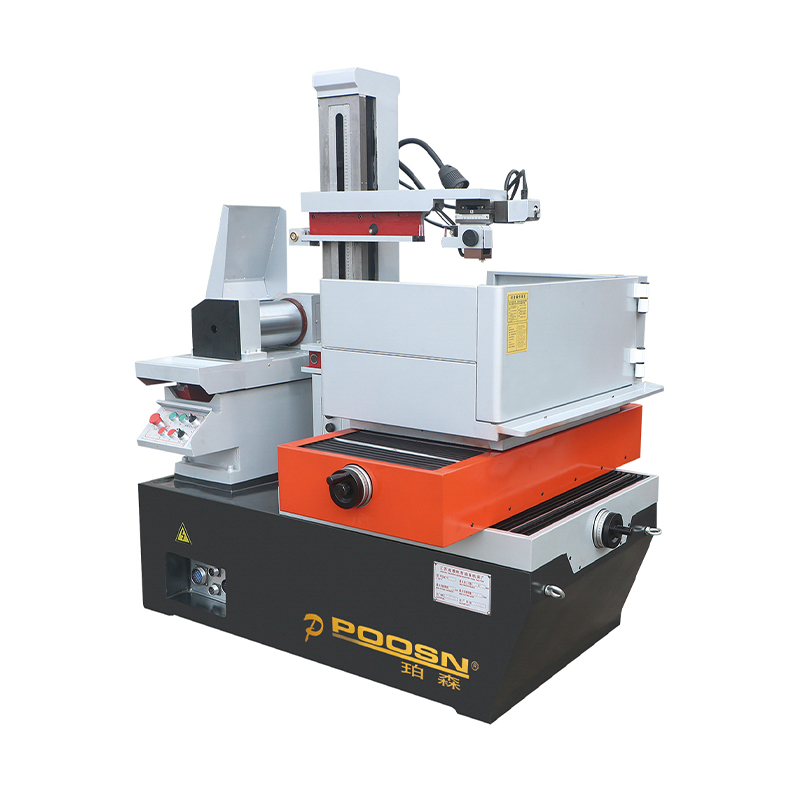
DK45D CNC Large-Taper Wire-Cut EDM Machine for Precision Mold and Complex Component Manufacturing
2026-09-30
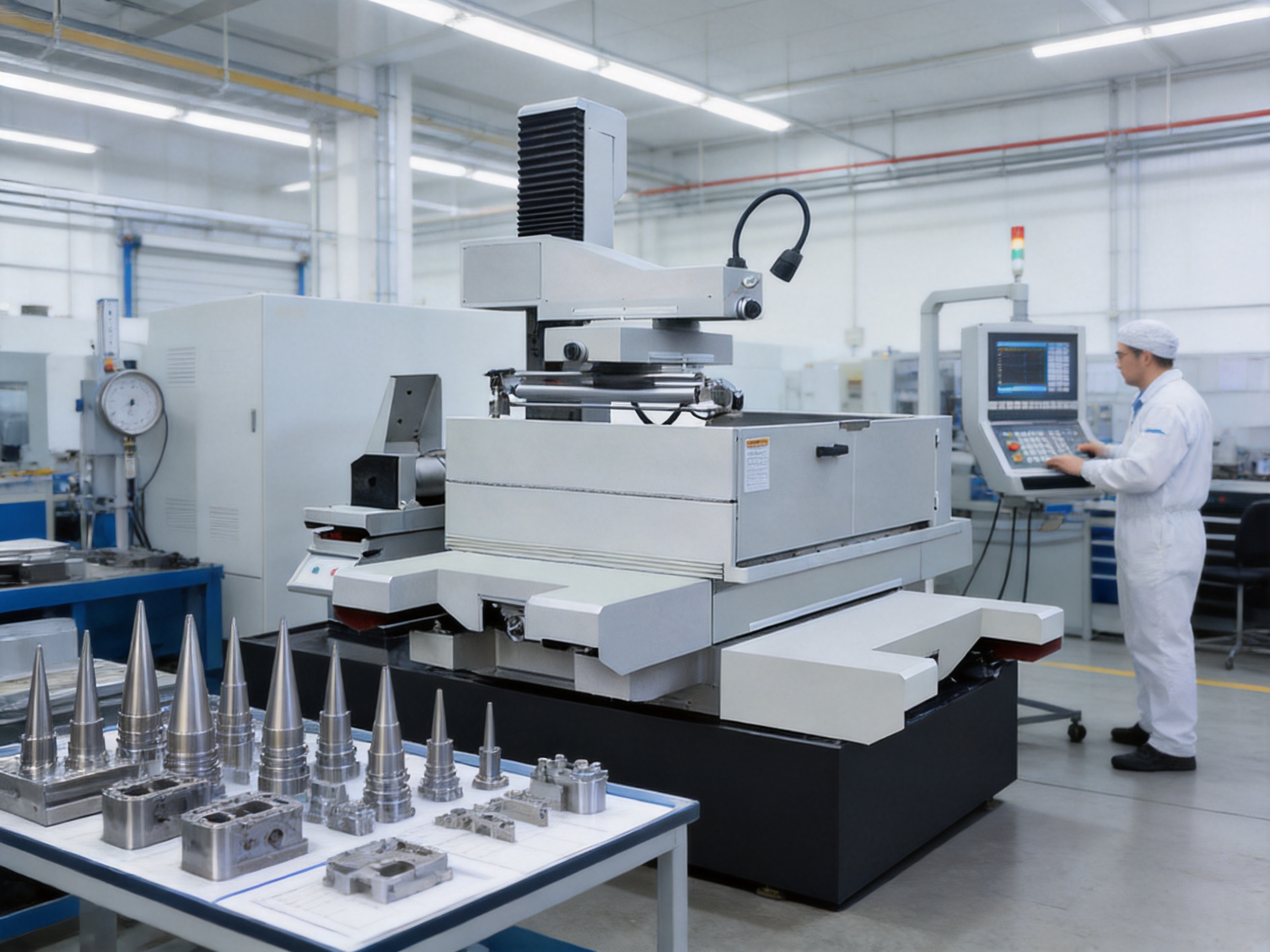
Precision manufacturing increasingly depends on machine tools that can combine geometric flexibility, dimensional accuracy, stable operation, and practical production efficiency. Conventional wire-cut electrical discharge machining equipment is highly effective for many two-dimensional profiles, but more demanding applications require the ability to cut steep tapers, complex contours, thick workpieces, and high-value materials without sacrificing surface quality or repeatability. The DK45D CNC Large-Taper Wire-Cut EDM Machine is designed for this class of work.
Developed for large-taper and high-precision wire electrical discharge machining, the DK45D is intended for mold manufacturing, precision machinery, aerospace components, automotive parts, and other applications involving difficult profiles or demanding tolerances. Its principal advantage is the combination of a large taper capability, a 450 mm maximum cutting thickness, four-axis X/Y/U/V linkage, a rigid mechanical structure, and an X8 AUTOCUT control system.
The machine is manufactured by Taizhou Xinchengyang Machinery Manufacturing Co., Ltd., a specialized Chinese producer of wire-cut EDM equipment and related special-processing technologies. The company has operated in the wire-cutting field since 1999 and has developed product families covering medium-speed, high-speed, and large-taper wire-cut EDM applications. Its manufacturing approach combines machine-tool design, casting and structural production, precision assembly, electrical integration, positioning-accuracy testing, and application-oriented inspection.
This article examines the DK45D’s technical configuration, large-taper machining logic, operational advantages, manufacturing strengths, application value, and selection considerations. It also explains how the machine compares with conventional wire-cut equipment and why it can be a practical choice for manufacturers that need stable performance in medium-sized, high-precision, large-angle cutting operations.
Content
- 1 1. Product Overview
- 2 2. Principal Technical Specifications
- 3 3. Large-Taper Machining Capability
- 4 4. Four-Axis Linkage and Geometric Control
- 5 5. Mechanical Structure and Stability
- 6 6. Wire Feed and Guiding System
- 7 7. EDM Power and Discharge Control
- 8 8. Precision, Surface Quality, and Repeatability
- 9 9. Control System and Operator Experience
- 10 10. Advantages Compared with Conventional Wire-Cut Equipment
- 11 11. Applications in Mold Manufacturing
- 12 12. Aerospace and Precision Machinery Applications
- 13 13. Manufacturing Strengths of the Producer
- 14 14. Quality Assurance and Inspection
- 15 15. Production Efficiency and Cost Control
- 16 16. Installation, Operation, and Maintenance
- 17 17. Model Selection within the Large-Taper Series
- 18 18. Customer Support and Technical Service
- 19 19. Frequently Asked Questions
- 19.1 Q1. What is the maximum taper capability of the DK45D?
- 19.2 Q2. What is the maximum workpiece thickness?
- 19.3 Q3. How much weight can the worktable support?
- 19.4 Q4. Does the DK45D support variable taper cutting?
- 19.5 Q5. Which control system is used?
- 19.6 Q6. Is the DK45D suitable for inexperienced operators?
- 19.7 Q7. What surface roughness can the machine achieve?
- 19.8 Q8. What materials can the DK45D process?
- 19.9 Q9. Can the machine process heavy workpieces for long periods?
- 19.10 Q10. What options are available?
- 19.11 Q11. How does the DK45D reduce production costs?
- 19.12 Q12. How does the manufacturer verify machine quality?
- 20 20. Conclusion
- 21 References
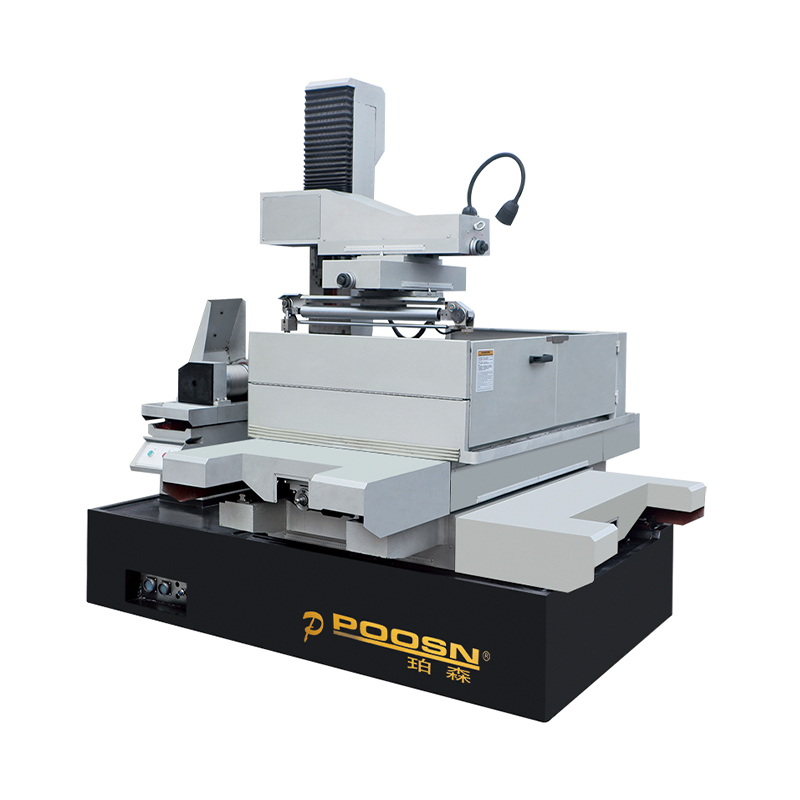
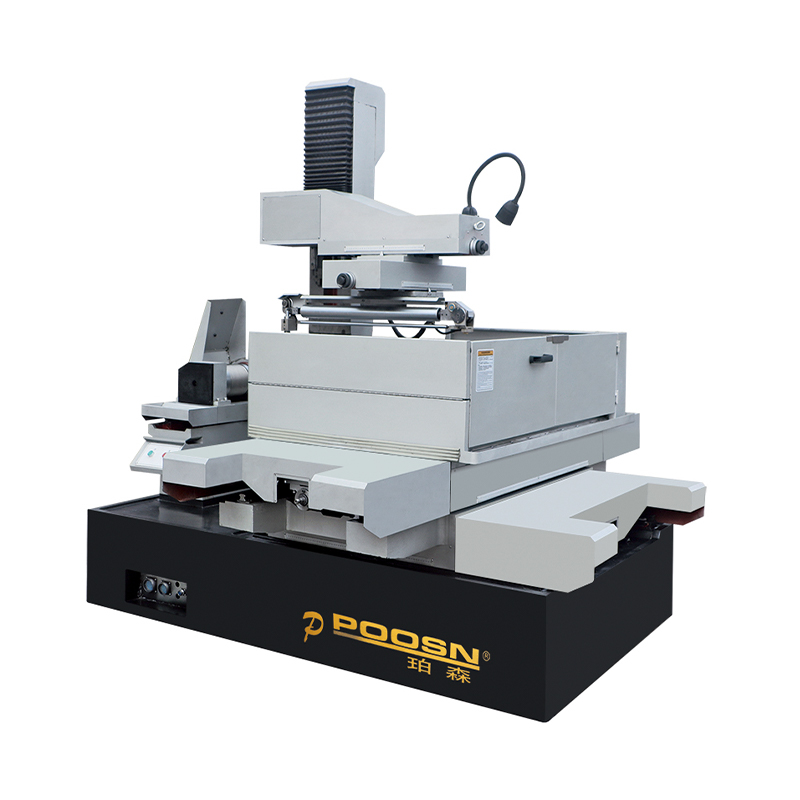
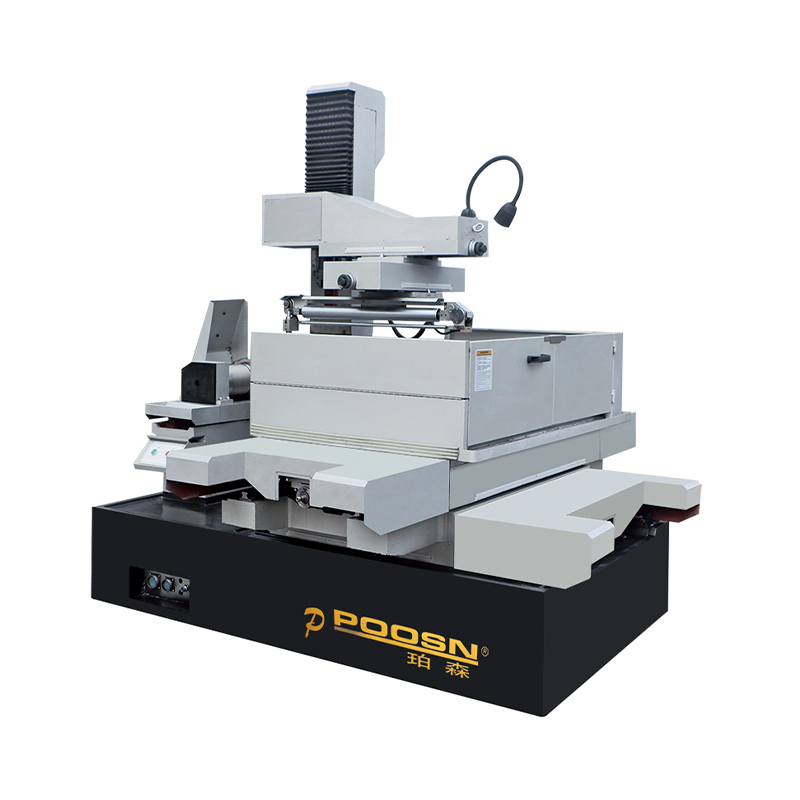
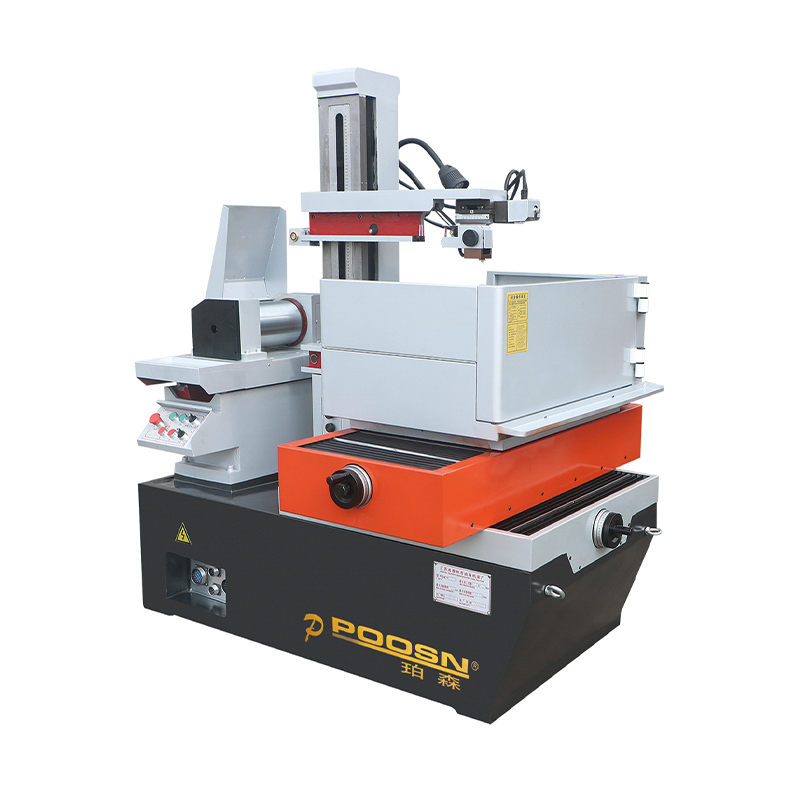
- 22 Product: DK45D CNC Large Taper Wire Cut EDM Machine for Precision Mold Machining
1. Product Overview
The DK45D belongs to the DK-D series of large-cutting-taper wire-cut EDM machines. It is designed for users who need more than basic profile cutting. In particular, it addresses applications in which the top and bottom contours of a workpiece differ, a steep cutting angle is required, or a thick workpiece must be processed while maintaining geometric consistency across the cut.
Unlike a standard two-axis wire-cut machine, the DK45D uses synchronized X, Y, U, and V axes. The X and Y axes control the horizontal movement of the worktable, while the U and V axes control the upper wire-guiding system and allow the electrode wire to tilt in space. This architecture makes it possible to perform taper cutting and to coordinate the wire trajectory with changing workpiece geometry.
The maximum cutting taper is specified as ±30° over 40 mm for the DK45D. This capability is important in the production of die components, forming tools, punches, inserts, precision mechanical parts, and complex profiles that cannot be produced efficiently by a conventional vertical cut alone.
The machine provides a maximum cutting thickness of 450 mm and a maximum worktable load of 400 kg. These specifications position the DK45D for medium-sized workpieces and substantial mold components rather than only small precision parts. At the same time, its high-precision linear rail support, reinforced structure, and controlled wire movement allow it to address fine profiles and detailed geometries.
The machine is equipped with the X8 AUTOCUT control system. This system provides a user-oriented interface and supports the calculations required for four-axis taper machining. By reducing the amount of manual calculation and intervention, the control platform helps operators prepare and execute complex cutting tasks more efficiently.
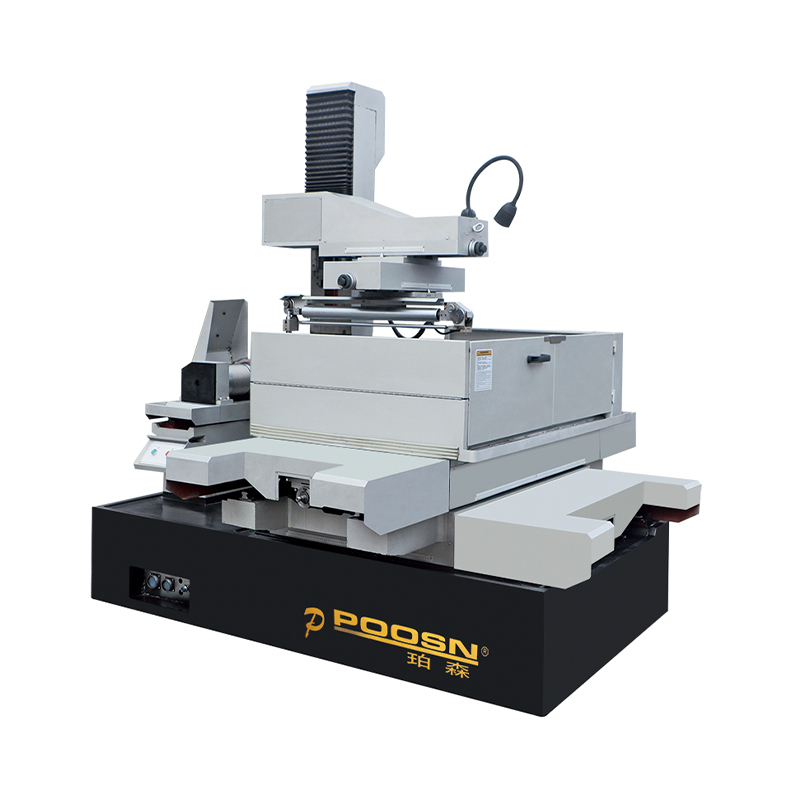
DK45D CNC Large Taper Wire Cut EDM Machine for Precision Mold Machining
2. Principal Technical Specifications
| Technical Item | DK45D Specification |
| Machine Type | CNC large-taper wire-cut EDM |
| Worktable Size | 570 × 950 mm |
| X/Y Travel | 450 × 650 mm |
| Processing Slot Size | 630 × 990 mm |
| Maximum Cutting Thickness | 450 mm |
| Maximum Worktable Load | 400 kg |
| U/V Travel | 290 × 290 mm |
| Maximum Cutting Taper | ±30°/40 mm |
| Electrode Wire Diameter | 0.18 mm with wire guider |
| Wire Feed Speed | 1–11 m/s, frequency controlled |
| Maximum Wire Storage Length | Approximately 350 m |
| Maximum Cutting Efficiency | 10,000–16,000 mm²/h |
| Optimal Surface Roughness | Ra ≤ 2.5 μm |
| Controlled Axes | X, Y, U, and V four-axis linkage |
| Programming System | X8 AUTOCUT |
| Maximum Processing Current | 6 A |
| Electrical Capacity | 2.5 kVA |
| Machine Weight | Approximately 1,600 kg |
| Machine Dimensions | Approximately 1,780 × 1,500 × 1,700 mm |
The specification set shows that the DK45D is not limited to a single type of production task. Its travel range supports medium-sized molds and components, while the large working thickness allows it to process substantial sections of alloy, steel, and other electrically conductive materials. The 400 kg worktable load further increases its suitability for heavy mold plates and large mechanical parts.
The stated maximum cutting efficiency of 10,000–16,000 mm²/h provides a useful reference for production planning. Actual performance depends on material, thickness, flushing conditions, wire condition, cutting strategy, workpiece geometry, and required surface quality. Even so, the machine is configured to balance productivity with precision rather than focusing only on maximum rough-cut speed.
The optional configuration includes a high-pressure water tank and linear scale. These options allow users to adapt the machine to particular requirements involving flushing efficiency, feedback accuracy, or process control. XY AC servo drives are also available as an option instead of standard stepper drives.
3. Large-Taper Machining Capability
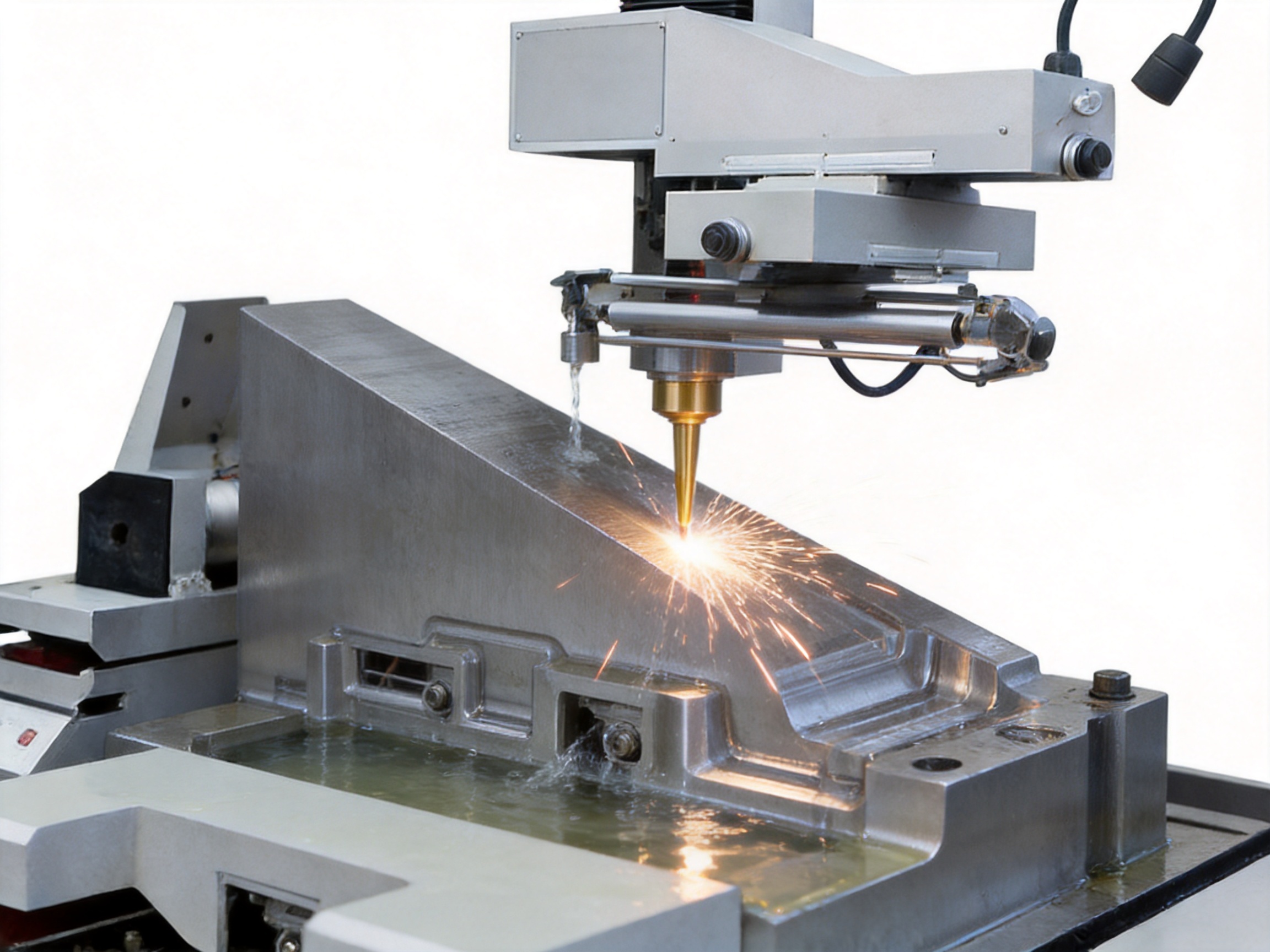
The defining feature of the DK45D is its ability to perform large-angle taper cutting. In a conventional straight cut, the wire remains approximately vertical and the upper and lower profiles of the workpiece are substantially aligned. In taper cutting, the wire is intentionally inclined so that the cut geometry changes through the thickness of the workpiece.
This process is essential for the production of tapered punches, die openings, sloped inserts, angled forming surfaces, components with different upper and lower outlines, and complex spatial profiles. A large taper may also be used to compensate for the design of a mold, create draft angles, or reduce the need for subsequent grinding and manual adjustment.
The DK45D generates this motion through coordinated X/Y/U/V operation. The worktable moves according to the programmed profile while the U and V axes guide the upper section of the wire. The machine can therefore control the relationship between the upper and lower cutting paths rather than treating taper as a simple fixed angular offset.
For complex workpieces, the programmed wire trajectory must consider wire diameter, workpiece thickness, corner conditions, and the desired final geometry. The control system assists with these calculations and supports the compensation required to maintain dimensional consistency. This is particularly important when the taper angle changes along the contour.
Compared with conventional equipment limited to small or constant tapers, the DK45D offers greater freedom in the design and manufacture of spatial forms. It can support large-span taper cutting and variable contour work that would otherwise require multiple setups, additional grinding, or a different machining process.
The ±30°/40 mm rating should be interpreted together with workpiece thickness and actual cutting conditions. Large-angle machining places higher demands on wire stability, flushing, axis synchronization, guide alignment, and structural rigidity. The DK45D is therefore built around more than a taper-capable control system; its mechanical and fluid systems are also configured for this application.
4. Four-Axis Linkage and Geometric Control
The DK45D’s four-axis linkage is central to its performance. X and Y movement determines the principal horizontal position of the cut, while U and V movement adjusts the upper wire position. When these axes operate simultaneously, the wire can follow a spatial trajectory rather than a purely planar path.
This capability enables the machine to produce upper and lower profiles with controlled differences. Such a function is useful when a workpiece contains a sloped wall, a compound taper, a changing draft angle, or a geometry that cannot be described by a simple parallel contour.
Accurate four-axis operation requires coordinated motion and compensation. If the upper and lower paths are not synchronized, the resulting part may show dimensional errors, uneven taper, or discrepancies between the programmed and actual profiles. The DK45D addresses this requirement through its CNC control architecture and precision guide system.
Geometric compensation is also important because tilting the wire changes the relationship between the programmed path and the actual discharge location. The machine’s control algorithms are designed to account for the wire diameter and the physical displacement associated with wire inclination. Proper compensation helps reduce errors on the cut surface, particularly in areas where the taper is steep or changes along the path.
For mold manufacturers, this can reduce the amount of corrective fitting required after wire cutting. For aerospace and precision machinery producers, it can help maintain the designed contour of complex components. The benefits are especially relevant when the workpiece is expensive, difficult to replace, or subject to strict dimensional inspection.
5. Mechanical Structure and Stability
Large-taper EDM places higher lateral forces and greater geometric demands on the wire than ordinary straight cutting. As the wire tilts, the effective direction of wire tension changes and the wire becomes more sensitive to vibration, guide misalignment, and flushing disturbances. A machine intended for this work must therefore provide a stable base and a rigid support structure.
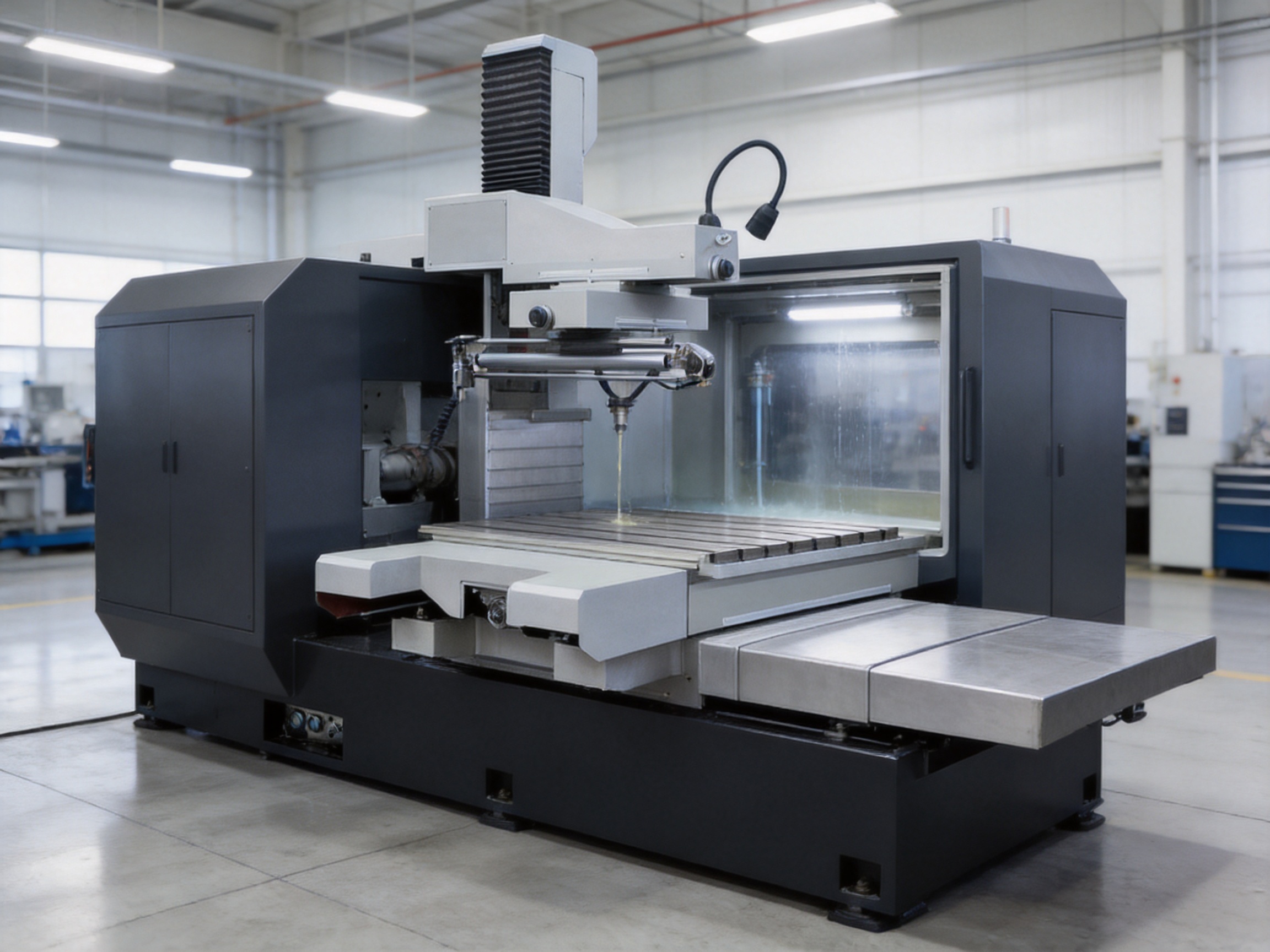
The DK45D uses a heavy machine bed and reinforced cast components. The castings are designed to support the worktable, wire system, and axis assemblies while limiting deformation during long operating cycles. Natural aging and stress-relief practices are used to reduce the effects of internal casting stress before precision machining and assembly.
A rigid structure benefits both rough cutting and finishing. During rough cutting, it helps the machine maintain stable movement under higher discharge loads and flushing forces. During finishing, it reduces the risk of vibration marks, dimensional drift, or inconsistent surface texture.
High-precision linear rail support is included as a standard configuration. Linear guides provide controlled motion and help maintain the positional relationship between the worktable and wire system. Their performance depends on correct installation, lubrication, protection from debris, and regular maintenance, all of which should be included in the user’s operating procedures.
The waterproof cover is another practical feature. EDM machining uses dielectric fluid and produces fine conductive debris. A protective cover helps prevent contamination of the machine’s moving elements and reduces the spread of fluid within the working area. The environmentally oriented waterproof configuration also supports cleaner operation and easier shop-floor management.
The machine’s approximately 1,600 kg weight contributes to stability. A substantial machine mass helps resist external vibration and limits movement caused by changes in table position. Correct foundation preparation remains important, but the heavy structure provides a stronger base for precision machining than a lightly constructed frame.
6. Wire Feed and Guiding System
The wire feed system directly affects cutting stability, accuracy, and surface quality. The DK45D uses a 0.18 mm electrode wire with a wire guider and provides a wire feed speed range of 1–11 m/s under frequency control. The system can store approximately 350 m of wire, allowing practical cutting autonomy for extended operations.
Stable wire transport is especially important when machining thick workpieces or operating at a large taper. Changes in wire speed, tension, alignment, or contact condition can influence the discharge gap and create variations in the cut. A controlled feed system helps maintain a more consistent electrical and mechanical process.
The wire-guiding components are calibrated in relation to the flushing nozzles. This alignment allows dielectric fluid to reach the discharge zone more effectively, even when the wire is inclined. Good fluid coverage improves the removal of erosion debris and helps maintain a stable discharge gap.
Wire-guiding accuracy also influences corner quality. At sharp changes in direction, the wire must respond to the programmed movement without excessive deflection. Proper guide alignment and stable wire tension reduce the likelihood of unwanted corner rounding, wire lag, or visible vibration patterns.
Operators should select wire speed and electrical parameters according to material, thickness, taper angle, and desired finish. A high-speed rough cut may be appropriate for material removal, while lower-energy finishing passes can improve surface quality and dimensional control. The DK45D’s control and power systems allow users to establish process recipes for recurring jobs.
7. EDM Power and Discharge Control
Wire EDM removes material through controlled electrical discharges between the electrode wire and the conductive workpiece. Because the wire does not make conventional mechanical contact with the part, the process can produce intricate shapes and narrow kerfs while exerting relatively low mechanical force on the workpiece.
However, the discharge process must be carefully controlled. Excessive pulse energy can cause thermal damage, corner overcutting, surface burns, or deterioration of the recast layer. Insufficient energy can reduce cutting efficiency and create unstable machining conditions. The DK45D uses a controlled electrical system with a maximum processing current of 6 A and an electrical capacity of 2.5 kVA.
During large-taper cutting, the effective discharge conditions may change along the height and contour of the workpiece. The machine’s control strategy is designed to adjust pulse energy according to the discharge gap and machining status. This type of regulation helps prevent corner collapse and thermal overburn while maintaining productive cutting performance.
Flushing is equally important. Erosion debris must be removed from the gap to avoid secondary discharges and unstable cutting. The dielectric circulation system and optional high-pressure water tank can support improved debris removal, particularly when processing thick sections or difficult geometries.
Better flushing can contribute to more consistent surface integrity, reduced wire breakage, and improved process continuity. It is not a substitute for correct parameter selection, but it provides the fluid conditions needed for the electrical system to perform reliably.
8. Precision, Surface Quality, and Repeatability
The DK45D is specified with a machining accuracy of 0.08 mm and an optimal surface roughness of Ra ≤ 2.5 μm. These values provide a general indication of the machine’s intended precision level. Actual results depend on workpiece material, thickness, geometry, wire condition, cutting strategy, environmental stability, and the inspection method used.
The machine is manufactured and tested in accordance with GB/T7926-2015 accuracy requirements. Compliance with a machine-tool accuracy standard provides a structured basis for evaluating geometric performance, positioning, and repeatability. It also gives users a reference for acceptance inspection and maintenance checks.
Precision in large-taper EDM is not determined by one component. It depends on the combined performance of the machine bed, guide rails, worktable, wire guides, U/V mechanism, drive system, control software, discharge power, dielectric circulation, and operator programming.
The DK45D’s design addresses these areas as an integrated system. The rigid structure limits vibration, the linear rails support accurate movement, the four-axis control coordinates the spatial path, the wire feed system stabilizes the electrode, and the discharge control manages the electrical gap.
Repeatability is particularly valuable in mold manufacturing. A stable process allows multiple cavities, inserts, or replacement parts to be produced with similar dimensions. It also reduces the need for manual correction and makes it easier to standardize production across shifts.
For long-duration cutting, thermal behavior must also be considered. The machine’s heavy structure and stable layout help limit deformation, although users should maintain a controlled workshop temperature and avoid placing the machine near sources of vibration, direct sunlight, or rapid temperature changes.
9. Control System and Operator Experience
The X8 AUTOCUT control system is designed to make advanced wire-cut functions more accessible. Large-taper machining normally involves calculations associated with upper and lower contours, wire diameter, taper angle, compensation, and axis movement. An intuitive interface reduces the risk of manual programming errors and shortens the time needed to prepare a job.
The control system supports the machine’s four-axis linkage and provides the operating environment for programming, parameter management, and machining monitoring. Operators can use the system to establish cutting paths and manage process conditions without manually calculating every aspect of the taper motion.
This does not eliminate the need for trained personnel. Operators still need to understand workpiece fixturing, electrical conductivity, wire selection, flushing, compensation, datum setting, and inspection. Nevertheless, a user-oriented interface lowers the learning barrier and allows technicians with basic wire-cut experience to become productive more quickly.
Taizhou Xinchengyang Machinery Manufacturing Co., Ltd. also provides operation training and technical assistance. Training can cover machine setup, programming, maintenance, parameter selection, troubleshooting, and safe working practices. This support is particularly useful for companies moving from conventional straight cutting to four-axis large-taper machining.
10. Advantages Compared with Conventional Wire-Cut Equipment
| Performance Area | Conventional Wire-Cut Equipment | DK45D Advantage |
| Taper Capability | Often limited to small or fixed tapers | Large taper up to ±30°/40 mm |
| Axis Configuration | Basic two-axis or simplified taper control | Synchronized X/Y/U/V four-axis linkage |
| Workpiece Thickness | May be restricted for demanding jobs | Maximum cutting thickness of 450 mm |
| Worktable Load | More limited on smaller machines | Maximum load of 400 kg |
| Complex Profiles | Best suited to planar contours | Supports spatial and variable-taper profiles |
| Structural Stability | May be optimized primarily for standard cutting | Heavy casting and reinforced support for large-angle work |
| Control Operation | More manual calculations may be required | X8 AUTOCUT control system for simplified operation |
| Application Range | Basic molds and general components | Complex molds, aerospace parts, automotive components, and precision machinery |
The DK45D’s advantage over conventional equipment is not limited to one specification. Its value lies in the relationship between taper range, axis linkage, structural rigidity, workpiece capacity, and control intelligence.
A standard machine may produce a simple mold insert effectively, but it may require additional setups or secondary machining when the part contains a steep taper or different upper and lower profiles. The DK45D can complete more of these geometries in a coordinated operation.
Reducing setups can improve both accuracy and productivity. Every additional setup introduces the possibility of datum errors, clamping variation, and alignment loss. When a complex profile can be completed in one controlled wire-cut operation, the total process chain becomes shorter and easier to manage.
The DK45D can also reduce the need for secondary grinding in suitable applications. For example, a tapered die edge may be produced directly by the wire-cut process rather than cut vertically and corrected manually. Whether grinding can be eliminated depends on the required finish and tolerance, but the machine’s large-taper capability creates that possibility.
11. Applications in Mold Manufacturing
Mold manufacturing is one of the most important application areas for the DK45D. Dies, punches, inserts, cavity components, and precision plates often contain narrow openings, tapered surfaces, small radii, and difficult-to-machine profiles.
In stamping die production, the machine can be used to cut profiles and tapered cutting edges. A large blanking die may require a controlled taper to achieve the designed clearance and forming behavior. By producing the taper directly, the DK45D can reduce the amount of manual fitting and finishing required after cutting.
For plastic molds, the machine can process inserts and components made from hardened tool steels and other conductive materials. Wire EDM is useful when conventional milling would cause excessive tool wear, produce unwanted cutting forces, or struggle to reach a narrow internal profile.
The machine is also suitable for replacement inserts and repair components. When an existing mold requires a precisely matched part, four-axis wire cutting can reproduce a controlled contour while minimizing mechanical stress on the material.
Moldmakers should consider workpiece thickness, taper direction, corner requirements, surface finish, and dielectric flushing when planning a job. Proper programming and multiple finishing passes may be needed for the most demanding applications.
12. Aerospace and Precision Machinery Applications
Aerospace components frequently involve difficult alloys, complex curves, thin sections, and strict dimensional requirements. The non-contact nature of wire EDM is advantageous when mechanical cutting forces must be minimized or when the material is difficult to machine by conventional methods.
The DK45D can be applied to components with specialized profiles, inclined surfaces, and complex contours. Its four-axis taper capability is particularly useful where the upper and lower shapes are not identical or where a large angular relationship is part of the component design.
In precision machinery, the machine can produce gears, plates, guides, fixtures, slots, and irregularly shaped parts. Its capacity for small kerfs and detailed cutting helps preserve material and supports the manufacture of intricate components.
Automotive applications may include steering, transmission, forming, and stamping components. High repeatability is valuable in these sectors because components may be produced in batches and must maintain consistent fit and function.
Before production, users should conduct sample cutting and inspection on the selected material. Material composition, hardness, thickness, and thermal behavior can affect cutting efficiency and final surface quality. Taizhou Xinchengyang Machinery Manufacturing Co., Ltd. can provide technical support for application-specific machine selection and process evaluation.
13. Manufacturing Strengths of the Producer
Taizhou Xinchengyang Machinery Manufacturing Co., Ltd. has specialized in electrical-discharge wire cutting since 1999. The company’s experience covers research and development, production, testing, application support, and the manufacture of multiple wire-cut EDM product families.
Its product portfolio includes PS-C and DK77-BC medium-speed wire-cut EDM machines, DK77-A and DK77-B high-speed wire-cut EDM machines, and DK77-D large-taper wire-cut EDM machines. This range indicates experience with different cutting speeds, machine capacities, taper requirements, and customer production environments.
The company operates with advanced processing equipment and comprehensive testing methods. Machine tools are manufactured according to national standards, and positioning accuracy testing is performed on each machine tool. Such testing is essential because an EDM machine’s practical value depends on the accuracy of its assembled and calibrated system, not only on the design drawings.
The production process includes structural manufacturing, precision machining of guide and mounting surfaces, axis assembly, wire-system installation, electrical integration, control-system configuration, and final adjustment. Each stage influences the final performance of the machine.
Quality control is described as a full-process activity. In addition to metrological verification, the company performs simulated machining trials according to customer application requirements. Application-based testing is valuable because it evaluates the machine under conditions closer to real production rather than relying only on isolated geometric measurements.
For the DK45D, this approach can include checking taper movement, wire alignment, axis coordination, discharge stability, flushing performance, dimensional consistency, and surface quality. The exact acceptance procedure should be agreed with the customer before delivery, especially for specialized applications.
The company’s own factory and technical resources support customization. Worktable size, cutting angle, load capacity, control configuration, and optional equipment can be discussed according to project needs. Customization is subject to engineering review, particularly when a customer requests a configuration outside the standard DK45D specification.
14. Quality Assurance and Inspection
Quality assurance begins with material and component selection. The machine bed and structural castings must provide sufficient strength and stability. Precision guideways, drive components, wire guides, electrical devices, and control elements must be correctly matched to the machine’s intended duty.
During assembly, alignment is critical. The relationship between the worktable, upper and lower wire guides, U/V mechanism, flushing nozzles, and machine frame must be carefully controlled. Small assembly deviations can become larger errors during large-angle cutting.
After assembly, the machine undergoes positioning and geometric checks. These checks establish whether the axes move according to their specified travel and whether the worktable and taper system maintain the necessary relationship. Calibration procedures may include precision measurement and laser-based verification where appropriate.
Operational testing is also important. A machine may pass a static measurement but still require adjustment under extended running conditions. Full-load or long-duration testing can reveal issues related to heat generation, lubrication, wire transport, dielectric circulation, electrical stability, and control synchronization.
Final simulated machining provides another layer of confidence. By cutting a test workpiece or a customer-specific sample, the manufacturer can evaluate actual process behavior. This is especially useful for customers purchasing the machine for large-taper molds, aerospace profiles, or other high-value components.
Users should maintain their own incoming inspection records after installation. Recommended checks include machine leveling, axis backlash, wire-guide condition, taper calibration, dielectric cleanliness, wire tension, cutting accuracy, surface roughness, and repeatability.
15. Production Efficiency and Cost Control
The DK45D is designed not only for precision but also for production efficiency. Its cutting efficiency of up to 10,000–16,000 mm²/h provides a basis for productive material removal, while the automated control functions reduce the amount of manual intervention required during routine jobs.
Large-taper capability can reduce manufacturing costs by consolidating operations. If a tapered profile can be cut directly, the customer may avoid separate milling, grinding, manual fitting, or additional clamping. The actual savings depend on the part and process route, but the potential is significant for complex mold components.
Reduced setup time is another benefit. Four-axis machining allows multiple geometric features to be coordinated within one program. Fewer setups can improve utilization, reduce alignment labor, and limit the risk of cumulative error.
The X8 AUTOCUT system can also support faster operator training and simpler job preparation. When process templates and proven parameters are stored, repeat orders can be launched more quickly. This helps medium-sized manufacturers improve scheduling flexibility without requiring a large team of highly specialized programmers.
Cost control also depends on consumables and maintenance. Correct wire selection, clean dielectric fluid, proper filtration, and timely replacement of guides can improve wire utilization and reduce unplanned downtime. A stable process generally produces fewer rejected parts and minimizes the cost of corrective machining.
16. Installation, Operation, and Maintenance
The installation foundation must be prepared according to the machine’s weight and dimensions. The DK45D weighs approximately 1,600 kg, so the floor should be capable of supporting the load without excessive settlement or vibration. The machine should be positioned away from heavy stamping equipment, large compressors, direct sunlight, and unstable temperature zones.
Electrical installation should follow the required three-phase 380 V ±10% power supply specification. Grounding, cabinet ventilation, cable routing, and protection devices should be checked by qualified personnel before commissioning.
Dielectric fluid quality has a direct effect on cutting performance. The tank, filters, pumps, and flushing lines should be cleaned and inspected regularly. Contaminated fluid can reduce discharge stability, increase wire breakage, and degrade surface quality.
Wire guides and contact components are wear items. Their condition should be inspected at planned intervals, especially when the machine operates frequently at large taper angles or with abrasive materials. Worn guides can create taper errors and inconsistent wire positioning.
The linear rails, screws, bearings, and drive systems require appropriate lubrication. Operators should follow the manufacturer’s maintenance schedule and use compatible lubricants. Unusual noise, vibration, temperature, or axis movement should be investigated before the machine continues with precision production.
At the end of each job, the working area should be cleaned and the machine should be protected from corrosion. Good housekeeping improves safety, supports stable operation, and extends the service life of the machine.
17. Model Selection within the Large-Taper Series
The DK45D is intended for medium-sized components and precision molds requiring large-taper cutting. Its 450 mm cutting thickness and 400 kg load capacity make it appropriate for many general mold and precision-machining applications.
The DK55D is more suitable for larger workpieces and heavier components. It provides a worktable size of approximately 740 × 1,160 mm, a maximum cutting thickness of 600 mm, and a maximum load of 600 kg. Its taper capability is specified at ±30°/80 mm and ±45°/80 mm.
The DK63D is intended for extra-large workpieces and heavier-duty components. It offers a worktable size of approximately 844 × 1,360 mm, a maximum load of 800 kg, and a cutting thickness of up to 600 mm.
The DK80D is designed for heavy-duty molds and very large workpieces. It provides a worktable size of approximately 1,020 × 1,620 mm, a maximum cutting thickness of 800 mm, and a maximum load of 1,000 kg. Customizable options are available for DK80D and larger machines subject to engineering confirmation.
| Model | Worktable Size | Maximum Thickness | Maximum Load | Typical Positioning |
| DK45D | 570 × 950 mm | 450 mm | 400 kg | Medium components and precision molds |
| DK55D | 740 × 1,160 mm | 600 mm | 600 kg | Large workpieces and complex components |
| DK63D | 844 × 1,360 mm | 600 mm | 800 kg | Extra-large molds and heavy components |
| DK80D | 1,020 × 1,620 mm | 800 mm | 1,000 kg | Heavy-duty molds and large-scale production |
18. Customer Support and Technical Service
Technical support is an important part of machine ownership. A capable supplier should assist with installation, commissioning, operator training, parameter setup, troubleshooting, spare parts, and process optimization.
Taizhou Xinchengyang Machinery Manufacturing Co., Ltd. provides rapid response and professional technical support for its equipment. Support can help customers maintain operational stability and address issues related to wire breakage, inaccurate taper, poor flushing, unstable discharge, programming, or surface quality.
Training should be adapted to the customer’s production objectives. A mold manufacturer may require detailed instruction in taper programming, compensation, corner control, and inspection. A general precision-machining workshop may focus more on workpiece setup, repeat production, wire consumption, and routine maintenance.
For international customers, technical communication should include machine specifications, electrical requirements, installation conditions, spare-parts recommendations, acceptance criteria, and documentation. Clear communication before shipment reduces commissioning time and supports a smoother production launch.
19. Frequently Asked Questions
Q1. What is the maximum taper capability of the DK45D?
The DK45D provides a maximum cutting taper of ±30° over 40 mm. This makes it suitable for steep taper operations involving complex molds, tapered die edges, and precision components with different upper and lower profiles.
Q2. What is the maximum workpiece thickness?
The maximum specified cutting thickness is 450 mm. Actual practical performance depends on material, workpiece geometry, flushing conditions, wire selection, and the required surface quality.
Q3. How much weight can the worktable support?
The maximum worktable load is 400 kg. This allows the DK45D to process many medium-sized mold plates, inserts, and heavy precision components. Larger or heavier workpieces may require a DK55D, DK63D, or DK80D model.
Q4. Does the DK45D support variable taper cutting?
The machine’s X/Y/U/V four-axis linkage is designed to support complex spatial trajectories and variable taper operations. The specific range depends on the programmed geometry, workpiece thickness, taper angle, and cutting conditions.
Q5. Which control system is used?
The standard programming and control system is the X8 AUTOCUT system. It provides an intuitive interface and supports the calculations and coordinated motion required for four-axis large-taper machining.
Q6. Is the DK45D suitable for inexperienced operators?
The control interface is designed to simplify operation, and the manufacturer provides training and technical support. Operators still need basic knowledge of wire EDM, workholding, dielectric management, parameter selection, and inspection, but the control system reduces the need for manual four-axis calculations.
Q7. What surface roughness can the machine achieve?
The stated optimal surface roughness is Ra ≤ 2.5 μm. The final result depends on material, thickness, wire type, roughing and finishing strategy, flushing, electrical parameters, and inspection conditions.
Q8. What materials can the DK45D process?
The machine can process electrically conductive metals and alloys with different hardness levels. Common applications include tool steels, alloy steels, and other conductive materials used in molds, aerospace components, automotive parts, and precision machinery.
Q9. Can the machine process heavy workpieces for long periods?
The DK45D is designed for stable operation under high-load and long-duration conditions. Its heavy structure, linear rail support, controlled wire system, and discharge management help maintain consistency. Proper maintenance, thermal control, dielectric filtration, and correct workholding remain essential.
Q10. What options are available?
Optional configurations include a high-pressure water tank, linear scale, and AC servo drives for the XY worktable. The most appropriate options should be selected according to the required accuracy, production volume, workpiece material, and process conditions.
Q11. How does the DK45D reduce production costs?
It can reduce costs by combining large-taper cutting and precision profile cutting in one machine. This may reduce additional grinding, manual fitting, setup time, and rework. Improved process stability can also reduce rejected parts and unplanned downtime.
Q12. How does the manufacturer verify machine quality?
The manufacturer applies process inspections, final assembly checks, positioning-accuracy testing, geometric verification, operational testing, and simulated machining trials. Customer-specific acceptance tests can also be discussed for specialized applications.
20. Conclusion
The DK45D CNC Large-Taper Wire-Cut EDM Machine is designed for manufacturers that need more than conventional planar wire cutting. Its core strengths include ±30°/40 mm large-taper capability, 450 mm maximum cutting thickness, 400 kg worktable load, X/Y/U/V four-axis linkage, high-precision linear rail support, controlled wire feeding, and the X8 AUTOCUT control system.
These features make the machine suitable for precision molds, stamping dies, aerospace components, automotive parts, and complex mechanical components. By coordinating the worktable and tapering device, the DK45D can produce spatial profiles and steep tapers that may be difficult or inefficient to manufacture with standard equipment.
The machine’s performance is supported by a rigid structure, calibrated wire-guiding system, dielectric flushing arrangement, adaptive discharge control, and a manufacturing process that includes accuracy testing and simulated machining. Together, these elements help provide stable cutting under demanding conditions.
Taizhou Xinchengyang Machinery Manufacturing Co., Ltd. contributes additional value through long-term specialization in wire-cut EDM, a broad product portfolio, technical support, customization capability, and application-oriented quality assurance. For companies seeking to improve precision, reduce secondary processing, and expand their capacity for large-angle cutting, the DK45D represents a practical and technically focused solution.
References
1. Taizhou Xinchengyang Machinery Manufacturing Co., Ltd., DK-D Large Cutting Taper WEDM Technical Parameters.
2. Taizhou Xinchengyang Machinery Manufacturing Co., Ltd., DK45D Product Description and Application Information.
3. GB/T7926-2015, Accuracy of Wire-Cut Electrical Discharge Machines.
4. Manufacturer-provided information on X8 AUTOCUT control systems and four-axis wire EDM operation.
5. Manufacturer-provided information on wire feed systems, dielectric flushing, linear guide support, and EDM discharge control.
6. Manufacturer-provided product selection guidance for DK45D, DK55D, DK63D, and DK80D large-taper wire-cut EDM machines.
Product: DK45D CNC Large Taper Wire Cut EDM Machine for Precision Mold Machining

-
Phone
+86-0523-86268788 +86-13815960366 +86-13912191163Email
[email protected]Address
No. 366, Yusheng Road Jiulong Town, Hailing District Taizhou City, China
Copyright © Taizhou Xinchengyang Machinery Manufacturing Co., Ltd. All Rights Reserved.
Custom edm machine for sale
wholesale edm machine manufacturers
