

 English
 русский
 عربى
عربى

Lu Qianwen — Overseas Sales Manager
Home / Author / Lu Qianwen — Overseas Sales Manager / High-Capacity Medium-Speed Wire EDM for Oversized Precision Cutting
High-Capacity Medium-Speed Wire EDM for Oversized Precision Cutting
2026-07-14
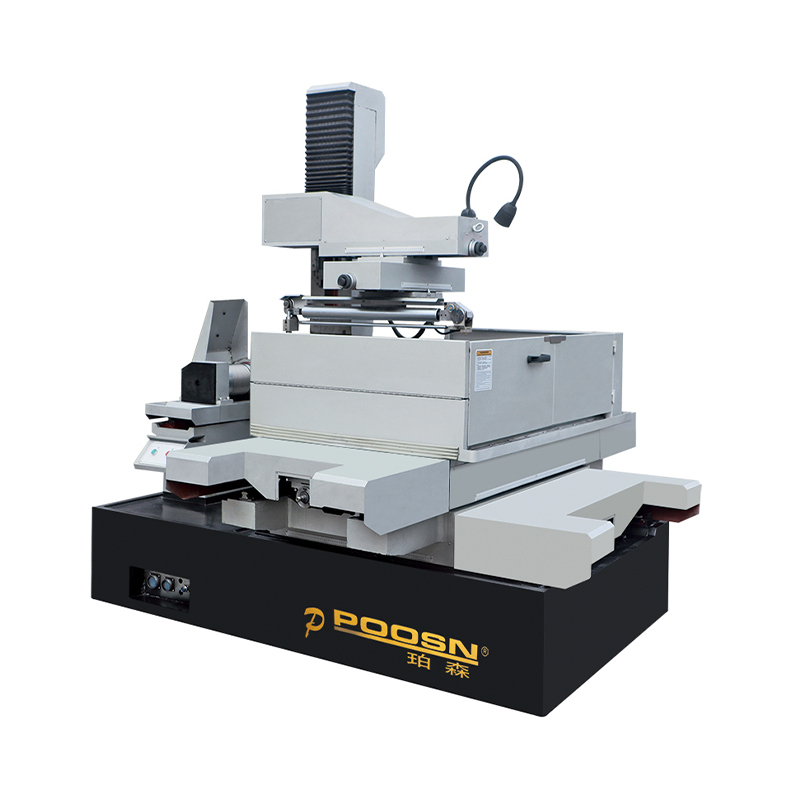
In modern precision manufacturing, the ability to cut thick, heavy, and complex conductive materials with reliable dimensional accuracy is a decisive competitive advantage. The DK60BC CNC medium-speed wire EDM machine is engineered for exactly this class of demanding work. As the largest model in the DK-BC high-medium-speed WEDM series, it combines an oversized worktable, heavy-load structural design, stable wire feeding, intelligent CNC control, and a practical configuration philosophy suited to mold manufacturing, aerospace components, heavy machinery parts, and other high-value industrial applications.
The DK60BC is designed for workpieces that exceed the practical capacity of many conventional wire-cut EDM machines. With a 600×800 mm X/Y travel, 840×1160 mm worktable, 800 mm maximum cutting thickness, and 800 kg maximum worktable load, it is positioned for large molds, thick plates, heavy components, and oversized precision parts. Its purpose is not only to cut large workpieces, but to do so with repeatability, stability, and process control that support real production environments.
Unlike ordinary high-speed WEDM equipment that is commonly used for rough cutting and blanking, the DK60BC is built around medium-speed wire EDM performance. It supports higher cutting quality through stable machine mechanics, controlled wire travel, optimized discharge parameters, and multi-pass machining strategies. Compared with many imported slow-wire systems, it offers a more economical ownership model while still delivering practical precision and surface quality for a wide range of industrial parts. This balance between capacity, precision, efficiency, and cost is the central value of the DK60BC.
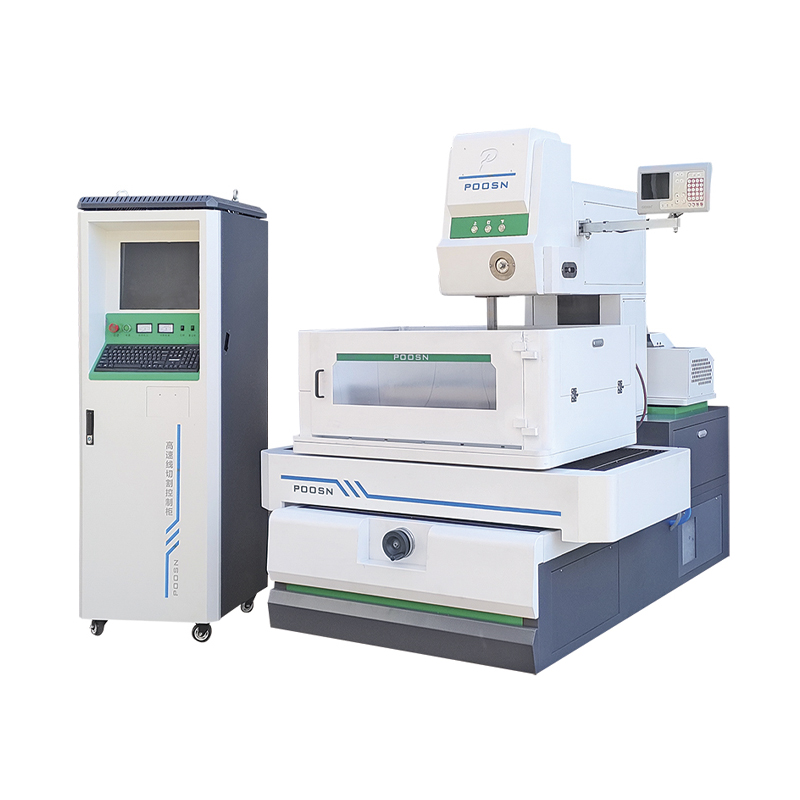
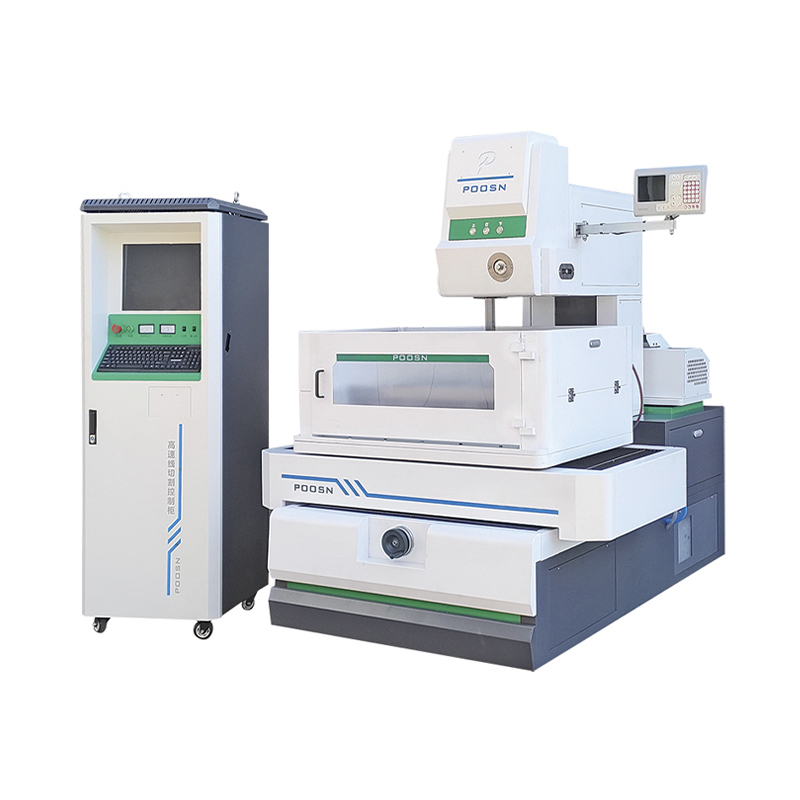
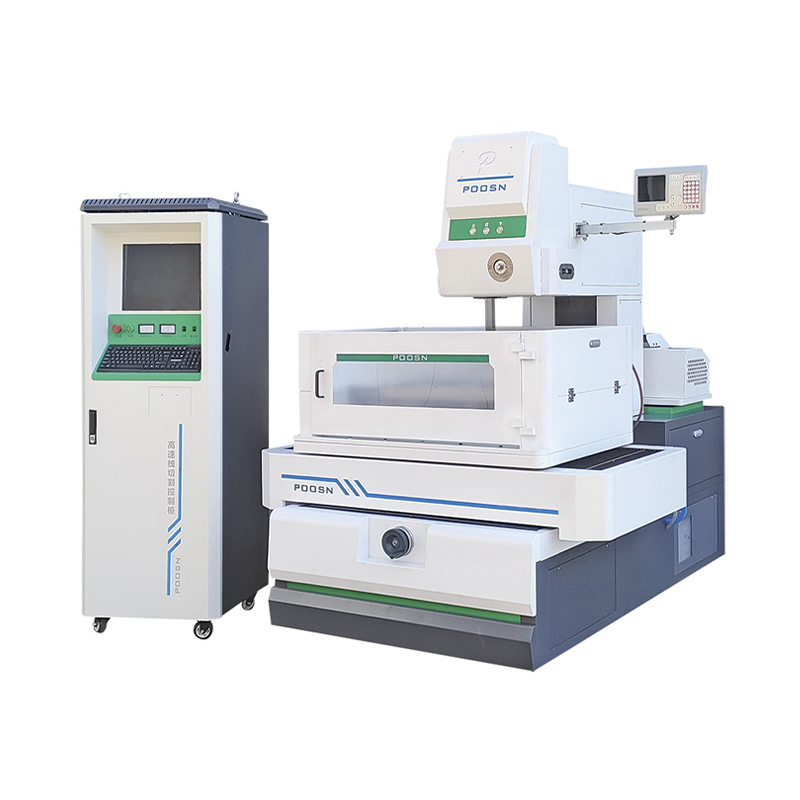
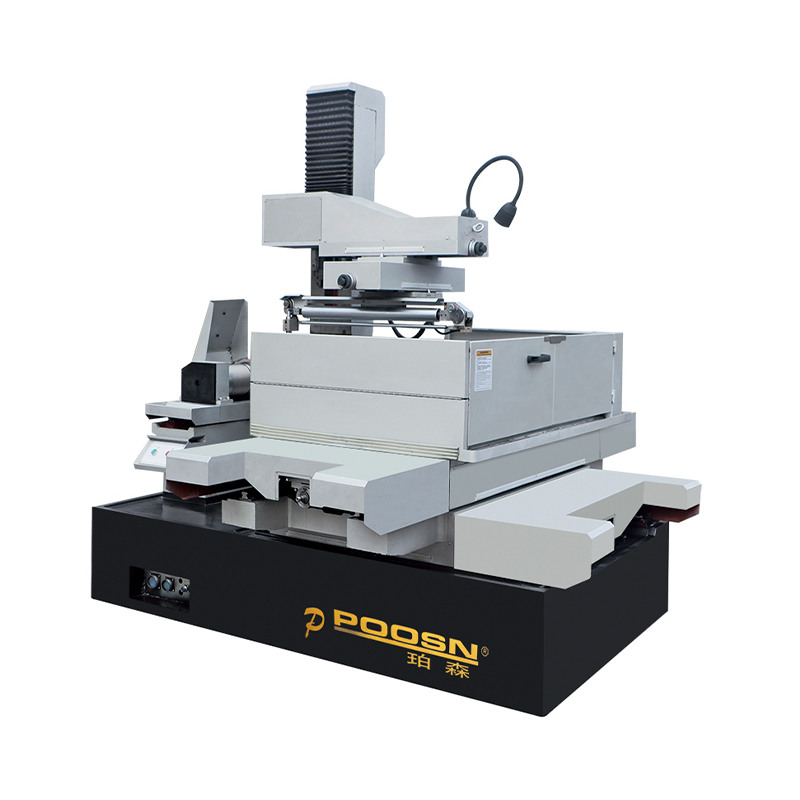
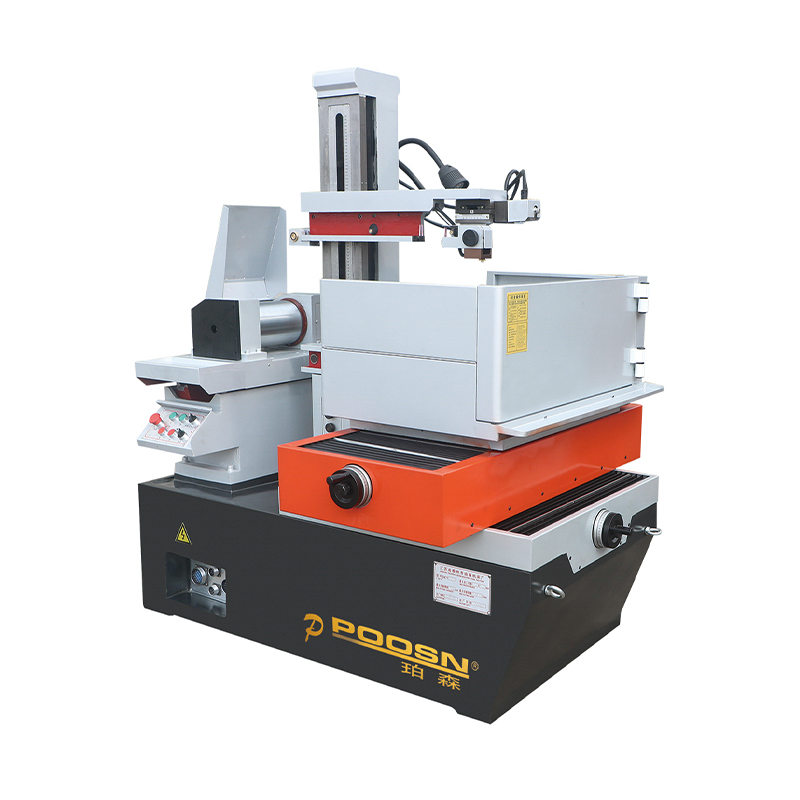
DK60BC CNC Medium-Speed Wire EDM Machine (800kg Load, 800mm Thickness)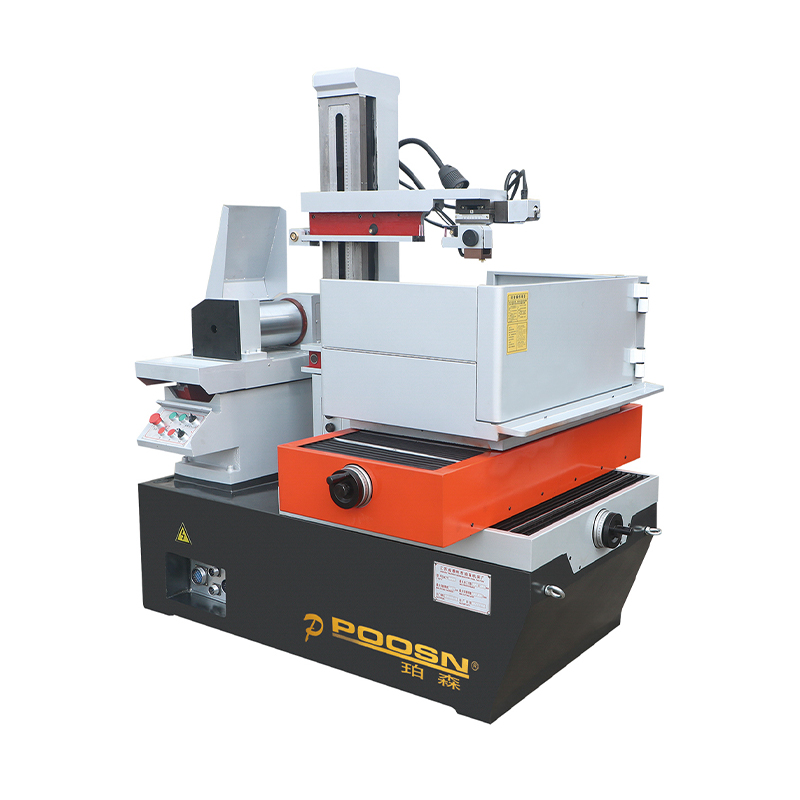
Content
- 1 1. Product Positioning: A Large-Format Medium-Speed Wire EDM Machine for Heavy-Duty Precision
- 2 2. Core Technical Advantages of the DK60BC
- 3 3. Main Technical Specifications
- 4 4. How the DK60BC Competes Against Conventional High-Speed WEDM
- 5 5. How the DK60BC Competes Against Imported Slow-Wire Systems
- 6 6. Mechanical Structure and Manufacturing Quality
- 7 7. CNC Motion Control and Four-Axis Linkage
- 8 8. Wire Feeding, Discharge Stability, and Surface Quality
- 9 9. Application Areas
- 10 10. Material Compatibility
- 11 11. Manufacturing Strengths Behind the Machine
- 12 12. Quality Control and Factory Testing
- 13 13. Configuration and Optional Upgrades
- 14 14. Operating Environment and Maintenance Considerations
- 15 15. Model Selection Guidance
- 16 16. Business Value and Return on Investment
- 17 17. Q&A Section
- 17.1 Q1: What production needs is the DK60BC best suited for?
- 17.2 Q2: How does the DK60BC differ from smaller DK-BC models?
- 17.3 Q3: Is the DK60BC suitable for high-precision mold processing?
- 17.4 Q4: What is the maximum cutting thickness of the DK60BC?
- 17.5 Q5: What materials can the DK60BC cut?
- 17.6 Q6: What control system does the machine use?
- 17.7 Q7: Can the DK60BC cut tapers?
- 17.8 Q8: What are the advantages over ordinary high-speed wire EDM machines?
- 17.9 Q9: Why choose the DK60BC instead of an imported slow-wire EDM machine?
- 17.10 Q10: What optional configurations are available?
- 17.11 Q11: What power supply does the DK60BC require?
- 17.12 Q12: What support does the manufacturer provide?
- 18 18. Conclusion
- 19 References
- 20 Product: DK60BC CNC Medium-Speed Wire EDM Machine (800kg Load, 800mm Thickness)
1. Product Positioning: A Large-Format Medium-Speed Wire EDM Machine for Heavy-Duty Precision
The DK60BC belongs to the DK-BC high-medium-speed WEDM category and is intended for users who require greater cutting capacity than smaller models can provide. In the same series, smaller models such as DK35BC, DK45BC, and DK50BC are suitable for small-to-medium molds, mechanical parts, and general precision components. The DK60BC extends this platform to oversized workpieces by increasing the travel, tank size, machine structure, load capacity, and cutting thickness capability.
The machine is especially valuable when a manufacturer needs to process large conductive materials without transferring the workpiece between multiple setups. In EDM, setup stability is critical because each additional clamping and alignment operation can introduce cumulative error. By allowing larger and heavier components to be cut in one machine envelope, the DK60BC helps reduce handling time, improve workflow continuity, and maintain geometric consistency.
The DK60BC’s maximum cutting thickness of 800 mm makes it suitable for thick molds, large die blocks, heavy machine components, and deep-profile parts. Thick workpiece cutting is one of the most challenging tasks in wire EDM because debris evacuation, wire lag, flushing stability, discharge consistency, and verticality become increasingly difficult as material height increases. The DK60BC addresses this through reinforced structure, controlled wire motion, optional high-pressure water tank configuration, and optimized CNC parameter control.
Its 800 kg workload capacity also distinguishes it from many smaller machines. Heavy-load cutting requires more than a larger table; the entire machine must resist deformation under load. The cast structure, guide system, transmission design, and aging process all contribute to the machine’s ability to maintain working accuracy under prolonged industrial use.
2. Core Technical Advantages of the DK60BC
The value of a wire EDM machine is determined by the interaction of mechanical rigidity, discharge control, wire path stability, CNC intelligence, and operator usability. The DK60BC is designed as a complete machining platform rather than a simple cutting frame. Each subsystem supports the others to produce stable results across different workpiece sizes, materials, and thicknesses.
2.1 Large Work Envelope and Heavy-Load Capacity
The DK60BC provides a worktable size of 840×1160 mm and an X/Y travel size of 600×800 mm. These specifications allow it to handle large workpieces used in mold bases, aerospace tooling, heavy industrial fixtures, large dies, and structural metal parts. The processing slot size of 860×1200 mm further supports oversized workpiece positioning and flushing requirements.
The 800 kg maximum worktable load makes the DK60BC suitable for heavy-duty machining. This is important for industries where high-density tool steels, thick stainless plates, carbide assemblies, and heavy die components are routinely processed. When a machine lacks sufficient load capacity, users may face table deformation, guide wear, unstable positioning, and reduced long-term accuracy. The DK60BC is built to avoid these problems by using a stronger mechanical structure and stable worktable support.
2.2 800 mm Maximum Cutting Thickness
Thick workpiece cutting is one of the DK60BC’s defining strengths. With a maximum cutting thickness of 800 mm, the machine can process deep sections that smaller wire EDM equipment cannot handle efficiently. This makes it useful for large mold manufacturing, heavy machinery, aerospace tooling, and large precision components requiring deep cuts and accurate contours.
In thick cutting, the wire must remain stable throughout the height of the workpiece. The discharge gap must remain clean, debris must be flushed away, and the CNC system must maintain a consistent feed strategy. The DK60BC’s wire feed system, CNC control, and machine structure are intended to support these requirements. For workpieces above 400 mm thickness, process planning becomes especially important, and the DK60BC’s reinforced platform gives users a practical foundation for achieving reliable results.
2.3 High-Medium-Speed EDM Efficiency
The DK60BC offers maximum cutting efficiency in the range of 10,000 to 16,000 mm²/h, depending on the selected control cabinet, material, thickness, cutting strategy, and operating conditions. This efficiency supports production environments where large parts must be cut without excessive machine occupation time.
Compared with conventional high-speed wire cutting, medium-speed WEDM can offer improved surface finish and dimensional stability by supporting controlled cutting passes and improved discharge management. Compared with imported slow-wire systems, the DK60BC offers a more economical operating model, especially when users require high-capacity cutting but do not need the full cost structure of premium imported equipment.
2.4 Stable Wire Feed System
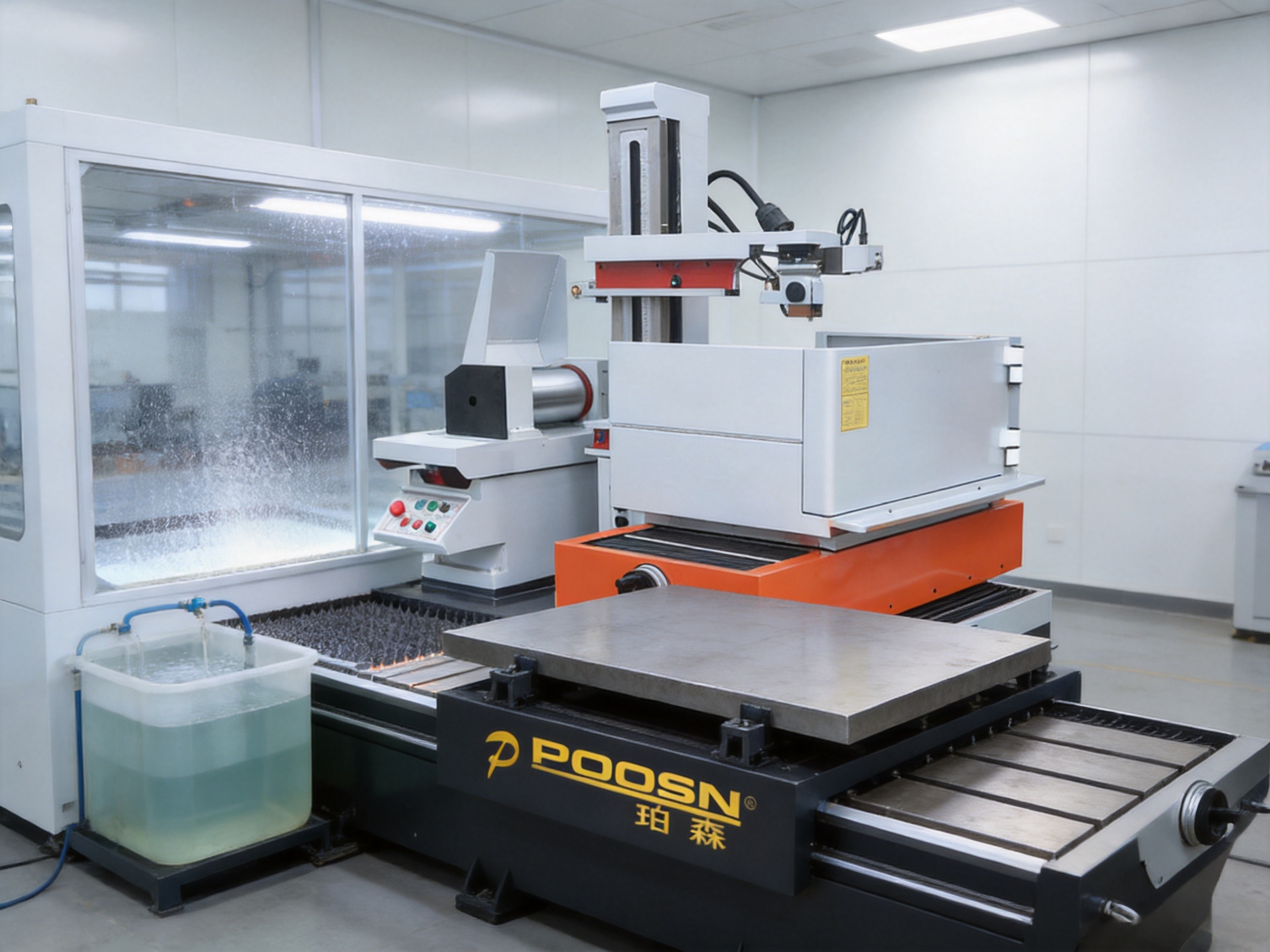
The DK60BC uses a wire feed system designed for frequency-controlled speed adjustment from 1 to 11 m/s. The electrode wire diameter is φ0.18 mm with a guide device, and the maximum wire storage length is approximately 350 m. The wire drum maximum travel is 180 mm. These specifications support stable wire reciprocation and practical consumable economy.
Wire stability is essential in WEDM. Any vibration, tension variation, or path deviation can affect kerf width, surface quality, taper consistency, and corner accuracy. The DK60BC’s optimized wire feeding process helps maintain consistent cutting precision over long machining cycles, especially when processing thick or oversized workpieces where cut duration may be long.
2.5 CNC Control and Intelligent Parameter Management
The DK60BC is equipped with the X8/AUTOCUT programming control system. This system supports CNC cutting path management, multi-axis linkage, parameter optimization, and real-time monitoring of the cutting process. The standard control cabinet model is ZHZK-03, with ZHZ-09G available as an optional configuration.
For many manufacturers, user-friendly CNC software is as important as mechanical precision. Operators need to import graphics, define machining paths, adjust discharge settings, compensate for taper, and monitor machining progress without unnecessary complexity. The DK60BC’s control system is designed to reduce manual intervention and support stable production by applying suitable parameters for different cutting conditions.
3. Main Technical Specifications
The following table summarizes key DK60BC parameters and also compares it with other DK-BC series models for users who need to choose the most suitable machine size.
| Parameter | DK35BC | DK45BC | DK50BC | DK60BC |
| Worktable Size | 500×750 mm | 650×926 mm | 740×1060 mm | 840×1160 mm |
| X/Y Travel Size | 350×450 mm | 450×600 mm | 500×700 mm | 600×800 mm |
| Processing Slot Size | 510×790 mm | 650×970 mm | 740×1100 mm | 860×1200 mm |
| Maximum Cutting Thickness | 450 mm | 450 mm | 650 mm | 800 mm |
| Maximum Worktable Load | 300 kg | 400 kg | 600 kg | 800 kg |
| Machine Weight | 1200 kg | 1400 kg | 2000 kg | 2500 kg |
| Machine Dimensions | 1650×1345×1830 mm | 1915×1655×1830 mm | 2200×1865×2000 mm | 2400×2065×2200 mm |
Additional shared specifications of the DK-BC series include a U/V travel size of 60×60 mm, maximum cutting taper of ±6°/80 mm, wire speed of 1–11 m/s frequency control, maximum wire storage length of approximately 350 m, processing accuracy according to GB/T7926-2015, optimal surface roughness of Ra≤2.5 μm, maximum processing current of 6A, electrical capacity of 2.5 KVA, and power supply requirement of 3N 380V±10%.
4. How the DK60BC Competes Against Conventional High-Speed WEDM
Many workshops begin with high-speed wire EDM machines because they are economical and productive for general cutting. However, traditional high-speed WEDM machines often prioritize speed and initial investment cost over surface quality, multi-pass capability, and advanced cutting control. For rough blanking and simple profiles, they remain useful. For high-precision molds, thick components, and large parts requiring better surface integrity, a medium-speed machine such as the DK60BC offers significant advantages.
First, the DK60BC provides better process stability for demanding cuts. High-speed machines commonly perform a single cutting pass, leaving relatively rough surfaces and requiring additional finishing in some applications. Medium-speed WEDM supports more refined process control and can improve dimensional consistency by using optimized cutting strategies.
Second, the DK60BC is designed with linear guide support and a stronger structural platform. This improves motion stability, especially during long contour cutting, thick workpiece machining, and complex shapes. When cutting large molds or heavy parts, mechanical stiffness is not optional; it directly influences final accuracy.
Third, the DK60BC provides a larger effective cutting range and higher load capacity than common high-speed machines. The 800 kg load capacity and 800 mm thickness capability place it in a heavy-duty category. Workshops that outgrow smaller equipment can use the DK60BC to process larger jobs without sacrificing workflow efficiency.
Fourth, the intelligent control system reduces operator dependence. Conventional high-speed equipment often requires experienced operators to tune parameters manually. The X8/AUTOCUT system helps operators manage cutting conditions more efficiently, reducing errors and improving repeatability.
5. How the DK60BC Competes Against Imported Slow-Wire Systems
Imported slow-wire EDM machines are known for extremely high accuracy, fine surface quality, and advanced automation. However, they also involve high purchase cost, higher consumable expenses, specialized maintenance, and stricter environmental requirements. The DK60BC does not attempt to replace every ultra-high-end slow-wire application. Instead, it provides a practical alternative for manufacturers who need large-format, high-efficiency, and cost-effective EDM cutting with reliable precision.
The first advantage is cost performance. The DK60BC uses a reciprocating wire system with economical molybdenum wire and practical consumable costs. This makes it attractive for workshops that process large volumes of conductive material and need to control running costs. In many general mold, tool, mechanical, and industrial applications, the DK60BC can produce satisfactory results at a much lower operating cost than imported slow-wire machines.
The second advantage is heavy-duty adaptability. Large imported slow-wire machines can be expensive and may require specialized installation conditions. The DK60BC offers a rugged large-format platform suitable for general workshop environments, while still delivering stable EDM cutting for large workpieces.
The third advantage is service practicality. Taizhou Xinchengyang Machinery Manufacturing Co., Ltd. provides technical support, spare parts response, and application guidance for its equipment. The company’s manufacturing and service model is oriented toward practical production users who need stable machines, accessible maintenance, and responsive assistance.
The fourth advantage is configuration flexibility. Users can select standard or optional control cabinet configurations, high-pressure water tank options, linear scale options, and different drive choices according to their production needs. This allows the DK60BC to be tailored to a user’s investment level and machining requirements.
6. Mechanical Structure and Manufacturing Quality
The performance of a WEDM machine begins with its mechanical foundation. Electrical discharge machining is a non-contact process in terms of cutting force, but this does not mean mechanical structure is unimportant. The machine must resist vibration, thermal drift, load deformation, and long-term wear. The DK60BC uses a high-rigidity body structure intended to maintain precision over prolonged operation.
Taizhou Xinchengyang Machinery Manufacturing Co., Ltd. has years of experience in electrical discharge machining equipment and special processing technologies. Its manufacturing approach emphasizes national standards, positioning accuracy testing, rational product design, and stable mechanical assembly. The company’s background in wire cutting since 1999, the development of its manufacturing facilities, and its recognition as a high-tech enterprise support its ability to produce reliable EDM equipment.
The DK60BC benefits from casting aging and structural stabilization processes. Proper casting treatment helps reduce internal stress, improving long-term dimensional stability. In machine tool manufacturing, residual stress can cause gradual deformation after assembly, especially in large machines. By emphasizing stable castings and strict manufacturing processes, the company improves the machine’s ability to maintain geometry during years of service.
Precision components such as guide rails, screws, wire guide assemblies, and transmission parts must be carefully assembled and inspected. The DK60BC uses high-precision linear rail support as a standard configuration. Linear guides reduce motion resistance and improve straightness compared with less advanced sliding systems. This supports better trajectory following during contour machining.
The machine also features an eco-friendly waterproof cover as a standard configuration. During wire EDM, dielectric fluid management is important for both machining stability and workshop cleanliness. A suitable cover reduces splashing, improves operator safety, and contributes to a cleaner production environment.
7. CNC Motion Control and Four-Axis Linkage
The DK60BC supports X, Y, U, and V four-axis linkage. The X/Y axes control the worktable movement, while the U/V axes control taper cutting through the taper device. This allows the machine to cut angled profiles and components with different upper and lower contours. The standard maximum cutting taper is ±6°/80 mm.
Four-axis linkage expands the machine’s application range beyond simple vertical profiles. It enables taper holes, die relief profiles, draft angles, extrusion die features, and complex mold geometries. For industries such as mold manufacturing and aerospace tooling, taper capability can reduce secondary processing and improve part functionality.
The CNC worktable uses standard X/Y stepper drives, with optional X/Y AC servo drives available. The CNC taper device uses U/V three-phase stepper drives, and the Z-axis lift is powered by an AC 220V electric motor. This configuration provides a balance between cost, reliability, and control precision. Users with higher control requirements may select optional upgrades based on machining needs.
Motion control is especially important when cutting oversized workpieces. Long contours require consistent interpolation, stable feed, and accurate transition control at corners and curves. The DK60BC’s control platform monitors the cutting process and adjusts machining conditions to help maintain stability.
8. Wire Feeding, Discharge Stability, and Surface Quality
The wire feeding system is one of the most important subsystems in a medium-speed WEDM machine. The DK60BC uses a frequency-controlled wire feed speed range of 1–11 m/s, allowing process adjustment according to material, thickness, surface requirement, and cutting strategy. A stable wire path helps reduce surface stripes, kerf variation, and corner deviation.
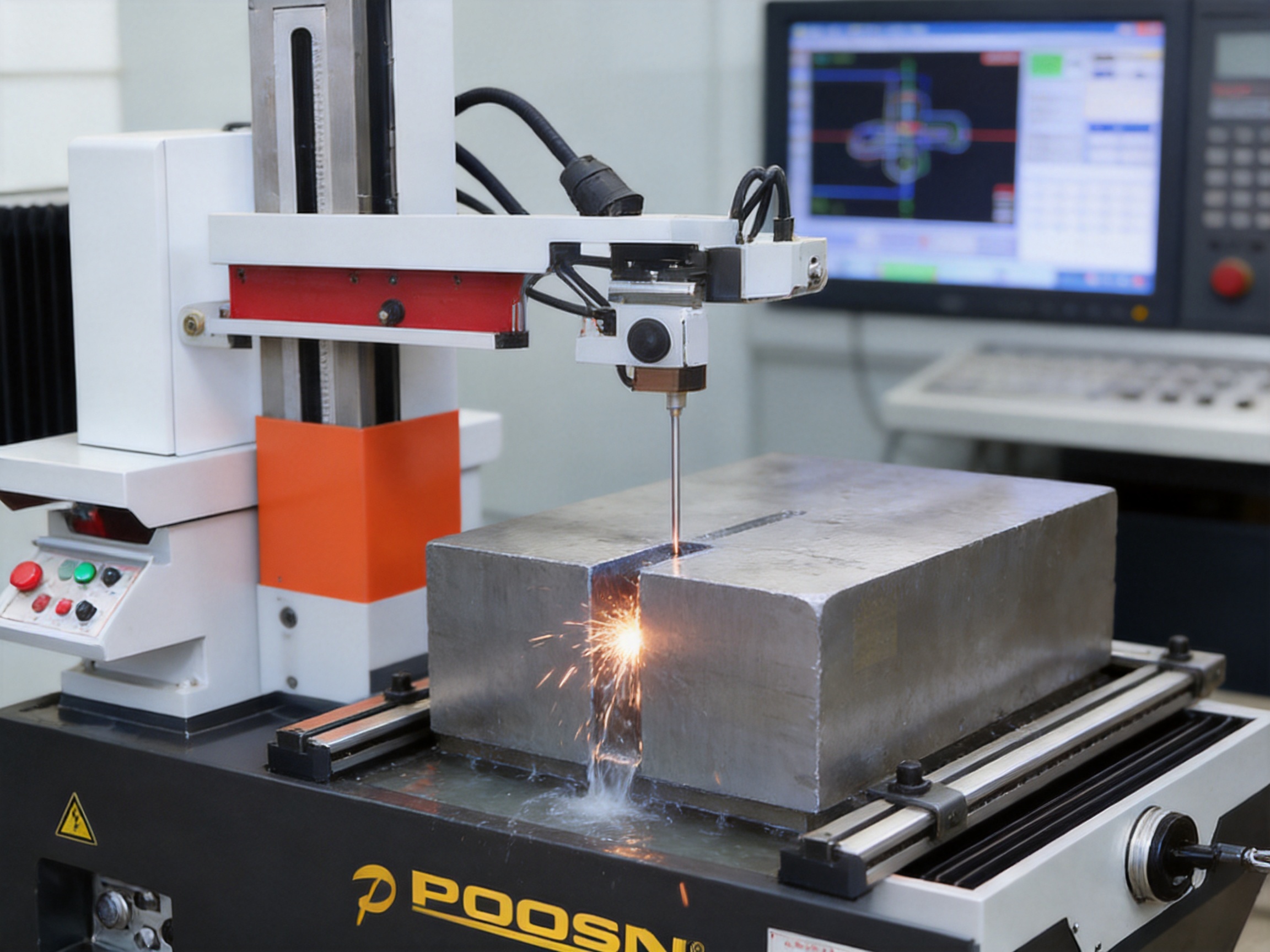
In wire EDM, the electrode wire does not physically cut the material. Instead, controlled electrical discharges remove material by localized melting and vaporization. This means that discharge gap stability directly determines cutting quality. If debris accumulates in the gap, sparks become unstable. If the wire vibrates, the gap fluctuates. If flushing is insufficient, thick cutting becomes inefficient and inaccurate.
The DK60BC’s wire feed structure, wire guide design, and optional high-pressure water tank help address these issues. The machine is especially suited to thick workpieces because stable flushing and wire alignment are necessary over the full cutting height. A more controlled wire path improves verticality and helps maintain consistent kerf width.
Surface roughness is specified at Ra≤2.5 μm under optimal conditions. Actual surface quality depends on material, thickness, discharge settings, flushing quality, wire condition, and the number of cutting passes. In practical manufacturing, the DK60BC provides a strong balance between cutting speed and surface finish, making it suitable for many mold and mechanical applications without excessive secondary finishing.
9. Application Areas
9.1 Large-Scale Precision Mold Manufacturing
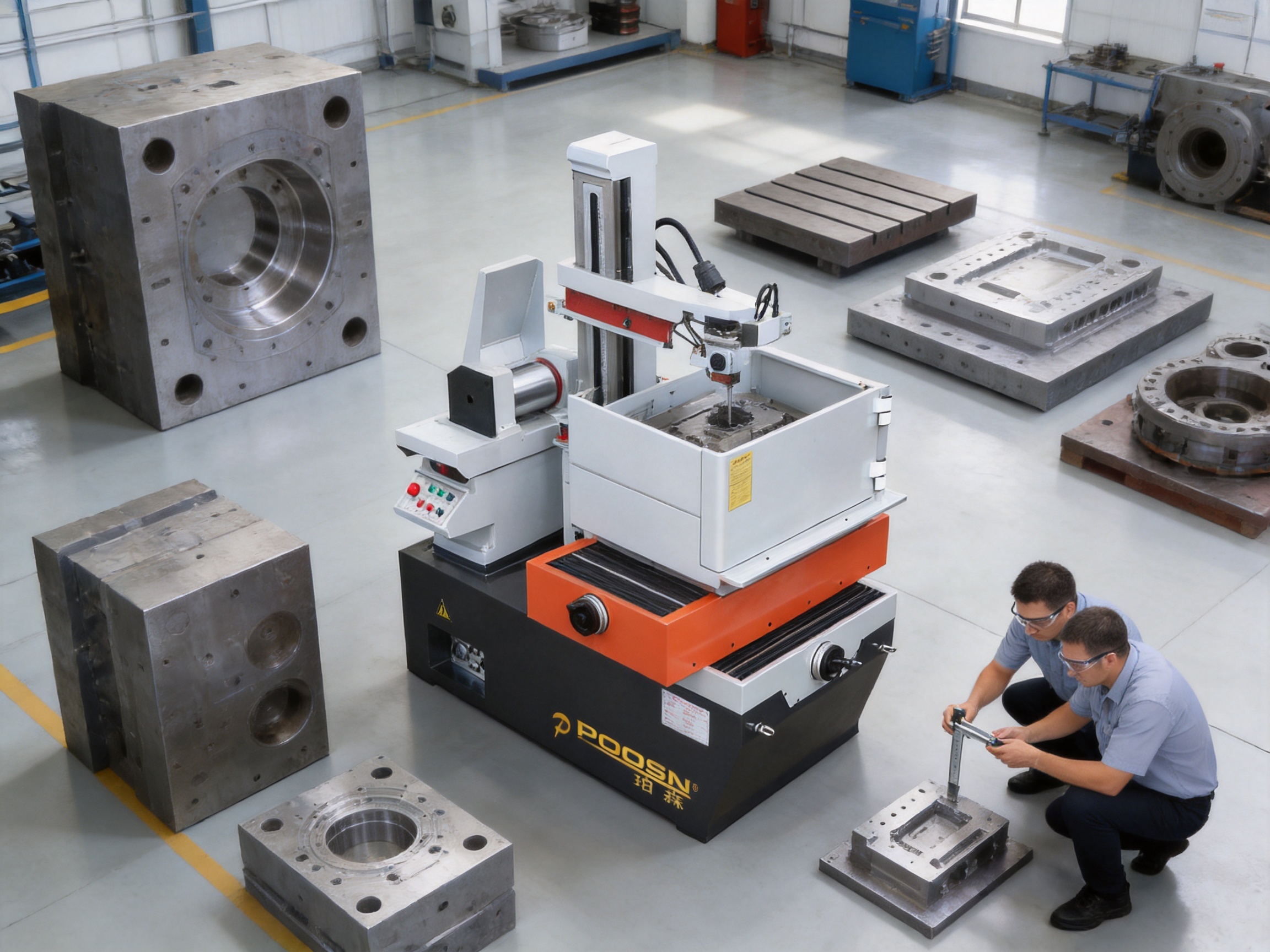
The DK60BC is well suited for large precision molds, especially metal molds requiring accurate contours, stable clearances, and deep cutting capacity. Mold manufacturing often involves hardened tool steels, complex profiles, sharp internal corners, and thick sections. Because EDM can cut conductive materials regardless of hardness, it is ideal for finished or heat-treated mold materials.
Large molds also require stable workholding and sufficient machine travel. The DK60BC’s 840×1160 mm worktable and 600×800 mm travel allow large die blocks and mold plates to be processed more conveniently. Its 800 kg load capacity supports heavy mold components without overloading the machine structure.
9.2 Aerospace Components and Tooling
Aerospace manufacturing demands high reliability, careful material handling, and accurate cutting. Materials such as titanium alloys, stainless steels, nickel-based alloys, and high-strength conductive metals can be challenging for conventional machining. Wire EDM is valuable because it cuts by electrical discharge rather than mechanical force, reducing tool wear issues associated with hard or heat-resistant alloys.
The DK60BC can be used for aerospace tooling, fixtures, thick plates, structural conductive components, and high-precision profiles. Its stable CNC control and large work envelope make it a practical solution for manufacturers handling large aerospace-related workpieces.
9.3 Heavy Machinery Parts
Heavy machinery manufacturing often involves large steel components, thick sections, and demanding part geometries. Conventional milling, drilling, or sawing may struggle with hardened materials, deep profiles, or intricate internal shapes. The DK60BC provides a non-contact cutting solution for heavy conductive parts up to 800 kg on the worktable.
Its 800 mm maximum cutting thickness allows users to process parts that are not feasible on smaller EDM machines. This supports sectors such as construction machinery, industrial equipment, mining machinery, power equipment, and large mechanical assemblies.
9.4 Tooling, Dies, and Industrial Components
Beyond large molds and heavy parts, the DK60BC can also process die plates, punch profiles, extrusion tooling, jigs, fixtures, precision slots, and special-shaped conductive components. Its taper capability supports die relief angles and complex upper-lower profile differences. Its CNC control supports repeatable part production for both one-off custom work and batch manufacturing.
10. Material Compatibility
The DK60BC can process electrically conductive materials regardless of hardness. This includes tool steels, alloy steels, stainless steels, copper alloys, aluminum alloys, titanium alloys, tungsten carbide, nickel-based alloys, and other conductive materials. The key factors influencing cutting performance are electrical conductivity, melting point, thickness, flushing condition, and discharge parameter selection.
This material flexibility is one of the major advantages of EDM technology. Hardened steel, carbide, and difficult-to-machine alloys can be cut without the tool wear problems common in mechanical machining. The wire electrode gradually wears, but the process does not rely on tool edge hardness. For manufacturers working with heat-treated materials or complex hard alloys, this provides major process flexibility.
11. Manufacturing Strengths Behind the Machine
Taizhou Xinchengyang Machinery Manufacturing Co., Ltd. is a specialized manufacturer focused on EDM equipment, special processing technologies, and related machinery. The company has developed product lines including medium-speed wire-cutting EDM machines, high-speed wire-cutting EDM machines, and large-taper wire-cutting EDM machines. This product range reflects accumulated experience across different EDM applications.
The company’s manufacturing strengths include technical capability, advanced processing equipment, comprehensive testing methods, rational product design, and strict adherence to national standards. Each machine tool undergoes positioning accuracy testing before delivery. This inspection approach is critical because EDM machine performance depends on actual assembled accuracy, not only component specifications.
The company’s long history in wire cutting equipment began in 1999, with the POOSN brand originating in 2003. Over the years, the company expanded its market presence, developed manufacturing facilities, obtained patents, and received recognition as a high-tech enterprise. These milestones indicate continuous development rather than short-term assembly-based production.
For DK60BC users, the manufacturer’s experience matters because large-format EDM machines require careful design, production, and support. A large machine is more difficult to build than a small machine because structural stability, alignment, shipping integrity, and installation quality become more demanding. The company’s manufacturing process and technical background help ensure the DK60BC is not merely enlarged in size, but properly engineered for heavy-duty operation.
12. Quality Control and Factory Testing
Quality control is essential in CNC EDM equipment. The DK60BC is manufactured according to national standards, and each machine tool is inspected for positioning accuracy. This helps ensure that the delivered machine corresponds to its designed performance requirements.
Factory testing typically includes mechanical inspection, axis motion verification, electrical system inspection, control cabinet testing, wire feeding operation, dielectric system function, and test cutting. For users, test cutting is particularly important because it confirms that the complete system works under real machining conditions.
Precision verification also supports long-term reliability. If axis motion, guide alignment, wire path, and electrical discharge behavior are checked before delivery, installation and commissioning become easier. The DK60BC is shipped fully assembled and calibrated, reducing the need for complex mechanical reassembly after arrival. Once installed, users mainly need proper leveling, power connection, dielectric preparation, and operational setup.
13. Configuration and Optional Upgrades
The DK60BC standard configuration includes high-precision linear rail support, an eco-friendly waterproof cover, X/Y stepper drives, U/V three-phase stepper drives, X8/AUTOCUT programming control, and the ZHZK-03 control cabinet. Optional configurations include a high-pressure water tank, linear scale, X/Y AC servo drives, and ZHZ-09G control cabinet.
The high-pressure water tank is especially useful for thick workpiece cutting because effective flushing helps remove debris from deep kerfs. Better flushing improves discharge stability, reduces short circuits, and supports better cutting efficiency. For users frequently cutting thick plates or tall molds, this option can be valuable.
Linear scale feedback can improve measurement and motion feedback accuracy, especially in applications requiring tighter tolerance control. AC servo drives can enhance dynamic response and positioning performance compared with standard stepper drives. The optional control cabinet can provide additional features depending on the user’s process requirements.
This modular configuration philosophy allows manufacturers to choose a machine that matches their application and budget. A workshop focused on general large-part cutting may select the standard configuration. A mold factory requiring higher accuracy and thicker cutting stability may select optional upgrades.
14. Operating Environment and Maintenance Considerations
The DK60BC is designed for industrial workshop use, but good operating conditions always improve machine performance. For high-precision machining, stable temperature, clean power supply, good ventilation, and a low-vibration foundation are recommended. Temperature fluctuation can influence machine geometry and workpiece dimensions, especially during long cuts. A stable environment is therefore beneficial when tight tolerances are required.
Routine maintenance includes checking wire condition, guide wheels, guide nozzles, dielectric fluid quality, filter condition, lubrication, electrical cabinet cleanliness, and axis movement. Because wire EDM relies on stable discharge, the dielectric system must be maintained properly. Dirty fluid, poor filtration, or low flushing pressure can reduce cutting speed and surface quality.
Consumables such as molybdenum wire, guide wheels, guide nozzles, water-based dielectric fluid, and filtration materials should be replaced according to actual usage. The DK60BC’s economical consumable model helps reduce operating cost compared with many imported EDM systems. This is an important advantage for production environments with continuous cutting demands.
Operator training is also important. Although the CNC system reduces manual parameter burden, users should understand workpiece clamping, wire threading, datum setting, dielectric management, taper programming, and process selection. With proper training, the DK60BC can deliver stable performance and reduce scrap risk.
15. Model Selection Guidance
Choosing the correct DK-BC model depends mainly on workpiece size, thickness, and weight. The DK35BC is suitable for small-to-medium workpieces, precision molds, and smaller parts. The DK45BC is appropriate for medium-sized components and mold manufacturing requiring a larger table and higher load capacity. The DK50BC is a better choice for large components, thicker workpieces, and high-precision molds requiring up to 650 mm cutting thickness. The DK60BC is designed for extra-large workpieces, heavy components, and demanding industrial production requiring up to 800 mm cutting thickness and 800 kg load capacity.
If a manufacturer frequently processes parts thicker than 400 mm, the DK50BC or DK60BC is generally more suitable because the reinforced structure and larger working capacity provide better process stability. If workpieces are consistently heavy, wide, or long, the DK60BC offers the safest margin in the series.
16. Business Value and Return on Investment
The DK60BC provides business value in several ways. First, it expands the range of work a manufacturer can accept. Shops limited by smaller wire EDM machines may reject oversized molds, thick parts, or heavy components. With the DK60BC, these jobs become feasible.
Second, it reduces outsourcing. Outsourcing large EDM work can increase lead time, cost, and quality risk. By bringing large-format wire EDM capability in-house, manufacturers gain better control over schedules and technical requirements.
Third, it improves process flexibility. Because EDM can cut hardened conductive materials, users can machine parts after heat treatment or process difficult alloys that would be inefficient with conventional cutting tools. This expands manufacturing options and may simplify process routes.
Fourth, it balances investment and performance. Imported slow-wire EDM machines can be excellent but expensive. Basic high-speed WEDM machines can be economical but may lack surface quality and stability for demanding work. The DK60BC occupies a practical middle position: large capacity, medium-speed cutting quality, strong structure, and manageable operating cost.
17. Q&A Section
Q1: What production needs is the DK60BC best suited for?
The DK60BC is best suited for precision cutting of oversized workpieces, thick conductive materials, large molds, heavy machinery components, aerospace tooling, and high-load industrial parts. It is the largest model in the DK-BC series and is designed for applications requiring 600×800 mm X/Y travel, 800 mm cutting thickness, and 800 kg load capacity.
Q2: How does the DK60BC differ from smaller DK-BC models?
The DK60BC provides the largest worktable, largest travel, highest cutting thickness, and highest worktable load in the DK-BC series. Compared with the DK35BC, DK45BC, and DK50BC, it is more suitable for extra-large and heavy components. Smaller models are more economical for small and medium workpieces, while the DK60BC is selected when capacity and structural strength are the priority.
Q3: Is the DK60BC suitable for high-precision mold processing?
Yes. The DK60BC is suitable for large high-precision mold processing, especially when the workpiece is too large or too thick for smaller machines. It uses high-precision linear rail support, CNC four-axis linkage, stable wire feeding, and process control to support accurate contour cutting. For applications requiring enhanced feedback, optional linear scales can be selected.
Q4: What is the maximum cutting thickness of the DK60BC?
The maximum cutting thickness is 800 mm. This makes the DK60BC suitable for thick plates, large die blocks, heavy mold components, and deep-profile industrial parts. For thick workpieces, proper flushing, suitable wire condition, and correct machining parameters are important for stable results.
Q5: What materials can the DK60BC cut?
The DK60BC can cut electrically conductive materials, including tool steels, stainless steels, alloy steels, copper alloys, aluminum alloys, titanium alloys, tungsten carbide, nickel-based alloys, and other conductive metals. Material hardness does not prevent EDM cutting, although conductivity, melting point, thickness, and flushing conditions influence cutting performance.
Q6: What control system does the machine use?
The DK60BC uses the X8/AUTOCUT programming control system. The standard control cabinet is ZHZK-03, and ZHZ-09G is available as an optional configuration. The system supports CNC programming, cutting process monitoring, parameter adjustment, and four-axis linkage operation.
Q7: Can the DK60BC cut tapers?
Yes. The DK60BC includes a CNC taper device with U/V travel of 60×60 mm and supports a maximum cutting taper of ±6°/80 mm. This allows it to process taper holes, die relief features, angled profiles, and components with different upper and lower contours.
Q8: What are the advantages over ordinary high-speed wire EDM machines?
The DK60BC provides stronger structure, larger capacity, better process control, stable wire feeding, medium-speed cutting performance, and improved suitability for precision mold and thick workpiece machining. Ordinary high-speed wire EDM machines are often better for rough cutting, while the DK60BC is designed for higher-quality cutting and heavier-duty applications.
Q9: Why choose the DK60BC instead of an imported slow-wire EDM machine?
The DK60BC offers a strong balance of cutting capacity, precision, efficiency, and cost. Imported slow-wire systems may provide ultra-high-end finishing capability, but they usually involve higher purchase cost, higher consumable cost, and stricter environmental requirements. The DK60BC is a practical choice for manufacturers needing large-format EDM cutting with economical operation and reliable industrial performance.
Q10: What optional configurations are available?
Optional configurations include a high-pressure water tank, linear scale, X/Y AC servo drives, and ZHZ-09G control cabinet. These options help users improve flushing performance, feedback accuracy, dynamic response, or control functionality depending on application requirements.
Q11: What power supply does the DK60BC require?
The machine requires 3N 380V±10% power supply, with an electrical capacity of 2.5 KVA and maximum processing current of 6A. Proper electrical installation and stable power supply are recommended for reliable operation.
Q12: What support does the manufacturer provide?
Taizhou Xinchengyang Machinery Manufacturing Co., Ltd. provides professional technical support, spare parts response, and operation guidance to help ensure equipment stability. The company emphasizes quality-first manufacturing, customer service, and long-term reliability of delivered machines.
18. Conclusion
The DK60BC CNC medium-speed wire EDM machine is a heavy-duty precision cutting solution for manufacturers that need to process large, thick, and heavy conductive workpieces. Its 840×1160 mm worktable, 600×800 mm travel, 800 mm maximum cutting thickness, and 800 kg load capacity make it the strongest model in the DK-BC series. It is particularly suitable for large precision molds, aerospace-related components, heavy machinery parts, tooling, dies, and other demanding industrial applications.
Its advantages are not limited to size. The machine combines a stable mechanical structure, high-precision linear rail support, four-axis linkage, CNC taper capability, optimized wire feeding, X8/AUTOCUT control, practical optional upgrades, and economical operation. Compared with ordinary high-speed WEDM, it offers better suitability for precision and thick cutting. Compared with imported slow-wire systems, it provides a more accessible and cost-effective solution for many production users.
Behind the machine is the manufacturing strength of Taizhou Xinchengyang Machinery Manufacturing Co., Ltd., a specialized EDM equipment manufacturer with long-term experience, national-standard production, positioning accuracy testing, and a broad product portfolio. The company’s focus on quality, service, and process improvement supports the DK60BC as a reliable choice for manufacturers seeking capacity expansion, improved production flexibility, and stable EDM performance.
For companies facing larger molds, thicker materials, heavier components, or growing precision cutting requirements, the DK60BC offers a practical route to higher capability. It is a machine designed not only to cut larger parts, but to help manufacturers compete in industries where accuracy, efficiency, and reliability determine long-term success.
References
1. GB/T7926-2015, Accuracy Inspection Standards for Electrical Discharge Wire Cutting Machines.
2. Ho, K. H., and Newman, S. T. “State of the Art Electrical Discharge Machining.” International Journal of Machine Tools and Manufacture.
3. Kunieda, M., Lauwers, B., Rajurkar, K. P., and Schumacher, B. M. “Advancing EDM Through Fundamental Insight into the Process.” CIRP Annals.
4. Jameson, E. C. Electrical Discharge Machining. Society of Manufacturing Engineers.
5. Manufacturing process and product specification materials for the DK-BC high-medium-speed WEDM series.
Product: DK60BC CNC Medium-Speed Wire EDM Machine (800kg Load, 800mm Thickness)
-
Phone
+86-0523-86268788 +86-13815960366 +86-13912191163Email
[email protected]Address
No. 366, Yusheng Road Jiulong Town, Hailing District Taizhou City, China
Copyright © Taizhou Xinchengyang Machinery Manufacturing Co., Ltd. All Rights Reserved.
Custom edm machine for sale
wholesale edm machine manufacturers
