

 English
 русский
 عربى


Shen Yiru — After-Sales Service Engineer
Home / Author / Shen Yiru — After-Sales Service Engineer / DK45BC CNC Medium-Speed Wire EDM Machine: Precision, Capacity, and Production Efficiency
DK45BC CNC Medium-Speed Wire EDM Machine: Precision, Capacity, and Production Efficiency
2026-10-24
In modern mold manufacturing, precision tooling, automotive components, aerospace parts, and general mechanical production, wire electrical discharge machining has become an essential technology for processing electrically conductive materials. It enables manufacturers to produce intricate profiles, narrow slots, sharp internal corners, complex contours, and highly accurate components that may be difficult or impossible to manufacture using conventional cutting tools.
The DK45BC CNC Medium-Speed Wire EDM Machine is designed for manufacturers that require more capacity than a compact wire-cut EDM machine while still demanding stable accuracy, reliable operation, controlled operating costs, and flexible cutting performance. With a maximum worktable load of 400 kg, a maximum cutting thickness of 450 mm, an X-axis travel of 450 mm, and a Y-axis travel of 600 mm, the machine is positioned for medium-sized and relatively heavy workpieces.
Its configuration combines a rigid machine structure, precision linear guide support, four-axis linkage, adjustable wire-feed speed, multi-pass cutting capability, an X8/AUTOCUT programming system, and optional servo or linear-scale upgrades. These characteristics allow the DK45BC to serve both productivity-oriented cutting operations and applications that require improved surface quality and repeatable dimensional accuracy.
The machine is manufactured by Taizhou Xinchengyang Machinery Manufacturing Co., Ltd., a specialist wire-cut EDM producer with roots in the industry dating back to 1999. The company develops and manufactures medium-speed, high-speed, and large-taper wire-cut EDM equipment, combining product engineering, production testing, process support, and after-sales service in a single supply chain.
This article examines the DK45BC in detail, including its mechanical design, control system, cutting performance, application range, manufacturing advantages, customization options, maintenance requirements, and comparison with alternative machine classes.
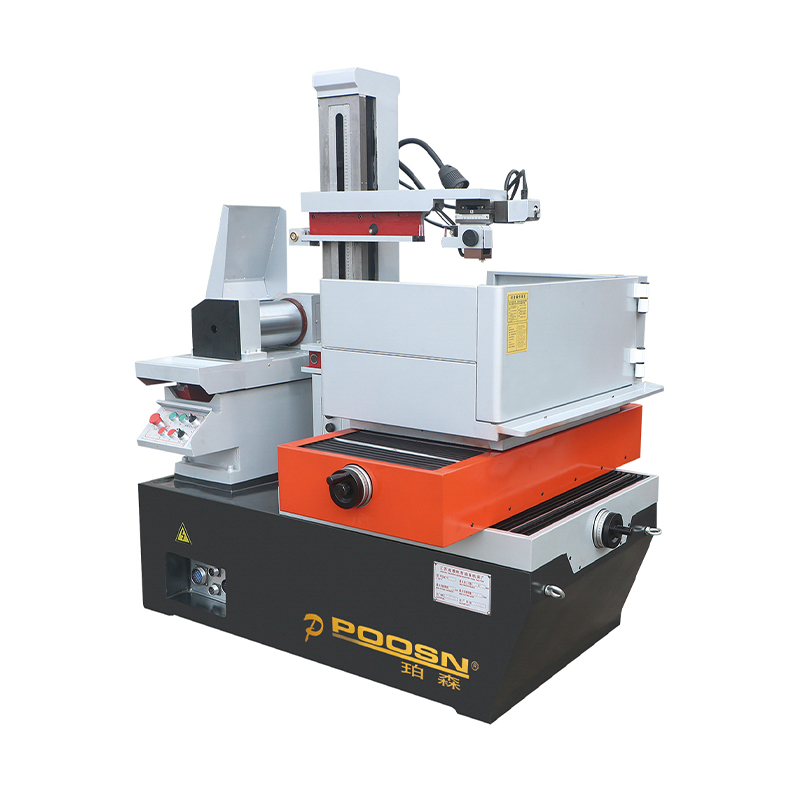
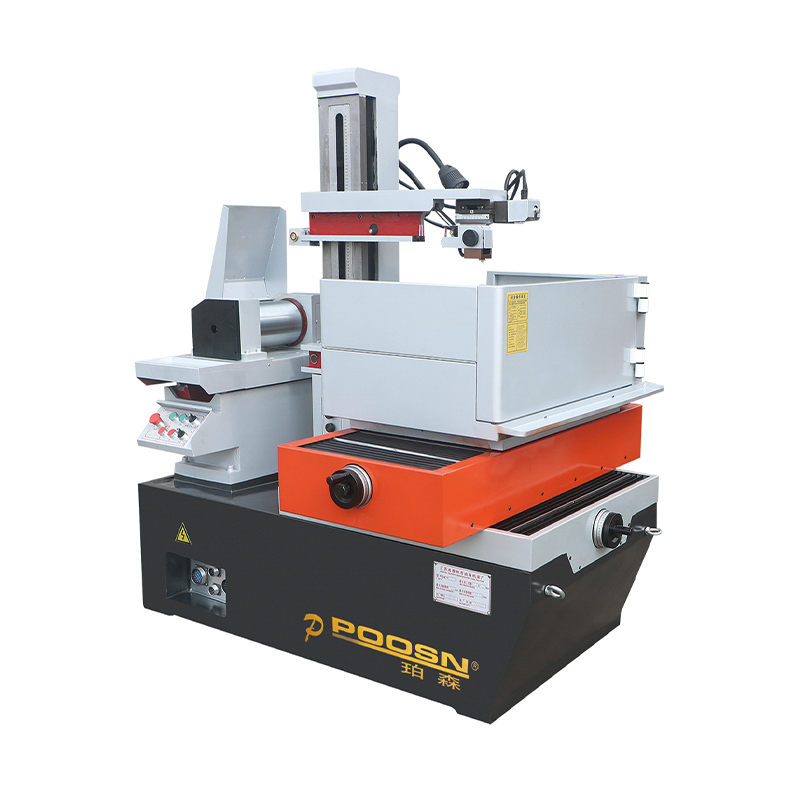
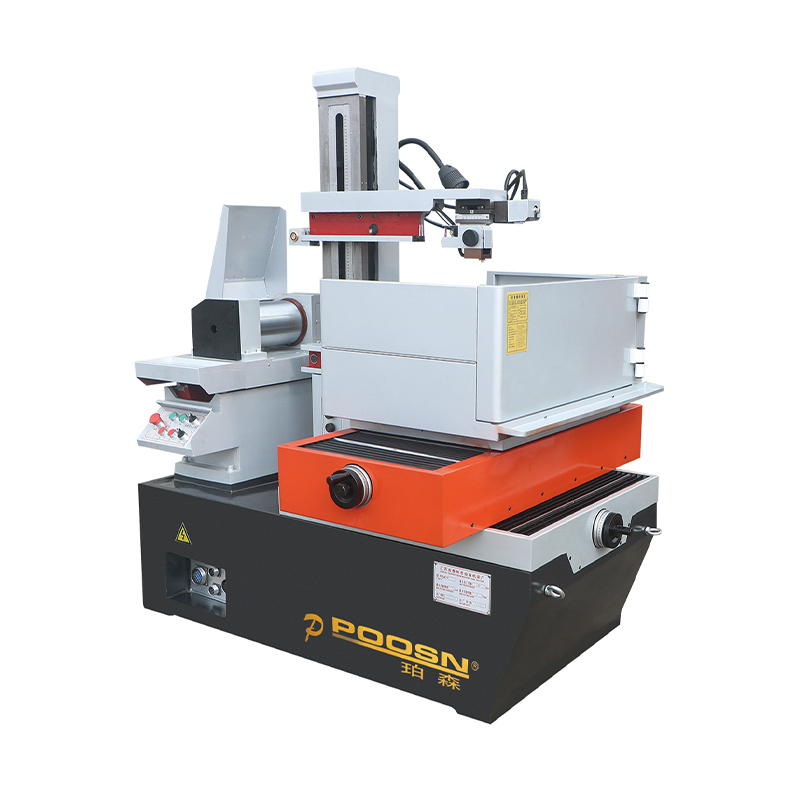
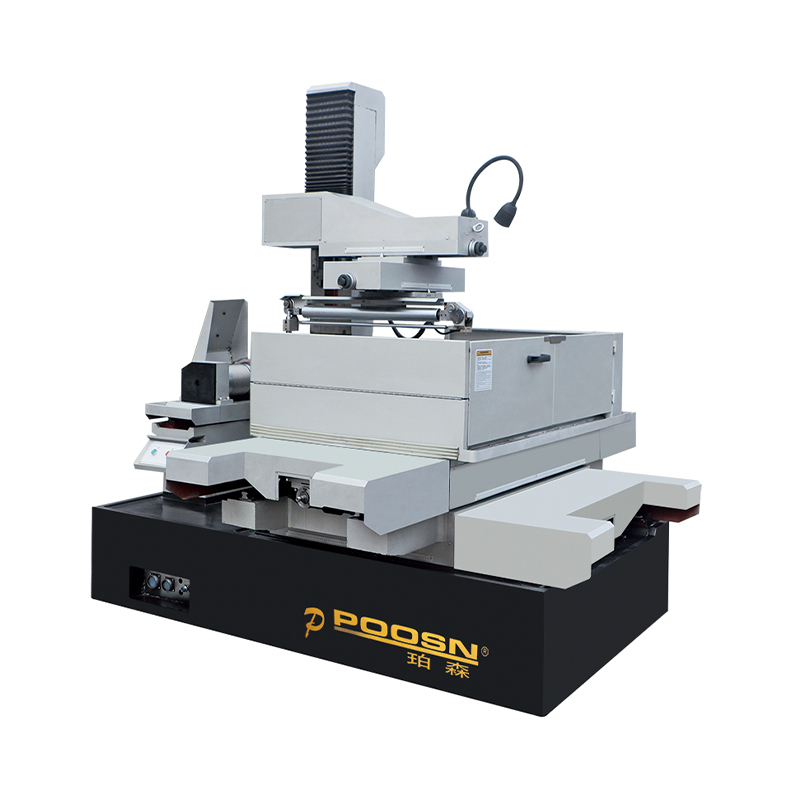
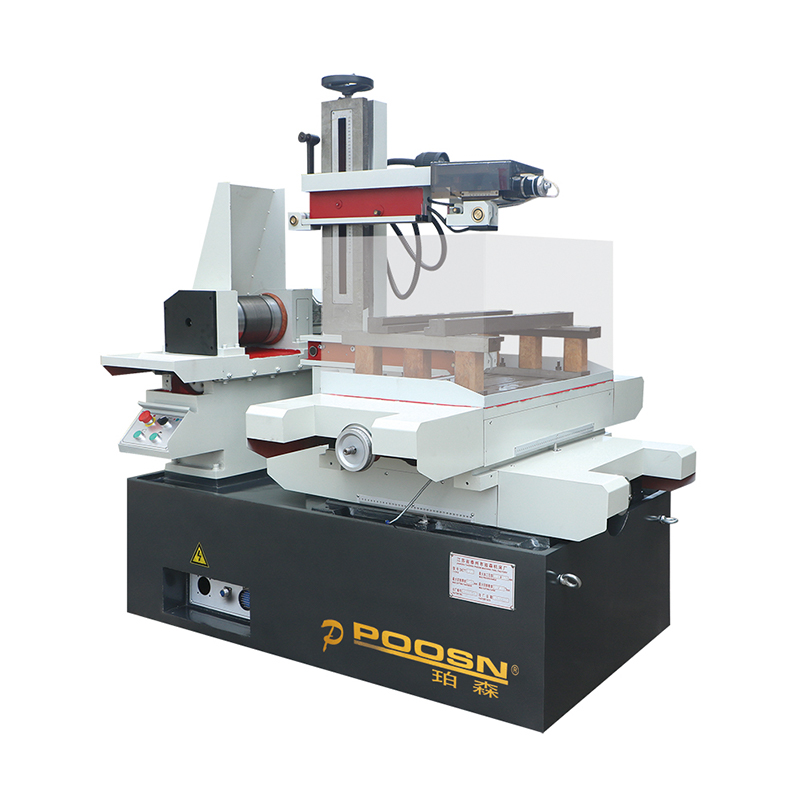
DK45BC CNC Medium-Speed Wire EDM Machine (400kg Load)
Content
- 1 1. Positioning of the DK45BC in Medium-Speed Wire EDM
- 2 2. Main Technical Specifications
- 3 3. Rigid Mechanical Structure for Stable Cutting
- 4 4. Wire-Feed and Guide System
- 5 5. Control System and Intelligent Process Management
- 6 6. Cutting Efficiency and Multi-Pass Performance
- 7 7. Accuracy, Surface Quality, and Taper Cutting
- 8 8. Materials and Industrial Applications
- 9 9. Advantages Compared with Competing Machine Types
- 10 10. Manufacturing Strengths of the Equipment Producer
- 11 11. Customization and Configuration Options
- 12 12. Installation, Operation, and Maintenance
- 13 13. Operating Costs and Lifecycle Value
- 14 14. Recommended Model Selection within the Product Family
- 15 15. Selecting the DK45BC for a Production Environment
- 16 16. Frequently Asked Questions
- 16.1 Q1: What type of production is the DK45BC best suited for?
- 16.2 Q2: What is the maximum workpiece thickness?
- 16.3 Q3: Can the machine cut hardened steel and carbide?
- 16.4 Q4: What is the maximum worktable load?
- 16.5 Q5: Does the DK45BC support taper cutting?
- 16.6 Q6: What is the difference between the DK45BC and a high-speed wire EDM machine?
- 16.7 Q7: Can the machine be customized?
- 16.8 Q8: What control system is supplied?
- 16.9 Q9: Does the machine require a climate-controlled room?
- 16.10 Q10: How often should consumables be replaced?
- 16.11 Q11: What support is available after purchase?
- 16.12 Q12: How should a buyer compare the DK45BC with a larger model?
- 17 17. Conclusion
- 18 References
- 19 Product: DK45BC CNC Medium-Speed Wire EDM Machine (400kg Load)
1. Positioning of the DK45BC in Medium-Speed Wire EDM
Wire EDM machines are commonly selected according to workpiece dimensions, material thickness, required surface quality, production volume, taper requirements, and the desired balance between initial investment and operating cost. A small machine may be economical but lack sufficient table capacity. A large machine may provide additional travel and load capacity but occupy more floor space and require a higher investment.
The DK45BC occupies an important middle position. It is larger and more heavily built than compact models intended for small components, yet it remains more accessible and economical than many imported high-end systems. Its 650 × 926 mm worktable and 400 kg maximum load give manufacturers room to process medium-sized molds, mechanical components, automotive tooling, and thick conductive workpieces.
The machine is particularly suitable where the production requirements include one or more of the following conditions:
• The workpiece is too large or heavy for a compact wire-cut EDM machine.
• Cutting thickness may reach 450 mm.
• The production process requires rough cutting followed by one or more finishing passes.
• The user needs four-axis X, Y, U, and V interpolation for taper cutting.
• The workshop requires a machine that can process different conductive metals without tool hardness becoming a limiting factor.
• The buyer wants a practical alternative to higher-priced imported medium-speed or low-speed wire EDM systems.
• The machine must support future upgrades such as AC servo drives, linear scales, enhanced control cabinets, or special worktable dimensions.
Unlike a basic high-speed wire-cut system intended primarily for single-pass rough cutting, the DK45BC is designed around a more flexible process concept. Its adjustable wire speed and multi-pass capability allow the operator to prioritize cutting efficiency during the first pass and dimensional or surface quality during subsequent passes.
2. Main Technical Specifications
The technical configuration of the DK45BC is intended to support medium-sized production while maintaining a practical footprint. The principal specifications are summarized below.
| Parameter | DK45BC Specification |
|---|---|
| Worktable size | 650 × 926 mm |
| X/Y travel | 450 × 600 mm |
| Processing slot size | 650 × 970 mm |
| Maximum cutting thickness | 450 mm |
| Maximum worktable load | 400 kg |
| U/V travel | 60 × 60 mm |
| Maximum taper | ±6°/80 mm |
| Electrode wire diameter | 0.18 mm with wire guide |
| Wire-feed speed | 1–11 m/s, frequency controlled |
| Maximum wire storage length | Approximately 350 m |
| Maximum cutting efficiency | 10,000–16,000 mm²/h |
| Best surface roughness | Ra ≤ 2.5 μm according to the listed standard configuration |
| NC-controlled axes | X, Y, U, and V four-axis linkage |
| Control system | X8/AUTOCUT |
| Standard control cabinet | ZHZK-03 |
| Optional control cabinet | ZHZ-09G |
| Electrical capacity | 2.5 KVA |
| Power supply | 3N 380 V ±10% |
| Machine weight | Approximately 1,400 kg |
| Overall dimensions | Approximately 1,915 × 1,655 × 1,830 mm |
The listed maximum cutting efficiency varies according to the selected control cabinet, workpiece material, thickness, flushing conditions, cutting strategy, and process parameters. For this reason, production users should evaluate the machine using actual material and part samples before establishing a final cycle-time estimate.
3. Rigid Mechanical Structure for Stable Cutting
Mechanical stability is fundamental to wire EDM accuracy. The wire is slender, continuously moving, and subject to tension, flushing forces, vibration, and changing discharge conditions. Any weakness in the machine structure, guide system, worktable, or wire frame can lead to geometric deviation, taper error, surface irregularity, or unstable cutting.
The DK45BC uses a high-strength cast-iron machine base and a rigid structural layout intended to absorb vibration during reciprocating wire movement. The manufacturing process includes aging treatment designed to reduce internal stress in the casting. Stress relief is important because residual stress can gradually influence alignment and geometry as a machine operates through changes in temperature and working load.
A rigid base also supports the long-term relationship between the X and Y axes. When a workpiece is mounted on the table, the machine must maintain smooth axis movement without excessive deflection. This is especially important when processing heavy molds or thick parts near the machine’s maximum load rating.
The worktable provides a usable 650 × 926 mm surface, while the 400 kg load capacity allows the machine to handle substantially heavier components than small-format equipment. The load rating must always be considered together with workpiece positioning, center of gravity, clamping method, and table condition. Proper distribution of the workpiece helps maintain smooth motion and reduces unnecessary stress on the axis drive system.
High-precision linear guides are included as a standard configuration. Compared with conventional sliding guide arrangements, linear guides can provide lower friction, smoother movement, and more consistent positioning behavior. They also contribute to reduced mechanical resistance during directional changes and help support repeatable contour tracking.
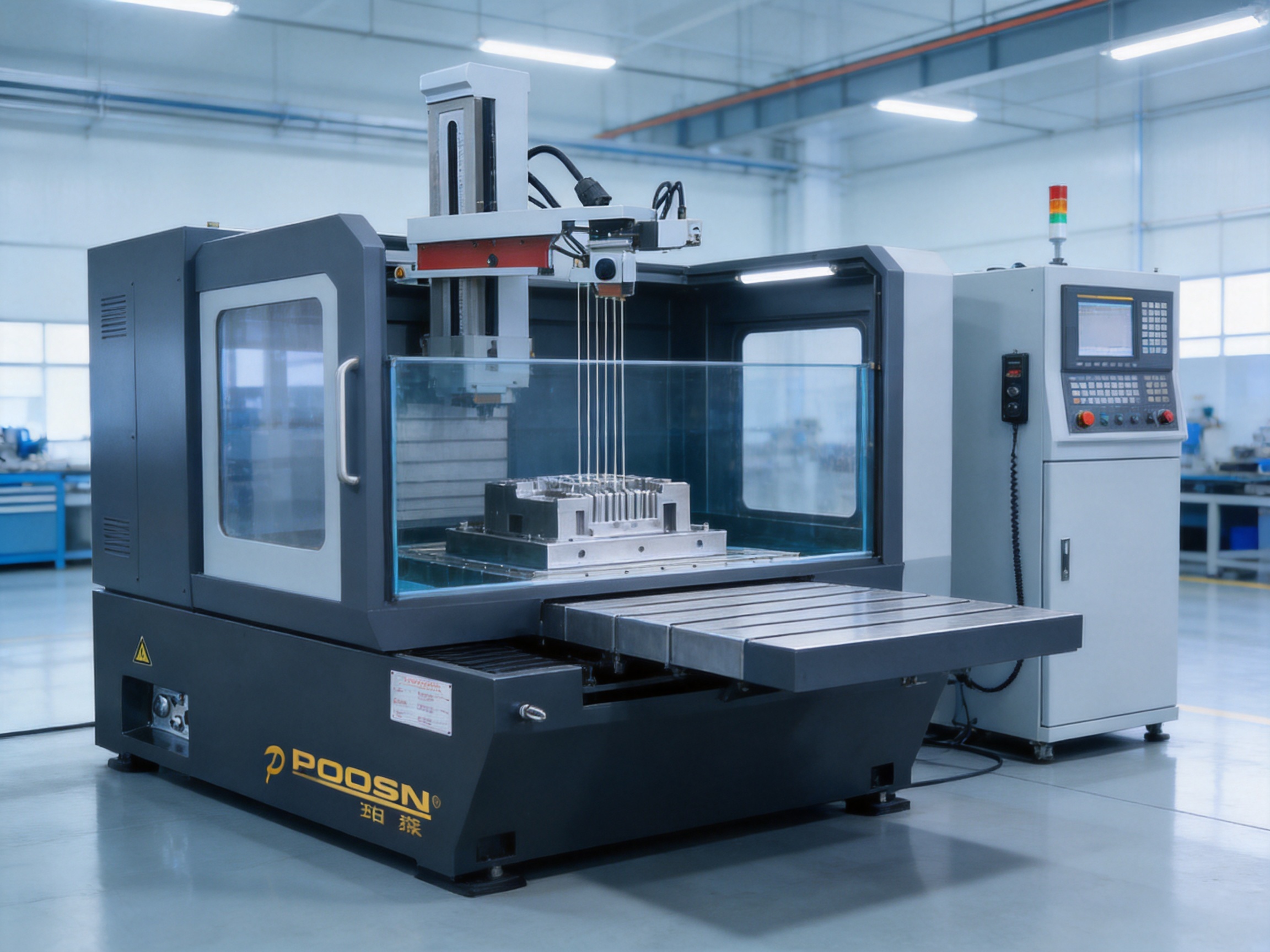
4. Wire-Feed and Guide System
The wire-feed system has a direct influence on cutting stability, surface condition, wire wear, and the probability of wire breakage. The DK45BC uses a frequency-controlled wire-feed system with a speed range of approximately 1–11 m/s. This range enables the operator or control system to adapt wire movement to different cutting stages.
Higher wire speed can support productive rough cutting by continuously presenting fresh electrode wire to the discharge zone. Lower or adjusted wire speed can be useful during finishing operations where the priority is stable discharge behavior, controlled material removal, and improved surface quality.
The machine is configured for 0.18 mm electrode wire with a guide device. The wire storage length is approximately 350 m, and the maximum travel of the wire drum is approximately 180 mm. The wire system is designed to maintain controlled movement through the machining zone while supporting convenient threading and routine operator access.
Guide wheels and guide nozzles must maintain precise alignment throughout operation. The supplied configuration includes waterproof guide-wheel components designed to simplify wire threading and help protect the wire path from working fluid. The use of suitable guide materials, correct wire tension, clean flushing water, and regular inspection is essential for achieving consistent results.
Optional components include a high-pressure water tank and linear scale feedback. The high-pressure flushing option is valuable when cutting thick workpieces because debris must be removed efficiently from a deep and narrow kerf. If debris accumulates in the cutting gap, unstable discharge, short circuits, wire vibration, and reduced surface quality may occur.
The wire-feed system also supports the machine’s multi-pass process. A first pass can be configured for efficient stock removal, while later passes can be programmed with different electrical and motion parameters. This makes the DK45BC more versatile than a machine restricted to a single rough-cut operation.
5. Control System and Intelligent Process Management
The DK45BC uses the X8/AUTOCUT programming and control system. The control platform is intended to simplify programming, improve cutting stability, and support repeatable production. The system can be used for routine profiles as well as more complex contours requiring coordinated movement.
Graphical programming functions can reduce the need for extensive manual code preparation. Depending on the installed software configuration, users can work with imported geometry, define cutting paths, establish offsets, select cutting conditions, and configure multiple passes. This reduces setup time and minimizes the risk of manual programming errors.
The control system also supports the four coordinated axes of X, Y, U, and V. The X and Y axes define the primary profile movement, while U and V control the relative movement of the upper and lower wire guides. Coordinated U/V movement permits taper cutting and enables the machine to produce different upper and lower contours when the application requires it.
Real-time monitoring of the electrical discharge gap is an important part of stable wire EDM operation. Cutting conditions change as the wire enters corners, crosses different material zones, encounters changing thickness, or removes debris from the kerf. Adaptive control can adjust feed and discharge behavior to help maintain a stable process.
Stable control is especially valuable for thick workpieces. As thickness increases, flushing becomes more difficult and the wire can experience greater lag or vibration. A responsive control system helps the machine react to unstable discharge conditions and reduces the risk of wire breakage.
The standard control cabinet is the ZHZK-03, while the ZHZ-09G is available as an optional configuration. The appropriate control cabinet should be selected according to the required cutting efficiency, operator preferences, process complexity, and planned future upgrades.
Programming and Operator Accessibility
A wire EDM machine can only deliver its full technical capability when operators can use the control system effectively. The DK45BC is designed with an operator-oriented interface that supports routine production programming and process adjustment. Operators with general CNC experience can normally learn the basic workflow through training, manuals, and supervised practice.
Typical programming steps include importing or creating the profile, confirming workpiece coordinates, selecting the wire diameter and offset, defining the entry point, setting cutting passes, checking taper data where applicable, and starting the machining cycle. The system can then monitor cutting conditions during operation.
Training should also cover workpiece alignment, wire threading, flushing adjustment, conductivity and water-quality control, consumable inspection, alarm handling, and emergency procedures. Proper training protects both the machine and the workpiece while improving actual production output.
6. Cutting Efficiency and Multi-Pass Performance
The DK45BC offers a maximum stated cutting efficiency of 10,000–16,000 mm²/h. The actual rate depends on material type, material thickness, electrical parameters, flushing, wire condition, workpiece geometry, and the selected control cabinet. The machine is therefore appropriate for medium-batch production in which a combination of throughput and accuracy is required.
Multi-pass cutting is one of the machine’s principal advantages. In a conventional rough-cut process, the operator may focus on removing material as quickly as practical. However, the first pass can leave a surface and dimensional condition that is not adequate for a finished mold or precision component. A finishing pass can correct part geometry, reduce surface irregularities, and improve dimensional consistency.
The DK45BC can be used with roughing, semi-finishing, and finishing strategies. The exact number of passes depends on the material, desired tolerance, part geometry, and surface requirement. For a basic blanking task, one efficient pass may be sufficient. For a precision mold insert, multiple passes may provide better results.
This process flexibility creates an important difference between medium-speed equipment and basic high-speed machines. High-speed wire EDM machines are often selected for fast blanking and economical rough cutting. The DK45BC, by contrast, is designed to combine productive initial cutting with the possibility of controlled finishing.
Cutting efficiency should not be evaluated only by the maximum material removal rate. A machine that achieves a high rough-cut speed but requires extensive secondary machining may produce a higher total manufacturing cost. By reducing the need for additional polishing, grinding, or corrective machining, controlled multi-pass cutting can improve the overall process economy.
The machine’s listed best surface roughness is Ra ≤ 2.5 μm in the standard specification. Other supplied technical descriptions identify finer surface results under specific multi-pass conditions and optional configurations. Actual surface roughness should be confirmed through a sample test using the intended material, thickness, wire, control cabinet, and process parameters.
7. Accuracy, Surface Quality, and Taper Cutting
Precision manufacturing requires more than a large travel range. The machine must maintain axis movement, wire alignment, discharge stability, and geometric compensation throughout the cutting cycle. The DK45BC is manufactured according to the GB/T7926-2015 accuracy standard listed in its specifications.
The precision of a finished part depends on machine geometry, thermal conditions, wire tension, wire guide condition, material stress, programming offset, flushing, and cutting strategy. Operators must therefore establish a controlled process rather than rely on nominal machine specifications alone.
The four-axis U/V system supports taper cutting up to approximately ±6° over an 80 mm thickness range in the listed standard configuration. This function is useful for punches, dies, forming tools, extrusion components, inclined profiles, and parts that require different upper and lower contours.
Taper accuracy depends on workpiece thickness, wire tension, guide alignment, electrical conditions, and machine calibration. Before production cutting, the operator should verify the reference plane and accurately set the workpiece coordinate system. The condition of the upper and lower guide assemblies is also critical.
For applications requiring substantially larger taper angles, a large-taper wire-frame configuration may be available as a customized solution. Such applications should be reviewed by the manufacturer’s engineering team because larger taper angles can affect flushing, wire deflection, travel range, and process stability.
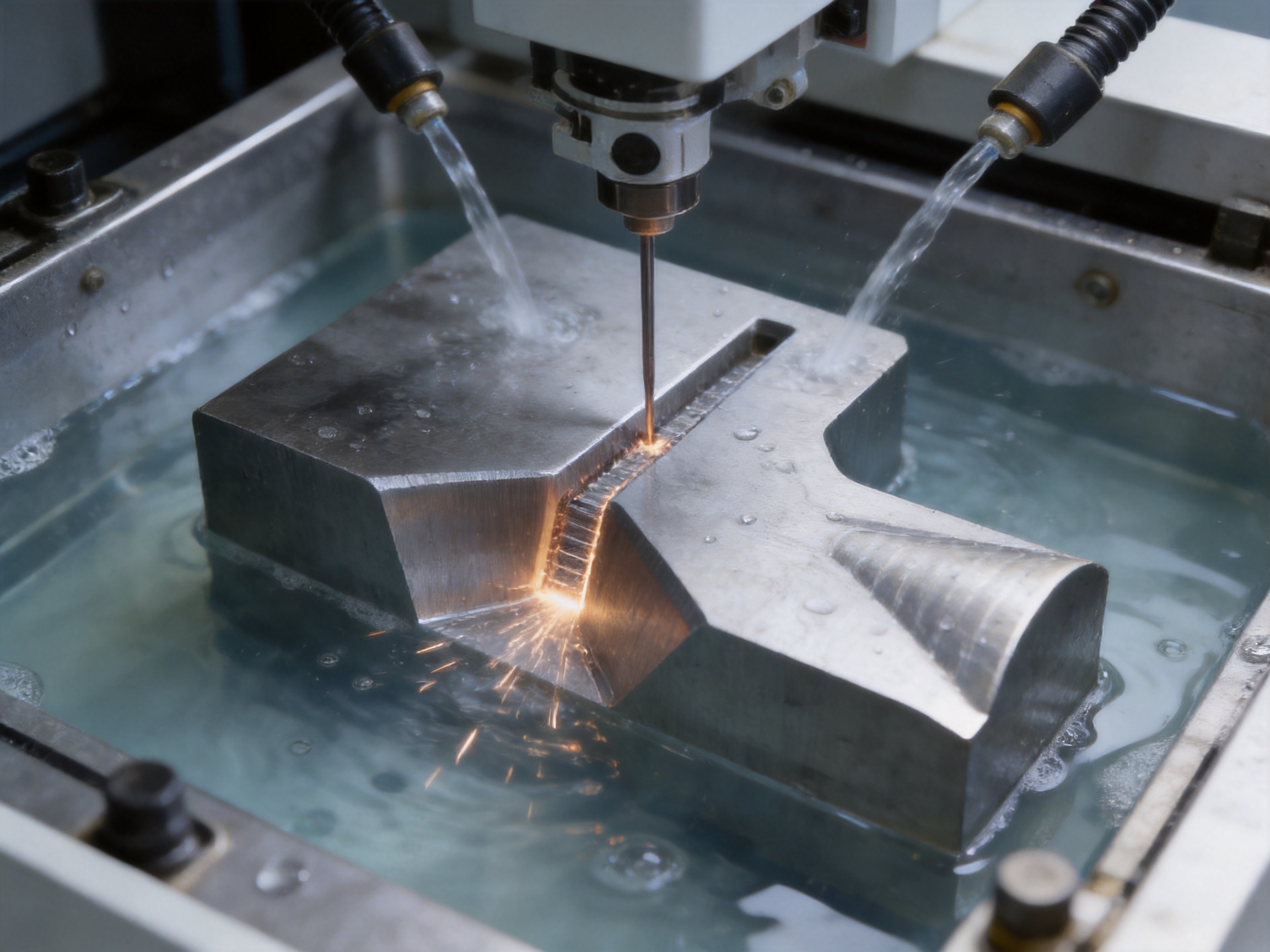
8. Materials and Industrial Applications
Wire EDM can process any electrically conductive material when the electrical and thermal properties fall within the operating range of the equipment. Unlike conventional cutting, material hardness does not directly determine whether the machine can cut the workpiece. Hardened steel, carbide, stainless steel, titanium alloys, copper alloys, and heat-resistant materials can all be considered, provided that suitable process parameters are used.
Mold and Die Manufacturing
The DK45BC is well suited to medium-sized mold components, precision inserts, punches, dies, and forming tools. Mold manufacturers often require narrow slots, internal radii, complex profiles, and high dimensional repeatability. The 450 mm maximum cutting thickness supports the processing of thick mold blocks and tool components.
Multiple cutting passes can improve the quality of mold surfaces and reduce the amount of manual finishing required after EDM. The machine’s taper function is also useful for die clearance, forming angles, and specialized tooling geometries.
Automotive Components and Tooling
Automotive production uses wire-cut EDM for stamping dies, injection mold components, precision fixtures, gear-related components, and special tooling. These parts may combine significant weight with complex two-dimensional or tapered profiles.
The DK45BC’s 400 kg table load provides useful capacity for automotive tooling that would be difficult to mount on a small-format machine. Its medium-speed configuration can support both prototype work and repeated production of tooling components.
Aerospace and High-Performance Components
Aerospace materials often include difficult-to-machine alloys and components with strict dimensional requirements. Wire EDM can process conductive titanium alloys, nickel-based alloys, hardened steels, and other materials that create high tool wear in conventional machining.
For aerospace applications, process qualification is essential. Users should verify dimensional capability, surface condition, recast layer requirements, heat-affected-zone limits, and inspection procedures. The DK45BC can provide the cutting platform, while application-specific parameters should be developed through sample testing and documented process control.
Mechanical Parts and General Engineering
General engineering companies can use the machine for custom components, replacement parts, slots, keyways, profile cutting, and low- to medium-volume production. The ability to process different conductive metals makes the DK45BC useful in workshops with varied customer requirements.
It can also be used for cutting cemented carbide, copper, aluminum, stainless steel, tool steel, and other conductive materials. Workholding and flushing should be adapted to the material and part geometry.
9. Advantages Compared with Competing Machine Types
The DK45BC should be compared with different equipment categories rather than with a single competing model. Each type of wire EDM has its own strengths, and the best choice depends on the production objective.
Compared with Compact Medium-Speed Machines
Smaller medium-speed machines typically occupy less floor space and may cost less initially. However, they often have lower table load ratings and shorter axis travel. The DK45BC offers a 400 kg load capacity and 450 × 600 mm X/Y travel, making it more suitable for larger molds and heavier workpieces.
For a company that expects its workpiece size to grow, selecting the DK45BC can avoid an early equipment replacement. The larger table also provides greater flexibility for fixtures and multiple small parts mounted in a single setup.
Compared with Basic High-Speed Wire EDM
High-speed wire EDM machines can be attractive for economical blanking and high-volume rough cutting. However, they may use a more limited single-pass process and may not provide the same level of finishing flexibility. The DK45BC supports adjustable wire speed and multi-pass cutting, giving it an advantage when surface finish and final dimensional quality are important.
The DK45BC also uses high-precision linear guides as standard, whereas some basic high-speed machines use sliding guide structures. Linear guides can provide smoother motion and lower friction, which may support better trajectory stability and repeatability.
Compared with Imported High-End Wire EDM
Imported low-speed or premium wire EDM systems may provide advanced automation, high-end closed-loop control, and highly refined finishing capability. Their purchase price, service costs, spare-part prices, and maintenance requirements can be significantly higher.
The DK45BC provides a practical cost-performance alternative for users who need medium-sized capacity, multi-pass cutting, taper capability, and reliable process control without the total investment associated with premium imported equipment. Its domestic manufacturing base also supports customization and direct technical communication.
Compared with Conventional Cutting Methods
Conventional milling, grinding, and sawing can be highly productive for accessible geometries, but they may struggle with hardened materials, narrow slots, small internal corners, and stress-sensitive profiles. Wire EDM applies no direct mechanical cutting force to the workpiece, reducing the risk of tool deflection and allowing hardened parts to be processed after heat treatment.
The process is not universally faster than milling, and it requires conductive material and appropriate dielectric management. However, for complex profiles and difficult materials, it can reduce the need for specialized cutting tools and improve geometric flexibility.
10. Manufacturing Strengths of the Equipment Producer
The capability of a machine tool manufacturer affects more than the initial product design. It also influences casting quality, assembly accuracy, inspection reliability, spare-parts availability, process documentation, and long-term technical support.
Taizhou Xinchengyang Machinery Manufacturing Co., Ltd. has specialized in electrical discharge wire cutting since 1999. Its POOSN brand was established in 2003, and the company later developed its own manufacturing base after the establishment of the current enterprise in 2017.
The company’s product range includes PS-C medium-speed wire-cut EDM machines, DK77-BC medium-speed models, DK77-A and DK77-B high-speed machines, and DK77-D large-taper machines. This product coverage allows the engineering team to work across different machine formats and application categories.
The company reports advanced processing equipment, comprehensive testing methods, and positioning accuracy testing for each machine tool. Such testing is important because the quality of a wire EDM machine depends on the relationship between its mechanical axes, wire frame, worktable, electrical system, and control software.
A production process for a machine such as the DK45BC may include casting preparation, aging treatment, precision machining of structural components, guide installation, drive-system assembly, electrical cabinet integration, wire-frame alignment, software configuration, geometric testing, and test cutting.
Final test cutting provides practical verification beyond dimensional inspection. It can reveal issues involving wire stability, flushing, cutting response, surface quality, and operator interaction. Factory testing also gives the manufacturer an opportunity to establish baseline parameters before shipment.
Quality-Oriented Production
The company states that its products are manufactured according to national standards and that each machine undergoes positioning accuracy testing. This quality-oriented approach is especially important for export equipment because machines may be shipped long distances and installed by different service teams.
Before shipment, the machine can be checked for axis movement, table condition, wire-feed function, electrical operation, safety functions, and basic cutting capability. Proper packaging is also necessary to protect the machine against vibration, moisture, and handling risks during transportation.
International Market Experience
The company serves customers in China and exports selected models to Southeast Asia, West Asia, Europe, and the Americas. Experience with different regions can help the manufacturer address differences in power supply, workshop conditions, operator practices, documentation, and local compliance expectations.
For international buyers, technical support is an important part of machine value. Remote assistance through video calls, operating manuals, spare-part dispatch, and application guidance can reduce downtime and help users achieve stable production more quickly.
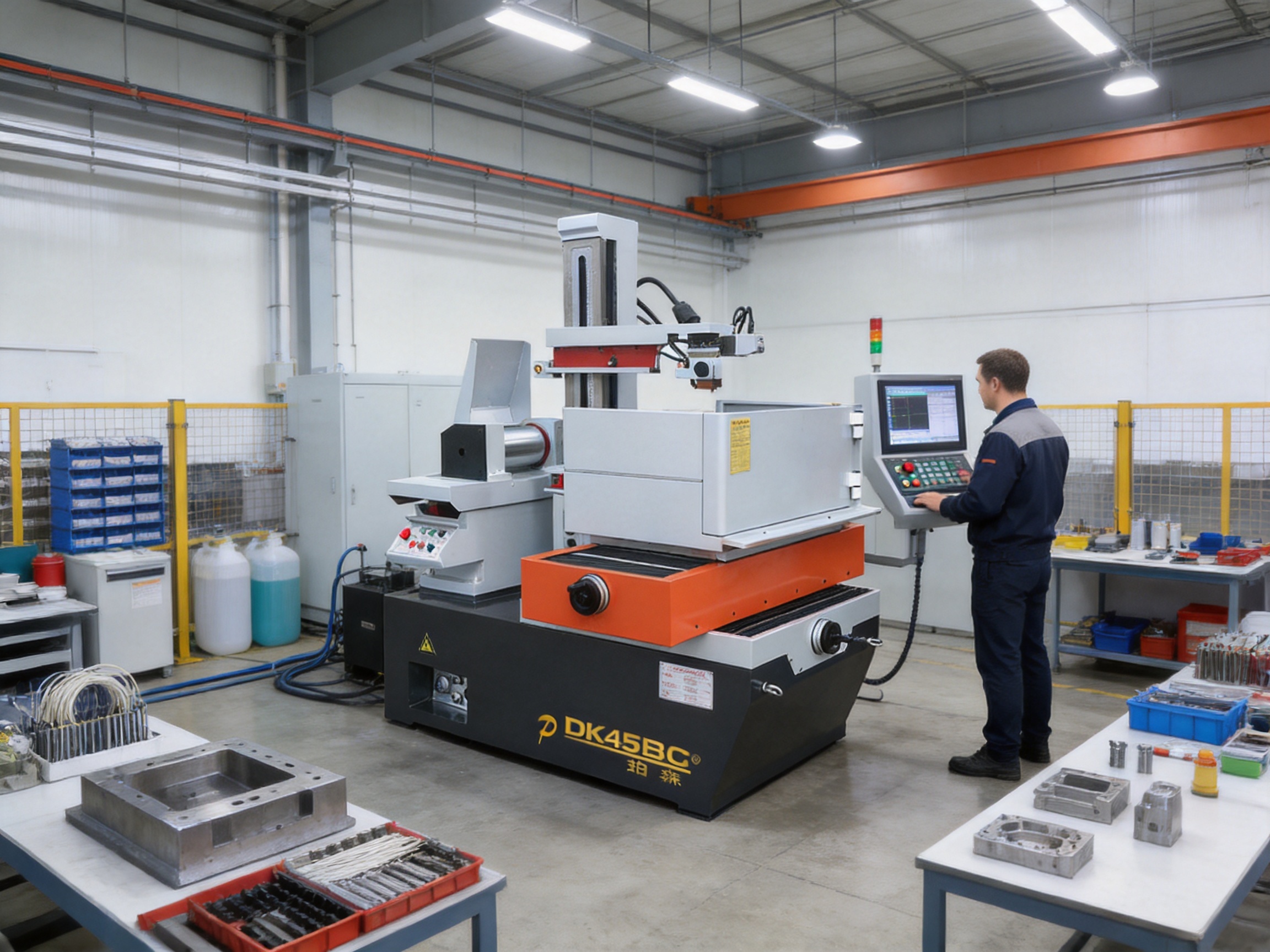
11. Customization and Configuration Options
The DK45BC can be configured according to the buyer’s application and production environment. Standard equipment is suitable for many general applications, while optional features can improve precision, automation, productivity, or special-profile capability.
Available options may include:
• AC servo drives for the X and Y axes.
• Linear scale feedback for improved position verification and repeatability.
• High-pressure water tank for improved flushing of thick workpieces.
• ZHZ-09G control cabinet.
• Extended X-axis or Y-axis travel.
• Large-taper wire-frame configurations.
• Automatic wire threading for reduced operator intervention.
• Rotary table or C-axis functions for specialized cylindrical or spiral work.
• Certification and documentation packages for specific export markets.
Customized worktable dimensions can also be discussed. The manufacturer indicates that X-axis and Y-axis dimensions may be adapted to meet specific production requirements. Any modification to travel, table size, wire frame, or control system should be evaluated as a complete engineering project because changes can affect machine footprint, structural rigidity, power requirements, and shipping dimensions.
12. Installation, Operation, and Maintenance
Correct installation is essential for maintaining machine accuracy. The floor must have adequate load-bearing capacity, the machine must be leveled correctly, and sufficient space must be provided for workpiece loading, maintenance, electrical access, and water-system inspection.
The listed power supply is 3N 380 V ±10%, and the electrical capacity is approximately 2.5 KVA. Buyers should confirm local voltage, frequency, grounding, circuit protection, and electrical safety requirements before shipment.
Although the DK45BC is designed for general workshop conditions, stable temperature and clean environmental conditions are beneficial for precision production. Temperature changes can affect machine geometry, workpiece dimensions, dielectric water temperature, and wire behavior. For the most demanding tolerances, a temperature-controlled environment and optional linear-scale feedback may be appropriate.
Daily Checks
Operators should check wire tension, wire condition, guide wheels, upper and lower nozzles, flushing flow, water level, water conductivity, and visible leakage before starting production. The worktable should be cleaned to prevent chips or debris from interfering with workpiece seating.
The electrical cabinet should be kept dry and free from excessive dust. Cooling fans, filters, and ventilation openings should be inspected according to the maintenance schedule. Alarms should not be ignored, even if the machine appears to continue operating normally.
Working Fluid and Filtration
Clean working fluid is critical for stable EDM. Filtration removes machining debris from the circulation system, while conductivity control helps maintain predictable discharge conditions. Contaminated fluid can cause unstable cutting, poor surface quality, short circuits, and increased wire breakage.
The filtration system should be maintained according to operating hours and material removal volume. Filters and ion-exchange components require periodic replacement or regeneration as appropriate. The exact replacement interval depends on workload and fluid condition rather than calendar time alone.
Guide and Wire Maintenance
Guide wheels and guide nozzles are wear components. Their condition should be inspected regularly because wear can influence wire position and taper accuracy. The electrode wire should be threaded correctly, and the wire path should remain free of burrs, deposits, and damage.
When cutting thick workpieces, flushing pressure and nozzle alignment should be checked carefully. The upper and lower nozzles should be positioned close enough to the workpiece to provide effective flushing while avoiding collision risk.
13. Operating Costs and Lifecycle Value
The total cost of a wire EDM machine includes the purchase price, installation, electricity, wire, filters, guide components, working fluid, labor, maintenance, downtime, and possible secondary operations. A machine with a low initial price is not necessarily economical if it produces unstable quality or requires frequent corrective work.
The DK45BC is designed to support lifecycle value through a combination of medium-speed productivity, multi-pass finishing, standard components, and optional upgrades. Molybdenum wire is relatively economical compared with consumable wire systems used in some low-speed EDM configurations. Reusable wire-feed operation can help reduce operating cost when the process is properly controlled.
Consumable life varies with cutting hours, material, thickness, wire tension, flushing conditions, and process settings. Guide wheels may require replacement after several months of use, while guide nozzles and filters require inspection based on actual wear and contamination. Working fluid and ion-exchange materials must be maintained to protect cutting stability.
The economic benefit of multi-pass cutting should be evaluated against the value of improved surface finish and reduced secondary operations. In mold manufacturing, avoiding extensive manual finishing can provide substantial savings in labor and lead time.
For export customers, spare-parts availability and technical support also affect lifecycle cost. The manufacturer offers remote support and rapid dispatch options for critical parts, which can help reduce downtime when a replacement component is needed.
14. Recommended Model Selection within the Product Family
The DK45BC is part of a related family of medium-speed machines. Model selection should be based primarily on workpiece size, thickness, weight, production volume, and future capacity requirements.
| Model | X/Y Travel | Maximum Thickness | Maximum Load | Typical Application |
|---|---|---|---|---|
| DK35BC | 350 × 450 mm | 450 mm | 300 kg | Small-to-medium precision components and small molds |
| DK45BC | 450 × 600 mm | 450 mm | 400 kg | Medium molds, automotive tooling, and heavy mechanical parts |
| DK50BC | 500 × 700 mm | 650 mm | 600 kg | Large molds and thicker, heavier workpieces |
| DK60BC | 600 × 800 mm | 800 mm | 800 kg | Extra-large molds and heavy industrial components |
The DK35BC may be more economical when workpieces are small and the production volume is limited. The DK45BC is appropriate when a larger table and 400 kg load rating are required without moving to the footprint and investment of the DK50BC or DK60BC.
Customers who frequently process workpieces thicker than 400 mm should consider the DK50BC or DK60BC. Customers with especially large and heavy molds should also evaluate not only the load rating but the available table dimensions, processing tank clearance, lifting equipment, and workshop space.
15. Selecting the DK45BC for a Production Environment
Before purchasing the machine, users should prepare representative sample drawings and provide information about material, thickness, workpiece weight, required tolerance, desired surface roughness, taper angle, annual production volume, and available floor space.
A sample cutting test is recommended when the application involves special materials, large thicknesses, tight tolerances, or demanding surface requirements. The test can confirm cutting speed, wire stability, surface condition, dimensional accuracy, and the number of required passes.
The buyer should also decide whether the standard stepper-drive configuration is sufficient or whether AC servo drives and linear scales are justified. For routine production with moderate tolerances, the standard configuration may provide an attractive balance of cost and capability. For higher repeatability requirements, feedback upgrades can provide additional process control.
Application planning should include the entire production workflow. Workholding, crane capacity, water treatment, programming, inspection, part cleaning, and post-EDM finishing all influence the actual benefit of the machine.
16. Frequently Asked Questions
Q1: What type of production is the DK45BC best suited for?
The DK45BC is intended for medium-sized and relatively heavy workpieces, including molds, automotive tooling, mechanical components, and thick conductive parts. It is suitable for production that requires a larger worktable, a 400 kg load capacity, and the ability to combine productive rough cutting with finishing passes.
Q2: What is the maximum workpiece thickness?
The listed maximum cutting thickness is 450 mm. Actual results depend on material, workpiece geometry, flushing, wire condition, electrical parameters, and machine setup. For frequent cutting above 400 mm, a larger model may provide greater process margin.
Q3: Can the machine cut hardened steel and carbide?
Yes. Wire EDM is suitable for electrically conductive hard materials, including tool steel, stainless steel, cemented carbide, titanium alloys, copper alloys, and various heat-resistant alloys. The material must be conductive, and parameters should be selected according to its electrical and thermal behavior.
Q4: What is the maximum worktable load?
The maximum listed worktable load is 400 kg. The workpiece should be securely supported and positioned so that its weight is distributed appropriately. The loading method and center of gravity should be considered before machining.
Q5: Does the DK45BC support taper cutting?
Yes. The machine uses coordinated U and V axes and supports a listed maximum taper of approximately ±6° over 80 mm. Larger taper configurations may be available as an engineering option.
Q6: What is the difference between the DK45BC and a high-speed wire EDM machine?
The DK45BC is designed for medium-speed operation, adjustable wire-feed control, and multi-pass cutting. A basic high-speed machine is generally focused on economical single-pass rough cutting. The DK45BC is therefore more suitable when surface quality, finishing capability, and dimensional refinement are important.
Q7: Can the machine be customized?
Possible customization options include worktable travel, AC servo drives, linear scales, high-pressure flushing, control cabinet upgrades, automatic wire threading, large-taper wire frames, and specialized rotary functions. The final configuration should be reviewed by the manufacturer’s engineering team.
Q8: What control system is supplied?
The listed standard programming system is X8/AUTOCUT, with the ZHZK-03 control cabinet as standard and the ZHZ-09G available as an option. Buyers should confirm the precise software and hardware configuration in the quotation because control features can vary by package.
Q9: Does the machine require a climate-controlled room?
The machine is designed for general workshop use, but stable temperature improves precision. For demanding tolerances, temperature control, proper machine leveling, clean working fluid, and optional linear-scale feedback are recommended.
Q10: How often should consumables be replaced?
Replacement intervals depend on cutting hours, material, thickness, wire tension, flushing, and contamination. Guide wheels, guide nozzles, filters, dielectric fluid, and ion-exchange materials should be inspected regularly and replaced when wear or performance degradation is observed.
Q11: What support is available after purchase?
The manufacturer provides technical support, operating guidance, remote assistance, spare-parts service, and application advice. Support may include video communication, manuals, commissioning guidance, and recommendations for process parameters.
Q12: How should a buyer compare the DK45BC with a larger model?
Compare the largest expected workpiece dimensions, thickness, weight, required taper, production volume, available floor space, and future expansion plans. The DK45BC is suitable for medium-sized workpieces and loads up to 400 kg. The DK50BC or DK60BC is more appropriate when thicker, larger, or heavier parts are common.
17. Conclusion
The DK45BC CNC Medium-Speed Wire EDM Machine provides a balanced solution for manufacturers that need more capacity and process flexibility than a compact wire-cut machine can offer. Its 450 × 600 mm X/Y travel, 650 × 926 mm worktable, 450 mm maximum cutting thickness, and 400 kg load rating make it suitable for a wide range of medium-sized molds, automotive tooling, mechanical components, and heavy conductive workpieces.
Its key technical advantages include a rigid cast-iron structure, high-precision linear guides, adjustable wire-feed speed, four-axis X/Y/U/V linkage, taper cutting, multi-pass processing, X8/AUTOCUT control, and optional upgrades for servo drive, linear-scale feedback, high-pressure flushing, and automation.
Compared with basic high-speed wire EDM machines, the DK45BC offers stronger finishing capability and greater process flexibility. Compared with premium imported systems, it provides a more accessible cost structure while retaining important functions for precision production. Its value is further supported by the manufacturer’s experience in wire-cut EDM, in-house development, factory testing, international service, and customization capability.
For the best result, the machine should be selected according to actual part dimensions, material, thickness, load, tolerance, surface requirement, and production volume. When properly installed, programmed, maintained, and supported with suitable process parameters, the DK45BC can become a dependable platform for efficient and repeatable wire EDM production.
References
1. Taizhou Xinchengyang Machinery Manufacturing Co., Ltd. DK45BC High-Medium-Speed Wire EDM Technical Specifications.
2. GB/T7926-2015. Accuracy Requirements and Inspection Methods for Wire-Cut Electrical Discharge Machines.
3. X8/AUTOCUT CNC Programming and Operation Information for Medium-Speed Wire EDM Systems.
4. Technical documentation for DK35BC, DK45BC, DK50BC, and DK60BC medium-speed wire EDM machines.
5. General engineering principles for wire electrical discharge machining, dielectric filtration, wire guidance, and multi-pass finishing.
6. Manufacturer-provided information concerning machine structure, control systems, customization, commissioning, maintenance, and international technical support.
Product: DK45BC CNC Medium-Speed Wire EDM Machine (400kg Load)

-
Phone
+86-0523-86268788 +86-13815960366 +86-13912191163Email
[email protected]Address
No. 366, Yusheng Road Jiulong Town, Hailing District Taizhou City, China
Copyright © Taizhou Xinchengyang Machinery Manufacturing Co., Ltd. All Rights Reserved.
Custom edm machine for sale
wholesale edm machine manufacturers
