

 English
 русский
 عربى


Zhou Meiling — Technical Sales Consultant
Home / Author / Zhou Meiling — Technical Sales Consultant / DK60BC High-Performance Medium-Speed Wire EDM for Large and Heavy Workpieces
DK60BC High-Performance Medium-Speed Wire EDM for Large and Heavy Workpieces
2026-10-22
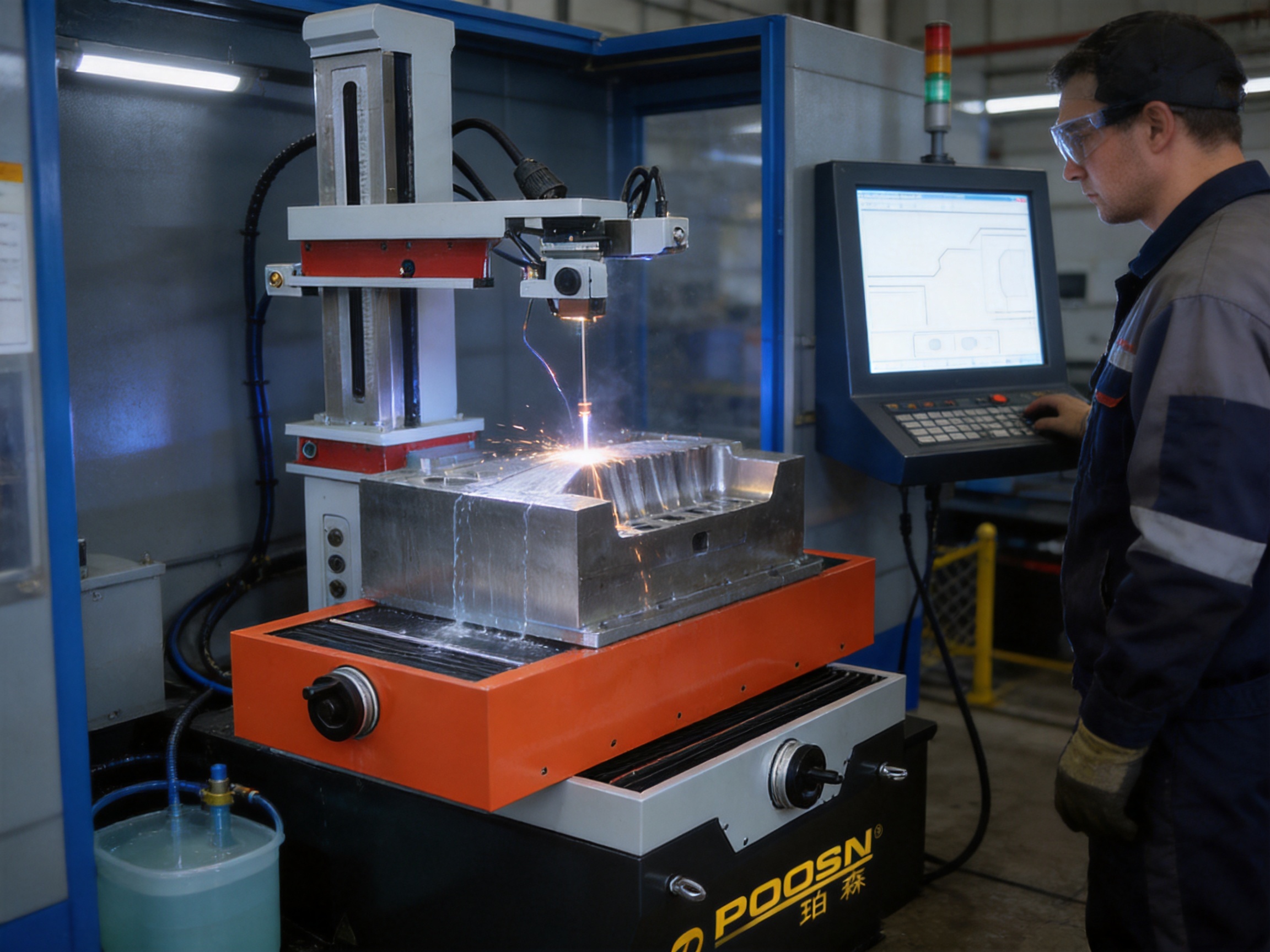
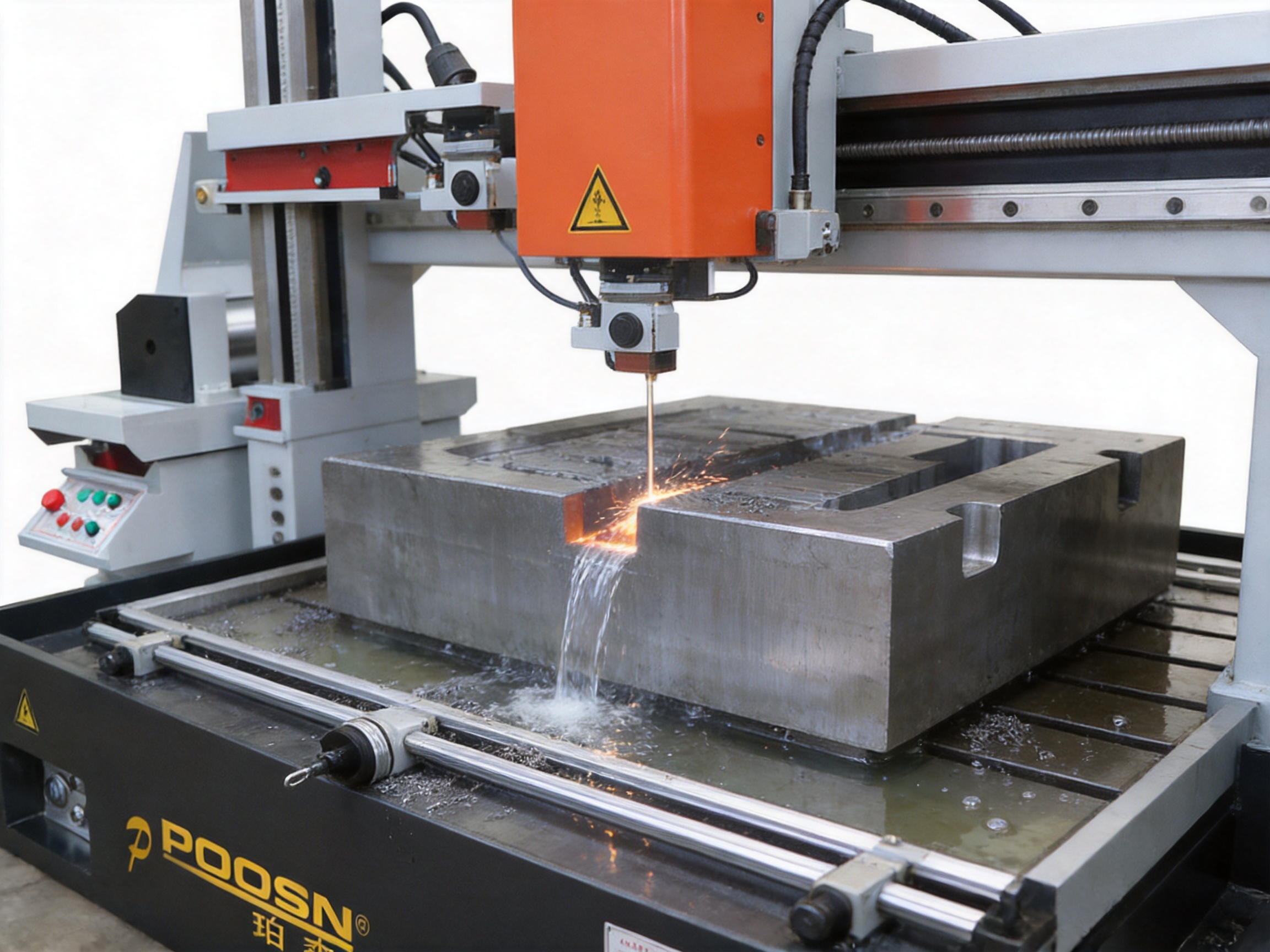
In modern precision manufacturing, the ability to cut hardened, electrically conductive materials with accuracy, stability, and repeatability is essential. Large molds, aerospace components, heavy-machinery parts, tool-steel plates, carbide components, and other difficult workpieces often exceed the practical capacity of conventional machining centers. Wire Electrical Discharge Machining, commonly known as WEDM or wire-cut EDM, addresses these challenges by using controlled electrical discharges to remove material without direct mechanical contact between the cutting tool and workpiece.
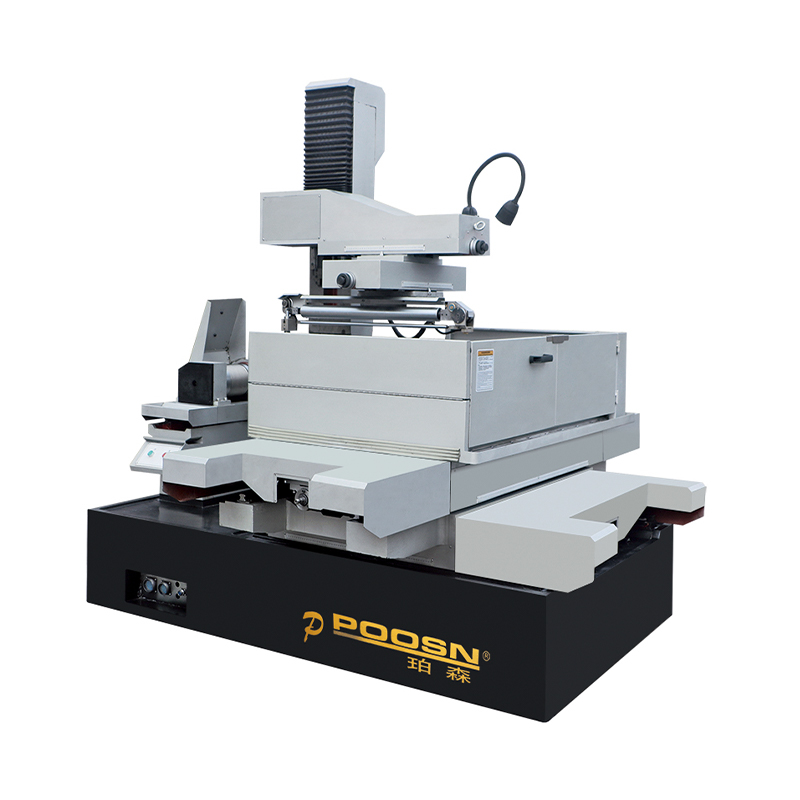
The DK60BC CNC Medium-Speed Wire EDM Machine is designed for manufacturers that need large working capacity, substantial load-bearing strength, thick-workpiece capability, and high-precision cutting in one machine. As the largest model in its DK-BC series, it provides an X-axis travel of 600 mm, a Y-axis travel of 800 mm, a maximum cutting thickness of 800 mm, and a maximum worktable load of 800 kg. These specifications position the DK60BC as a solution for oversized molds, heavy industrial components, and demanding production environments where smaller wire-cut EDM machines cannot provide sufficient space or load capacity.
The machine combines a rigid cast structure, high-precision linear guide support, an X8/AUTOCUT control system, multi-axis linkage, optimized wire feeding, and a high-pressure flushing system. Its design is intended to balance cutting efficiency and precision rather than focusing on only one performance characteristic. The machine can achieve a published maximum cutting efficiency of 10,000–16,000 mm²/h, while its surface finish can reach Ra ≤ 2.5 μm under suitable cutting conditions and process settings.
More than a large-format machine, the DK60BC represents a complete manufacturing approach. Its performance depends not only on axis travel or electrical power, but also on casting treatment, mechanical transmission, wire-tension control, process monitoring, filtration, assembly quality, inspection, and technical support. Together, these elements determine whether a WEDM machine can deliver dependable results over years of industrial use.
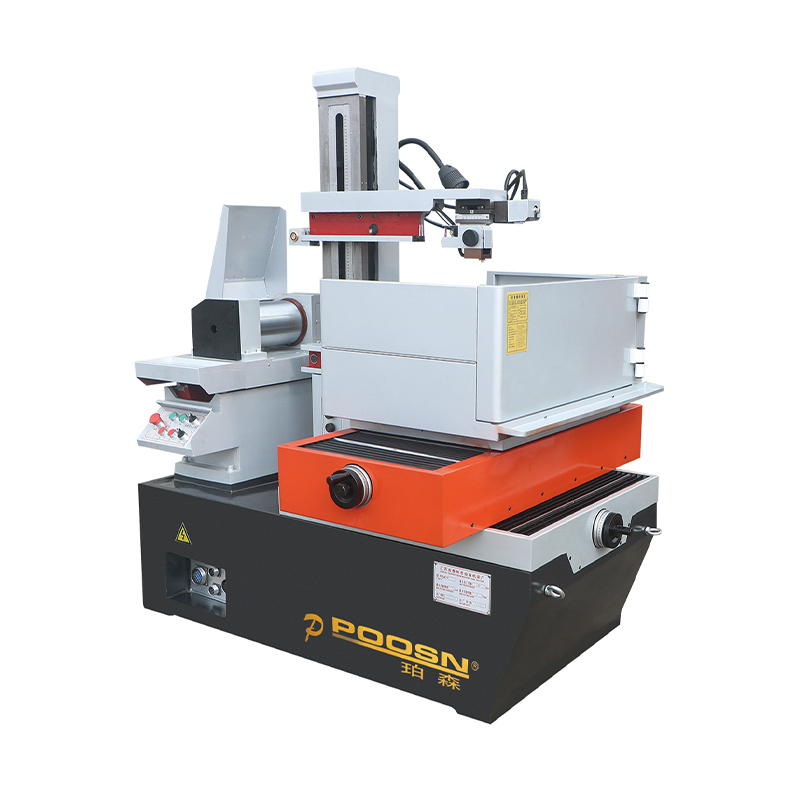
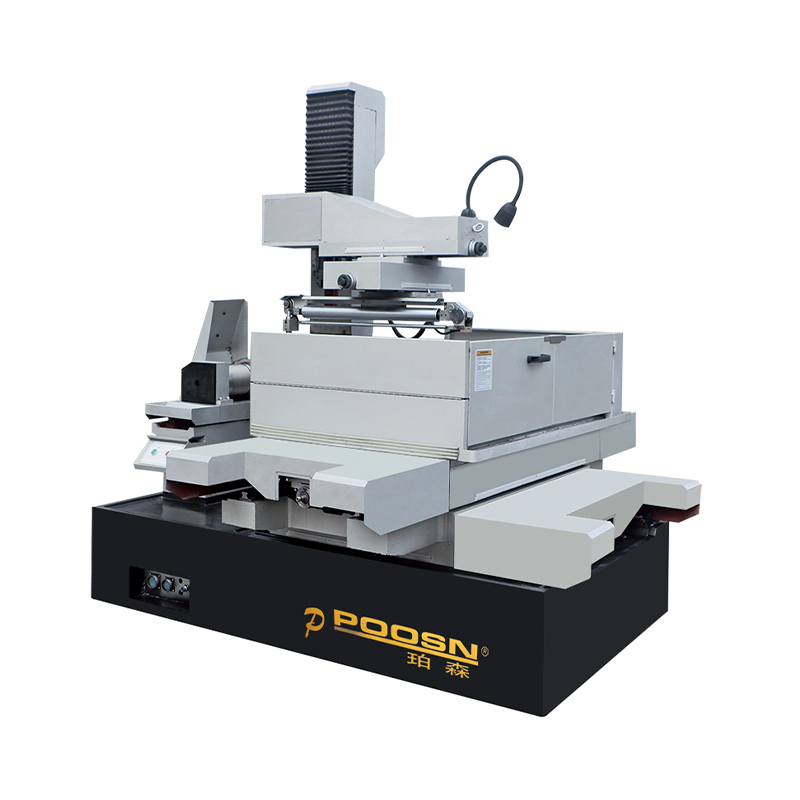
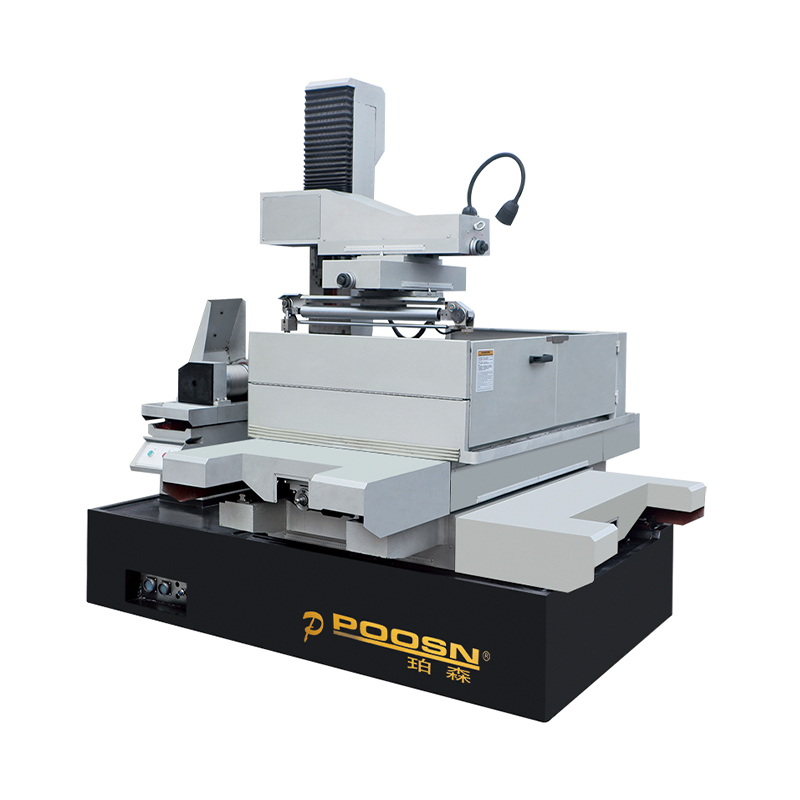
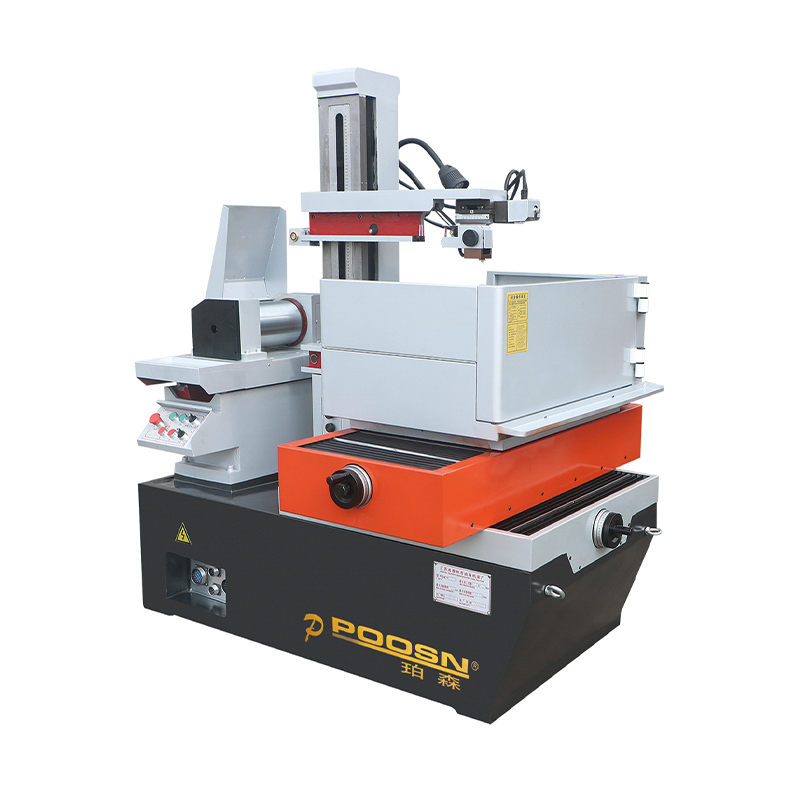
DK60BC CNC Medium-Speed Wire EDM Machine (800kg Load, 800mm Thickness)
Content
- 1 1. Why Large-Format Wire EDM Requires a Different Machine Design
- 2 2. Main Technical Specifications
- 3 3. Large Worktable and 800 kg Load Capacity
- 4 4. Rigid Mechanical Structure and Long-Term Stability
- 5 5. Precision Linear Guides and Axis Transmission
- 6 6. Wire Feeding and Tension Stability
- 7 7. Adaptive Pulse Power and Discharge Control
- 8 8. X8/AUTOCUT Control System
- 9 Product: DK60BC CNC Medium-Speed Wire EDM Machine (800kg Load, 800mm Thickness)
1. Why Large-Format Wire EDM Requires a Different Machine Design
Cutting a small precision insert and cutting an 800 mm-thick industrial component are fundamentally different machining tasks. Large workpieces introduce additional demands on the machine bed, worktable, wire frame, guide system, flushing system, electrical discharge process, and control software. A machine designed primarily for small components may not maintain the same geometric stability when supporting a workpiece weighing several hundred kilograms.
Large workpieces can also create longer cutting paths, deeper discharge gaps, greater flushing resistance, and increased risk of wire deflection. As the thickness of the material increases, debris produced during electrical discharge must travel farther before leaving the cutting slot. If flushing is insufficient, the discharge gap becomes unstable. This can result in wire breaks, inconsistent cutting speed, poor surface quality, or dimensional deviation.
The DK60BC addresses these issues with a large worktable, reinforced structural components, a high-pressure water system, and wire-guiding components intended for thick-workpiece cutting. Its 840 × 1160 mm worktable provides a broad support area, while the stated processing slot size is 860 × 1200 mm. The 800 kg maximum worktable load allows manufacturers to position substantially heavier parts than would be practical on compact WEDM equipment.
Capacity alone, however, does not guarantee accuracy. The machine must maintain stable relative movement between the workpiece and electrode wire. For this reason, a rigid machine body, carefully treated castings, precision linear guides, low-backlash transmission, and controlled wire tension are central to the DK60BC architecture.
2. Main Technical Specifications
The DK60BC is the largest standard model in the DK-BC series, which also includes the DK35BC, DK45BC, and DK50BC. The series allows users to select equipment according to workpiece size, weight, cutting thickness, and production scale.
| Parameter | DK60BC Specification |
|---|---|
| Model | DK60BC CNC Medium-Speed Wire EDM Machine |
| Worktable size | 840 × 1160 mm |
| X/Y travel | 600 × 800 mm |
| Processing slot size | 860 × 1200 mm |
| Maximum cutting thickness | 800 mm |
| Maximum worktable load | 800 kg |
| U/V travel | 60 × 60 mm |
| Maximum taper | ±6°/80 mm, subject to operating conditions |
| Electrode wire diameter | 0.18 mm with wire guide |
| Wire feed speed | 1–11 m/s, frequency controlled |
| Maximum wire storage length | Approximately 350 m |
| Maximum cutting efficiency | 10,000–16,000 mm²/h |
| Best stated surface roughness | Ra ≤ 2.5 μm |
| Controlled axes | X, Y, U, and V four-axis linkage |
| Control system | X8/AUTOCUT |
| Maximum processing current | 6 A |
| Electrical capacity | 2.5 kVA |
| Power supply | 3N 380 V ±10% |
| Machine weight | Approximately 2,500 kg |
| Overall dimensions | Approximately 2400 × 2065 × 2200 mm |
Specifications can vary according to the selected control cabinet, drive configuration, optional accessories, and application requirements. Before ordering, users should confirm the final configuration, applicable accuracy standard, electrical requirements, workpiece geometry, and installation conditions with the manufacturer.
3. Large Worktable and 800 kg Load Capacity
One of the most important advantages of the DK60BC is its capacity for oversized and heavy workpieces. The 800 kg load rating enables users to machine substantial mold bases, large plates, heavy dies, and industrial components without dividing the job into multiple operations or transferring the part to a larger external machine.
A large worktable also improves flexibility. It gives operators more room to position clamping fixtures, reference blocks, supporting brackets, and workholding devices. In complex mold and tooling applications, this additional space can reduce setup compromises. The workpiece can be positioned with a more practical relationship to the cutting contour, improving accessibility and simplifying alignment.
Large-format capacity is particularly valuable when the workpiece is not only heavy but also thick. The maximum stated cutting thickness of 800 mm allows the DK60BC to address applications that are beyond the normal range of many compact or conventional high-speed wire-cut machines. Thick plates, large punch-and-die components, heavy industrial templates, and specialized tooling can be processed within the machine’s intended operating envelope.
Load capacity also contributes to production efficiency. When a heavy part can remain on the machine for multiple cutting operations, the manufacturer reduces crane handling, re-clamping, repeated alignment, and work-in-process movement. Fewer handling operations can improve safety and reduce the possibility of positioning errors.
4. Rigid Mechanical Structure and Long-Term Stability
The foundation of a large WEDM machine is its mechanical structure. During cutting, the wire must follow the programmed path while the machine maintains stable geometry under the combined influence of workpiece weight, flushing pressure, wire tension, thermal changes, and axis movement. Any instability in the structure can appear as dimensional error, taper inconsistency, poor perpendicularity, or variation between repeated parts.
The DK60BC uses a high-strength cast machine structure with reinforced ribbing. Such a structure is intended to damp machining vibrations and maintain geometric stability. The supplied technical material also describes long-duration aging treatment for castings. Aging treatment helps reduce internal stress in cast components, supporting dimensional stability after machining and during long-term operation.
For a large machine, casting quality and stress control are especially important. If internal stress is not adequately relieved, a structural component may gradually deform after installation or under extended load. This can affect guide alignment and overall machine geometry. Controlled casting, aging, machining, and inspection therefore form an essential part of the production process.
The machine’s approximate weight of 2,500 kg reflects its large physical scale and structural requirements. A heavy base does not automatically produce high accuracy, but sufficient mass and rigidity can help reduce vibration and improve resistance to external disturbances. Correct foundation preparation, leveling, and installation remain necessary to realize the intended performance.
5. Precision Linear Guides and Axis Transmission
The DK60BC uses high-precision linear rail support as a standard configuration. Linear guides provide controlled movement with low friction and repeatable positioning. Compared with sliding guide systems used on some traditional high-speed wire-cut machines, linear guide rails can provide advantages in motion smoothness, response, maintenance, and long-term positioning behavior when properly installed and protected.
The axis transmission system is designed to minimize mechanical lag and maintain accurate trajectory following. In practical cutting, this is important when the wire changes direction, follows small radii, or transitions between straight and curved segments. Smooth motion reduces the risk that the actual wire path will deviate from the programmed path.
The standard drive arrangement uses stepper drives for the X and Y axes, while AC servo drives are available as an option. Stepper drives provide a practical and economical solution for many cutting applications. AC servo drives can be selected when the production process requires enhanced dynamic response, feedback capability, or more demanding motion control.
The U and V taper axes are configured for four-axis linkage with the X and Y axes. This allows the upper and lower wire guides to move relative to one another so that the machine can produce tapered profiles. Such capability is useful for dies, punches, extrusion components, sloped mold features, and parts whose upper and lower contours are different.
6. Wire Feeding and Tension Stability
The electrode wire is the active cutting tool in WEDM. Its movement, tension, straightness, and condition directly affect cutting quality. If the wire vibrates or deviates from its intended position, the resulting slot may show dimensional inconsistency, uneven surface marks, or poor verticality.
The DK60BC uses an optimized wire feed system with frequency-controlled wire speed from 1 to 11 m/s. The electrode wire diameter is specified as 0.18 mm with a wire guide. The wire storage length is approximately 350 m, and the maximum travel of the wire drum is stated as 180 mm.
The machine design also emphasizes constant-tension dynamic compensation. During reciprocating wire movement, tension control helps suppress wire vibration and jitter. This is particularly important in medium-speed wire cutting, where the wire may be used through multiple passes and must maintain stable behavior during roughing and finishing operations.
Stable wire tension supports several performance objectives. It can improve slot consistency, help maintain perpendicularity in thick workpieces, reduce stripe interference, and produce more predictable results on complex contours. It also helps the controller respond more effectively to changes in cutting load and discharge conditions.
The wire path includes guide wheels, waterproof guide components, and wire-guiding elements designed for practical operation. An easy wire-threading waterproof guide wheel is listed among the available machine features. These details may appear small, but they influence setup time, maintenance effort, and the reliability of daily operation.
7. Adaptive Pulse Power and Discharge Control
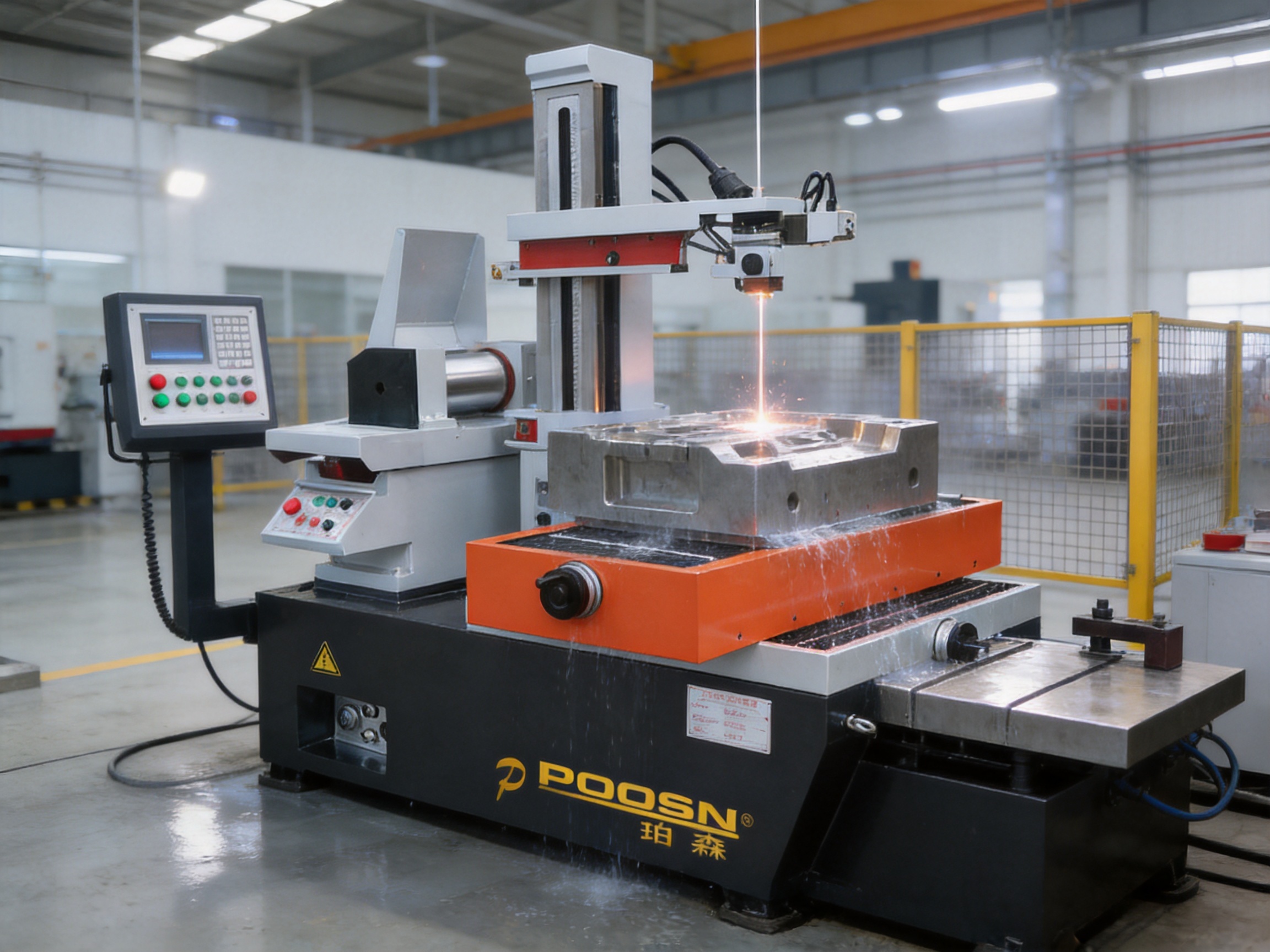
Electrical discharge machining removes material through controlled sparks between the electrode wire and the workpiece. The discharge must occur across a carefully maintained gap. If the gap becomes too small, short circuits and wire breaks may occur. If it becomes too large, the discharge becomes weak or unstable, reducing cutting efficiency.
The DK60BC is described as using an adaptive pulse power supply that monitors discharge conditions in real time and adjusts pulse energy. During rough cutting, the system can prioritize material removal through stronger or more frequent energy pulses. During finishing, it can use lower-energy pulses to improve surface quality and reduce the thickness of the recast layer.
This roughing-to-finishing approach is important because high material-removal speed and fine surface finish normally require different electrical conditions. A single cutting pass optimized for maximum speed may leave a rougher surface and greater geometric deviation. Multiple cutting passes allow the machine to remove the bulk of the material efficiently before using finer electrical parameters to refine the final contour.
The DK-BC series supports multiple-cut processing, with typical routines ranging from roughing to semi-finishing and finishing. The number of passes and specific electrical parameters should be selected according to the material, thickness, contour complexity, required tolerance, and target surface finish.
Adaptive control can also reduce the operator’s burden. Instead of relying entirely on manual adjustment, the control system can respond to changing discharge conditions and modify feed behavior to help avoid unstable cutting. This is especially valuable in thick sections, narrow corners, and areas where flushing conditions change along the cutting path.
8. X8/AUTOCUT Control System
The DK60BC is equipped with an X8/AUTOCUT programming and control system. The system is designed to manage axis motion, cutting parameters, multi-pass routines, taper cutting, and real-time process monitoring through an integrated operator interface.
A graphical programming environment can simplify the preparation of cutting programs. Depending on the selected configuration
Product: DK60BC CNC Medium-Speed Wire EDM Machine (800kg Load, 800mm Thickness)

-
Phone
+86-0523-86268788 +86-13815960366 +86-13912191163Email
[email protected]Address
No. 366, Yusheng Road Jiulong Town, Hailing District Taizhou City, China
Copyright © Taizhou Xinchengyang Machinery Manufacturing Co., Ltd. All Rights Reserved.
Custom edm machine for sale
wholesale edm machine manufacturers
