

 English
 русский
 عربى
عربى

Zhou Meiling — Technical Sales Consultant
Home / Author / Zhou Meiling — Technical Sales Consultant / High-Precision Medium-Speed Wire EDM for Heavy-Duty Cutting Applications
High-Precision Medium-Speed Wire EDM for Heavy-Duty Cutting Applications
2026-07-02
Modern mold manufacturing, precision component production, and heavy machinery machining increasingly demand a cutting solution that can combine high accuracy, high efficiency, broad material compatibility, and stable long-term operation. The DK50BC CNC Medium-Speed Wire EDM Machine is designed for this exact production environment. With a maximum cutting thickness of 650 mm, a maximum worktable load of 600 kg, a 740 × 1060 mm worktable, and 500 × 700 mm XY travel, this machine is positioned as a robust and precise wire electrical discharge machining solution for large molds, thick conductive materials, and complex industrial parts.
Unlike basic high-speed wire-cut EDM equipment that primarily emphasizes speed, the DK50BC focuses on the balanced performance expected from a high-medium-speed WEDM platform: dimensional stability, repeatable accuracy, reliable taper cutting, controlled wire movement, efficient flushing, and practical production economy. It is especially suitable for manufacturers that require better surface quality and higher geometric accuracy than conventional fast-wire EDM can usually provide, while also needing a more cost-effective investment than many slow-wire EDM systems.
Taizhou Xinchengyang Machinery Manufacturing Co., Ltd. develops and manufactures this machine with a long-term focus on EDM equipment, wire cutting technology, special processing solutions, and precision manufacturing. The company’s production philosophy emphasizes quality, stability, and practical usability. Each machine is manufactured according to national standards and undergoes positioning accuracy testing before delivery, helping users receive a machine tool that is ready for dependable industrial use.
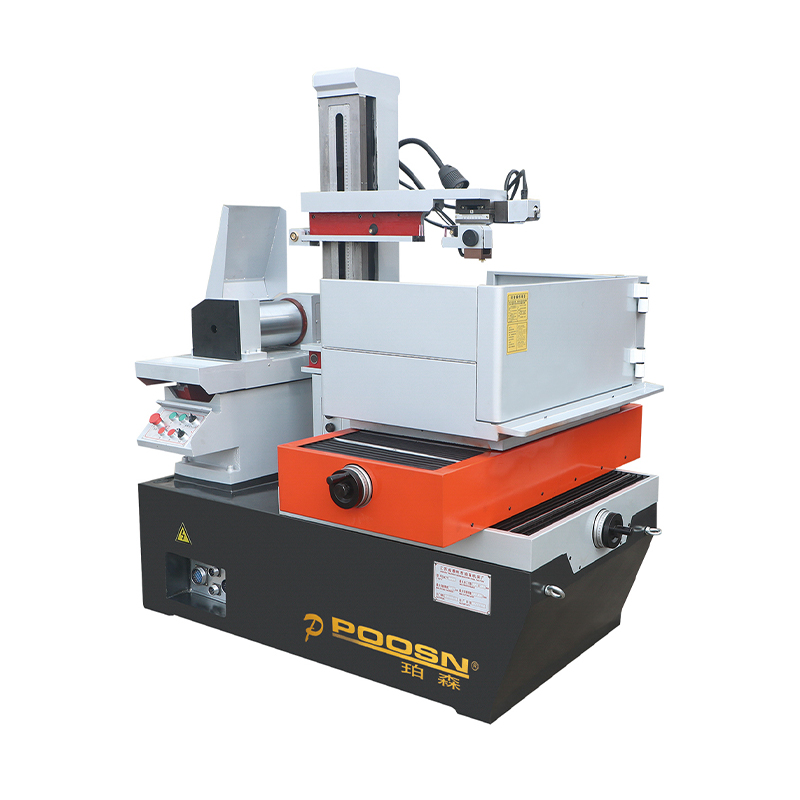
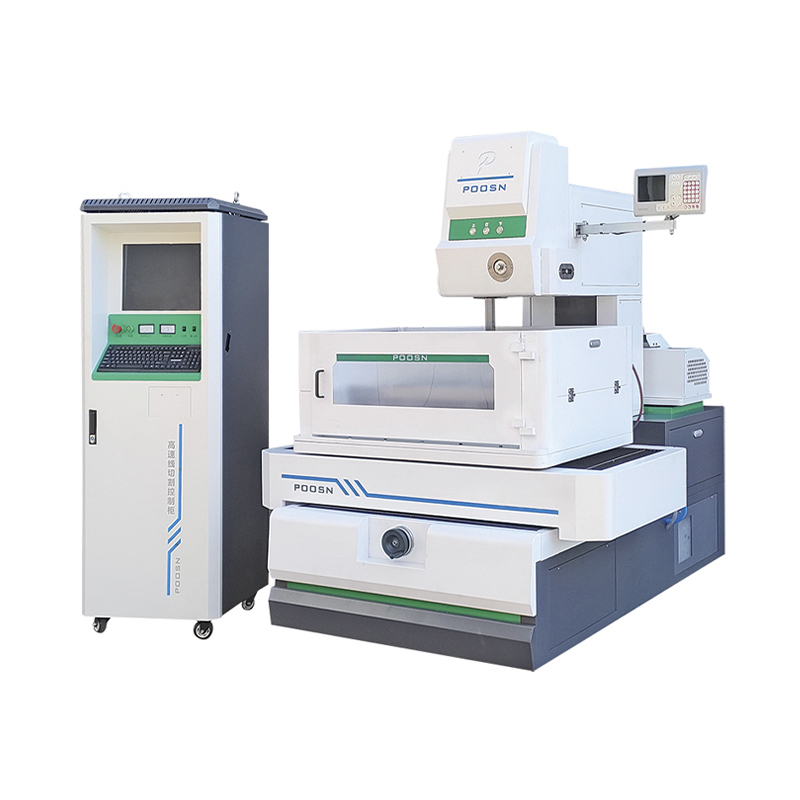
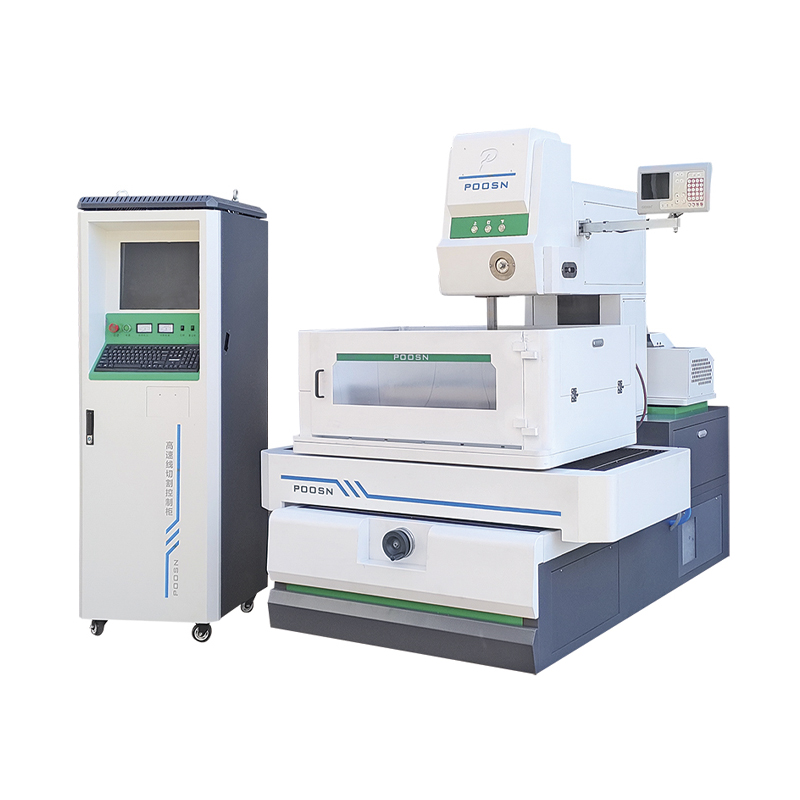
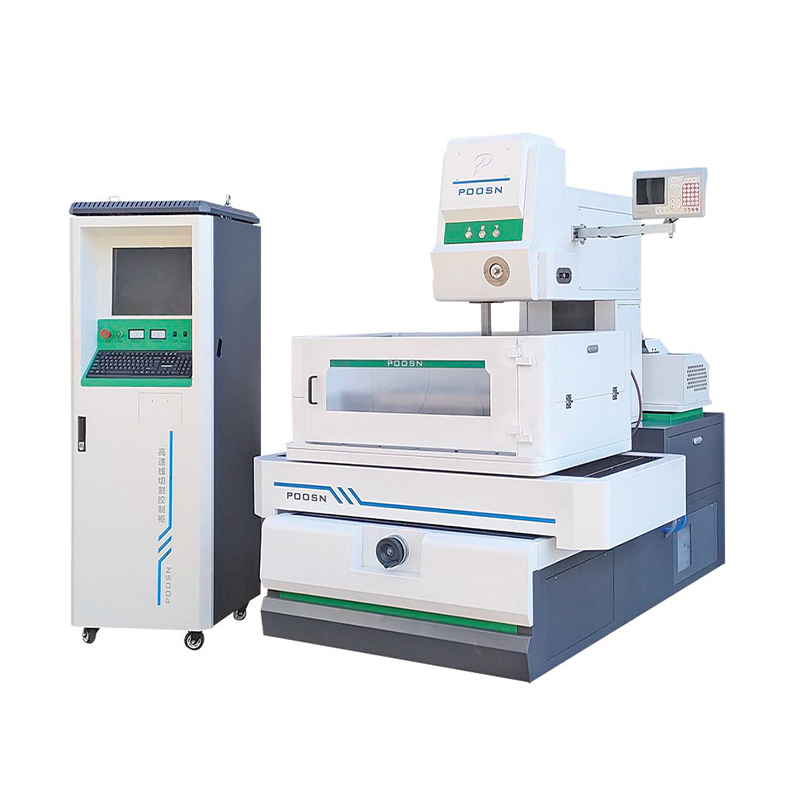
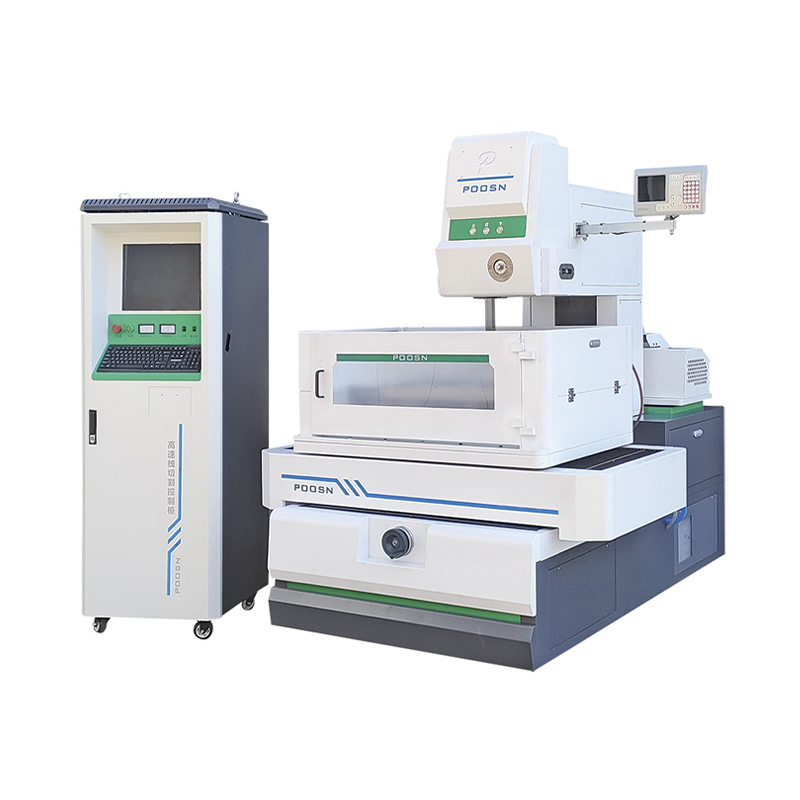
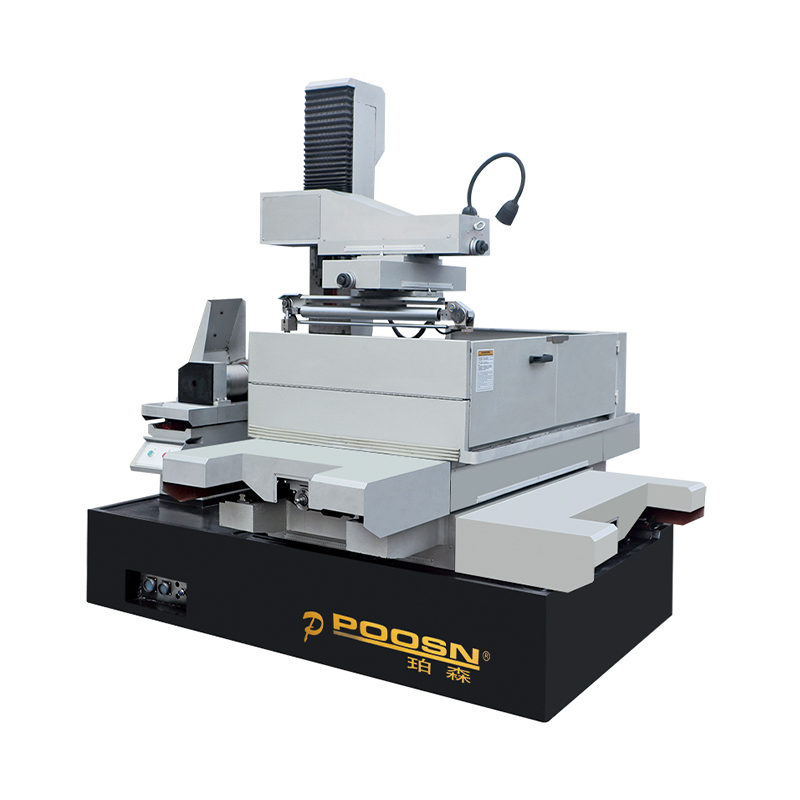
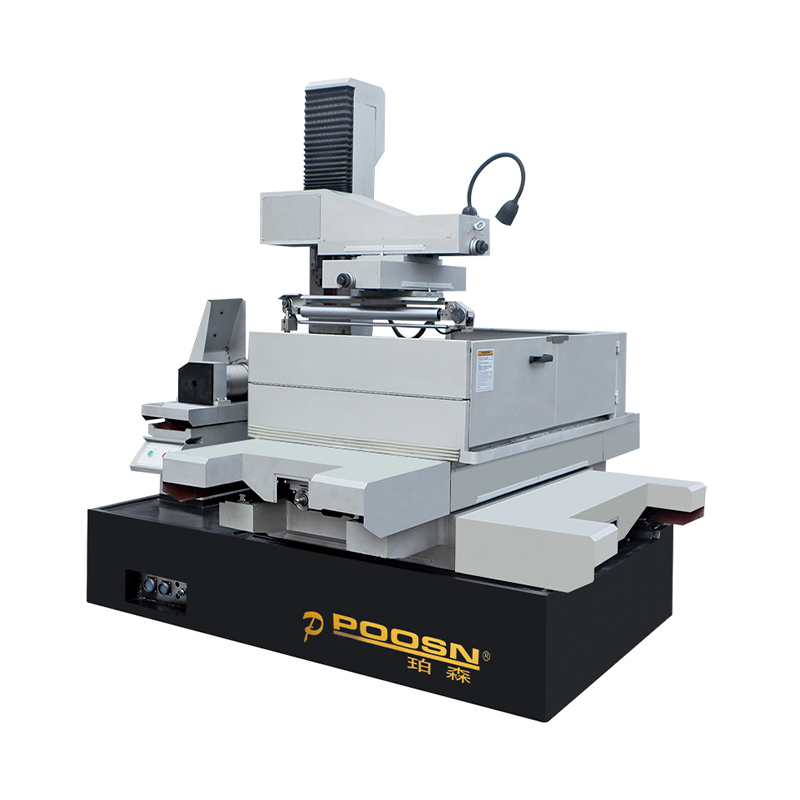
DK50BC CNC Medium-Speed Wire EDM Machine (600kg Load, 650mm Thickness)
Content
- 1 1. Product Positioning and Industrial Value
- 2 2. Core Technical Specifications
- 3 3. Mechanical Rigidity and Structural Stability
- 4 4. Wire Control System and Cutting Stability
- 5 5. Pulse Power Supply and EDM Process Efficiency
- 6 6. Accuracy, Surface Quality, and Repeatability
- 7 7. Taper Cutting and Complex Geometry Capability
- 8 8. Cooling, Flushing, and Workpiece Protection
- 9 9. Application Areas
- 10 10. Comparison Within the Machine Series
- 11 11. Advantages Over Conventional Competitor Equipment
- 12 12. Manufacturing Strengths Behind the Machine
- 13 13. Advanced Manufacturing and Quality Control Processes
- 14 14. Energy Saving and Environmental Considerations
- 15 15. Production Workflow Benefits
- 16 16. Practical Selection Advice
- 17 17. Operating Considerations for Best Results
- 18 18. Q&A Section
- 18.1 Q1: What production needs is the DK50BC most suitable for?
- 18.2 Q2: What are the main advantages of the DK50BC compared with the DK45BC?
- 18.3 Q3: Is the DK50BC suitable for heavy-duty component machining?
- 18.4 Q4: How does the machine maintain accuracy when cutting thick workpieces?
- 18.5 Q5: What cutting efficiency can users expect?
- 18.6 Q6: How does the DK50BC differ from ordinary high-speed wire-cut machines?
- 18.7 Q7: Can the machine replace a slow-wire EDM machine?
- 18.8 Q8: What optional configurations are worth considering?
- 18.9 Q9: What materials can be processed?
- 18.10 Q10: What support does the manufacturer provide?
- 19 19. Conclusion
- 20 References
- 21 Product: DK50BC CNC Medium-Speed Wire EDM Machine (600kg Load, 650mm Thickness)
1. Product Positioning and Industrial Value
The DK50BC belongs to the DK-BC high-medium-speed WEDM category and is designed for users who need a machine capable of handling larger, heavier, and thicker workpieces. It is not merely a larger version of a standard wire-cut EDM system; it is a production-oriented machine tool developed around the real requirements of mold factories, automotive component suppliers, aerospace parts manufacturers, and heavy machinery workshops.
In many factories, production managers face a difficult choice. Traditional high-speed wire-cut machines may be affordable and fast, but they can struggle when the workpiece is thick, heavy, or geometrically demanding. Slow-wire EDM machines can deliver excellent surface finish and tight tolerance, but the purchase cost, consumable cost, and maintenance complexity may exceed the practical requirements of many production scenarios. The DK50BC addresses this middle ground by offering a stronger mechanical structure, controlled wire feeding, multi-cut capability, practical CNC control, and a high worktable load capacity.
The machine is particularly useful where large molds or heavy plates must be cut with stable accuracy. Its 650 mm maximum cutting thickness makes it suitable for thick conductive materials that would be challenging for smaller machines. Its 600 kg load capacity allows users to machine heavy dies, large steel blocks, and substantial mechanical components without compromising table support. This combination of thickness capacity and load capacity gives the DK50BC a distinct advantage over many smaller medium-speed or conventional fast-wire EDM models.
The machine also offers a maximum cutting efficiency of 10,000 to 16,000 mm²/h, depending on the selected control cabinet and machining conditions. This level of productivity supports both single-piece precision manufacturing and medium-to-large batch production. The optimal surface roughness can reach Ra ≤ 2.5 μm under suitable process settings, giving users a better balance between productivity and surface quality.
2. Core Technical Specifications
A clear understanding of the DK50BC begins with its mechanical and electrical parameters. These specifications show why the machine is suitable for large-scale and high-precision workpieces.
| Technical Item | DK50BC Specification | Production Significance |
| Worktable Size | 740 × 1060 mm | Supports large molds, plates, and complex industrial parts |
| XY Travel Size | 500 × 700 mm | Provides a broad processing range for medium-to-large components |
| Processing Slot Size | 740 × 1100 mm | Allows larger workpieces to be positioned and flushed effectively |
| Maximum Cutting Thickness | 650 mm | Enables cutting of thick molds and heavy conductive materials |
| Maximum Worktable Load | 600 kg | Suitable for heavy-duty component machining |
| UV Travel Size | 60 × 60 mm | Supports taper cutting and profile compensation |
| Maximum Cutting Taper | ±6°/80 mm | Useful for mold inserts, tapered cavities, and special contours |
| Electrode Wire Diameter | φ0.18 mm with wire guider | Provides a practical balance between cutting ability and precision |
| Wire Feed Speed | 1–11 m/s frequency control | Allows adjustment for different materials and cutting conditions |
| Maximum Wire Storage Length | Approximately 350 m | Supports longer operating cycles and stable wire supply |
| Maximum Cutting Efficiency | 10,000–16,000 mm²/h | Helps improve productivity in batch production |
| Optimal Surface Roughness | Ra ≤ 2.5 μm | Improves finishing quality compared with ordinary fast-wire cutting |
| Controlled Axes | X, Y, U, V four-axis linkage | Supports complex geometry and taper machining |
| Programming System | X8/AUTOCUT control system | Provides practical programming and machining control |
| Control Cabinet | ZHZK-03 standard, ZHZ-09G optional | Allows configuration according to efficiency and production needs |
| Electrical Capacity | 2.5 KVA | Supports efficient machining with controlled energy use |
| Power Supply | 3N 380 V ±10 | Designed for industrial power environments |
| Machine Weight | 2000 kg | Contributes to rigidity and vibration resistance |
| Machine Dimensions | 2200 × 1865 × 2000 mm | Large enough for heavy work while remaining workshop practical |
3. Mechanical Rigidity and Structural Stability
For wire EDM machining, accuracy is not determined only by the control system or pulse power supply. Mechanical rigidity plays a central role in maintaining linear accuracy, perpendicularity, and surface consistency. The DK50BC uses a high-rigidity mechanical base intended to support heavy workpieces while maintaining stable geometric precision during long operating cycles.
The machine bed is made from quality cast iron and undergoes aging treatment to reduce internal stress. This process is important because untreated casting stress may gradually release over time, causing slight deformation and reduced machining accuracy. By controlling this factor during manufacturing, the machine is better able to maintain stable alignment, particularly when processing heavy blocks or working continuously in demanding production environments.
The DK50BC’s 2000 kg machine weight also contributes to stability. A machine designed for cutting thick and heavy materials must resist vibration, thermal influence, and dynamic motion forces. When the worktable carries a 600 kg workpiece, the supporting structure must remain consistent and predictable. The machine’s structural design helps prevent minute deviations that could otherwise affect straightness, taper accuracy, and dimensional repeatability.
Compared with lighter competitor machines, the DK50BC provides a stronger foundation for high-load machining. Many economical wire-cut machines may be sufficient for small parts, but their rigidity becomes a limitation when the workpiece is large or thick. In contrast, the DK50BC is engineered for high workload conditions, giving users better confidence when processing heavy molds, thick die plates, and large mechanical components.
4. Wire Control System and Cutting Stability
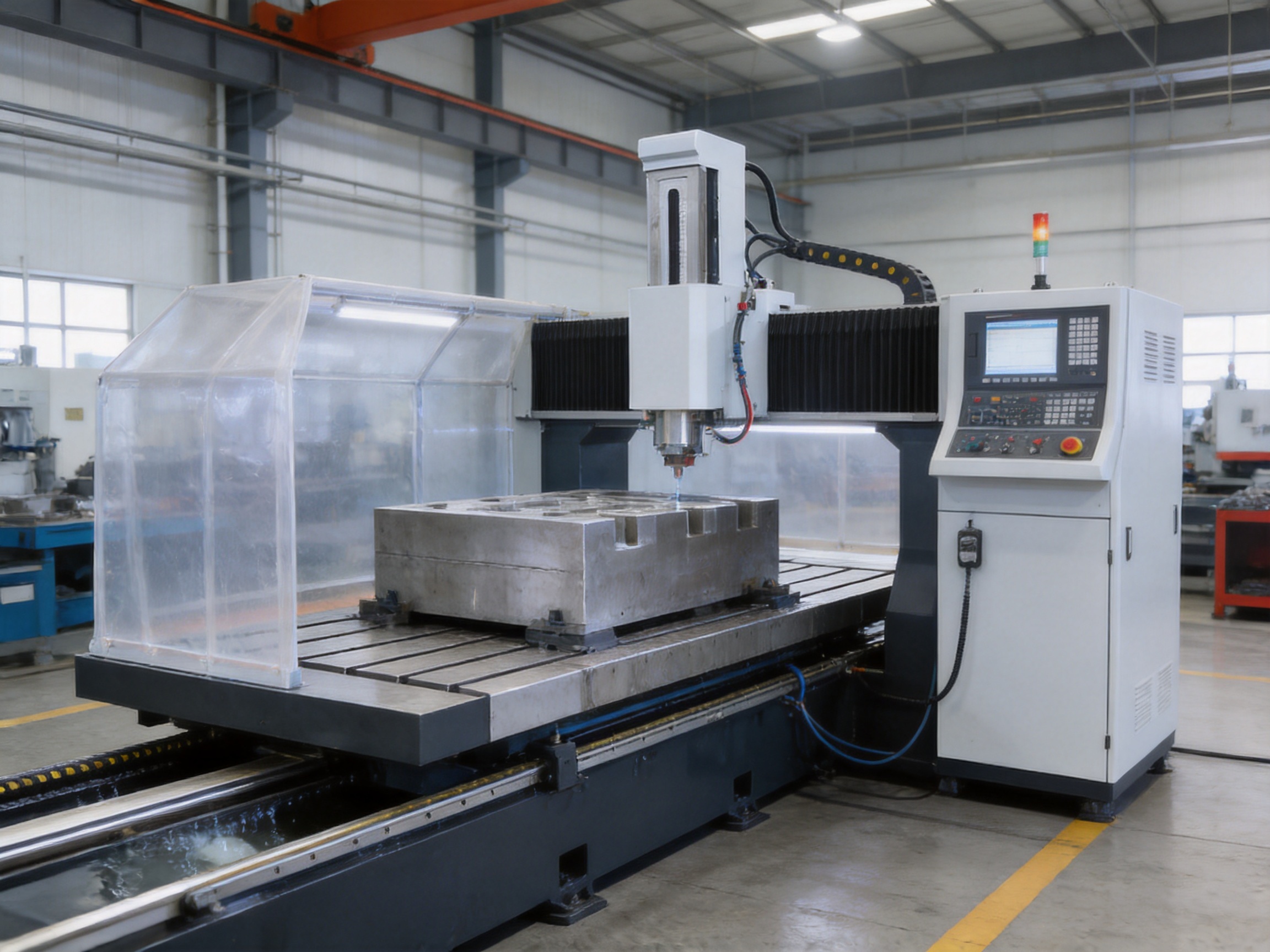
The wire transport system is one of the most important factors in medium-speed wire EDM performance. The DK50BC uses an innovative wire control system designed to improve cutting quality and machining efficiency through intelligent adjustment and stable wire operation. In wire EDM, the electrode wire is not only a consumable; it is also the tool that defines the cut. Any instability in wire tension, vibration, or tracking can directly affect surface quality and dimensional accuracy.
The machine emphasizes constant wire tension and controlled wire movement. Through a multi-stage tensioning mechanism, wire vibration can be reduced during high-speed reciprocating operation. This is especially important when cutting thick materials, because the longer cutting section increases the possibility of wire lag and deflection. Better tension control helps maintain flatter surfaces, improved perpendicularity, and more consistent kerf geometry.
Traditional high-speed wire-cut machines often rely on simpler wire transport systems. They may perform adequately for rough cutting or simple profiles, but when users require better surface finish or repeated accuracy, wire instability can become a major limitation. The DK50BC improves on this by combining controlled wire speed, a practical wire storage capacity of about 350 m, and frequency-controlled wire feed from 1 to 11 m/s. This gives operators more flexibility when matching machine parameters to material thickness, material type, and desired surface finish.
The φ0.18 mm electrode wire configuration with wire guider offers a practical balance between cutting performance and precision. The easy wire-threading waterproof guide wheel further improves operational convenience. In production environments, reduced setup time and easier wire handling can make a meaningful difference, especially for operators who frequently change workpieces or process parts with internal contours.
5. Pulse Power Supply and EDM Process Efficiency
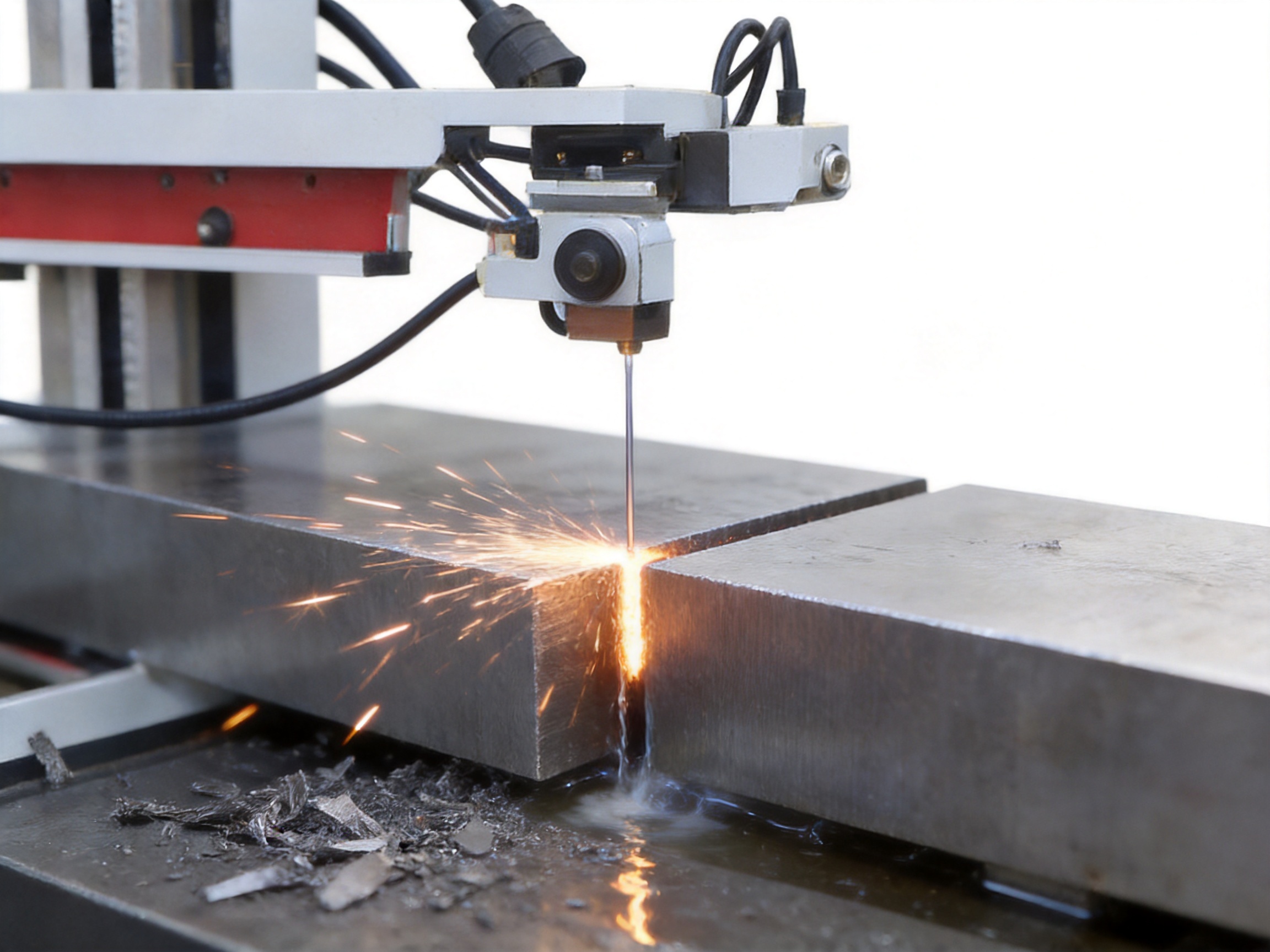
The pulse power supply is the core of any EDM machine because it controls the electrical discharge between the wire electrode and the workpiece. The DK50BC is equipped with a high-performance pulse power system that can support efficient cutting while helping protect the electrode wire and improve surface quality. By adjusting discharge frequency and pulse width according to material thickness and cutting requirements, the system contributes to more stable machining conditions.
In EDM, cutting does not occur through mechanical force. Instead, controlled electrical sparks melt and remove tiny portions of conductive material. The challenge is to maintain stable discharge without excessive arcing, wire breakage, or surface damage. A well-designed pulse power supply must balance energy intensity, spark frequency, gap condition, and flushing performance. The DK50BC is designed to achieve this balance for medium-speed machining applications.
One advantage over many ordinary fast-wire systems is the DK50BC’s ability to support multiple cutting strategies. A typical medium-wire process may include one rough cut followed by two or more finishing cuts. The rough cut removes the majority of material quickly, while the finishing cuts improve dimensional accuracy and remove the recast layer or heat-affected surface. This method helps the machine approach the surface quality standards associated with higher-end EDM processes while preserving practical operating cost advantages.
The machine’s maximum processing current is 6 A, and its electrical capacity is 2.5 KVA. These specifications reflect a design aimed at efficient industrial operation without unnecessary energy waste. Energy-saving and environmental considerations are addressed through optimized drive control and current management. For manufacturers operating multiple machines, reduced power consumption and stable electrical performance can contribute to lower long-term operating costs.
6. Accuracy, Surface Quality, and Repeatability
Precision is one of the central reasons manufacturers choose wire EDM. The DK50BC provides linear accuracy of 0.005 mm and taper accuracy of 0.01 mm under suitable conditions, supporting high-standard production tasks. These accuracy characteristics make the machine suitable for precision molds, complex tooling, mechanical components, and applications where repeatable dimensional control is required.
The machine conforms to GB/T7926-2015 processing accuracy requirements, reflecting a standardized approach to performance verification. Before delivery, every machine tool is subjected to positioning accuracy testing. This manufacturing discipline helps ensure that the equipment users receive is not only mechanically assembled but also verified for accuracy.
The optional linear scale can further improve positioning feedback and compensation. In demanding production environments, a linear scale can help reduce the influence of mechanical transmission error, thermal drift, and cumulative positioning deviation. Users who require higher consistency for precision molds or complex parts may benefit from selecting this option.
The optimal surface roughness of Ra ≤ 2.5 μm gives the DK50BC a practical advantage over conventional high-speed wire-cut machines. While actual surface finish depends on material, thickness, flushing, wire condition, pulse parameters, and the number of cutting passes, the machine’s architecture supports a higher-quality finish than simple rough cutting systems. This reduces the need for excessive secondary polishing in many mold and component applications.
For competitor comparison, the DK50BC should be understood as a machine designed to outperform basic fast-wire EDM in accuracy control, surface consistency, thick-material cutting, and production stability. At the same time, it offers a more accessible investment and operating structure than many slow-wire EDM platforms. This balanced positioning is valuable for factories seeking to upgrade capability without overinvesting in a machine category that may exceed their normal production needs.
7. Taper Cutting and Complex Geometry Capability
Many industrial parts require more than vertical cutting. Mold cavities, inserts, extrusion dies, punches, special fixtures, and aerospace components may involve tapered profiles or complex contour relationships. The DK50BC includes a tapering device with 60 × 60 mm UV travel and maximum cutting taper of ±6°/80 mm. Combined with X, Y, U, and V four-axis linkage, the machine can process a wide range of contour shapes.
The CNC taper device uses UV 3P stepper drives, while the CNC worktable is supplied with standard XY stepper drives and optional XY AC servo drives. This configuration gives users flexibility in balancing cost and performance. For customers requiring higher dynamic response and smoother interpolation, the optional servo drive configuration can be selected.
The X8/AUTOCUT control system supports practical programming and is compatible with mainstream CAD/CAM workflows through standard code generation and machining logic. In complex geometric machining, path smoothness, sharp-corner compensation, and stable interpolation are important. The DK50BC is designed to help operators convert digital part geometry into reliable machining paths.
Compared with machines that only provide simple two-axis cutting, the DK50BC’s four-axis linkage and taper cutting capability expand its application range significantly. Manufacturers can produce not only straight-profile components but also tapered cavities, draft-angle mold parts, and specialized industrial shapes. This helps improve equipment utilization and reduces the need to outsource complex EDM work.
8. Cooling, Flushing, and Workpiece Protection
In wire EDM, flushing quality strongly affects cutting speed, surface finish, and process stability. During discharge machining, microscopic particles are removed from the workpiece and electrode wire. If these particles remain in the spark gap, they can cause unstable discharges, secondary sparking, wire breakage, and surface burns. The DK50BC is designed with an efficient cooling and chip evacuation approach to maintain stable machining conditions.
The optimized working fluid flow helps cover the cutting zone and remove discharge debris. This is especially important when cutting thick workpieces up to 650 mm. In thick cutting, debris removal is more difficult because the flushing path is longer and the discharge gap must remain stable through the full depth of the workpiece. The machine’s high-pressure water tank option can further support demanding cutting conditions where improved flushing pressure is beneficial.
A gem water nozzle and waterproof guide structure help improve the reliability of the cutting zone. The eco-friendly waterproof cover also improves workshop cleanliness by reducing fluid splashing. For industrial users, a cleaner machining environment is not only more comfortable but also more efficient, because it reduces maintenance workload and improves operator safety.
Compared with older wire-cut EDM equipment, the DK50BC reflects a more complete approach to fluid management. Instead of treating flushing as a secondary function, it integrates cutting stability, surface protection, and environmental cleanliness into the machine configuration. This is particularly valuable for high-duty workshops running long machining cycles.
9. Application Areas
9.1 Precision Mold Manufacturing
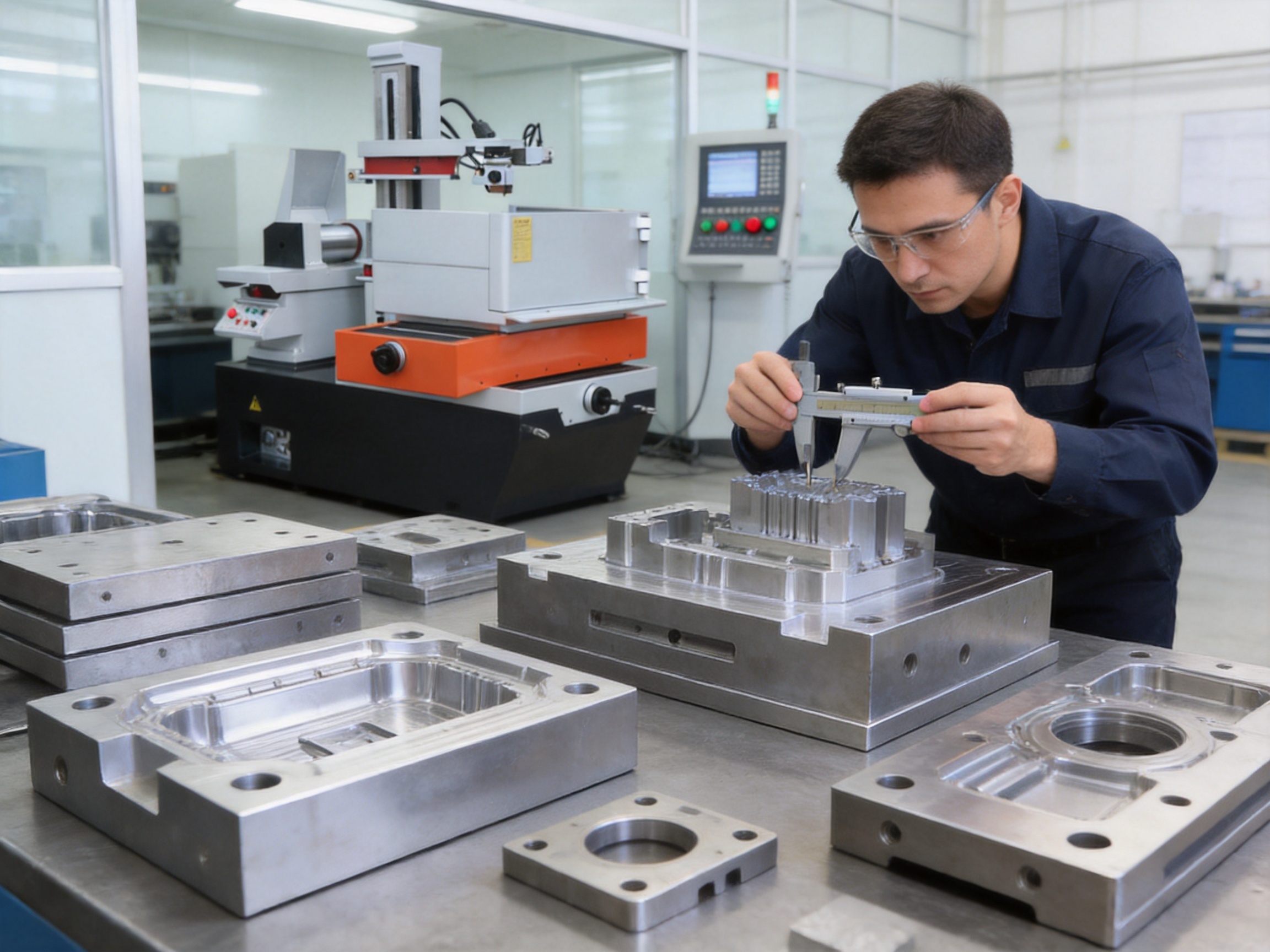
The DK50BC is highly suitable for large mold manufacturing, including metal molds, plastic molds, die components, punch and die sets, and mold inserts. Mold manufacturers often need to cut hardened materials, complex internal profiles, narrow slots, and accurate cavities. The machine’s large worktable, high load capacity, and precision control support these requirements.
In mold production, the ability to cut after heat treatment is a major advantage of EDM. Because wire EDM does not rely on mechanical cutting force, it can process hardened steel and difficult conductive materials with reduced risk of tool wear or mechanical deformation. The DK50BC’s stable wire control and multi-cut capability help produce mold features with improved accuracy and surface finish.
9.2 Heavy Machinery Components
Heavy machinery parts often involve thick steel plates, large profiles, keyways, slots, special contours, and high-strength conductive materials. The DK50BC’s 650 mm cutting thickness and 600 kg load capacity make it suitable for many of these applications. Its mechanical rigidity helps maintain precision even when machining large or heavy workpieces.
For manufacturers of industrial equipment, construction machinery, agricultural machinery, and mechanical transmission systems, the DK50BC can provide a practical solution for special-shaped cutting. It may reduce reliance on multiple conventional processes and improve accuracy for difficult profiles.
9.3 Automotive Components
Automotive manufacturing requires precise tooling, fixtures, stamping dies, forming components, and special parts. The DK50BC can be used in toolroom environments, prototype production, and batch manufacturing of conductive metal parts. Its balance of efficiency and accuracy supports the fast development cycles often required in automotive supply chains.
The machine’s ability to process medium-to-large components gives it value for die and mold departments producing automotive sheet metal tooling or plastic injection mold components. Stable surface quality and repeatable dimensional control can help reduce downstream fitting and polishing work.
9.4 Aerospace and High-Precision Industrial Parts
Aerospace applications often require complex geometry, controlled accuracy, and stable machining processes. While every aerospace component must be evaluated according to its material and certification requirements, the DK50BC provides a useful production platform for conductive parts, tooling, fixtures, and selected precision components. Its taper capability, controlled wire movement, and optional linear scale support higher-demand machining tasks.
9.5 Conductive Ceramic and Carbide Processing
Wire EDM can process many hard conductive materials that are difficult to machine with conventional cutting tools. Cemented carbide, hardened steel, and conductive ceramics can be cut effectively when electrical parameters and flushing conditions are properly matched. The DK50BC’s pulse power control and stable mechanical platform make it suitable for these demanding materials.
10. Comparison Within the Machine Series
The DK50BC is part of a broader product series that includes different machine sizes for different production needs. Understanding its position helps users select the correct model.
| Model | Typical Workpiece Range | Main Advantage | Recommended Use |
| DK35BC | Small to medium workpieces | Compact size and precision capability | Small parts, precision molds, and small-batch work |
| DK45BC | Medium-sized components | Larger table and higher load than entry model | General mold manufacturing and mechanical parts |
| DK50BC | Large and heavy components | 650 mm cutting thickness and 600 kg load | Large molds, heavy parts, and high-precision production |
| DK60BC | Extra-large workpieces | 800 mm cutting thickness and 800 kg load | Aerospace tooling, large molds, and heavy-duty production |
Compared with the DK45BC, the DK50BC offers larger X-axis and Y-axis travel, a bigger worktable, higher load capacity, and greater maximum cutting thickness. The DK45BC is suitable for medium-sized parts, while the DK50BC is a stronger choice when workpieces are larger, heavier, or thicker. Compared with the DK60BC, the DK50BC provides substantial capability while occupying less space and requiring a lower investment than the extra-large model. This makes it a balanced choice for many factories upgrading from smaller EDM equipment.
11. Advantages Over Conventional Competitor Equipment
11.1 Stronger Heavy-Load Capability
Many competitor machines in the same general price-sensitive segment are designed for lighter workpieces. Their tables, guide systems, and structural rigidity may be adequate for small dies or thin plates but less stable under heavy loads. The DK50BC’s 600 kg maximum worktable load gives it a clear advantage for mold blocks and heavy components.
11.2 Better Thick-Cutting Capacity
The 650 mm maximum cutting thickness is an important differentiator. In many workshops, thick cutting is where machine limitations become obvious. Wire deflection, poor flushing, slow progress, and inconsistent accuracy can all occur if the machine is not designed for such work. The DK50BC’s structure, wire control, and flushing configuration are intended to support thick-material cutting more reliably.
11.3 More Balanced Cost-to-Performance Ratio
Slow-wire EDM can provide outstanding surface quality, but not every factory requires that level of investment for every part. The DK50BC provides multi-cut medium-speed performance, practical surface finish, and high efficiency, making it a cost-effective alternative for many mold and component applications. It allows users to improve beyond ordinary fast-wire machining without entering the highest cost category.
11.4 Flexible Configuration
The availability of standard and optional control cabinets, optional high-pressure water tank, optional linear scale, and optional XY AC servo drives allows customers to configure the machine according to their production priorities. This flexibility is valuable because not all factories have identical accuracy, speed, or budget requirements.
11.5 Improved Operator Convenience
The easy wire-threading waterproof guide wheel, practical control interface, automatic or centralized lubrication concepts, and cleaner waterproof design help reduce operator burden. A machine that is easier to set up, monitor, and maintain can improve real productivity beyond what is shown in specifications alone.
12. Manufacturing Strengths Behind the Machine
The performance of the DK50BC is closely connected to the manufacturing capabilities of Taizhou Xinchengyang Machinery Manufacturing Co., Ltd. The company has years of experience in the research, development, and production of EDM equipment and special processing machines. Its main product lines include medium-speed wire-cutting EDM machines, high-speed wire-cutting EDM machines, and large-taper wire-cutting EDM machines. This broad product background gives the company practical insight into different customer needs and machining conditions.
The company’s manufacturing strength is reflected in its technical capability, processing equipment, testing methods, and rational product design. A wire EDM machine requires precise alignment of mechanical, electrical, hydraulic, and control systems. The company’s production process emphasizes strict manufacturing according to national standards, which helps maintain consistency from one machine to another.
Positioning accuracy testing is performed on each machine tool. This is a significant strength because it verifies that the finished machine meets the accuracy expectations required for precision machining. In addition, dynamic positioning accuracy testing, multi-point compensation, and practical inspection methods help ensure the machine can deliver stable performance in real applications.
The company’s development history also demonstrates long-term specialization. Since 1999, it has focused on electrical discharge wire cutting. The POOSN brand originated in 2003. The company expanded its market presence through cooperation, gained recognition for quality and reputation, established Taizhou Xinchengyang Machinery Manufacturing Co., Ltd. in 2017 with a registered capital of 60 million yuan, built its own factory, obtained a patent related to automatic CNC machine tool technology in 2018, and was recognized as a High-Tech Enterprise in Taizhou in 2021. This history shows a continuous path of product development, manufacturing investment, and technology improvement.
For customers, this background matters because machine tool purchasing is not only about the initial equipment. It also involves service, technical support, spare parts, training, and long-term reliability. The company provides rapid response and professional technical support to help ensure stable equipment operation. This commitment supports the long-term effectiveness and reliability of each delivered machine.
13. Advanced Manufacturing and Quality Control Processes
13.1 Casting Treatment and Stress Control
The machine bed is produced with attention to casting quality and aging treatment. Internal stress control is essential because even small structural deformation can reduce machining accuracy. By emphasizing stable casting and aging processes, the company improves the long-term geometric stability of the machine.
13.2 Precision Assembly
Wire EDM machine assembly requires careful alignment of worktable movement, guide rails, wire transport parts, taper axes, and electrical systems. High-precision linear rail support contributes to smooth movement and repeatable positioning. Precision ball screws and linear rolling guides help achieve micron-level feed behavior and stable geometric accuracy.
13.3 Electrical System Integration
The electrical and programming system must operate reliably in an EDM environment where discharge energy, coolant, and continuous motion create demanding conditions. The DK50BC uses an industrial control approach with practical anti-interference capability. Stable data transmission and robust electrical design help reduce machining interruptions.
13.4 Accuracy Inspection Before Delivery
Every machine tool undergoes positioning accuracy testing before shipment. This practice reduces the risk of hidden assembly errors and gives customers greater confidence in the machine’s initial performance. For high-precision users, this verification process is a major purchasing consideration.
13.5 Process-Oriented Product Design
The DK50BC is designed not only for specifications but also for daily operation. The control panel layout, wire threading structure, waterproof protection, lubrication arrangement, and optional flushing equipment are all linked to practical workshop use. A machine that is easier to operate consistently can deliver better production results than a machine that is powerful but difficult to manage.
14. Energy Saving and Environmental Considerations
Modern manufacturing increasingly values energy efficiency and environmental responsibility. The DK50BC addresses these concerns through optimized drive control, current regulation, and improved fluid management. By controlling the drive system and machining current more efficiently, the machine can reduce unnecessary energy consumption while maintaining cutting performance.
The waterproof cover and fluid containment design help create a cleaner working environment. Cleaner operation reduces coolant splashing, supports safer working conditions, and helps operators maintain the machine more easily. The optional high-pressure water tank can improve flushing efficiency, while controlled dielectric use helps reduce wasteful operation.
For factories pursuing lean production or green manufacturing goals, these details can make a practical difference. Energy savings may appear modest per machine, but across long operating hours and multiple units, efficient design can reduce total operating cost and environmental impact.
15. Production Workflow Benefits
The DK50BC improves workflow by combining large work capacity, stable precision, and efficient cutting. In a mold workshop, operators can process large workpieces without constantly shifting to external suppliers. In a mechanical parts factory, the machine can cut heavy and complex profiles that may be difficult or inefficient with milling, sawing, or grinding alone.
The optimized cutting process reduces production time, particularly in multi-batch processing. By using appropriate roughing and finishing strategies, users can balance speed and quality according to the part requirement. For rougher parts, higher efficiency settings may be chosen. For precision molds, multiple trimming passes can improve surface finish and dimensional accuracy.
The large worktable also improves flexibility. Users can clamp larger workpieces or arrange multiple smaller parts depending on fixture design. This can improve machine utilization and reduce repeated setup time. In production management, the ability to adapt to varied workpiece sizes is a major advantage.
16. Practical Selection Advice
The DK50BC is recommended when production involves large-sized components, high-precision molds, thick materials, and heavy workpieces. It is also suitable for companies that need a stronger upgrade from smaller wire-cut machines but do not yet require the extra-large capacity of the DK60BC.
Users processing mostly small parts may select the DK35BC for a more compact and economical solution. Users processing medium-sized mold and mechanical parts may choose the DK45BC. However, if workpieces frequently exceed medium size, if cutting thickness reaches demanding levels, or if table load is a concern, the DK50BC is a more suitable model. For extra-large aerospace tooling, very heavy molds, or 800 mm thick cutting requirements, the DK60BC may be the better choice.
When configuring the DK50BC, users should consider whether to select optional XY AC servo drives, linear scale, and high-pressure water tank. For general production, the standard configuration provides strong capability. For high-precision and high-duty applications, optional upgrades can improve positioning feedback, dynamic performance, and flushing stability.
17. Operating Considerations for Best Results
To achieve the best machining results, operators should match parameters to material type, thickness, desired surface finish, and part geometry. Thick workpieces require careful flushing and stable wire tension. Precision mold parts may require multiple cutting passes. Heavy components require secure clamping and correct table loading practices.
The working fluid should be maintained properly because fluid quality affects discharge stability, debris removal, surface finish, and wire life. Dirty or poorly controlled working fluid can reduce cutting quality even on a well-designed machine. Regular maintenance of guide wheels, wire transport components, water nozzles, filters, and lubrication points helps preserve machine accuracy and reliability.
For taper cutting, operators should verify UV axis calibration, wire alignment, and programmed taper values. Complex geometry should be checked through simulation or careful code review before machining. The X8/AUTOCUT system supports practical programming workflows, but process knowledge remains important for achieving stable results.
18. Q&A Section
Q1: What production needs is the DK50BC most suitable for?
The DK50BC is suitable for precision cutting of large-sized components, heavy mechanical parts, thick conductive materials, and high-precision molds. It is especially useful for users who require high cutting accuracy, stable thick-material processing, and higher load capacity than smaller machines can provide.
Q2: What are the main advantages of the DK50BC compared with the DK45BC?
The DK50BC provides a larger worktable, larger XY travel, greater maximum cutting thickness, and higher worktable load capacity. The DK45BC has 450 × 600 mm XY travel and 400 kg load capacity, while the DK50BC offers 500 × 700 mm XY travel and 600 kg load capacity. If workpieces are larger, heavier, or thicker, the DK50BC provides stronger support.
Q3: Is the DK50BC suitable for heavy-duty component machining?
Yes. With a maximum worktable load of 600 kg and a maximum cutting thickness of 650 mm, the DK50BC is designed for heavy-duty machining tasks such as large molds, thick die plates, and heavy machinery components.
Q4: How does the machine maintain accuracy when cutting thick workpieces?
The machine combines a rigid cast-iron structure, controlled wire tension, stable wire feed, practical flushing design, and CNC taper control. For very thick materials, multi-cut strategies can further improve perpendicularity, dimensional accuracy, and surface quality.
Q5: What cutting efficiency can users expect?
The maximum cutting efficiency is generally 10,000 to 16,000 mm²/h, depending on material, thickness, flushing condition, wire quality, selected control cabinet, and machining parameters. The machine supports efficient production while maintaining practical accuracy.
Q6: How does the DK50BC differ from ordinary high-speed wire-cut machines?
Ordinary high-speed wire-cut machines often focus mainly on fast rough cutting. The DK50BC provides better controllability through medium-speed machining strategies, improved wire control, four-axis linkage, multi-cut capability, and enhanced stability. This allows better surface finish and dimensional consistency than many basic fast-wire machines.
Q7: Can the machine replace a slow-wire EDM machine?
The DK50BC is not intended to fully replace slow-wire EDM in applications requiring the highest possible surface finish or ultra-fine tolerance. However, for many industrial molds and mechanical components, it offers an excellent balance of precision, speed, and cost. It can reduce the need for slow-wire outsourcing in many practical production scenarios.
Q8: What optional configurations are worth considering?
Users with higher accuracy requirements may choose the optional linear scale. Users cutting thick materials or running demanding production may consider the high-pressure water tank. Users needing smoother dynamic motion and higher response may select optional XY AC servo drives. The optional ZHZ-09G control cabinet can also be considered according to production needs.
Q9: What materials can be processed?
The DK50BC can process conductive materials, including hardened steel, tool steel, cemented carbide, mold steel, and selected conductive ceramics. As with all EDM processes, the workpiece must be electrically conductive or suitable for EDM cutting conditions.
Q10: What support does the manufacturer provide?
Taizhou Xinchengyang Machinery Manufacturing Co., Ltd. provides rapid response and professional technical support to help ensure stable machine operation. The company’s experience in EDM equipment manufacturing and its quality control procedures support long-term machine reliability.
19. Conclusion
The DK50BC CNC Medium-Speed Wire EDM Machine is a strong solution for manufacturers that need to cut large, thick, and heavy workpieces with stable precision. Its 650 mm maximum cutting thickness, 600 kg worktable load, 500 × 700 mm XY travel, four-axis linkage, controlled wire transport, multi-cut capability, and practical CNC system make it a versatile machine for mold manufacturing, heavy machinery, automotive tooling, aerospace-related applications, and precision component production.
Its key advantage lies in balance. It offers better control, surface finish, and accuracy than many conventional high-speed wire-cut EDM machines, while remaining more economical and production-friendly than many slow-wire EDM systems. This makes it especially valuable for factories seeking to upgrade machining capability, improve workflow efficiency, and reduce outsourcing costs.
Behind the machine is the manufacturing strength of Taizhou Xinchengyang Machinery Manufacturing Co., Ltd., a specialized EDM equipment manufacturer with long-term technical experience, strict production standards, accuracy testing procedures, and a commitment to customer support. Through its mechanical rigidity, intelligent wire control, efficient pulse power supply, and practical production design, the DK50BC provides a reliable foundation for modern precision machining.
References
1. GB/T7926-2015, Accuracy Inspection Standards for Electrical Discharge Wire-Cut Machine Tools.
2. Manufacturing Technology Handbook: Electrical Discharge Machining Principles and Applications.
3. Precision Mold Manufacturing Process Guide, Industrial Tooling and Die Engineering Reference.
4. Wire Electrical Discharge Machining: Process Control, Surface Integrity, and Industrial Applications.
5. CNC Machine Tool Design and Accuracy Verification, Mechanical Manufacturing Engineering Reference.
Product: DK50BC CNC Medium-Speed Wire EDM Machine (600kg Load, 650mm Thickness)
-
Phone
+86-0523-86268788 +86-13815960366 +86-13912191163Email
[email protected]Address
No. 366, Yusheng Road Jiulong Town, Hailing District Taizhou City, China
Copyright © Taizhou Xinchengyang Machinery Manufacturing Co., Ltd. All Rights Reserved.
Custom edm machine for sale
wholesale edm machine manufacturers
