

 English
 русский
 عربى


Fang Xuelan — Customer After-Sales Supervisor
Home / Author / Fang Xuelan — Customer After-Sales Supervisor / DK63D Heavy-Duty CNC Large-Taper Wire-Cut EDM Machine for Large Mold and Complex Component Machining
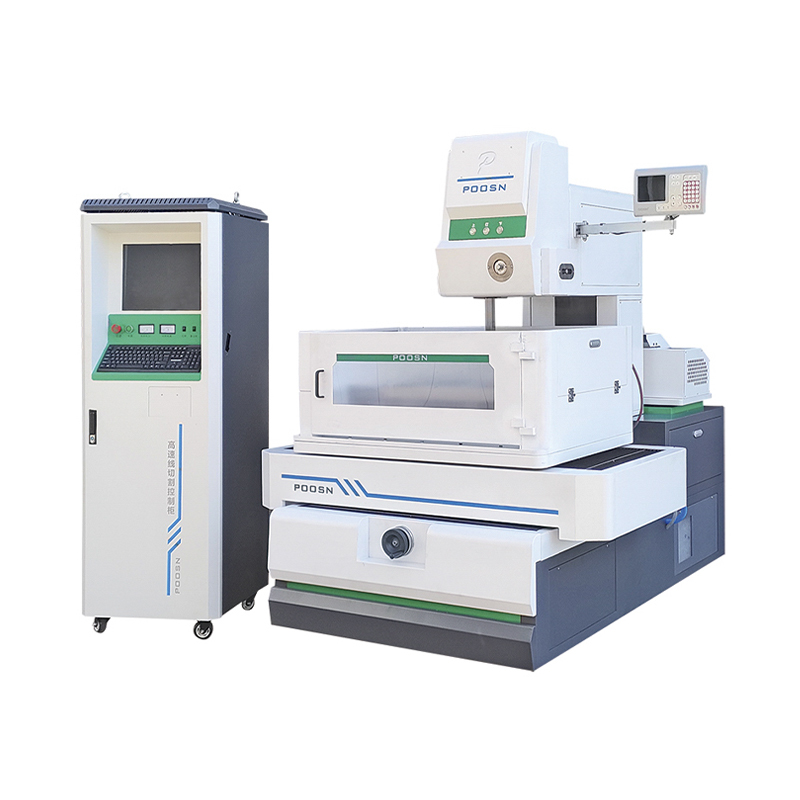
DK63D Heavy-Duty CNC Large-Taper Wire-Cut EDM Machine for Large Mold and Complex Component Machining
2026-08-29
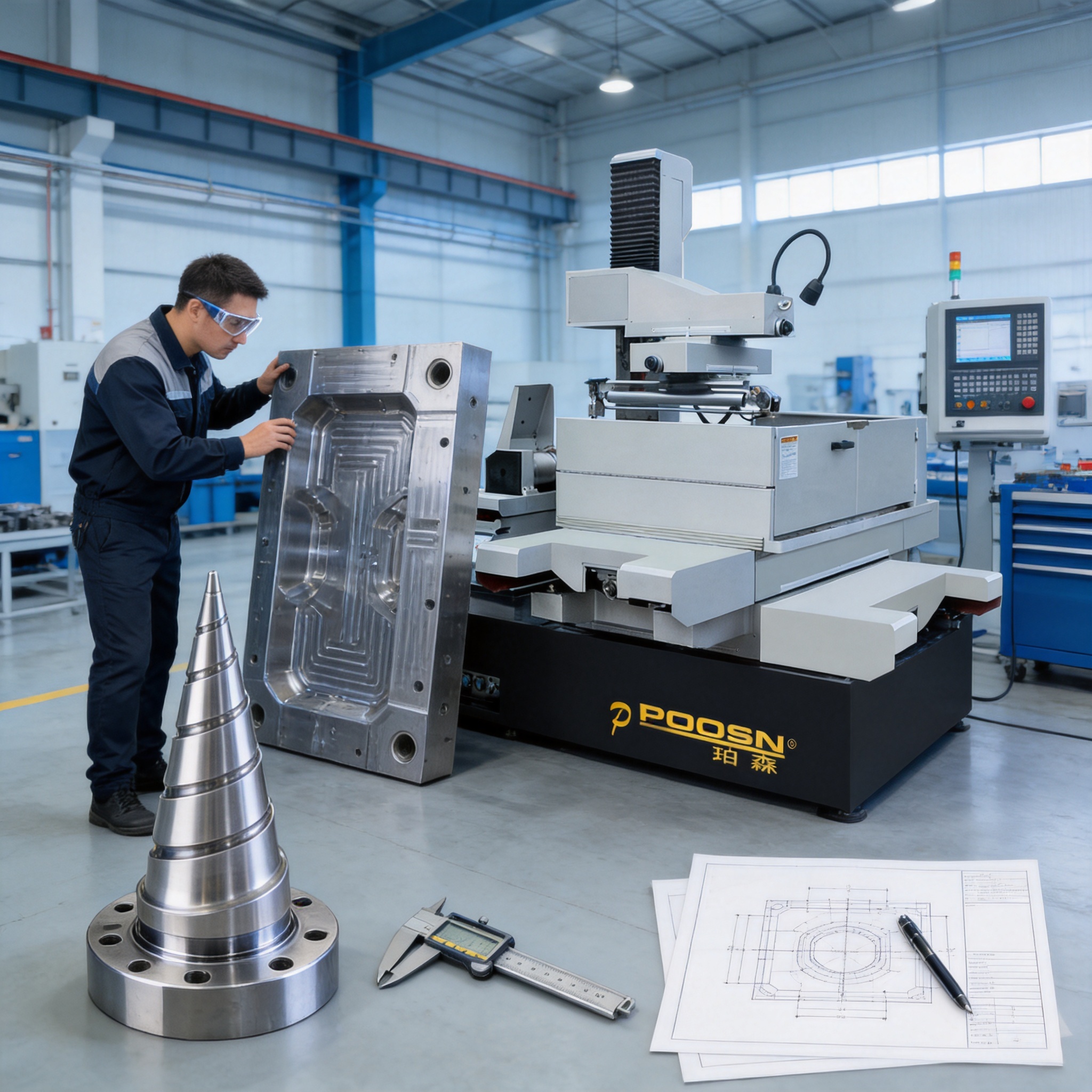
Large and heavy workpieces create challenges that conventional wire-cut electrical discharge machining equipment cannot always address efficiently. As workpiece dimensions increase, the machine must provide greater table capacity, longer axis travel, stronger structural stability, deeper cutting capability, and reliable control of the electrode wire at large taper angles. These requirements are especially important in precision mold manufacturing, aerospace component production, heavy machinery, and the machining of complex parts made from difficult-to-cut materials.
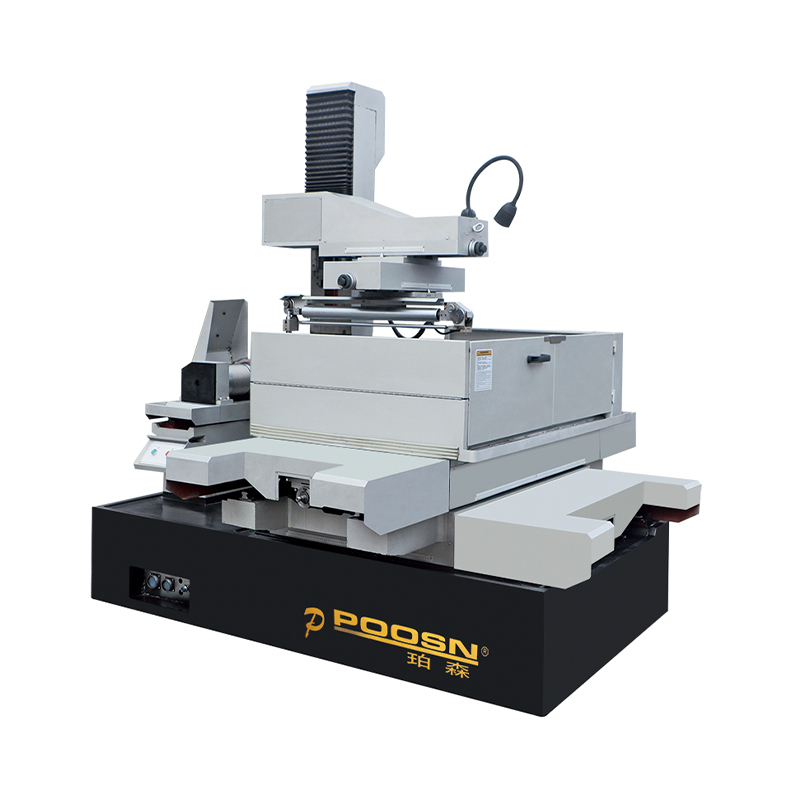
The DK63D Heavy-Duty CNC Large-Taper Wire-Cut EDM Machine is designed for these demanding production conditions. It combines a large working envelope, high load capacity, four-axis linkage, large-taper cutting capability, deep cutting performance, and an intelligent CNC control system. Its mechanical structure and process-control architecture are intended to maintain dimensional accuracy and cutting stability even when machining large, thick, heavy, or geometrically complicated workpieces.
With a maximum X-axis travel of 630 mm, a maximum Y-axis travel of 1,000 mm, a maximum worktable load of 800 kg, and a maximum cutting thickness of up to 600 mm according to the technical table, the DK63D is positioned between medium-large and extra-large wire-cut EDM platforms. It is particularly suitable for customers that require more capacity than a DK45D or DK55D but do not necessarily need the much larger footprint and capacity of a DK80D.
Content
- 1 1. Product Positioning and Core Value
- 2 2. Large-Taper Cutting Performance
- 3 3. Heavy-Duty Worktable and Large Working Envelope
- 4 4. Deep Cutting Capability
- 5 5. Precision, Surface Quality, and Process Stability
- 6 6. Intelligent CNC Control and Automation
- 7 7. Mechanical Design and Advanced Manufacturing Processes
- 8 8. Comparison with Other Models in the Series
- 9 9. Application Advantages in Precision Mold Manufacturing
- 10 10. Aerospace and Precision Machinery Applications
- 11 11. Material Compatibility
- 12 12. Production Efficiency and Operating Cost
- 13 13. Customization and Configuration Flexibility
- 14 14. Quality Assurance and Manufacturing Strengths
- 15 15. Installation, Training, and Lifecycle Support
- 16 16. Practical Maintenance Recommendations
- 17 17. Why the DK63D Is a Competitive Choice
- 18 18. Frequently Asked Questions
- 18.1 Q1: What are the main advantages of the DK63D over the DK45D and DK55D?
- 18.2 Q2: Can the DK63D machine thick materials?
- 18.3 Q3: What taper angle can the DK63D achieve?
- 18.4 Q4: How does the DK63D maintain precision during large-angle cutting?
- 18.5 Q5: What is the cutting efficiency of the DK63D?
- 18.6 Q6: What control system does the machine use?
- 18.7 Q7: Is the machine suitable for operators with limited large-taper experience?
- 18.8 Q8: What materials can be processed?
- 18.9 Q9: What optional configurations are available?
- 18.10 Q10: How is machine stability maintained under heavy loads?
- 18.11 Q11: What maintenance areas require the most attention?
- 18.12 Q12: Is technical support available after delivery?
- 19 19. Conclusion
- 20 References
- 21 Product: DK63D Heavy-Duty CNC Large Taper Wire Cut EDM Machine for Large Mold Machining
1. Product Positioning and Core Value
The DK63D belongs to the large-cutting-taper WEDM category. Unlike a standard straight-cut wire EDM machine, it is engineered to control the wire electrode at an angle while maintaining coordinated motion between the X, Y, U, and V axes. This makes it possible to produce tapered profiles, inclined surfaces, complex openings, variable-angle contours, and components with significant geometric transitions.
The main value of the DK63D lies in its balance of working capacity and precision. The machine is large enough to accommodate heavy-duty molds and substantial mechanical parts, but its configuration remains more accessible than that of the largest models in the series. It offers a practical solution for manufacturers that need large-taper machining without automatically moving to the highest-capacity machine platform.
The machine is also designed for production efficiency. Its stated maximum cutting efficiency ranges from 10,000 to 16,000 mm²/h, depending on the control cabinet configuration, material, thickness, cutting conditions, and process strategy. This performance enables the DK63D to support both prototype work and repeated production of large precision components.
For manufacturers, equipment value is determined not only by cutting speed but also by the ability to reduce setup time, control operator workload, limit secondary processing, and maintain consistent quality over long operating cycles. The DK63D addresses these factors through a combination of automated parameter adjustment, high-precision guide systems, four-axis interpolation, stable wire feeding, and process-oriented technical support.
2. Large-Taper Cutting Performance
Large-angle machining is one of the defining features of the DK63D. The machine supports large taper cutting of up to ±45°/80 mm according to the product information. This capability expands the range of parts that can be produced compared with standard wire EDM equipment designed mainly for vertical cutting.
Large-taper machining is useful when a component includes inclined walls, tapered cavities, angled punches, complex die openings, or sections whose upper and lower profiles are different. In mold production, the ability to control taper precisely can eliminate additional milling, grinding, or manual correction. In aerospace and precision machinery, it enables the production of geometries that would otherwise require multiple setups or specialized tooling.
The DK63D uses coordinated X/Y and U/V axis movement to control the wire trajectory. The X and Y axes determine the primary cutting path, while the U and V axes control the relative position of the wire guide system. Four-axis linkage allows the machine to generate a calculated angular relationship between the upper and lower wire positions.
Large-taper cutting places demanding requirements on motion synchronization. Even a small error in axis positioning can cause dimensional deviation, incorrect angular geometry, or uneven surfaces. The DK63D addresses this challenge through a high-capacity U/V axis linkage system, precision guide components, and control algorithms designed to compensate for wire-electrode position during inclined movement.
Its taper system is suitable not only for fixed-angle machining but also for complex variable-taper work. This is important for parts with changing slopes, irregular contours, or upper and lower profiles that cannot be represented by one constant angle. The practical result is greater freedom in component design and fewer restrictions during mold development.
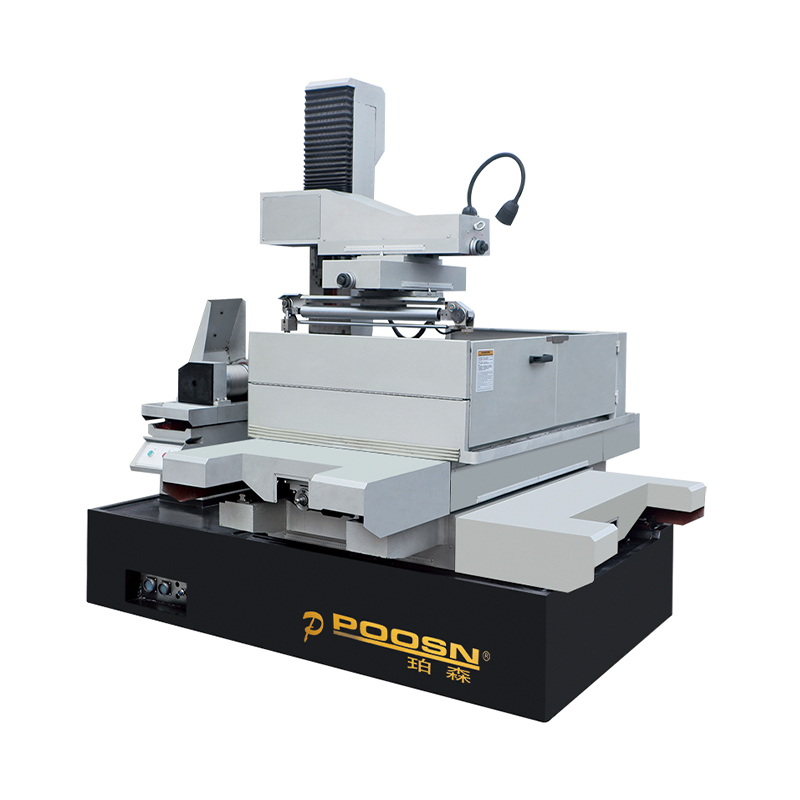
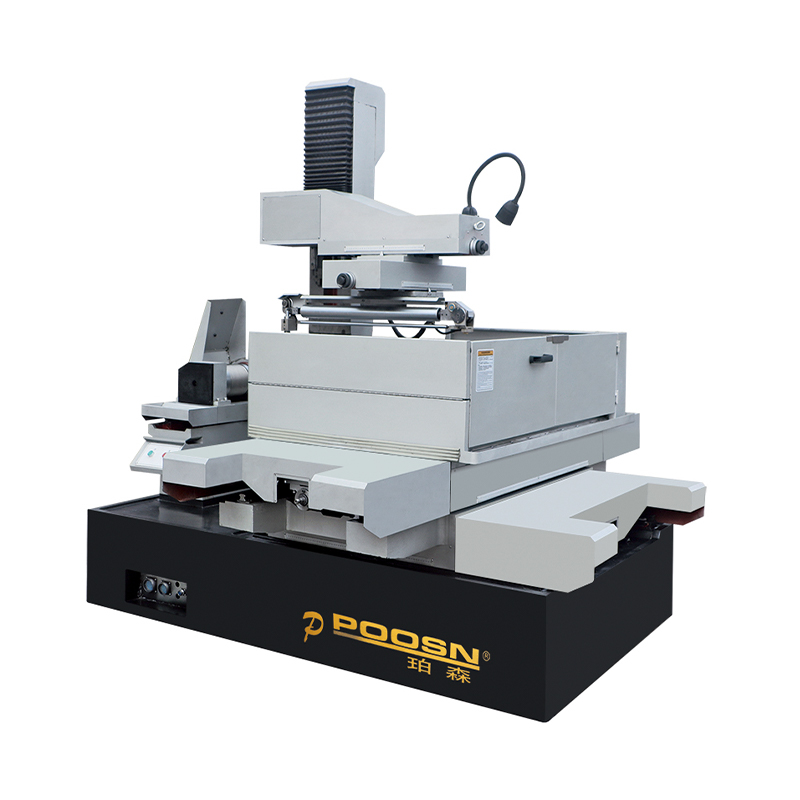
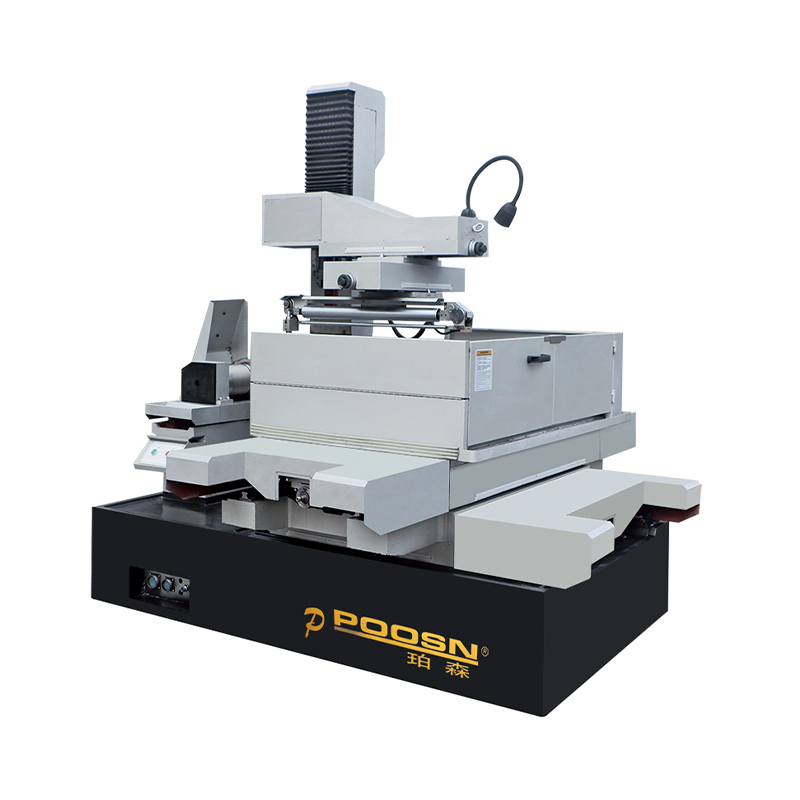
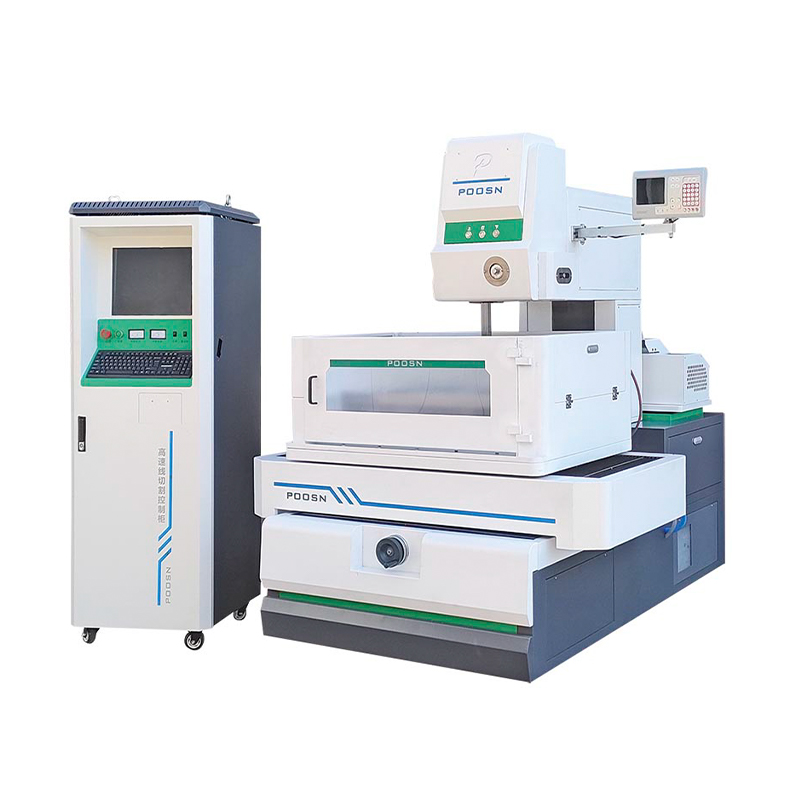
DK63D Heavy-Duty CNC Large Taper Wire Cut EDM Machine for Large Mold Machining
3. Heavy-Duty Worktable and Large Working Envelope
The DK63D is designed for large workpieces. Its CNC worktable measures approximately 844 × 1,360 mm, while the stated X/Y travel is 630 × 1,000 mm. The processing slot is approximately 890 × 1,400 mm. These dimensions provide a substantial machining envelope for large dies, structural components, plates, inserts, and complex mechanical parts.
A maximum worktable load of 800 kg allows the machine to support heavy components that could exceed the capacity of ordinary wire EDM platforms. Load capacity is more than a simple lifting specification. It affects the stability of the cutting process, the rigidity of the table, the behavior of the guide system, and the ability to position large workpieces safely and repeatably.
When heavy workpieces are mounted, the machine structure must resist deformation and maintain the relative position between the wire, guides, and workpiece. The DK63D uses a reinforced machine bed and high-strength structural materials to provide stable support under high-load conditions. This is particularly valuable during long cutting cycles, when thermal and mechanical changes can accumulate over time.
The large working envelope also reduces the need for repositioning. Fewer setups can improve dimensional consistency because the part remains referenced to the same coordinate system. Reduced repositioning can also shorten production time, reduce the risk of alignment errors, and simplify inspection procedures.
For mold manufacturers, the capacity is suitable for large stamping dies, injection mold components, precision templates, and large inserts. For aerospace and heavy machinery customers, it provides sufficient table space for substantial structural parts and hard-material components requiring narrow cutting slots or complex internal profiles.
4. Deep Cutting Capability
The DK63D is suitable for thick workpieces and deep cutting applications. The product information identifies a maximum cutting thickness of up to 600 mm in the technical parameter table. The associated product description emphasizes its ability to handle deeper cutting tasks and workpieces with complex geometric forms.
Deep cutting creates several process difficulties. The wire must remain stable over a long working length, dielectric flushing must effectively remove erosion debris, and the electrical discharge gap must remain controlled throughout the cut. If debris accumulates or wire vibration increases, the risk of wire breakage, unstable discharge, rough surfaces, and dimensional error becomes greater.
The DK63D is configured to support stable cutting in these conditions through a controlled wire-feed system, optimized discharge technology, and optional high-pressure water tank equipment. The wire-feed system uses a standard electrode wire diameter of approximately 0.18 mm with a wire guider. Its wire-feed speed is listed at 1 to 11 m/s with frequency control, and its maximum wire storage length is approximately 350 m.
These features help maintain a consistent cutting process through thick sections. The ability to adjust wire-feed conditions and electrical parameters allows operators to adapt the process to material hardness, workpiece thickness, contour complexity, and required surface quality.
Deep cutting is especially useful for large die blocks and thick hardened alloy components. It can also reduce the need to divide a part into multiple sections, which improves geometric continuity and may lower total manufacturing cost.
5. Precision, Surface Quality, and Process Stability
The machine is specified with a linear accuracy of 0.08 mm and is manufactured in accordance with the GB/T7926-2015 machine accuracy standard. The optimal surface roughness is listed as Ra ≤ 2.5 μm under suitable cutting conditions.
Actual machining results depend on material, thickness, wire condition, flushing, cutting parameters, workpiece preparation, and programming strategy. Nevertheless, the machine’s mechanical and electrical configuration is designed to provide a stable foundation for precision work.
High-precision linear guide rails support smooth movement and help reduce friction-related errors. Precision ball screws transmit motion from the drive system to the worktable and contribute to repeatable positioning. During assembly, careful alignment of the guide and screw systems is essential because large-taper machining requires frequent coordinated movement between the primary axes and the U/V axes.
Surface quality is influenced by the consistency of the discharge gap. A stable pulse power supply helps regulate electrical energy in the machining zone and supports effective erosion of the workpiece. Efficient chip removal is equally important. When debris is removed from the gap, the process is less likely to suffer from short circuits, unstable discharge, or unwanted wire breakage.
The DK63D is designed to reduce common large-taper machining problems such as dimensional distortion, wire deflection, mid-section bulging, and root chipping. These problems can occur when cutting forces, discharge conditions, wire inclination, and flushing are not properly coordinated. The machine’s control system and structural design work together to maintain a more predictable wire trajectory and cutting condition.
For mold manufacturers, stable surface quality can reduce polishing and correction work. For precision machinery customers, consistent geometry improves interchangeability and assembly performance. For aerospace customers, controlled accuracy and process repeatability are important for meeting demanding part specifications.
| Performance Area | DK63D Capability | Production Benefit |
| Maximum X/Y travel | 630 × 1,000 mm | Accommodates large workpieces and reduces repositioning |
| Worktable size | Approximately 844 × 1,360 mm | Provides a large mounting area for dies and heavy components |
| Maximum worktable load | 800 kg | Supports heavy-duty machining applications |
| Maximum cutting thickness | Up to 600 mm | Enables deep cutting of thick workpieces |
| Maximum taper capability | Up to ±45°/80 mm | Supports inclined, tapered, and complex profiles |
| Maximum cutting efficiency | 10,000–16,000 mm²/h | Improves throughput in suitable production conditions |
| Optimal surface roughness | Ra ≤ 2.5 μm | Reduces secondary finishing requirements |
| Controlled axes | X, Y, U, and V four-axis linkage | Enables coordinated large-taper machining |
| Programming system | X8/AUTOCUT | Simplifies programming and parameter management |
6. Intelligent CNC Control and Automation
The DK63D uses the X8/AUTOCUT control system. This CNC platform is intended to improve programming convenience, cutting efficiency, and process consistency. An intelligent control system is particularly important for large-taper wire EDM because the operator must manage multiple coordinated axes and a wide range of cutting parameters.
The system can automatically adjust cutting parameters according to the machining task. Parameter adjustment may involve factors such as workpiece material, thickness, taper angle, cutting path, wire condition, discharge stability, and desired finish. Automation reduces manual intervention and helps operators maintain more consistent production conditions.
Large-taper machining often requires four-axis simultaneous control. Without suitable software support, programming can become time-consuming and prone to errors. The DK63D’s control architecture is designed to make the programming process more accessible by providing guided parameters and support for complex trajectory calculations.
The control system is also compatible with mainstream CAD/CAM workflow requirements. This allows the machine to be incorporated into modern manufacturing environments in which part geometry is created digitally, processed through CAM software, and transferred to the machine for controlled execution.
Automation does not eliminate the importance of operator experience. Correct fixturing, workpiece preparation, wire threading, flushing, and process verification remain essential. However, automated parameter management can reduce repetitive decisions and allow skilled operators to focus on process optimization, quality control, and production planning.
For companies with multiple operators or several shifts, a more guided control system can help reduce variation between users. It can also shorten training time for operators who already possess basic wire-cut EDM experience.
7. Mechanical Design and Advanced Manufacturing Processes
The performance of a large-taper wire EDM machine depends heavily on the quality of its manufacturing process. A machine may have advanced control software, but it cannot maintain accuracy if the bed, guide rails, screws, or wire frame are not manufactured and assembled precisely. The production approach used for the DK63D therefore emphasizes structural strength, precision alignment, and comprehensive testing.
7.1 Reinforced Machine Bed
The DK63D uses a high-strength cast iron bed that undergoes extended natural aging. Natural aging helps relieve internal stresses in cast iron before precision machining and assembly. This is important because residual stress can lead to deformation over time, particularly when a machine is exposed to temperature variation or prolonged heavy operation.
The reinforced bed is designed to resist the lateral forces generated during large-taper cutting. When the wire is inclined, the cutting process can introduce forces that differ from those present in vertical machining. A rigid and stable bed helps preserve the geometric relationship between the table, wire frame, and electrode guides.
Long-term structural stability is a major advantage in production environments. It reduces the likelihood that the machine will require frequent geometric correction and helps maintain consistent results across extended operating periods.
7.2 Precision Guide Rails and Ball Screws
High-precision linear guide rails are used to support the CNC worktable and motion assemblies. Linear guides provide smooth movement, high load capacity, and predictable positioning behavior. They are particularly important when heavy workpieces are mounted on the table.
Precision ball screws transmit drive motion with low friction and high repeatability. Their installation requires careful control of parallelism, preload, alignment, and lubrication. The assembly process places special emphasis on micron-level alignment because the U and V axes must operate in coordination with the X and Y axes during large-angle cutting.
Accurate guide and screw installation reduces backlash and motion deviation. It also supports more stable interpolation when the machine is executing complex contours or variable-taper paths.
7.3 Large-Span U/V Axis Linkage
The U/V axis system is central to the DK63D’s large-taper performance. Its extended effective travel allows the wire electrode to tilt significantly while following the programmed contour. Intelligent algorithms coordinate the U/V movement with the primary X/Y path so that the upper and lower wire positions correspond to the intended geometry.
The large-span design expands the range of possible tapered forms. It can support irregular openings, inclined sections, complex mold profiles, impeller-related geometries, and components with steep gradients. For manufacturers, this means more parts can be produced in one setup instead of being divided into several machining operations.
7.4 Wire-Feed and Electrode Control
The wire-feed system uses frequency-controlled wire movement to maintain a stable electrode condition during machining. Consistent wire transport is important for both cutting efficiency and surface quality. A poorly controlled wire path may increase vibration, cause uneven erosion, and raise the risk of breakage.
The wire guider supports the specified electrode wire diameter and helps stabilize the wire near the machining zone. The feed speed can be adjusted according to machining conditions, allowing the process to be adapted to different materials and thicknesses.
7.5 Electrical and Pulse Power System
The DK63D has a maximum processing current of 6 A and an electrical capacity of 2.5 KVA. Its standard power supply is listed as 3N 380 V ±10%. The pulse power supply is designed to deliver controlled electrical energy to the discharge gap while supporting stable erosion and efficient debris removal.
Electrical stability is essential when machining high-hardness alloys and thick sections. The control of pulse duration, pause time, current, and other discharge conditions influences cutting speed, surface roughness, dimensional accuracy, and wire life. A well-integrated electrical system gives operators a wider and more reliable process window.
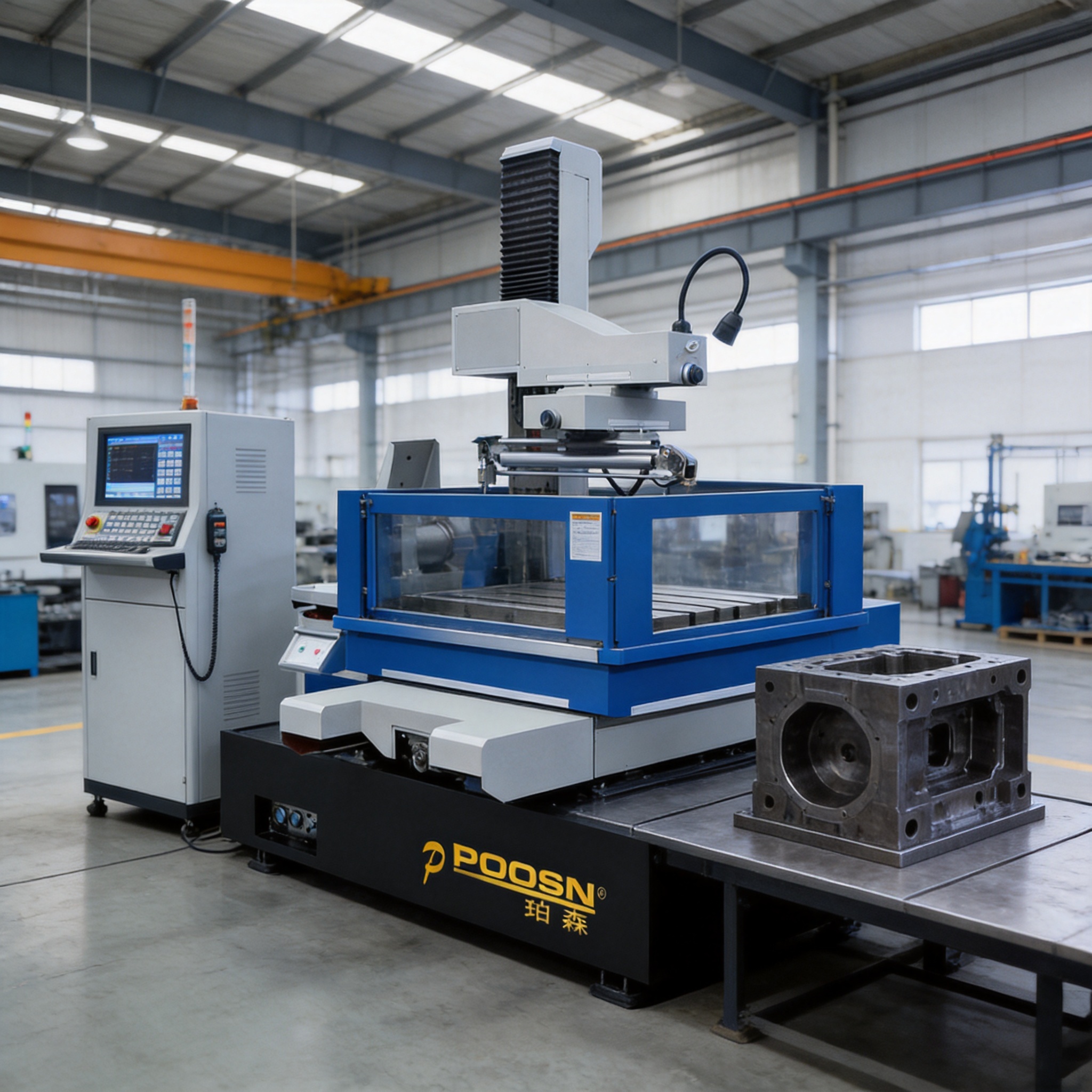
8. Comparison with Other Models in the Series
The DK63D is part of a family of large-taper wire-cut EDM machines that includes the DK45D, DK55D, and DK80D. Each model is intended for a different combination of workpiece size, load capacity, taper requirement, and production difficulty.
Compared with the DK45D, the DK63D offers longer X and Y travel, a larger table, greater workload capacity, and a more substantial machining envelope. The DK45D is suitable for medium-sized components and precision molds, while the DK63D is better suited to extra-large parts and heavy-duty components.
Compared with the DK55D, the DK63D provides a larger X-axis travel of 630 mm and a Y-axis travel of 1,000 mm. Its worktable load increases to 800 kg, compared with 600 kg for the DK55D. This additional capacity is important when machining large mold bases, thick die blocks, and heavy mechanical components.
The DK63D also supports a maximum taper capability of up to ±45°/80 mm. This makes it suitable for complex angular cutting tasks that may exceed the practical requirements of smaller models. The DK55D remains a strong choice for large workpieces and complex shapes, but the DK63D offers greater working capacity and heavier-load stability.
The DK80D is the largest model in the listed series. It provides an X/Y travel of approximately 800 × 1,200 mm, a maximum worktable load of 1,000 kg, and a maximum cutting thickness of 800 mm. It is intended for very large workpieces, heavy-duty molds, and high-difficulty production tasks.
The DK63D is therefore an effective middle-to-upper capacity solution. It provides more capability than the DK45D and DK55D while requiring less investment, floor space, and infrastructure than the DK80D. This balance can be attractive to manufacturers whose workpieces are large and heavy but do not consistently require the maximum capacity of the series.
Model Selection Summary
| Model | Typical Application | Maximum Worktable Load | Best Use |
| DK45D | Medium-sized components and precision molds | 400 kg | Large-taper work requiring moderate capacity |
| DK55D | Large workpieces and complex-shaped components | 600 kg | Higher load and larger taper requirements |
| DK63D | Extra-large workpieces and heavy-duty components | 800 kg | Large molds, aerospace parts, and heavy precision machining |
| DK80D | Very large molds and oversized workpieces | 1,000 kg | Maximum capacity and high-difficulty production |
9. Application Advantages in Precision Mold Manufacturing
Large mold manufacturing is one of the most important application areas for the DK63D. Molds often contain deep cavities, narrow slots, tapered sections, complex internal profiles, and hardened materials. Wire EDM is particularly effective when a component requires high geometric accuracy and when conventional cutting tools would have difficulty reaching the required shape.
The DK63D can machine large stamping dies, metal mold components, punch profiles, inserts, and other precision mold elements. Its large table and high load capacity allow substantial die components to be mounted securely. Its taper capability enables the production of inclined cutting edges and non-vertical mold surfaces.
Large-taper machining can also improve mold design flexibility. Designers are not limited to simple vertical walls or constant sections. The ability to create upper and lower profiles with calculated offsets supports more sophisticated forming geometries and may reduce the number of separate components needed in a die assembly.
Accurate wire movement is important for mold matching. If the upper and lower profiles do not correspond correctly, the assembled mold may show uneven clearance, premature wear, or poor product quality. The DK63D’s coordinated axis control and precision mechanical system help support the dimensional consistency required for mold fitting.
Surface quality is another major consideration. A smoother EDM surface can reduce polishing work and shorten the time between machining and final assembly. With an optimal surface roughness of Ra ≤ 2.5 μm under appropriate conditions, the machine can help reduce secondary operations for suitable applications.
10. Aerospace and Precision Machinery Applications
Aerospace components often combine high-strength materials with complex geometries. Parts may include tapered openings, thin sections, curved profiles, intricate slots, and difficult-to-machine alloys. Wire EDM is useful because it applies minimal mechanical cutting force and can process electrically conductive hard materials without imposing the same tool-access limitations as milling.
The DK63D’s heavy-duty table and deep cutting capability make it suitable for large aerospace components and structural parts. Its four-axis linkage supports the machining of angular features and complex contours. Its controlled discharge process contributes to dimensional stability when processing high-hardness alloys and other conductive materials.
In precision machinery, the machine can be used for gears, templates, wear-resistant parts, guide components, specialty tooling, and heavy mechanical elements. The ability to machine deep profiles and complex openings can simplify production where conventional methods would require multiple tools or setups.
The DK63D is also suitable for components that require repeatability across multiple identical parts. Once a proven process has been established, the CNC system can reproduce the programmed geometry with reduced operator intervention. This supports stable production quality and more predictable manufacturing schedules.
11. Material Compatibility
The DK63D can process a broad range of electrically conductive materials. These may include tool steels, hardened steels, alloy steels, copper-based materials, aluminum alloys, and other conductive metals. It is particularly useful for high-hardness materials that are difficult to cut using conventional methods.
Material selection affects electrical parameters, wire speed, flushing requirements, cutting efficiency, and final surface quality. Thick or highly conductive materials may require different discharge conditions from hardened tool steel. The machine’s adjustable process settings allow operators to develop appropriate cutting strategies for different material groups.
For high-hardness alloys, the non-contact nature of EDM reduces mechanical cutting force and avoids many problems associated with tool wear. The wire electrode is continuously supplied, which means the cutting edge does not need to be resharpened like a conventional tool.
However, workpiece preparation remains important. The material must be electrically conductive, properly supported, and securely positioned. The workpiece should also be free from excessive surface contamination that could interfere with electrical discharge or flushing.
12. Production Efficiency and Operating Cost
The DK63D is designed to support high-efficiency machining while controlling operating cost. Its maximum cutting efficiency of 10,000 to 16,000 mm²/h can help reduce production lead times for suitable workpieces. Actual results depend on the control cabinet model, material, thickness, taper, surface-finish requirements, and cutting strategy.
One advantage of a large-capacity machine is the ability to complete larger components in fewer setups. Fewer setups can reduce fixture preparation, alignment time, inspection time, and the possibility of cumulative positioning errors.
The machine’s energy-saving design is intended to reduce operating costs. Efficient drive circuits and reduced non-processing time can lower energy consumption per part. Cost savings may also come from lower secondary finishing requirements, fewer manual corrections, and reduced scrap caused by dimensional inconsistency.
Automation contributes to efficiency by reducing the amount of manual parameter adjustment. The operator can use the control system’s guided functions to establish a suitable starting process and then refine the parameters based on production results.
For batch production, repeatable programming and stable wire-feed control are particularly valuable. Once the process has been validated, the same cutting strategy can be applied to subsequent workpieces with limited modification.
13. Customization and Configuration Flexibility
Different manufacturers have different workpiece sizes, material combinations, floor-space restrictions, automation requirements, and production targets. The DK63D can be configured or customized according to customer requirements in areas such as axis travel, cutting depth, taper range, control cabinet selection, drive system, and auxiliary equipment.
The standard worktable drive uses XY stepper drives, while XY AC servo drives are available as an option. Servo drives may be selected when a customer requires enhanced motion response, positioning performance, or integration with a specific production environment.
A linear scale is available as an optional configuration. Linear scales can provide direct position feedback and may be valuable for applications requiring enhanced accuracy monitoring and compensation.
A high-pressure water tank is also available as an option. This equipment can support improved flushing in deep, thick, or complex cutting conditions. Effective flushing helps remove erosion debris and can contribute to improved discharge stability.
The machine uses an electric motor AC 220 V system for Z-axis lifting. Its CNC tapering device uses three-phase stepper drives for the U and V axes. These configuration choices provide a practical combination of control capability, reliability, and maintainability.
Customization enables the machine to align with a customer’s process rather than forcing the customer to redesign the entire production method around a standard configuration. This is particularly useful for mold manufacturers and job shops with unusual workpiece dimensions or specialized taper requirements.
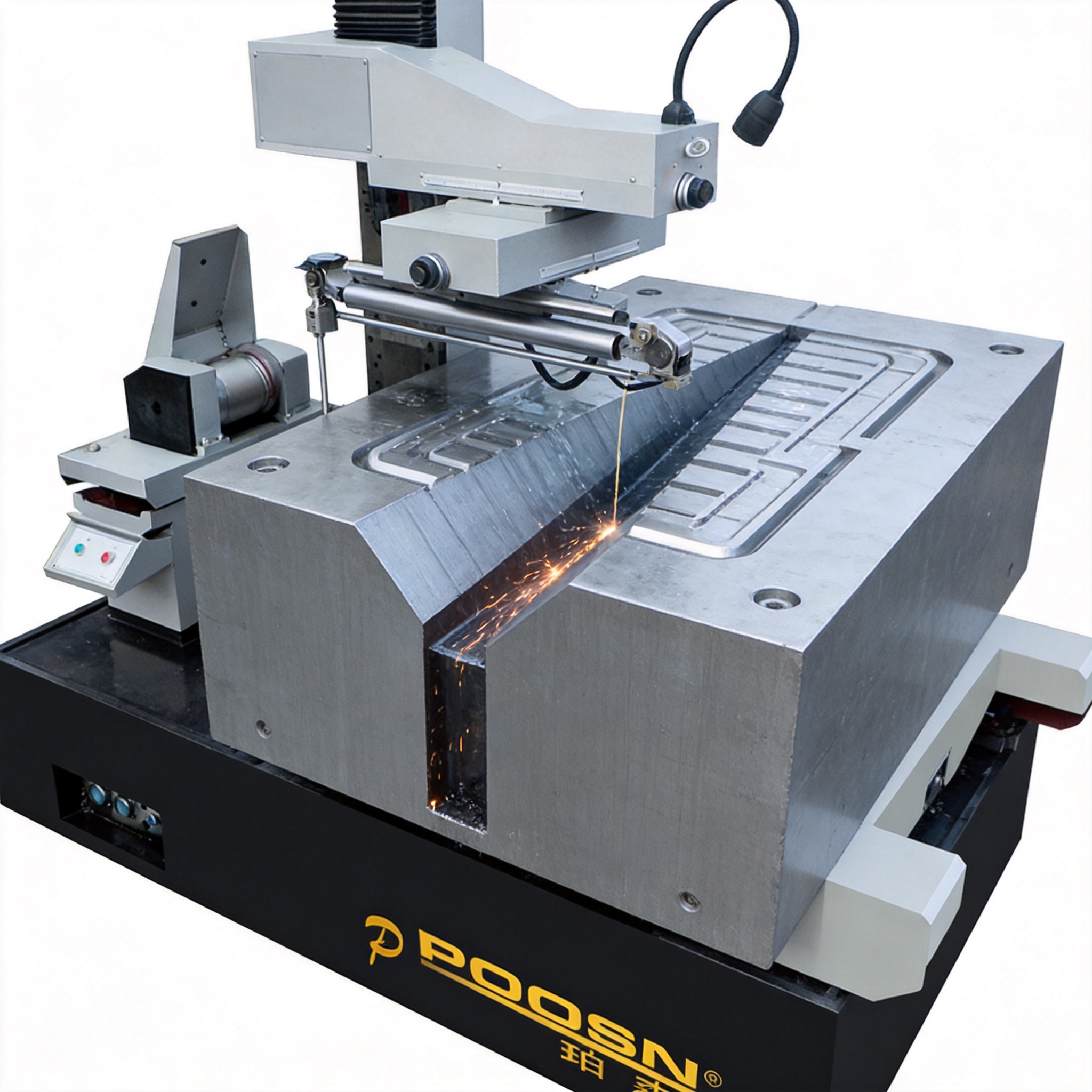
14. Quality Assurance and Manufacturing Strengths
Taizhou Xinchengyang Machinery Manufacturing Co., Ltd. has specialized in electrical discharge wire cutting since 1999. Its production activities cover research, development, manufacturing, testing, and technical support for EDM equipment and related special-processing technologies.
The company operates with advanced processing equipment and comprehensive testing methods. Product design is developed around practical machining requirements, while manufacturing follows national standards. Each machine tool undergoes positioning accuracy testing before delivery to verify that its motion and geometric performance meet the required specifications.
Machine quality depends on consistency throughout the manufacturing chain. The company’s production approach includes structural casting and aging, precision machining of key components, careful assembly of guide and screw systems, electrical integration, CNC configuration, and final accuracy verification.
Extended natural aging of the cast bed supports long-term dimensional stability. Precision machining provides the foundation for accurate assembly. Alignment of the motion system ensures that X, Y, U, and V axes operate as an integrated mechanism. Electrical testing verifies the performance of the control cabinet and discharge system.
Final inspection is not limited to visual checking. Positioning accuracy, machine geometry, axis movement, electrical operation, wire-feed performance, and control-system functions must all be verified. This comprehensive approach reduces the risk of performance problems after installation.
The company has developed product families covering medium-speed, high-speed, and large-taper wire-cut EDM applications. Its products are sold in China and exported to selected markets in Southeast Asia, West Asia, Europe, and the Americas. This experience gives the manufacturer a broad understanding of different production environments and customer requirements.
15. Installation, Training, and Lifecycle Support
Large-taper EDM performance depends on correct installation and process preparation. Even a precision machine may fail to deliver its full potential if it is not leveled correctly, if the foundation is unsuitable, or if environmental conditions are not considered.
Customized installation and commissioning services are provided to help ensure that the machine reaches an appropriate operational condition at the customer’s facility. Installation includes machine leveling, basic accuracy verification, electrical connection checks, wire-feed inspection, and functional testing.
Operator training is especially important for large-taper machining. Operators must understand coordinate systems, taper programming, wire threading, workpiece preparation, flushing, discharge parameters, and inspection procedures. Training can range from basic control commands to advanced strategies for different materials, thicknesses, and taper angles.
Professional training reduces the learning curve and helps prevent avoidable problems such as incorrect wire alignment, unsuitable parameter selection, insufficient flushing, or improper workpiece support. It also enables customers to establish repeatable internal operating procedures.
Technical support continues after installation. The company provides remote technical guidance and on-site assistance when necessary. Support may include process consultation, software updates, troubleshooting, maintenance guidance, and recommendations for hardware upgrades.
Maintenance attention should focus on the U/V axis guide blocks, lubrication points, ball screws, wire guides, water system, electrical cabinet, and moving joints. Because the wire frame may undergo considerable movement during large-taper machining, keeping moving components clean, lubricated, and properly adjusted is essential for long-term accuracy.
16. Practical Maintenance Recommendations
Routine maintenance is essential for preserving the DK63D’s precision and operating stability. Operators should clean the work area regularly to prevent debris from affecting the table, guide surfaces, seals, and wire-feed components.
The U and V axis guide blocks should receive particular attention. Contamination or insufficient lubrication can increase friction and cause movement irregularity. The ball screw system should be inspected and lubricated according to the recommended maintenance schedule.
The wire guider should be checked for wear. A worn guide can affect wire position and increase the risk of dimensional error, especially during large-angle cutting. The wire-feed mechanism should also be inspected to ensure smooth and consistent transport.
Dielectric water quality should be monitored. Contaminated water can reduce discharge stability and affect surface finish. Filters, pumps, tanks, and flushing nozzles should be maintained to ensure effective removal of machining debris.
The machine should be installed in an environment with controlled temperature and limited vibration whenever possible. Large precision components can be affected by thermal expansion, so stable environmental conditions help improve repeatability during long cutting cycles.
Operators should maintain accurate records of maintenance, wire consumption, cutting parameters, alarms, and dimensional inspection results. These records help identify trends before they develop into serious equipment or process problems.
17. Why the DK63D Is a Competitive Choice
The DK63D competes through a combination of capacity, taper capability, precision, automation, and support rather than through one isolated specification. Its 800 kg load rating and 630 × 1,000 mm axis travel give it a strong position for large components. Its ±45°/80 mm taper capability expands the range of geometries that can be machined. Its deep-cutting capability supports thick workpieces, while four-axis linkage enables complex tapered profiles.
Compared with smaller large-taper models, the DK63D offers more working space and load capacity. Compared with the largest model, it provides a more balanced solution for customers that require substantial capability without the maximum floor space and investment level.
The machine’s competitive advantage is also supported by manufacturing discipline. A reinforced and aged cast bed, precision guide rails, ball screws, careful alignment, controlled wire feeding, and complete accuracy testing provide the mechanical basis for reliable operation.
The intelligent control system further improves usability. Guided parameters, automated adjustment, and four-axis interpolation reduce the complexity of large-taper machining. The result is a machine that can be integrated into both specialized mold shops and broader precision manufacturing operations.
Finally, the manufacturer’s lifecycle support adds value beyond the initial purchase. Installation, training, process consultation, maintenance guidance, software updates, and technical assistance help customers maintain productivity over the useful life of the machine.
18. Frequently Asked Questions
Q1: What are the main advantages of the DK63D over the DK45D and DK55D?
The DK63D provides a larger X-axis travel of 630 mm and a Y-axis travel of 1,000 mm. It also increases maximum worktable load to 800 kg and supports more demanding large-taper cutting requirements. These advantages make it more suitable for extra-large workpieces, heavy mold components, and complex parts that exceed the practical capacity of the smaller models.
Q2: Can the DK63D machine thick materials?
Yes. The technical information lists a maximum cutting thickness of up to 600 mm. The machine is suitable for deep cutting and thick conductive materials, provided that the workpiece, flushing system, wire condition, and electrical parameters are properly prepared for the application.
Q3: What taper angle can the DK63D achieve?
The product information identifies a maximum taper capability of up to ±45°/80 mm. The actual usable angle depends on the workpiece thickness, contour, wire conditions, guide configuration, and programmed cutting strategy.
Q4: How does the DK63D maintain precision during large-angle cutting?
Precision is supported by coordinated X/Y and U/V axis movement, high-precision linear guides, ball screws, rigid structural components, and control algorithms that compensate for wire-electrode position during tilted machining. Correct installation, calibration, workpiece support, and process parameters are also essential.
Q5: What is the cutting efficiency of the DK63D?
The listed maximum cutting efficiency is approximately 10,000 to 16,000 mm²/h. Actual performance depends on the control cabinet model, workpiece material, thickness, taper angle, required surface finish, wire condition, and flushing effectiveness.
Q6: What control system does the machine use?
The DK63D uses the X8/AUTOCUT control system. It supports CNC programming, four-axis linkage, guided process parameters, and automated adjustment functions intended to improve cutting efficiency and reduce manual intervention.
Q7: Is the machine suitable for operators with limited large-taper experience?
Operators should have basic wire EDM knowledge, but the control system’s guided functions can make large-taper programming more accessible. Professional training is recommended so that operators understand workpiece setup, taper calculations, wire threading, flushing, parameter selection, and inspection.
Q8: What materials can be processed?
The DK63D can process many electrically conductive materials, including high-hardness alloys, tool steels, hardened steels, and other conductive metals. The correct electrical and flushing parameters must be selected according to the material and workpiece thickness.
Q9: What optional configurations are available?
Available options include a high-pressure water tank, linear scales, and AC servo drives for the X and Y axes. Configuration can be discussed according to the customer’s accuracy requirements, workpiece size, production volume, and process conditions.
Q10: How is machine stability maintained under heavy loads?
The DK63D uses a reinforced machine bed, high-strength structural components, precision linear guide rails, and carefully aligned motion assemblies. These features help maintain table stability and cutting accuracy when heavy workpieces are mounted and machined over long operating periods.
Q11: What maintenance areas require the most attention?
The U/V axis guide blocks, ball screws, wire guides, wire-feed components, dielectric water system, filters, pumps, and moving joints require regular inspection and maintenance. Cleaning and lubrication are particularly important for preserving smooth movement and large-taper accuracy.
Q12: Is technical support available after delivery?
Yes. Support includes installation and commissioning assistance, operator training, remote technical guidance, maintenance recommendations, software updates, and on-site service when required. This support is intended to help customers maintain stable production and long-term equipment reliability.
19. Conclusion
The DK63D Heavy-Duty CNC Large-Taper Wire-Cut EDM Machine is designed for manufacturers that need to process large, thick, heavy, and geometrically complex workpieces with controlled precision. Its combination of 630 × 1,000 mm X/Y travel, approximately 800 kg table capacity, deep cutting capability, large taper performance, four-axis linkage, and X8/AUTOCUT control system provides a strong solution for demanding WEDM applications.
Its advantages extend beyond basic specifications. The reinforced cast iron structure, natural aging process, precision guide and screw assembly, large-span U/V linkage, controlled wire-feed system, and stable pulse power supply create a foundation for reliable machining. These features help reduce common large-taper problems, shorten production cycles, and limit the need for secondary correction.
For precision mold manufacturers, aerospace suppliers, heavy machinery producers, and specialized job shops, the DK63D offers a practical balance between capacity and investment. It provides more capability than smaller models while remaining more compact and economical than the largest platform in the series.
Supported by professional installation, application training, technical assistance, and lifecycle maintenance, the DK63D is not simply a machine for cutting difficult shapes. It is a complete manufacturing solution for companies seeking higher productivity, more flexible part design, stable precision, and lower long-term processing costs.
References
1. Product Technical Information: DK-D Large Cutting Taper WEDM Technical Parameters.
2. GB/T7926-2015, Accuracy Standards for Wire-Cut Electrical Discharge Machine Tools.
3. Electrical Discharge Machining Principles and Applications, technical reference material for EDM process engineering.
4. CNC Motion Control and Four-Axis Interpolation, manufacturing automation reference material.
5. Precision Mold Manufacturing and Large-Format Wire EDM Process Guidelines.
6. Heavy-Duty Machine Tool Design, Structural Stability, and Precision Assembly Reference.
7. Wire Electrode Control, Dielectric Flushing, and Pulse Power Supply Applications in WEDM.
Product: DK63D Heavy-Duty CNC Large Taper Wire Cut EDM Machine for Large Mold Machining

-
Phone
+86-0523-86268788 +86-13815960366 +86-13912191163Email
[email protected]Address
No. 366, Yusheng Road Jiulong Town, Hailing District Taizhou City, China
Copyright © Taizhou Xinchengyang Machinery Manufacturing Co., Ltd. All Rights Reserved.
Custom edm machine for sale
wholesale edm machine manufacturers
