

 English
 русский
 عربى
عربى

Fang Xuelan — Customer After-Sales Supervisor
Home / Author / Fang Xuelan — Customer After-Sales Supervisor / DK-7735 CNC High-Speed Wire EDM Machine: Precision, Productivity, and Manufacturing Strength for Advanced Cutting
DK-7735 CNC High-Speed Wire EDM Machine: Precision, Productivity, and Manufacturing Strength for Advanced Cutting
2026-07-24
In modern manufacturing, the ability to produce complex shapes accurately, repeatedly, and economically is a decisive competitive advantage. Molds, precision mechanical components, automotive parts, aerospace structures, and specialized industrial components increasingly require machining technologies that can process hardened materials and intricate contours without imposing excessive mechanical force on the workpiece. Wire electrical discharge machining, commonly known as wire EDM or WEDM, has become an important solution for these requirements.
The DK-7735 CNC High-Speed Wire EDM Machine is designed for manufacturers that need a larger working range, stronger load capacity, four-axis control, and dependable production efficiency. With a 350 mm X-axis travel, a 450 mm Y-axis travel, a maximum worktable load of 300 kg, and a cutting efficiency of up to 16,000 mm²/h, the machine occupies an important position between compact precision equipment and larger heavy-duty wire-cutting systems.
Its value is not limited to individual specifications. The machine combines a reinforced cast-iron structure, precision transmission components, digital pulse discharge control, four-axis simultaneous linkage, intelligent machining functions, and an enclosed operating environment. These features help manufacturers achieve stable cutting performance while reducing setup difficulty, production interruptions, and the cost associated with repeated manual adjustments.
Behind the DK-7735 is a manufacturer with long-term experience in electrical discharge machining and special processing technologies. Taizhou Xinchengyang Machinery Manufacturing Co., Ltd. has developed a product system covering medium-speed wire-cut EDM, high-speed wire-cut EDM, large-taper wire-cut EDM, and related CNC equipment. Its manufacturing philosophy emphasizes structural stability, tested positioning accuracy, practical operation, and long-term serviceability.
Content
- 1 1. The Role of High-Speed Wire EDM in Precision Manufacturing
- 2 2. Product Positioning of the DK-7735
- 3 3. Structural Design for Stable Machining
- 4 4. Four-Axis Linkage and Taper Machining
- 5 5. Digital Pulse Power and Cutting Efficiency
- 6 6. Surface Quality, Accuracy, and Repeatability
- 7 7. Manufacturing Process and Quality Assurance
- 8 8. Competitive Advantages Over Conventional Alternatives
- 9 9. Application Fields
- 10 10. Production Efficiency and Cost Control
- 11 11. Installation and Operating Environment
- 12 12. Customer Support and Customization
- 13 13. Model Selection within the Product Family
- 14 14. Frequently Asked Questions
- 14.1 Q1: What type of manufacturer should choose the DK-7735?
- 14.2 Q2: What are the main dimensions of the DK-7735 working range?
- 14.3 Q3: What is the maximum load capacity?
- 14.4 Q4: Can the machine perform taper cutting?
- 14.5 Q5: What materials can be processed?
- 14.6 Q6: Is the DK-7735 suitable for mass production?
- 14.7 Q7: What surface roughness can be achieved?
- 14.8 Q8: What control cabinet options are available?
- 14.9 Q9: How does the machine help reduce wire breakage?
- 14.10 Q10: Does the machine support automatic parameter adjustment?
- 14.11 Q11: What installation conditions are recommended?
- 14.12 Q12: What maintenance is most important?
- 14.13 Q13: Can the manufacturer provide customized solutions?
- 14.14 Q14: How does the DK-7735 compare with larger models?
- 15 15. Why Manufacturing Experience Matters
- 16 16. Conclusion
- 17 References
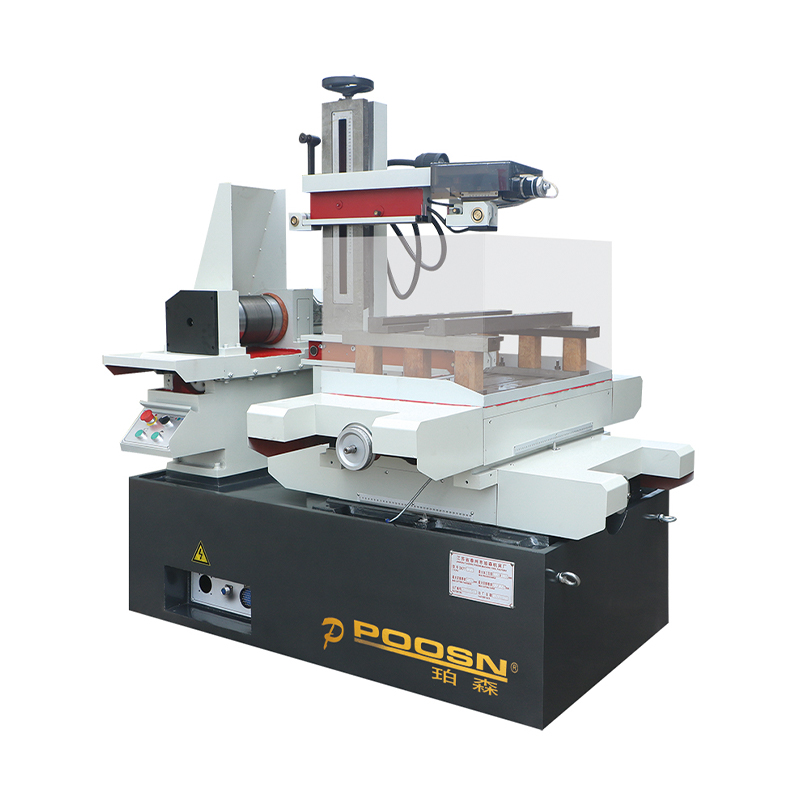
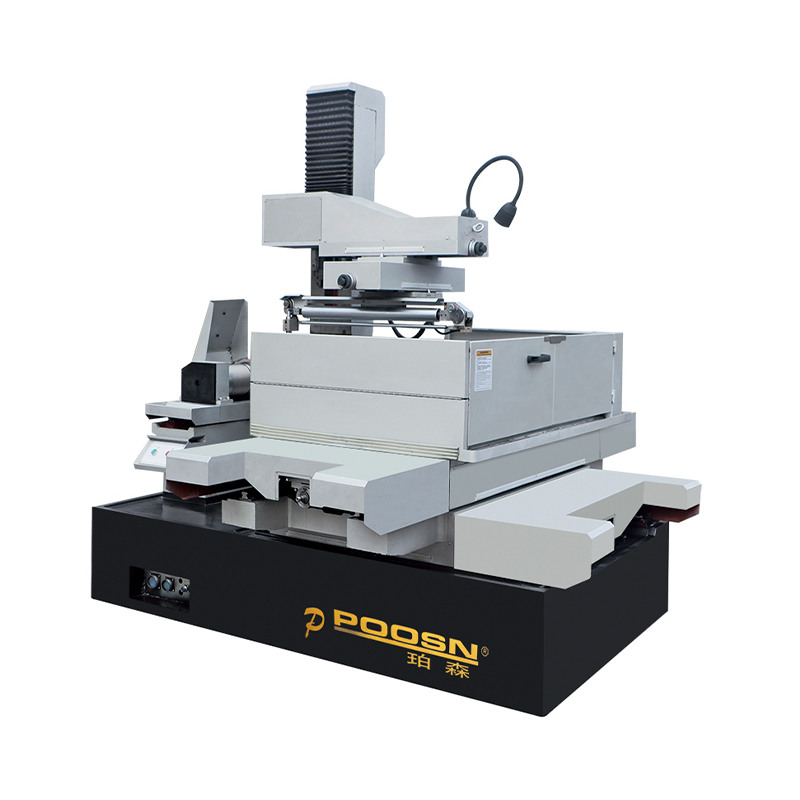
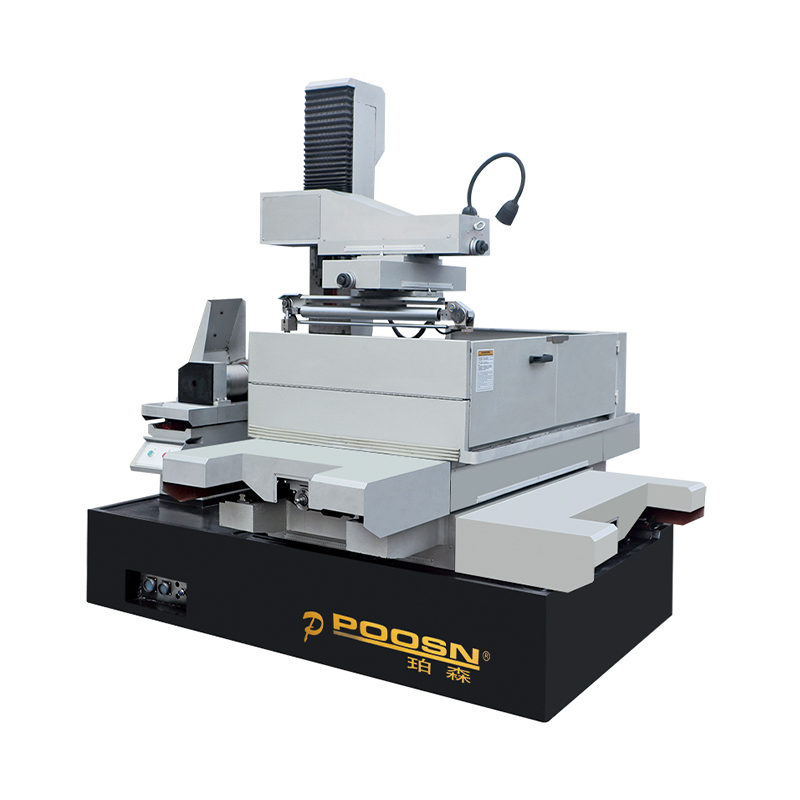
- 18 Product: DK-7735 CNC High-Speed Wire EDM Machine (4-Axis, 300kg Load)
1. The Role of High-Speed Wire EDM in Precision Manufacturing
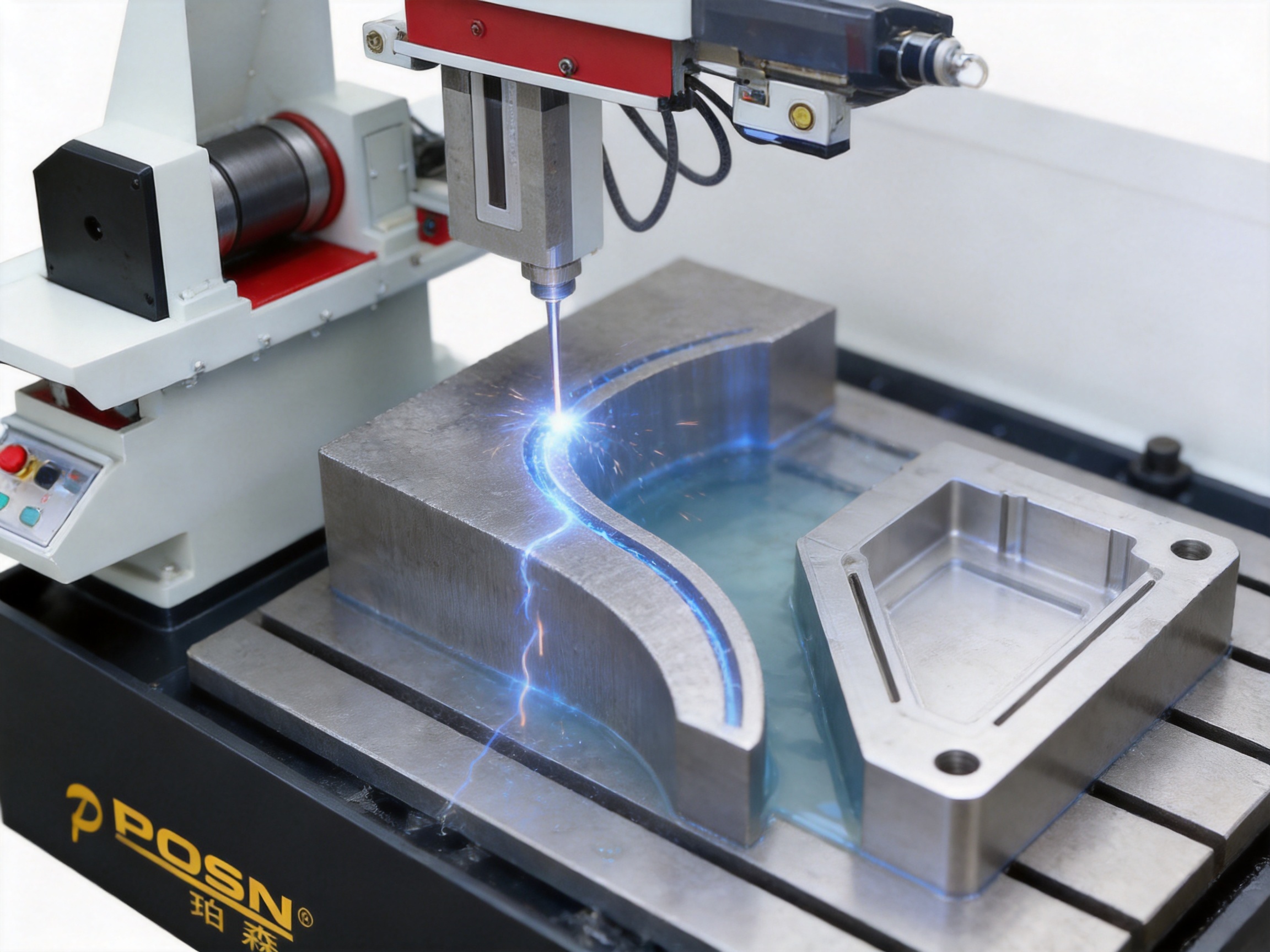
Wire EDM removes material through controlled electrical discharges between a continuously moving electrode wire and a conductive workpiece. The wire does not directly cut the material through mechanical contact. Instead, a precisely controlled electrical pulse creates a small spark gap, generating localized heat that melts and vaporizes material. Working fluid removes the eroded particles and helps cool the cutting zone.
This operating principle gives wire EDM several important advantages over conventional cutting processes. It can machine hardened steel, stainless steel, copper, aluminum, and other electrically conductive materials without requiring the same cutting forces associated with milling or sawing. Because the tool is a thin wire, it can produce narrow slots, sharp internal corners, small radii, and complex profiles that may be difficult or expensive to manufacture by traditional methods.
Wire EDM is particularly useful after heat treatment. A mold component, for example, may be hardened before final contour machining. This can improve the service life of the finished part, but hardened material is more difficult to machine with conventional tools. WEDM can process the hardened workpiece while minimizing mechanical stress and avoiding many of the tool wear problems associated with carbide or high-speed steel cutters.
However, the quality of a wire EDM process depends on much more than the basic discharge principle. A stable machine structure, accurate axis movement, effective wire tension control, reliable dielectric circulation, and appropriate pulse parameters are all necessary. The DK-7735 is developed around these interconnected requirements rather than treating cutting speed as an isolated performance target.
2. Product Positioning of the DK-7735
The DK-7735 is a four-axis CNC high-speed wire EDM machine intended for medium-sized and relatively heavy workpieces. It is larger and more capable than a compact machine intended primarily for small molds or limited-batch precision work. At the same time, it offers a more accessible footprint and investment level than many extra-large wire EDM systems designed for very large aerospace structures or oversized mold bases.
The machine has a worktable size of 500 × 750 mm and X/Y travel of 350 × 450 mm. Its maximum cutting thickness is 450 mm, while the maximum worktable load is 300 kg. These specifications provide a practical working envelope for a broad range of mold inserts, mechanical components, fixtures, dies, and industrial parts.
The DK-7735 also supports a maximum taper of ±6° over 80 mm. Taper cutting allows the upper and lower sections of a workpiece to have different profiles. This is useful for molds, punches, dies, angled components, and parts requiring controlled draft or nonparallel surfaces. Four-axis linkage gives the control system the ability to coordinate the X, Y, U, and V axes during such operations.
With a stated maximum cutting efficiency of 10,000 to 16,000 mm²/h across the series, actual performance depends on the selected control cabinet, material, workpiece thickness, flushing condition, wire type, surface-finish requirements, and cutting strategy. This range gives production planners a useful balance between rough cutting speed and finishing accuracy.
| Performance Category | DK-7735 Specification | Production Significance |
| Worktable size | 500 × 750 mm | Supports medium-sized workpieces and fixtures |
| X/Y travel | 350 × 450 mm | Provides a larger machining range for complex profiles |
| Maximum cutting thickness | 450 mm | Suitable for thick plates, mold components, and heavy sections |
| Maximum worktable load | 300 kg | Allows processing of heavier workpieces with suitable workholding |
| Maximum cutting efficiency | Up to 16,000 mm²/h | Supports higher throughput in production environments |
| Maximum cutting taper | ±6°/80 mm | Enables angled and upper/lower profile machining |
| Axis drive | X, Y, U, and V stepper drive; four-axis linkage | Coordinates contour and taper movements |
| Optimal surface roughness | Ra ≤ 2.5 μm | Provides a suitable finish for many precision applications |
| Machine accuracy standard | GB/T 7926-2015 | Provides a defined reference for machine accuracy testing |
| Machine dimensions | Approximately 1,650 × 1,250 × 1,830 mm | Offers substantial capacity without an extra-large footprint |
| Machine weight | Approximately 1,100 kg | Contributes to structural stability and floor-load planning |
The DK-7735 therefore serves manufacturers looking for a versatile production machine rather than a machine limited to one narrow application. It can be used for precision molds, automotive components, aerospace parts, precision mechanical elements, and repeated production of similar components.
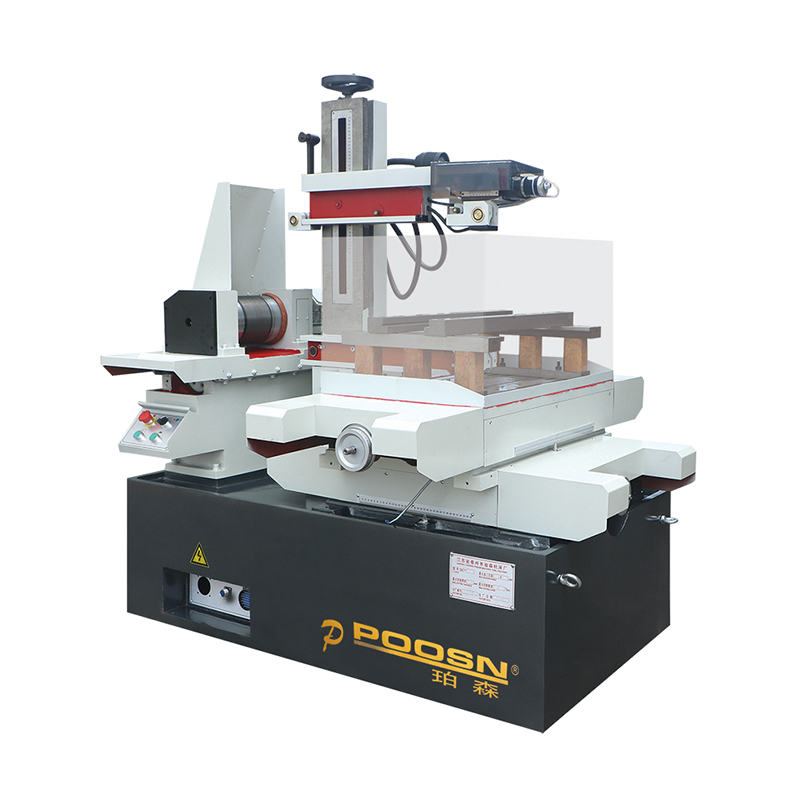
DK-7735 CNC High-Speed Wire EDM Machine (4-Axis, 300kg Load)
3. Structural Design for Stable Machining
Structural rigidity is one of the most important factors in wire EDM performance. Although wire EDM produces little conventional cutting force, the machine still experiences movement, fluid circulation, wire tension, thermal changes, and repeated axis acceleration and deceleration. If the bed, column, table, or guide system lacks stability, the result may be dimensional drift, poor straightness, inconsistent taper, or reduced repeatability.
The DK-7735 uses a high-strength cast-iron machine base. The casting is subjected to aging treatment intended to reduce internal stress. Stress relief is important because residual stress may gradually affect the geometry of a machine structure, particularly after repeated thermal cycles or long periods of dynamic operation. A properly stabilized base provides a more reliable foundation for the guideways, ball screws, worktable, and wire-guiding assemblies.
The machine’s mass and overall construction also help reduce the effects of vibration. A heavier, more rigid machine structure can absorb and resist dynamic disturbances more effectively than a lightweight frame. This is especially valuable when cutting thick workpieces, using long cutting paths, or operating for extended periods during production.
Stable geometry supports more than initial accuracy. It contributes to repeatability from one workpiece to the next. In mass production, even a small variation in profile position can create cumulative losses through additional inspection, manual correction, rework, or rejection. A stable mechanical foundation helps reduce these risks when combined with suitable programming, workholding, and maintenance practices.
3.1 Precision Transmission and Guideways
The DK-7735 incorporates precision ball screws and high-rigidity linear guides for axis movement. Ball screws convert motor rotation into controlled linear movement with low friction and a high degree of positioning consistency. Linear guides support smooth movement while maintaining the required stiffness for long-stroke machining.
These components are important when the machine is required to cut fine contours, micro-holes, narrow slots, or complex curves. Smooth axis motion reduces the likelihood of unwanted marks caused by irregular feed movement. It also helps the control system follow programmed paths more accurately, especially when the path includes changes in direction or coordinated taper movement.
The X and Y travel of 350 mm and 450 mm gives the DK-7735 a larger effective cutting range than machines designed only for small components. The expanded travel reduces the need to reposition a workpiece or divide a profile into multiple operations. Fewer repositioning operations can improve productivity and help preserve dimensional consistency across the finished part.
3.2 Workpiece Support and Load Capacity
A maximum worktable load of 300 kg allows the DK-7735 to handle medium-sized and relatively heavy workpieces. This is useful in mold and mechanical production, where the workpiece itself may be dense and where fixtures, clamping plates, and support devices add additional weight.
Load capacity should always be considered together with workpiece dimensions, center of gravity, clamping arrangement, and table distribution. The stated capacity provides a reference for machine selection, but correct installation and workholding remain essential. Proper support prevents distortion, reduces movement during machining, and helps maintain accurate wire alignment.
Compared with smaller wire EDM machines, the DK-7735 gives production teams more flexibility in choosing workpiece size and fixture design. Compared with very large systems, it can be easier to integrate into facilities that do not require an oversized work envelope. This balance is one of its practical competitive advantages.
4. Four-Axis Linkage and Taper Machining
The DK-7735 uses X, Y, U, and V axes with four-axis linkage. The X and Y axes control the primary movement of the workpiece profile, while the U and V axes coordinate the upper and lower wire-guide positions. This arrangement allows the wire to remain angled in a controlled way during taper cutting.
Four-axis control expands the range of parts that can be manufactured. A conventional straight profile may be sufficient for a simple punch or flat plate, but many production parts require inclined walls, draft angles, upper and lower contours, or nonparallel surfaces. Four-axis interpolation allows the control system to coordinate these movements within the programmed geometry.
The maximum taper specification of ±6°/80 mm provides a useful capability for mold components, dies, punches, angled inserts, and other components requiring controlled taper. The actual taper achievable in a particular application depends on material thickness, wire-guiding condition, workpiece geometry, discharge parameters, flushing, and programming accuracy.
For manufacturers, the benefit is not only the ability to cut a taper. It is the reduction in secondary operations. If a profile can be produced with the required angle directly on the wire EDM, the manufacturer may avoid additional milling, grinding, manual fitting, or specialized fixtures. Fewer operations can reduce production time and lower the risk of transferring errors between machines.
4.1 Complex and Irregular Profiles
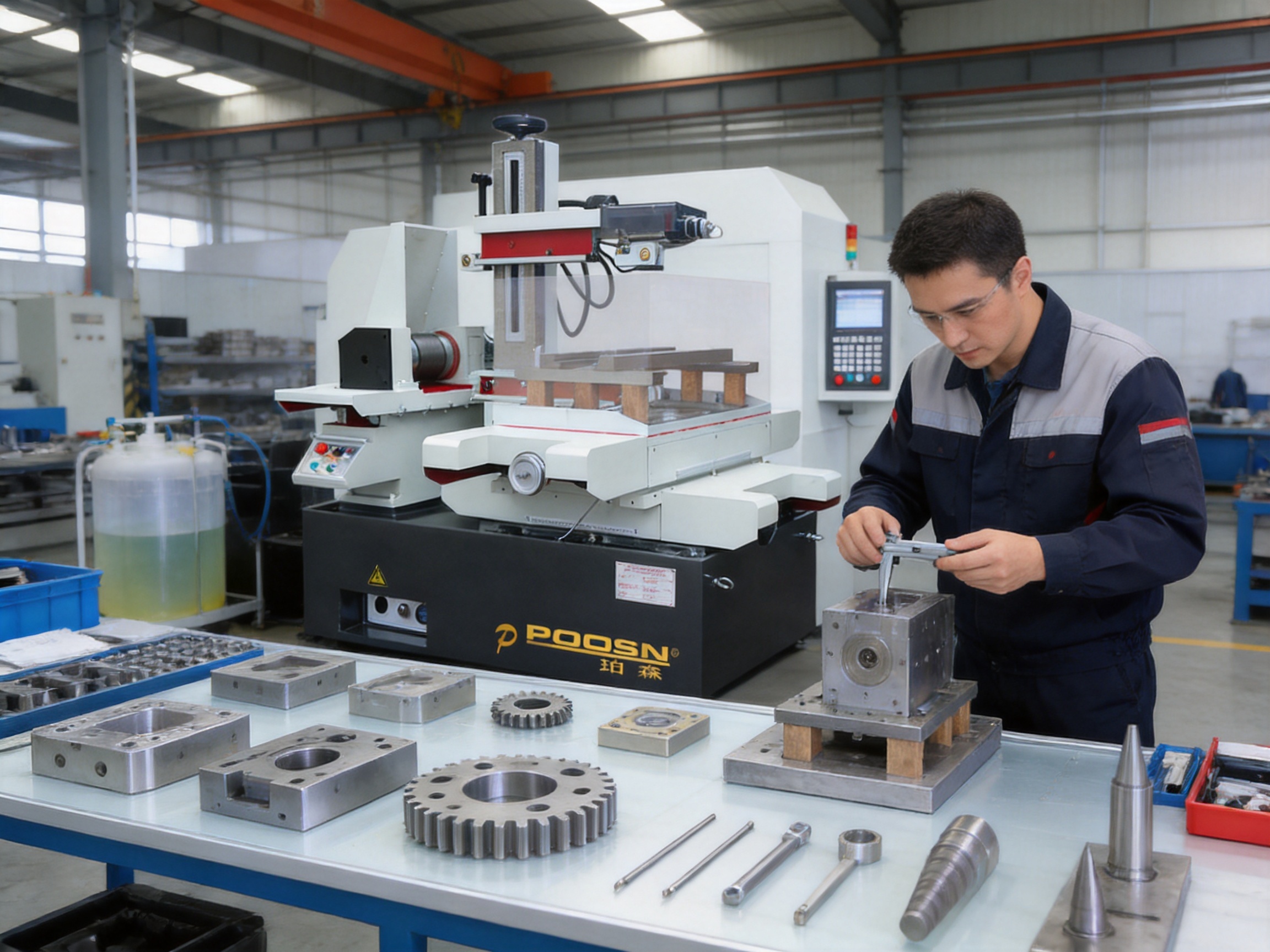
The machine is suitable for complex and irregular trajectories, including curved contours, internal profiles, narrow openings, and coordinated upper/lower shapes. This makes it applicable to precision mold inserts, punches, progressive die components, gears, guide parts, and specialized mechanical profiles.
Complex cutting requires more than a capable machine axis system. The programmer must consider wire entry, corner behavior, offset compensation, skim-cut strategy, flushing direction, and the thermal condition of the workpiece. The DK-7735’s control functions are intended to simplify the transition from technical drawings to actual machining, giving operators a practical interface for configuring and monitoring the process.
5. Digital Pulse Power and Cutting Efficiency
The discharge power supply is the core of the EDM process. Each pulse must deliver sufficient energy to remove material, but excessive energy may damage the surface, increase wire consumption, produce unstable discharge, or create unwanted heat-affected effects. The relationship between pulse duration, peak current, off time, voltage, wire speed, flushing, and workpiece thickness must be carefully controlled.
The DK-7735 uses a digital pulse power supply capable of optimizing discharge parameters according to material thickness and material characteristics. This approach helps balance cutting rate and surface quality. During rough cutting, the machine can prioritize material removal. During finishing passes, the control strategy can reduce discharge intensity to improve surface quality and dimensional control.
A maximum cutting efficiency of up to 16,000 mm²/h makes the DK-7735 suitable for production work where throughput is important. The machine is especially appropriate for factories processing repeated batches of similar parts. Faster cutting can reduce the time required for each component, increase the utilization of the machine, and help lower the machining cost per unit.
High cutting speed must be understood in relation to the complete process. A high-speed setting is not always the best choice if the final component requires a fine surface finish or extremely tight dimensional control. The practical advantage of the DK-7735 is its ability to support different cutting priorities through suitable control cabinet selection and process adjustment.
5.1 Three Control Cabinet Options
The product information identifies three control cabinet choices for the series. The standard configuration is the ZH-K68 desktop cabinet, while the ZHZK-03 vertical cabinet is available as an option. The available control cabinet configuration affects operation, control functions, user workflow, and specific cutting efficiency.
Offering multiple control cabinet options is valuable because different manufacturers have different requirements. A small or medium-sized workshop may prefer a compact desktop arrangement. A production facility may prefer a vertical cabinet with a different operating position or control layout. Selecting the appropriate control cabinet can help align the machine with available floor space, operator habits, programming requirements, and production goals.
Before ordering, customers should confirm the exact controller configuration, supported functions, programming format, interface language, remote support capability, electrical requirements, and optional accessories. This ensures that the machine is matched to the factory’s existing processes rather than treated as an isolated purchase.
6. Surface Quality, Accuracy, and Repeatability
Wire EDM quality is commonly evaluated through dimensional accuracy, straightness, taper accuracy, repeatability, corner quality, and surface roughness. The DK-7735 lists an optimal surface roughness of Ra ≤ 2.5 μm under appropriate machining conditions. This level is suitable for many mold, mechanical, and industrial applications, although the final result depends on the material, thickness, wire, workholding, number of finishing passes, and selected process parameters.
The machine’s stated accuracy standard is GB/T 7926-2015. A defined standard provides a reference for testing and acceptance. It gives customers a basis for evaluating machine positioning and machining performance during commissioning and periodic inspection.
Repeatability is particularly important for production. If every workpiece follows the same programmed path but the resulting dimensions vary, the production process becomes difficult to control. Variation may come from machine geometry, thermal changes, contamination in the working fluid, wire-guide wear, poor wire tension, unstable discharge, or incorrect compensation values.
The DK-7735 addresses these issues through its mechanical structure, precision transmission system, wire transport design, filtration and cooling functions, and control algorithms. The machine information describes high-sensitivity wire tension control, integrated circulation and cooling, automatic gap compensation, and path optimization. Together, these functions are intended to support consistent machining rather than merely a high first-pass cutting speed.
6.1 Wire Transport and Tension Control
Wire stability directly affects cutting accuracy. If the wire vibrates, wanders, or experiences unstable tension, the cut profile may deviate from the programmed path. Wire instability can be especially problematic in thick workpieces, narrow slots, sharp corners, and high-speed operations.
The DK-7735 uses a high-sensitivity tension control design to maintain stable wire travel. Stable tension helps reduce the risk of wire breakage and supports more consistent positioning between the upper and lower guides. It also contributes to improved surface quality because an unstable wire may produce irregular discharge conditions.
Wire consumption is another important operating consideration. Discharge control that adapts to the cutting condition can help limit unnecessary wire use while maintaining material removal performance. Reduced wire waste contributes to operating cost control, particularly in high-volume applications.
6.2 Filtration and Working Fluid Management
Working fluid carries eroded particles away from the cutting gap and helps cool the workpiece and wire. If the fluid becomes contaminated, debris may interfere with the discharge gap, reduce cutting stability, increase short circuits, or damage pumps and other internal components.
The DK-7735 incorporates a multi-stage circulation and cooling approach to help maintain fluid purity and temperature stability. Proper filtration supports reliable machining and extends the service life of internal components. It also helps maintain more consistent conditions between roughing and finishing passes.
Filtration performance depends on regular maintenance. Operators should monitor filter condition, fluid quality, circulation pressure, temperature, and signs of contamination. A well-designed system can support stable operation, but it cannot replace routine inspection and timely consumable replacement.
7. Manufacturing Process and Quality Assurance
The quality of a wire EDM machine begins before final assembly. It depends on material selection, casting quality, stress relief, machining accuracy, component inspection, assembly methods, electrical integration, software configuration, and final testing. A manufacturer with experience across several EDM product families can apply process knowledge from one model to another while adapting the structure and control system to different applications.
Taizhou Xinchengyang Machinery Manufacturing Co., Ltd. has specialized in electrical discharge wire cutting since 1999. The POOSN brand originated in 2003, and the company later established its own factory. Its development has included cooperation with CNC technology partners, quality and reputation recognition, patent development, and high-tech enterprise recognition.
The company reports that it has advanced processing equipment, comprehensive testing methods, rational product design, and strict manufacturing according to national standards. Each machine tool undergoes positioning accuracy testing. This process is important because a machine may contain high-quality individual components but still fail to deliver satisfactory results if the components are not assembled, aligned, and tested correctly.
7.1 Casting and Stress Management
Machine castings must be suitable for long-term precision service. The base and structural members should have adequate strength, dimensional stability, and resistance to vibration. Aging treatment is used to reduce internal casting stress before precision machining and assembly.
This manufacturing step is especially important for a machine intended for prolonged operation. If stress is not adequately managed, the machine geometry may change gradually. Such changes can appear as positioning deviations, inconsistent straightness, or differences between initial and long-term performance.
7.2 Precision Component Processing
Precision ball screws, linear guides, wire guides, pulleys, worktable components, and electrical systems must work together as an integrated system. The manufacturer’s processing equipment and inspection capabilities support the preparation of these components before final assembly.
Accurate component interfaces improve alignment. Proper alignment reduces friction, prevents unnecessary vibration, and helps the axis drive system follow commanded movement. It also makes routine maintenance more predictable because wear is less likely to be caused by installation errors or uneven loading.
7.3 Assembly and Calibration
After mechanical and electrical assembly, the machine requires calibration and testing. Axis movement, squareness, positioning accuracy, wire alignment, taper movement, discharge stability, fluid circulation, and safety functions should all be checked.
Positioning accuracy testing provides evidence that the machine conforms to its intended performance requirements. For customers, this process reduces uncertainty during installation. It also creates a baseline that can be used for future maintenance and diagnostic comparison.
In addition to initial testing, the company emphasizes long-term equipment reliability. This perspective is important because wire EDM machines are often expected to operate for many hours in production. A machine that performs well only during initial acceptance but becomes difficult to maintain later does not provide a complete manufacturing solution.
8. Competitive Advantages Over Conventional Alternatives
The DK-7735 competes not only with other wire EDM machines but also with conventional milling, sawing, grinding, drilling, and outsourcing alternatives. Its advantages become most evident when the workpiece is hard, the profile is complex, the tolerance is demanding, or repeated production is required.
8.1 Compared with Conventional Milling
Milling can be highly productive for accessible surfaces and three-dimensional shapes, but it may become difficult when the workpiece is hardened or when a narrow internal profile is required. Tool access, cutter diameter, tool deflection, and tool wear can limit the geometry.
Wire EDM can machine narrow slots and complex internal contours with a thin wire and minimal mechanical contact. This makes it particularly useful for punches, dies, mold inserts, and profiles that would require specialized small-diameter tooling on a milling machine.
8.2 Compared with Grinding
Grinding provides excellent surface quality and dimensional control but is generally more suitable for accessible surfaces and geometries compatible with grinding wheels. It may require multiple setups or custom fixtures for internal and irregular shapes.
The DK-7735 can produce complex contours and taper profiles directly through programmed wire movement. It may therefore reduce the number of secondary operations required after rough machining or heat treatment.
8.3 Compared with Small Wire EDM Machines
Compact wire EDM systems are appropriate for small components and limited work envelopes. However, they may not provide enough table size, travel, or load capacity for medium-sized molds and heavier parts.
With a 500 × 750 mm worktable, 350 × 450 mm X/Y travel, and 300 kg load capacity, the DK-7735 offers a broader production range. It can accommodate larger fixtures and workpieces without moving immediately to an extra-large machine category.
8.4 Compared with Outsourced Processing
Outsourcing can be useful when demand is irregular or when a company lacks the necessary equipment. However, it may introduce longer lead times, transportation risks, communication delays, and less direct control over process parameters.
Bringing the process in-house with a DK-7735 can improve scheduling flexibility and protect production know-how. Operators can adjust cutting conditions, inspect the workpiece immediately, and respond more quickly to design changes or urgent orders.
8.5 Compared with Basic High-Speed Machines
A basic high-speed wire EDM machine may offer acceptable cutting speed but lack advanced wire tension control, taper capability, strong load capacity, flexible cabinet options, or integrated process management. The DK-7735 is positioned as a more complete production solution, combining speed with structural stability, four-axis control, filtration, cooling, and intelligent compensation functions.
9. Application Fields
9.1 Mold and Die Manufacturing
Mold and die manufacturing is one of the primary application fields for the DK-7735. Mold components often require complex profiles, fine corners, hardened materials, and accurate matching surfaces. Wire EDM can produce inserts, punches, cavities, stripper plates, guide components, and die sections with reduced mechanical loading.
The four-axis taper function is valuable when a mold or die requires draft angles or a controlled relationship between upper and lower profiles. The 450 mm maximum cutting thickness also supports thicker mold sections that may exceed the capability of smaller machines.
9.2 Automotive Components
Automotive production depends on repeatable tooling and accurate components. Stamping dies, injection mold parts, cutting tools, and specialized fixtures may contain intricate profiles that require wire EDM. The DK-7735 can support both prototype production and repeated manufacturing of automotive components.
For mass production, the machine’s cutting efficiency and 300 kg load capacity can help reduce cycle time and accommodate robust workholding. Consistent programming and process documentation can further improve repeatability across batches.
9.3 Aerospace Components
Aerospace manufacturing frequently involves high-value materials, complex geometry, and demanding inspection requirements. Wire EDM can be used for conductive components, tooling, fixtures, turbine-related parts, structural elements, and specialized production aids.
The DK-7735 is suitable for medium-sized aerospace workpieces that require controlled contour cutting, taper machining, and stable operation. For very large aerospace structures, a larger model in the product family may be more appropriate, but the DK-7735 provides a useful solution for many medium-scale applications.
9.4 Precision Machinery
Precision machinery manufacturers use wire EDM for gears, mechanical profiles, guide parts, slots, fixtures, and replacement components. The process is especially useful where the geometry is difficult to achieve with ordinary turning or milling operations.
The machine’s combination of accurate movement, surface-finish capability, and production efficiency allows it to serve both one-off precision work and repeated production. Its larger travel also makes it possible to process multiple small components in one setup when the fixture and programming strategy permit.
9.5 Medical and Specialized Components
Conductive medical components and specialized industrial parts may require clean, accurate, burr-minimized profiles. Wire EDM can be useful where conventional cutting tools may create excessive mechanical stress or where the component includes narrow openings and unusual contours.
Manufacturers should define material, cleanliness, surface-finish, and inspection requirements in advance. Process parameters and post-processing should be selected according to the final application.
10. Production Efficiency and Cost Control
Manufacturing cost is influenced by machine utilization, cutting time, wire consumption, labor, setup time, rework, maintenance, energy use, and quality losses. The DK-7735 addresses several of these factors through its high-speed cutting capability, larger working envelope, four-axis control, and process automation functions.
High cutting efficiency can reduce the time required for rough cutting. When a workpiece is produced in several operations, a faster rough cut may release machine capacity for additional jobs. This can be particularly valuable in factories operating multiple shifts or managing time-sensitive mold and tooling orders.
Four-axis cutting can reduce secondary operations. Producing a taper or upper/lower profile directly on the wire EDM may eliminate additional milling, grinding, or manual fitting. Each eliminated operation reduces handling time and decreases the opportunity for cumulative dimensional error.
A larger worktable can also improve setup efficiency. Depending on the part size and fixture arrangement, several smaller components may be processed in one setup. This can reduce loading and unloading frequency and improve the productivity of skilled operators.
Cost control must not be based on cutting speed alone. A stable machine that produces acceptable parts on the first attempt may be more economical than a faster machine that generates frequent wire breaks, poor surface quality, or dimensional rework. The DK-7735 is designed to pursue a balance among speed, accuracy, reliability, and maintainability.
11. Installation and Operating Environment
Correct installation is essential for achieving the DK-7735’s intended accuracy. The machine should be placed on a stable foundation capable of supporting its approximately 1,100 kg weight, with sufficient space for operation, maintenance, workpiece handling, control cabinet access, and fluid-system service.
A stable temperature environment is recommended for high-precision machining. Large temperature changes can cause thermal expansion and contraction in the machine structure, workpiece, wire, and working fluid. Temperature stability helps reduce dimensional variation during long cutting cycles.
The installation area should also be free from strong magnetic interference and excessive vibration. Adequate ventilation and a clean workshop environment help protect the electrical system and maintain operator comfort. The foundation should be level and prepared according to the installation requirements supplied with the machine.
The power supply specification is 3N 380 V ±10. Before installation, the customer should verify local electrical conditions, grounding, protection devices, cable sizing, and compliance with local safety regulations. Electrical preparation should be completed by qualified personnel.
11.1 Workholding and Alignment
Workholding must support the workpiece firmly without obstructing wire travel or fluid circulation. Heavy parts should be supported at appropriate points to prevent distortion. The workpiece must be aligned carefully, particularly when the programmed geometry depends on a known datum or when taper cutting is required.
Before starting a long cycle, operators should verify the wire path, upper and lower guide alignment, workpiece height, clamping security, program coordinates, offset values, and flushing condition. A short test cut or inspection sample can help identify problems before a full production run.
11.2 Routine Maintenance
Regular maintenance helps preserve accuracy and reduce unexpected downtime. Important tasks include checking lubrication, cleaning the work area, inspecting wire guides, monitoring filters, checking working fluid condition, reviewing wire tension, and confirming the operation of pumps and safety devices.
Ball screws and linear guides should be lubricated according to the manufacturer’s recommendations. Excessive contamination or insufficient lubrication can accelerate wear and reduce movement quality. Wire guides and contact components should be inspected for wear because their condition directly affects wire position and machining stability.
Operators should maintain records of maintenance, wire consumption, cutting conditions, alarms, and inspection results. These records help identify gradual changes in machine behavior and support preventive maintenance rather than emergency repair.
12. Customer Support and Customization
Different customers may process different materials, thicknesses, geometries, and production volumes. For this reason, equipment selection should include more than a standard model number. It should consider control cabinet configuration, table arrangement, workholding, software requirements, installation conditions, training, consumables, and technical support.
The manufacturer provides customized solutions for workpieces with special specifications. Customization may involve process recommendations, machine configuration, control cabinet selection, fixture planning, or other technical coordination. Customers should provide drawings, material information, dimensions, target accuracy, surface-finish requirements, production volume, and expected cycle time when requesting a solution.
Professional technical support is important throughout the equipment life cycle. During pre-sales communication, the customer needs accurate guidance on model selection. During installation, the machine must be assembled, leveled, connected, and tested correctly. During operation, personnel may need training in programming, process adjustment, troubleshooting, and preventive maintenance.
After-sales support helps protect the long-term value of the machine. Rapid response to technical questions can reduce downtime, while access to replacement components and maintenance guidance can help preserve operating stability.
13. Model Selection within the Product Family
The DK-7735 belongs to a broader high-speed wire EDM model range. Selecting the correct model requires a realistic assessment of workpiece size, load, thickness, production volume, floor space, and future expansion plans.
The DK-7725 is suitable for small and medium-sized components, precision mold processing, and small-batch production. It has a smaller worktable and lower load capacity than the DK-7735.
The DK-7735 is appropriate for medium-sized components and mold processing requiring a larger worktable, longer X/Y travel, and a 300 kg maximum load.
The DK-7745 provides a larger work envelope and higher load capacity for large parts, high-precision molds, aerospace components, and automotive tooling.
The DK-7745F is intended for extra-large workpieces and high-precision heavy components. It is particularly suitable for large aerospace structures and large-scale mold production.
For still larger workpieces, the DK-7755F, DK-7763F, DK-7780F, and DK-77100F models offer progressively larger travel, table dimensions, thickness capacity, and load capacity. Customizable options are available for DK-77100 and larger machines according to the product information.
| Model | X/Y Travel | Maximum Load | Typical Positioning |
| DK-7725 | 250 × 320 mm | 250 kg | Small and medium parts; precision molds; small batches |
| DK-7735 | 350 × 450 mm | 300 kg | Medium parts; larger mold components; production machining |
| DK-7745 | 450 × 550 mm | 400 kg | Large parts; automotive and aerospace components |
| DK-7745F | 450 × 650 mm | 500 kg | Extra-large workpieces and heavy precision components |
| DK-7755F | 550 × 800 mm | 600 kg | Large industrial and structural components |
| DK-7763F | 650 × 1,000 mm | 800 kg | Very large tooling and production parts |
| DK-7780F | 800 × 1,200 mm | 1,000 kg | Oversized mold and industrial components |
| DK-77100F | 1,000 × 1,400 mm | 1,200 kg | Extra-large workpieces and customized applications |
14. Frequently Asked Questions
Q1: What type of manufacturer should choose the DK-7735?
The DK-7735 is suitable for mold manufacturers, automotive suppliers, aerospace component producers, precision machinery factories, tool-and-die companies, and general industrial manufacturers that need to process medium-sized conductive workpieces with complex profiles. It is especially appropriate for companies requiring a combination of larger travel, four-axis taper cutting, and production efficiency.
Q2: What are the main dimensions of the DK-7735 working range?
The worktable size is 500 × 750 mm. The X-axis travel is 350 mm and the Y-axis travel is 450 mm. The maximum cutting thickness is 450 mm. These dimensions provide a practical working range for many medium-sized molds, dies, plates, inserts, and precision mechanical parts.
Q3: What is the maximum load capacity?
The maximum worktable load is 300 kg. The actual workholding arrangement should also consider the distribution of weight, the center of gravity, fixture design, and the support condition of the workpiece. Heavy workpieces should be mounted securely and evenly.
Q4: Can the machine perform taper cutting?
Yes. The DK-7735 uses X, Y, U, and V axis movement with four-axis linkage. Its listed maximum cutting taper is ±6° over 80 mm. Taper accuracy depends on material, thickness, wire-guide condition, workpiece alignment, discharge parameters, and programming.
Q5: What materials can be processed?
The machine is designed for electrically conductive materials such as steel, stainless steel, aluminum, copper, and similar alloys. The best cutting parameters vary according to material composition, thickness, hardness, surface condition, and the required final finish.
Q6: Is the DK-7735 suitable for mass production?
Yes. Its cutting efficiency of up to 16,000 mm²/h, larger work envelope, four-axis control, and stable wire transport make it suitable for repeated production. Actual cycle time depends on the geometry, material, thickness, number of passes, surface-finish target, wire type, and control cabinet configuration.
Q7: What surface roughness can be achieved?
The listed optimal surface roughness is Ra ≤ 2.5 μm under suitable machining conditions. Final surface quality depends on the cutting strategy, workpiece material, discharge settings, wire condition, flushing, and finishing passes.
Q8: What control cabinet options are available?
The standard option is the ZH-K68 desktop cabinet, and the ZHZK-03 vertical cabinet is available as an option. The product information identifies three control cabinet choices for the series. Customers should confirm the exact configuration and functions required for their application before ordering.
Q9: How does the machine help reduce wire breakage?
The high-sensitivity wire tension control system is designed to maintain stable wire travel. Appropriate discharge settings, clean working fluid, correct flushing, suitable wire speed, and properly maintained wire guides are also essential for reducing wire breakage.
Q10: Does the machine support automatic parameter adjustment?
The machine includes an intelligent control system capable of adjusting cutting parameters according to workpiece requirements. Operators should still verify the recommended settings through testing and adapt them to the material, thickness, geometry, and required surface quality.
Q11: What installation conditions are recommended?
The machine should be installed on a stable foundation with sufficient load-bearing capacity. A temperature-stable environment, adequate ventilation, suitable electrical power, reliable grounding, and protection from excessive vibration and strong magnetic interference are recommended for precision operation.
Q12: What maintenance is most important?
Important maintenance tasks include lubrication of moving components, inspection of ball screws and linear guides, cleaning and replacement of filters, checking working fluid quality, inspecting wire guides, verifying wire tension, and maintaining the electrical and safety systems. Operators should follow the manufacturer’s maintenance instructions.
Q13: Can the manufacturer provide customized solutions?
Yes. Customized solutions are available for workpieces with special specifications. Customers should provide detailed information about material, dimensions, weight, cutting thickness, taper, accuracy, surface finish, production volume, and installation conditions so that the machine configuration can be evaluated accurately.
Q14: How does the DK-7735 compare with larger models?
The DK-7735 offers a balance between capacity and footprint. Larger models provide greater travel and load capacity for oversized parts, while the DK-7735 is more suitable for medium-sized components and molds. Choosing a larger model than necessary may increase investment and floor-space requirements, while choosing a smaller model may restrict future production flexibility.
15. Why Manufacturing Experience Matters
Purchasing a wire EDM machine is a long-term manufacturing decision. A machine is not simply a combination of a table, wire system, motor, and controller. Its performance depends on how the structure, electrical discharge system, motion components, software, fluid system, and operator interface work together over time.
Taizhou Xinchengyang Machinery Manufacturing Co., Ltd. has built its business around EDM equipment, special processing technologies, and related machinery. Its product lines include PS-C and DK77-BC medium-speed wire-cutting EDM machines, DK77-A and DK77-B high-speed wire-cutting EDM machines, and DK77-D large-taper wire-cutting EDM machines.
This product coverage gives the company experience across different machine sizes, cutting speeds, taper requirements, and customer applications. The company’s stated quality policy emphasizes quality first and customer service. Its products are sold throughout China, with selected models exported to Southeast Asia, West Asia, Europe, and the Americas.
The company also states that its products are manufactured according to national standards and tested for positioning accuracy. Its development history includes technology cooperation, factory construction, patent development, and recognition as a high-tech enterprise. These elements indicate a manufacturing organization focused not only on sales but also on technical development and process capability.
For international customers, the ability to communicate technical requirements clearly is essential. A manufacturer should be able to discuss installation, electrical specifications, workpiece testing, consumables, operator training, spare parts, and service response. The company’s stated technical support and customization capabilities are intended to address these practical requirements.
16. Conclusion
The DK-7735 CNC High-Speed Wire EDM Machine is designed for manufacturers that need a capable and flexible solution for medium-sized precision work. Its 350 mm X-axis travel, 450 mm Y-axis travel, 450 mm maximum cutting thickness, 300 kg load capacity, and cutting efficiency of up to 16,000 mm²/h provide a strong combination of capacity and productivity.
Its four-axis linkage system expands the range of possible geometries by supporting taper cutting and coordinated upper/lower profiles. The reinforced cast-iron structure, aging treatment, precision ball screws, high-rigidity linear guides, wire tension control, filtration and cooling system, digital pulse power supply, and intelligent compensation functions are all directed toward stable, repeatable machining.
Compared with smaller machines, the DK-7735 offers a larger work envelope and stronger workpiece adaptability. Compared with conventional milling and grinding, it provides an effective method for cutting hardened conductive materials, narrow slots, complex internal contours, and tapered profiles. Compared with outsourcing, it can give manufacturers greater control over schedule, quality, process knowledge, and production cost.
The machine’s performance also depends on correct installation, workholding, programming, maintenance, and operator training. When these factors are managed properly, the DK-7735 can support mold manufacturing, automotive components, aerospace parts, precision machinery, specialized industrial products, and mass production.
With long-term experience in electrical discharge wire cutting, a broad product portfolio, tested manufacturing processes, and customization and technical support capabilities, Taizhou Xinchengyang Machinery Manufacturing Co., Ltd. provides a practical equipment foundation for manufacturers seeking higher productivity, dependable precision, and long-term value from high-speed wire EDM technology.
References
1. Taizhou Xinchengyang Machinery Manufacturing Co., Ltd., DK-7735 CNC High-Speed Wire EDM Machine Product Specifications.
2. Taizhou Xinchengyang Machinery Manufacturing Co., Ltd., High-Speed Wire-Cut EDM Product Family and Model Selection Information.
3. GB/T 7926-2015, Machine Tool Accuracy and Testing Requirements for Wire-Cut Electrical Discharge Machines.
4. General principles of electrical discharge machining, including discharge-gap control, dielectric circulation, electrode-wire movement, and pulse-power regulation.
5. General manufacturing practices for precision mold machining, hardened conductive materials, taper cutting, workpiece alignment, and preventive maintenance.
Product: DK-7735 CNC High-Speed Wire EDM Machine (4-Axis, 300kg Load)
-
Phone
+86-0523-86268788 +86-13815960366 +86-13912191163Email
[email protected]Address
No. 366, Yusheng Road Jiulong Town, Hailing District Taizhou City, China
Copyright © Taizhou Xinchengyang Machinery Manufacturing Co., Ltd. All Rights Reserved.
Custom edm machine for sale
wholesale edm machine manufacturers
