

 English
 русский
 عربى
عربى

Fang Xuelan — Customer After-Sales Supervisor
Home / Author / Fang Xuelan — Customer After-Sales Supervisor / PS45C Heavy-Duty CNC Medium-Speed Wire-Cut EDM Machine: Precision, Capacity, and Production Efficiency
PS45C Heavy-Duty CNC Medium-Speed Wire-Cut EDM Machine: Precision, Capacity, and Production Efficiency
2026-08-23
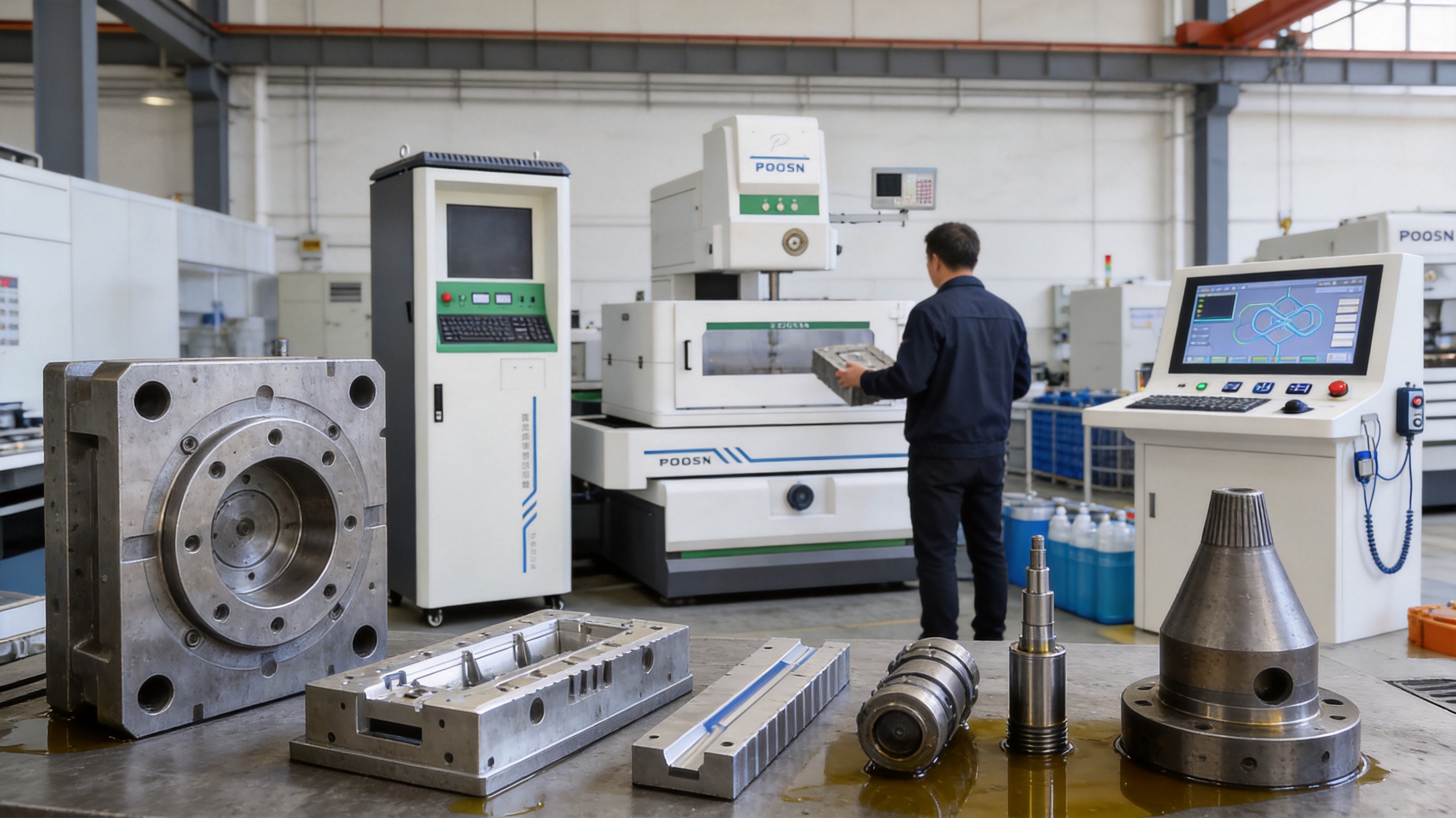
The PS45C heavy-duty CNC medium-speed wire-cut electrical discharge machining machine is designed for manufacturers that require dependable accuracy, substantial workpiece capacity, and stable performance during demanding production cycles. It combines a rigid mechanical structure, controlled electrode-wire movement, intelligent pulse-power technology, and flexible CNC operation in one production-oriented platform. Its design is particularly suited to medium-to-large molds, heavy machinery components, precision tooling, aerospace parts, and other applications in which workpiece size, thickness, surface quality, and dimensional consistency must be controlled simultaneously.
Compared with conventional high-speed wire-cut EDM equipment, the PS45C places greater emphasis on structural stability, cutting capacity, constant wire tension, and repeatable accuracy. Compared with smaller medium-speed models, it provides a larger work envelope, a higher table load, and stronger production capability. These characteristics make it a practical solution for manufacturers that have outgrown compact machines but do not want to sacrifice the operating economy and flexibility associated with medium-speed wire EDM.
The machine is manufactured by Taizhou Xinchengyang Machinery Manufacturing Co., Ltd., a specialist enterprise with long-term experience in electrical discharge machining, wire-cutting technology, machine-tool development, and precision manufacturing. Through continuous improvement in mechanical design, electrical control, testing, and process support, the company has developed a product platform intended to help customers increase productivity, reduce operating costs, and improve the competitiveness of finished components.
Content
- 1 1. The Production Role of the PS45C
- 2 2. Main Technical Capabilities
- 3 3. Structural Rigidity and Vibration Control
- 4 4. Constant-Tension Wire Control
- 5 5. Intelligent Pulse-Power Technology
- 6 6. Working-Fluid Circulation and Flushing
- 7 7. CNC Control and Programming Flexibility
- 8 8. Taper Cutting and Adjustable Wire Guides
- 9 9. Manufacturing Strengths Behind the Machine
- 10 10. Advantages Over Competing Machine Configurations
- 11 11. Application Areas
- 12 12. Production Efficiency, Energy Use, and Cost Control
- 13 13. Quality Assurance and Technical Support
- 14 14. Installation and Operating Environment
- 15 15. Selecting the Appropriate Model
- 16 16. Automation and Future Production Integration
- 17 17. Recommended Process Strategy
- 18 18. Frequently Asked Questions
- 18.1 Q1: How is the PS45C different from the PS35C?
- 18.2 Q2: What is the maximum cutting thickness?
- 18.3 Q3: What cutting efficiency can users expect?
- 18.4 Q4: Can the machine produce tapered parts?
- 18.5 Q5: Is the PS45C appropriate for thick hardened materials?
- 18.6 Q6: What surface quality can the machine achieve?
- 18.7 Q7: Does the machine support automatic threading?
- 18.8 Q8: What control system is supplied?
- 18.9 Q9: What drives are used for the machine axes?
- 18.10 Q10: Is the PS45C suitable for automated production?
- 18.11 Q11: What environment is recommended?
- 18.12 Q12: How can wire consumption be controlled?
- 19 19. Conclusion
- 20 References
- 21 Product: PS45C Heavy-Duty CNC Medium Speed Wire Cut EDM Machine
1. The Production Role of the PS45C
Wire-cut EDM is essential when conventional cutting tools cannot easily produce narrow slots, intricate contours, sharp internal corners, hardened materials, or complex profiles. The process uses a continuously moving electrode wire and controlled electrical discharges to remove material without direct mechanical contact. Because the cutting force is extremely low, the process is suitable for hardened steel, carbide-related components, mold materials, and other difficult-to-machine workpieces.
However, not every wire-cut EDM machine is equally suitable for heavy-duty production. A machine may offer acceptable nominal accuracy but still experience vibration, wire instability, thermal drift, poor flushing, or reduced efficiency when processing thick sections. The PS45C addresses these practical challenges through a combination of mechanical rigidity, automatic wire-management functions, high-pressure working-fluid circulation, and adaptive electrical control.
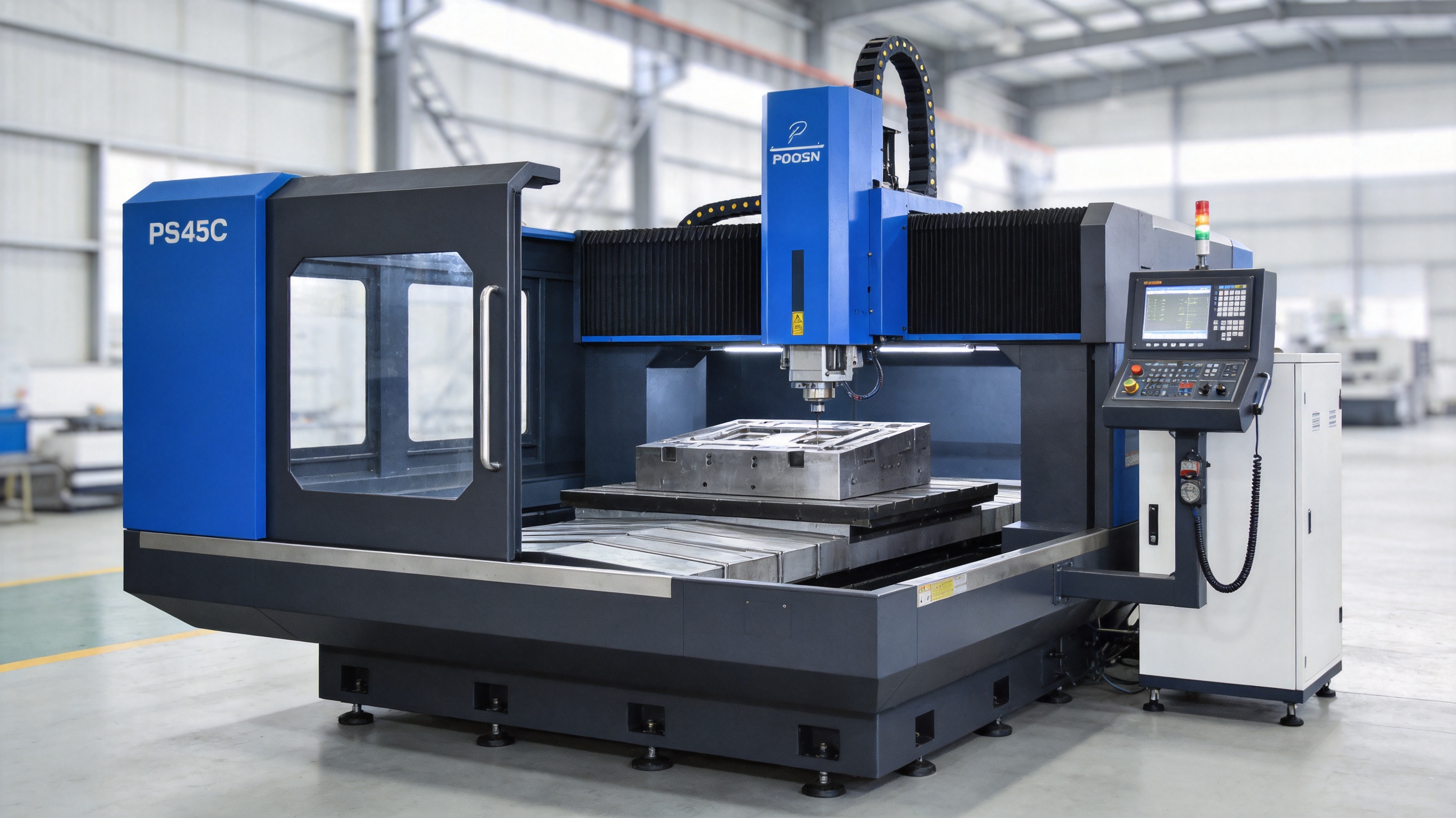
The PS45C is positioned between smaller machines intended for compact parts and larger machines designed for exceptionally heavy or oversized workpieces. Its 450 mm X-axis travel and 600 mm Y-axis travel provide an effective working range for many medium and large components. The maximum table load of 400 kg supports heavier workpieces while maintaining stable movement. A maximum cutting thickness of 280 mm allows the machine to process thick plates, large mold sections, and deep profiles that may exceed the capability of smaller models.
This balance of size and capacity is important for manufacturers that need versatility. A compact machine may limit the size of the mold or fixture that can be installed. An oversized machine may require more floor space, greater investment, and higher operating resources than a typical production department needs. The PS45C offers a practical middle configuration for companies seeking increased capacity without moving immediately to the largest class of equipment.
2. Main Technical Capabilities
The PS45C uses a CNC worktable with a standard worktable size of 650 × 926 mm. The effective XY travel is 450 × 600 mm, while the processing slot size is 645 × 1010 mm. This configuration provides sufficient room for workholding, positioning, flushing access, and the installation of components with complex outlines.
The machine can process workpieces up to 280 mm thick and supports a maximum worktable load of 400 kg. These specifications are especially valuable in mold manufacturing and heavy mechanical-part production, where the workpiece itself may be large and the fixture may add considerable weight. A stable table and rigid supporting structure help reduce positional variation during long cutting cycles.
The standard tapering device provides a UV travel size of 60 × 60 mm and a maximum cutting taper of ±6° per 80 mm. Taper capability enables the machine to produce angled profiles, draft surfaces, punches, dies, and components that require different upper and lower contours. The taper system uses controlled U and V axes, allowing four-axis linkage with X, Y, U, and V interpolation.
The wire-feed system supports a maximum wire-drum travel of 180 mm, an electrode-wire diameter of approximately 0.18 mm when used with the wire guide, and a wire-feed speed from 1 to 11 m/s through frequency control. The maximum wire storage length is approximately 320 m. This arrangement supports continuous machining while allowing operators to select suitable wire-feed conditions according to material, thickness, contour complexity, and desired surface quality.
The working-fluid system has an 80-liter tank and uses paper-core filtration. High-pressure fluid circulation helps remove eroded particles from the cutting gap, supports dielectric stability, and assists with heat control. Proper filtration is particularly important when cutting thick workpieces because the quantity of eroded material increases and unstable flushing can reduce both speed and accuracy.
Under suitable test conditions, the PS45C can achieve a processing accuracy of approximately 0.01 mm, a maximum cutting efficiency of 10,000 to 16,000 mm²/h, and an optimal multi-cut surface roughness of Ra ≤ 1.2 μm. Actual results depend on workpiece material, thickness, geometry, wire condition, cutting strategy, control-cabinet configuration, working-fluid condition, and operator-selected parameters.
| Technical Item | PS45C Specification | Production Significance |
| Worktable size | 650 × 926 mm | Provides room for medium-to-large workpieces and fixtures |
| XY travel | 450 × 600 mm | Supports larger contours than compact models |
| Processing slot size | 645 × 1010 mm | Improves workholding flexibility and access |
| Maximum cutting thickness | 280 mm | Suitable for thick plates and deep mold sections |
| Maximum table load | 400 kg | Handles heavier components with greater stability |
| UV travel | 60 × 60 mm | Supports taper and angled-profile machining |
| Maximum taper | ±6°/80 mm | Enables tapered punches, dies, and complex profiles |
| Wire-feed speed | 1–11 m/s | Allows process adjustment for different materials and tasks |
| Fluid-tank capacity | 80 L | Supports flushing and thermal stability during long cycles |
| Processing accuracy | Approximately 0.01 mm | Supports precision mold and tooling applications |
| Maximum cutting efficiency | 10,000–16,000 mm²/h | Improves throughput for larger production jobs |
| Surface roughness | Ra ≤ 1.2 μm with multi-cutting | Reduces subsequent finishing requirements |
| Controlled axes | X, Y, U, and V four-axis linkage | Provides coordinated contour and taper machining |
| Machine weight | Approximately 2,000 kg | Contributes to rigidity and vibration resistance |
3. Structural Rigidity and Vibration Control
The foundation of any precision wire-cut EDM machine is its mechanical structure. During machining, the electrode wire travels continuously and may change direction rapidly. Electrical discharges also generate localized thermal effects, while the workpiece and working fluid introduce additional changes in temperature and loading. If the machine structure lacks rigidity, these influences may produce vibration marks, dimensional variation, taper errors, or inconsistent surface quality.
The PS45C uses high-quality HT250 castings and a T-shaped bed structure. Compared with a conventional strip-shaped bed, the T-shaped arrangement allows the worktable to move within the supporting limits of the base. This reduces the risk of deformation caused by unsupported table extension and provides a more stable load path between the workpiece, table, guide system, and bed.
The cast structure is manufactured with aging treatment to reduce internal stress. This is a critical step because residual stress in a large casting can gradually release during operation, causing changes in geometry and alignment. Proper aging improves the long-term consistency of the bed and helps preserve the accuracy established during assembly.
The machine integrates precision linear guides, ball screws, AC servo systems, and pitch-error compensation. Linear guides provide controlled movement with low friction, while ball screws convert motor rotation into accurate linear displacement. Servo feedback allows the control system to monitor and correct axis movement. Pitch compensation further reduces the effect of lead-screw manufacturing errors over the travel range.
The worktable is standard-equipped with imported linear guides and a grating scale for real-time, full-stroke position monitoring. A grating scale can provide direct positional information rather than relying only on motor rotation or screw-pitch calculations. This supports more reliable positioning and helps reduce cumulative errors over long strokes.
These structural features give the PS45C an important advantage over basic machines that rely on lighter frames, less comprehensive compensation, or open-loop positioning. In production environments, the value of rigidity is not limited to the first workpiece. It is reflected in repeatability across many parts, more predictable process planning, and fewer corrections during extended operation.
4. Constant-Tension Wire Control
Electrode-wire stability is one of the most important factors in wire-cut EDM. If wire tension is too low, the wire may vibrate, deflect, or produce visible marks on the cut surface. If tension is too high, the wire may be exposed to unnecessary mechanical stress and become more vulnerable to breakage. Tension may also fluctuate during acceleration, deceleration, directional reversal, taper cutting, or changes in cutting conditions.
The PS45C incorporates an adaptive constant-tension wire-tightening mechanism. Unlike a simple weight-based system, which may respond slowly to tension changes, the constant-tension mechanism reacts dynamically to fluctuations in wire movement. It is designed to maintain a more consistent wire condition during both straight cutting and taper cutting.
Stable tension improves perpendicularity, contour accuracy, and surface finish. It is especially valuable when machining thick workpieces because the wire must remain controlled over a longer cutting zone. It also benefits complex contours in which the wire direction changes frequently or where small vibration marks would be difficult to remove through subsequent processing.
The automatic double-sided tightening mechanism helps prevent molybdenum-wire vibration and one-sided loosening. By maintaining balanced control on both sides of the wire path, the system supports more consistent movement and reduces the possibility of unstable wire behavior caused by uneven tension distribution.
The machine also uses a waterproof gemstone guide wheel. The approximately 40 mm single-sided gemstone guide wheel is designed for convenient threading, long service life, and high precision. The guide wheel is an important wear component because it determines the position and direction of the electrode wire. A durable, accurately manufactured guide wheel helps maintain the wire path over repeated production cycles.
An optional one-touch automatic threading function improves convenience and reduces manual intervention. Automatic threading can be particularly useful in multi-cut production, unattended operation, or jobs requiring repeated rethreading after wire breakage. It also reduces the operator’s exposure to repetitive manual tasks and can improve workplace safety.
5. Intelligent Pulse-Power Technology
The electrical power supply determines how efficiently and consistently the EDM process removes material. Each discharge must be controlled within a narrow machining gap. Excessive energy can increase wire wear, enlarge the recast layer, or damage the workpiece surface. Insufficient energy can reduce cutting speed and increase the risk of unstable machining.
The PS45C is equipped with an advanced patented eco-friendly pulse-power supply. Its operating concept emphasizes low electrode wear, high cutting speed, low surface roughness, and improved energy efficiency. The system is intended to provide controlled discharge energy while reducing unnecessary electrical consumption and wire loss.
High-frequency control enables the machine to adapt discharge parameters to workpiece material, thickness, and real-time gap conditions. This adaptive approach helps the machine respond to changes in flushing, contour geometry, and cutting resistance. By keeping discharge conditions within a more stable range, the power supply can help reduce short circuits and wire breakage while maintaining productive cutting speed.
The power supply is also designed to reduce the thickness and influence of the recast layer. In applications such as precision molds, aerospace components, and fatigue-sensitive parts, the quality of the affected surface layer is important. A controlled multi-cutting strategy can remove the rough-cut layer and produce a cleaner final surface with more consistent dimensions.
The machine is available with high-speed power-supply or nanosecond power-supply configurations across the product series. Different control-cabinet options allow users to select a configuration according to required speed, surface quality, process complexity, and investment level. The PS45C documentation identifies three control-cabinet types as available selection options, allowing the machine to be matched more closely to production requirements.
Compared with basic power supplies that use less flexible fixed parameters, adaptive pulse control can provide better process stability across changing workpiece conditions. The resulting benefits include improved cutting consistency, lower risk of wire damage, better surface control, and more efficient use of electrical energy.
6. Working-Fluid Circulation and Flushing
Efficient flushing is essential for stable EDM. The electrical discharge process produces fine particles that must be removed from the gap. If these particles remain in the cutting zone, they may cause secondary discharges, unstable current flow, short circuits, poor surface finish, and reduced dimensional accuracy.
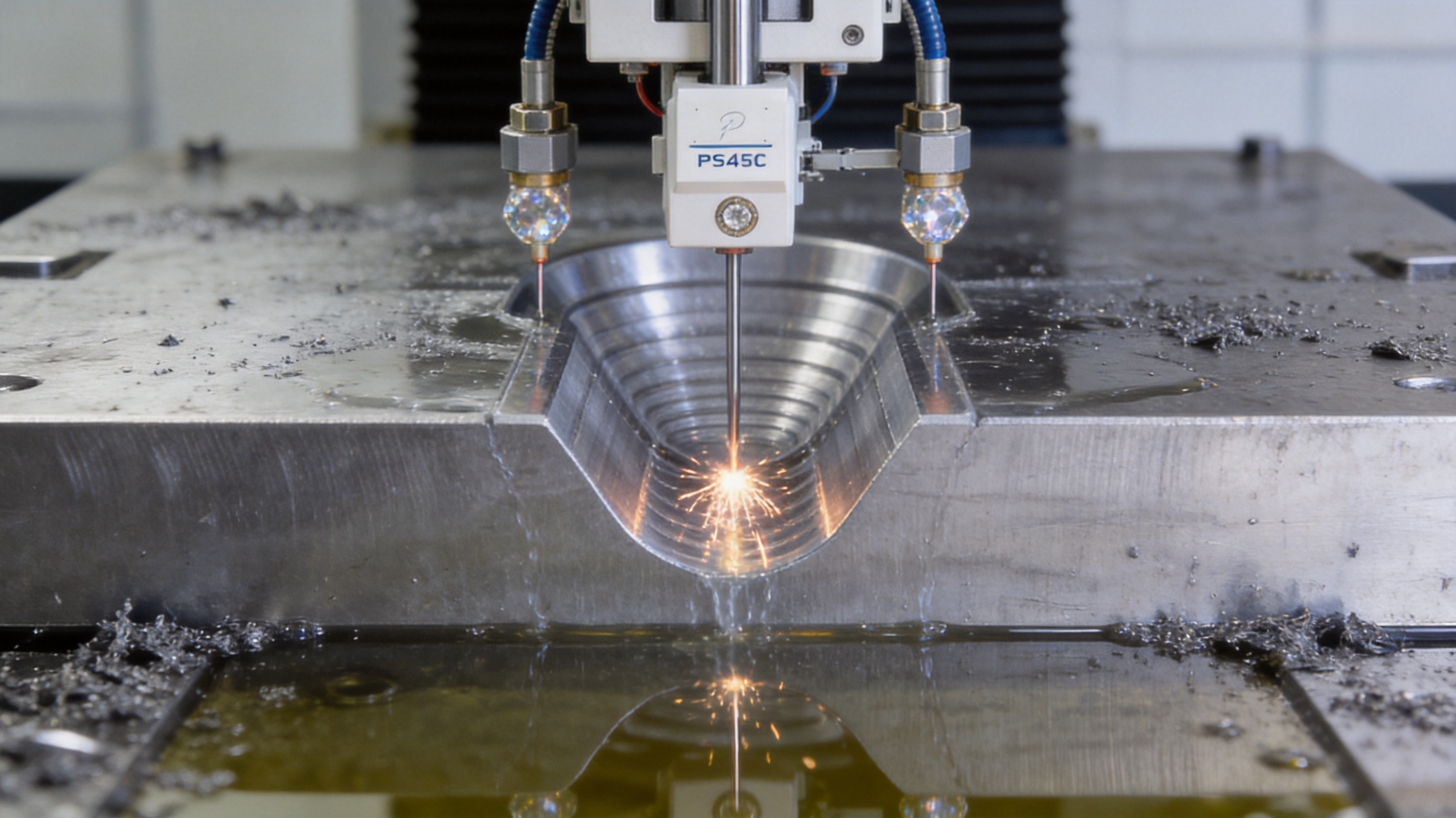
The PS45C uses automatic tracking water spraying during the cutting process. This function helps direct working fluid toward the active cutting area as the machine follows the programmed contour. More effective fluid delivery improves the removal of machining debris and supports a cleaner discharge environment.
The 80-liter fluid tank provides a working reserve for long machining cycles. The paper-core filtration system removes particles from the circulating fluid. Regular filter maintenance is necessary to preserve flow, filtration efficiency, and stable dielectric conditions. When the fluid remains clean and the pressure is maintained, the machine can better control heat and prevent debris accumulation.
Flushing performance is especially significant when machining workpieces up to 280 mm thick. Thick sections create a deeper and more restrictive cutting channel. The PS45C combines high-pressure fluid delivery, optimized nozzle positioning, and pulse control to improve penetration into the cutting gap. These features help maintain cutting efficiency and reduce the deterioration that can occur when discharge byproducts are not evacuated quickly enough.
Thermal management is another important benefit. Working fluid carries heat away from the cutting area and helps reduce temperature variation in the workpiece. Stable thermal conditions support better dimensional consistency during long cycles. This is one reason why fluid maintenance, temperature control, and correct nozzle adjustment should be treated as part of the precision process rather than as routine auxiliary tasks.
7. CNC Control and Programming Flexibility
The PS45C uses the X8/AUTOCUT control system as its standard programming platform. CAXA CAM2019 or TCAM can be selected as optional programming solutions. These systems support the creation of cutting programs and help operators translate CAD geometry and process requirements into reliable G-code data.
The industrial control computer is designed for long-term stable operation. Interfaces such as LAN and USB facilitate data exchange between the machine, engineering workstation, network, and removable storage devices. This supports more efficient program transfer and reduces the need for manual data entry.
The CNC system controls X, Y, U, and V axes in four-axis linkage. Coordinated four-axis movement is necessary for taper cutting and other applications in which the upper and lower wire-guide positions must follow different paths. Accurate interpolation allows the machine to create controlled angular surfaces and more complex three-dimensional profiles.
The system is intended to simplify intelligent programming and improve operating efficiency. In production, ease of programming has a direct effect on setup time, operator training, and the likelihood of input errors. A clear control interface, repeatable program storage, and organized parameter management allow manufacturers to standardize proven cutting conditions.
The machine supports standard XY stepper drives, while AC servo drives are available as an option for the XY axes. Servo drives can provide benefits in applications requiring higher dynamic response, more demanding positioning, or greater emphasis on closed-loop motion control. The taper device uses UV3P stepper drives, while the Z-axis lift is powered by an AC 220 V electric motor.
8. Taper Cutting and Adjustable Wire Guides
Taper cutting expands the range of parts that can be produced on a wire EDM machine. It is commonly used for punches and dies, sloped mold walls, angular inserts, special forming tools, and components with different upper and lower profiles. To achieve reliable taper accuracy, the U and V axes must move smoothly and remain coordinated with the primary X and Y axes.
The PS45C taper device uses P-grade linear guides and ball screws. These components provide controlled motion and help limit backlash and friction. The standard UV travel is 60 × 60 mm, while the machine design supports a maximum cutting taper of ±6° per 80 mm under the stated specification.
The product platform also identifies a larger taper-motion capability for the U and V axes, with stated CNC travel sizes of 400 × 400 mm at ±30° and 590 × 590 mm at ±45°, depending on the applicable configuration. Actual taper capability should be confirmed for the selected machine version, workpiece thickness, and process requirements before ordering.
A liftable gemstone wire guide is available to improve operating flexibility. The guide can move closer to the workpiece surface during machining, reducing wire vibration and improving cutting accuracy and surface finish. It can also adjust the cutting-height range without requiring the operator to rethread the wire. This saves setup time and makes manual operation more convenient.
These taper and guide features distinguish the PS45C from simpler wire-cut machines intended mainly for flat, low-thickness profiles. They provide greater flexibility for mold and tooling manufacturers whose parts may contain inclined surfaces or require a controlled angle through a thick section.
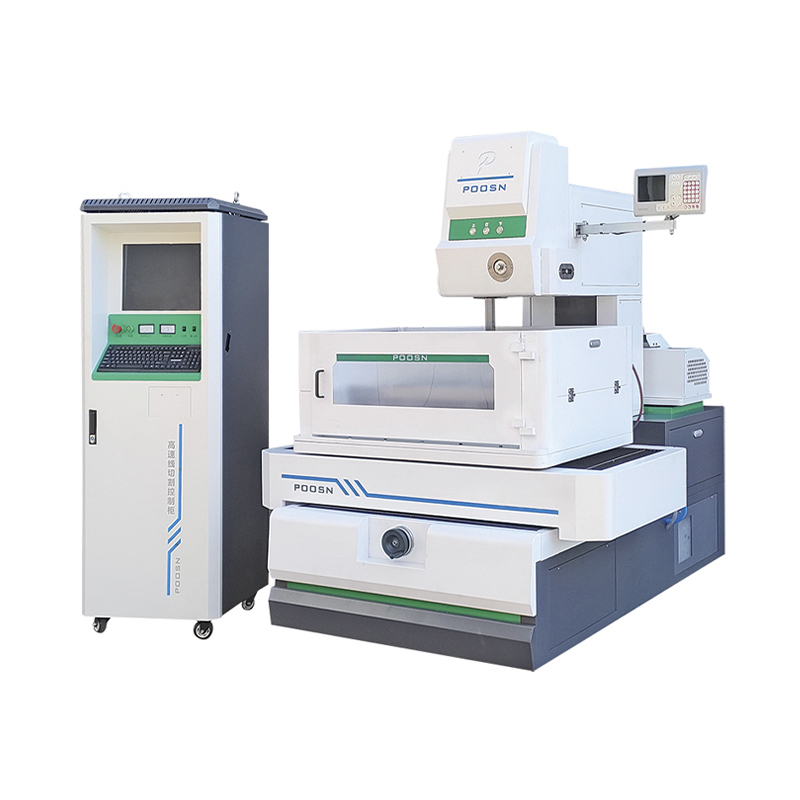
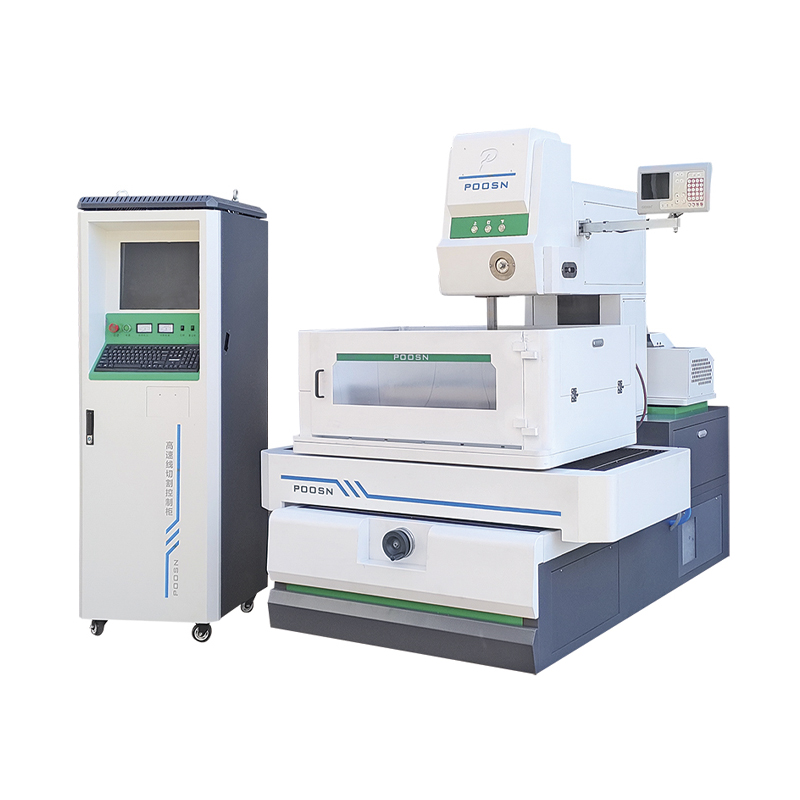
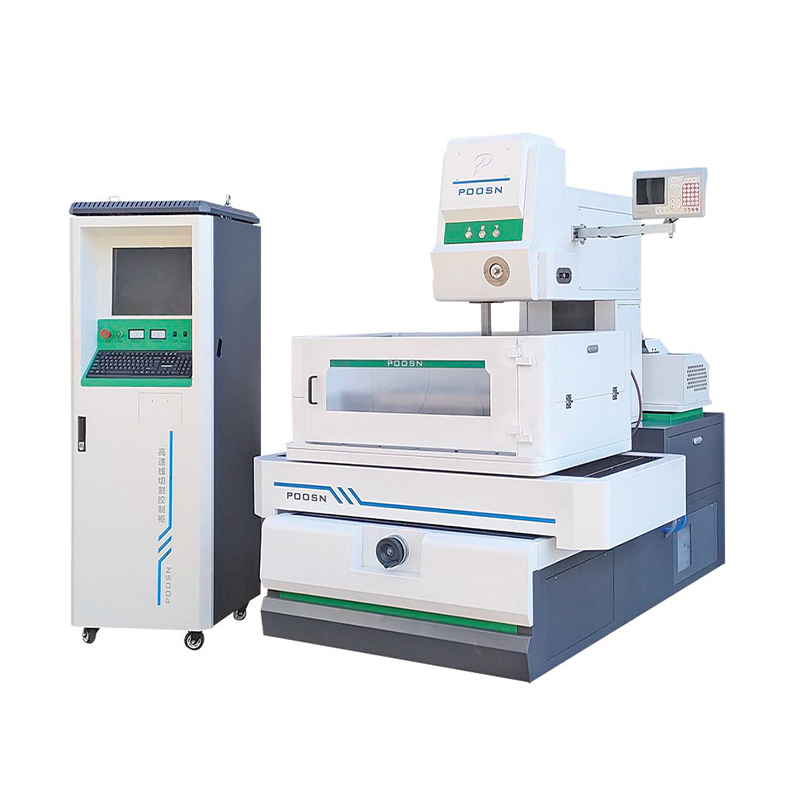
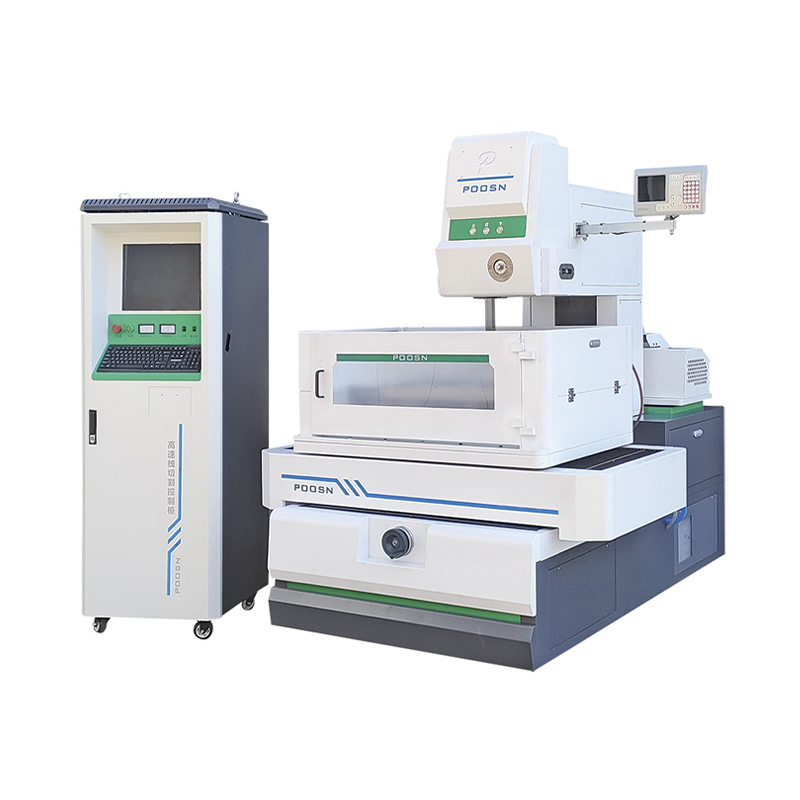
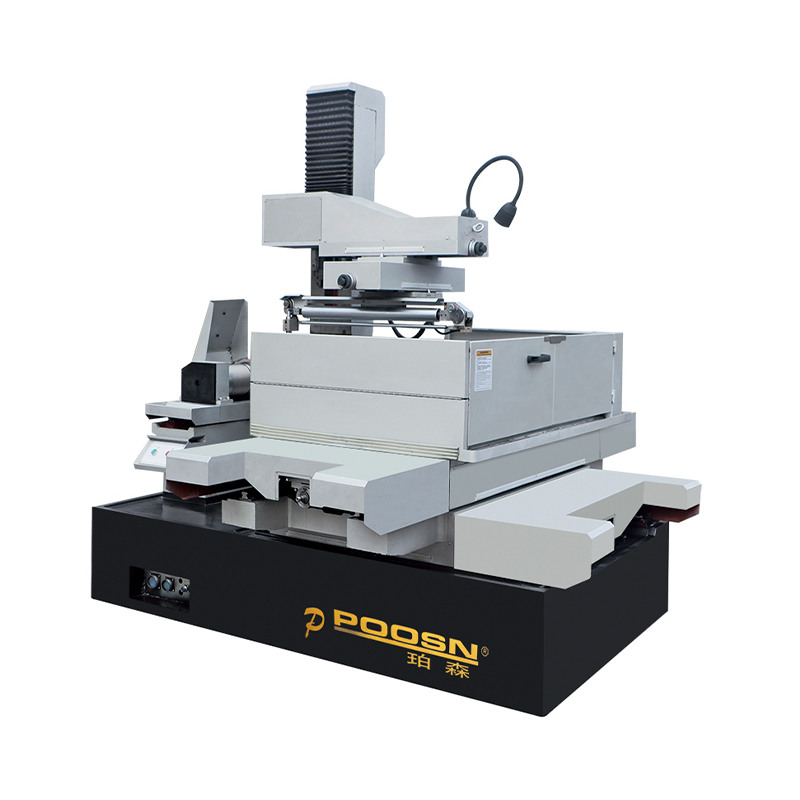
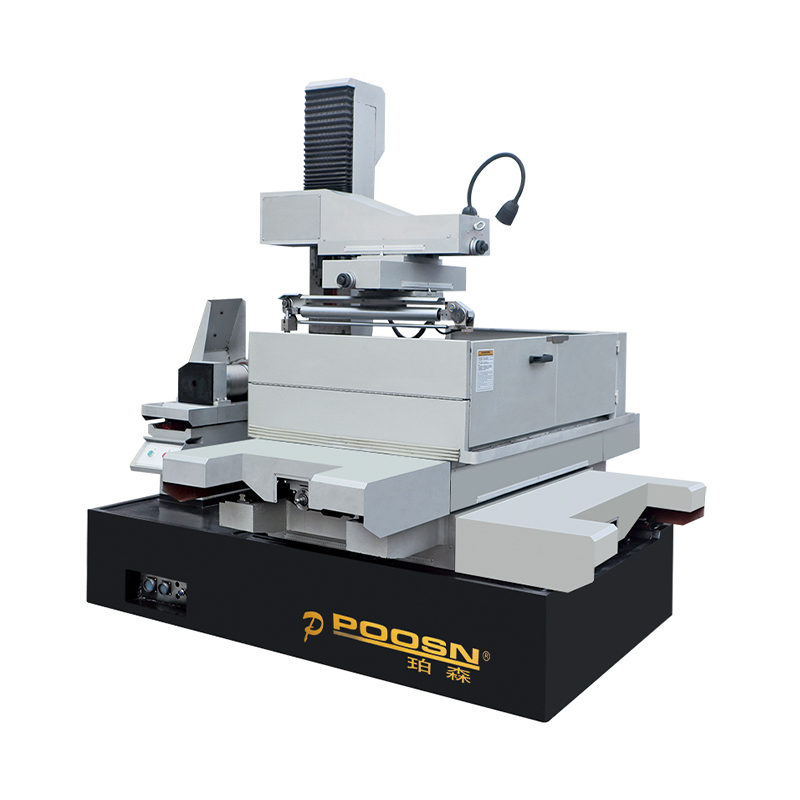
PS45C Heavy-Duty CNC Medium Speed Wire Cut EDM Machine
9. Manufacturing Strengths Behind the Machine
Machine performance depends not only on the published specification but also on the manufacturing discipline used to produce and assemble the equipment. Taizhou Xinchengyang Machinery Manufacturing Co., Ltd. has specialized in electrical-discharge wire cutting since 1999. The POOSN brand was established in 2003, and the company later expanded its manufacturing and technical capabilities through cooperation, product development, and factory construction.
The company’s manufacturing strengths include product research and development, mechanical processing, electrical integration, assembly, precision inspection, and process support. Its product lines include the PS-C and DK77-BC medium-speed wire-cut EDM series, DK77-A and DK77-B high-speed wire-cut EDM series, and DK77-D large-taper wire-cut EDM series.
In 2017, the company established Taizhou Xinchengyang Machinery Manufacturing Co., Ltd. with registered capital of 60 million yuan and built its own factory. This development provided a stronger foundation for organized production, quality management, and ongoing product improvement. The company also developed patented machine-tool technologies, including a fully automatic CNC machine tool involving plate-type winding and suction-type adhesive technology.
The company operates with advanced processing equipment and comprehensive testing methods. Each machine tool undergoes positioning-accuracy testing before delivery. This is important because wire-cut EDM performance is affected by the alignment of guide rails, ball screws, worktable movement, wire guides, taper axes, and control feedback. Inspection at the machine-tool level helps identify deviations before the equipment reaches the customer.
Imported components are used in critical motion and control areas. Panasonic servo motors, Taiwan-brand high-precision linear guides and ball screws, and Japanese EZO bearings are identified among the machine’s selected components. The use of proven suppliers for key motion elements can support reliability, repeatability, and serviceability.
The assembly process includes attention to guide-rail and lead-screw parallelism, mechanical alignment, pitch-error compensation, and the relationship between the wire path and worktable. These details are not always visible in a product photograph, but they strongly influence the quality of finished parts. A robust manufacturing process turns the theoretical advantages of a machine design into practical production results.
The company has supplied products throughout China, with selected models exported to Southeast Asia, West Asia, Europe, and the Americas. This market experience provides exposure to different operating environments, production standards, materials, and customer expectations. It also encourages the development of adaptable machine configurations and technical support practices.
10. Advantages Over Competing Machine Configurations
The PS45C competes with several categories of wire-cut EDM equipment. The most relevant comparisons are with compact medium-speed machines, basic high-speed wire-cut machines, and larger heavy-duty models. Its advantages depend on the specific production requirement, but several distinctions are clear.
10.1 Advantage over smaller medium-speed models
Compared with a smaller model such as the PS35C, the PS45C offers larger effective XY travel, a larger worktable, and a higher maximum load. The PS35C is suitable for smaller parts and small-to-medium batch production, while the PS45C is intended for medium-sized and larger components. The PS45C can accommodate a 400 kg workpiece load compared with 300 kg for the PS35C.
The PS45C maintains the same stated maximum cutting thickness of 280 mm while providing a larger plan area. This means manufacturers can process broader molds, larger inserts, and more substantial precision components without immediately moving to a much larger machine. Its maximum cutting efficiency of 10,000 to 16,000 mm²/h also supports higher throughput for larger workpieces.
10.2 Advantage over basic high-speed wire EDM
High-speed wire EDM machines can be attractive because of their relatively simple configuration and economical operation. However, basic high-speed machines may provide less emphasis on closed-loop tension behavior, full-stroke position monitoring, heavy-load rigidity, or advanced taper-axis control.
The PS45C combines medium-speed operating economy with features normally associated with higher-precision equipment. These include a constant-tension wire mechanism, grating-scale monitoring, precision linear guides, ball screws, AC servo options, adaptive pulse power, and four-axis linkage. The result is a stronger platform for applications in which surface quality and dimensional repeatability are more important than the lowest initial purchase price.
10.3 Advantage over oversized heavy-duty machines
Large machines such as the PS50C and PS60C are suitable for very large or exceptionally heavy parts. The PS45C is not intended to replace them in every application. Instead, its advantage is proportionality. It offers substantial capacity without requiring the footprint, weight, and investment associated with the largest models.
With an approximate machine weight of 2,000 kg and dimensions of 2010 × 1655 × 2010 mm, the PS45C can be easier to integrate into a production department than a 2,200 kg or 2,700 kg machine. It can provide a more efficient use of floor space for manufacturers whose workpieces are substantial but do not require the maximum capacity of the largest platform.
10.4 Advantage in long-cycle stability
In many wire EDM applications, productivity is measured not only by peak cutting speed but also by the ability to run consistently over many hours. The PS45C’s rigid casting, aging treatment, constant wire tension, filtration, position monitoring, and adaptive power supply are directed toward this type of stability.
Stable operation reduces the risk of interrupted cutting, wire breakage, repeated setup, manual polishing, and dimensional rework. For high-volume production, these indirect benefits can be more valuable than a small difference in nominal cutting speed.
11. Application Areas
11.1 Mold and die manufacturing
The PS45C is particularly suited to large stamping dies, plastic-mold components, precision inserts, punches, and forming tools. These parts often require hardened materials, narrow clearances, complex contours, and precise matching between mating components.
Multi-cutting can be used to combine roughing productivity with finishing quality. The first pass removes material efficiently, while subsequent passes correct the profile and improve surface finish. This approach can reduce manual polishing and improve the fit of mold components.
11.2 Heavy machinery components
Heavy machinery manufacturers often need to cut thick plates, wear-resistant parts, guide components, and large precision profiles. The 400 kg table load and 280 mm maximum cutting thickness make the PS45C suitable for many of these tasks. The low mechanical cutting force of EDM also allows the machine to process hardened parts without creating the cutting forces associated with conventional milling or sawing.
11.3 Aerospace components
Aerospace manufacturing requires reliable dimensional control, traceable production methods, and consistent component quality. Wire EDM can be used for difficult-to-machine alloys, precision slots, structural profiles, and specialized tooling. The PS45C’s stable wire control, high-frequency pulse power, and multi-cutting capability can support applications where surface integrity and repeatability are critical.
11.4 Precision machinery and tooling
Precision machinery manufacturers can use the PS45C for gears, fixtures, guide parts, forming inserts, calibration components, and special-purpose tooling. Its taper capability is useful when a part requires an angled profile or when upper and lower contours must be coordinated.
11.5 Medical and high-appearance components
Fine surface quality is important for medical device housings, high-precision prototypes, and aesthetic hardware. When suitable material, flushing, wire, and multi-cut parameters are selected, the PS45C can produce surfaces with low roughness and a consistent appearance. The machine’s controlled wire path helps reduce visible vibration marks on detailed contours.
12. Production Efficiency, Energy Use, and Cost Control
Manufacturing cost is influenced by more than cutting speed. Wire consumption, electrical consumption, setup time, operator labor, rework, polishing, filter replacement, downtime, and machine utilization all contribute to the cost of a finished part. The PS45C addresses several of these factors simultaneously.
Its high-frequency pulse-power system is designed to use discharge energy more efficiently. Reduced electrode wear can lower wire consumption and reduce interruptions caused by wire replacement or breakage. Adaptive power control can also help keep the process stable as workpiece conditions change.
The automatic threading option reduces the time required to restore operation after wire breakage or between separate cutting tasks. A liftable wire guide can reduce the need for repeated rethreading when the cutting height changes. These small reductions in manual work can accumulate significantly in batch production.
The larger worktable and higher load capacity allow manufacturers to process more varied parts on one machine. In some cases, several smaller components can be arranged within one cutting program, improving material utilization and reducing repeated setup. The possibility of integrating the machine with other equipment and production lines further supports automation and reduces manual intervention.
Energy saving is also part of the PS45C design objective. Efficient pulse generation, controlled motor operation, and optimized cutting parameters can lower long-term energy consumption compared with less efficient systems. The actual energy savings depend on job conditions, duty cycle, material, and machine configuration, but a more efficient process can contribute to lower operating costs over the machine’s service life.
For a fair investment evaluation, users should consider total cost of ownership rather than only the purchase price. A machine that provides better uptime, fewer wire breaks, more predictable accuracy, and less secondary finishing may deliver a lower cost per acceptable component even if its initial configuration includes higher-grade control or motion components.
13. Quality Assurance and Technical Support
Precision equipment requires continuing support after installation. Operators need assistance with machine setup, wire threading, parameter selection, taper programming, working-fluid management, and preventive maintenance. A responsive technical-support system helps users achieve stable operation and protects the long-term value of the equipment.
Taizhou Xinchengyang Machinery Manufacturing Co., Ltd. provides rapid response and professional technical support for its equipment. The company’s service objective is to maintain operational stability and help customers achieve effective long-term use. Support is especially important during the first stage of installation, when operators are establishing cutting databases for local materials and production conditions.
Routine maintenance should include inspection of wire guides, guide wheels, linear guides, ball screws, bearings, filters, pumps, nozzles, electrical connections, and working-fluid quality. Preventive maintenance is more effective than waiting for a sudden failure because small deviations in wire path or fluid flow can gradually reduce accuracy before becoming obvious.
The machine’s use of imported bearings, precision guides, and recognized servo components also supports serviceability. When replacement is required, standardized components can simplify maintenance planning. Customers should confirm the exact component configuration, spare-parts policy, warranty conditions, and training arrangements before final purchase.
14. Installation and Operating Environment
Although the PS45C is engineered for demanding work, the installation environment has a direct influence on precision. A temperature-controlled environment is recommended for high-accuracy applications. Changes in ambient temperature can cause thermal expansion and contraction of the machine structure, workpiece, and wire system. A stable environment reduces dimensional variation during long machining cycles.
The installation area should also have a firm foundation with low vibration. External vibration from stamping presses, heavy transport equipment, or nearby machine tools may affect surface finish and contour accuracy. Adequate space should be provided around the machine for loading, maintenance, fluid-system access, electrical inspection, and safe operator movement.
A clean environment helps protect mechanical and electrical components. Dust and airborne contaminants may affect guideways, control cabinets, filters, and cooling systems. The electrical installation should comply with the required power specification. The stated power supply is 3N 380 V ±10, while the electrical capacity is approximately 2.5 kVA for the listed configuration. Local electrical requirements should be verified before installation.
Operators should also establish a disciplined working-fluid management procedure. Fluid concentration or quality, filtration, tank cleanliness, nozzle alignment, and pump condition all influence cutting stability. Proper preparation and regular inspection help the machine deliver results closer to its intended performance.
15. Selecting the Appropriate Model
The PS45C should be selected according to the largest typical workpiece, not only the average part. Users should consider workpiece dimensions, thickness, mass, fixture size, required taper, production volume, surface-finish expectations, and future product plans.
The PS35C is appropriate for smaller parts and small-to-medium batch production. It is a practical choice when the required work envelope and load remain within its smaller capacity.
The PS45C is suited to medium-sized parts, larger molds, and precision components that require a larger worktable and higher load capacity. It is the appropriate choice when a manufacturer needs more room and stronger support but does not require the maximum capacity of the larger platforms.
The PS50C is intended for larger and heavier components, with a 500 × 700 mm XY travel, 350 mm maximum cutting thickness, and 600 kg maximum table load.
The PS60C is designed for extra-large workpieces and high-load components. With a 600 × 800 mm XY travel, 430 mm maximum cutting thickness, and 800 kg maximum table load, it is suitable for heavy-duty molds and demanding industries. Customizable options are available for the PS60C and larger machines.
For many manufacturers, the PS45C represents the most balanced configuration because it expands capacity while preserving manageable installation requirements and operating costs.
16. Automation and Future Production Integration
The PS45C supports a certain degree of automation and can be integrated with other equipment or production lines. Possible integration strategies include program transfer through network or USB interfaces, automatic threading, standardized workholding, scheduled production, and process monitoring.
Automation is not limited to robotic loading. It also includes reducing repeated operator actions, maintaining consistent process parameters, recording production information, and making recovery from interruptions more efficient. Automatic threading and programmable Z-axis depth setting are examples of features that reduce manual intervention.
The Z-axis is equipped with an electric motor and supports one-click depth setting through the linear-guide lifting arrangement. This makes it easier to adjust cutting height and prepare jobs with different workpiece dimensions. A simpler setup process can improve production flexibility, especially in job-shop environments with frequent product changes.
As manufacturers move toward connected production, the LAN and USB interfaces provide a foundation for organized data exchange. Additional automation requirements should be discussed during configuration so that machine options, control systems, workholding, and peripheral equipment can be selected as a complete solution.
17. Recommended Process Strategy
A successful PS45C application begins with accurate workpiece preparation. The workpiece should be securely supported, electrically connected, and positioned so that flushing is not obstructed. Heavy components should be loaded with appropriate lifting equipment and checked for stable contact with the table.
The cutting program should reflect the material, thickness, contour, taper requirement, and desired final quality. Rough cutting can be optimized for removal rate, while finishing passes should use lower-energy parameters and suitable offsets. Multi-cutting is recommended when dimensional accuracy and surface finish are more important than completing the part in a single pass.
Wire tension, feed speed, flushing pressure, pulse parameters, and offset values should be adjusted together rather than independently. A change in one condition may affect the others. For example, a thicker workpiece may require stronger flushing and different discharge energy, while a fine finishing pass may require lower energy and greater attention to debris removal.
Operators should monitor wire condition, fluid pressure, filter status, machine temperature, and cutting sound or electrical behavior. Consistent production is achieved when abnormal conditions are identified early. Maintaining a record of successful parameters for common materials can reduce setup time and improve repeatability between operators and shifts.
18. Frequently Asked Questions
Q1: How is the PS45C different from the PS35C?
The PS45C has a larger work envelope, with 450 mm X-axis travel and 600 mm Y-axis travel, compared with the smaller PS35C configuration. It also supports a higher maximum worktable load of 400 kg, compared with 300 kg. These improvements make it more suitable for medium-to-large molds, heavier components, and higher-capacity production tasks.
Q2: What is the maximum cutting thickness?
The stated maximum cutting thickness of the PS45C is 280 mm. Actual performance depends on material type, geometry, flushing conditions, wire condition, cutting parameters, and the required accuracy and surface finish.
Q3: What cutting efficiency can users expect?
The maximum cutting efficiency is specified as approximately 10,000 to 16,000 mm²/h under suitable test conditions. The actual value varies according to the selected control cabinet, workpiece material, thickness, contour, wire settings, pulse parameters, and working-fluid conditions.
Q4: Can the machine produce tapered parts?
Yes. The PS45C uses coordinated X, Y, U, and V axes for taper cutting. The standard tapering device provides 60 × 60 mm UV travel and a maximum cutting taper of ±6° per 80 mm. The final result depends on workpiece thickness, taper angle, wire condition, calibration, and process settings.
Q5: Is the PS45C appropriate for thick hardened materials?
Yes. Wire EDM is well suited to hardened and difficult-to-machine materials because it removes material through electrical discharge rather than conventional mechanical cutting force. The PS45C’s rigid structure, controlled wire tension, adaptive pulse power, and high-pressure flushing support thick-section machining.
Q6: What surface quality can the machine achieve?
The stated optimal multi-cutting surface roughness is Ra ≤ 1.2 μm. Achieving this result requires appropriate roughing and finishing strategies, clean working fluid, stable wire tension, correct offset compensation, suitable electrical parameters, and careful workpiece preparation.
Q7: Does the machine support automatic threading?
One-touch motorized automatic threading is available as a machine feature or configuration option. It reduces manual labor and can improve recovery efficiency after wire breakage or during repeated production operations.
Q8: What control system is supplied?
The listed standard programming system is X8/AUTOCUT. CAXA CAM2019 or TCAM can be selected as optional programming solutions. The machine also provides LAN and USB interfaces for data exchange.
Q9: What drives are used for the machine axes?
The standard XY configuration uses stepper drives, while AC servo drives are available as an option. The CNC taper device uses UV3P stepper drives. The Z-axis lift uses an AC 220 V electric motor. The exact configuration should be confirmed in the technical quotation.
Q10: Is the PS45C suitable for automated production?
Yes. The machine supports a degree of automation through automatic threading, programmable depth setting, data transfer, and potential integration with other production equipment. The appropriate automation level depends on the customer’s workholding, loading, inspection, and production-line requirements.
Q11: What environment is recommended?
A temperature-controlled, low-vibration, and relatively dust-free environment is recommended for precision work. Stable temperature reduces thermal dimensional changes, while a clean environment protects the mechanical and electrical systems.
Q12: How can wire consumption be controlled?
Wire consumption can be controlled through adaptive pulse power, correct wire-feed settings, stable tension, suitable flushing, proper alignment, and optimized cutting parameters. Maintaining the working fluid and using an appropriate multi-cut strategy can also reduce unnecessary wire wear and wire breakage.
19. Conclusion
The PS45C heavy-duty CNC medium-speed wire-cut EDM machine is engineered for manufacturers that need more than basic contour cutting. Its value lies in the coordinated performance of a rigid HT250 casting structure, T-shaped bed, full-stroke grating-scale monitoring, precision linear guides, ball screws, adaptive constant-tension wire control, high-frequency pulse power, effective filtration, and four-axis taper machining.
With 450 × 600 mm XY travel, a 400 kg table load, and a 280 mm maximum cutting thickness, the PS45C occupies a useful position in the medium-to-large workpiece market. It provides greater capacity than compact models while remaining more manageable than the largest heavy-duty machines. Its cutting efficiency, multi-cutting surface quality, automatic functions, and energy-conscious design support both job-shop flexibility and higher-volume production.
The machine’s performance is reinforced by the manufacturing capabilities of Taizhou Xinchengyang Machinery Manufacturing Co., Ltd. The company’s long experience in wire-cut EDM, use of precision components, casting and aging processes, positioning-accuracy testing, technical development, and customer support provides a foundation for dependable equipment delivery.
For manufacturers producing molds, heavy machinery parts, aerospace components, precision tooling, and other demanding workpieces, the PS45C offers a balanced combination of capacity, accuracy, process stability, and operating efficiency. When correctly installed, maintained, and programmed, it can help reduce rework, shorten production cycles, limit manual finishing, and improve the consistency of finished products.
References
1. Taizhou Xinchengyang Machinery Manufacturing Co., Ltd. PS-C Series Medium-Speed Wire-Cut EDM Machine Technical Materials.
2. PS45C Product Specifications, Worktable Capacity, Travel Data, Taper Functions, and Control-System Information.
3. General Principles of Electrical Discharge Machining and Wire-Cut EDM Process Control.
4. Machine-Tool Structural Design Practices for Vibration Control, Casting Aging, and Geometric Accuracy.
5. Technical Guidance on EDM Pulse Power, Electrode-Wire Wear, Flushing, Filtration, and Multi-Cut Processing.
Product: PS45C Heavy-Duty CNC Medium Speed Wire Cut EDM Machine

-
Phone
+86-0523-86268788 +86-13815960366 +86-13912191163Email
[email protected]Address
No. 366, Yusheng Road Jiulong Town, Hailing District Taizhou City, China
Copyright © Taizhou Xinchengyang Machinery Manufacturing Co., Ltd. All Rights Reserved.
Custom edm machine for sale
wholesale edm machine manufacturers
