

 English
 русский
 عربى


Fang Xuelan — Customer After-Sales Supervisor
Home / Author / Fang Xuelan — Customer After-Sales Supervisor / PS60C Heavy-Duty CNC Wire-Cut EDM Machine for Oversized Workpieces
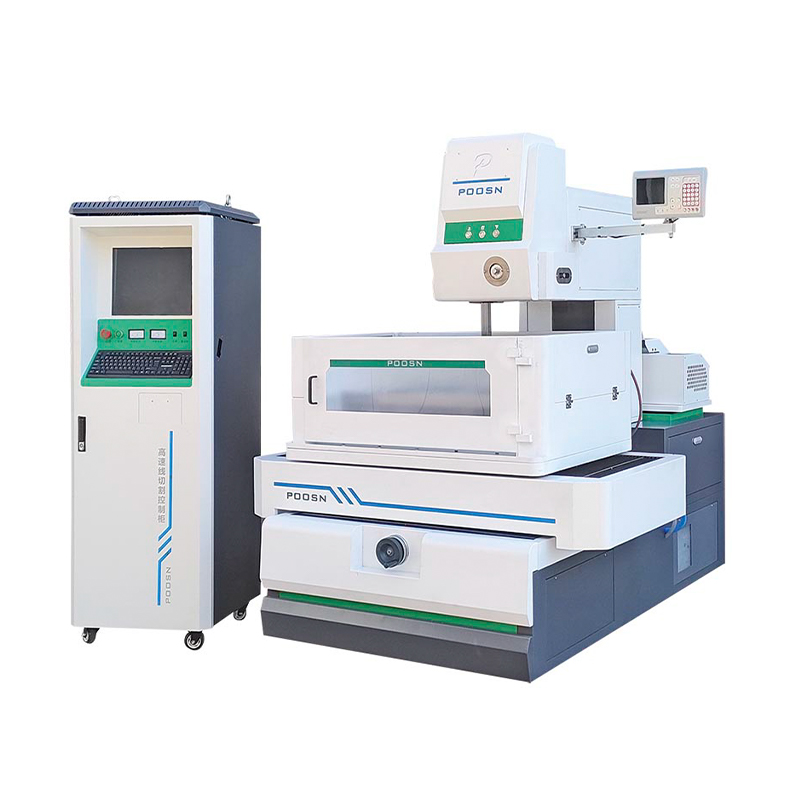
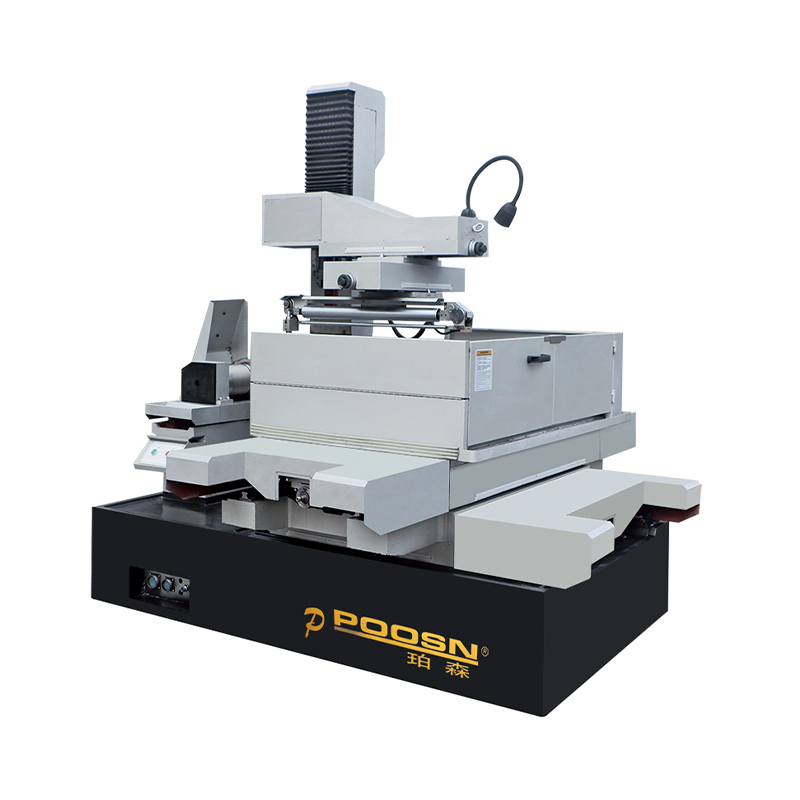
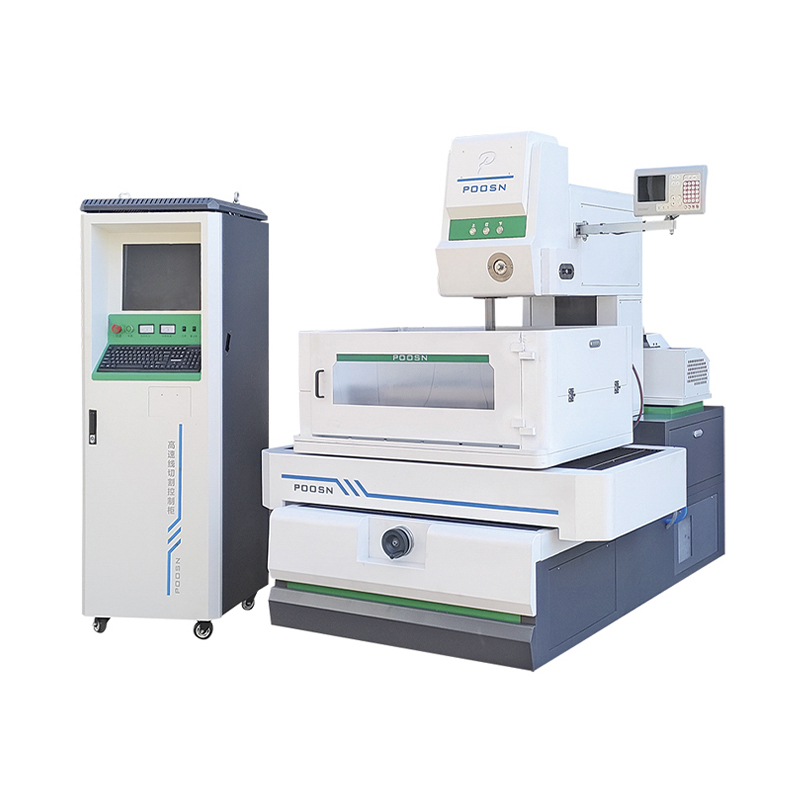
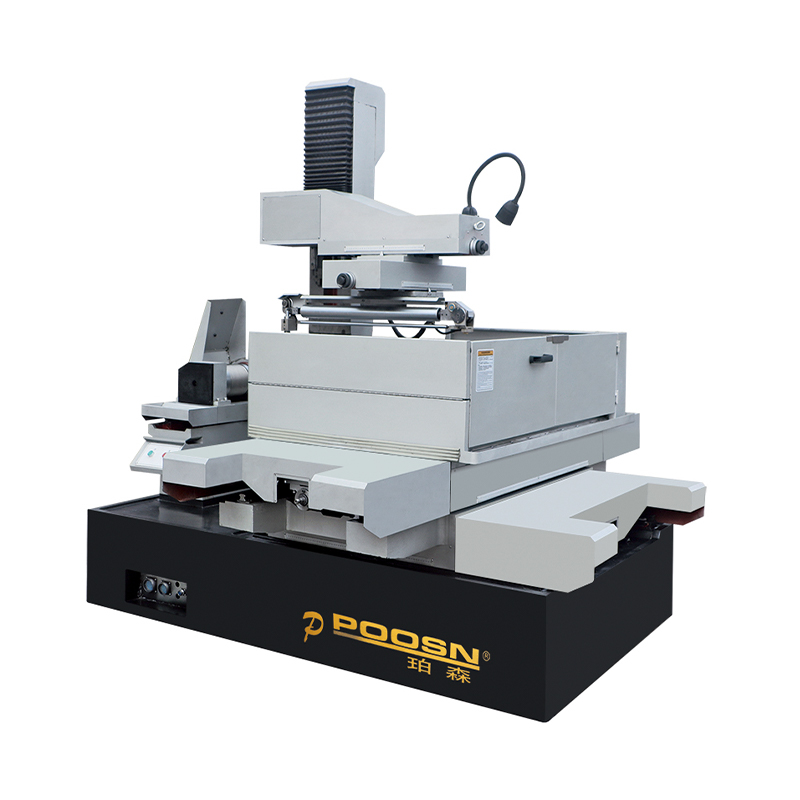
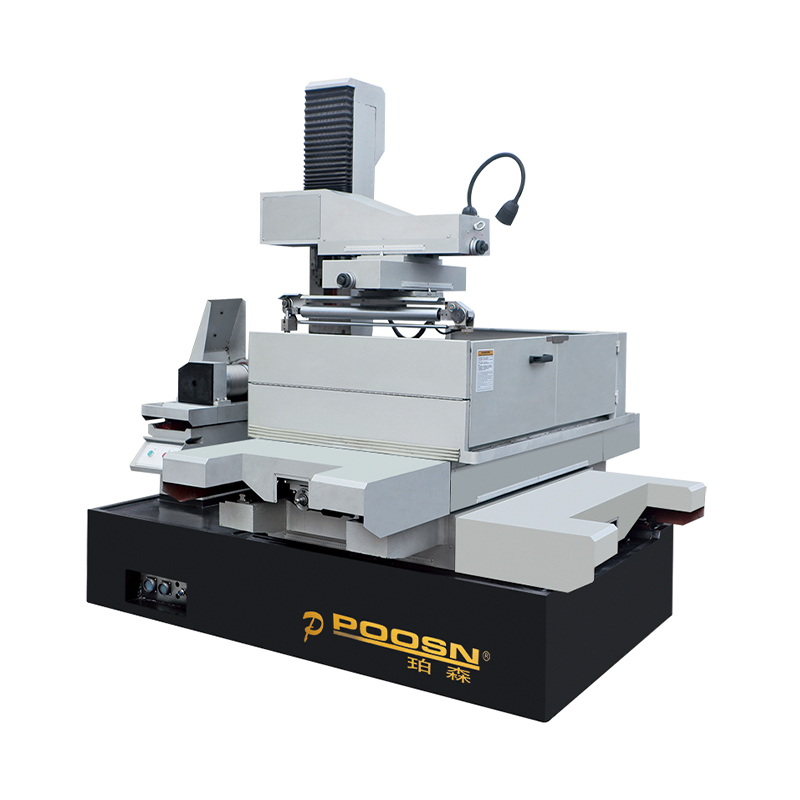
PS60C Heavy-Duty CNC Wire-Cut EDM Machine for Oversized Workpieces
2026-10-02
Modern mold manufacturing, aerospace production, heavy equipment construction, and precision mechanical processing increasingly depend on machining systems that can combine large working capacity with repeatable accuracy. Oversized workpieces create challenges that are not normally encountered when machining small or medium-sized components. Their greater mass can influence table movement, their thickness can increase cutting difficulty, and their dimensions can magnify the effects of vibration, thermal change, wire deflection, and positioning error. A suitable wire-cut electrical discharge machining system must therefore provide more than a large worktable. It must offer structural rigidity, controlled wire tension, dependable electrical discharge performance, accurate motion control, efficient fluid management, and stable long-duration operation.
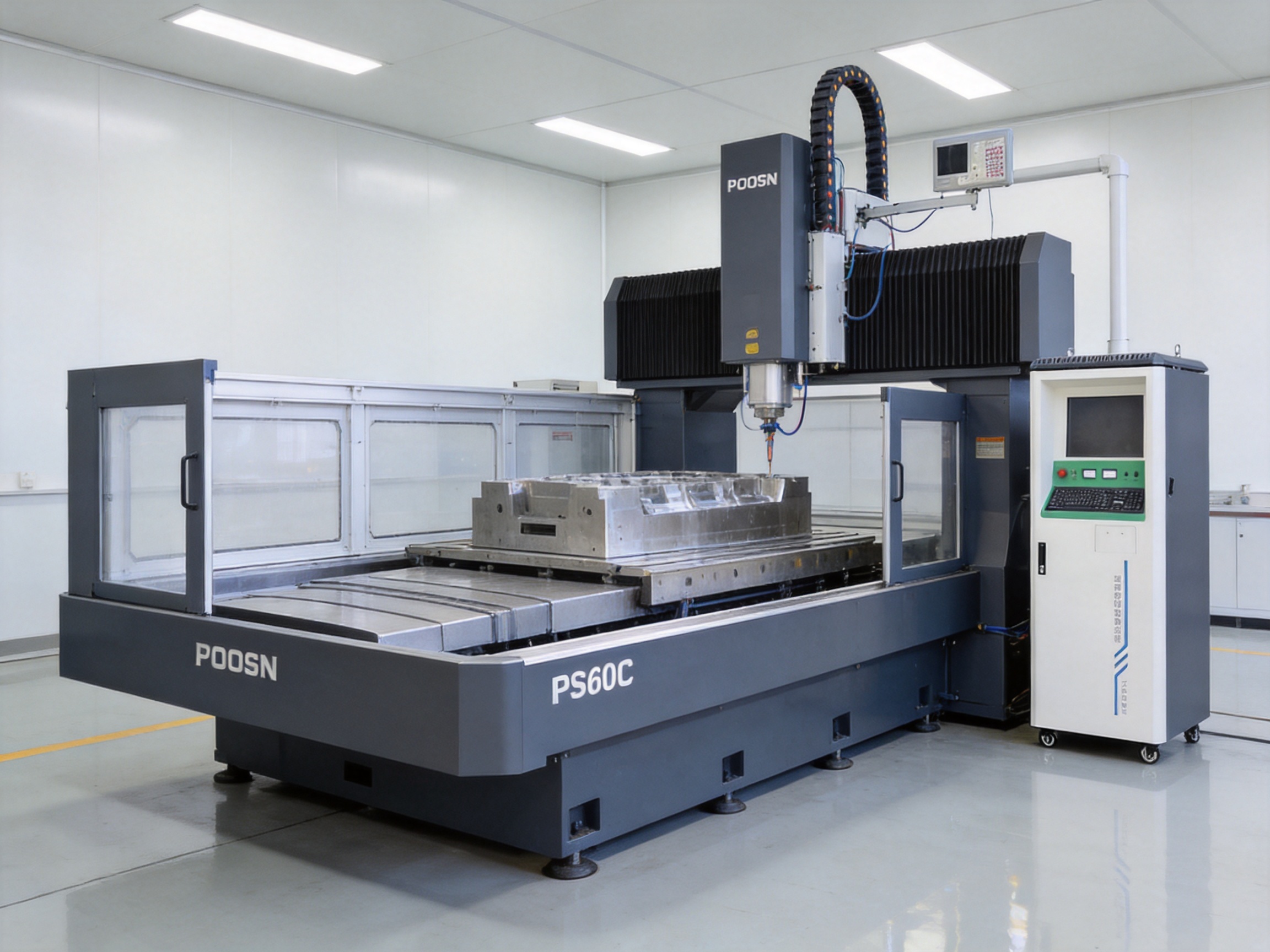
The PS60C Medium-Speed Wire-Cut EDM Machine is designed for this demanding class of work. As the largest and most capable model in the PS-C series, it provides an XY travel range of 600 × 800 mm, a worktable measuring 840 × 1,160 mm, a maximum cutting thickness of 430 mm, and a maximum worktable load of 800 kg. These specifications position the machine for the processing of large molds, heavy-duty components, thick conductive materials, and precision parts that exceed the practical capacity of many conventional medium-speed wire-cut EDM machines.
Its value is not limited to size. The machine combines a high-strength T-shaped cast bed, imported linear guides, ball screws, grating-scale monitoring, four-axis X/Y/U/V linkage, multi-pass cutting capability, high-speed or nanosecond power-supply options, and an intelligent CNC control system. The result is a production platform intended to maintain accuracy and stability while cutting large or heavy workpieces over extended periods.
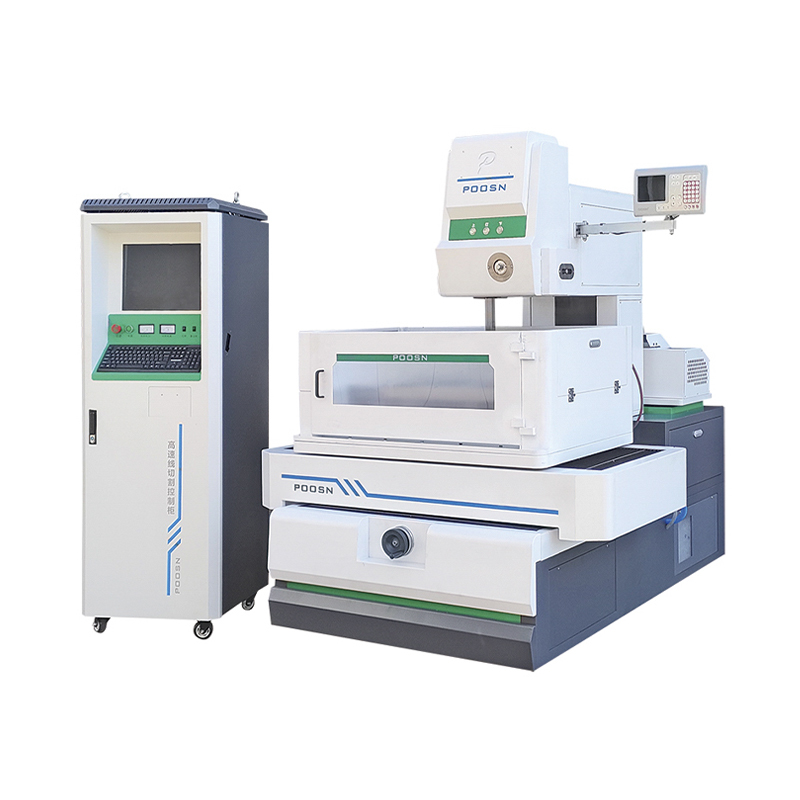
PS60C Heavy-Duty CNC Wire Cut EDM Machine for Oversized Workpieces
Content
- 1 1. The Role of Large-Capacity Wire-Cut EDM in Precision Manufacturing
- 2 2. Main Performance Advantages
- 3 3. Advanced Wire-Tension and Guide Technology
- 4 4. Electrical Discharge and Cutting Performance
- 5 5. Large Taper Cutting Capability
- 6 6. Control System and Operator Efficiency
- 7 7. Machine Structure and Manufacturing Quality
- 8 8. Advantages Compared with Conventional Alternatives
- 9 9. Customization and Application Engineering
- 10 10. Typical Industrial Applications
- 11 11. Technical Specification Table
- 12 12. Manufacturing and Quality-Control Strengths
- 13 13. Installation, Operation, and Maintenance Considerations
- 14 14. Selecting the Right PS-C Model
- 15 15. Frequently Asked Questions
- 15.1 Q1: What type of workpiece is the PS60C designed to process?
- 15.2 Q2: What is the maximum cutting thickness?
- 15.3 Q3: What is the maximum worktable load?
- 15.4 Q4: What cutting accuracy can the machine achieve?
- 15.5 Q5: Is the PS60C suitable for mass production?
- 15.6 Q6: Can the machine perform taper cutting?
- 15.7 Q7: Which control and programming systems are available?
- 15.8 Q8: Can the PS60C be customized?
- 15.9 Q9: What materials can be processed?
- 15.10 Q10: What maintenance is most important?
- 16 16. Conclusion
- 17 References
- 18 Product: PS60C Heavy-Duty CNC Wire Cut EDM Machine for Oversized Workpieces
1. The Role of Large-Capacity Wire-Cut EDM in Precision Manufacturing
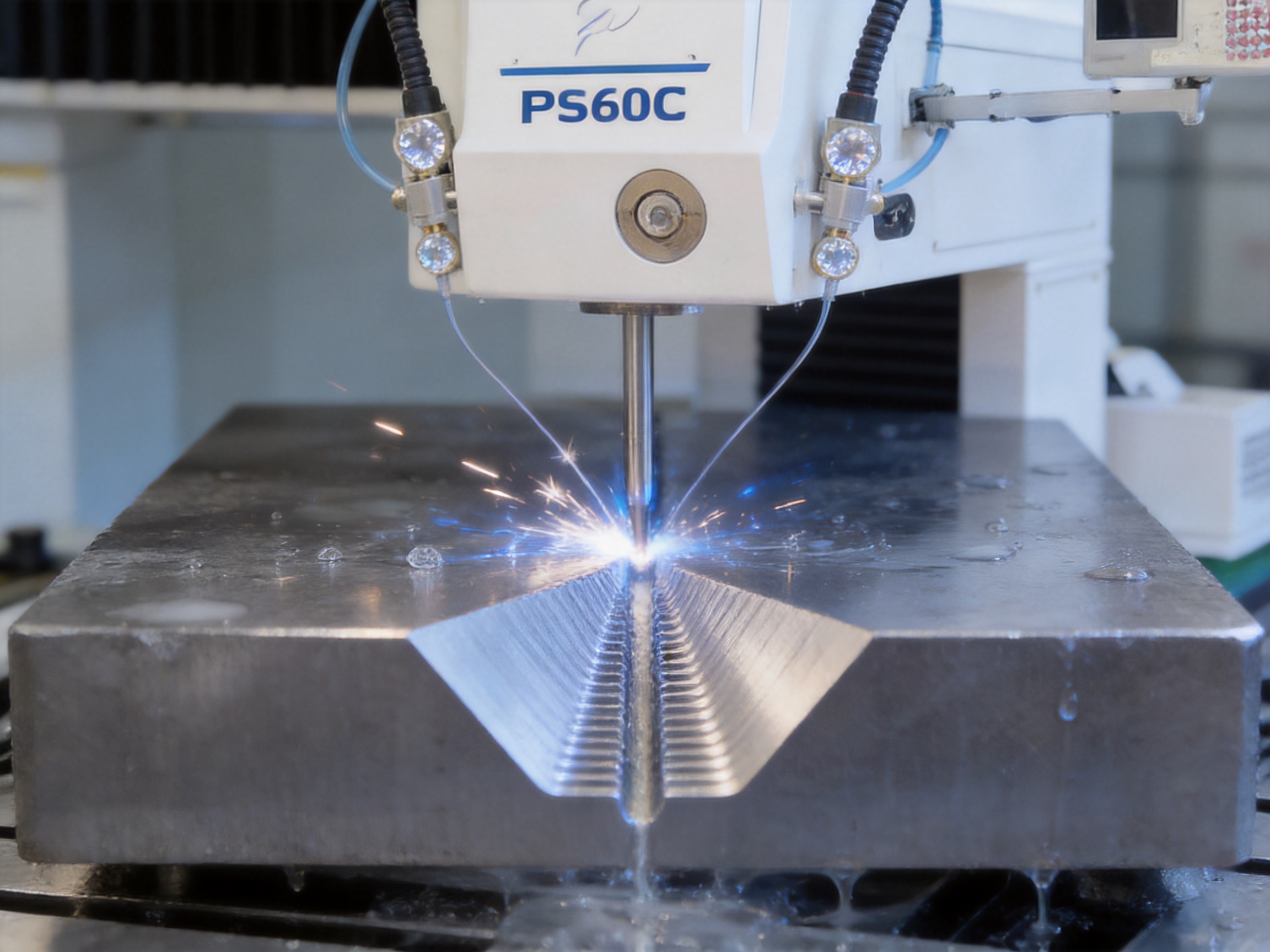
Wire-cut EDM removes electrically conductive material through controlled electrical discharges between a continuously moving electrode wire and the workpiece. Because the cutting action is non-contact, the process can machine hardened steel, carbide, and other difficult materials without imposing the same mechanical cutting forces associated with milling, sawing, or broaching. This makes wire EDM particularly useful for intricate profiles, narrow slots, precision punches, die components, and complex contours.
However, the capabilities required for a large workpiece differ from those required for a small component. A large workpiece may occupy most of the worktable and may weigh several hundred kilograms. The machine must support that weight without excessive deformation. Its axes must travel smoothly and accurately across a long stroke. The electrode wire must remain stable over a tall cutting zone. The dielectric fluid must be delivered and filtered consistently. The control system must compensate for process changes while maintaining dimensional control.
The PS60C addresses these requirements as an integrated system. Its large machining envelope allows users to process oversized workpieces without dividing them into separate operations. Avoiding additional setups can reduce alignment errors, shorten handling time, and improve the consistency of related features. This is especially important for large dies and molds, where the relationship between multiple profiles must be maintained across the full component.
The machine is also suitable for heavy-load applications in which workpiece weight is a central consideration. With a rated maximum worktable load of 800 kg, the PS60C provides a substantial capacity for large tooling and mechanical parts. Actual loading should always be evaluated according to workpiece geometry, fixture design, support conditions, and customer-specific machine configuration, but the rated capacity gives manufacturers a practical foundation for large-scale production planning.
2. Main Performance Advantages
2.1 Extra-Large Work Envelope
The PS60C has an XY travel size of 600 × 800 mm and a standard worktable size of 840 × 1,160 mm. Its processing slot measures 840 × 1,250 mm. This combination gives manufacturers more usable space for large components, fixtures, and workholding arrangements.
A large working envelope can create several advantages. First, it enables a single setup for parts that might otherwise require multiple repositioning operations. Second, it provides additional room for fixtures, locating blocks, clamps, and auxiliary supports. Third, it makes it easier to accommodate parts with irregular shapes or large external dimensions. Finally, it allows production planners to process larger components without immediately investing in several smaller machines or outsourcing oversized work.
Compared with smaller medium-speed wire EDM models, the PS60C is better suited to large mold plates, substantial punch and die assemblies, aerospace components, heavy machinery parts, and thick precision sections. The PS-C series also includes PS35C, PS45C, and PS50C models for smaller workpieces. This model range helps users select capacity according to part size rather than forcing every application into a single machine format.
2.2 High Cutting Thickness
The PS60C provides a maximum cutting thickness of 430 mm. This is one of its most important advantages for heavy-duty machining because thick workpieces place greater demands on wire stability, flushing, taper control, and discharge energy.
Deep cutting can cause process conditions to vary along the height of the workpiece. Debris removal may become more difficult, discharge stability may be affected, and wire vibration can influence straightness and surface quality. The PS60C addresses these challenges through a combination of adaptive wire tension, automatic tracking water spraying, precision wire guides, and controlled power-supply technology.
The stated maximum thickness is a machine capability reference. In actual production, the achievable thickness and final quality depend on the material, workpiece geometry, flushing conditions, wire diameter, cutting strategy, required tolerance, surface finish, and number of finishing passes. For particularly demanding applications, the manufacturer can evaluate the workpiece and recommend suitable process parameters or customized configurations.
2.3 High Load Capacity
Large parts require a rigid and stable support structure. The PS60C is rated for a maximum worktable load of 800 kg, enabling it to accommodate heavy molds and large conductive components that would exceed the capacity of smaller wire-cut machines.
The load capacity is supported by a high-strength cast machine body and a T-shaped bed design. Unlike a narrow strip-style bed, the T-shaped arrangement allows the worktable to move within the supporting structure of the base. This design helps reduce deformation and contributes to long-term geometric stability. The casting is subjected to aging treatment to relieve internal stress and preserve mechanical precision during prolonged operation.
Workpiece weight is only one part of safe and accurate machining. The mass distribution of the component, the position of its center of gravity, the design of the fixture, and the support points are also important. Proper workholding remains essential, but the PS60C provides the structural platform required for these large-load applications.
2.4 Precision Motion Control
The PS60C uses high-precision linear guides and ball screws for the principal motion system. Imported bearings are used throughout the motion mechanisms, including Japanese EZO bearings according to the supplied specifications. These components help reduce friction, improve movement smoothness, and support repeatable positioning.
The machine can be supplied with standard XY stepper drives or optional AC servo drives. Servo configurations can provide enhanced dynamic response and may be selected for applications that require higher motion performance or more demanding multi-pass work. The machine uses four-axis linkage across X, Y, U, and V, allowing the cutting path and taper mechanism to work together for complex profiles.
A grating scale is standard on the worktable for real-time, full-stroke position monitoring. This provides a direct position reference and helps the control system detect and manage position changes across the entire travel range. The combination of scale feedback, precision mechanical transmission, and pitch-error compensation is intended to help the machine maintain accurate motion throughout its large working envelope.
The stated test-piece processing accuracy is 0.01 mm, while the supplied product information also identifies a linear cutting accuracy of 0.003 mm under specified conditions. These values should be understood as performance references rather than universal guarantees for every material and process. Final accuracy depends on machine installation, environmental stability, workpiece material, fixturing, cutting parameters, thermal conditions, and the selected number of passes.
3. Advanced Wire-Tension and Guide Technology
3.1 Adaptive Constant-Tension Wire Mechanism
Wire tension has a direct effect on cutting stability, straightness, taper accuracy, surface condition, and the risk of wire breakage. Traditional weight-based tensioning systems can respond slowly when tension fluctuates. This can become more noticeable during high-speed reciprocation, changes in cutting direction, deep cutting, and taper machining.
The PS60C can be equipped with an adaptive constant-tension wire-tightening mechanism. The system is designed to respond more effectively to tension variation and maintain a more consistent electrode-wire condition during machining. A stable wire helps the machine control the position of the discharge zone and reduces unwanted vibration.
Automatic double-sided tightening further helps prevent molybdenum-wire vibration and one-sided loosening. Maintaining balanced tension is particularly valuable when processing tall workpieces, cutting narrow internal profiles, or using taper operations. Better wire stability can contribute to improved perpendicularity, more consistent surface finish, and reduced interruption caused by wire problems.
3.2 Precision Gemstone Guide Wheels
The machine uses a φ40 single-sided gemstone guide wheel designed for easy threading, long service life, and high precision. A waterproof gemstone guide wheel can resist the operating conditions associated with the working fluid while maintaining accurate wire guidance.
The liftable gem wire guide offers two practical benefits. The guide can be positioned closer to the workpiece surface, reducing the unsupported length of wire and limiting vibration. This can improve cutting accuracy and surface finish. In addition, the cutting-height range can be adjusted without rethreading the wire, making manual operation more convenient and reducing setup time.
For production users, guide-wheel accessibility is also important for maintenance. The PS60C is designed for convenient replacement of the main guide wheel. Regular inspection and timely replacement of worn guide components help preserve wire alignment and protect the dimensional performance of the machine.
3.3 Automatic Threading and Wire Handling
The optional one-touch motorized automatic threading system reduces manual labor and simplifies wire preparation. Automatic threading can be especially useful when the production schedule includes multiple workpieces, internal holes, interrupted cuts, or repeated setup operations.
Reducing manual threading work can improve operator safety and process consistency. It also helps make the machine more accessible to operators who may be responsible for multiple machines or who need to change wire quickly between jobs. The wire drum has a maximum travel size of 180 mm, while the maximum wire storage length is approximately 320 m. The standard electrode-wire diameter is φ0.18 mm with a wire guide, and the wire feed speed is adjustable from 1 to 11 m/s through frequency control.
4. Electrical Discharge and Cutting Performance
4.1 Eco-Friendly Pulse Power Supply
The PS60C uses an advanced patented pulse power supply designed to balance cutting speed, electrode-wire wear, surface condition, and energy consumption. The system supports high-speed processing while limiting unnecessary wire erosion and maintaining controlled discharge behavior.
Full-series configurations are supplied with either a high-speed power supply or a nanosecond power supply according to the selected specification. High-speed power control is useful for production work in which material removal rate is a priority. Nanosecond pulse technology can be selected for applications that place greater emphasis on surface quality, reduced discharge damage, or fine finishing requirements.
The stated maximum cutting efficiency is 10,000 to 16,000 mm²/h. Actual performance varies according to material, thickness, workpiece geometry, flushing, wire condition, required finish, and selected cutting mode. In production planning, users should evaluate cutting efficiency together with total cycle time, setup time, finishing passes, wire consumption, and the need for secondary operations.
4.2 Multi-Pass Cutting
Medium-speed wire-cut EDM technology relies on a multi-pass process. The initial cut removes the majority of the material efficiently. Subsequent passes refine the profile, improve dimensional consistency, and reduce the surface-altered layer created during rough machining.
The PS60C is well suited to this approach because its mechanical structure and control system are designed for repeatable motion over a large workpiece. The optimal surface roughness is specified as Ra ≤ 1.2 μm under multi-cutting conditions. The result is a smoother and more uniform machined surface compared with a single rough pass.
Multi-pass machining is valuable for mold components, precision inserts, punches, dies, and parts that must fit with mating components. It can also reduce the need for manual grinding or polishing. Although additional passes increase the nominal machining sequence, the improved dimensional quality and reduced post-processing can lower total manufacturing time and reduce scrap.
4.3 Directional Switching and Drive Protection
Imported frequency converters support smooth directional switching in the wire-drive system. Smooth changes in direction can reduce mechanical shock and help extend the service life of the wire-drive components. This is important in a medium-speed machine that may operate for long cycles and perform frequent reciprocating movements.
Controlled directional switching also supports consistent wire movement. Stable wire transport is necessary for uniform discharging, predictable surface texture, and reduced risk of wire breakage. Combined with automatic tension control and precision guide wheels, the drive system contributes to reliable continuous operation.
5. Large Taper Cutting Capability
Taper cutting allows the machine to produce profiles in which the upper and lower contours differ or are deliberately angled. This capability is essential for many stamping dies, extrusion tools, precision inserts, and special mechanical components.
The PS60C taper device uses linear guides and ball screws. The U and V axes provide four-axis control in combination with the X and Y axes. The supplied specifications list a UV travel size of 60 × 60 mm and a maximum cutting taper of ±6°/80 mm. Additional reference information identifies U and V travel configurations of 400 × 400 mm at ±30° and 590 × 590 mm at ±45° for applicable taper arrangements. Because taper capability depends on the selected device, workpiece height, profile geometry, and configuration, the exact requirement should be confirmed during technical review.
The U and V axes may be configured with P-grade linear guides, servo motors, and ball screws. These options provide a more advanced taper-cutting platform for users who regularly process angled or three-dimensional profiles. Maintaining wire tension during taper cutting is especially important because the guide relationship changes as the wire moves through the workpiece. The PS60C's dynamic tension concept is intended to preserve stability during this operation.
6. Control System and Operator Efficiency
The PS60C uses a professional industrial control computer for stable long-term operation. The standard X8 control system supports machine operation, data input, program management, and cutting control. CAXA CAM2019 or TCAM may be selected as optional programming solutions, depending on the user's workflow and software requirements.
LAN and USB interfaces support data exchange between the machine and external systems. These connections can simplify the transfer of cutting programs, process files, and production data. The intelligent programming system assists with G-code generation, reducing the amount of manual coding required for common machining tasks.
A practical control system should do more than provide a digital interface. It must help operators manage the entire process from setup through finishing. The PS60C is designed to simplify parameter changes between roughing and finishing passes, support taper programming, and coordinate the movement of the X, Y, U, and V axes.
One-click depth setting is available for the Z-axis through linear-guide lifting. This feature can simplify the positioning of the upper guide and make adjustments more convenient during setup. The Z-axis lift is driven by an AC 220 V electric motor, while a linear-guide lifting arrangement is available as an option.
These operator-oriented functions can reduce setup complexity and help shorten the learning curve. They are particularly useful when a production facility needs to handle a combination of standard profiles, large molds, special workpieces, and customized cutting programs.
7. Machine Structure and Manufacturing Quality
7.1 High-Strength Castings
The stability of a large wire EDM machine begins with its machine body. The PS60C uses high-quality HT250 castings and a T-shaped bed structure. Cast construction provides the mass and rigidity needed to resist vibration during movement and discharge machining. HT250 material is commonly associated with strong compressive performance and suitable damping characteristics for machine-tool structures.
After casting, aging treatment is applied to reduce the effects of internal stress. Stress relief is important because a large machine body may experience gradual dimensional change if residual casting stress remains uncontrolled. By stabilizing the casting before final machining and assembly, the manufacturer can improve the long-term consistency of the machine geometry.
7.2 Precision Component Integration
The PS60C integrates precision linear guides, ball screws, grating scales, imported bearings, AC servo options, and pitch-error compensation. Each component contributes to performance, but the final result depends on how these elements are assembled and aligned.
Precision assembly requires controlled inspection of guide parallelism, screw alignment, axis perpendicularity, table movement, wire-guide position, and electrical response. Positioning accuracy testing is performed on the finished machine according to the company's stated quality process. This helps verify that the machine is ready for demanding production applications rather than merely meeting a component-level specification.
The manufacturer maintains advanced processing equipment and comprehensive testing methods for EDM machine production. Its product development experience covers medium-speed wire-cutting EDM, high-speed wire-cutting EDM, large-taper wire-cutting EDM, and related special-processing technologies. This product breadth helps the engineering team understand the differences between high-speed production, precision multi-pass cutting, large workpiece support, and taper machining.
7.3 Fluid Management and Working Environment
Working-fluid cleanliness directly affects discharge stability and surface quality. The PS60C uses an 80-liter fluid tank with a paper-core filtration method. The filtration system helps remove machining debris from the dielectric fluid, while automatic tracking water spraying directs fluid toward the cutting zone.
Efficient flushing is particularly important when cutting thick sections. Debris that remains in the gap can cause unstable discharges, short circuits, wire breaks, and inconsistent surface results. Regular filter inspection and replacement are therefore essential elements of machine maintenance.
The machine also incorporates an anti-splash design to reduce working-fluid splatter. A cleaner machining environment can improve operator comfort, reduce contamination around the machine, and simplify routine housekeeping. Environmental adaptability is a stated strength of the PS60C, making it suitable for demanding industrial environments when the machine is correctly installed and maintained.
8. Advantages Compared with Conventional Alternatives
8.1 Compared with Smaller Wire-Cut EDM Machines
The most obvious advantage of the PS60C over smaller machines is its capacity. A 600 × 800 mm XY travel range and 800 kg load rating allow users to process parts that would be too large or heavy for compact equipment. This can eliminate the need for multiple setups, reduce fixture repositioning, and lower the risk of accumulated alignment error.
The 430 mm maximum cutting thickness also gives the PS60C a stronger position in thick-section work. Smaller machines may be appropriate for precision inserts, small punches, and compact components, but they may require special workholding or may be unable to accept large parts. The PS60C is intended for applications where capacity is as important as dimensional accuracy.
8.2 Compared with Conventional Weight-Tension Systems
Simple weight-based wire tension systems can be reliable for basic applications, but their response to tension fluctuations may be limited. The PS60C's adaptive constant-tension concept is designed to react more effectively to changes during high-speed reciprocation and taper cutting.
More consistent tension can reduce wire vibration and support better straightness. It can also help maintain a stable discharge gap, particularly in deep cuts. This technology is an important differentiator for users who need to combine large thickness, high precision, and long unattended cutting cycles.
8.3 Compared with Single-Pass Cutting Equipment
Single-pass systems may prioritize speed for rough work, but they may not provide the same final surface condition or dimensional refinement as a multi-pass machine. The PS60C is designed around multi-cut processing, allowing roughing and finishing parameters to be managed as part of a complete machining strategy.
For molds and precision components, the ability to achieve a consistent surface and accurate contour can be more valuable than maximum roughing speed alone. Reduced polishing, lower scrap risk, and better mating accuracy can improve the overall production result.
8.4 Compared with Machines Focused Only on Standard Parts
Many production machines are configured around standard dimensions and common materials. The PS60C provides a broader customization path for customers with unusual requirements. Worktable dimensions, cutting depth, power supply, cutting modes, automation scripts, motion configuration, and software can be reviewed according to the application.
This flexibility is useful for aerospace suppliers, large mold manufacturers, research institutions, and specialized mechanical producers whose workpieces cannot be fully defined by standard catalog dimensions. The manufacturer can also evaluate customer drawings or physical samples and develop a more suitable combination of mechanical and process parameters.
9. Customization and Application Engineering
Customization is a central part of the PS60C value proposition. Customers may require a larger or differently arranged worktable, a special fixture concept, increased cutting depth, a specific power-supply configuration, or software functions for repeated production operations.
The manufacturer can assess the customer's drawings, samples, material information, and production targets. This assessment may include workpiece geometry, hardness, electrical conductivity, thickness, desired surface finish, taper requirements, cutting efficiency, and expected production volume.
For special materials, discharge parameters can be optimized to balance cutting efficiency and wire wear. Pulse frequency, pulse width, discharge current, flushing conditions, and multi-pass strategy can be adjusted to achieve the desired combination of speed and surface quality.
Effective travel range and fixturing can also be reviewed for parts with unusual shapes. A large nominal worktable does not automatically guarantee that every irregular workpiece can be mounted efficiently. Application engineering helps ensure that the machine, fixture, guide position, and cutting path work together before the machine enters production.
Automation scripts may be developed for repetitive manufacturing tasks. These scripts can support standardized setup procedures, automatic parameter selection, repeated cutting sequences, and production monitoring. The objective is not simply to add software features, but to improve repeatability and reduce operator-dependent variation.
10. Typical Industrial Applications
10.1 Large Molds and Dies
The PS60C is suited to large stamping dies, injection-mold components, precision mold plates, forming tools, and heavy-duty die sections. Its large table and high load capacity provide space for substantial tooling, while multi-pass cutting supports accurate profiles and smooth surfaces.
Large mold components often require precise relationships between holes, inserts, guide features, and contoured surfaces. Processing the component in one setup can help preserve these relationships. Taper capability is also valuable where draft angles or angled profiles are part of the mold design.
10.2 Aerospace Components
Aerospace manufacturing requires strict control over material quality, dimensional accuracy, traceability, and surface condition. Wire EDM can process hardened conductive alloys and complex profiles without applying significant mechanical cutting force.
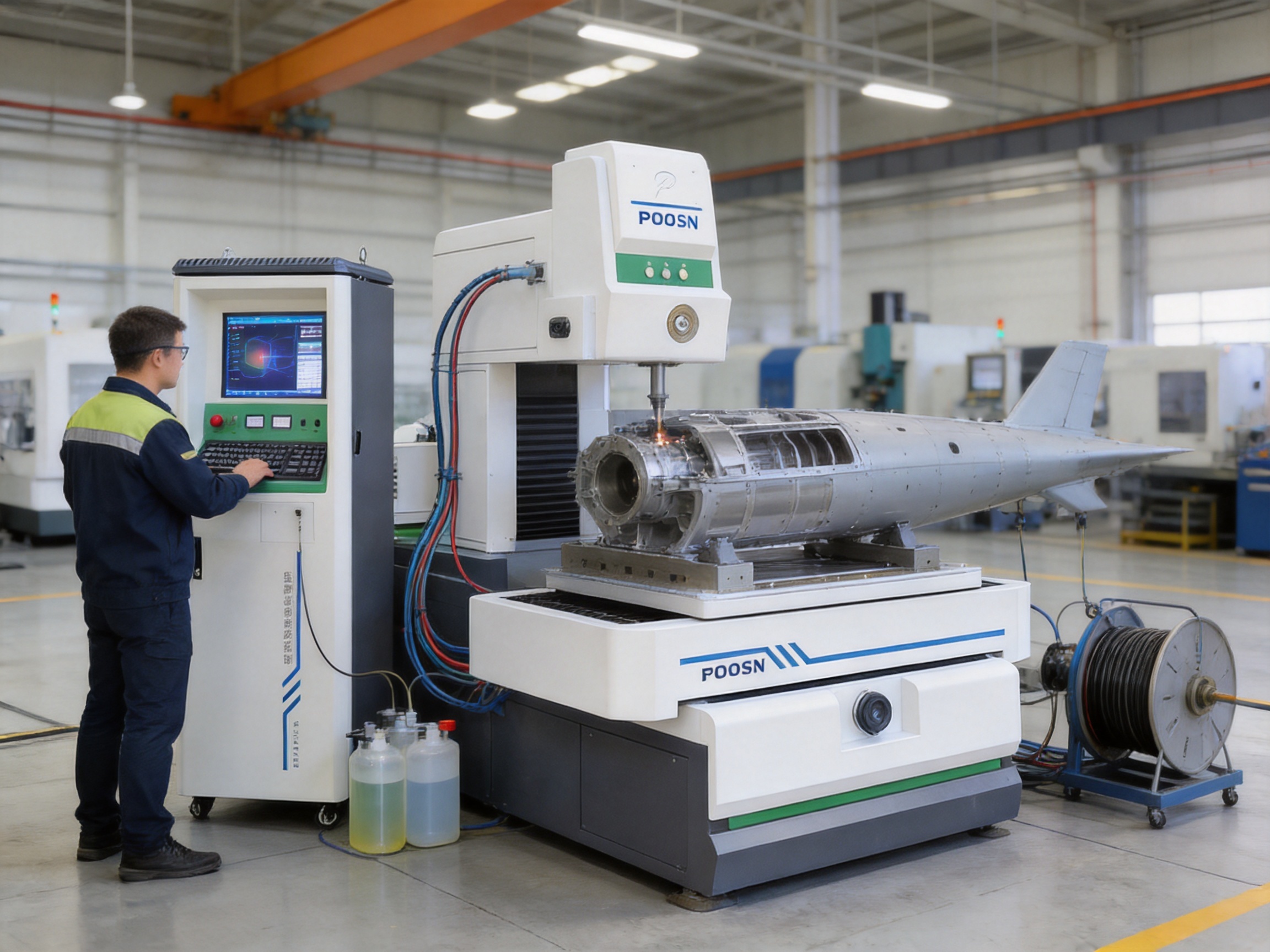
The PS60C's high load capacity and large cutting envelope make it appropriate for oversized aerospace tooling, fixtures, structural components, and specialized production parts. Actual aerospace qualification requirements depend on the customer's quality system, material standards, inspection procedures, and process validation requirements.
10.3 Heavy Machinery
Heavy machinery manufacturers often process thick plates, large wear components, gear-related parts, custom mechanical profiles, and high-strength steel sections. These components can be difficult to machine using conventional cutting tools after hardening.
The PS60C provides a practical solution when the component must be cut accurately after heat treatment or when a complex profile would require extensive milling and manual finishing. Its 800 kg load rating gives production teams more flexibility when planning large workpiece operations.
10.4 Precision Mechanical Components
Precision mechanical components may require narrow slots, accurate internal profiles, mating contours, and fine surface finishes. The PS60C's controlled wire motion, grating-scale feedback, multi-pass processing, and precision guide system support these requirements.
Suitable parts may include custom tooling, machine components, precision inserts, conductive fixtures, and special engineering products. The machine's ability to handle both large dimensions and fine contours helps bridge the gap between heavy-duty production and precision machining.
11. Technical Specification Table
| Specification | PS60C Value |
| Machine category | PS-C medium-speed wire-cut EDM machine |
| Worktable size | 840 × 1,160 mm |
| XY travel size | 600 × 800 mm |
| Processing slot size | 840 × 1,250 mm |
| Maximum cutting thickness | 430 mm |
| Maximum worktable load | 800 kg |
| UV travel size | 60 × 60 mm |
| Maximum cutting taper | ±6°/80 mm |
| Electrode wire diameter | φ0.18 mm with wire guide |
| Wire feed speed | 1–11 m/s, frequency controlled |
| Maximum wire storage length | Approximately 320 m |
| Maximum wire-drum travel | 180 mm |
| Fluid tank capacity | 80 L |
| Fluid filtration | Paper-core filter |
| Processing accuracy reference | 0.01 mm |
| Linear cutting accuracy reference | 0.003 mm under specified conditions |
| Maximum cutting efficiency | 10,000–16,000 mm²/h |
| Optimal surface roughness | Ra ≤ 1.2 μm, multi-cutting |
| Number of NC-controlled axes | X, Y, U, V four-axis linkage |
| XY drive | Standard stepper drives; optional AC servo drives |
| Taper-device drive | UV3P stepper drives |
| Z-axis lift | Electric motor, AC 220 V |
| Programming system | X8/AUTOCUT control system |
| Electrical capacity | 2.5 kVA |
| Maximum processing current | 6 A |
| Power supply | 3N 380 V ±10% |
| Machine weight | Approximately 2,700 kg |
| Machine dimensions | Approximately 2,500 × 2,065 × 2,300 mm |
12. Manufacturing and Quality-Control Strengths
The manufacturer has specialized in electrical-discharge wire cutting since 1999 and developed the POOSN brand in 2003. Its experience includes research, development, production, testing, and customization of EDM equipment. This long-term focus is valuable because wire EDM performance depends on the coordination of mechanical design, electrical discharge control, software, wire handling, and process engineering.
The company's production capability includes advanced machining equipment, comprehensive testing methods, rational product design, and positioning-accuracy inspection. Machines are manufactured according to national standards, and each machine tool undergoes testing before delivery. Such a process helps identify geometric, electrical, and functional issues before the equipment is installed at the customer site.
The company established Taizhou Xinchengyang Machinery Manufacturing Co., Ltd. in 2017 with registered capital of 60 million yuan and built its own factory. It obtained a patent in 2018 for a fully automatic CNC machine tool using plate-type winding and suction-type adhesive technology. In 2021, it was recognized as a High-Tech Enterprise in Taizhou.
The product portfolio includes PS-C and DK77-BC medium-speed wire-cut EDM machines, DK77-A and DK77-B high-speed wire-cut EDM machines, and DK77-D large-taper wire-cut EDM machines. This range allows the manufacturer to compare different process requirements and recommend a suitable machine family rather than forcing every customer toward one standard model.
Products are sold throughout China and selected models are exported to Southeast Asia, West Asia, Europe, and the Americas. The company emphasizes quality, customer service, technical support, and continuous product improvement. Its technical team can support customers with machine selection, process configuration, installation guidance, maintenance procedures, and application-specific development.
13. Installation, Operation, and Maintenance Considerations
Large-capacity EDM equipment should be installed on a suitable foundation with adequate space for workpiece handling, maintenance, electrical access, fluid management, and operator movement. Because the PS60C weighs approximately 2,700 kg, transport and foundation planning should be completed before delivery.
The operating environment should be stable and reasonably clean. Excessive temperature variation can influence machine geometry and workpiece dimensions. The machine should be protected from unnecessary vibration, conductive dust, and contamination that could affect the electrical cabinet, guide system, or working fluid.
Working-fluid maintenance is essential. Operators should inspect fluid cleanliness, monitor filter condition, clean the tank when required, and ensure that spraying remains correctly directed toward the cutting zone. A blocked filter or insufficient flushing can reduce cutting stability and increase the likelihood of wire breakage.
Wire guides and guide wheels should be inspected regularly for wear, contamination, or alignment changes. The electrode wire should be threaded correctly and maintained at the specified tension. If the wire shows abnormal vibration, uneven wear, or repeated breakage, operators should check the guide system, flushing, power parameters, and workpiece conditions.
Linear guides, ball screws, and other motion mechanisms require appropriate lubrication. Lead screws should be inspected and lubricated according to the recommended maintenance schedule. Bearings, drive systems, electrical connections, and emergency-stop functions should also be checked as part of planned preventive maintenance.
Operators should record cutting parameters, workpiece materials, wire consumption, filter changes, guide-wheel condition, and service actions. A maintenance history helps identify trends and supports stable production over the service life of the machine.
14. Selecting the Right PS-C Model
The PS-C series provides multiple capacity levels. The PS35C is intended for smaller parts and small-to-medium batch production. It provides a 350 × 500 mm XY travel range and a 300 kg maximum worktable load.
The PS45C is suitable for medium-sized components, larger molds, and precision parts requiring a 450 × 600 mm travel range and a 400 kg load capacity.
The PS50C is designed for large and heavy parts. It provides a 500 × 700 mm XY travel range, a 350 mm maximum cutting thickness, and a 600 kg maximum worktable load.
The PS60C is intended for extra-large workpieces and high-load components. Its 600 × 800 mm travel range, 430 mm cutting thickness, and 800 kg load capacity make it the most suitable choice in the series for heavy-duty molds, aerospace-related tooling, and large industrial components.
Model selection should be based on more than the external dimensions of the largest part. Users should consider workpiece weight, fixture space, cutting thickness, taper requirements, desired surface finish, production quantity, automation needs, material type, and future capacity plans. A machine that appears adequate for today's largest component may have insufficient room for future product development or improved workholding.
15. Frequently Asked Questions
Q1: What type of workpiece is the PS60C designed to process?
The PS60C is designed for oversized and heavy workpieces, including large molds, heavy-duty dies, aerospace tooling, large mechanical components, precision plates, and thick conductive parts. Its 600 × 800 mm XY travel range and 800 kg worktable load make it particularly suitable for applications that exceed the practical capacity of smaller wire EDM machines.
Q2: What is the maximum cutting thickness?
The standard PS60C specification lists a maximum cutting thickness of 430 mm. Actual production capability depends on workpiece material, thickness, geometry, flushing, wire condition, required tolerance, and finishing strategy. Customers with unusually thick or difficult materials should request an application evaluation before final machine selection.
Q3: What is the maximum worktable load?
The maximum rated worktable load is 800 kg. The workpiece must also be supported with an appropriate fixture and distributed in a manner that maintains safe and stable machine operation. The actual loading arrangement should be reviewed for unusually shaped or unbalanced components.
Q4: What cutting accuracy can the machine achieve?
The supplied specifications identify a processing accuracy reference of 0.01 mm and a linear cutting accuracy reference of 0.003 mm under specified conditions. Final accuracy depends on installation, temperature, workpiece material, fixture stability, wire condition, calibration, cutting parameters, and the number of finishing passes.
Q5: Is the PS60C suitable for mass production?
Yes. The machine is suitable for batch and mass-production work when the workpiece size and process requirements match its capacity. Its cutting efficiency is specified at 10,000–16,000 mm²/h under reference conditions. Multi-pass cutting, automatic threading options, programmable control, and stable wire handling can support repeatable production. Cycle-time validation should be performed using the customer's actual material and geometry.
Q6: Can the machine perform taper cutting?
Yes. The PS60C includes a U/V taper device with four-axis X/Y/U/V linkage. The supplied standard reference lists a UV travel size of 60 × 60 mm and a maximum taper of ±6°/80 mm. Additional taper configurations and options may be available depending on the workpiece and selected machine arrangement.
Q7: Which control and programming systems are available?
The standard programming system is X8/AUTOCUT. CAXA CAM2019 or TCAM can be selected as optional programming solutions. LAN and USB interfaces support data exchange, and the intelligent programming system assists with the preparation of G-code programs.
Q8: Can the PS60C be customized?
Yes. Customization may include worktable dimensions, cutting depth, power supply, cutting modes, automation scripts, motion systems, taper configuration, software, and special fixturing requirements. The manufacturer can review customer drawings or physical samples to develop a suitable configuration.
Q9: What materials can be processed?
Wire EDM is suitable for electrically conductive materials, including hardened steels, mold steels, cemented carbide, conductive alloys, and many aerospace or mechanical materials. The material must be electrically conductive, and the most appropriate parameters should be established according to hardness, thickness, composition, and required surface quality.
Q10: What maintenance is most important?
Key maintenance tasks include keeping the working fluid clean, replacing filters when necessary, inspecting guide wheels, checking wire tension, lubricating linear guides and ball screws, verifying flushing, cleaning the machine area, and inspecting electrical and safety systems. Preventive maintenance helps protect accuracy and reduce unplanned downtime.
16. Conclusion
The PS60C Heavy-Duty CNC Wire-Cut EDM Machine is developed for manufacturers that need to process large, thick, and heavy conductive workpieces without sacrificing precision. Its 600 × 800 mm XY travel range, 840 × 1,160 mm worktable, 430 mm maximum cutting thickness, and 800 kg load capacity provide the scale required for demanding industrial applications.
Its competitive advantages extend beyond physical dimensions. The machine combines a rigid HT250 T-shaped cast bed, aging treatment, precision linear guides, ball screws, grating-scale feedback, imported bearings, adaptive constant wire tension, automatic double-sided tightening, gemstone guide wheels, multi-pass cutting, four-axis taper control, and selectable high-speed or nanosecond power supplies.
These technologies support a production process that is more stable, more adaptable, and more capable than a basic wire-cutting system. Large molds, aerospace tooling, heavy machinery components, and precision mechanical parts can be processed with fewer setup limitations and greater control over surface finish and dimensional quality.
Behind the machine is a manufacturer with long-term experience in EDM research, development, production, testing, and customization. Its advanced manufacturing resources, product range, technical team, and application-engineering capabilities allow it to support customers from initial model selection through installation, process development, and ongoing maintenance.
For companies seeking a large-capacity wire EDM solution, the PS60C offers a balanced combination of working envelope, load capacity, cutting thickness, precision motion, process intelligence, and customization potential. It is a practical platform for high-demand manufacturing environments in which reliability, accuracy, and production flexibility are equally important.
References
1. Manufacturer-provided PS-C Series Medium-Speed Wire-Cut EDM Machine Technical Specifications.
2. Manufacturer-provided PS60C Product Description and Application Information.
3. Manufacturer-provided Machine Tool Performance Characteristics and Optional Configuration Data.
4. Manufacturer-provided Company Profile, Manufacturing Capabilities, and Development History.
5. General principles of electrical discharge machining, multi-pass wire cutting, electrode-wire tension control, and EDM process optimization.
Product: PS60C Heavy-Duty CNC Wire Cut EDM Machine for Oversized Workpieces

-
Phone
+86-0523-86268788 +86-13815960366 +86-13912191163Email
[email protected]Address
No. 366, Yusheng Road Jiulong Town, Hailing District Taizhou City, China
Copyright © Taizhou Xinchengyang Machinery Manufacturing Co., Ltd. All Rights Reserved.
Custom edm machine for sale
wholesale edm machine manufacturers
