

 English
 русский
 عربى


Shen Yiru — After-Sales Service Engineer
Home / Author / Shen Yiru — After-Sales Service Engineer / DK35BC CNC Medium-Speed Wire EDM Machine: Precision, Productivity, and Manufacturing Value
DK35BC CNC Medium-Speed Wire EDM Machine: Precision, Productivity, and Manufacturing Value
2026-10-10
The DK35BC CNC medium-speed wire electrical discharge machining machine is designed for manufacturers that require a practical balance between precision, cutting efficiency, operating stability, and manageable investment. With an X-axis travel of 350 mm, a Y-axis travel of 450 mm, and a maximum cutting thickness of 450 mm, the machine is positioned for small and medium-sized molds, precision mechanical parts, electrodes, dies, and other electrically conductive workpieces.
Unlike a basic high-speed wire-cut machine intended mainly for rough cutting, the DK35BC combines medium-speed wire-cut technology, linear guide support, multi-pass machining, taper cutting, programmable control, and a compact structural design. It is therefore suitable for workshops that need more than simple material removal but do not necessarily require the high acquisition and operating costs associated with premium low-speed wire EDM equipment.
The machine is manufactured by Taizhou Xinchengyang Machinery Manufacturing Co., Ltd., a specialist producer with experience in electrical discharge wire cutting since 1999. Through its POOSN product development history, the company has built capabilities in machine-tool design, mechanical processing, electrical control, precision testing, assembly, and after-sales support. The DK35BC reflects this manufacturing background through its reinforced machine bed, controlled wire transport, high-pressure flushing options, multi-stage fluid circulation, and configurable CNC system.
For customers comparing medium-speed WEDM, high-speed WEDM, and low-speed WEDM technologies, the DK35BC occupies an important middle position. It offers faster and more economical production than many traditional precision wire EDM solutions, while its multiple-cut capability and guide-rail configuration provide higher finishing potential than a conventional rough-cutting machine.
Content
- 1 1. Product Positioning and Main Applications
- 2 2. Core Technical Specifications
- 3 3. Medium-Speed Wire EDM Technology
- 4 4. Mechanical Structure and Manufacturing Quality
- 5 5. Pulse Power, Wire Tension, and Discharge Stability
- 6 6. Flushing, Filtration, and Cooling
- 7 7. Control System and Operator Usability
- 8 8. Taper Cutting Capability
- 9 9. Material Compatibility
- 10 10. Advantages Over Basic High-Speed Wire EDM
- 11 11. Comparison with Premium Low-Speed Wire EDM
- 12 12. Manufacturing Process and Company Strengths
- 13 13. Model Selection Within the DK-BC Series
- 14 14. Installation, Maintenance, and Operating Costs
- 15 15. Quality Assurance and After-Sales Support
- 16 16. Ordering and Customization Options
- 17 17. Shipping and Delivery
- 18 18. Q&A: Frequently Asked Questions
- 18.1 Q1: What type of production is the DK35BC best suited for?
- 18.2 Q2: Can the DK35BC cut hardened steel?
- 18.3 Q3: What is the maximum workpiece thickness?
- 18.4 Q4: What surface finish can the machine achieve?
- 18.5 Q5: Does the DK35BC support multiple cutting passes?
- 18.6 Q6: Can it produce tapered parts?
- 18.7 Q7: Which controller is supplied?
- 18.8 Q8: Is automatic wire threading available?
- 18.9 Q9: Does the machine need a climate-controlled room?
- 18.10 Q10: How does the DK35BC compare with a high-speed wire EDM?
- 18.11 Q11: How does it compare with a premium low-speed wire EDM?
- 18.12 Q12: What is the warranty period?
- 18.13 Q13: What information should be provided before requesting a quotation?
- 19 19. Conclusion
- 20 References
- 21 Product: DK35BC CNC Medium-Speed Wire EDM Machine (350×450mm Travel)
1. Product Positioning and Main Applications
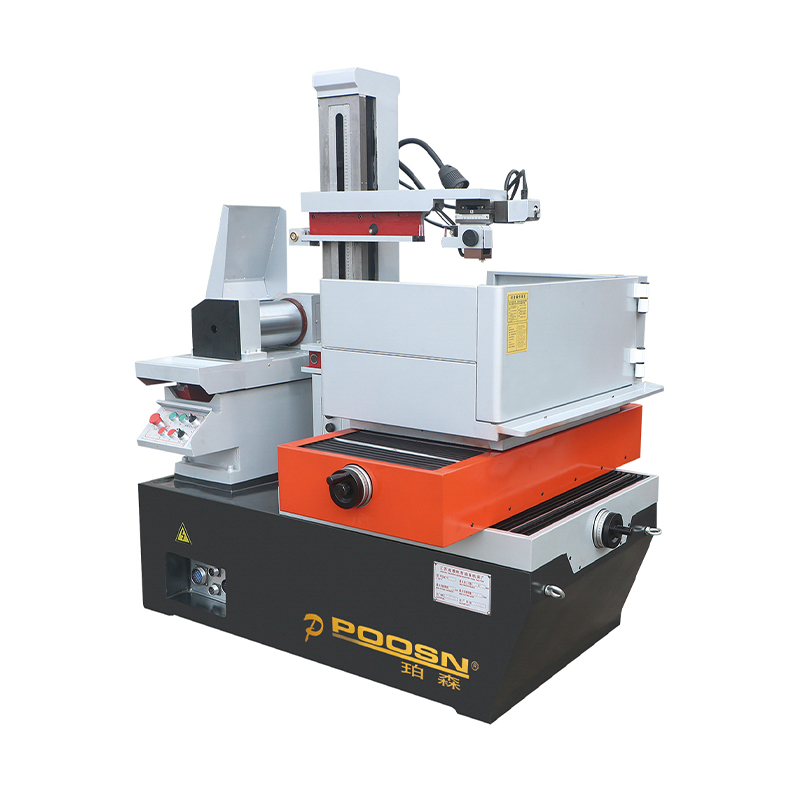
The DK35BC is intended for small-to-medium workpieces and production environments where dimensional accuracy, repeatability, and overall cost control are equally important. Its travel range is large enough for many standard mold inserts, precision plates, punches, dies, electrodes, and mechanical components, while its compact footprint allows installation in workshops where floor space is limited.
The machine uses electrical discharge erosion rather than conventional mechanical cutting. A continuously moving electrode wire removes electrically conductive material through controlled spark discharges. Because the process does not depend on the hardness of the workpiece in the same way as milling or drilling, the DK35BC can process hardened tool steels, stainless steels, carbide, copper alloys, titanium alloys, aluminum alloys, high-temperature alloys, and other conductive materials.
Typical applications include precision mold manufacturing, stamping dies, injection mold components, mechanical parts, electronic components, medical-device parts, and special tooling. The equipment is also suitable for small-batch production, repair work, prototype development, and manufacturers that need to process complex profiles that are difficult to produce through conventional machining.
In mold production, the DK35BC can be used for cavity inserts, punches, sliders, lifter components, precision templates, and electrode-related parts. In mechanical manufacturing, it can cut keyways, narrow slots, irregular contours, and hardened components after heat treatment. In the electronics and medical sectors, its non-contact cutting method helps reduce mechanical stress on small and delicate workpieces.
The DK35BC is particularly valuable when a manufacturer needs a single machine to perform rough cutting, semi-finishing, finishing, and selected taper operations. Its multi-cut process enables the operator to remove most material during the first pass and then reduce discharge energy during subsequent passes to improve surface quality and dimensional control.
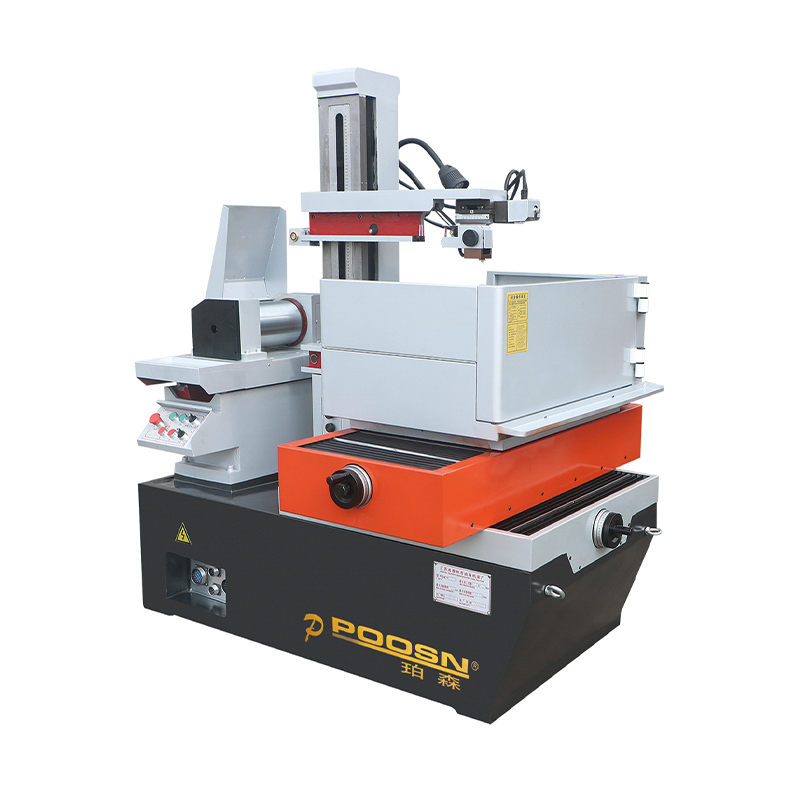
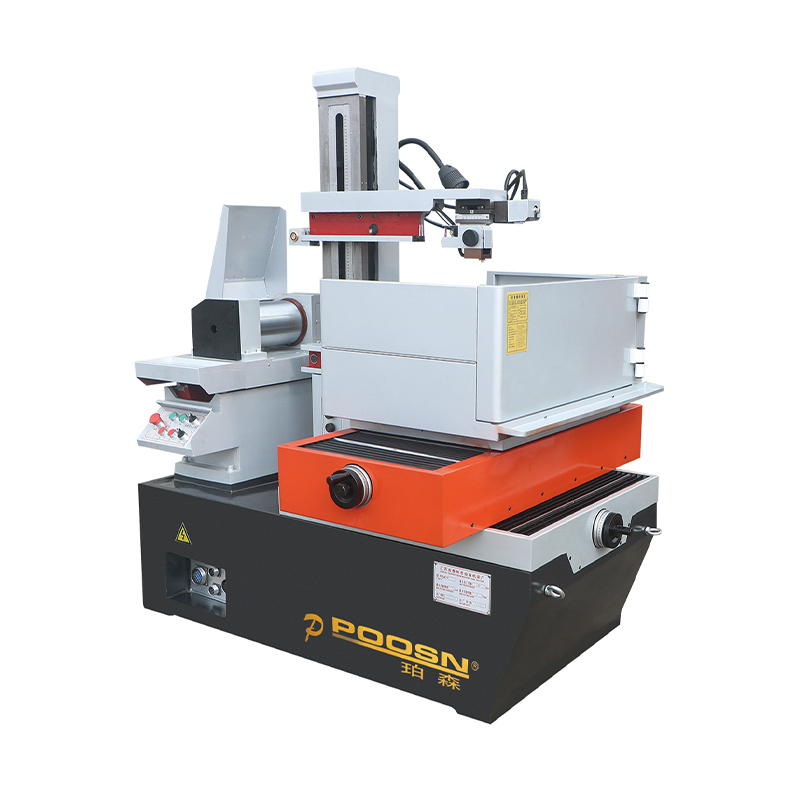
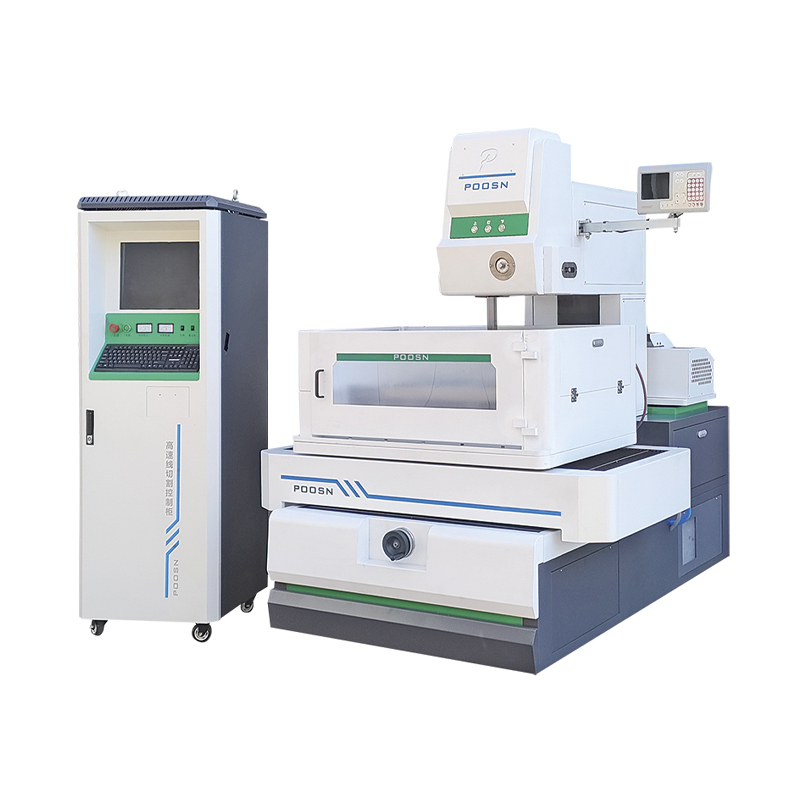
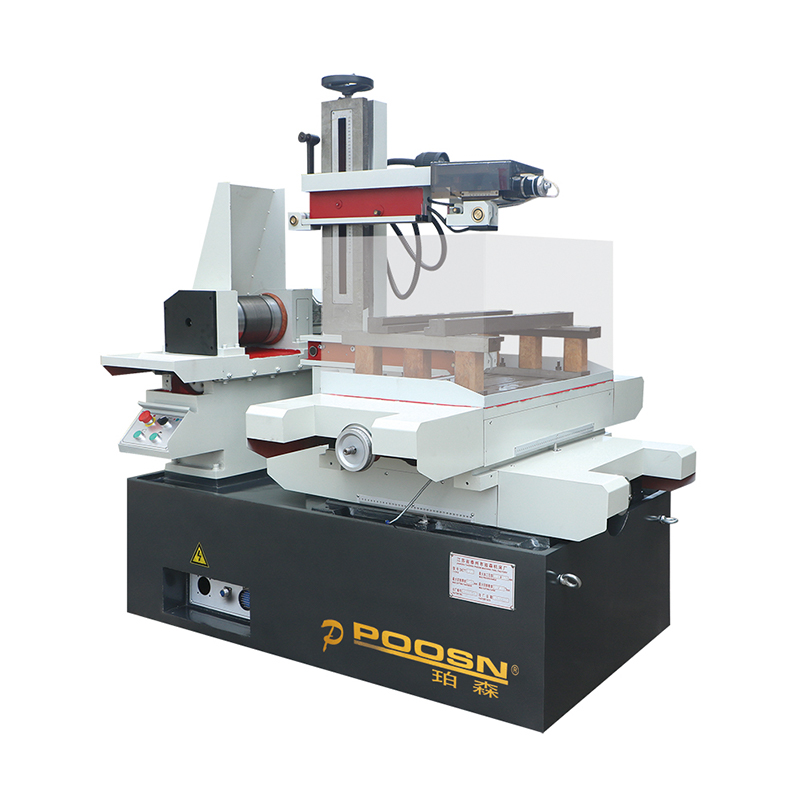
DK35BC CNC Medium-Speed Wire EDM Machine (350×450mm Travel)
2. Core Technical Specifications
The DK35BC is the smallest model in the DK-BC family, which also includes the DK45BC, DK50BC, and DK60BC. Its configuration is optimized for smaller workpieces, while the larger models provide increased travel, load capacity, and cutting thickness for more demanding applications.
| Specification | DK35BC |
| X/Y axis travel | 350 × 450 mm |
| Maximum cutting thickness | 450 mm |
| Maximum worktable load | 300 kg |
| Worktable size | Approximately 500 × 750 mm |
| Processing tank inner dimensions | Approximately 510 × 790 mm |
| Taper U/V travel | 60 × 60 mm |
| Standard maximum taper | Approximately ±6 degrees per 80 mm |
| Electrode wire diameter | 0.18 mm with guide device |
| Wire speed | 1–11 m/s with frequency control |
| Maximum wire storage length | Approximately 350 m |
| Maximum cutting efficiency | 10,000–16,000 mm²/h |
| Best stated surface roughness | Ra ≤ 2.5 μm |
| NC-controlled axes | X, Y, U, and V four-axis linkage |
| Maximum processing current | 6 A |
| Electrical capacity | 2.5 kVA |
| Power supply | 3N 380 V ±10% |
| Machine weight | Approximately 1,200 kg |
| Overall host dimensions | Approximately 1,650 × 1,345 × 1,830 mm |
The stated cutting efficiency of 10,000–16,000 mm²/h depends on the control cabinet, workpiece material, thickness, flushing conditions, wire condition, discharge parameters, and selected cutting strategy. The range should therefore be understood as a production reference rather than a guaranteed result for every application.
Different technical materials supplied for the DK-BC series refer to positioning accuracy values of 0.005 mm and 0.002 mm. These figures may correspond to different configurations, test conditions, or product descriptions. The higher-performance configuration is described as capable of approximately 0.002 mm linear positioning accuracy, with optional glass-scale feedback for applications requiring tighter repeatability. Customers should confirm the applicable factory test standard and final machine configuration before purchase.
3. Medium-Speed Wire EDM Technology
Medium-speed wire EDM uses a continuously moving wire electrode and controlled electrical discharges to erode the workpiece. The wire is generally reused through a reciprocating transport path rather than consumed in a single pass. This approach reduces wire consumption compared with single-use wire systems and contributes to lower running costs.
The DK35BC uses a wire-feeding system with frequency-controlled speed from approximately 1 to 11 m/s. The wire transport mechanism is designed to maintain stable movement during acceleration, cutting, reversal, and continuous operation. Stable wire motion is essential because wire vibration, inconsistent tension, and contaminated guide components can influence straightness, surface marks, and dimensional accuracy.
Medium-speed operation is especially useful for customers that need a compromise between productivity and finishing capability. A high-speed wire machine may deliver economical rough cutting, but its traditional configuration may be less suitable for multiple finishing passes. A premium low-speed wire machine can provide excellent surface quality, but its wire consumption, equipment cost, maintenance requirements, and process complexity may be higher.
The DK35BC addresses this gap through a multi-pass strategy. The first pass can be used for efficient stock removal. Subsequent passes can use reduced discharge energy, adjusted wire speed, and corrected offsets to improve profile accuracy and surface condition. Depending on the material and machining parameters, the machine can support approximately one to five passes.
For manufacturers producing precision molds or hardened tooling in moderate quantities, this combination can reduce the need to transfer the workpiece between rough-cutting and finishing equipment. It also simplifies production planning because the same machine can perform several stages of the wire-cut process.
4. Mechanical Structure and Manufacturing Quality
Precision wire EDM depends not only on the controller and discharge power supply but also on the rigidity, thermal stability, and geometric accuracy of the machine structure. The DK35BC uses a reinforced cast-iron base and support structure. The machine body is designed to resist vibration during reciprocating wire movement, flushing, table travel, and prolonged cutting cycles.
Natural aging treatment is used to reduce internal casting stress before final machining and assembly. According to the supplied manufacturing information, the cast-iron base undergoes an extended aging process intended to improve long-term dimensional stability. Stress relief is important because residual stress can gradually cause deformation, alignment changes, and loss of geometric accuracy in a machine tool.
The mechanical components are processed using precision manufacturing equipment and inspected through positioning accuracy testing. The company states that its products are manufactured according to national standards and that every machine tool undergoes accuracy verification before delivery. Such testing is important for wire EDM because errors in axis movement, squareness, straightness, or taper-axis alignment can be transferred directly to the finished part.
The DK-BC design uses high-precision linear guide rails as a standard feature. Compared with sliding guide systems commonly associated with basic high-speed wire machines, linear guides can provide smoother axis movement, lower friction, and more consistent positioning. They also support more predictable motion during long profiles and fine finishing passes.
AC servo drives are available as an option for the X and Y axes, while the standard configuration uses stepper drives. The selected drive system should be matched to the customer’s production requirements. Stepper drives can provide a cost-effective solution for general production, whereas AC servo drives may be preferred for applications requiring enhanced dynamic response, feedback control, and higher positioning performance.
The machine also incorporates a motorized Z-axis lift and four-axis linkage through X, Y, U, and V. The U and V axes control wire inclination for taper cutting. This configuration permits the machine to produce angled profiles, tapered punches, die reliefs, and other components in which the upper and lower contours are intentionally different.
5. Pulse Power, Wire Tension, and Discharge Stability
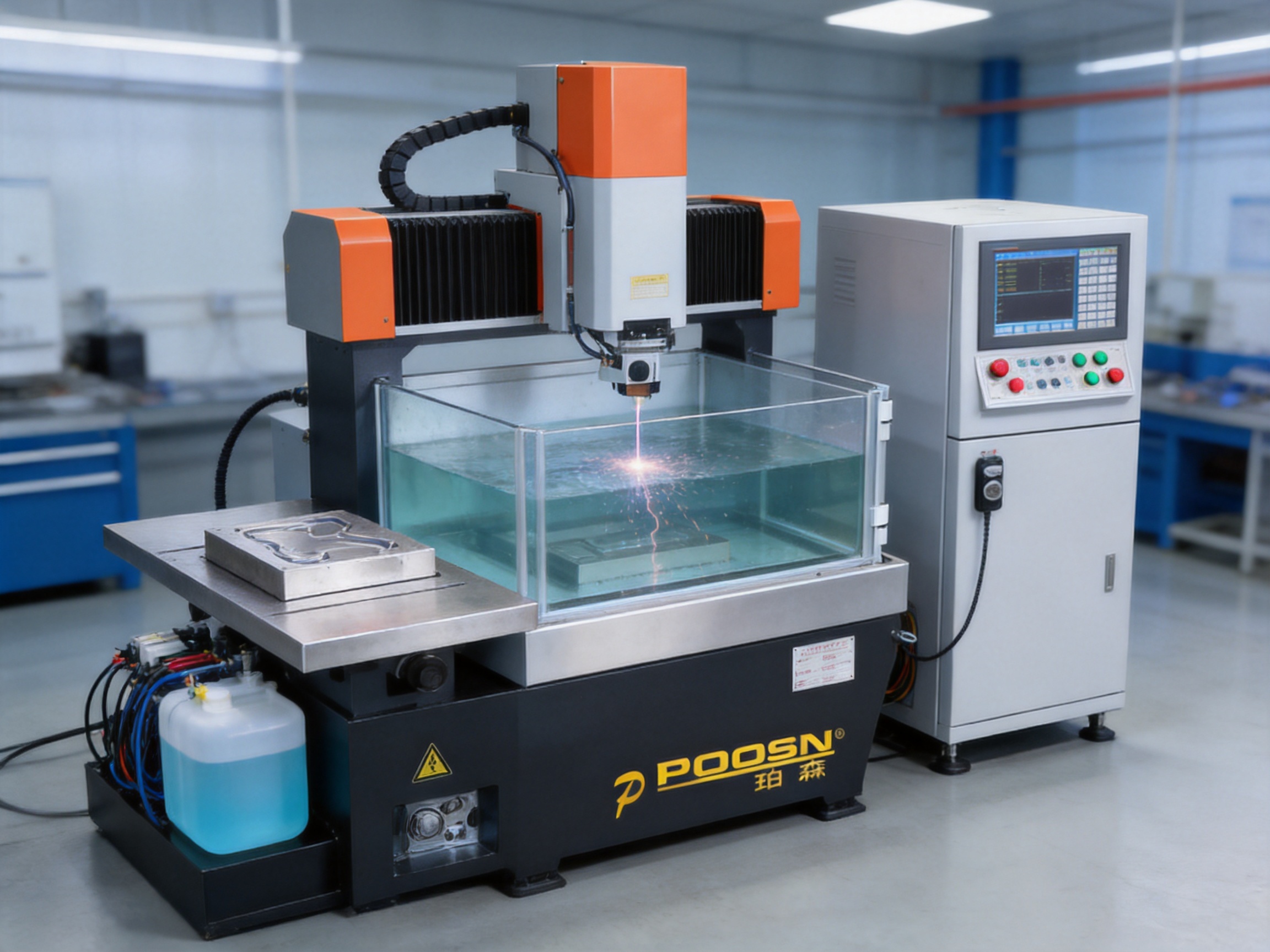
The discharge power supply is one of the most important systems in a wire EDM machine. If the discharge energy is too high, the workpiece may develop excessive recast material, micro-cracks, rough surface texture, or unwanted wire wear. If the energy is too low, cutting efficiency may decline and unstable discharges may increase.
The DK35BC uses a coordinated digital pulse power supply designed to control discharge energy within the machining gap. The objective is to maintain stable spark conditions while balancing removal rate, wire wear, flushing, and surface quality. This is particularly important during multiple cutting, where the power settings must change from aggressive roughing to controlled finishing.
The machine’s optimized current control system is intended to reduce cutting errors and improve surface consistency. The maximum processing current is listed as 6 A, while total electrical capacity is approximately 2.5 kVA. Actual current selection depends on material type, workpiece thickness, flushing conditions, wire speed, and the selected machining program.
Wire tension is another major factor in achieving verticality and profile accuracy. A wire that is too loose may deflect under discharge force, flushing pressure, or movement changes. A wire that is excessively tight may increase the load on guide components and raise the risk of wire breakage. The DK35BC incorporates a constant-tension control concept that adjusts the wire condition during feeding, reversing, and cutting.
Stable tension is particularly valuable when processing thick workpieces. As thickness increases, the wire must remain aligned through a deeper cutting zone. Any deflection can produce taper errors, uneven upper and lower dimensions, or visible striations. The combination of reinforced support, linear guides, controlled tension, and flushing is designed to reduce these effects.
The wire-guiding system uses guide wheels and guide devices suited to a 0.18 mm electrode wire. Waterproof guide-wheel construction and easy wire-threading features are available within the product configuration. Optional linear scales can provide direct axis feedback for customers who require improved repeatability or more advanced process control.
6. Flushing, Filtration, and Cooling
Efficient flushing is essential to stable wire EDM. During cutting, the discharge process produces eroded particles that must be removed from the gap. If debris remains in the kerf, secondary discharges can occur, causing unstable cutting, wire breaks, poor surface quality, and dimensional errors.
The DK35BC uses a circulating dielectric system with filtration and cooling functions. The machine can be equipped with a high-pressure water tank to improve upper and lower flushing, especially for thicker workpieces or deep cutting paths. Strong and balanced flushing helps remove debris while maintaining stable discharge conditions around the wire.
Multi-stage filtration separates metal particles from the working fluid. Cleaner dielectric fluid supports more predictable conductivity and reduces the possibility of uncontrolled discharges. Filtration also protects pumps, valves, guide components, and other parts of the circulation system.
Cooling is important because electrical discharge generates heat in the workpiece, wire, and dielectric fluid. Excessive temperature variation can influence machining dimensions and machine geometry. An independent cooling circuit for the dielectric tank is available within the DK-BC design concept, and temperature compensation is incorporated into the control approach.
The machine is designed for general workshop environments, with a stated operating range of approximately 5–40°C. For the highest precision work, especially tolerances below approximately ±3 μm, a temperature-controlled room is recommended. Environmental control should also be considered when the workpiece is large, the cutting cycle is long, or the application requires close comparison between multiple parts.
Fluid maintenance is a necessary part of machine ownership. Operators should monitor fluid cleanliness, conductivity, concentration, filtration performance, and tank temperature. The exact maintenance interval depends on working hours, material type, production volume, and local water quality. A planned maintenance program is more reliable than replacing fluid only after cutting quality has already declined.
7. Control System and Operator Usability
The DK35BC is offered with the X8 and AUTOCUT programming control system, while the standard control cabinet is identified as ZHZK-03, with ZHZ-09G available as an option. Other control configurations may be available depending on the customer’s technical requirements and production market.
A graphical programming interface can simplify the preparation of cutting paths. DXF or DWG files may be imported directly, reducing the need for manual code generation. Automatic edge finding and centering functions can help the operator establish the workpiece position more efficiently, particularly when processing repeated batches.
Multi-pass programming is another important control function. The operator can define roughing, semi-finishing, and finishing stages, with separate discharge, speed, offset, and compensation parameters. This approach reduces manual intervention and makes production results more repeatable between operators.
Real-time discharge monitoring can adjust feed rates in response to changing cutting conditions. If the gap becomes unstable or the risk of wire breakage increases, adaptive control can reduce the feed rate or modify the discharge response. USB and LAN connectivity support program transfer from engineering offices, CAM workstations, or production networks.
The company states that operators with basic CNC experience can become familiar with the system within approximately three to five days, supported by an English operation manual and remote training. Training should cover workpiece setup, wire threading, parameter selection, taper programming, fluid maintenance, alarm handling, and inspection of finished components.
Control-system selection should be confirmed before ordering because the supplied materials identify more than one controller and cabinet arrangement. Customers should request a complete configuration sheet specifying the exact software, communication interfaces, servo or stepper drives, automatic functions, language options, and available upgrade paths.
8. Taper Cutting Capability
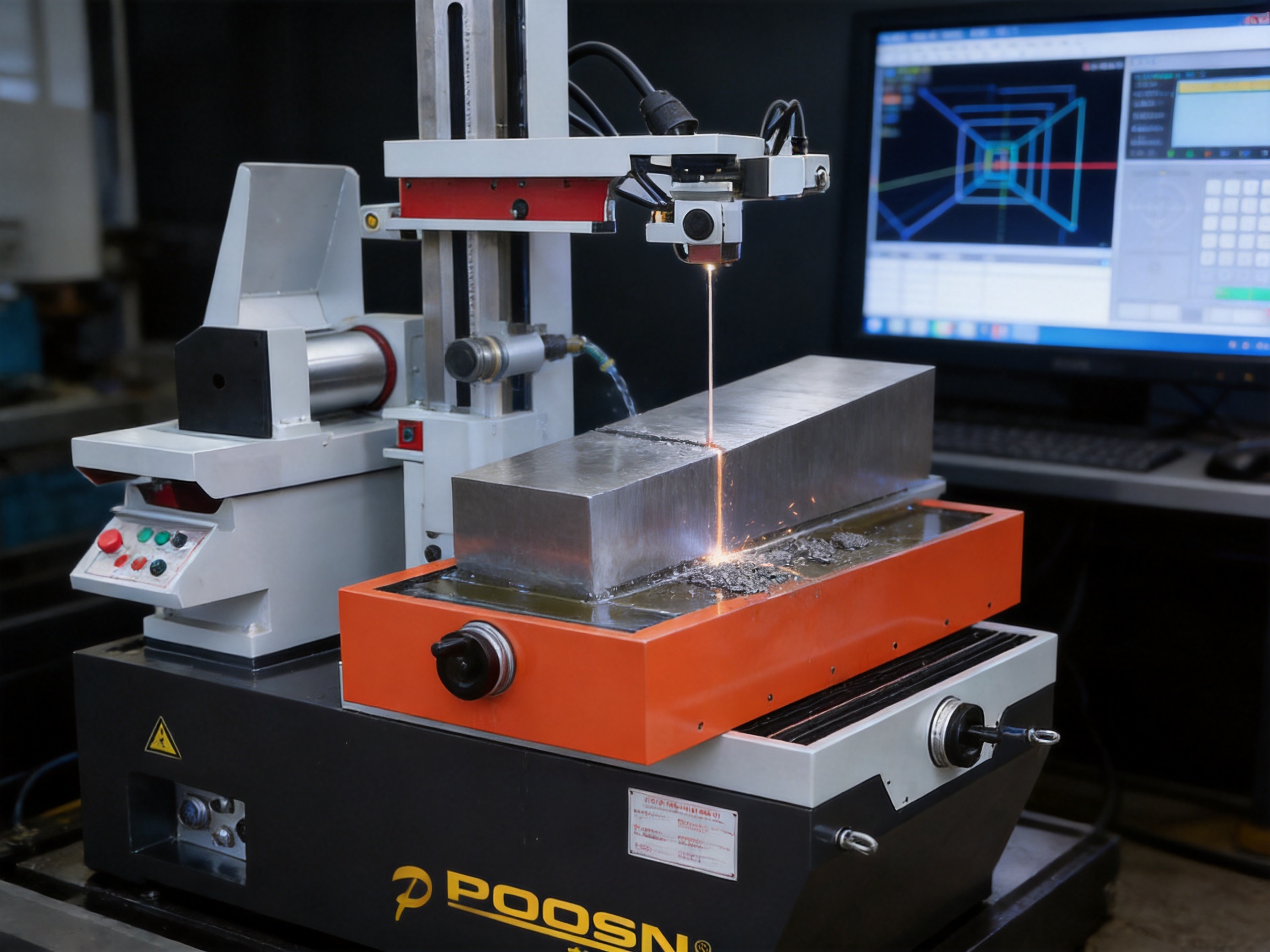
The DK35BC supports taper cutting through coordinated U and V axis movement. The standard taper device has approximately 60 × 60 mm of travel and a maximum cutting taper of about ±6 degrees per 80 mm, according to the main technical table. Other descriptions refer to approximately ±6 degrees per 100 mm, so the final permitted taper should be confirmed against the machine quotation and factory acceptance specification.
Taper cutting allows the upper and lower portions of a workpiece to have different geometries. This is useful for stamping dies, extrusion tools, relief angles, ejector components, and parts that require controlled draft. The operator must account for material thickness, wire diameter, offset, flushing, and the desired angle when programming the process.
For larger taper angles, an optional large-taper wire-frame configuration is available. The supplied information identifies possible angles up to approximately ±30 degrees under a DKD-style upgrade. Such applications require engineering review because the allowable angle depends on workpiece thickness, wire travel, guide clearance, machine structure, and the intended surface quality.
Taper accuracy is affected by wire tension, guide alignment, U/V axis calibration, flushing pressure, and thermal conditions. A machine with a well-maintained wire path and properly calibrated taper axes is more likely to produce consistent upper and lower profiles. For critical tooling, customers should submit sample drawings or test pieces before finalizing the configuration.
9. Material Compatibility
The DK35BC can process electrically conductive materials regardless of conventional hardness. This makes it suitable for hardened tool steels that may be difficult to mill economically after heat treatment. Common materials include D2, A2, H13, SKD11, stainless steels such as 304 and 316L, precipitation-hardening stainless steel, cemented carbide, titanium alloys, copper, brass, aluminum, Inconel, Hastelloy, PCD blanks, and CBN tool materials.
Hardness itself does not prevent wire EDM cutting. Process behavior is influenced more strongly by electrical conductivity, melting characteristics, thickness, flushing, and discharge parameters. Materials with different conductivity require different power settings and feed rates. Aluminum, for example, may require special attention to flushing and workpiece preparation, while carbide may require controlled energy to limit surface damage.
The controller can include parameter libraries for common material groups. These libraries provide a starting point, but they should not replace process verification. The final result depends on the actual alloy, heat treatment, thickness, surface condition, workholding method, dielectric condition, and required tolerance.
When cutting materials with high residual stress, the operator should consider the possibility of movement after the contour is opened. Correct clamping, stress-relief practices, cutting sequence, and workpiece support can help prevent distortion. For thin or delicate parts, low-energy finishing passes and suitable support may be necessary.
10. Advantages Over Basic High-Speed Wire EDM
The DK35BC provides several advantages over a basic high-speed wire EDM machine. Its linear guide configuration supports smoother table movement and improved long-term motion consistency compared with traditional sliding guide systems. Its multi-pass capability is also more appropriate for customers who require finishing rather than only rapid blanking.
| Feature | DK35BC Medium-Speed WEDM | Basic High-Speed WEDM |
| Typical guide system | Linear guide rails | Sliding guide rails commonly used |
| Cutting approach | Roughing plus multiple finishing passes | Primarily single-pass rough cutting |
| Stated surface finish range | Approximately Ra 0.8–2.5 μm depending on configuration | Approximately Ra 1.6–2.5 μm in supplied comparison |
| Multiple cuts | Supported, generally one to five passes | More limited |
| Wire consumption | Lower through reciprocating wire use | Higher in many operating conditions |
| Typical application | Precision molds and finishing work | Rough cutting and high-volume blanking |
| Taper cutting | Supported through U/V linkage | Configuration-dependent |
The comparison does not mean that high-speed WEDM is unsuitable. High-speed machines remain effective for economical rough cutting, general plates, and applications where surface quality is less demanding. However, manufacturers that need better finishing, improved trajectory control, or repeated finishing passes may find the DK35BC more suitable.
11. Comparison with Premium Low-Speed Wire EDM
Premium low-speed wire EDM machines are recognized for high precision, excellent surface finish, automatic threading, advanced process control, and sophisticated thermal management. They are often selected for aerospace tooling, high-precision dies, medical components, and applications with demanding repeatability requirements.
The DK35BC is not intended to replace every low-speed machine. Instead, it offers a more accessible solution for manufacturers that need strong performance without adopting the complete cost structure of a premium imported system. Its reciprocating wire system can reduce electrode-wire costs, while its medium-speed configuration supports practical production rates.
The company’s supplied comparison indicates that DK-BC consumable costs may be approximately 60–70 percent lower than those associated with some imported brands. Actual savings depend on wire type, operating hours, local prices, maintenance practice, and production parameters. Nevertheless, the possibility of lower wire and guide-component costs can be significant for workshops that run the machine continuously.
The DK35BC may also be easier to install and operate in a general workshop environment. It does not require the same level of climate control commonly associated with the most demanding premium systems, although temperature control remains advisable for micron-level work. For many mold and mechanical-part manufacturers, this balance between capability and infrastructure requirement can improve return on investment.
Customers requiring sub-micron repeatability, automatic wire threading, advanced closed-loop control, or very high-end aerospace qualification should evaluate the optional glass scales, automatic wire-threading system, enhanced controller, and factory test results. The correct comparison should be based on the complete production requirement rather than purchase price alone.
12. Manufacturing Process and Company Strengths
Taizhou Xinchengyang Machinery Manufacturing Co., Ltd. specializes in electrical discharge machining, special processing technologies, and related equipment. Its manufacturing activities include research and development, structural design, mechanical processing, electrical integration, machine assembly, calibration, test cutting, and technical support.
The company’s experience in wire cutting began in 1999, while the POOSN brand originated in 2003. In 2007, cooperation with Bingfeng CNC supported expansion in the southern market. The company was recognized as an Advanced Unit for Quality and Reputation in 2009. In 2017, Taizhou Xinchengyang Machinery Manufacturing Co., Ltd. was established with registered capital of 60 million yuan and its own factory.
In 2018, the company obtained a patent related to a fully automatic CNC machine tool using plate-type winding and suction-type adhesive technology. In 2021, it was recognized as a High-Tech Enterprise in Taizhou. These milestones indicate a continuing focus on product development, process improvement, and specialized wire-cutting technology.
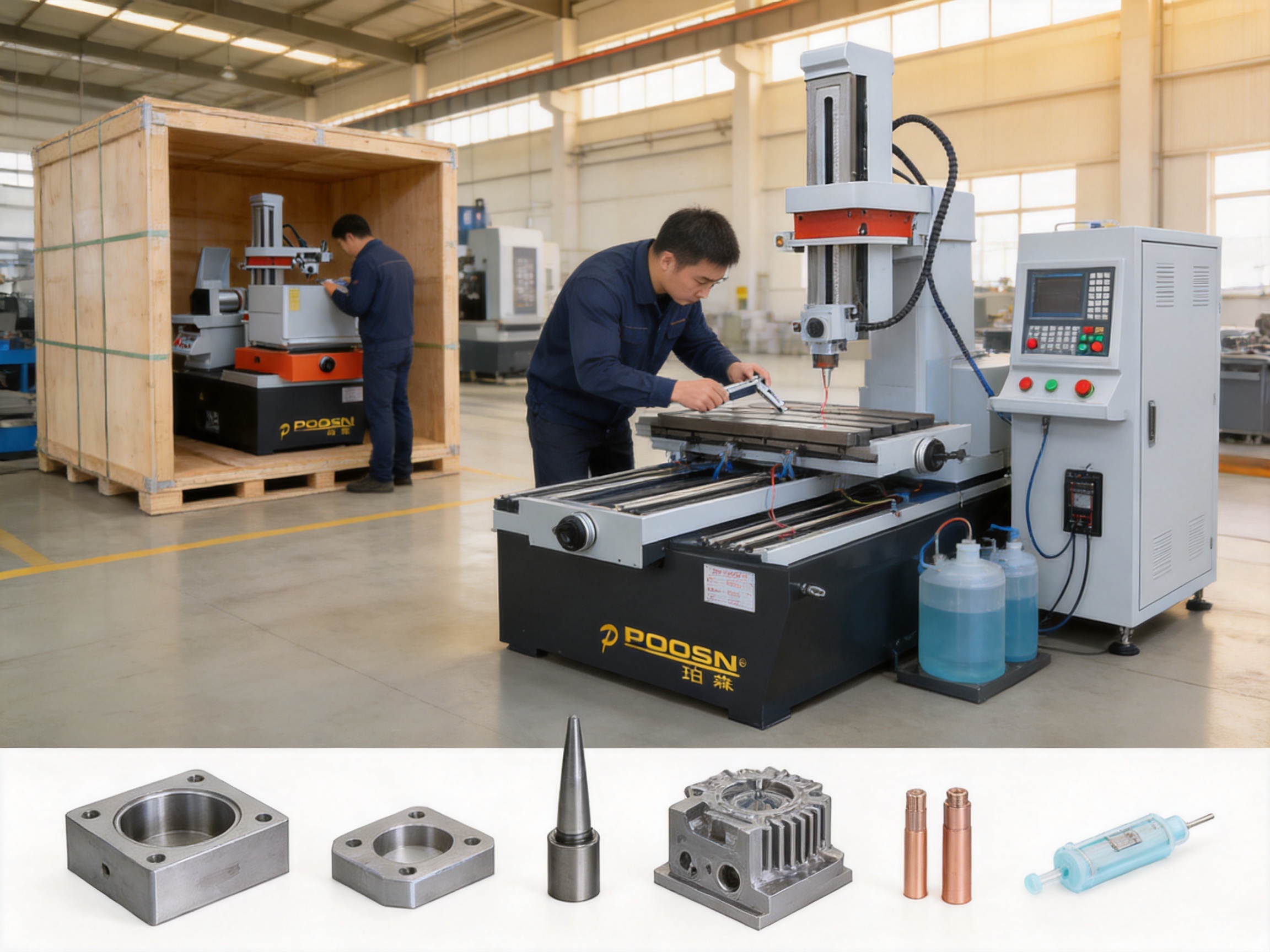
The company reports that it has advanced processing equipment and comprehensive testing methods. Every machine tool undergoes positioning accuracy testing, and the DK35BC is shipped assembled, calibrated, and test-cut at the factory. This reduces the amount of mechanical reassembly required at the customer’s site. After arrival, installation generally focuses on leveling, power connection, fluid preparation, and final commissioning.
Manufacturing quality is supported by the interaction of several processes: stress-relieved castings, precision machining of guide surfaces, careful alignment of the table and wire frame, electrical-system testing, wire-path inspection, and functional cutting tests. A wire EDM machine cannot achieve reliable accuracy if any one of these processes is neglected.
The company’s product range includes PS-C medium-speed wire EDM machines, DK-BC high-medium-speed models, DK-77 high-speed machines, and DKD large-taper wire EDM equipment. This broader product portfolio allows customers to choose a machine based on workpiece size, taper requirement, production rate, finishing quality, and budget.
13. Model Selection Within the DK-BC Series
The DK35BC is recommended for small precision parts, dies, electrodes, and small-to-medium molds. Its 350 × 450 mm travel and approximately 300 kg load capacity make it appropriate for compact workpieces and small-batch production.
The DK45BC provides approximately 450 × 600 mm travel and a 400 kg load capacity. It is suitable for medium molds, automotive tooling, and mechanical components that exceed the working range of the DK35BC.
The DK50BC offers approximately 500 × 700 mm travel, up to 650 mm cutting thickness, and approximately 600 kg load capacity. It is intended for larger molds and thicker workpieces.
The DK60BC provides approximately 600 × 800 mm travel, up to 800 mm cutting thickness, and approximately 800 kg load capacity. It is designed for oversized molds, heavy industrial parts, and demanding applications in sectors such as aerospace tooling and large-scale die production.
| Model | X/Y travel | Maximum cutting thickness | Maximum load | Typical application |
| DK35BC | 350 × 450 mm | 450 mm | 300 kg | Small precision parts, dies, electrodes |
| DK45BC | 450 × 600 mm | 450 mm | 400 kg | Medium molds and automotive tooling |
| DK50BC | 500 × 700 mm | 650 mm | 600 kg | Large molds and thick workpieces |
| DK60BC | 600 × 800 mm | 800 mm | 800 kg | Oversized molds and heavy industrial parts |
If the workpiece frequently exceeds 400 mm in thickness, the DK50BC or DK60BC should be considered. If the workpiece dimensions remain within the DK35BC envelope and the required load is moderate, choosing the smaller machine can reduce floor-space requirements and initial investment.
14. Installation, Maintenance, and Operating Costs
The DK35BC requires a stable foundation, suitable electrical supply, clean working fluid, and adequate space around the machine for operation and maintenance. The listed power supply is 3N 380 V ±10 percent. Customers should verify local electrical standards, grounding, transformer requirements, and installation regulations before delivery.
The machine’s approximate weight is 1,200 kg. Floor loading, access routes, lifting equipment, door dimensions, and workshop layout should be reviewed in advance. A suitable space is also needed for the control cabinet, fluid tank, wire storage, consumables, and operator access.
Routine maintenance includes cleaning the worktable and tank, checking filters, inspecting guide wheels and guide nozzles, monitoring dielectric condition, lubricating specified components, checking wire tension, and removing deposits from the wire-guiding assembly. Operators should also inspect electrical connections, pumps, hoses, seals, and protective covers.
Indicative consumable information identifies a 0.18 mm molybdenum wire lifespan of approximately 40–80 continuous hours, guide-wheel replacement at approximately six to twelve months, guide-nozzle replacement at approximately three to six months, dielectric-fluid replacement every two to three months, and ion-exchange resin replacement approximately every three to six months. These figures are estimates and vary according to production intensity and maintenance quality.
Consumable cost is only one part of total operating cost. Electricity, labor, fluid treatment, filters, spare parts, downtime, calibration, and preventive maintenance must also be included in a proper cost calculation. The DK35BC can nevertheless support cost-efficient production through reusable wire, moderate electrical capacity, standardized components, and available remote technical support.
15. Quality Assurance and After-Sales Support
The company provides a stated twelve-month warranty from the date of shipment. Critical spare parts can be dispatched by express courier, with a stated target of dispatch within twenty-four hours when available. Free lifetime technical support is offered through remote communication channels such as WhatsApp and WeChat video calls.
Remote support can assist with software settings, alarm diagnosis, parameter selection, wire threading, fluid-system checks, and routine maintenance. For more complex problems, customers should provide photographs, alarm codes, program files, cutting samples, and machine operating data so that the technical team can identify the likely cause more efficiently.
Before shipment, the machine is described as fully assembled, calibrated, and test-cut. Buyers should request documentation including the factory inspection report, dimensional accuracy results, electrical test records, packing list, operation manual, maintenance schedule, and recommended spare-parts list.
For export customers, available certification packages may include CE or UL-related options. Certification requirements depend on the destination country, voltage system, safety regulations, and customer procurement rules. These requirements should be confirmed at the quotation stage rather than after production has begun.
16. Ordering and Customization Options
The DK35BC can be customized for specific production requirements. Available options may include AC servo drives for the X and Y axes, linear-scale feedback, high-pressure water tanks, automatic wire threading, upgraded CNC systems, extended travel, large-taper wire frames, rotary tables, and certification packages.
A C-axis rotary table can support specialized cylindrical or spiral cutting applications, while automatic wire threading can reduce operator intervention in multi-cavity or unattended production. Closed-loop glass scales may be selected where repeatability and direct position feedback are more important than minimum purchase cost.
Customization affects price, delivery time, installation, training, and maintenance. Standard models are stated to have a lead time of approximately fifteen to twenty-five days, while custom configurations may add approximately ten to fifteen days. The final schedule depends on component availability, configuration complexity, inspection requirements, and shipping arrangements.
Before placing an order, customers should provide the largest and smallest workpiece dimensions, maximum thickness, material types, required tolerance, surface-finish target, taper angle, production volume, preferred file formats, power standard, workshop temperature, and desired automation functions. A sample drawing or test workpiece can help the engineering team recommend the correct configuration.
17. Shipping and Delivery
The DK35BC can be shipped by sea freight in full-container or less-than-container-load arrangements. Typical sea transit is approximately twenty-five to forty-five days for full-container delivery and thirty to fifty days for less-than-container-load shipment, depending on the destination and port schedule.
Rail freight may be suitable for Central Asia, Russia, and parts of Eastern Europe, with a typical transit range of approximately twenty-five to thirty-five days. Actual delivery time depends on production completion, export documentation, port handling, customs clearance, inland transport, and local delivery conditions.
The machine should be packed to protect the cast-iron structure, control cabinet, wire path, fluid system, and precision components. Customers should inspect the packaging upon arrival and record any visible damage before unloading. After positioning, the machine should be leveled, connected to the correct power supply, filled with the approved dielectric fluid, and commissioned according to the installation instructions.
18. Q&A: Frequently Asked Questions
Q1: What type of production is the DK35BC best suited for?
The DK35BC is best suited for small-to-medium workpieces, precision molds, dies, electrodes, hardened mechanical components, and small-batch or medium-batch production. It is especially appropriate when the customer needs both efficient rough cutting and improved finishing through multiple passes.
Q2: Can the DK35BC cut hardened steel?
Yes. Wire EDM is suitable for electrically conductive hardened steels, including many tool steels used for molds and dies. Hardness does not prevent the electrical discharge process. Parameters should be adjusted according to material grade, thickness, conductivity, flushing, and the required finish.
Q3: What is the maximum workpiece thickness?
The DK35BC is listed with a maximum cutting thickness of 450 mm. The practical result depends on workpiece geometry, flushing access, wire condition, material, taper requirement, and the selected machining parameters.
Q4: What surface finish can the machine achieve?
The supplied specifications identify an optimal surface roughness of approximately Ra ≤ 2.5 μm, while the DK-BC comparison refers to a possible range of approximately Ra 0.8–1.2 μm under suitable finishing conditions. Actual surface quality depends on material, thickness, power settings, wire condition, fluid cleanliness, and the number of finishing passes.
Q5: Does the DK35BC support multiple cutting passes?
Yes. The machine supports multi-pass cutting, generally including roughing, semi-finishing, and finishing operations. Multiple passes reduce the recast layer and improve contour accuracy compared with a single aggressive cut.
Q6: Can it produce tapered parts?
Yes. The U and V axes provide four-axis linkage for taper cutting. The standard taper capability is approximately ±6 degrees per 80 mm according to the main specification, although another product description states ±6 degrees per 100 mm. The exact value should be confirmed for the purchased configuration. Larger angles may be possible with an optional large-taper frame.
Q7: Which controller is supplied?
The product information identifies the X8 and AUTOCUT programming control system, with ZHZK-03 listed as the standard control cabinet and ZHZ-09G as an option. Because configurations may vary, customers should confirm the controller, cabinet, software language, communication ports, and upgrade options on the final quotation.
Q8: Is automatic wire threading available?
Automatic wire threading is available as an optional customization for applications requiring reduced operator intervention, repeated cavity cutting, or more unattended operation. Standard machines may use manual wire threading with the supplied guide system.
Q9: Does the machine need a climate-controlled room?
The DK35BC is designed for general workshop environments of approximately 5–40°C. Temperature control is recommended for the highest precision work, especially when tolerances are below approximately ±3 μm or when long cutting cycles could create thermal variation.
Q10: How does the DK35BC compare with a high-speed wire EDM?
The DK35BC is designed for higher finishing capability, smoother linear-guide movement, and multi-pass cutting. A high-speed machine may be preferable for economical rough cutting and high-volume blanking where surface finish requirements are less demanding.
The DK35BC offers a more economical medium-speed approach, reusable wire operation, practical cutting efficiency, and optional precision upgrades. A premium low-speed machine may still be preferable for extremely tight tolerances, advanced automation, or applications requiring the highest level of surface finish and repeatability.
Q12: What is the warranty period?
The stated warranty is twelve months from the date of shipment. The supplier also provides remote technical support and can arrange express dispatch of critical spare parts when available.
Q13: What information should be provided before requesting a quotation?
Customers should provide workpiece dimensions, maximum thickness, weight, material, required tolerance, surface finish, taper angle, production volume, desired controller, electrical standard, automation requirements, and destination country. Sample drawings are strongly recommended for special or high-precision applications.
19. Conclusion
The DK35BC CNC medium-speed wire EDM machine is a versatile production solution for manufacturers that require precision cutting, practical throughput, and controlled operating costs. Its 350 × 450 mm travel, 450 mm maximum cutting thickness, 300 kg worktable load, four-axis linkage, linear guide system, adjustable wire speed, and multi-pass capability make it suitable for a broad range of mold, die, tooling, mechanical, electronic, and medical-component applications.
Its main advantage is balance. Compared with a basic high-speed WEDM, it provides stronger finishing potential and more advanced motion and control features. Compared with a premium low-speed WEDM, it offers a more accessible medium-speed architecture and potentially lower consumable costs. Linear guides, controlled wire tension, digital pulse management, filtration, cooling, taper capability, and optional feedback systems further strengthen its production value.
The machine also benefits from the manufacturing experience of Taizhou Xinchengyang Machinery Manufacturing Co., Ltd. The company’s long-term focus on wire-cut EDM, in-house product development, factory testing, accuracy verification, customization, and technical support provides a foundation for dependable equipment supply.
For customers processing small and medium workpieces, the DK35BC can serve as a primary wire-cut machine or as part of a larger production line alongside high-speed roughing equipment and larger DK-BC models. With correct machine selection, disciplined fluid management, appropriate parameter development, and scheduled maintenance, it can support consistent production while helping manufacturers improve efficiency and reduce total processing cost.
References
1. Taizhou Xinchengyang Machinery Manufacturing Co., Ltd. DK35BC CNC Medium-Speed Wire EDM Machine Product Specifications.
2. Taizhou Xinchengyang Machinery Manufacturing Co., Ltd. DK-BC Series Technical Configuration and Model Selection Information.
3. GB/T 7926-2015, Accuracy Requirements and Inspection Methods for Wire-Cut Electrical Discharge Machines.
4. Manufacturer-provided information on X8 and AUTOCUT programming control systems.
5. Manufacturer-provided information on wire transport, taper cutting, dielectric circulation, and multi-pass machining.
6. Manufacturer-provided comparison of DK-BC medium-speed and DK-77 high-speed wire EDM characteristics.
7. Manufacturer-provided maintenance, consumable, warranty, shipping, and technical-support information.
Product: DK35BC CNC Medium-Speed Wire EDM Machine (350×450mm Travel)

-
Phone
+86-0523-86268788 +86-13815960366 +86-13912191163Email
[email protected]Address
No. 366, Yusheng Road Jiulong Town, Hailing District Taizhou City, China
Copyright © Taizhou Xinchengyang Machinery Manufacturing Co., Ltd. All Rights Reserved.
Custom edm machine for sale
wholesale edm machine manufacturers
