

 English
 русский
 عربى


Shen Yiru — After-Sales Service Engineer
Home / Author / Shen Yiru — After-Sales Service Engineer / DK-7745F CNC High-Speed Wire EDM Machine: Precision, Productivity, and Heavy-Duty Performance
DK-7745F CNC High-Speed Wire EDM Machine: Precision, Productivity, and Heavy-Duty Performance
2026-10-12
In modern mold manufacturing, aerospace production, automotive engineering, and precision component processing, manufacturers need more than a basic cutting machine. They need equipment that can handle large workpieces, maintain dimensional accuracy over extended production cycles, reduce operating costs, and integrate smoothly into increasingly automated workshops. The DK-7745F CNC High-Speed Wire Electrical Discharge Machining machine is designed to meet these requirements through a combination of large working capacity, four-axis control, high-speed cutting performance, rigid mechanical construction, and flexible configuration options.
The DK-7745F belongs to the high-speed WEDM product family and is positioned as a heavy-duty model for demanding industrial applications. Its published configuration provides an X-axis travel of 450 mm and a Y-axis travel of 650 mm, while the machine is frequently promoted for large-format cutting applications with a working envelope of approximately 500 × 700 mm depending on configuration and reference convention. It offers a maximum worktable load of 500 kg, a maximum cutting thickness of 450 mm, four-axis linkage, and a cutting efficiency of approximately 10,000–16,000 mm²/h when paired with the appropriate control cabinet and process conditions.
These specifications make the machine particularly suitable for large precision molds, thick plates, heavy mechanical parts, aerospace components, automotive tooling, and complex conductive workpieces. More importantly, the DK-7745F is developed as a complete production solution rather than simply a wire-cutting platform. Its mechanical structure, control system, pulse power supply, wire-feeding mechanism, filtration system, and technical support are intended to work together as one stable machining system.
Content
- 1 1. The Role of High-Speed Wire EDM in Precision Manufacturing
- 2 2. Product Positioning and Main Applications
- 3 3. Large Work Capacity for Heavy and Oversized Components
- 4 4. Four-Axis Linkage and Taper-Cutting Capability
- 5 5. High-Speed Cutting and Production Efficiency
- 6 6. Mechanical Structure and Long-Term Precision
- 7 7. Intelligent Control and Operator Convenience
- 8 8. Pulse Power Technology and Electrical Stability
- 9 9. Wire Feeding, Tension Control, and Flushing
- 10 10. Advantages Over Conventional and Lower-Capacity Alternatives
- 11 11. Manufacturing Strengths and Quality Assurance
- 12 12. Installation, Commissioning, and Maintenance
- 13 13. Energy Efficiency and Operating Cost
- 14 14. Customization and Technical Support
- 15 15. Selecting the Right Model for Different Production Needs
- 16 16. Recommended Evaluation Criteria Before Purchase
- 17 17. Frequently Asked Questions
- 17.1 Q1: What is the travel range of the DK-7745F?
- 17.2 Q2: What is the maximum worktable load?
- 17.3 Q3: What cutting efficiency can the machine achieve?
- 17.4 Q4: Can the DK-7745F perform taper cutting?
- 17.5 Q5: What materials can be processed?
- 17.6 Q6: What surface roughness can be achieved?
- 17.7 Q7: Is the machine suitable for automated production?
- 17.8 Q8: Is the DK-7745F difficult to operate?
- 17.9 Q9: Which control cabinets are available?
- 17.10 Q10: How does the machine maintain precision during long production cycles?
- 17.11 Q11: What industries commonly use this machine?
- 17.12 Q12: Can the manufacturer provide customized solutions?
- 18 18. Conclusion
- 19 References
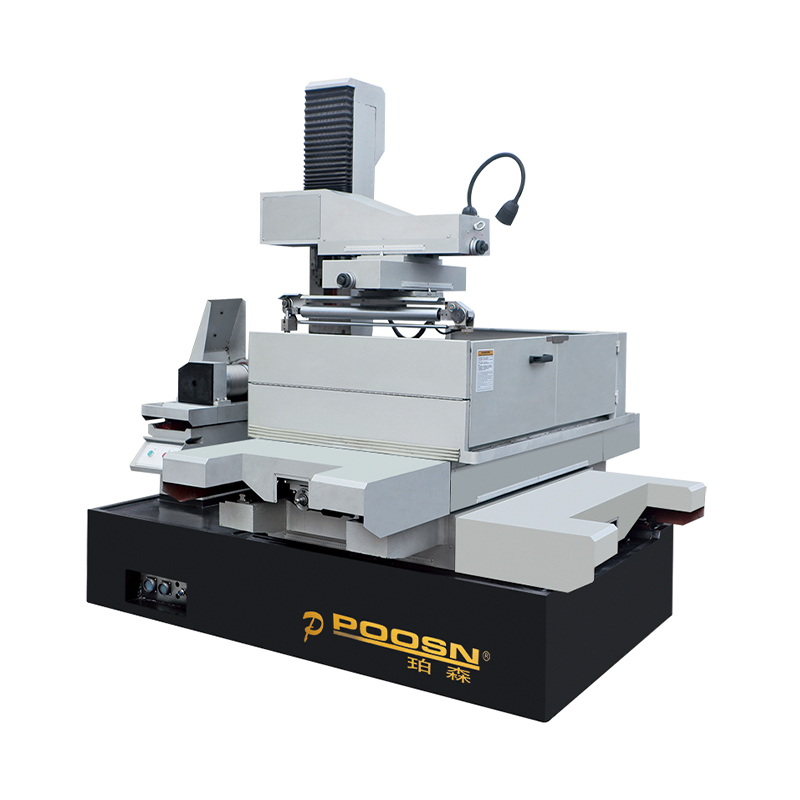
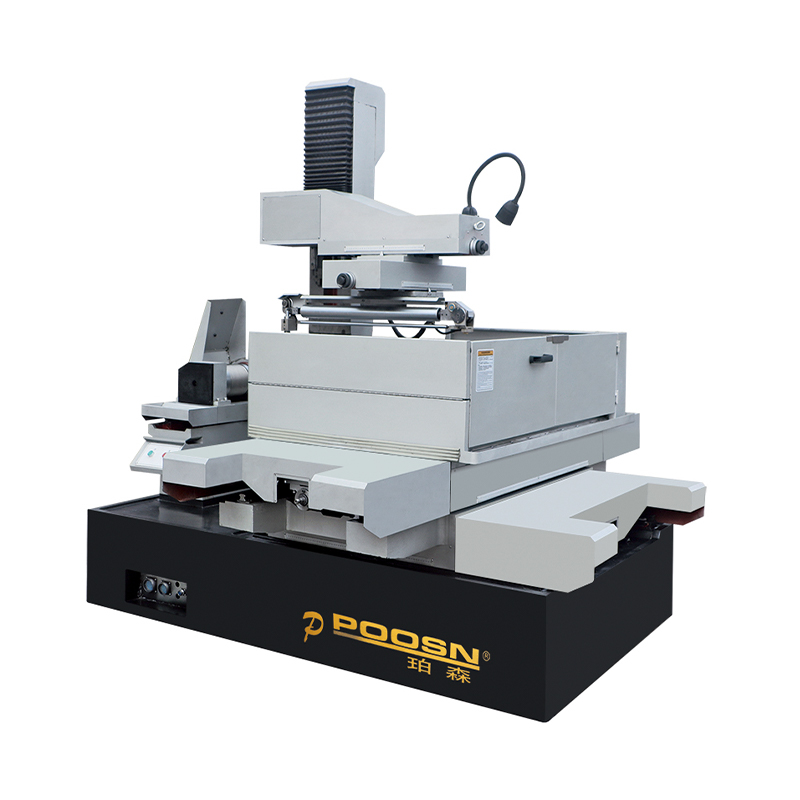
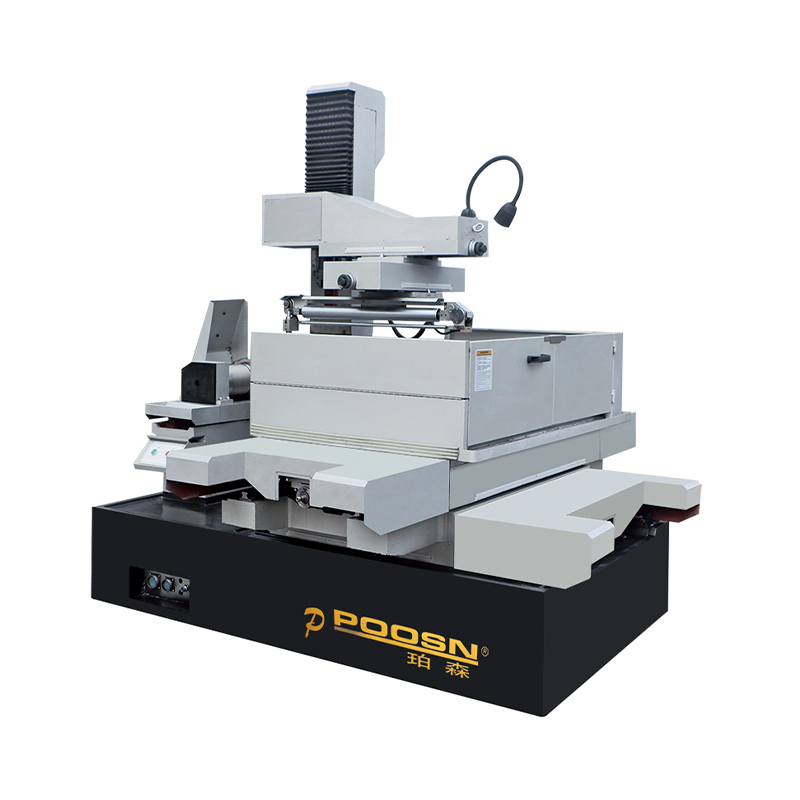
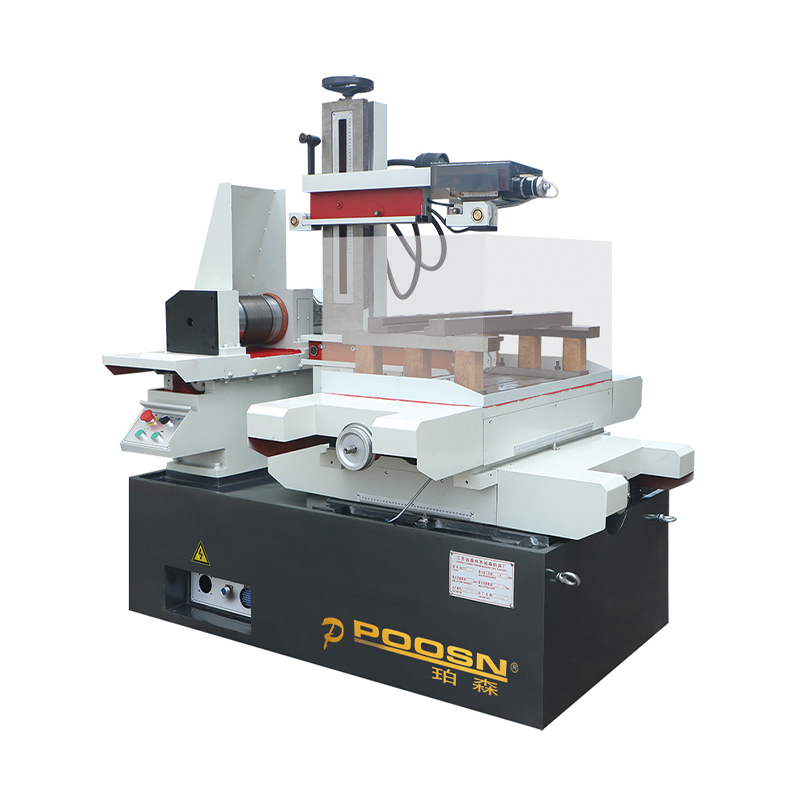
- 20 Product: DK-7745F CNC High-Speed Wire EDM Machine (4-Axis, 500×700mm Travel)
1. The Role of High-Speed Wire EDM in Precision Manufacturing
Wire Electrical Discharge Machining removes material through controlled electrical discharges between a moving wire electrode and a conductive workpiece. Because the cutting process does not rely on direct mechanical contact, WEDM can process hardened steel, tool steel, copper, aluminum, tungsten carbide, and other conductive materials that may be difficult or expensive to machine using conventional cutting tools.
The absence of direct cutting-force contact creates several important advantages. Thin sections are less likely to deform under tool pressure, intricate profiles can be produced without forcing a milling cutter into a narrow corner, and hardened materials can be cut after heat treatment. These characteristics make wire EDM valuable in mold production, stamping-die manufacturing, precision fixtures, medical components, aerospace parts, and high-value prototype work.
However, not every wire-cut EDM machine provides the same level of production value. Cutting speed alone does not determine machine performance. A productive WEDM system must also maintain wire tension, control discharge energy, evacuate eroded particles, manage heat, preserve perpendicularity, and repeat the programmed geometry accurately. If any of these functions is unstable, the result may include wire breakage, rough surfaces, tapered cuts, dimensional drift, excessive rework, and higher consumable costs.
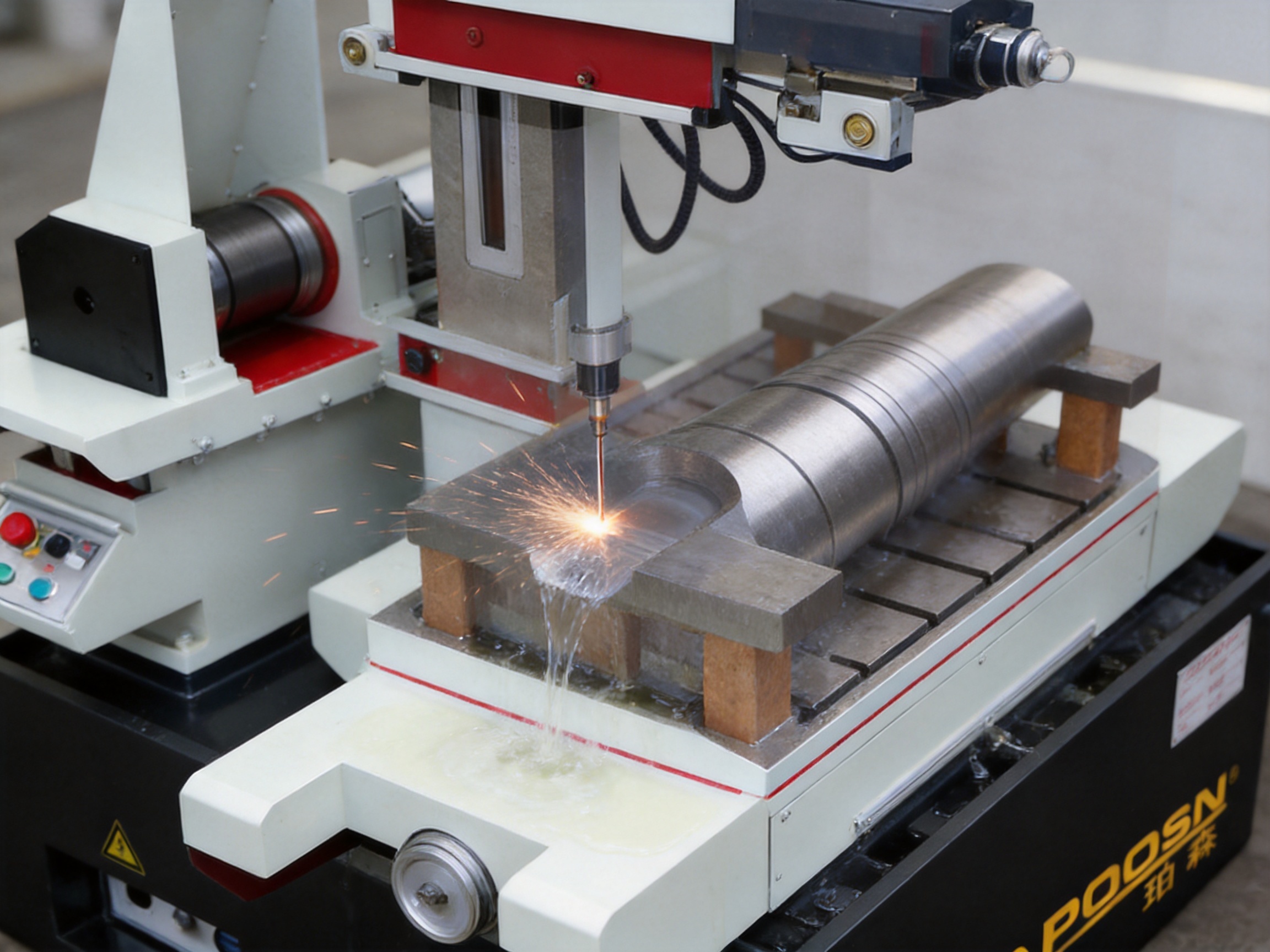
The DK-7745F addresses these challenges through a coordinated design. Its four-axis system supports simultaneous movement of the X, Y, U, and V axes, allowing the upper and lower wire guides to move independently when taper cutting is required. Its pulse power system can adapt discharge parameters to workpiece thickness and material conditions. Its wire circulation and filtration system assist with debris removal and cooling. Its rigid bed and guideway arrangement provide a stable foundation for long-duration machining.
2. Product Positioning and Main Applications
The DK-7745F is intended for manufacturers that require a larger work envelope and higher load capacity than those available from compact or general-purpose WEDM equipment. The machine is suitable for both individual complex parts and repeated production batches, making it useful for workshops that combine mold making, contract machining, maintenance work, and industrial component manufacturing.
Typical applications include the production of large precision molds, inserts, punches, dies, aerospace structural components, automotive tooling, heavy machinery parts, precision mechanical elements, and components requiring complex internal profiles. The machine can also be incorporated into automated production lines where consistent positioning, repeatable cutting conditions, and reduced manual intervention are important.
Its maximum worktable load of 500 kg is especially valuable for heavy workpieces. A high load rating allows production teams to use robust fixtures and mount large steel plates without operating close to the physical limits of the machine. It also provides greater flexibility when the workpiece includes a fixture base, clamping structure, or multiple parts arranged for batch processing.
The DK-7745F can be used for through-cuts, internal profiles, narrow slots, complex contours, punches, dies, gear-like forms, and multi-pass finishing operations. Its four-axis linkage makes it possible to cut angled profiles and tapered surfaces within the machine’s specified taper range. According to the published technical data, the maximum cutting taper is approximately ±6° over 80 mm, subject to workpiece geometry, material, wire condition, flushing, and selected machining parameters.
For businesses that process a wide variety of conductive materials, the machine’s flexibility is another important benefit. Steel, aluminum, copper, tungsten carbide, and other electrically conductive metals can be machined when suitable electrical and flushing parameters are selected. This material versatility helps manufacturers accept a broader range of orders without requiring separate specialized equipment for every material category.
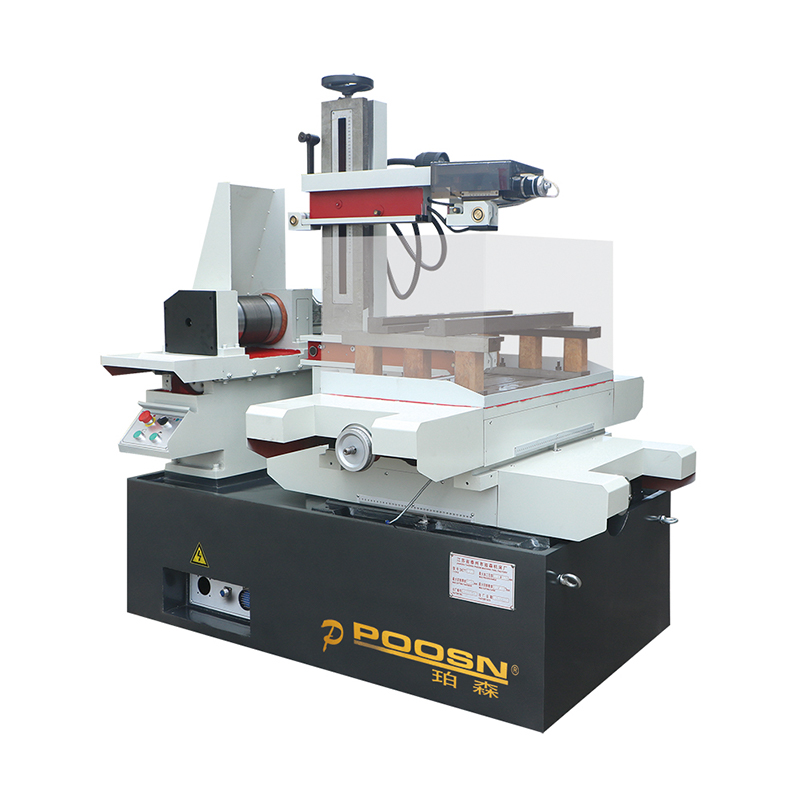
DK-7745F CNC High-Speed Wire EDM Machine (4-Axis, 500×700mm Travel)
3. Large Work Capacity for Heavy and Oversized Components
One of the most significant advantages of the DK-7745F is its combination of travel range, table size, and load capacity. The published model table lists a worktable size of 570 × 950 mm and X/Y travel of 450 × 650 mm. These dimensions provide a practical machining area for large dies, mold plates, thick components, and workpieces with multiple features positioned across a broad surface.
Large workpieces often create difficulties for smaller machines. Operators may need to reposition the part, split the cutting program, or use complex auxiliary fixtures. Each additional setup introduces the possibility of alignment errors, accumulated tolerance, and increased preparation time. A larger machine reduces the need for repositioning and allows more operations to be completed in one setup.
The 500 kg maximum worktable load further supports heavy-duty production. It enables the use of strong fixtures and stable clamping methods, which are important for maintaining geometric accuracy during long cutting cycles. A secure workpiece is less likely to shift or vibrate, and a rigid setup helps the machine maintain cutting stability when the wire passes through thick material.
Compared with compact high-speed WEDM machines, the DK-7745F offers greater capacity for large industrial components without moving into the extremely large floor space and investment requirements associated with the biggest specialized machines. This balance is valuable for medium-sized and large workshops that need a substantial working envelope but still want reasonable installation and operating efficiency.
The machine’s robust capacity is also useful for batch production. A manufacturer can place several smaller workpieces on the table, arrange multiple parts for sequential cutting, or use a common fixture to process repeated components. This reduces loading and unloading frequency and helps improve machine utilization across a full shift.
Published DK-77 Model Comparison
| Specification | DK7725 | DK7735 | DK7745 | DK7745F |
| Worktable Size | 410 × 600 mm | 500 × 750 mm | 570 × 850 mm | 570 × 950 mm |
| X/Y Travel | 250 × 320 mm | 350 × 450 mm | 450 × 550 mm | 450 × 650 mm |
| Maximum Cutting Thickness | 350 mm | 450 mm | 450 mm | 450 mm |
| Maximum Worktable Load | 250 kg | 300 kg | 400 kg | 500 kg |
| Machine Weight | 800 kg | 1,100 kg | 1,250 kg | 1,350 kg |
| Machine Dimensions | 1,300 × 1,080 × 1,625 mm | 1,650 × 1,250 × 1,830 mm | 1,825 × 1,400 × 1,830 mm | 1,825 × 1,550 × 1,830 mm |
The comparison shows the progression from compact to heavy-duty configurations. The DK-7745F provides the largest table and travel range among the four listed models, as well as the highest worktable load. This makes it the logical choice when the production requirement extends beyond small and medium parts.
4. Four-Axis Linkage and Taper-Cutting Capability
Four-axis linkage is a core feature of the DK-7745F. In addition to the primary X and Y table movements, the U and V axes control relative movement of the upper and lower wire guides. This arrangement allows the machine to produce tapered profiles rather than limiting the cut to a straight vertical wall.
Taper cutting is essential for many molds, dies, punches, inserts, and mechanical components. A tapered profile may be required to support part release, create a specific functional angle, compensate for assembly conditions, or reproduce a three-dimensional contour. Without coordinated four-axis movement, these geometries may require additional machining operations or separate equipment.
The maximum taper specification is listed as ±6° over 80 mm. Actual results depend on workpiece thickness, material, wire diameter, flushing conditions, guide condition, machine calibration, and the selected cutting strategy. Nevertheless, the ability to coordinate four axes in one programmed operation improves flexibility and reduces the need for secondary processing.
The control system is designed to interpret complex geometric data and coordinate the axis movements required by the program. Compatibility with mainstream CAD/CAM-generated code allows the machine to fit into established engineering workflows. Production teams can design a profile digitally, generate the machining program, verify the tool path, and transfer the data to the machine with fewer manual geometry conversions.
Four-axis control also contributes to improved consistency between parts. Once the program and process parameters have been validated, repeated workpieces can be produced with the same programmed geometry. This is especially valuable for mold inserts, matched die components, repeat production parts, and assemblies requiring interchangeable components.
5. High-Speed Cutting and Production Efficiency
The DK-7745F is specified for a maximum cutting efficiency of approximately 10,000–16,000 mm²/h, depending on the selected control cabinet, workpiece material, thickness, wire condition, flushing, and machining strategy. This range positions the machine for high-throughput operations where cycle time has a direct impact on manufacturing cost.
High-speed cutting is not merely a matter of increasing electrical power. Stable high-speed operation requires accurate synchronization between the pulse generator, wire movement, axis feed rate, flushing system, and control software. If feed rate is too high for the material or discharge condition, the wire may break or the cut may become unstable. If it is too low, productivity declines unnecessarily.
The DK-7745F’s control architecture is intended to balance these variables. The pulse power supply can adjust discharge energy in response to workpiece thickness and material characteristics. This helps the machine maintain a stable spark gap and supports efficient material removal. A controlled discharge also reduces the risk of excessive heat concentration and surface damage.
Higher productivity can reduce the cost per component in several ways. A shorter cutting cycle increases the number of parts that can be completed during a shift. It also reduces machine-hours assigned to each workpiece, which may lower labor allocation and energy consumption per part. In mass production, these improvements can have a significant effect on the overall manufacturing cost.
The productivity advantage is particularly relevant when the machine is used for repeated profiles or automated production. Once the fixture, program, and parameters are established, the machine can process multiple parts with limited operator intervention. This allows skilled personnel to focus on programming, inspection, process optimization, and other high-value activities rather than continuous manual supervision.
Productivity Factors That Influence Actual Results
Published cutting efficiency is a reference value rather than a guaranteed result for every application. Actual performance is affected by material type, material thickness, electrical conductivity, workpiece height, wire diameter, wire speed, flushing pressure, required surface finish, corner geometry, and the number of finishing passes.
For rough cutting, the priority is usually material removal rate. For finishing, the priority shifts toward dimensional accuracy, corner quality, surface roughness, and reduced recast effects. A production plan may therefore use a fast roughing pass followed by one or more finishing passes. The DK-7745F can be configured and programmed to support this balance between speed and quality.
According to the provided technical information, the optimal surface roughness can reach Ra ≤ 2.5 μm under suitable conditions. Achieving this result depends on appropriate wire, workpiece preparation, flushing, electrical parameters, and maintenance of the guides and power system.
6. Mechanical Structure and Long-Term Precision
Long-term precision begins with the machine structure. A wire EDM machine may operate for many hours while the wire repeatedly travels through the workpiece and the axes move according to complex trajectories. Any structural instability, thermal distortion, guideway wear, or foundation weakness can affect the final part.
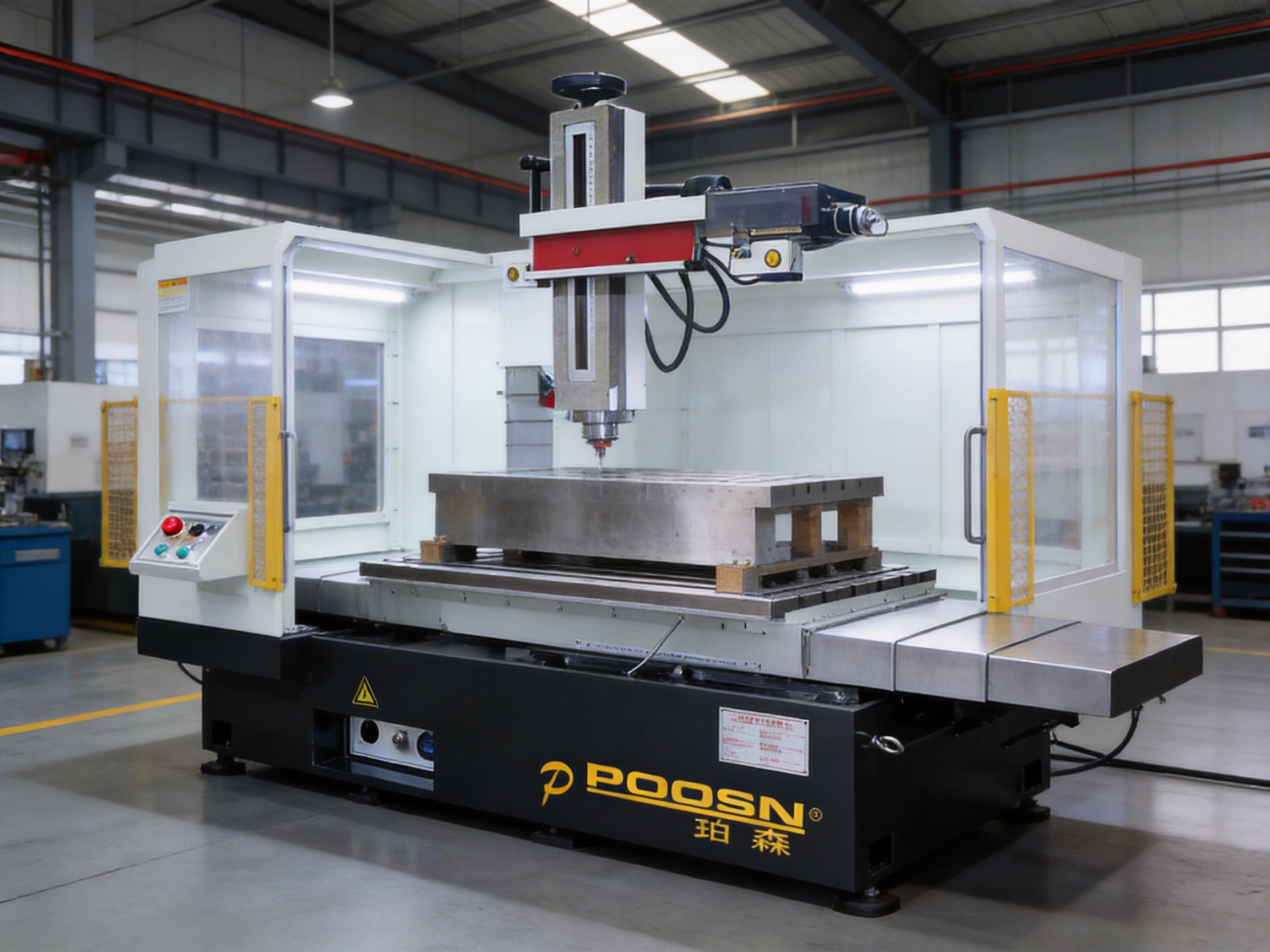
The DK-7745F uses a rigid steel and cast-iron structural design intended to resist deformation and vibration. The machine bed undergoes aging treatment to reduce internal stress and help preserve geometric stability during extended use. A rigid base supports the guideways, table, wire guides, and working tank, creating a stable reference structure for the machining system.
Vibration control is particularly important during high-speed cutting. Small vibrations can influence the spark gap and lead to uneven discharge, poor surface finish, dimensional variation, or wire breakage. By optimizing the machine-bed layout and supporting components, the design aims to reduce the impact of process-generated vibration.
Precision guide rails and ball screws support controlled axis movement. These components contribute to smooth travel, repeatable positioning, and accurate interpolation. Proper lubrication, cleaning, inspection, and adjustment remain essential, but a high-quality mechanical foundation gives maintenance personnel a stronger starting point for preserving accuracy.
The stated machine accuracy standard is GB/T 7926-2015. Compliance with a recognized accuracy standard provides a framework for inspection and acceptance. For international buyers, it is also important to confirm the specific inspection documents, acceptance procedures, and accuracy tolerances applicable to the purchase contract.
Machine weight is another indication of structural scale. The DK-7745F is listed at approximately 1,350 kg, providing a substantial base for its working envelope and load capacity. Correct installation on a suitable foundation remains necessary. The installation environment should be level, clean, temperature-controlled where possible, and protected from excessive vibration or contamination.
7. Intelligent Control and Operator Convenience
A modern WEDM machine must be powerful without being unnecessarily difficult to operate. Complex control systems can create production delays if operators need extensive specialist training for routine tasks. The DK-7745F therefore emphasizes an intuitive graphical interface, parameter management, and practical control functions.
The control system is designed to support the interpretation of complex geometric programs, axis coordination, cutting parameter selection, and process monitoring. A graphical operating environment helps operators understand machining status, axis position, program progress, and alarm information. This reduces dependence on manual calculations and makes routine setup more accessible.
Parameter libraries can help standardize production. Once reliable settings have been developed for common materials and thicknesses, operators can recall approved parameters instead of creating every cutting condition from the beginning. Standardization improves consistency between shifts and reduces the risk of incorrect settings.
The machine can support code generated by mainstream CAD/CAM software systems. This compatibility is important for companies that already use digital design and manufacturing processes. Engineers can prepare the profile in the software environment familiar to them, while operators can concentrate on workholding, wire threading, flushing, alignment, and process verification.
Operational simplicity does not eliminate the need for training. Operators should understand wire EDM principles, workpiece conductivity, wire threading, flushing, machine zero positions, taper settings, alarm handling, and safe electrical operation. However, an intuitive system can shorten the learning curve and allow new personnel to become productive more quickly.
Control Cabinet Options
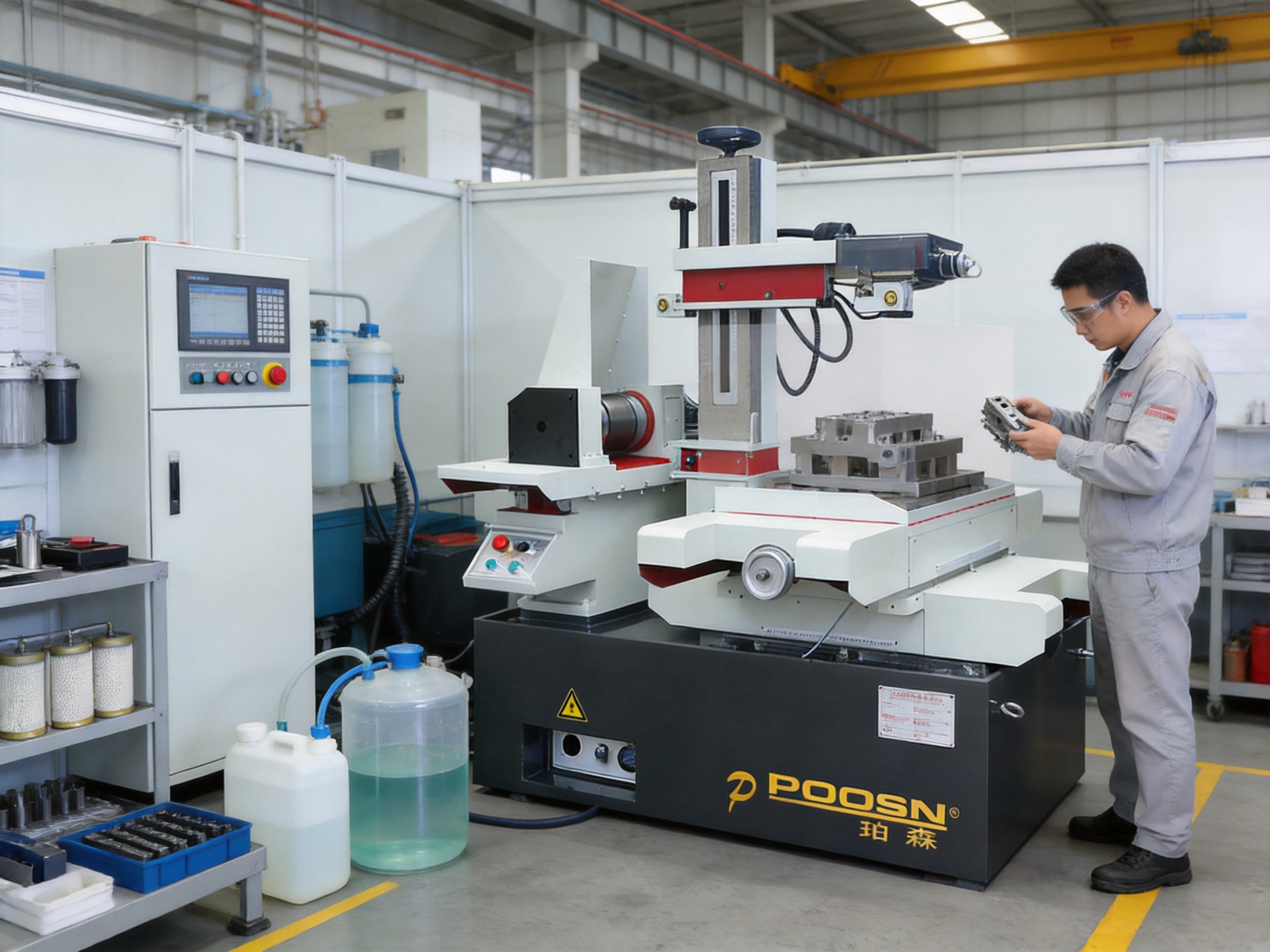
The standard configuration uses a ZH-K68 desktop control cabinet, while a ZHZK-03 vertical cabinet is available as an option. The choice may depend on workshop layout, operator position, visibility, available floor space, and integration requirements. Customers should confirm the final cabinet configuration during technical discussions because cabinet selection may influence available functions and the machine’s practical installation arrangement.
8. Pulse Power Technology and Electrical Stability
The pulse power supply is one of the most important systems in any wire-cut EDM machine. It determines how electrical energy is delivered to the discharge gap and strongly influences cutting speed, surface quality, wire consumption, and process stability.
The DK-7745F uses an optimized pulse power system capable of adjusting discharge energy for different workpiece thicknesses and material conditions. During rough cutting, stronger discharge conditions can support higher material removal. During finishing, controlled lower-energy pulses can reduce surface damage and improve surface quality.
Automatic or semi-automatic adaptation is useful when workpiece thickness changes along the cutting path. A single fixed parameter may not be suitable for every section of a complex part. The ability to respond to changing conditions can reduce unstable discharge and maintain more consistent cutting performance.
Electrical stability also contributes to wire life. Excessively aggressive discharge conditions can increase wire wear and the possibility of breakage. By balancing discharge energy with wire speed, flushing, and feed rate, the machine can help reduce unnecessary molybdenum wire consumption. Consumable savings are particularly important in high-volume production, where small reductions in per-part cost accumulate over time.
The power system should be evaluated together with the wire-feeding and circulation systems. A strong pulse generator cannot deliver consistent results if wire tension fluctuates or eroded particles remain in the cutting gap. The DK-7745F’s design treats these systems as interconnected elements of the machining process.
9. Wire Feeding, Tension Control, and Flushing
Wire movement is central to stable WEDM operation. The wire must travel at a controlled speed, maintain suitable tension, and pass accurately through the upper and lower guides. Uneven tension can affect kerf geometry, surface quality, taper accuracy, and the risk of wire breakage.
The DK-7745F incorporates a balanced wire-feeding mechanism intended to maintain consistent tension during high-speed reciprocating motion. Stable tension helps the wire remain in the correct position relative to the workpiece and supports consistent electrical discharge conditions.
Wire guides and related components must remain clean and correctly aligned. Contamination, wear, or incorrect adjustment can cause the wire to deviate from its intended path. Regular inspection of guide components, rollers, contact points, and threading paths is therefore an essential part of machine maintenance.
The cooling, filtration, and circulation system assists in removing electrical erosion particles from the machining zone. These particles can interfere with the discharge gap and cause secondary discharges if they accumulate. Effective flushing improves debris evacuation, helps control heat, and supports stable machining conditions.
Clean working fluid also contributes to precision. The filtration system should be monitored according to the manufacturer’s maintenance recommendations. Filters, pumps, seals, and fluid quality should be checked regularly, especially when the machine operates continuously or processes materials that generate significant erosion debris.
Compared with a basic wire-cutting system with limited circulation control, an integrated wire and fluid-management design provides a stronger foundation for high-speed production. It can help reduce wire breakage, improve surface finish, and maintain more predictable cutting behavior over long production cycles.
10. Advantages Over Conventional and Lower-Capacity Alternatives
The DK-7745F offers several advantages when compared with conventional low-capacity WEDM machines. The most obvious is its larger working capacity. A larger table and longer Y-axis travel allow manufacturers to process bigger components without splitting the job or making repeated setups.
The second advantage is load capacity. A 500 kg worktable rating supports heavy workpieces and robust fixtures. Lower-capacity machines may require lighter parts, smaller fixtures, or more restrictive loading procedures. For heavy mold plates and industrial components, this difference can determine whether a job can be processed efficiently in one setup.
The third advantage is four-axis functionality. Machines with only basic two-axis movement may be suitable for straight-wall profiles, but they are less flexible for tapered molds and complex angled contours. Four-axis linkage expands the range of geometries that can be produced directly.
The fourth advantage is the combination of high-speed cutting and surface-finish capability. A machine designed for higher production speed can reduce cycle times, while controlled pulse energy and finishing parameters help preserve accuracy and surface quality. The result is a more balanced solution than equipment optimized only for rough cutting or only for small precision parts.
The fifth advantage is the machine’s suitability for automation. Its digital control system, repeatable positioning, parameter libraries, and stable process architecture make it appropriate for connection to automated production lines. Automation can include part loading, palletized fixtures, production scheduling, process monitoring, and data collection, depending on the customer’s factory system.
Compared with very large premium wire EDM machines from global brands, the DK-7745F may also provide a more accessible investment path for businesses that need substantial capacity but must control capital expenditure. The machine offers a practical balance between large-format capability, production speed, configurable controls, and manufacturing cost.
Every machine selection should still be based on application trials, acceptance criteria, service availability, and the exact workpiece requirements. Competitive advantages are most valuable when they match the customer’s real production conditions.
11. Manufacturing Strengths and Quality Assurance
The manufacturer behind the DK-7745F has specialized in electrical discharge wire cutting since 1999. Its POOSN brand was established in 2003, and the company later developed its own production facility after its formal establishment in 2017. This long involvement in wire EDM provides experience in machine structure, electrical discharge technology, application requirements, and customer support.
The company maintains product lines covering medium-speed wire-cut EDM, high-speed wire-cut EDM, and large-taper wire-cut EDM. This range allows engineering knowledge gained from different machine categories to support product development across the portfolio. It also enables customers to select a model based on workpiece size, production volume, taper requirements, and budget.
Advanced manufacturing strength is not limited to the final assembly stage. It includes material selection, casting and aging treatment, precision component processing, guideway installation, electrical cabinet assembly, software configuration, testing, and final inspection. Each of these processes influences the accuracy and reliability of the finished machine.
The company reports advanced processing equipment, comprehensive testing methods, rational product design, and manufacturing according to national standards. Positioning accuracy testing is performed on each machine tool. This inspection process is important because the value of a WEDM machine depends not only on its nominal specification but also on whether the delivered unit performs consistently during actual cutting.
Mechanical assembly requires careful alignment of the worktable, guide rails, ball screws, wire guides, and wire-feeding system. Electrical assembly requires secure connections, suitable cabinet layout, protection against contamination, and appropriate heat dissipation. Software and control parameters must be verified so that the operator interface, axis movement, pulse system, alarms, and auxiliary functions work correctly as a complete system.
The company’s development history also includes a patent for a CNC machine tool with plate-type winding and suction-type adhesive technology in 2018. This indicates ongoing attention to specialized machine-tool innovation rather than relying exclusively on conventional designs.
Quality and Production Process Overview
| Manufacturing Stage | Primary Objective | Customer Value |
| Structural casting and aging | Reduce internal stress and improve rigidity | Better long-term geometric stability |
| Precision guideway and screw installation | Ensure smooth, repeatable axis travel | Improved positioning and contour accuracy |
| Electrical cabinet assembly | Integrate power, control, and protection systems | Stable operation and easier maintenance |
| Wire-feeding system assembly | Maintain controlled wire speed and tension | Lower risk of wire breakage and process variation |
| Control-system configuration | Coordinate four-axis movement and machining parameters | Accessible programming and flexible production |
| Positioning and performance testing | Verify machine accuracy and operation | Greater confidence at installation and acceptance |
| Technical support preparation | Provide manuals, guidance, and service response | Faster commissioning and reduced downtime |
12. Installation, Commissioning, and Maintenance
Correct installation is essential for obtaining the expected performance from the DK-7745F. Before delivery, the customer should prepare a suitable foundation, electrical supply, work area, lifting equipment, ventilation, and fluid-management arrangements. The listed power supply is 3N 380 V ±10%, but the exact electrical requirements should be confirmed before installation.
The machine should be positioned away from severe vibration, direct heat sources, excessive dust, and uncontrolled temperature changes. Thermal variation can influence machine geometry and fluid conditions. A stable workshop environment helps the machine maintain repeatable performance, especially during precision finishing operations.
Commissioning normally includes leveling, electrical connection, control-system inspection, wire threading, fluid filling, pump and filter checks, axis movement verification, origin confirmation, and test cutting. Operators should receive training in safe operation, program loading, workpiece alignment, wire threading, parameter selection, alarm response, and routine maintenance.
Daily maintenance may include checking fluid level and quality, inspecting wire condition, cleaning the work zone, confirming guide and nozzle condition, removing accumulated debris, and reviewing alarm history. Periodic maintenance should address lubrication, filter replacement, pump inspection, electrical cabinet cleaning, guide alignment, ball-screw condition, and accuracy verification.
Maintenance is not simply a cost. It protects production efficiency. A blocked filter, worn guide, unstable pump, or incorrect wire tension can increase cycle time and reduce part quality. Preventive maintenance helps detect these problems before they cause major downtime or damaged workpieces.
13. Energy Efficiency and Operating Cost
Manufacturers increasingly evaluate machine tools according to total operating cost rather than purchase price alone. Energy consumption, consumables, maintenance, labor, downtime, and rework all influence the cost of ownership.
The DK-7745F is designed with an optimized pulse power supply and energy-conscious electrical architecture. Efficient conversion of electrical energy into controlled discharge energy can support high cutting performance without unnecessary power loss. Reduced wire consumption also contributes to lower consumable costs.
High productivity has an indirect energy benefit. If a part can be completed in fewer machine-hours, the energy used per finished component may decline even when the instantaneous cutting power remains similar. Faster production also reduces the factory space and scheduling capacity required for a given output level.
Surface quality and dimensional stability influence cost in the same way. A part that is correct after the first machining cycle does not require repeated cutting, manual correction, or extensive inspection-based rework. Stable process control therefore supports both environmental and economic objectives.
Energy performance depends on actual application conditions. Workpiece material, cutting thickness, number of passes, flushing, wire speed, and machine utilization all affect consumption. Customers should evaluate energy data under representative production conditions rather than relying only on general catalog values.
14. Customization and Technical Support
Different industries require different combinations of working capacity, control functions, cabinet layout, automation, fixtures, software, and process parameters. The DK-7745F is offered with customization support so that the machine can be adapted to specific production requirements.
Customization may involve the control cabinet, workholding arrangements, wire configuration, automation interface, special cutting processes, machine layout, or application-specific parameter development. Customers producing aerospace components may prioritize precision and process documentation, while mold manufacturers may prioritize taper accuracy, surface finish, and large workpiece handling.
Technical support begins before the machine is ordered. Application information such as workpiece material, maximum dimensions, thickness, required tolerance, surface roughness, taper angle, annual production volume, and preferred CAD/CAM workflow should be reviewed during the selection process. This information allows the supplier to recommend a suitable configuration and identify any special requirements early.
After delivery, technical support can include installation guidance, operator training, process assistance, troubleshooting, spare-parts coordination, and remote response. The company reports service coverage for customers in Southeast Asia, Europe, the Americas, and other international markets. Overseas customers should confirm local service arrangements, spare-parts lead times, language support, and warranty conditions during contract negotiations.
Responsive support is especially important for WEDM because process issues may involve mechanical, electrical, software, and fluid-related causes. A supplier with product-specific knowledge can often diagnose problems more efficiently than a general machinery service provider.
15. Selecting the Right Model for Different Production Needs
The DK-77 product family includes several models intended for different workpiece sizes and production requirements. The DK-7725 is suitable for small and medium components, precision mold work, and small-batch production. The DK-7735 provides a larger table for medium-sized components. The DK-7745 is intended for large parts and precision molds, including aerospace and automotive applications.
The DK-7745F is the preferred choice when the workpiece is extra-large, heavy, thick, or geometrically complex. Its 500 kg load rating, 450 × 650 mm travel, 570 × 950 mm table, and four-axis functionality provide a higher level of capacity than the smaller models.
For applications involving even larger components, the product family includes DK7755F, DK7763F, DK7780F, and DK77100F configurations. These models offer progressively larger tables, travel ranges, cutting thicknesses, load capacities, and machine dimensions. Customization options are available for the largest configurations, subject to technical review.
Model selection should be based on the largest realistic workpiece, not only the average workpiece. Buyers should consider clamping margins, fixture dimensions, wire-access requirements, future product development, and space for loading. Selecting a machine with insufficient capacity can create recurring setup problems, while selecting an unnecessarily large machine can increase installation and operating costs.
16. Recommended Evaluation Criteria Before Purchase
Before purchasing the DK-7745F, manufacturers should prepare representative test pieces and define measurable acceptance criteria. These may include cutting speed, dimensional accuracy, taper accuracy, surface roughness, wire consumption, repeatability, and maximum practical workpiece weight.
The evaluation should include the customer’s actual materials and thicknesses. A machine that performs well on thin tool steel may require different settings for thick aluminum or tungsten carbide. Testing should also examine internal corners, narrow slots, small radii, large straight sections, and any difficult geometry that represents the customer’s real production needs.
Other questions should include the available floor space, foundation requirements, power capacity, fluid handling, ambient temperature, operator skill level, CAD/CAM software compatibility, automation plans, and expected annual utilization. These factors influence whether the machine will achieve its intended return on investment.
Customers should request documentation covering machine accuracy, inspection procedures, electrical specifications, included accessories, optional equipment, warranty terms, installation responsibilities, training scope, and spare-parts support. Clear technical documentation helps prevent misunderstandings and provides a reference for future maintenance.
17. Frequently Asked Questions
Q1: What is the travel range of the DK-7745F?
The published technical table lists an X-axis travel of 450 mm and a Y-axis travel of 650 mm. Marketing descriptions may refer to an approximate 500 × 700 mm travel class depending on the measurement convention or configuration. Buyers should confirm the final dimensional specification on the quotation and technical agreement.
Q2: What is the maximum worktable load?
The maximum worktable load is listed as 500 kg. The actual permissible load should also consider how the weight is distributed, the fixture design, the workpiece center of gravity, and the installation conditions.
Q3: What cutting efficiency can the machine achieve?
The specified maximum cutting efficiency is approximately 10,000–16,000 mm²/h when suitable control equipment and process conditions are used. Actual results vary with material, thickness, wire condition, flushing, required surface finish, and cutting strategy.
Q4: Can the DK-7745F perform taper cutting?
Yes. The machine uses X, Y, U, and V-axis stepper drives with four-axis linkage. Its listed maximum cutting taper is approximately ±6° over 80 mm, subject to the workpiece and process conditions.
Q5: What materials can be processed?
The machine is designed for conductive metals such as steel, aluminum, copper, and tungsten carbide. Cutting parameters must be selected according to the material’s conductivity, thickness, hardness, and required finish.
Q6: What surface roughness can be achieved?
The published optimal surface roughness is Ra ≤ 2.5 μm. Achieving this value depends on material, wire, electrical parameters, flushing, machine condition, and the number of finishing passes.
Q7: Is the machine suitable for automated production?
Yes. Its CNC control, repeatable positioning, parameter management, and digital program compatibility allow it to be connected with automated production systems. The specific automation interface and loading solution should be designed according to the customer’s factory layout and part-handling requirements.
Q8: Is the DK-7745F difficult to operate?
The machine is designed with an intuitive graphical interface and intelligent control functions intended to simplify operation. Operators still require training in WEDM principles, workholding, wire threading, programming, safety, and maintenance.
Q9: Which control cabinets are available?
The standard option is the ZH-K68 desktop cabinet. A ZHZK-03 vertical cabinet is also available as an option. The final selection should be confirmed according to workshop layout and required functions.
Q10: How does the machine maintain precision during long production cycles?
Precision is supported by the rigid bed, aging-treated structure, precision guideways, ball screws, controlled wire tension, stable pulse power, flushing, and inspection procedures. Regular maintenance and a suitable installation environment are also essential.
Q11: What industries commonly use this machine?
Typical industries include mold manufacturing, aerospace, automotive, heavy machinery, precision mechanical production, tooling, die making, and high-volume industrial component processing.
Q12: Can the manufacturer provide customized solutions?
Yes. Customization and technical support are available for different production requirements. Potential customization areas include control cabinet selection, process parameters, fixtures, automation interfaces, machine configuration, and application-specific machining solutions.
18. Conclusion
The DK-7745F CNC High-Speed Wire EDM Machine is designed for manufacturers that need more than basic profile cutting. Its large worktable, 450 × 650 mm published X/Y travel, 500 kg load capacity, 450 mm maximum cutting thickness, four-axis linkage, high-speed cutting capability, and flexible taper performance make it a strong solution for large and demanding conductive workpieces.
Its competitive value comes from the combination of capacity and process control. The machine is not only larger than compact WEDM equipment; it also integrates a rigid aging-treated structure, precision guideways, intelligent CNC control, optimized pulse power, balanced wire feeding, and cooling and filtration systems. These elements work together to improve production efficiency, cutting stability, surface finish, and long-term reliability.
The manufacturing organization supporting the machine contributes additional value through long-term specialization in EDM technology, a broad product range, testing procedures, customization services, and international technical support. For buyers evaluating equipment based on total production value, these capabilities are as important as the headline specifications.
When correctly installed, programmed, maintained, and matched to the application, the DK-7745F can help manufacturers process larger workpieces, reduce setup frequency, improve production throughput, control consumable costs, and expand their ability to produce complex precision parts. It is therefore well suited to companies seeking a practical high-capacity WEDM platform for modern mold production and industrial manufacturing.
References
1. Product technical specification sheet for the DK-7745F CNC High-Speed Wire EDM Machine.
2. DK-77 series model comparison data covering worktable size, axis travel, cutting thickness, load capacity, machine weight, and dimensions.
3. GB/T 7926-2015, Accuracy of Wire-Cut Electrical Discharge Machines.
4. General principles of Wire Electrical Discharge Machining, including pulse discharge, wire tension, flushing, filtration, and taper cutting.
5. Manufacturer-provided information on electrical discharge machining equipment, production capabilities, quality testing, customization, and technical support.
Product: DK-7745F CNC High-Speed Wire EDM Machine (4-Axis, 500×700mm Travel)

-
Phone
+86-0523-86268788 +86-13815960366 +86-13912191163Email
[email protected]Address
No. 366, Yusheng Road Jiulong Town, Hailing District Taizhou City, China
Copyright © Taizhou Xinchengyang Machinery Manufacturing Co., Ltd. All Rights Reserved.
Custom edm machine for sale
wholesale edm machine manufacturers
