

 English
 русский
 عربى


Shen Yiru — After-Sales Service Engineer
Home / Author / Shen Yiru — After-Sales Service Engineer / DK45BC CNC Medium-Speed Wire EDM Machine for Heavy-Duty Precision Cutting
DK45BC CNC Medium-Speed Wire EDM Machine for Heavy-Duty Precision Cutting
2026-09-26
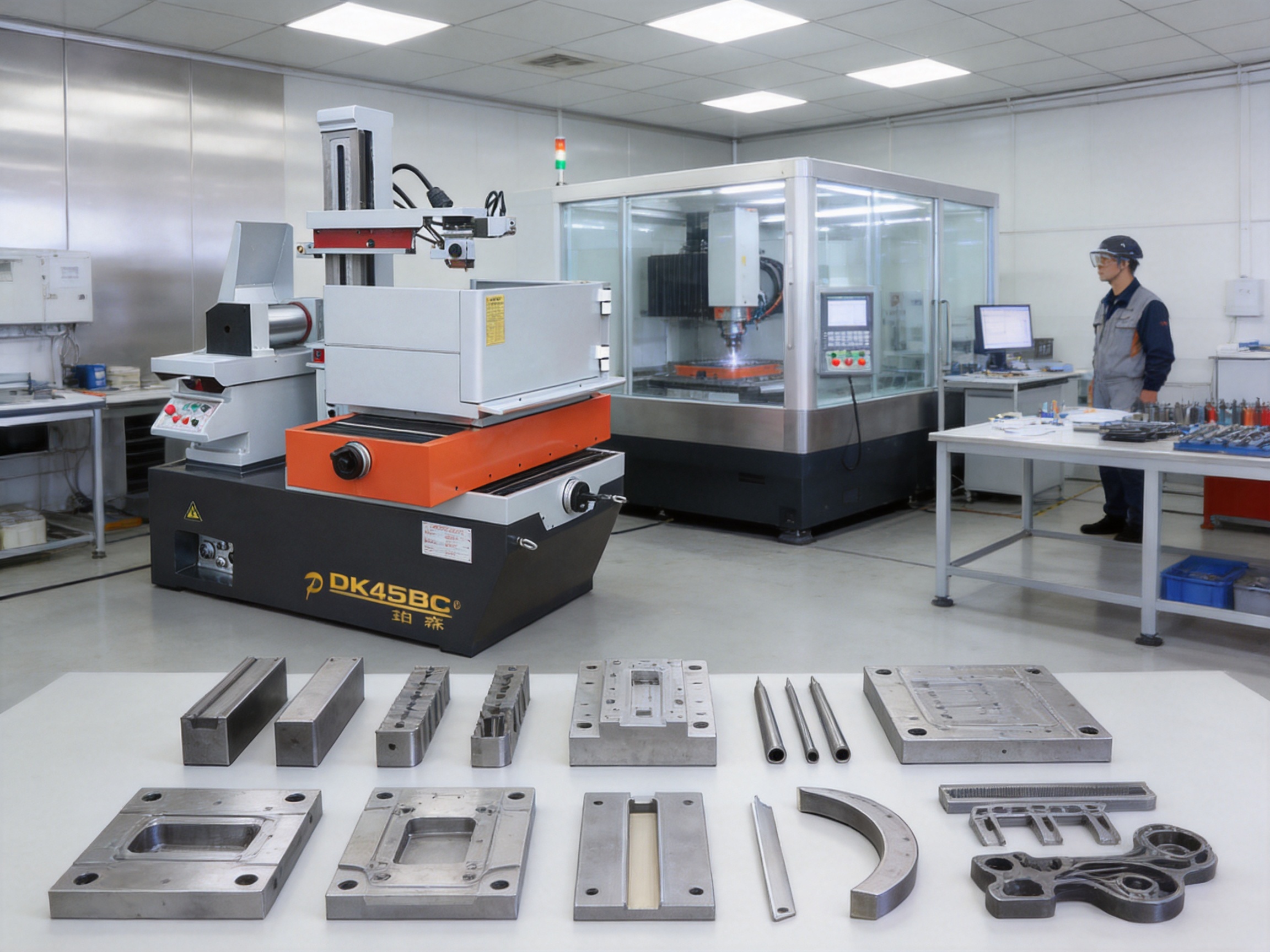
Wire Electrical Discharge Machining (WEDM) has become an essential technology for manufacturers that need to cut hardened, conductive materials into intricate profiles without imposing mechanical cutting forces on the workpiece. Mold manufacturers, automotive suppliers, aerospace subcontractors, toolmakers, and precision engineering companies increasingly require equipment that can combine large workpiece capacity, reliable cutting performance, controlled taper machining, and repeatable accuracy. The DK45BC CNC Medium-Speed Wire EDM Machine has been developed to address these requirements through a high-capacity worktable, a four-axis control structure, adjustable wire-feed operation, and a multi-pass cutting process.
Designed for a maximum worktable load of 400 kg and a maximum cutting thickness of 450 mm, the DK45BC occupies an important position between compact precision machines and larger heavy-duty WEDM systems. It is suitable for medium-sized molds, automotive tooling, mechanical components, and other conductive workpieces that are too large or heavy for smaller machines but do not require the footprint of an extra-large model. Its 450 mm X-axis travel and 600 mm Y-axis travel provide a practical machining envelope for a broad range of industrial components.
The machine is manufactured by Taizhou Xinchengyang Machinery Manufacturing Co., Ltd., a specialist producer with experience in electrical discharge machining, wire-cutting equipment, special processing technologies, and related CNC systems. Since beginning its wire-cutting specialization in 1999, the company has developed product families covering medium-speed, high-speed, and large-taper wire EDM applications. Its manufacturing philosophy combines structural design, electrical control development, precision testing, process optimization, and after-sales support.
This article examines the DK45BC in detail, including its mechanical construction, control architecture, cutting capabilities, workpiece applications, manufacturing advantages, customization options, operating economy, and comparison with conventional high-speed wire-cut machines and competing equipment categories.
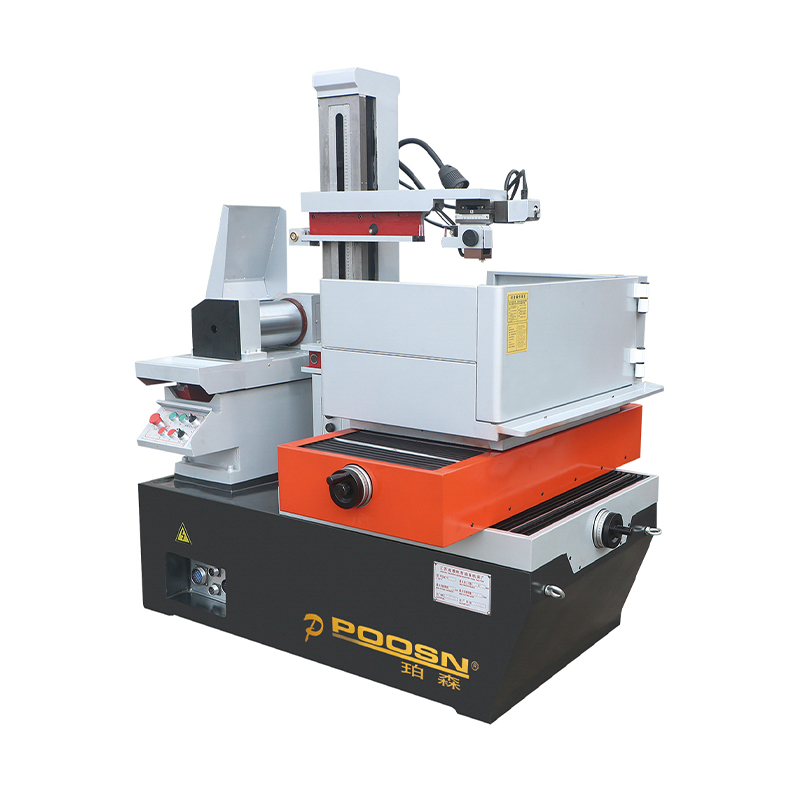
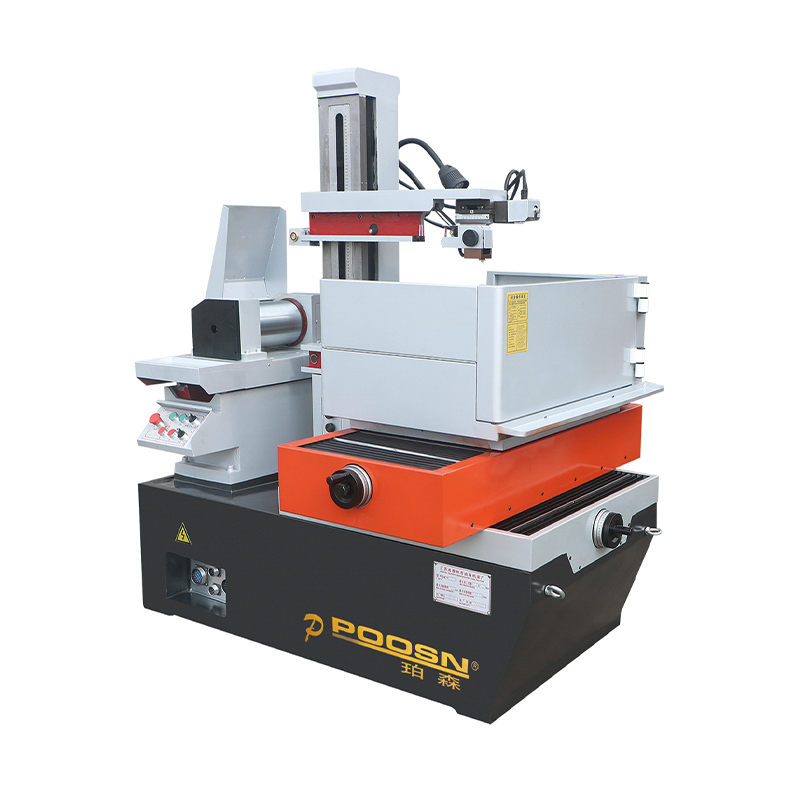
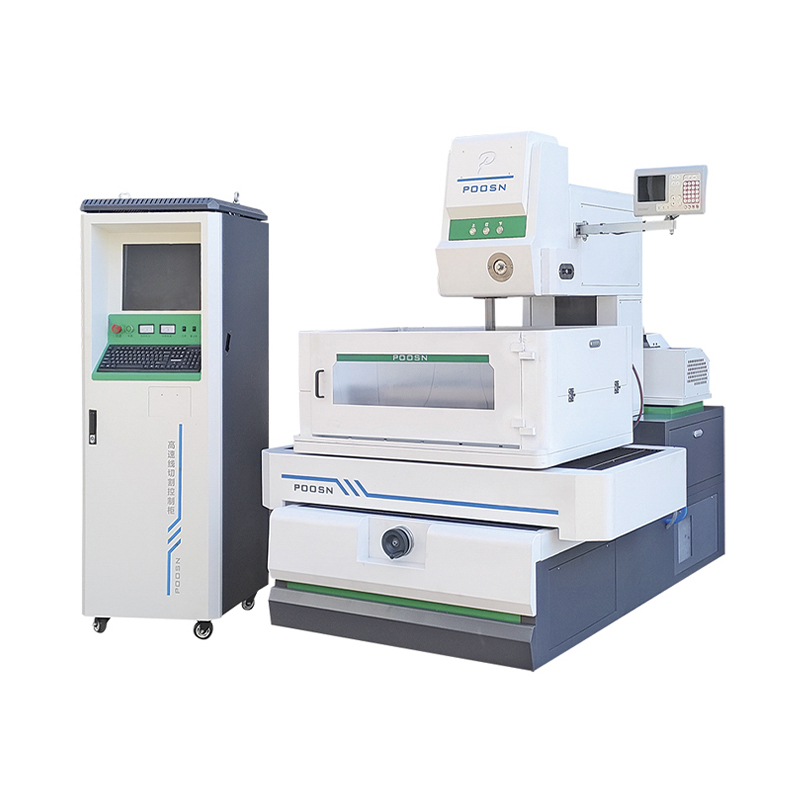
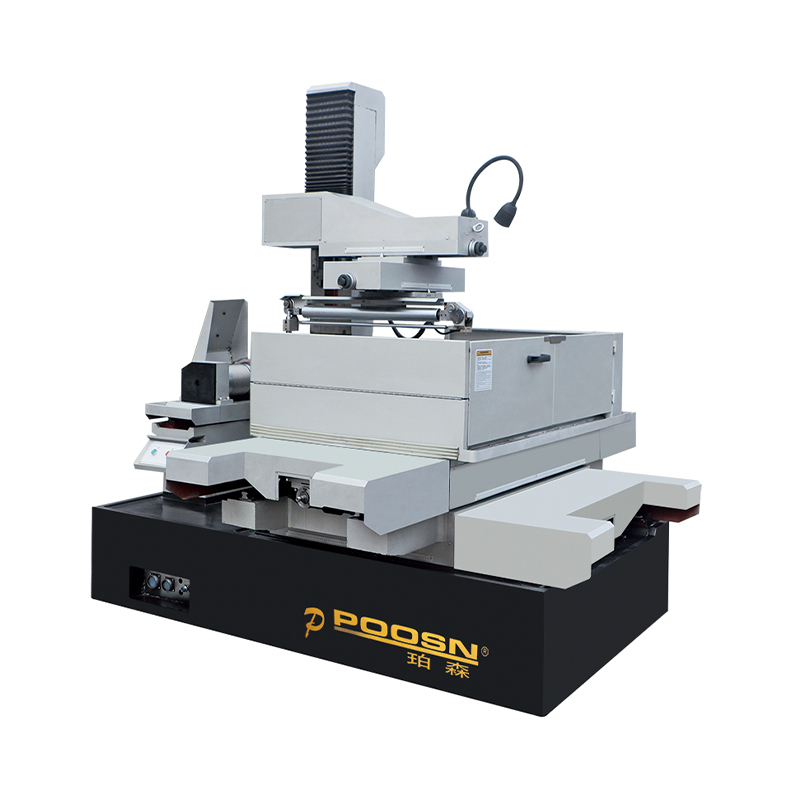
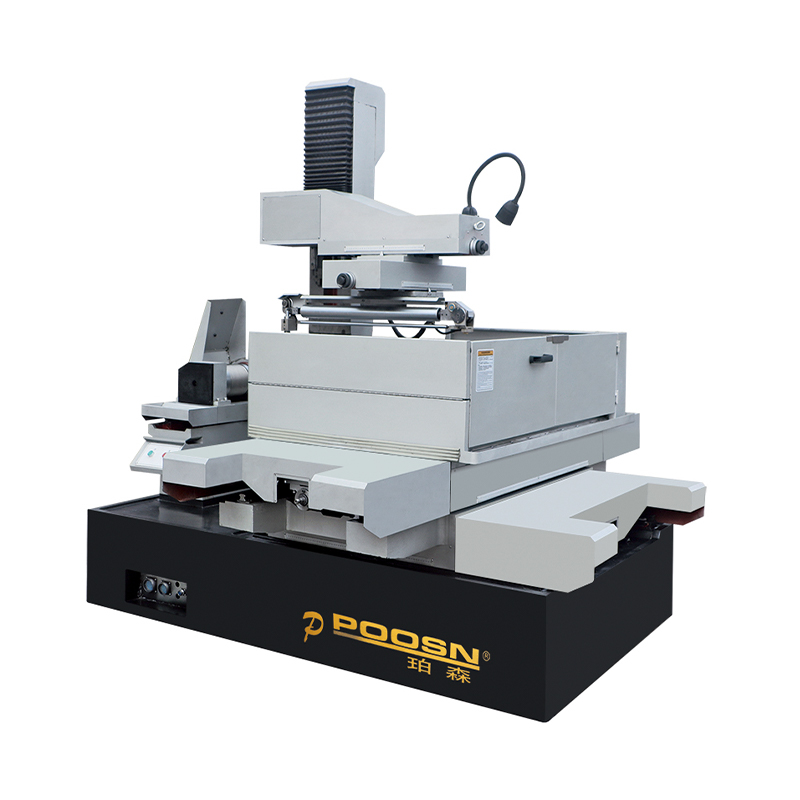
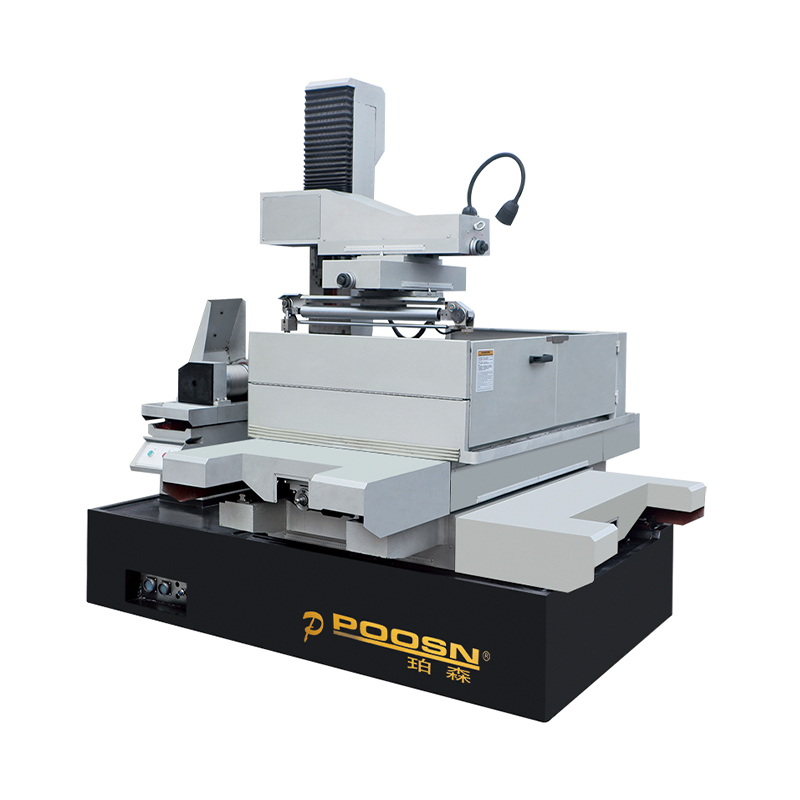
DK45BC CNC Medium-Speed Wire EDM Machine (400kg Load)
Content
- 1 1. Product Positioning and Main Application Value
- 2 2. Structural Design for Stability and Heavy Workpieces
- 3 3. Wire Feed and Cutting Process
- 4 4. CNC Control and Intelligent Process Management
- 5 5. Accuracy, Surface Quality, and Finishing Performance
- 6 6. Water Management, Flushing, and Environmental Design
- 7 7. Manufacturing Strengths and Quality Assurance
- 8 8. Applications Across Industrial Sectors
- 9 9. Comparison with Other WEDM Categories
- 10 10. Selecting the Correct Model in the DK-BC Family
- 11 11. Customization and Optional Configurations
- 12 12. Operating Costs, Maintenance, and Service Support
- 13 13. Installation and Workshop Requirements
- 14 14. Recommended Production Workflow
- 15 15. Frequently Asked Questions
- 15.1 Q1. What type of production is the DK45BC best suited for?
- 15.2 Q2. What is the maximum workpiece load?
- 15.3 Q3. What are the DK45BC worktable travel and size?
- 15.4 Q4. Can the DK45BC cut very thick material?
- 15.5 Q5. Can the machine cut hardened steel and carbide?
- 15.6 Q6. What is the maximum taper capability?
- 15.7 Q7. How does the DK45BC compare with a conventional high-speed WEDM machine?
- 15.8 Q8. How does it compare with a premium low-speed WEDM machine?
- 15.9 Q9. Is a temperature-controlled room required?
- 15.10 Q10. What control system is supplied?
- 15.11 Q11. Can the machine import CAD drawings?
- 15.12 Q12. What options are available?
- 15.13 Q13. What warranty and technical support are provided?
- 15.14 Q14. How is the machine shipped?
- 15.15 Q15. What information should a customer provide when requesting a quotation?
- 16 16. Overall Evaluation
- 17 References
- 18 Product: DK45BC CNC Medium-Speed Wire EDM Machine (400kg Load)
1. Product Positioning and Main Application Value
The DK45BC is classified as a high-medium-speed wire-cut EDM machine. This category is intended to bridge the gap between traditional high-speed WEDM equipment and low-speed precision wire EDM systems. Traditional high-speed machines are often valued for their comparatively simple operation, low initial cost, and suitability for rough cutting. However, they may provide limited surface quality, less flexible finishing capability, and reduced control when a workpiece requires multiple cutting passes.
Low-speed wire EDM machines can deliver excellent surface quality and high precision, but their acquisition cost, maintenance requirements, and operating costs may be considerably higher. The DK45BC offers an alternative by combining a reusable wire-feed arrangement with variable-speed control and multi-pass machining. The first pass can emphasize material removal, while later passes can be configured for improved accuracy and surface finish.
This positioning creates several practical benefits for manufacturers:
First, the DK45BC can process relatively large and heavy workpieces while maintaining a stable working platform. The maximum worktable load is 400 kg, making it suitable for molds, dies, plates, tooling inserts, and mechanical components that exceed the capacity of smaller machines.
Second, the machine provides a generous 450 mm by 600 mm X/Y travel range. The corresponding worktable size is approximately 650 mm by 926 mm, while the processing slot size is approximately 650 mm by 970 mm. These dimensions provide useful clearance for workholding, flushing, and the positioning of medium-sized components.
Third, the machine can cut workpieces up to 450 mm thick. This capability is important for thick mold bases, heavy tooling, hardened steel blocks, and other components where conventional milling or sawing may be difficult, inefficient, or unable to produce the required profile.
Fourth, the DK45BC can achieve a maximum cutting efficiency in the range of 10,000 to 16,000 mm²/h, depending on the control cabinet configuration, workpiece material, thickness, cutting geometry, and selected process parameters. This gives production departments flexibility when balancing roughing speed, wire consumption, accuracy, and surface finish.
Finally, the machine supports taper cutting through U/V-axis movement. Its standard taper device provides a U/V travel of 60 mm by 60 mm and a maximum taper specification of approximately ±6° over 80 mm, subject to actual workpiece conditions and process setup. Optional large-taper configurations can be discussed for applications that require substantially greater angular movement.
2. Structural Design for Stability and Heavy Workpieces
Precision in WEDM depends not only on the CNC controller and electrical power supply but also on the mechanical stability of the complete machine. The cutting wire follows a programmed path under controlled tension while the worktable moves through a liquid-filled cutting zone. Any unwanted vibration, deformation, thermal drift, or guide movement can affect dimensional accuracy and surface quality.
The DK45BC is designed around a rigid machine structure intended to support heavy workpieces and repeated reciprocating wire motion. The high-strength cast iron base provides a stable foundation for the worktable, wire frame, guide components, and drive system. The company applies aging treatment during manufacturing to reduce internal stress in the casting. Stress reduction is important because residual stress can gradually influence geometric stability during long-term operation.
A rigid base also helps reduce the effect of external vibration. In a production environment, neighboring machine tools, crane movement, floor vibration, and pump operation can all introduce disturbances. The heavier and more stable the machine structure, the less likely these disturbances are to be transferred directly into the cutting trajectory.
The worktable is designed to support loads of up to 400 kg. This capacity allows users to mount substantial components without relying on improvised support arrangements. Proper support is particularly important when cutting thick parts, because the workpiece must remain stable throughout the process. A stable workpiece reduces the risk of profile deviation, vibration marks, wire deflection, and inconsistent flushing conditions.
High-precision linear guide rails are used as a standard configuration. Compared with conventional sliding guide systems, linear guides can provide lower friction, smoother movement, and more consistent positioning behavior. They also contribute to long-term repeatability when properly lubricated and protected from conductive debris and contaminated working fluid.
An optional linear scale feedback system can further improve position monitoring. Linear scales measure actual table movement rather than relying only on motor rotation and screw movement. This option can be valuable for customers working with tight tolerances, temperature variation, extended cutting cycles, or demanding mold applications.
Mechanical Benefits Compared with Basic High-Speed Machines
Many basic high-speed WEDM machines use simpler sliding guide arrangements and less sophisticated feedback systems. Such machines can be effective for general rough cutting, but their motion behavior may be less suitable for precision finishing. The DK45BC is designed to provide greater mechanical consistency through linear guide support, optional scale feedback, rigid casting, and multi-pass capability.
The difference is particularly noticeable when the workpiece contains long straight edges, narrow slots, small radii, deep profiles, or complex internal contours. In these situations, small fluctuations in wire movement or worktable positioning can accumulate into visible profile errors. A more rigid mechanical system helps the controller maintain the programmed trajectory.
The DK45BC also provides an electric Z-axis lifting system. This enables adjustment of the guide frame and working height for different workpiece thicknesses and setup requirements. Correct upper and lower guide positioning is essential for maintaining wire alignment and flushing performance.
3. Wire Feed and Cutting Process
The wire-feed system is one of the most important differences between a high-medium-speed WEDM machine and a conventional single-pass high-speed machine. The DK45BC uses an electrode wire diameter of approximately 0.18 mm with a wire-guiding device. The wire-feed speed can be adjusted from approximately 1 to 11 m/s through frequency control, allowing the process to be adapted to material type, thickness, cutting stage, and required surface condition.
The system provides a maximum wire storage length of approximately 350 m and a maximum travel size of the wire drum of approximately 180 mm. These specifications support continuous operation while allowing the operator to manage wire circulation and cutting conditions effectively.
During rough cutting, a higher wire-feed speed and more aggressive electrical parameters may be selected to maximize material removal. During finishing passes, the machine can use lower and more controlled wire movement, reduced discharge energy, and adjusted flushing conditions to improve surface quality and dimensional control.
Multi-pass cutting is particularly valuable for mold and die manufacturers. A typical process may include a roughing pass, one or more semi-finishing passes, and a final finishing pass. The roughing pass removes most of the material efficiently. Later passes correct the profile, reduce the effects of wire lag, and improve the surface texture.
This approach offers an important advantage over machines designed mainly for single-pass cutting. Rather than requiring a separate finishing process or accepting a rougher surface, users can complete more of the profile work on the same machine. The exact number of passes depends on material, thickness, geometry, tolerance, and surface finish requirements.
The machine's optimized wire-feed arrangement also helps maintain steady cutting performance. Stable wire movement reduces unwanted vibration and supports a more consistent discharge gap. A stable gap is essential because WEDM removes material through controlled electrical discharges between the wire and the conductive workpiece. If the gap becomes unstable, the machine may experience wire breakage, short circuits, uneven removal, or poor surface quality.
Control of Thick-Workpiece Cutting
Thick workpieces create special challenges. The wire must travel through a long cutting channel, and the flushing system must remove eroded particles from the gap. Wire deflection and lag can also become more significant as thickness increases. The DK45BC addresses these requirements through controlled wire motion, upper and lower water flow, electrical parameter adjustment, and multi-pass compensation strategies.
For workpieces near the maximum thickness limit, the operator should select suitable flushing pressure, discharge energy, feed rate, wire tension, and cutting speed. The actual achievable speed will depend on the material's electrical conductivity, melting behavior, thickness, profile complexity, and required finish. Maximum published efficiency should therefore be understood as an operating range rather than a guaranteed result for every application.
The machine is intended to process electrically conductive materials. Common applications include tool steels, stainless steels, hardened steels, cemented carbide, copper alloys, aluminum alloys, titanium alloys, and selected high-temperature alloys. Material hardness does not prevent EDM cutting, because the process does not depend on conventional mechanical hardness. However, conductivity, thermal properties, thickness, and required finish influence the cutting parameters.
4. CNC Control and Intelligent Process Management
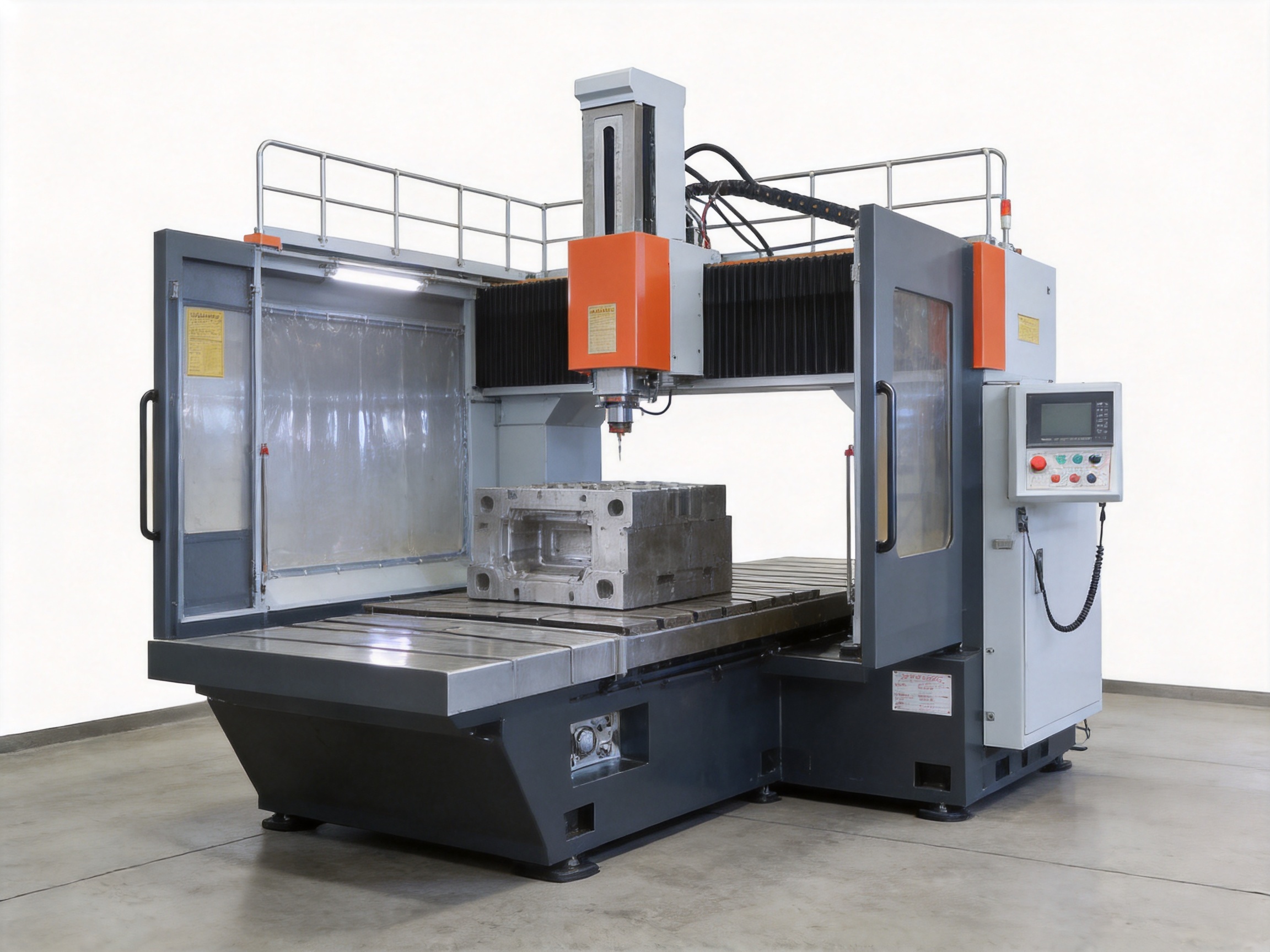
The DK45BC uses the X8/AUTOCUT programming and control system, with the ZHZK-03 control cabinet specified as standard and the ZHZ-09G available as an option. The control system coordinates the X, Y, U, and V axes, manages wire-feed behavior, controls discharge parameters, and supports the programming of straight, curved, tapered, and multi-pass profiles.
Four-axis linkage allows the machine to coordinate table movement with U/V taper movement. This is required when the upper and lower contours are different or when a tapered profile must be generated through the thickness of the workpiece. The system can be configured for a wide range of profile geometries, including dies, punches, inserts, slots, gears, precision plates, and complex mechanical contours.
A graphical programming interface can reduce the need for manual numerical-code entry. Depending on the selected software configuration, operators can import CAD geometry, define cutting contours, establish lead-in and lead-out conditions, set offsets, and assign cutting passes. This reduces programming time and helps minimize the risk of manual coordinate errors.
Auto edge-finding and centering functions can also simplify setup. These functions help operators locate the workpiece, establish a reference position, and align the programmed geometry with the actual component. Faster setup is valuable in job shops and medium-batch production, where many different part numbers may be processed during a working week.
Real-time discharge monitoring is another important control function. The controller can monitor the electrical condition of the discharge gap and adjust feed behavior when cutting conditions change. If the gap becomes unstable because of debris, geometry, insufficient flushing, or an unsuitable feed rate, adaptive control can reduce the risk of wire breakage and surface damage.
Multi-pass profiles can be stored as standardized process routines. This helps a production department establish repeatable methods for common materials and thicknesses. Experienced process engineers can build parameter libraries for tool steels, stainless steels, carbide, aluminum, copper alloys, and other conductive materials. Once validated, these routines can reduce trial-cutting time for future jobs.
Control Cabinet Options
The standard ZHZK-03 control cabinet is suitable for general DK45BC operation. The optional ZHZ-09G cabinet can be selected when a customer requires additional control functions, process flexibility, or integration features. The specific choice should be based on the required cutting efficiency, programming workflow, communications needs, and application complexity.
The maximum processing current is specified at 6 A, while the electrical capacity is approximately 2.5 KVA. The standard power supply is 3N 380 V with a tolerance of approximately ±10 percent. Before installation, the customer should verify local electrical requirements, grounding conditions, phase balance, and protection devices.
USB and LAN connectivity can support the transfer of programs between the CNC system and engineering or CAM workstations. This is useful for production environments where multiple machines share a centralized library of approved cutting programs.
5. Accuracy, Surface Quality, and Finishing Performance
Accuracy in wire EDM is influenced by machine geometry, guide alignment, ball screw condition, linear guide performance, wire tension, thermal stability, workpiece stress, flushing, electrical parameters, and programming compensation. The DK45BC is manufactured to meet the GB/T 7926-2015 standard for wire-cut EDM machine performance and accuracy.
Published technical information for the DK-BC series indicates linear positioning accuracy of approximately 0.002 mm under specified test conditions. Actual production accuracy depends on the workpiece, environmental conditions, machine setup, maintenance condition, cutting strategy, and measurement method. For the most demanding applications, an optional glass-scale feedback system can be considered.
The standard machine can achieve a best surface roughness of approximately Ra ≤ 2.5 μm under suitable cutting conditions. Additional finishing passes and optimized electrical parameters may produce finer surface results. Some application data for the DK-BC series indicates surface quality approaching Ra 0.8 to 1.2 μm under suitable multi-pass conditions. Users should confirm the required result through a sample cutting test when surface finish is critical.
The main process advantage of multi-pass cutting is that different passes can serve different purposes. The roughing pass focuses on removal rate. The semi-finishing pass corrects the profile and reduces the remaining cutting allowance. The finishing pass reduces discharge energy and improves surface texture. A final skim pass may be used when the application requires enhanced dimensional consistency or a more uniform surface.
Compared with a basic single-pass high-speed wire machine, the DK45BC provides greater flexibility for precision mold work and finished components. Compared with a low-speed wire machine, it can offer a more economical operating model through reusable wire-feed operation, lower consumable costs, and a simpler production setup.
Factors Affecting Final Accuracy
Operators should recognize that published accuracy values are not independent of operating conditions. A long workpiece may experience thermal expansion during an extended cut. A thick workpiece may cause wire lag. Improper flushing can result in unstable discharge. Workpiece residual stress may cause profile movement after material is removed. Incorrect wire alignment can produce taper or dimensional error.
For this reason, high-precision production should include proper leveling, guide alignment, wire condition checks, dielectric maintenance, temperature management, and verification cutting. The optional linear scale system may be especially useful when production tolerances are tight or when the machine operates in a workshop with variable ambient temperature.
6. Water Management, Flushing, and Environmental Design
Efficient flushing is essential for WEDM. During cutting, the electrical discharge removes small particles from the workpiece. These particles must be carried away from the cutting gap. If debris accumulates, it can cause secondary discharges, unstable current, wire breakage, poor surface quality, and slower cutting.
The DK45BC can be equipped with a high-pressure water tank as an option. A high-pressure flushing system helps direct working fluid toward the upper and lower portions of the cutting zone. This is particularly useful for thick workpieces, deep slots, narrow cavities, and profiles where debris removal is difficult.
The machine is also designed with an eco-friendly waterproof cover. The cover helps contain the working fluid, protect surrounding components, and maintain a cleaner production environment. Proper sealing and water management also reduce the risk of contamination reaching the guide rails, screws, electrical elements, and floor area around the machine.
Water quality and filtration should be treated as part of the process rather than as a secondary maintenance issue. The working fluid should be filtered and monitored regularly. Conductivity, contamination level, tank cleanliness, pump condition, and filter status can all influence cutting stability. If the machine is operated continuously, a scheduled cleaning and filtration program will help maintain predictable performance.
The company emphasizes the use of cooling and filtration circulation systems to extend working-fluid service life and maintain stable discharge conditions. For overseas installations, the actual water-treatment configuration may be adapted to local water quality, ambient temperature, production volume, and customer process requirements.
7. Manufacturing Strengths and Quality Assurance
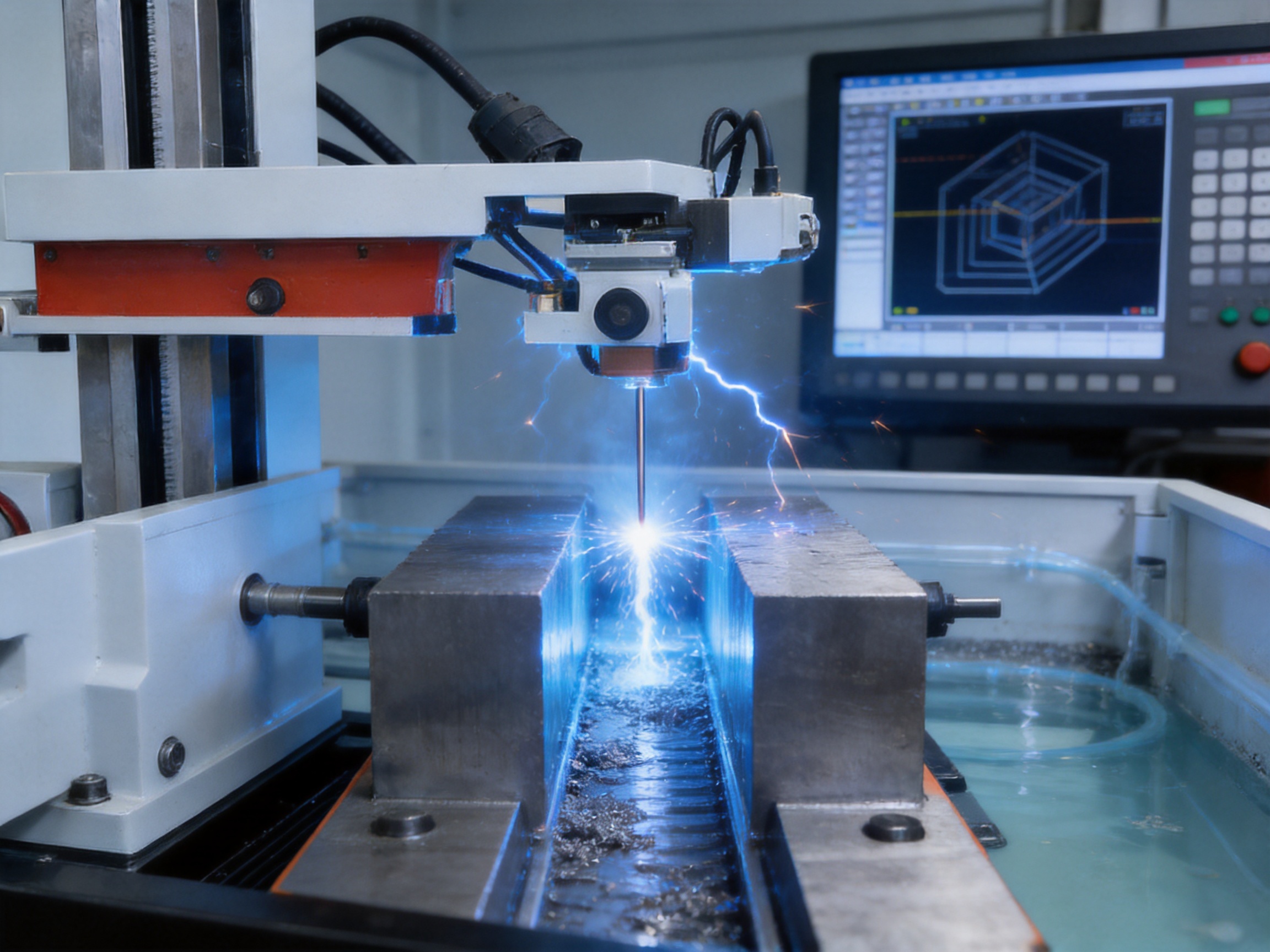
The performance of a WEDM machine depends heavily on how consistently it is manufactured. A machine may have an attractive specification sheet, but long-term value depends on casting quality, machining accuracy, assembly control, electrical testing, geometric inspection, software integration, and service support.
Taizhou Xinchengyang Machinery Manufacturing Co., Ltd. has developed its business around wire-cut EDM technology and related special processing equipment. The company maintains processing equipment, testing methods, and product development capabilities intended to support the production of complete machine tools rather than relying solely on external assembly.
The company states that its products are manufactured according to national standards and that each machine undergoes positioning accuracy testing. This testing approach is important because it helps identify mechanical or control inconsistencies before shipment. Factory inspection can include geometric accuracy verification, axis movement checks, guide alignment, electrical testing, test cutting, and confirmation of basic operating functions.
Castings and Stress Control
Machine tool castings must remain stable over time. Extended aging treatment helps reduce internal stress generated during casting and cooling. If residual stress is not adequately controlled, the casting may gradually deform, affecting guide alignment and worktable geometry. A stable cast structure provides a stronger foundation for precision assembly.
After casting and aging, critical surfaces require accurate machining. Guide mounting surfaces, table reference surfaces, and structural interfaces must be produced to suitable geometric tolerances. Assembly technicians then align guide rails, screws, wire frames, and guide wheels so that the wire path remains consistent across the working envelope.
Electrical and Process Integration
The DK45BC is not simply a mechanical platform with an added controller. Mechanical movement, wire feeding, discharge power, flushing, taper control, and software compensation must work together. A change in wire speed may require a corresponding change in electrical parameters. A thick workpiece may require different flushing and feed conditions. A finishing pass may require a lower energy level and different compensation values.
Integrating these functions at the manufacturing stage allows the company to refine the relationship between machine hardware and control software. It also makes it easier to develop application parameters for different material groups and cutting conditions.
Factory Testing and Shipment Preparation
Before shipment, the machine can undergo stress testing, geometric precision verification, and test cutting. Test cutting is valuable because it checks the complete system under working conditions rather than evaluating individual components in isolation.
For international delivery, anti-vibration and moisture-resistant packaging are important. The DK45BC is shipped fully assembled and calibrated for standard delivery arrangements. After arrival, the customer generally needs to complete positioning, leveling, electrical connection, working-fluid preparation, and final installation checks. The actual commissioning requirements depend on the shipping method, local regulations, and site conditions.
The company's experience serving customers in Southeast Asia, West Asia, Europe, the Americas, and other regions supports the development of practical export procedures. Different countries may have different power standards, factory conditions, certification expectations, and operator training needs. Technical support should therefore be adapted to the destination market.
8. Applications Across Industrial Sectors
Mold and Die Manufacturing
Moldmaking is one of the principal applications for the DK45BC. The machine can cut cavities, punches, inserts, slides, precision plates, ejector components, and other conductive mold parts. Its 400 kg load capacity and 450 mm maximum cutting thickness make it suitable for medium-sized molds and thick steel components.
Complex profiles can be programmed from CAD data and processed through roughing and finishing passes. Taper cutting is useful for extrusion dies, punching dies, forming tools, and profiles that require different upper and lower dimensions. Multi-pass cutting can improve the edge condition and reduce the need for manual finishing.
Automotive Tooling and Components
Automotive manufacturing uses many hardened and conductive components, including stamping dies, trimming tools, forming inserts, precision plates, and specialized tooling. These parts often require repeatable profiles, controlled edge quality, and the ability to process hardened materials without softening or annealing them.
The DK45BC can support prototype production, replacement tooling, maintenance work, and medium-batch manufacture. The machine's worktable size is suitable for many automotive tooling components while remaining more compact than a heavy extra-large WEDM system.
Aerospace and High-Performance Engineering
Aerospace components often require complex contours, difficult-to-machine materials, and high dimensional control. Electrically conductive titanium alloys, nickel-based alloys, stainless steels, and hardened materials can be processed by EDM when conventional cutting methods are inefficient or cause excessive tool wear.
For aerospace-related work, process validation, measurement, documentation, and material-specific parameters are particularly important. The DK45BC can provide a useful platform for production support, tooling, fixtures, and selected component profiles, subject to the customer's qualification procedures.
Toolmaking and General Precision Engineering
Toolmakers can use the DK45BC for cutting punches, dies, electrodes, guide components, templates, keyways, narrow slots, and precision mechanical profiles. Because EDM cutting is not limited by conventional cutter hardness, it can process hardened steel and carbide components after heat treatment.
General engineering companies may also use the machine for repair work, obsolete-part reproduction, prototype development, and small- to medium-batch production. The programmable nature of the system allows the same machine to handle a wide range of geometries without dedicated mechanical tooling.
9. Comparison with Other WEDM Categories
The DK45BC should be compared with competing equipment according to application requirements rather than purchase price alone. Different WEDM categories serve different production strategies.
| Feature | DK45BC High-Medium-Speed WEDM | Basic High-Speed WEDM | Low-Speed Precision WEDM |
| Primary strength | Balanced capacity, efficiency, and finishing | Economical rough cutting | High-end precision and surface quality |
| Wire operation | Adjustable feed with multi-pass capability | Generally optimized for simpler cutting cycles | Fine wire management with single-use wire |
| Guide system | Linear guides as standard | Often sliding guides or simpler arrangements | Precision guide and advanced feedback systems |
| Maximum DK45BC load reference | 400 kg | Depends on model | Depends on model |
| Maximum DK45BC thickness reference | 450 mm | Depends on model | Depends on model |
| Finishing method | Rough, semi-finish, and finish passes | Primarily rough or general-purpose cutting | Highly refined finishing cycles |
| Operating cost profile | Moderate and suitable for repeated production | Generally economical | Typically higher due to wire and system costs |
| Best application | Medium molds, tooling, thick parts, precision production | Blanking, rough profiles, cost-sensitive work | Ultra-precision and premium surface requirements |
Compared with a basic high-speed WEDM machine, the DK45BC offers more advanced finishing potential, linear guide support, four-axis taper control, and a more flexible wire-feed process. It is therefore better suited to users who need both productivity and an improved final surface.
Compared with premium imported low-speed WEDM brands, the DK45BC can provide a more accessible investment model and lower consumable costs while still supporting multi-pass precision machining. It may be particularly attractive to manufacturers that need a reliable production machine but do not require the highest possible level of automation or ultra-fine tolerance control on every job.
10. Selecting the Correct Model in the DK-BC Family
The DK45BC is part of a model range that includes the DK35BC, DK50BC, and DK60BC. The correct selection should be based on workpiece dimensions, weight, thickness, production volume, and future capacity requirements.
| Model | X/Y Travel | Maximum Thickness | Maximum Load | Typical Application |
| DK35BC | 350 × 450 mm | 450 mm | 300 kg | Small-to-medium precision parts and molds |
| DK45BC | 450 × 600 mm | 450 mm | 400 kg | Medium molds, automotive tooling, heavy components |
| DK50BC | 500 × 700 mm | 650 mm | 600 kg | Large molds and thicker workpieces |
| DK60BC | 600 × 800 mm | 800 mm | 800 kg | Extra-large molds and heavy industrial parts |
The DK35BC may be sufficient when the majority of parts are compact and the workload is below 300 kg. The DK45BC is a strong choice when the customer needs additional table space and a 400 kg load rating without moving to a much larger machine footprint. The DK50BC or DK60BC is more appropriate for parts that frequently exceed 400 mm in thickness or require substantially greater load capacity.
Customers should allow additional room around the machine for maintenance, workpiece loading, water system access, electrical connections, and operator movement. The DK45BC host dimensions are approximately 1915 mm by 1655 mm by 1830 mm, and the total installation area will be larger after allowing for auxiliary equipment and service clearance.
11. Customization and Optional Configurations
Different manufacturing environments may require different combinations of travel, feedback, control, taper, and automation functions. The DK45BC can be configured with several optional features.
A high-pressure water tank can improve flushing for thick workpieces and difficult geometries. A linear scale system can provide direct position feedback and support tighter accuracy requirements. AC servo drives for the X/Y axes can be selected when the customer requires enhanced dynamic response, smoother acceleration, or closed-loop drive behavior.
The ZHZ-09G control cabinet is available as an alternative control configuration. Additional control options may be discussed for customers who require specialized programming, communications, process monitoring, or automation functions.
For large-taper applications, the machine can be evaluated for a reinforced wire-frame or DKD-style configuration. Standard taper capacity should not be confused with optional extreme-angle capacity. Applications requiring angles up to approximately ±30° require engineering review because wire-frame rigidity, guide clearance, flushing, and software compensation all become more demanding.
Automatic wire threading can reduce operator intervention in multi-cavity production or in jobs where wire breakage recovery is frequent. A rotary table or C-axis configuration may be considered for selected cylindrical, spiral, or specialized four-axis applications, subject to feasibility review.
Certification packages such as CE or UL-related documentation may also be discussed for specific export markets. Certification requirements vary by destination and by the final machine configuration, so customers should state their regulatory requirements before ordering.
12. Operating Costs, Maintenance, and Service Support
The total cost of ownership includes the machine price, installation, energy, wire, guide components, filters, working fluid, labor, maintenance, and downtime. One of the DK45BC's practical advantages is the potential for controlled running costs compared with premium imported low-speed WEDM systems.
Typical consumables include approximately 0.18 mm molybdenum wire, guide wheels, upper and lower guide nozzles, water-based dielectric fluid, filters, and ion-exchange resin where applicable. Actual lifespan depends on cutting hours, workpiece material, wire tension, fluid quality, electrical settings, and maintenance practice.
Guide wheels and wire guides should be inspected regularly for wear, grooves, contamination, or damage. Worn guide components can affect wire alignment and cause taper, dimensional error, vibration, or wire breakage. Working fluid should be maintained at a suitable cleanliness and conductivity level, while pumps and filters should be checked according to the operating schedule.
The company provides technical support for equipment commissioning, operation, process parameters, troubleshooting, spare parts, and maintenance. A 12-month warranty from the date of shipment is stated for the DK-BC series, subject to the applicable sales agreement and warranty conditions. Critical spare parts can be arranged through express delivery, and remote technical support can be provided through video communication platforms.
Training is an important part of successful installation. Operators should be trained in CAD or program import, workpiece alignment, wire threading, guide adjustment, flushing setup, parameter selection, offset management, taper programming, daily cleaning, and emergency procedures. Basic CNC experience can shorten the learning curve, but operator training remains essential for safe and consistent results.
13. Installation and Workshop Requirements
The DK45BC is designed for general industrial workshop environments. A temperature range of approximately 5°C to 40°C is indicated for normal operation, provided that the machine is protected from direct sunlight, excessive humidity, severe dust, corrosive chemicals, and unstable electrical conditions.
For the highest precision work, a temperature-controlled room is recommended. Temperature control is particularly valuable when tolerances are very tight, cutting cycles are long, or workpieces have large thermal mass. The machine should be placed on a suitable foundation capable of supporting its approximately 1,400 kg machine weight together with the workpiece and auxiliary equipment.
Installation should include careful leveling and alignment. The electrical supply must meet the specified three-phase 380 V requirement or an approved local equivalent. Proper grounding, overcurrent protection, phase sequencing, and emergency-stop verification should be completed before production operation.
Water and drainage arrangements should be planned in advance. The customer should ensure that the working area has enough space for filling, cleaning, filter replacement, pump maintenance, and removal of cutting debris. Good housekeeping helps prevent contamination from entering the guide system and reduces slip hazards around the machine.
14. Recommended Production Workflow
A disciplined production workflow can help users obtain the full benefit of the DK45BC.
The first stage is workpiece review. The operator should confirm that the material is electrically conductive, identify the workpiece dimensions and weight, and check that the profile fits within the X/Y travel, thickness, and taper limits.
The second stage is fixture planning. The workpiece should be supported securely while leaving sufficient clearance for the wire, upper and lower guides, and flushing flow. Heavy components should be loaded using suitable lifting equipment and should never be placed on the table beyond its rated capacity.
The third stage is alignment and reference setting. Edge-finding or centering functions can help establish the work coordinate system. The operator should verify the programmed origin, contour direction, lead-in position, and offset values before starting the cut.
The fourth stage is parameter selection. The material, thickness, roughing allowance, required finish, and cutting geometry should be used to select wire speed, discharge energy, feed rate, flushing level, and pass strategy. Existing validated parameter libraries can reduce setup time.
The fifth stage is rough cutting. The roughing pass should remove material efficiently while preserving a suitable allowance for later passes. Operators should monitor current, gap stability, wire behavior, water flow, and cutting progress.
The sixth stage is finishing. Semi-finishing and finishing passes should be selected according to the required tolerance and surface quality. Lower energy and optimized offsets can improve the final result. If the workpiece contains high residual stress, a staged cutting strategy may reduce deformation risk.
The final stage is inspection and maintenance. The finished component should be measured using suitable inspection equipment. The operator should then clean the work area, check the wire path, inspect guides and nozzles, and record any process observations for future jobs.
15. Frequently Asked Questions
Q1. What type of production is the DK45BC best suited for?
The DK45BC is best suited for medium-sized and relatively heavy conductive components that require a combination of cutting efficiency, dimensional control, and finishing capability. Typical work includes medium molds, automotive tooling, hardened mechanical parts, thick plates, punches, dies, and precision inserts.
Q2. What is the maximum workpiece load?
The maximum worktable load is specified at 400 kg. The workpiece, fixture, support plates, and any additional mounted components must be considered together when calculating the actual load. Proper load distribution is also important for maintaining table stability.
Q3. What are the DK45BC worktable travel and size?
The X/Y travel is approximately 450 mm by 600 mm. The worktable size is approximately 650 mm by 926 mm, and the processing slot size is approximately 650 mm by 970 mm. Actual usable space depends on the workholding method and required flushing clearance.
Q4. Can the DK45BC cut very thick material?
Yes. The maximum cutting thickness is specified at 450 mm. Cutting speed and finish will vary according to material, geometry, flushing, and process parameters. For workpieces regularly exceeding 400 mm, the larger DK50BC or DK60BC models may provide greater capacity and a more comfortable operating margin.
Q5. Can the machine cut hardened steel and carbide?
Yes. WEDM can process electrically conductive materials regardless of conventional hardness. Tool steels, stainless steels, cemented carbide, copper alloys, aluminum alloys, titanium alloys, and selected high-temperature alloys can be considered. Electrical conductivity, thermal properties, thickness, and required finish determine the suitable cutting parameters.
Q6. What is the maximum taper capability?
The standard taper device provides U/V travel of approximately 60 mm by 60 mm and a maximum cutting taper of approximately ±6° over 80 mm. Larger angles may be available through an optional large-taper configuration. Customers should provide the workpiece thickness, required angle, upper and lower contour information, and production volume for engineering confirmation.
Q7. How does the DK45BC compare with a conventional high-speed WEDM machine?
The DK45BC provides adjustable wire-feed control, linear guide support, four-axis taper movement, and multi-pass cutting. These functions make it better suited to precision finishing and complex tooling than a basic machine designed mainly for single-pass rough cutting.
The DK45BC is intended to offer a more economical balance between performance and investment. It can provide multi-pass precision cutting and good surface quality while using a reusable wire-feed system and a comparatively accessible machine configuration. A premium low-speed machine may still be preferable for extreme precision, advanced automation, or the most demanding surface-finish specifications.
Q9. Is a temperature-controlled room required?
A temperature-controlled room is not generally required for normal workshop operation within the recommended environmental range. However, temperature control is advisable for tolerances below approximately ±3 μm, very long cutting cycles, or applications involving significant thermal sensitivity. Optional linear scale feedback may also be considered for such work.
Q10. What control system is supplied?
The machine uses the X8/AUTOCUT programming and control system. The standard control cabinet is the ZHZK-03, while the ZHZ-09G is available as an option. The system supports X, Y, U, and V axis coordination, multi-pass programming, and process control functions.
Q11. Can the machine import CAD drawings?
The control configuration can support graphical programming and CAD-based geometry transfer, depending on the software package and file format. Customers should confirm required DXF, DWG, CAM, USB, LAN, and post-processing functions before ordering.
Q12. What options are available?
Options include a high-pressure water tank, linear scale feedback, AC servo drives for the X/Y axes, upgraded control cabinets, large-taper configurations, automatic wire threading, rotary table systems, and certification packages for selected markets. Custom travel and worktable dimensions may also be evaluated.
Q13. What warranty and technical support are provided?
The stated warranty for the DK-BC series is 12 months from shipment, subject to the sales contract. The company also provides remote technical assistance, commissioning guidance, operating support, spare-parts coordination, and process advice for customers in international markets.
Q14. How is the machine shipped?
The DK45BC is shipped fully assembled, calibrated, and test-cut at the factory under standard delivery arrangements. Sea freight and rail freight options may be available depending on destination. Transit time varies by port, route, customs procedure, and shipping method. Final installation normally includes leveling, power connection, working-fluid preparation, and commissioning checks.
Q15. What information should a customer provide when requesting a quotation?
The customer should provide the material type, workpiece length, width, thickness, weight, required tolerance, target surface finish, taper angle, expected production volume, local electrical standard, preferred control cabinet, desired options, destination country, and any certification requirements. A drawing or sample component is useful for process evaluation.
16. Overall Evaluation
The DK45BC CNC Medium-Speed Wire EDM Machine is designed for manufacturers that require more than basic high-speed rough cutting but want a practical and cost-conscious alternative to premium low-speed WEDM equipment. Its main strengths are the 400 kg worktable capacity, 450 mm maximum cutting thickness, 450 mm by 600 mm X/Y travel, linear guide support, four-axis linkage, adjustable wire-feed speed, multi-pass cutting capability, and flexible control cabinet options.
Its value is further supported by the manufacturing capabilities of Taizhou Xinchengyang Machinery Manufacturing Co., Ltd. The company's long-term specialization in wire-cut EDM, focus on castings and structural stability, positioning accuracy testing, factory test cutting, international packaging, process support, and model-family approach provide a foundation for long-term industrial use.
For moldmakers, automotive tooling suppliers, general precision manufacturers, and heavy-component processors, the DK45BC offers a balanced combination of capacity and precision. It can handle workpieces that are too large for compact machines while avoiding the cost and footprint of an extra-large system. Its multi-pass process improves the opportunity to achieve a refined surface without immediately moving the workpiece to a separate finishing machine.
Customers should select the machine according to actual workpiece dimensions, material, thickness, load, tolerance, and production strategy. Where the application requires extreme taper, very tight tolerances, automatic wire threading, advanced feedback, or unusual workholding, the appropriate options should be agreed during the technical review stage.
When correctly installed, maintained, and operated with suitable process parameters, the DK45BC can serve as a dependable production platform for precision wire erosion, mold processing, tooling manufacture, and complex conductive component cutting.
References
1. Taizhou Xinchengyang Machinery Manufacturing Co., Ltd., DK45BC CNC Medium-Speed Wire EDM Machine Technical Information.
2. Taizhou Xinchengyang Machinery Manufacturing Co., Ltd., DK-BC Series Worktable, Taper Device, Wire Feed, and Electrical System Specifications.
3. Taizhou Xinchengyang Machinery Manufacturing Co., Ltd., Product Information for PS-C, DK-BC, DK-77, and DKD Wire-Cut EDM Series.
4. GB/T 7926-2015, Test Conditions and Accuracy Requirements for Wire-Cut Electrical Discharge Machine Tools.
5. General principles of electrical discharge machining, wire electrode control, flushing, multi-pass cutting, and CNC motion compensation.
6. Manufacturer-provided information regarding machine assembly, positioning accuracy testing, factory calibration, international shipment preparation, and technical support.
Product: DK45BC CNC Medium-Speed Wire EDM Machine (400kg Load)

-
Phone
+86-0523-86268788 +86-13815960366 +86-13912191163Email
[email protected]Address
No. 366, Yusheng Road Jiulong Town, Hailing District Taizhou City, China
Copyright © Taizhou Xinchengyang Machinery Manufacturing Co., Ltd. All Rights Reserved.
Custom edm machine for sale
wholesale edm machine manufacturers
