

 English
 русский
 عربى


Shen Yiru — After-Sales Service Engineer
Home / Author / Shen Yiru — After-Sales Service Engineer / DK60BC CNC Medium-Speed Wire EDM Machine for Oversized, High-Precision Workpieces
DK60BC CNC Medium-Speed Wire EDM Machine for Oversized, High-Precision Workpieces
2026-09-14
Wire Electrical Discharge Machining, commonly known as WEDM, has become an essential technology for manufacturing hardened steels, carbide, titanium alloys, intricate molds, and other electrically conductive materials. As workpieces become larger, thicker, and more complex, manufacturers require more than basic wire-cutting capability. They need a machine with sufficient working area, strong load capacity, stable wire control, reliable flushing, accurate motion, efficient cutting, and an intelligent control system that can deliver repeatable results over long production cycles.
The DK60BC CNC Medium-Speed Wire EDM Machine is designed for precisely these demanding applications. As the largest model in the DK-BC high-medium-speed WEDM series, it combines a large work envelope with a maximum cutting thickness of 800 mm and a maximum worktable load of 800 kg. Its 600 × 800 mm X/Y travel, reinforced mechanical structure, four-axis linkage, multi-cut capability, and X8/AUTOCUT control system make it suitable for oversized molds, heavy mechanical components, aerospace parts, and other precision workpieces that exceed the practical capacity of smaller wire-cut EDM machines.
Manufactured by Taizhou Xinchengyang Machinery Manufacturing Co., Ltd., the DK60BC reflects the company’s long-term specialization in electrical discharge wire cutting. Since 1999, the company has focused on wire-cutting technology, equipment development, manufacturing, and process improvement. Its production philosophy combines traditional mechanical manufacturing experience with modern CNC control, precision transmission, adaptive discharge technology, and systematic quality inspection.
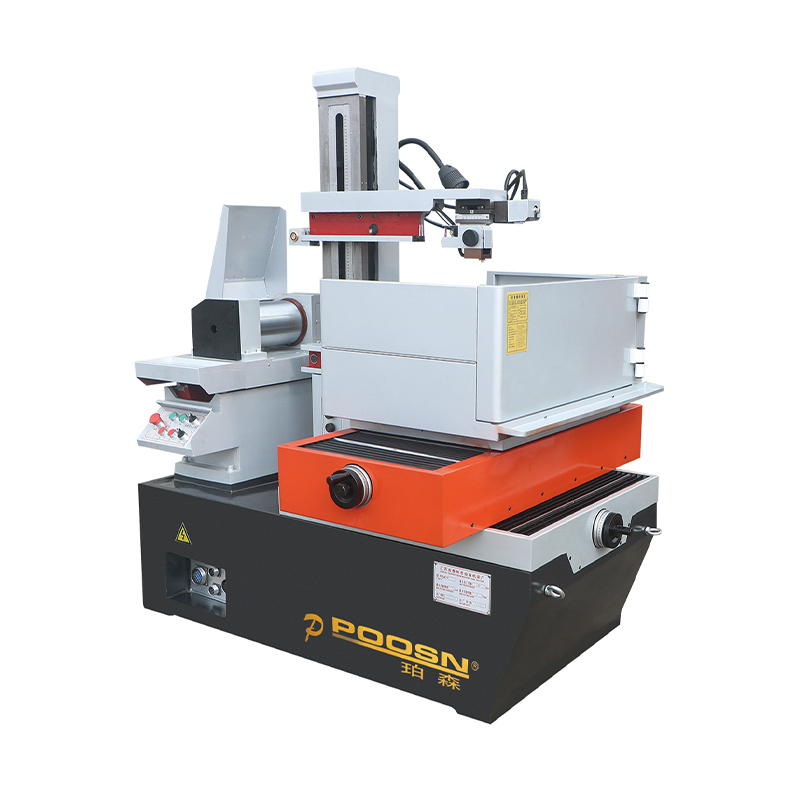
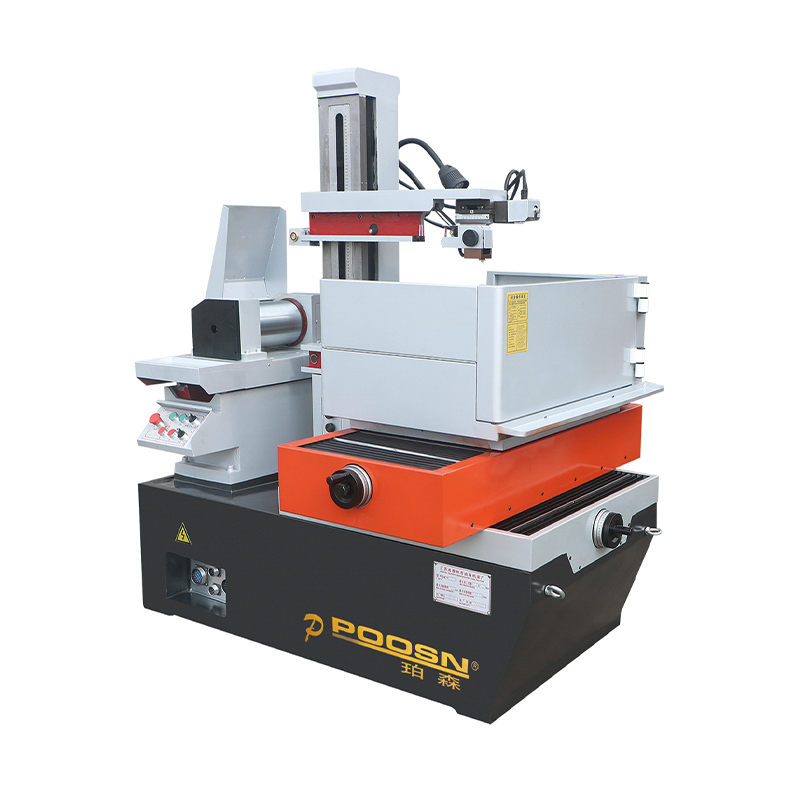
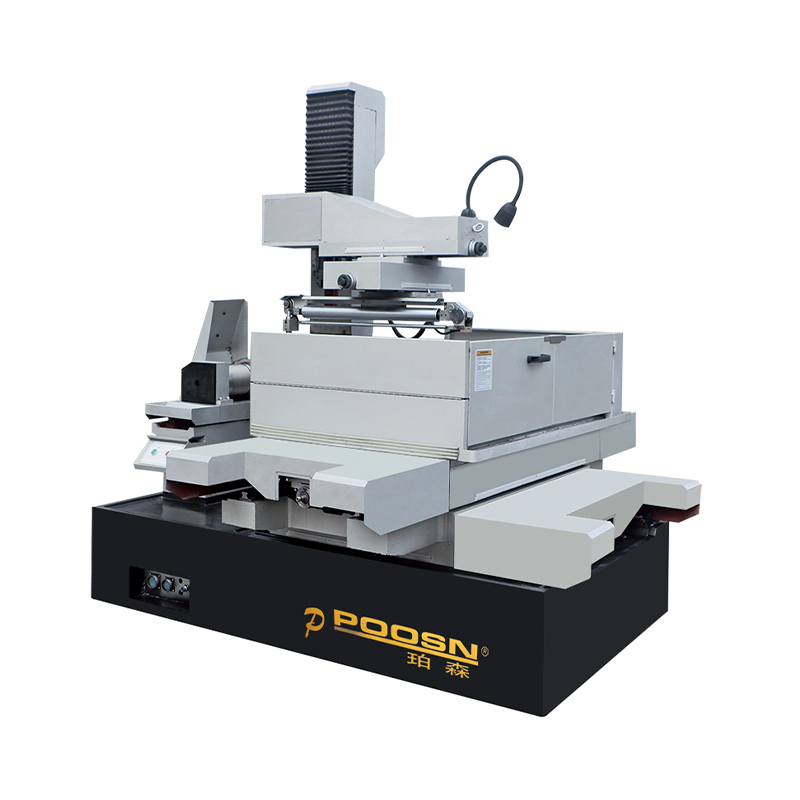
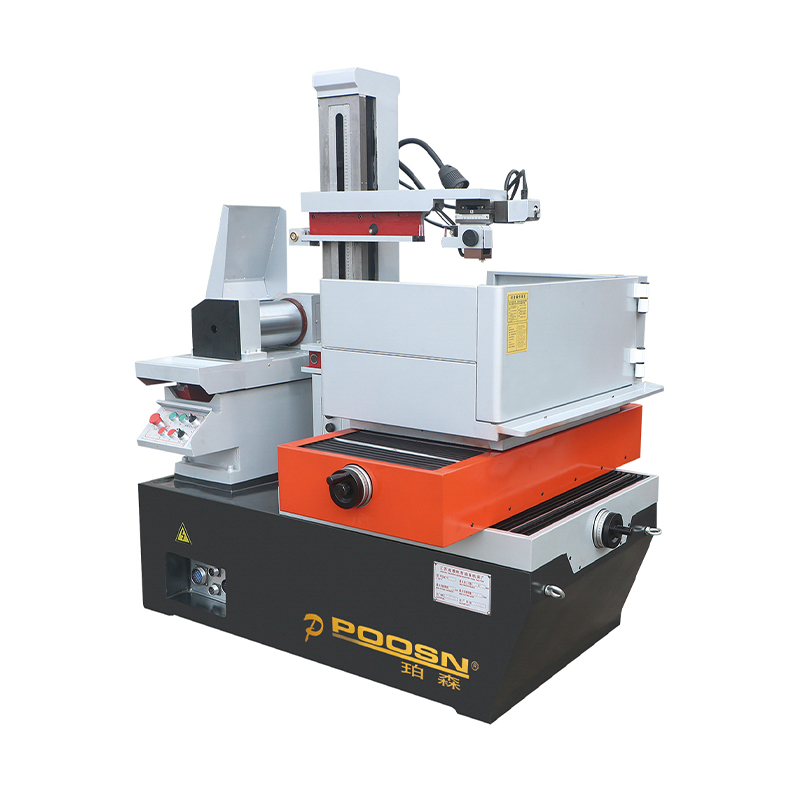
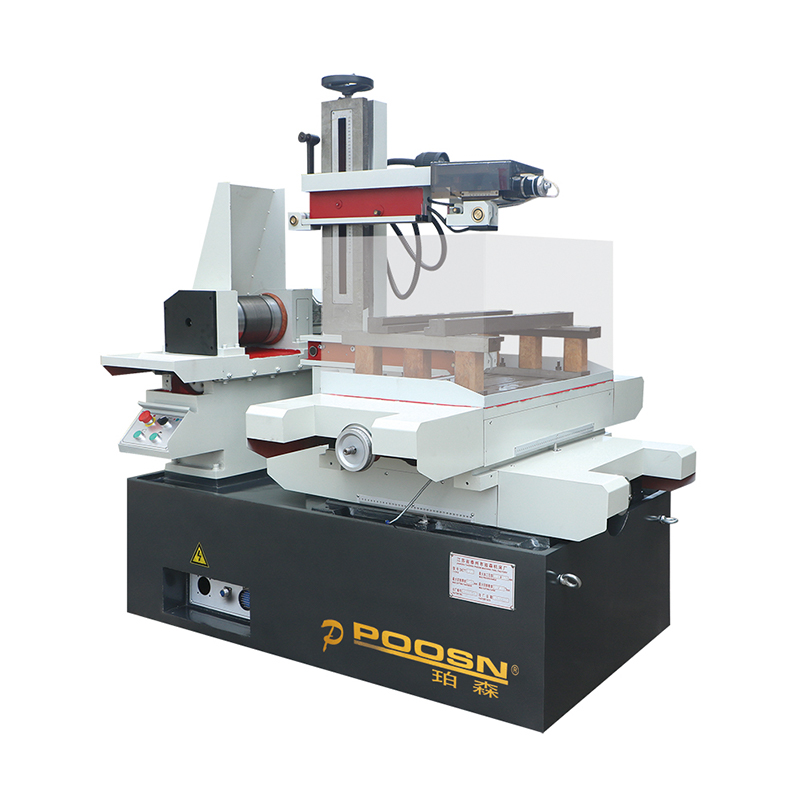
DK60BC CNC Medium-Speed Wire EDM Machine (800kg Load, 800mm Thickness)
Content
- 1 1. A Large-Format Medium-Speed WEDM Platform
- 2 2. Precision Cutting for Complex Industrial Components
- 3 3. Mechanical Structure and Long-Term Stability
- 4 4. Adaptive Pulse Power and Discharge Management
- 5 5. Wire Feeding, Tension, and Guide Technology
- 6 6. Intelligent CNC Control and Operator Convenience
- 7 7. Comparison with Other Wire-Cut EDM Categories
- 8 8. Model Selection within the DK-BC Series
- 9 9. Application Areas
- 10 10. Materials and Process Compatibility
- 11 11. Manufacturing Strengths of the Producer
- 12 12. Installation, Environment, and Maintenance
- 13 13. Automation and Custom Configuration Options
- 14 14. Service, Training, and Export Support
- 15 15. Purchasing and Delivery Considerations
- 16 16. Why the DK60BC Is a Competitive Choice
- 17 17. Frequently Asked Questions
- 17.1 Q1: What type of production is the DK60BC designed for?
- 17.2 Q2: What is the maximum workpiece thickness?
- 17.3 Q3: How much weight can the worktable support?
- 17.4 Q4: Can the DK60BC perform taper cutting?
- 17.5 Q5: What is the maximum cutting efficiency?
- 17.6 Q6: What surface finish can the machine achieve?
- 17.7 Q7: What materials can be cut?
- 17.8 Q8: What control system is supplied?
- 17.9 Q9: Is a climate-controlled workshop required?
- 17.10 Q10: How does the machine handle deep cutting?
- 17.11 Q11: What optional equipment is available?
- 17.12 Q12: What after-sales support is provided?
- 17.13 Q13: How should customers choose between the DK50BC and DK60BC?
- 17.14 Q14: Can the machine be used for mass production?
- 18 18. Conclusion
- 19 References
- 20 Product: DK60BC CNC Medium-Speed Wire EDM Machine (800kg Load, 800mm Thickness)
1. A Large-Format Medium-Speed WEDM Platform
The DK60BC is engineered for applications where ordinary medium-speed wire-cut machines are limited by workpiece size, weight, or thickness. Its worktable measures 840 × 1160 mm, while the X/Y axis travel reaches 600 × 800 mm. The processing slot size is approximately 860 × 1200 mm, providing a generous machining area for large molds, dies, plates, mechanical components, and complex profiles.
The machine supports a maximum cutting thickness of 800 mm. This capability is especially valuable for manufacturers processing thick steel blocks, large mold bases, heavy-duty tooling, and oversized components that cannot be accommodated by conventional machines. The maximum worktable load is 800 kg, reducing the need to divide heavy workpieces into multiple setups or transfer them between different machines.
A large work envelope does not automatically guarantee precision. Large machines must resist deformation, vibration, thermal drift, and transmission error. The DK60BC therefore uses a high-rigidity machine structure, reinforced support elements, precision linear guides, and carefully aligned motion components. These features help maintain stable cutting conditions when the machine is operating with a heavy workpiece and a deep cutting zone.
For production departments, the main benefit is fewer compromises during setup. Operators can load a larger workpiece, reserve more space for clamping, and complete more operations without repositioning. This can improve dimensional consistency and reduce the risks associated with repeated alignment.
Large Work Area and Heavy-Duty Capacity
The DK60BC’s principal size and load specifications include:
| Parameter | DK60BC Specification |
| Worktable size | 840 × 1160 mm |
| X/Y travel | 600 × 800 mm |
| Processing slot size | 860 × 1200 mm |
| Maximum cutting thickness | 800 mm |
| Maximum worktable load | 800 kg |
| U/V travel | 60 × 60 mm |
| Maximum standard taper | ±6° / 80 mm |
| Machine weight | Approximately 2500 kg |
| Overall machine dimensions | Approximately 2400 × 2065 × 2200 mm |
These specifications position the DK60BC at the top end of the DK-BC family. The DK35BC, DK45BC, and DK50BC remain useful for smaller and medium-sized workpieces, but the DK60BC provides the greatest combination of travel, thickness, and load capacity. It is the natural choice for facilities whose work frequently exceeds 400 mm in thickness or approaches the upper limit of medium-format WEDM tables.
2. Precision Cutting for Complex Industrial Components
WEDM removes electrically conductive material through controlled electrical discharges between a continuously moving electrode wire and the workpiece. Since the wire does not mechanically contact the workpiece, the process can cut hardened materials without imposing conventional tool pressure. This makes it suitable for intricate contours, narrow slots, sharp internal corners, punches, dies, and components that would be difficult or uneconomical to produce using milling or sawing.
The DK60BC extends these advantages to large and heavy workpieces. Its four-axis X, Y, U, and V linkage supports straight cutting as well as taper and variable-profile operations. The U/V system has a travel of 60 × 60 mm, and the standard taper capability is specified at up to ±6° per 80 mm. This enables the production of tapered punches, extrusion-related components, angled mold elements, and parts requiring different upper and lower profiles.
Machine performance is specified according to GB/T 7926-2015. The published specifications identify a linear accuracy of approximately 0.005 mm and a taper accuracy of approximately 0.01 mm for the DK60BC configuration. Other DK-BC technical materials describe optional feedback and upgraded control configurations capable of positioning performance around 0.002 mm under appropriate conditions. Actual results depend on the selected control cabinet, feedback arrangement, workpiece material, thickness, cutting strategy, temperature stability, wire condition, and machine calibration.
This distinction is important for responsible equipment selection. A machine’s nominal specification is only one part of the final result. Proper leveling, environmental control, wire alignment, flushing, workholding, process parameters, and periodic verification all contribute to the accuracy achieved on the shop floor. The DK60BC provides the mechanical and control foundation required for precision production, while correct process preparation allows users to obtain the best available performance.
Surface Quality and Multiple-Cut Processing
Medium-speed WEDM machines occupy an important position between traditional high-speed wire-cut systems and premium slow-wire EDM equipment. High-speed machines can be economical for blanking and general cutting, but a single-pass process may leave a rougher surface or require additional finishing. Slow-wire systems can provide outstanding surface quality, but they often involve higher equipment investment, wire consumption, and operating costs.
The DK60BC supports multiple-cut processing. A typical production sequence may include roughing, semi-finishing, and one or more finishing passes. The roughing pass removes material efficiently, while subsequent passes correct the contour and improve surface integrity. The published best surface roughness is Ra ≤ 2.5 μm for the standard specification. With suitable materials, parameters, flushing, and finishing strategies, the medium-speed architecture can provide a surface finish closer to the requirements normally associated with more advanced finishing processes.
Multiple-cut technology also reduces the burden on downstream polishing and fitting. For precision molds and dies, this may shorten manual finishing time and improve the consistency of mating surfaces. It can also preserve small details and reduce the risk of over-polishing sharp edges or fine geometry.
3. Mechanical Structure and Long-Term Stability
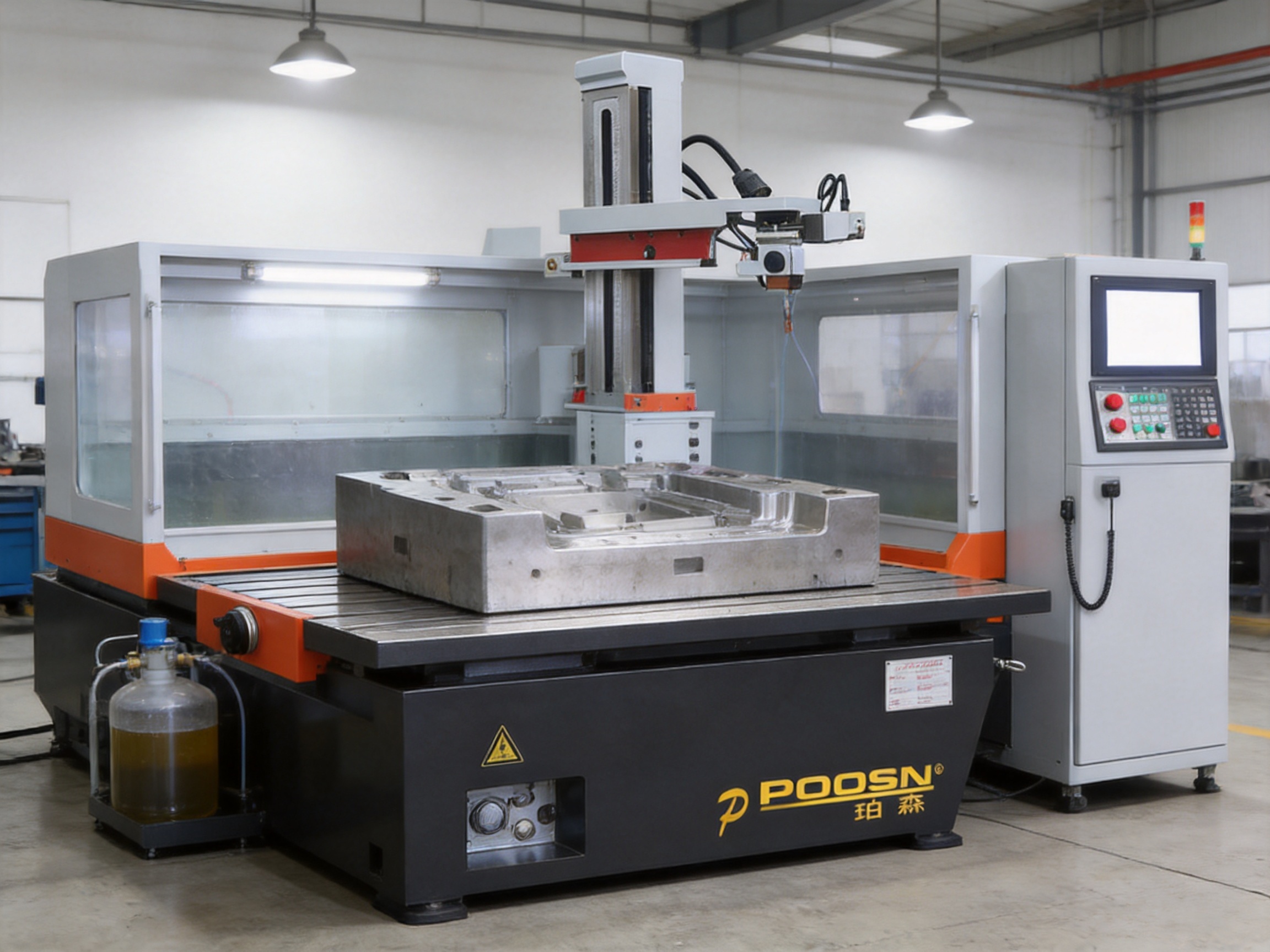
Large-format wire EDM machines must maintain geometric accuracy over a greater physical span than compact machines. The machine bed, column, table, guide rails, screw drives, wire frame, and tank structure all influence cutting performance. Any small deformation or vibration can become more noticeable when cutting a thick workpiece or when producing a large profile that must remain consistent over its full length.
The DK60BC uses a reinforced cast structure designed to provide high rigidity and vibration resistance. The company’s manufacturing approach includes long-duration aging treatment for castings. Aging helps reduce internal stress in the material and improves dimensional stability after machining. This is particularly important for a large machine that may carry substantial workpiece loads for extended periods.
The machine’s reinforced ribbing and high-strength resin-sand casting design help damp machining vibration and support long-term geometric accuracy. A stable foundation benefits not only straightness and squareness but also the repeatability of finishing passes. When the machine is used for large molds or thick components, structural stability becomes a direct contributor to the quality of the finished contour.
Precision Transmission and Linear Guidance
The DK60BC uses high-precision linear guide support for the main table movement. Compared with sliding guide systems, linear guides generally offer lower friction, smoother movement, and improved positioning response when properly installed and maintained. They are also well suited to CNC interpolation, where coordinated movement between the X and Y axes is necessary to generate accurate curves and profiles.
The transmission chain is optimized to reduce mechanical lag and backlash-related effects. Smooth movement is particularly important when the electrode wire changes direction, follows a small radius, or transitions between roughing and finishing paths. The machine must respond consistently to commanded motion while maintaining a stable wire position relative to the workpiece.
Optional linear scale feedback can be specified for applications requiring enhanced position verification. Closed-loop feedback can help compensate for certain positioning deviations, although the final result still depends on mechanical condition, temperature, calibration, and operating practices. For customers producing high-value molds or components with tight tolerances, this option can provide an additional level of process control.
4. Adaptive Pulse Power and Discharge Management
The discharge power supply is one of the most important systems in any EDM machine. Cutting efficiency, wire stability, surface quality, recast layer, heat-affected condition, and wire-break frequency are all influenced by the way electrical energy is delivered to the gap.
The DK60BC uses an adaptive pulse power approach designed to monitor discharge conditions in real time. The controller can adjust the energy of individual pulses according to the state of the machining gap. When the gap is stable and debris evacuation is effective, the system can maintain productive cutting. When the gap becomes unstable, the control logic can adjust feed behavior and discharge conditions to reduce the possibility of wire breakage or surface damage.
During rough cutting, higher-energy pulses can prioritize material removal and cutting efficiency. During finishing, lower-energy micro-pulses help reduce the thickness of the recast layer and improve surface condition. This division between roughing and finishing is essential for large precision components, where the machine must remove a significant volume of material while still meeting final dimensional and surface requirements.
The maximum cutting efficiency is specified at approximately 10,000 to 16,000 mm²/h. Actual efficiency varies according to material conductivity, melting point, thickness, workpiece condition, flushing, wire speed, cutting profile, and the selected control cabinet. The DK60BC is therefore suitable for both high-volume blanking and precision contour production, provided the process parameters are matched to the application.
Stable Cutting in Thick Workpieces
Thick cutting introduces several challenges. Debris must travel a long distance out of the kerf, flushing pressure must reach the cutting zone, and the wire can experience greater deflection or lag as it passes through the material. Heat distribution and discharge stability may also vary between the upper, middle, and lower portions of the workpiece.
The DK60BC addresses these conditions through a combination of reinforced wire-frame construction, high-precision wire guides, controlled wire tension, high-pressure flushing options, and geometric compensation. The system is designed to maintain a stable wire path as the wire travels through deep sections. This contributes to better perpendicularity and more consistent kerf geometry.
For especially thick workpieces, process planning remains essential. Operators may need to reduce cutting speed, optimize flushing, use an appropriate wire diameter, adjust pulse parameters, and confirm that the workpiece is securely supported. The company’s technical team can recommend suitable settings based on the material, thickness, contour, and required surface quality.
5. Wire Feeding, Tension, and Guide Technology
The wire transport system has a direct effect on cutting accuracy. A wire that vibrates, slips, or changes tension can create stripe patterns, taper variation, poor surface finish, or dimensional errors. These effects become more pronounced during thick-workpiece machining and in areas where the contour changes rapidly.
The DK60BC uses a frequency-controlled wire feed system with a wire speed range of approximately 1 to 11 m/s. The maximum wire storage length is approximately 350 m, while the maximum travel of the wire drum is 180 mm. The standard electrode wire diameter is approximately 0.18 mm with a guide device. Depending on the workpiece and process requirements, customers may consult the manufacturer regarding alternative wire diameters and application-specific settings.
A constant-tension dynamic compensation concept helps suppress wire vibration and movement irregularities during reciprocating operation. Stable tension keeps the wire aligned between the upper and lower guides and supports consistent cutting during direction changes. This is particularly useful for high-precision molds where mating clearances, edge quality, and verticality must be controlled carefully.
The machine can be equipped with waterproof guide wheels and easy wire-threading components to simplify preparation and maintenance. Gem water nozzles and precision guide elements help maintain a controlled working zone. Proper guide alignment and regular replacement of worn components are essential because guide wear can gradually affect accuracy even when the CNC system is functioning correctly.
Flushing and Filtration
Effective flushing serves several purposes. It removes eroded particles from the cutting gap, stabilizes the discharge environment, cools the process zone, and reduces the possibility of short circuits. In thick cutting, flushing becomes even more important because debris has farther to travel before leaving the kerf.
The DK60BC can be configured with a high-pressure water tank. The flushing system is designed to deliver strong upper and lower fluid flow around the cutting zone. A multi-stage filtration arrangement helps maintain cleaner dielectric water and supports stable machining over longer operating periods.
Clean filtration also protects pumps, valves, guide components, and the discharge system. Regular monitoring of water quality, conductivity, filter condition, and resin or deionization components helps maintain repeatable cutting performance. The machine’s production efficiency depends not only on its rated power and axis travel but also on the condition of these supporting systems.
6. Intelligent CNC Control and Operator Convenience
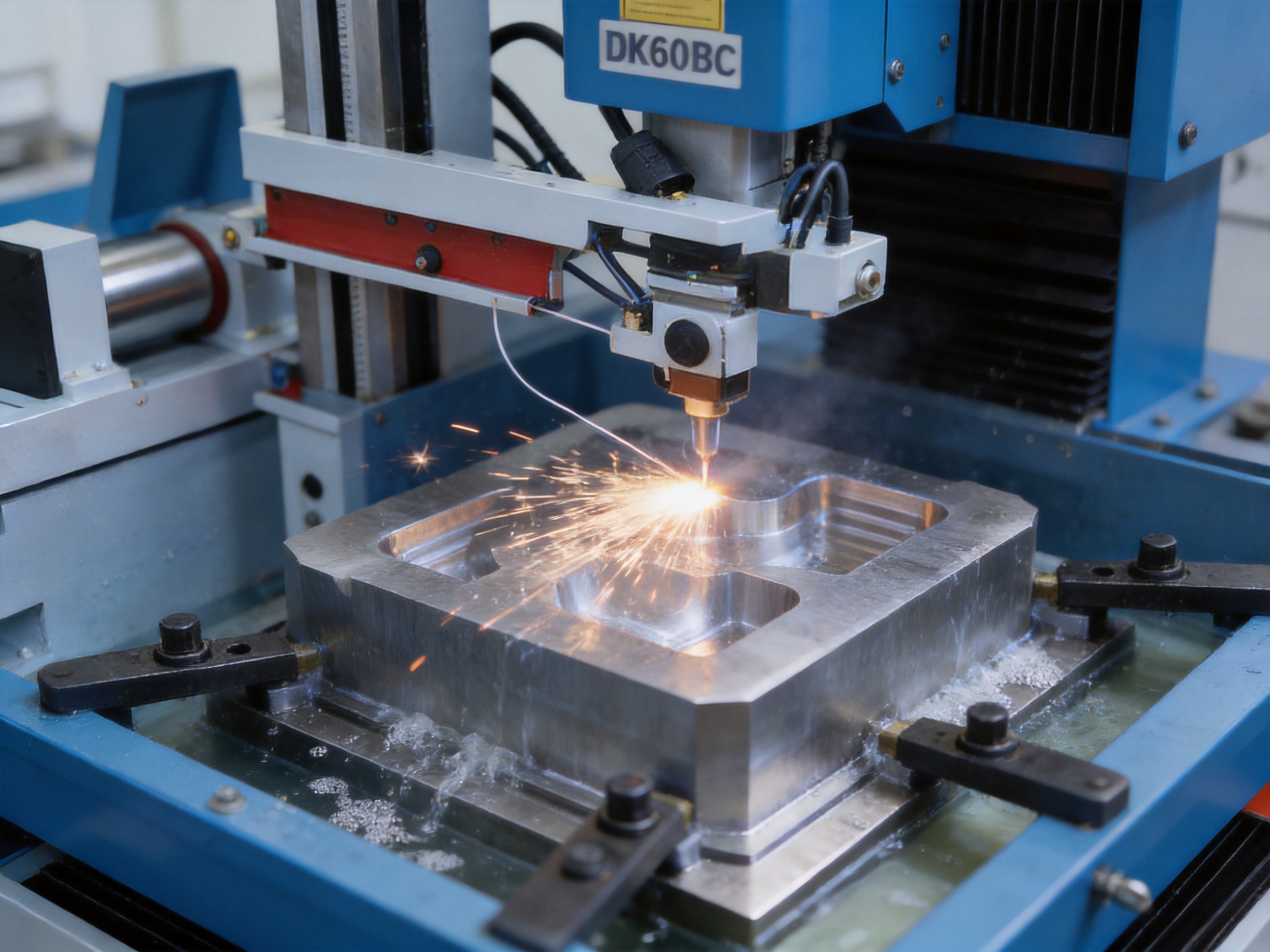
The DK60BC is equipped with the X8/AUTOCUT programming and control system. The control architecture is designed to simplify programming, process monitoring, parameter adjustment, and multi-pass cutting. A capable control system is especially valuable when the machine is used for varied workpieces, because operators may need to switch between rough cutting, finishing, taper cutting, and complex contour operations.
The system supports real-time monitoring of the cutting process and can adjust machining behavior according to discharge conditions. Adaptive feed control can help prevent unstable operation and reduce wire-break incidents. The controller is intended to provide a more responsive machining process than a basic fixed-parameter system.
Depending on the configuration, customers may select the ZHZK-03 standard control cabinet or the optional ZHZ-09G cabinet. The standard electrical capacity is approximately 2.5 KVA, the maximum processing current is 6 A, and the specified power supply is 3N 380 V ±10%. Electrical requirements should be confirmed with the supplier before installation because regional power standards, grounding, protection, and cabinet configuration may differ.
Programming and Process Management
The control system supports graphical programming and can be used with imported geometry and optimized cutting paths. This reduces the need for extensive manual G-code preparation. Operators can define the cutting contour, select multiple-pass strategies, set taper information, and manage process parameters through the CNC interface.
An integrated process database can provide starting parameters for different material groups and thickness ranges. This does not eliminate the need for skilled process judgment, but it reduces the time required to develop a stable cutting program. Experienced technicians can further refine the parameters for specific workpiece conditions, surface requirements, and production targets.
Automatic edge finding and centering functions can simplify workpiece alignment. Accurate alignment is important for large molds because even a small setup error can affect the relationship between the cutting path and the workpiece reference. USB and network connectivity options can also help transfer programs between a CAM workstation and the machine controller.
For new operators, an intuitive interface shortens the learning curve. The manufacturer provides operation guidance, remote technical assistance, and English-language documentation for export customers. Operators with basic CNC experience can generally learn the primary programming and operating functions within a short training period, although advanced taper and thick-workpiece applications require additional practical experience.
7. Comparison with Other Wire-Cut EDM Categories
The DK60BC is positioned as a high-medium-speed WEDM machine. It should not be selected solely by comparing a single cutting-speed figure with another machine. The most suitable solution depends on the balance between cutting speed, surface quality, machine capacity, automation, wire consumption, capital cost, and the type of parts being produced.
Compared with conventional high-speed wire-cut machines, the DK-BC platform offers several important advantages. Linear guide rails support smoother motion than many sliding guide systems. Multiple-cut capability improves surface finish and dimensional refinement. Adaptive discharge monitoring provides more control over wire stability. The DK60BC also offers a substantially larger cutting envelope and greater load capacity than many standard high-speed machines.
High-speed wire-cut machines such as the DK-77 series may remain attractive for rough cutting, economical blanking, and high-volume operations where surface finish requirements are moderate. They can be effective when the primary objective is to remove material quickly at a lower initial investment. However, users requiring precision molds, thick sections, taper accuracy, and finishing passes may benefit from the DK-BC design.
| Feature | DK-BC High-Medium-Speed WEDM | Typical High-Speed WEDM |
| Guide system | Precision linear guide support | Often sliding guide support |
| Processing approach | Roughing plus multiple finishing cuts | Often single-pass or limited finishing |
| Surface-finish potential | Suitable for precision finishing and mold work | Generally suited to general-purpose cutting |
| Thick-workpiece capability | DK60BC up to 800 mm | Depends strongly on model and configuration |
| Maximum DK60BC load | 800 kg | Usually lower on comparable compact models |
| Wire control | Controlled tension and adaptive monitoring | Basic to advanced, depending on configuration |
| Best application | Precision molds, large dies, heavy components | Rough cutting, blanking, general production |
Compared with premium imported slow-wire EDM systems, the DK60BC offers a different value proposition. Slow-wire machines may provide exceptional automation and very fine finishing capability, but their purchase price, maintenance requirements, and consumable costs can be significantly higher. A medium-speed machine with multiple-cut capability can provide an attractive balance for factories that need reliable precision but must also control equipment investment and running costs.
The DK60BC is therefore best understood as a high-capacity precision production platform rather than simply a faster or slower alternative. Its competitive strength lies in combining large-format machining, medium-speed operating economics, multi-pass finishing, and a heavy-duty structure in one machine.
8. Model Selection within the DK-BC Series
The DK-BC family includes several models intended for different workpiece sizes and production requirements. Selecting the correct model helps avoid paying for unused capacity while ensuring that the machine is not overloaded during daily production.
| Model | X/Y Travel | Maximum Cutting Thickness | Maximum Load | Recommended Applications |
| DK35BC | 350 × 450 mm | 450 mm | 300 kg | Small precision parts, dies, electrodes, and small-batch work |
| DK45BC | 450 × 600 mm | 450 mm | 400 kg | Medium molds, mechanical parts, and automotive tooling |
| DK50BC | 500 × 700 mm | 650 mm | 600 kg | Large molds, thick plates, and heavier components |
| DK60BC | 600 × 800 mm | 800 mm | 800 kg | Oversized molds, aerospace parts, and heavy industrial components |
The DK60BC is recommended when workpieces are frequently large, heavy, or thicker than approximately 400 mm. It is also appropriate where the production department wants additional table space for clamping, reference alignment, or future workpiece growth.
The DK50BC may be a more economical choice for customers whose workpieces remain within approximately 650 mm thickness and a 600 kg load. The DK45BC and DK35BC are more appropriate for smaller components and facilities with limited floor space. The choice should consider not only the largest current part but also expected future orders, lifting equipment, installation access, and available workshop area.
9. Application Areas
Large-Scale Mold and Die Manufacturing
Large molds often contain hardened inserts, deep cavities, narrow slots, complex profiles, and tapered features. The DK60BC can cut these components after heat treatment, reducing the need for soft machining or extensive manual correction. Its large work area and 800 kg load capacity are particularly helpful for mold bases, stamping dies, extrusion tooling, and large plastic-mold components.
Multiple-pass cutting supports the production of accurate mating surfaces and detailed contours. With careful setup, the machine can reduce manual fitting and polishing while preserving the geometry of sharp edges and small features. The U/V taper system also supports applications where upper and lower profiles are intentionally different.
Aerospace Component Processing
Aerospace manufacturing requires stable and repeatable machining of difficult materials, including titanium alloys, nickel-based alloys, hardened steels, and other electrically conductive materials. WEDM is valuable because material hardness does not create the same cutting-force challenge found in conventional machining. The DK60BC’s adaptive discharge system and stable wire transport support the controlled machining of complex profiles and heavy sections.
For aerospace production, process qualification and traceability remain essential. Users should establish documented parameters, verify material conductivity, control flushing quality, and inspect completed components with suitable measuring equipment. The DK60BC provides the required machining platform, while the customer’s quality system determines final acceptance procedures.
Heavy Machinery and Industrial Components
Heavy machinery manufacturers often process large plates, wear-resistant components, gears, templates, guide elements, and custom mechanical parts. These workpieces may be too heavy for compact WEDM machines or may require multiple setups when using smaller equipment. The DK60BC’s 800 kg load rating and large cutting thickness can reduce setup complexity.
The machine is also suitable for replacement parts and low-volume industrial production. A manufacturer can program different profiles without producing dedicated cutting tools, making WEDM an efficient solution for customized components, repair parts, and engineering prototypes.
Tool and Electrode Production
Tool steels, carbide, copper alloys, and conductive tool materials can be processed by WEDM. The DK60BC can produce punches, dies, electrode blanks, wear components, and other precision tooling. Multiple cuts are useful when the finished part requires a controlled surface condition and precise dimensional matching.
10. Materials and Process Compatibility
The DK60BC can process electrically conductive materials regardless of their mechanical hardness, provided suitable parameters are selected. Common materials include D2, A2, H13, and SKD11 tool steels; stainless steels such as 304, 316L, and 17-4PH; cemented carbide; titanium alloys; copper and copper alloys; aluminum alloys; nickel-based superalloys; and conductive PCD or CBN tool blanks.
Material hardness itself does not prevent EDM cutting. Cutting behavior is influenced more directly by electrical conductivity, melting point, thickness, thermal characteristics, workpiece condition, and the selected discharge parameters. Materials with lower conductivity or unusual metallurgical structures may require lower cutting rates and specialized process development.
Before production, the operator should verify that the workpiece is electrically continuous and securely connected to the machining circuit. Coatings, oxides, scale, and poor clamping contact can interfere with stable discharge. For thick workpieces, the workpiece should be adequately supported to prevent movement during cutting.
11. Manufacturing Strengths of the Producer
The performance of a machine tool depends heavily on the manufacturing system behind it. Taizhou Xinchengyang Machinery Manufacturing Co., Ltd. has developed its product range around electrical discharge machining and special processing technologies. Its experience extends across research and development, casting and mechanical production, assembly, electrical integration, testing, and after-sales service.
The company operates with advanced processing equipment and comprehensive testing methods. Its product design emphasizes functional reliability, maintainability, and suitability for industrial production. The product range includes PS-C and DK77-BC medium-speed wire-cut EDM machines, DK77-A and DK77-B high-speed wire-cut EDM machines, and DK77-D large-taper wire-cut EDM machines.
Full-Process Quality Control
Quality control begins when components enter the factory. Incoming parts are inspected before being released for assembly. Machined surfaces, guide mounting points, transmission components, electrical assemblies, and key structural elements are checked according to production requirements.
During assembly, the machine is aligned and adjusted to ensure that the table, guide system, wire frame, and cutting head work together correctly. Electrical and CNC systems are tested before the machine proceeds to final verification. This full-process approach helps identify deviations early rather than waiting until the completed machine reaches the customer.
Before shipment, each machine undergoes positioning accuracy testing. The company also describes the use of laser interferometer verification for positioning and repeat positioning performance. Such testing provides a measured basis for evaluating axis behavior and supports more consistent machine-to-machine quality.
Testing may also include trial cutting, electrical inspection, wire transport checks, flushing verification, and functional operation of the CNC system. A machine that has been assembled, calibrated, and test-cut before shipment can reduce installation risk for the customer.
Research, Development, and Engineering Experience
The company’s history in wire-cut EDM began in 1999, while the POOSN brand originated in 2003. Cooperation with CNC industry partners supported market development, and the company later established Taizhou Xinchengyang Machinery Manufacturing Co., Ltd. with its own factory and registered capital of 60 million yuan.
Its development history includes recognition for quality and reputation, high-technology enterprise status, and patent activity related to CNC machine tools. This background demonstrates a continuing effort to improve automation, mechanical design, control, and production technology.
For customers, manufacturing experience provides practical value. A supplier that has worked with wire-cutting applications for many years is more likely to understand problems involving wire vibration, guide wear, thick-section flushing, taper compensation, workpiece alignment, and finishing strategies. This application knowledge can be as important as the machine’s nominal specifications.
12. Installation, Environment, and Maintenance
The DK60BC is a large machine weighing approximately 2500 kg and measuring about 2400 × 2065 × 2200 mm. Before delivery, the customer should confirm floor loading, access routes, lifting equipment, electrical supply, drainage, ventilation, and service clearance. The machine should be installed on a stable foundation and leveled according to the manufacturer’s instructions.
A general workshop environment may be suitable for normal operation, but temperature stability is recommended when very tight tolerances are required. Thermal variation can affect the machine structure, workpiece dimensions, wire alignment, and dielectric conditions. A temperature-controlled room is particularly beneficial for work requiring tolerances below a few micrometers or for long cutting cycles where ambient conditions may change substantially.
The machine should be positioned away from strong vibration sources, excessive dust, corrosive chemicals, and direct heat. Stable electrical power and proper grounding help protect the control cabinet and improve operational reliability. Adequate ventilation is also recommended to maintain a safer and more comfortable workplace.
Routine Maintenance Points
Operators should inspect the wire guides, guide wheels, water nozzles, wire tension, and wire path on a regular basis. Worn or damaged guide components can affect straightness, taper accuracy, and surface finish. The dielectric system should be checked for water quality, filtration condition, pump performance, and contamination.
Linear guideways and transmission components should be lubricated according to the recommended maintenance schedule. The worktable and tank should be kept clean, particularly after processing materials that generate substantial debris. Electrical connections, sensors, switches, and safety devices should also be inspected periodically.
Consumable life varies according to cutting hours, material, thickness, flushing, wire tension, and operating parameters. Molybdenum wire, guide wheels, water nozzles, dielectric fluid, and ion-exchange materials should be replaced or serviced before their condition affects cutting stability. Actual replacement intervals and costs should be confirmed for the selected configuration and local operating conditions.
13. Automation and Custom Configuration Options
The DK60BC can be adapted to different production requirements. Customers may select optional AC servo drives for the X/Y axes instead of standard stepper drives. Linear scale feedback can be added where additional position monitoring is required. A high-pressure water tank can improve flushing for thick or difficult workpieces.
The ZHZ-09G control cabinet is available as an optional configuration. Depending on the application, customers may also discuss automatic wire threading, extended X/Y travel, large-taper wire-frame upgrades, customized control systems, rotary tables, and certification packages for specific export markets.
Large-taper upgrades can support angles beyond the standard DK60BC capability. Applications involving very large taper angles, extrusion die relief, or complex upper and lower profiles should be reviewed by the engineering team before ordering. The correct mechanical wire frame, control software, compensation strategy, and workholding arrangement must be selected together.
Automatic wire threading can be useful for multi-cavity molds and unmanned or lightly attended production. A rotary table may support cylindrical or spiral cutting applications, although this requires application-specific engineering. Customization is most successful when the customer provides workpiece drawings, materials, thicknesses, weight, tolerances, surface-finish targets, and expected production volumes.
14. Service, Training, and Export Support
Reliable after-sales support is an important part of a machine tool purchase. Taizhou Xinchengyang Machinery Manufacturing Co., Ltd. provides technical assistance for installation, commissioning, operation, process adjustment, and maintenance. Remote support through video communication can help local technicians identify problems without waiting for an on-site visit.
The company maintains spare-parts support for critical components and can arrange express shipment when required. Modular machine design allows many maintenance tasks to be carried out by trained local personnel under remote guidance. This is especially beneficial for international customers who need to reduce downtime and keep production running.
Export customers can receive operation instructions and technical documentation in English. Training commonly covers machine safety, wire threading, workpiece setup, program transfer, edge finding, parameter selection, taper cutting, multiple-cut strategies, water-system maintenance, and daily inspection procedures.
The standard warranty is stated as 12 months from the date of shipment. Exact warranty coverage, exclusions, commissioning arrangements, spare-parts responsibilities, and shipping conditions should be confirmed in the commercial contract before purchase.
15. Purchasing and Delivery Considerations
Standard DK-BC machines can be prepared for delivery after assembly, inspection, calibration, and test cutting. The stated lead time for standard models is approximately 15 to 25 days, while custom configurations may require an additional 10 to 15 days. Actual delivery time depends on production scheduling, configuration, inspection requirements, documentation, and destination arrangements.
International delivery can be arranged by full-container sea freight, less-than-container-load sea freight, or rail freight for selected regions. Typical transit times may range from approximately 25 to 50 days depending on the method and destination. The machine is shipped fully assembled and tested where logistics conditions allow. After arrival, installation generally involves positioning, leveling, utility connection, inspection, and commissioning rather than complete mechanical reassembly.
Customers should plan for unloading equipment because the DK60BC weighs approximately 2500 kg. The site should have a suitable crane, forklift, or other lifting system rated for the machine and its packaging. A pre-installation checklist can prevent avoidable delays and help ensure that the machine begins operation safely.
16. Why the DK60BC Is a Competitive Choice
The DK60BC competes through a combination of capacity, precision, process flexibility, and ownership value. Its strongest advantage is the ability to cut very large and heavy workpieces while retaining the benefits of medium-speed WEDM technology. A maximum thickness of 800 mm and a maximum load of 800 kg provide capabilities that are not available on many compact machines.
Its second advantage is the balance between roughing and finishing. The machine can remove material at a productive rate and then perform multiple finishing passes for improved contour accuracy and surface quality. This gives manufacturers more flexibility than a basic single-pass high-speed machine while avoiding the cost structure of some premium slow-wire systems.
The third advantage is structural and wire stability. Reinforced castings, linear guide support, controlled transmission, constant-tension wire management, high-pressure flushing, and adaptive pulse control work together to support stable cutting. No individual feature can guarantee perfect results, but the combined system is designed for difficult, deep, and heavy-duty machining.
The fourth advantage is configuration flexibility. Customers can select control cabinets, linear scales, AC servo drives, high-pressure water systems, automatic wire threading, large-taper upgrades, and other options according to their applications. This allows the machine to be specified for practical production needs rather than forcing every customer into an identical configuration.
Finally, the DK60BC is supported by a manufacturer with long-term experience in wire-cut EDM, in-house quality control, testing capability, export experience, and technical support. For buyers comparing machine tools, the ability to obtain process assistance and spare parts over the equipment’s service life can be as important as the initial purchase price.
17. Frequently Asked Questions
Q1: What type of production is the DK60BC designed for?
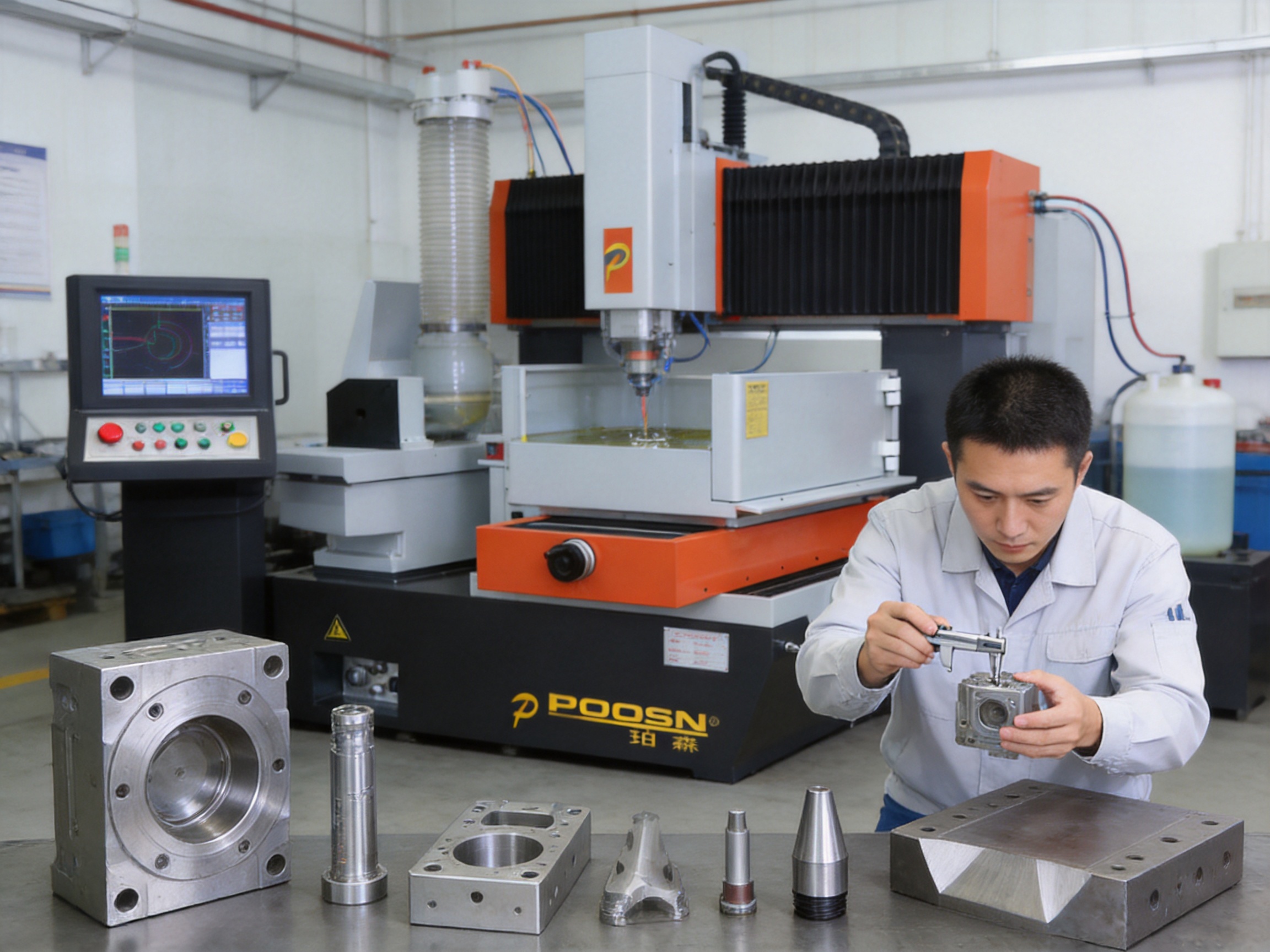
The DK60BC is designed for large-format precision wire cutting. It is suitable for oversized molds, heavy mechanical parts, aerospace components, thick plates, stamping dies, extrusion tooling, and other electrically conductive workpieces that require a large working area, high load capacity, and controlled contour accuracy.
Q2: What is the maximum workpiece thickness?
The maximum specified cutting thickness is 800 mm. Actual cutting performance depends on workpiece material, flushing, wire alignment, electrical parameters, contour complexity, and the required surface finish. Very thick workpieces should be evaluated with a suitable process plan before production.
Q3: How much weight can the worktable support?
The maximum worktable load is specified at 800 kg. The workpiece must be distributed and supported correctly, and the customer should confirm that the lifting and clamping arrangement is suitable. The load rating should not be interpreted as permission to place an unstable or improperly supported workpiece on the table.
Q4: Can the DK60BC perform taper cutting?
Yes. The machine uses U/V axes with approximately 60 × 60 mm travel and supports a standard maximum taper of up to ±6° per 80 mm. Larger taper capabilities may be available with an optional large-taper wire-frame configuration. Applications involving extreme taper angles should be reviewed by the manufacturer’s engineering team.
Q5: What is the maximum cutting efficiency?
The published maximum cutting efficiency is approximately 10,000 to 16,000 mm²/h. This is a reference range rather than a guaranteed rate for every application. Material conductivity, thickness, cutting profile, wire condition, flushing, power settings, and the selected control cabinet all influence actual productivity.
Q6: What surface finish can the machine achieve?
The standard technical specification lists an optimal surface roughness of Ra ≤ 2.5 μm. Multiple-cut processing can improve surface quality compared with a single-pass process. The final result depends on material, thickness, cutting strategy, pulse parameters, water quality, wire stability, and the number of finishing passes.
Q7: What materials can be cut?
The machine can cut electrically conductive materials, including tool steel, stainless steel, carbide, titanium alloys, copper, aluminum alloys, nickel-based alloys, and suitable conductive PCD or CBN materials. Hardness is not the primary limitation in EDM; electrical conductivity, melting characteristics, thickness, and process stability are more important.
Q8: What control system is supplied?
The machine is supplied with the X8/AUTOCUT programming and control system. The standard cabinet is identified as ZHZK-03, while ZHZ-09G is available as an option. Customers should confirm the final control configuration, software functions, language, communication interfaces, and optional feedback systems in the quotation.
Q9: Is a climate-controlled workshop required?
A general workshop may be suitable for normal production, but temperature stability is recommended for the highest precision. The machine should be protected from strong vibration, excessive dust, direct heat, and unstable power. For very tight tolerances, a temperature-controlled environment and optional linear-scale feedback may provide additional process stability.
Q10: How does the machine handle deep cutting?
The DK60BC combines a reinforced wire frame, precision guides, stable wire tension, upper and lower flushing, filtration, and adaptive discharge control. These systems help maintain a stable cutting gap and reduce wire deflection during deep cutting. Operators must still optimize parameters for the specific material and thickness.
Q11: What optional equipment is available?
Available options may include a high-pressure water tank, linear scale feedback, AC servo drives, upgraded control cabinets, automatic wire threading, extended travel, large-taper wire frames, rotary tables, and export certification packages. Availability should be confirmed according to the required application and destination market.
Q12: What after-sales support is provided?
The manufacturer provides technical support, operating guidance, spare-parts assistance, and remote troubleshooting. The stated warranty is 12 months from shipment. Customers should confirm the exact warranty terms, installation scope, commissioning service, and response procedures before placing an order.
Q13: How should customers choose between the DK50BC and DK60BC?
The DK50BC supports approximately 650 mm maximum cutting thickness and a 600 kg maximum load, while the DK60BC supports approximately 800 mm thickness and an 800 kg load. Choose the DK60BC when workpieces are frequently oversized, heavy, or thicker than the practical capacity of the DK50BC, or when additional worktable space is valuable for future production.
Q14: Can the machine be used for mass production?
Yes. The DK60BC’s cutting efficiency, automatic parameter adjustment, multiple-cut programming, and large worktable make it suitable for batch manufacturing. Production planning should account for the number of finishing passes, workpiece loading time, wire preparation, flushing maintenance, and inspection requirements.
18. Conclusion
The DK60BC CNC Medium-Speed Wire EDM Machine is designed for manufacturers that need to combine large workpiece capacity with high-precision wire cutting. Its 600 × 800 mm X/Y travel, 800 mm maximum cutting thickness, 800 kg load capacity, four-axis linkage, multiple-cut capability, adaptive pulse control, and stable wire-feeding system provide a strong foundation for demanding industrial applications.
Compared with conventional high-speed wire-cut machines, it offers greater emphasis on finishing, guide accuracy, thick-workpiece capability, and process control. Compared with premium slow-wire solutions, it provides a practical medium-speed alternative that can reduce equipment and operating costs while maintaining strong precision potential. Its value is further supported by a robust machine structure, quality verification, configurable options, and technical support from an experienced EDM manufacturer.
For large mold production, aerospace machining, heavy machinery manufacturing, precision tooling, and custom industrial components, the DK60BC offers a flexible and durable production solution. Final machine selection should be based on workpiece size, thickness, weight, material, taper requirements, tolerance, surface finish, production volume, workshop conditions, and desired automation level.
References
1. Taizhou Xinchengyang Machinery Manufacturing Co., Ltd., DK-BC Series High-Medium-Speed Wire EDM Technical Specifications.
2. Taizhou Xinchengyang Machinery Manufacturing Co., Ltd., DK60BC Product and Application Information.
3. GB/T 7926-2015, Accuracy Inspection Method for Wire-Cut Electrical Discharge Machines.
4. General principles of electrical discharge machining, wire transport, dielectric flushing, and pulse power control in industrial WEDM applications.
5. Manufacturer-provided information regarding machine structure, control systems, quality inspection, installation, and after-sales technical support.
Product: DK60BC CNC Medium-Speed Wire EDM Machine (800kg Load, 800mm Thickness)

-
Phone
+86-0523-86268788 +86-13815960366 +86-13912191163Email
[email protected]Address
No. 366, Yusheng Road Jiulong Town, Hailing District Taizhou City, China
Copyright © Taizhou Xinchengyang Machinery Manufacturing Co., Ltd. All Rights Reserved.
Custom edm machine for sale
wholesale edm machine manufacturers
