

 English
 русский
 عربى
عربى

Shen Yiru — After-Sales Service Engineer
Home / Author / Shen Yiru — After-Sales Service Engineer / DK-7725 High-Speed Wire EDM Machine: Precision, Productivity, and Manufacturing Value
DK-7725 High-Speed Wire EDM Machine: Precision, Productivity, and Manufacturing Value
2026-08-21
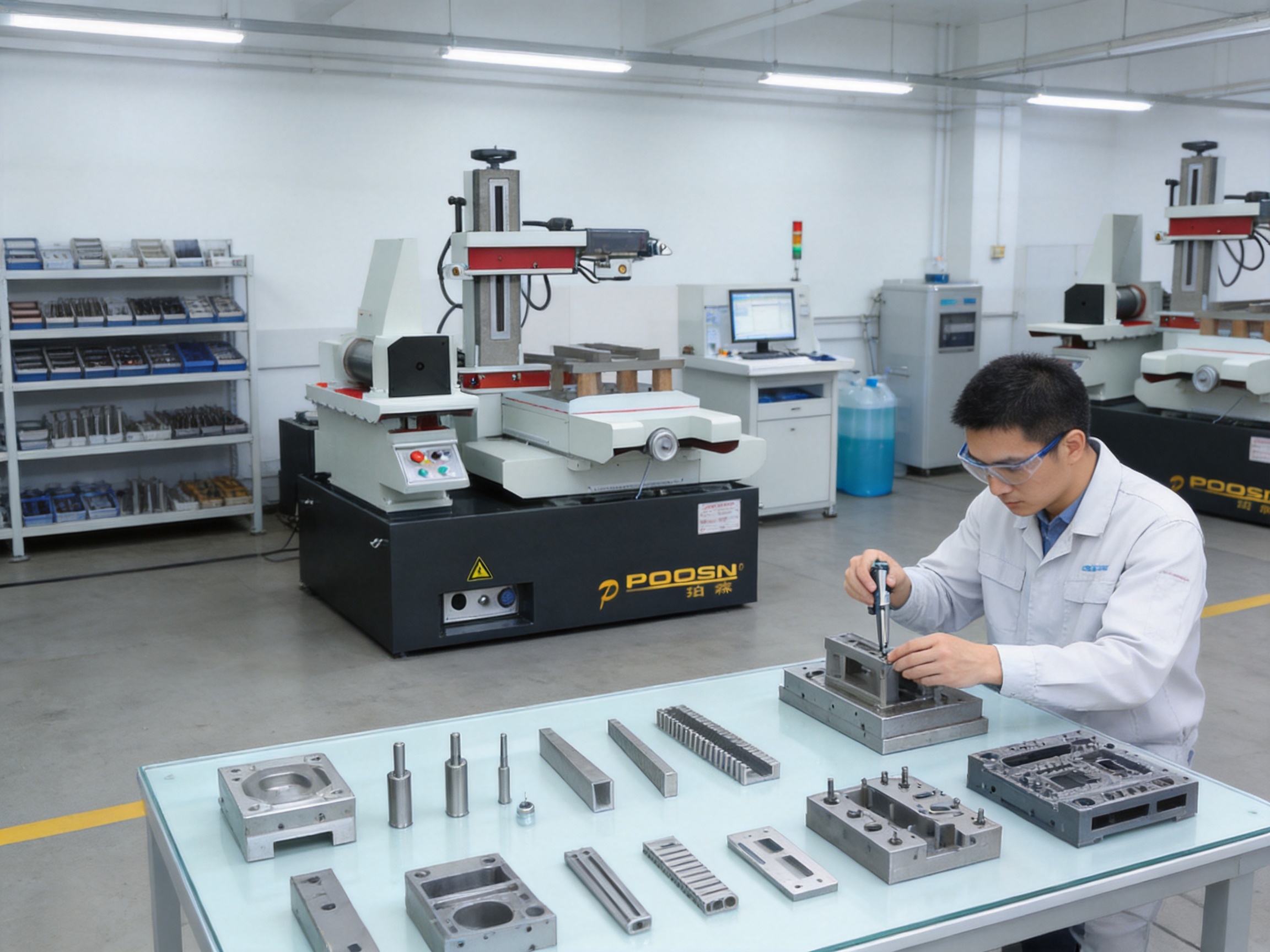
Modern mold manufacturing and precision metalworking require more than a machine capable of removing material. Manufacturers need predictable accuracy, stable operation, efficient production, manageable maintenance costs, and the flexibility to process a broad range of conductive materials. The DK-7725 CNC High-Speed Wire Electrical Discharge Machining (WEDM) machine is designed to address these requirements through a combination of high-speed cutting, four-axis linkage control, rigid mechanical construction, reliable electrical discharge control, and practical production-oriented features.
With a maximum table load of 250 kg, an X-axis travel of 250 mm, a Y-axis travel of 320 mm, and a worktable measuring 410 × 600 mm, the DK-7725 is positioned as a compact yet capable solution for small and medium-sized workpieces. It is particularly suitable for precision molds, dies, punches, mechanical components, electronic parts, automotive components, and other products that require accurate contour cutting and dependable repeatability.
The machine can achieve a maximum cutting efficiency of approximately 10,000 to 16,000 mm² per hour when matched with an appropriate CNC cabinet and process configuration. Its four-axis X, Y, U, and V control supports straight cutting as well as tapered and complex contour machining. The result is a machine that combines the accessibility and cost efficiency of a high-speed WEDM platform with the precision control expected in demanding industrial applications.
Content
- 1 1. The Role of High-Speed WEDM in Modern Manufacturing
- 2 2. Product Positioning and Main Capabilities
- 3 3. High-Speed Cutting Without Sacrificing Stability
- 4 4. Four-Axis Linkage for Tapered and Complex Profiles
- 5 5. Precision Performance for Molds and Mechanical Components
- 6 6. Mechanical Design and Advanced Manufacturing Strengths
- 7 7. CNC Control and Operator-Oriented Operation
- 8 8. Wire Transport, Tension, and Discharge Reliability
- 9 9. Cooling and Filtration for Process Consistency
- 10 10. Competitive Advantages in Practical Production
- 11 11. Applications Across Multiple Industries
- 12 12. Production Efficiency and Total Cost of Ownership
- 13 13. Customization and Model Selection
- 14 14. Quality Assurance and Manufacturing Control
- 15 15. Installation, Commissioning, and Technical Support
- 16 16. Maintenance Practices for Reliable Operation
- 17 17. Recommended Workflow for New Users
- 18 18. Frequently Asked Questions
- 18.1 Q1: What is the main application of the DK-7725?
- 18.2 Q2: What cutting accuracy can the machine achieve?
- 18.3 Q3: What materials can be processed?
- 18.4 Q4: What is the maximum workpiece size?
- 18.5 Q5: What is the maximum cutting thickness?
- 18.6 Q6: Does the machine support taper cutting?
- 18.7 Q7: Is the DK-7725 suitable for mass production?
- 18.8 Q8: What control cabinet options are available?
- 18.9 Q9: How can wire service life be extended?
- 18.10 Q10: What environmental conditions are recommended?
- 18.11 Q11: Is automatic lubrication included?
- 18.12 Q12: Can the machine be customized?
- 18.13 Q13: Which model should be selected for larger workpieces?
- 18.14 Q14: What support is available after purchase?
- 19 19. Why the DK-7725 Is a Strong Investment for Precision Production
- 20 20. Conclusion
- 21 References
- 22 Product: DK-7725 CNC High-Speed Wire EDM Machine (4-Axis, 250kg Load)
1. The Role of High-Speed WEDM in Modern Manufacturing
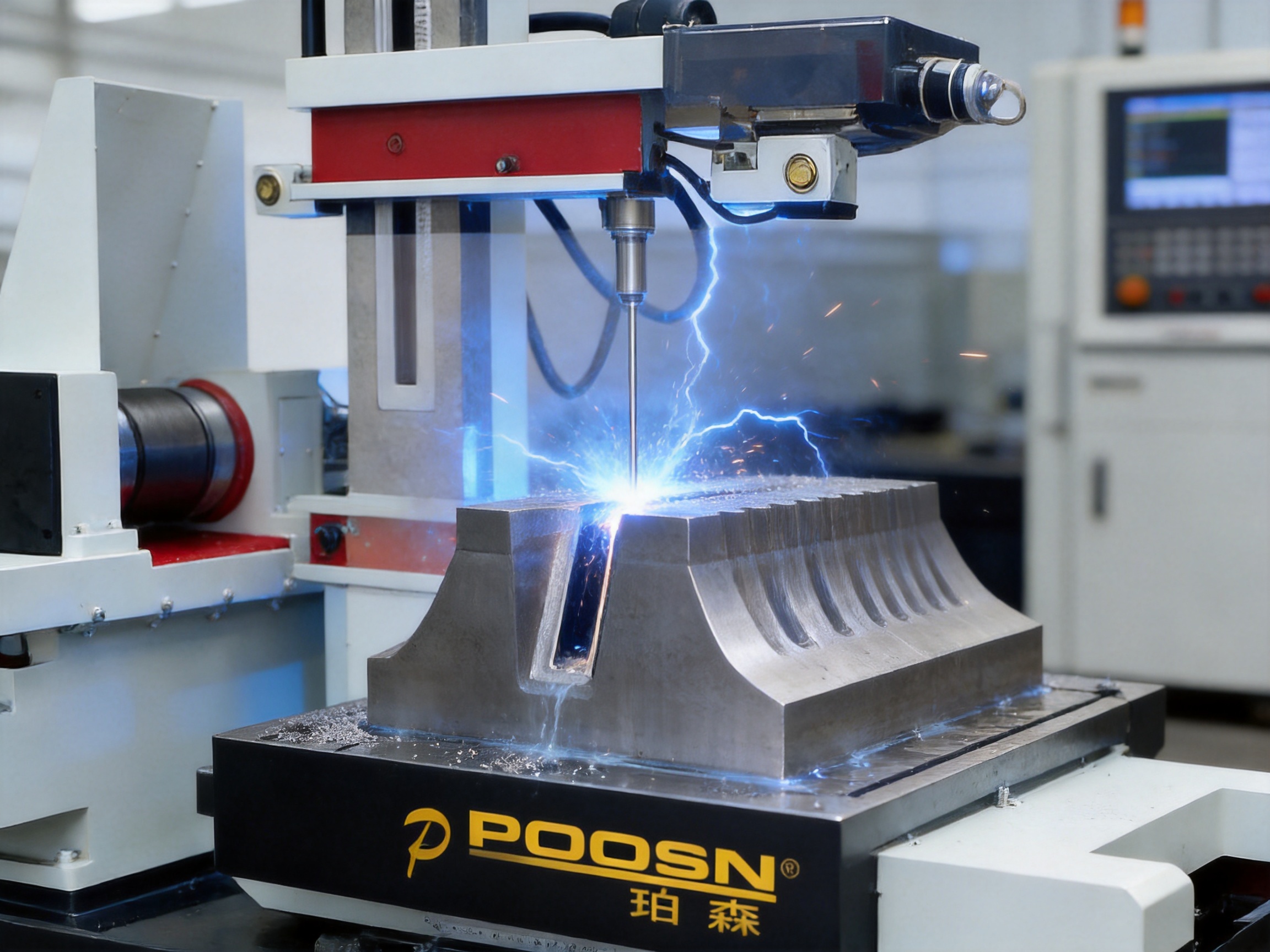
Wire electrical discharge machining removes material through controlled electrical discharges between a continuously moving wire electrode and a conductive workpiece. Because the process does not rely on conventional cutting forces, it can machine hardened steel, stainless steel, copper, aluminum, cemented carbide, and other electrically conductive materials without creating the same mechanical stress associated with milling, sawing, or conventional turning.
This process is especially valuable when a component includes narrow slots, intricate profiles, sharp internal corners, delicate ribs, or difficult-to-machine hardened sections. A wire EDM machine can follow a programmed path through the workpiece while maintaining a controlled discharge gap. The wire does not need to be shaped like the final profile; instead, the CNC system guides it along the desired contour.
High-speed WEDM adds a productivity advantage by increasing wire travel speed and optimizing discharge conditions. However, speed alone is not sufficient. If cutting speed is increased without controlling wire tension, flushing, electrical parameters, thermal stability, and machine rigidity, the result may be excessive wire wear, unstable sparks, poor surface finish, or wire breakage. The DK-7725 is therefore designed as an integrated system in which mechanical, electrical, control, and fluid-management functions work together.
For manufacturers, this integrated approach is important because the true value of a machine is determined by its complete production cycle. A machine that cuts quickly but requires frequent adjustment may not provide higher output in practice. Conversely, a stable machine that maintains predictable accuracy can reduce setup interruptions, rework, secondary grinding, and operator intervention.
2. Product Positioning and Main Capabilities
The DK-7725 is a four-axis CNC high-speed wire EDM machine intended for high-precision and small-to-medium batch production. Its configuration allows manufacturers to process workpieces that require straight profiles, angled surfaces, tapered contours, and coordinated multi-axis movement.
The standard machine offers an X/Y travel size of 250 × 320 mm and a maximum cutting thickness of 350 mm. The maximum table load is 250 kg, allowing the machine to support a wide range of small and medium-sized molds, plates, dies, and mechanical components. The worktable size of 410 × 600 mm provides a practical balance between usable machining area and compact floor-space requirements.
For manufacturers with larger workpiece requirements, the DK-7725 belongs to a wider model family. The DK-7735, DK-7745, DK-7745F, and larger DK-77 models provide progressively greater table dimensions, travel ranges, cutting thicknesses, load capacities, and machine sizes. This family structure allows customers to select a machine according to actual production requirements rather than purchasing an unnecessarily large platform.
| Specification | DK-7725 | Production Significance |
| Worktable Size | 410 × 600 mm | Suitable for small and medium-sized workpieces |
| X/Y Travel | 250 × 320 mm | Supports precision contour machining |
| Maximum Cutting Thickness | 350 mm | Allows processing of relatively deep workpieces |
| Maximum Table Load | 250 kg | Supports molds, dies, plates, and mechanical components |
| Maximum Cutting Efficiency | 10,000–16,000 mm²/h | Helps shorten production time |
| Maximum Cutting Taper | ±6°/80 mm | Enables tapered and angled profile machining |
| Drive Type | X, Y, U, V stepper drive; four-axis linkage | Provides coordinated contour and taper control |
| Optimal Surface Roughness | Ra ≤ 2.5 μm | Reduces the need for secondary finishing |
| Machine Accuracy Standard | GB/T 7926-2015 | Provides a defined accuracy reference |
| Machine Weight | Approximately 800 kg | Provides a stable compact machine platform |
| Power Supply | 3N 380 V ±10% | Designed for industrial electrical infrastructure |
3. High-Speed Cutting Without Sacrificing Stability
One of the principal advantages of the DK-7725 is its balance between cutting speed and process stability. The stated maximum cutting efficiency of 10,000 to 16,000 mm²/h is intended for rapid production under suitable material, thickness, flushing, wire, and CNC cabinet conditions. Actual performance depends on the workpiece material, cutting thickness, profile complexity, required finish, wire condition, and selected discharge parameters.
In competitive machine-tool environments, manufacturers often compare equipment using maximum cutting rates. While maximum speed is useful, it should not be considered independently from quality and reliability. A more meaningful comparison considers how effectively a machine maintains stable cutting over an entire work shift, how often the operator must intervene, how consistently it produces the required surface finish, and how much time is saved in subsequent operations.
The DK-7725 addresses these practical concerns through controlled pulse discharge, constant wire movement, stable mechanical transmission, and industrial cooling and filtration. These systems help maintain the discharge gap and reduce the effects of contamination, thermal variation, and vibration. When properly configured, the machine can sustain efficient cutting while protecting dimensional accuracy and surface quality.
The high-frequency pulse power supply is central to this performance. It controls the timing and energy of electrical discharges between the wire and the workpiece. Optimized sampling of the discharge gap helps the system distinguish between stable machining conditions and undesirable states such as short circuits or unstable arcing. The control system can then adjust the discharge response to help maintain a productive and controlled process.
This approach provides an advantage over less integrated machines that depend heavily on manual parameter adjustment. A machine with responsive discharge control can help operators maintain production continuity when material thickness or contour conditions change. It can also reduce the likelihood of wire breakage, which is especially important when cutting thick sections or complex profiles.
4. Four-Axis Linkage for Tapered and Complex Profiles
The DK-7725 uses coordinated X, Y, U, and V axes to support four-axis linkage machining. The X and Y axes control the primary worktable movement, while the U and V axes control the relative position of the wire guides. By coordinating these movements, the machine can produce tapered cuts and profiles in which the upper and lower contours are different.
The maximum cutting taper is specified as ±6° over 80 mm. This capability is useful for molds, punches, dies, inserts, and components that require draft angles or non-parallel walls. It can also reduce the need for separate machining operations, specialized fixtures, or manual correction.
Compared with a basic two-axis wire-cutting system, a four-axis platform offers greater geometric flexibility. A two-axis system may be sufficient for simple through-profiles, but it cannot provide the same degree of control when the upper and lower shapes must vary. Four-axis linkage can therefore improve production efficiency by allowing more features to be completed in a single setup.
Multi-axis control also contributes to repeatability. Once the geometry and taper information have been prepared in the CNC system, the machine can reproduce the programmed path with less dependence on manual alignment. This is valuable in batch production, where consistent results from one workpiece to the next are essential.
For mold manufacturers, tapered cutting is particularly important because many mold components require controlled release angles. For precision machinery and automotive components, angled or variable profiles may be part of the design itself. The DK-7725 gives these users the ability to process such geometries without changing to a different machine category.
5. Precision Performance for Molds and Mechanical Components
The DK-7725 is designed for high-precision machining, with a stated linear cutting accuracy of 0.005 mm and taper accuracy of 0.015 mm under appropriate conditions. These figures should be evaluated together with workpiece preparation, thermal environment, wire condition, machine leveling, programming quality, and process parameters. Nevertheless, they demonstrate the precision class and intended application range of the machine.
Accuracy in WEDM is influenced by many factors. The machine bed must resist deformation and vibration. Guideways and lead screws must deliver smooth movement. Wire tension must remain stable. The discharge gap must be controlled. The workpiece must be securely and correctly mounted. The dielectric fluid must be clean and maintained at suitable conditions. The control system must coordinate movement accurately along the programmed path.
The DK-7725 applies a rigid cast structure that has undergone aging treatment. This construction helps reduce the influence of internal casting stress and supports dimensional stability over time. The heavy machine structure also helps dampen vibration during movement and discharge machining. Stability is especially important when processing thin sections, narrow slots, or contours with sharp changes in direction.
Precision guideways and lead screws are selected to combine low friction with accurate positioning. Smooth motion helps prevent sudden changes in wire position and supports uniform surface generation. It also reduces the mechanical disturbances that can affect the discharge gap and dimensional consistency.
The machine is specified with an optimal surface roughness of Ra ≤ 2.5 μm. In practice, surface roughness depends on the number of skim cuts, material, wire, electrical settings, flushing, thickness, and the required balance between speed and finish. The machine’s control and discharge systems are intended to provide a fine and consistent surface, reducing the amount of polishing or grinding needed after cutting.
For toolmakers, this can have a significant financial effect. Secondary finishing often requires skilled labor, additional inspection, and extra handling. If the wire EDM process produces a more uniform surface directly, the total manufacturing time can be reduced even when the cutting cycle itself is not the only cost factor.
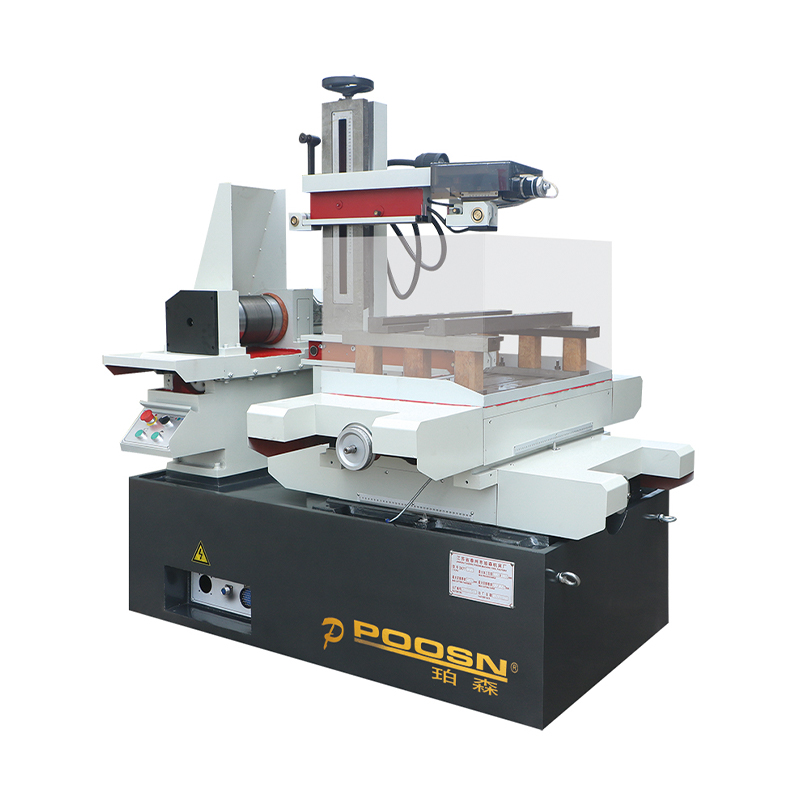
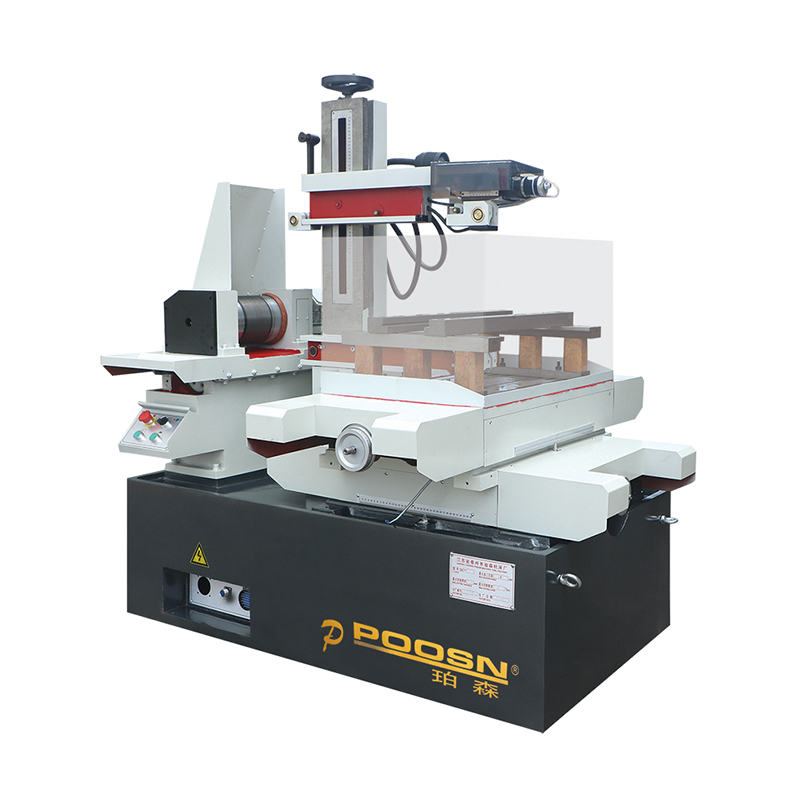
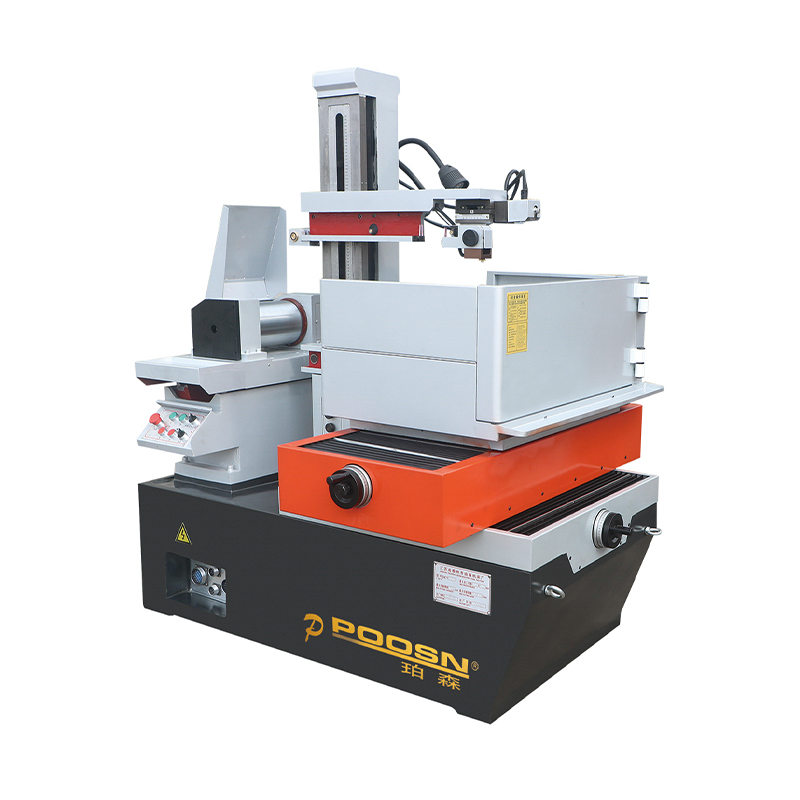
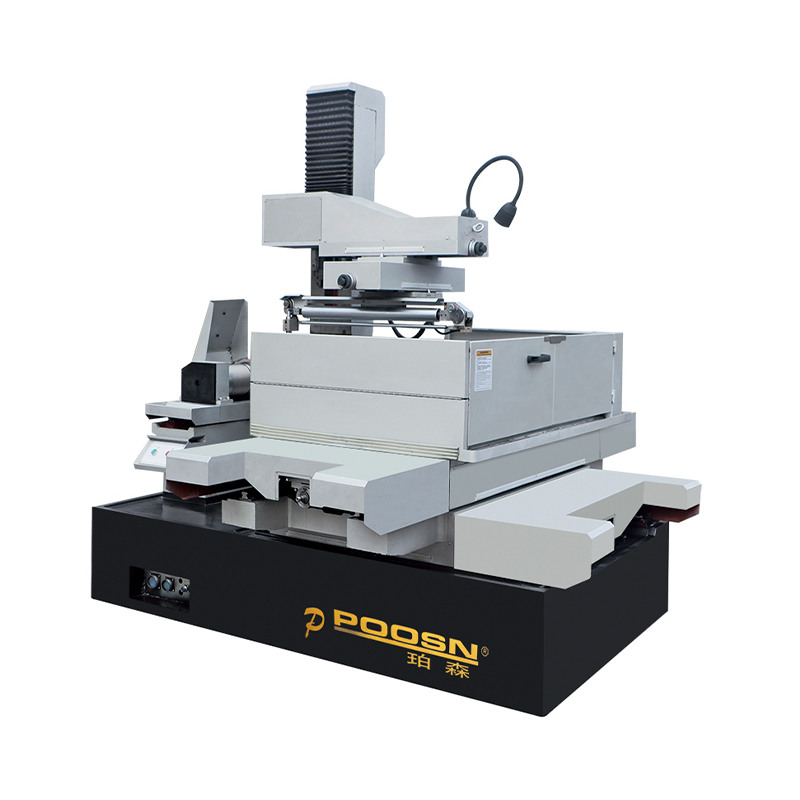
DK-7725 CNC High-Speed Wire EDM Machine (4-Axis, 250kg Load)
6. Mechanical Design and Advanced Manufacturing Strengths
The quality of a wire EDM machine begins with the quality of its manufacturing process. A machine tool is expected to maintain precision over years of use, so its performance depends on the design and production of the bed, worktable, guideways, transmission components, electrical cabinet, wire transport system, cooling system, and control interfaces.
The machine bed uses a high-rigidity HT250 cast iron structure. Cast iron is widely used in precision machine tools because it provides a favorable combination of stiffness, vibration damping, dimensional stability, and manufacturability. The use of a robust casting helps the machine resist dynamic disturbance during axis movement and electrical discharge.
Aging treatment is an important step in the production of cast machine structures. Casting processes can leave residual internal stress in the material. If these stresses are not properly controlled, the structure may gradually deform during machining or service. Aging treatment allows the casting to stabilize before precision machining and assembly. This contributes to long-term geometric accuracy.
After casting and aging, the relevant mounting surfaces must be processed and inspected carefully. The accuracy of guideway surfaces, screw supports, worktable interfaces, and electrical grounding points affects the final behavior of the complete machine. A high-quality assembly process ensures that individual components operate as a coordinated system rather than as isolated parts.
The manufacturing process also includes the selection and alignment of guide rails and lead screws. Low-friction movement reduces drive resistance and supports smooth positioning. Accurate alignment prevents uneven loading and helps maintain repeatability across the working area. In a wire EDM machine, these details matter because even a small positioning irregularity can appear as a profile error or a variation in taper.
Electrical and mechanical assembly are equally important. The discharge power supply, control cabinet, axis drives, sensors, wire transport components, fluid pumps, filters, and safety circuits must be connected and tested systematically. The company’s stated manufacturing approach includes positioning accuracy testing for each machine tool. Such testing provides an essential quality-control stage before shipment.
The company also maintains advanced processing equipment, comprehensive testing methods, and product designs developed according to national standards. These capabilities support consistent production across different machine models. They are particularly important for an OEM and ODM manufacturer, where customers may require custom configurations, cabinet options, application-specific adjustments, or production quantities beyond standard catalog orders.
7. CNC Control and Operator-Oriented Operation
The DK-7725 is equipped with a CNC system that supports four-axis simultaneous control. The control interface is designed for practical operation, including path input, machining parameter selection, axis movement, process monitoring, and production scheduling.
A clear industrial graphical user interface can reduce the time required for operator training. This is useful for factories that need to bring new personnel into production quickly or that operate multiple shifts. An accessible interface also lowers the chance of input errors during routine jobs.
Modern wire EDM control must do more than move the axes along a programmed line. It must coordinate axis motion with discharge conditions, wire speed, flushing, and machine protection. When the wire approaches a corner or a narrow section, the control system must respond appropriately to changes in cutting load and discharge behavior.
The DK-7725 uses path algorithms intended to support uniform machining around sharp corners, arcs, and other complex contours. By analyzing the programmed trajectory and adjusting discharge parameters, the control system can help maintain a consistent surface texture. This can reduce the difference in appearance and roughness between straight sections, corners, and curved sections.
Four-axis CNC control also simplifies the production of tapered parts. The operator can prepare the required geometry and taper values in the control system rather than relying on manual adjustment of the upper guide. This reduces setup complexity and improves repeatability between workpieces.
For production planning, the system’s ability to handle different workpiece geometries helps manufacturers consolidate operations. A single machine can process conventional profiles, tapered components, and more complex four-axis shapes. This flexibility can be an advantage over specialized equipment that performs only one type of cutting operation.
8. Wire Transport, Tension, and Discharge Reliability
Wire management is one of the most important factors in WEDM performance. The electrode wire must travel continuously through the machining zone while maintaining suitable tension. Excessive tension can increase the risk of breakage, while insufficient tension can lead to vibration, profile errors, and poor surface quality.
The DK-7725 incorporates a constant-tension wire transport concept. Stable tension supports consistent wire positioning as the machine moves through long trajectories and complex contours. It also helps extend the useful life of molybdenum wire by reducing abnormal stress and uneven wear.
Guide wheels and guide nozzles must remain in good condition for the tension system to work effectively. Wear or contamination can cause the wire to deviate from its intended position. For this reason, routine inspection of guide wheels, guide nozzles, conductive blocks, and wire paths is an important part of machine maintenance.
The high-frequency pulse system works together with the wire transport mechanism. If the discharge gap becomes unstable, the control system must respond quickly to protect the wire and workpiece. Stable flushing helps remove eroded particles from the gap and prevents debris from causing repeated short circuits.
The equipment is also designed to reduce wire breakage during thick-workpiece machining. No wire EDM system can eliminate breakage under every material and parameter condition, but stable gap control, appropriate discharge settings, clean working fluid, suitable wire speed, and effective flushing can significantly reduce avoidable interruptions.
Reduced wire breakage has a direct effect on production economics. Each breakage event can require machine recovery, wire rethreading, workpiece inspection, and possible rework. In automated or unattended production, an unexpected break can interrupt the planned schedule. A stable wire transport and discharge system therefore contributes not only to accuracy but also to equipment utilization.
9. Cooling and Filtration for Process Consistency
Electrical discharge machining generates heat and removes material in the form of fine particles. If the machining fluid becomes excessively warm or contaminated, discharge behavior may become unstable. Poor filtration can reduce cutting efficiency, affect surface finish, and increase the chance of short circuits.
The DK-7725 uses an industrial cooling and filtration arrangement intended to maintain a clean machining environment. Multi-stage filtration helps remove suspended particles, while cooling helps control thermal variation. Together, these functions support stable discharge conditions and consistent machining performance.
Thermal management is important because precision is affected by changes in the machine, workpiece, guide system, and fluid. A controlled working environment helps minimize dimensional drift during long cutting cycles. Manufacturers seeking the best results should also control room temperature fluctuations, avoid placing the machine near strong vibration sources, and provide proper grounding protection.
Fluid maintenance remains necessary even when the machine has an efficient filtration system. Filters must be inspected and replaced according to actual operating conditions. Pumps, tanks, nozzles, and fluid passages should be kept clean. Operators should monitor flow and ensure that flushing reaches the cutting zone effectively.
These maintenance activities are relatively straightforward compared with the cost of poor machining stability. Proper fluid management can improve wire life, surface finish, cutting speed, and repeatability while reducing the likelihood of unplanned downtime.
10. Competitive Advantages in Practical Production
The DK-7725 competes in a market that includes conventional WEDM machines, low-cost high-speed systems, servo-driven precision platforms, and imported premium equipment. Its competitive value lies in the combination of features rather than in one isolated specification.
First, the machine provides four-axis linkage at a compact machine size. This gives small and medium-sized manufacturers access to taper cutting and coordinated contour machining without requiring the floor space or investment associated with a much larger platform.
Second, the machine combines high cutting efficiency with a 250 kg table load. Some compact machines are optimized for light workpieces, while heavier platforms occupy more space and require greater installation resources. The DK-7725 offers a practical middle position for users that need meaningful load capacity but do not require a large-format machine.
Third, the machine supports a maximum cutting thickness of 350 mm. This expands its application range beyond thin plates and simple components. Toolmakers can process deeper molds, dies, and mechanical parts while retaining access to high-speed wire-cutting technology.
Fourth, its design emphasizes stable long-term operation. The rigid cast structure, aging treatment, controlled wire tension, industrial filtration, and precision electronic control system are intended to reduce variation and maintenance requirements. Compared with machines that depend on frequent manual corrections, this integrated design can improve operator productivity.
Fifth, the DK-7725 is supported by a broader model family and customization capability. Customers can select a smaller or larger machine according to workpiece size, load, and production plans. Optional control cabinets, including a standard desktop cabinet and a vertical cabinet option, provide additional flexibility in factory layout and operator preference.
Finally, the manufacturer combines equipment production with technical service. Installation, commissioning, operator training, maintenance support, spare-parts availability, and software assistance can be important differentiators when comparing suppliers. A machine’s value depends on how effectively it performs after installation, not merely on its catalog data.
11. Applications Across Multiple Industries
11.1 Mold and Die Manufacturing
Mold manufacturing is one of the primary applications for the DK-7725. Mold components often require accurate profiles, narrow slots, sharp internal corners, deep sections, and controlled taper. Hardened tool steel can be difficult to machine using conventional cutting tools, especially after heat treatment. Wire EDM provides a reliable method for producing precise contours without imposing large mechanical cutting forces.
The machine can be used for punches, dies, inserts, stripper plates, precision templates, and other mold components. Four-axis taper capability is valuable when the design includes draft angles or when upper and lower profiles must be coordinated. The specified surface-finish capability can also reduce the amount of hand polishing required after cutting.
11.2 Precision Machinery
Precision machinery manufacturers use WEDM to produce gears, slots, locating components, precision plates, special keys, and complex mechanical profiles. The DK-7725’s travel range and load capacity make it suitable for small and medium-sized components used in industrial machinery, automation equipment, tooling, and specialized mechanisms.
Because the process is guided by a programmed contour, manufacturers can produce repeatable parts in small batches without investing in dedicated cutting tools for every profile. This is particularly beneficial for custom machinery and engineering projects with frequent design changes.
11.3 Electronics and Small Components
Electronic equipment and precision instrument industries often require small components with narrow features and accurate dimensions. Wire EDM can process conductive metals used in connectors, fixtures, precision plates, and specialized component tooling. The DK-7725 provides the positioning control and fine surface capability needed for these applications, provided that the workpiece is properly fixtured and the cutting parameters are selected for the material.
11.4 Automotive Components
Automotive manufacturers and their suppliers use wire EDM for precision dies, stamping tools, prototype components, special fixtures, and production parts with complex contours. The machine’s load capacity and cutting thickness allow it to handle a useful range of tooling and components while maintaining a comparatively compact footprint.
For small and medium-sized production batches, the DK-7725 can shorten preparation time and reduce dependence on multiple specialized machines. Its four-axis control is useful for components that require angled surfaces or tapered profiles.
11.5 Aerospace and High-Precision Engineering
Aerospace-related production places strong demands on dimensional accuracy, material capability, traceability, and process consistency. The DK-7725 can process conductive materials used in precision aerospace tooling and components, including hardened steels and selected nonferrous alloys. Applications should be validated through sample cutting and process qualification, particularly when the component has strict certification or surface-integrity requirements.
12. Production Efficiency and Total Cost of Ownership
Purchasing a wire EDM machine is a long-term production decision. The initial equipment price is only one part of the total cost. Energy consumption, wire consumption, filter replacement, operator labor, maintenance, downtime, rework, and secondary finishing all influence the cost per component.
The DK-7725 is designed to improve total operating value in several ways. High cutting efficiency can reduce cycle time. Stable discharge control can reduce wire breakage and rejected parts. Four-axis machining can eliminate separate operations. The automatic lubrication system can reduce manual intervention. The rigid structure and reliable electronic controls can support longer service intervals.
Its compact form also contributes to installation efficiency. A smaller machine may require less floor space and lower building modifications than a large-format platform. At the same time, the 250 kg table load and 350 mm cutting thickness provide capabilities beyond those of many entry-level machines.
Manufacturers should calculate productivity using actual production requirements rather than maximum catalog performance alone. Relevant questions include the average workpiece thickness, typical material, required roughness, number of skim cuts, annual operating hours, batch size, operator availability, and expected machine utilization. Sample cutting is an effective way to establish realistic cycle times and surface-quality results.
When the machine is properly matched to the application, its advantages can extend beyond cutting speed. A predictable process allows production planners to schedule jobs more accurately. Stable quality reduces inspection and rework. A flexible machine can accommodate new products without major equipment changes. Together, these benefits can improve profitability and manufacturing responsiveness.
13. Customization and Model Selection
Different manufacturers have different requirements for worktable size, control cabinet layout, machining thickness, load capacity, automation, wire systems, and application parameters. The DK-7725 supports customized machining solutions based on customer requirements, making it suitable for users with specialized workpieces or industry-specific standards.
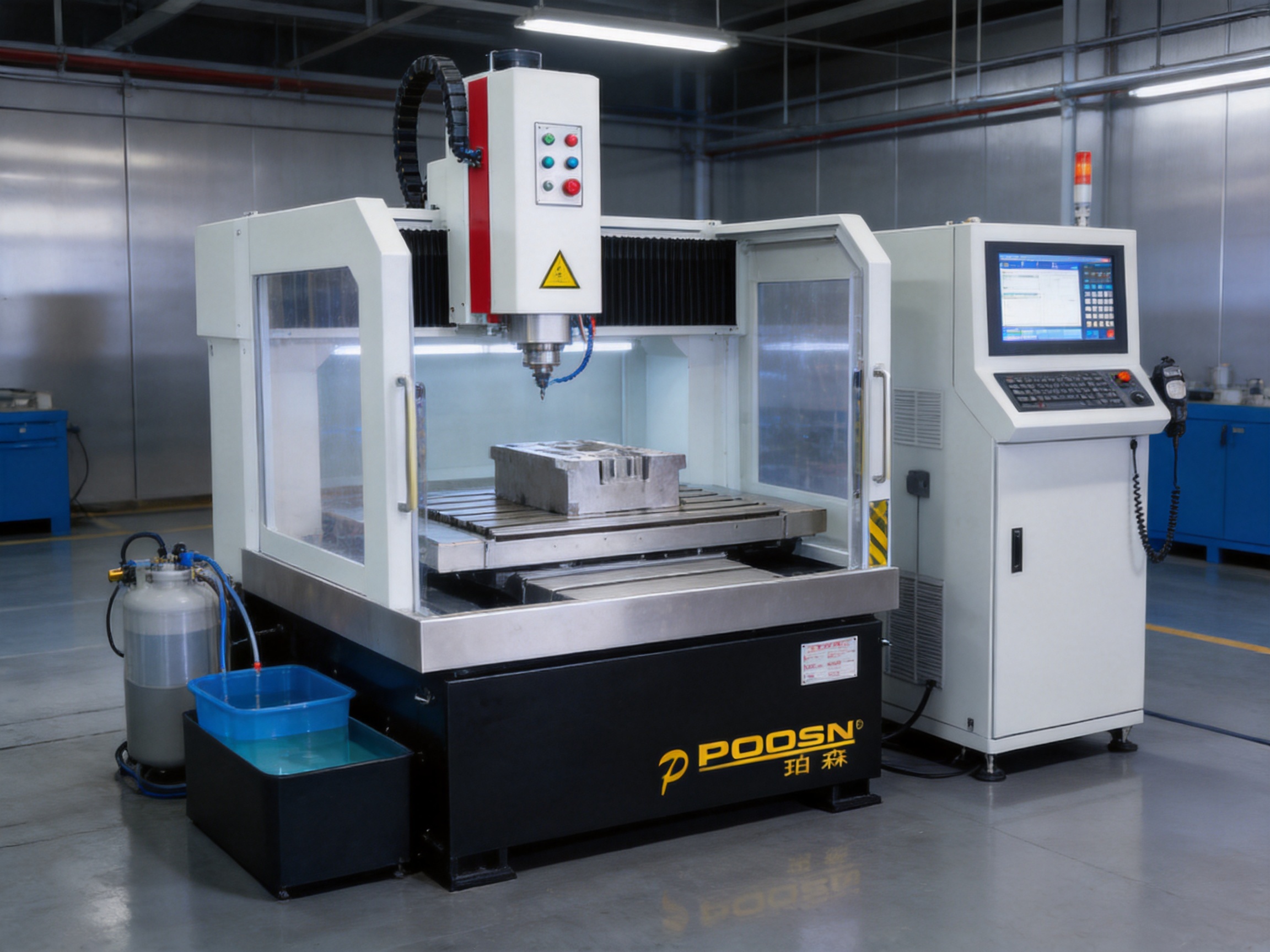
The standard ZH-K68 desktop control cabinet provides a compact control arrangement. The optional ZHZK-03 vertical cabinet can be selected when a different operating position or factory layout is preferred. Cabinet selection may be influenced by available space, operator visibility, electrical installation, and integration with existing production systems.
The wider DK-77 model range helps customers choose an appropriate platform:
| Model | Typical Application Positioning | Maximum Table Load | X/Y Travel |
| DK-7725 | Small and medium parts; precision molds; small-batch production | 250 kg | 250 × 320 mm |
| DK-7735 | Medium-sized components and molds requiring a larger worktable | 300 kg | 350 × 450 mm |
| DK-7745 | Large components, precision molds, automotive and aerospace tooling | 400 kg | 450 × 550 mm |
| DK-7745F | Extra-large workpieces and heavy precision components | 500 kg | 450 × 650 mm |
| DK-7755F and above | Large-format mold, tooling, and heavy-component production | 600 kg and above | 550 × 800 mm and above |
The DK-7725 is generally the most appropriate selection when the majority of workpieces fit within its travel and thickness limits. Customers should consider not only the largest workpiece but also fixture dimensions, wire access, clamping clearance, loading method, and space required around the machine for maintenance.
For future expansion, a larger model may be more economical if workpiece dimensions are expected to increase. Conversely, choosing a model that is much larger than necessary may increase the purchase price, installation requirements, energy consumption, and unused capacity. A technical review with the manufacturer can help identify the most balanced configuration.
14. Quality Assurance and Manufacturing Control
As a specialized EDM manufacturer, Taizhou Xinchengyang Machinery Manufacturing Co., Ltd. has developed experience in the research, development, production, and testing of electrical discharge machining equipment and related special-processing technologies. Its production capabilities include advanced processing equipment, comprehensive testing methods, and product designs developed for industrial applications.
The company states that its products are manufactured according to national standards and that each machine tool undergoes positioning accuracy testing. This testing is essential because a machine can only deliver reliable cutting results when its geometric accuracy has been verified before shipment.
Quality assurance begins with material selection and casting control, continues through aging and precision machining, and extends to assembly, wiring, software configuration, testing, packaging, and commissioning. Each stage influences the final machine. The use of standardized procedures helps reduce variation between units and supports more predictable field performance.
The company’s product range includes PS-C and DK77-BC medium-speed wire-cutting EDM machines, DK77-A and DK77-B high-speed wire-cutting EDM machines, and DK77-D large-taper wire-cutting EDM machines. This range demonstrates experience across different WEDM applications, from general production to larger workpieces and more demanding taper requirements.
The company has operated in the wire-cutting field since 1999, introduced the POOSN brand in 2003, and established its current manufacturing company in 2017 with registered capital of 60 million yuan and its own factory. Its development history also includes cooperation with CNC partners, recognition for quality and reputation, patent activity, and high-technology enterprise recognition.
Such experience provides an important foundation for continuous product improvement. Feedback from domestic customers and overseas markets can be used to improve machine structure, control functions, electrical reliability, maintenance access, and service procedures.
15. Installation, Commissioning, and Technical Support
Precision performance depends on correct installation. The machine must be positioned on a suitable foundation, leveled accurately, connected to a stable power supply, grounded correctly, and installed in an environment with limited vibration and controlled temperature variation.
The manufacturer provides installation and commissioning support that includes machine leveling, accuracy testing, and adjustment according to the customer’s production site. Proper commissioning establishes a reliable baseline for subsequent machining and makes it easier to identify whether a future issue is caused by tooling, process settings, environmental conditions, or machine changes.
Operator training is another important part of equipment value. Training can cover CNC operation, CAD modeling and drafting, workpiece preparation, wire threading, parameter selection, flushing, taper programming, routine inspection, lubrication, filtration, and fault response. Well-trained operators can use the machine more efficiently and avoid preventable damage.
Continuous maintenance support helps protect the machine’s long-term performance. Maintenance records can document operating hours, filter changes, lubrication, guide-component replacement, accuracy checks, and software updates. This information helps production managers plan service before a minor issue becomes a major interruption.
The company also emphasizes modularity and ease of maintenance. Core circuit boards and mechanical transmission components are designed for practical disassembly and replacement. Combined with spare-parts availability, this approach can reduce repair time and equipment downtime.
16. Maintenance Practices for Reliable Operation
Daily maintenance should begin with a visual inspection of the wire path, guide wheels, guide nozzles, conductive blocks, worktable, fluid level, and machine enclosure. Operators should remove accumulated debris and confirm that the wire travels smoothly without abnormal vibration.
The working fluid should be kept clean and circulated effectively. Filters should be checked regularly, and clogged elements should be replaced according to operating conditions. Inadequate filtration may lead to unstable discharge, slow cutting, poor surface finish, or repeated short circuits.
The automatic lubrication system reduces manual work, but operators should still verify lubricant levels and inspect lubrication points. Guideways and lead screws should be protected from abrasive particles. Unusual noise, backlash, vibration, or changes in axis movement should be reported promptly.
Wire components require particular attention. Guide wheels and guide nozzles should be inspected for wear. Conductive blocks should be positioned correctly and replaced when necessary. Proper alignment reduces abnormal molybdenum wire wear and supports stable machining accuracy.
The electrical cabinet should be kept clean and dry. Cooling fans, filters, connectors, grounding, and cables should be checked according to the maintenance schedule. Unauthorized changes to control parameters or electrical circuits should be avoided because they may affect machine protection and discharge stability.
Environmental control is also important. The machine should be installed away from strong vibration, significant temperature changes, corrosive substances, and strong magnetic interference. Proper grounding protection supports stable operation of the control system and reduces electrical noise.
17. Recommended Workflow for New Users
A new DK-7725 installation should begin with a review of the customer’s workpiece requirements. The review should identify the material, hardness, thickness, profile, taper, surface-finish target, dimensional tolerance, batch size, and expected daily operating time.
The second step is fixture and workholding preparation. The workpiece must be positioned securely and aligned appropriately. Since WEDM is a noncontact process, the fixture does not need to resist conventional cutting forces, but it must support the workpiece against movement, vibration, and distortion during immersion or flushing.
The third step is program preparation. The operator should verify the geometry, offsets, taper information, lead-in and lead-out positions, cutting sequence, skim-cut requirements, and safe wire-threading path. Trial cutting may be appropriate for unfamiliar materials or highly demanding components.
The fourth step is process parameter selection. Discharge energy, pulse duration, pulse interval, wire speed, flushing pressure, and cutting strategy should be selected according to the workpiece and required result. Maximum speed should not be used automatically when dimensional accuracy or surface quality is the priority.
The fifth step is in-process monitoring. Operators should observe discharge stability, wire movement, fluid flow, machine alarms, and workpiece behavior. If the process becomes unstable, it is better to pause and correct the cause than to continue and risk wire breakage or workpiece damage.
Finally, the finished part should be inspected and the results recorded. Data on cutting time, wire consumption, surface roughness, dimensional accuracy, and operator adjustments can be used to develop a repeatable process database for future production.
18. Frequently Asked Questions
Q1: What is the main application of the DK-7725?
The DK-7725 is intended for precision machining of conductive materials, especially molds, dies, punches, mechanical components, electronic parts, automotive components, and other small-to-medium-sized workpieces. It is suitable for high-precision and small-to-medium batch production.
Q2: What cutting accuracy can the machine achieve?
The stated linear cutting accuracy is 0.005 mm, while the taper accuracy is 0.015 mm. Actual results depend on machine installation, environmental stability, workpiece preparation, wire condition, programming, material, thickness, and selected cutting parameters.
Q3: What materials can be processed?
The machine can process electrically conductive materials such as steel, stainless steel, hardened steel, copper, aluminum, and cemented carbide. Parameter selection should be adapted to the electrical and thermal characteristics of each material.
Q4: What is the maximum workpiece size?
The DK-7725 provides an X-axis travel of 250 mm and a Y-axis travel of 320 mm. The worktable measures 410 × 600 mm, and the maximum table load is 250 kg. The practical workpiece size must also account for fixture dimensions, clamping clearance, and the required cutting path.
Q5: What is the maximum cutting thickness?
The maximum cutting thickness is specified as 350 mm. Actual performance at maximum thickness depends on material, flushing conditions, wire type, discharge settings, profile geometry, and the required accuracy and surface finish.
Q6: Does the machine support taper cutting?
Yes. The four-axis X, Y, U, and V linkage system supports tapered cutting up to approximately ±6° over 80 mm. This is useful for molds, dies, punches, and components requiring angled or non-parallel profiles.
Q7: Is the DK-7725 suitable for mass production?
It is particularly suitable for high-precision small-to-medium batch production and can also support repetitive production when the workpiece, fixture, and process are standardized. Its high cutting efficiency, stable control, and reduced manual intervention can help increase production capacity.
Q8: What control cabinet options are available?
The standard configuration uses the ZH-K68 desktop cabinet. The ZHZK-03 vertical cabinet is available as an optional configuration, subject to the customer’s layout and operating requirements.
Q9: How can wire service life be extended?
Users should maintain constant wire tension, inspect guide wheels and guide nozzles, keep the working fluid clean, check conductive-block positions, and select suitable discharge parameters. Excessive tension, poor flushing, contaminated fluid, and worn guides can cause abnormal wire wear.
Q10: What environmental conditions are recommended?
The machine should be installed in an environment with limited temperature fluctuation, minimal vibration, proper grounding, and no significant magnetic interference. A clean and stable environment supports accuracy, control-system reliability, and consistent cutting results.
Q11: Is automatic lubrication included?
The DK-7725 is described as having an automatic lubrication system. This reduces manual intervention, but operators should still check lubricant levels and confirm that the system is functioning properly as part of routine maintenance.
Q12: Can the machine be customized?
Yes. Customized machining solutions can be developed according to workpiece requirements, precision standards, control-cabinet preferences, production conditions, and other application factors. Technical evaluation and sample cutting are recommended for specialized applications.
Q13: Which model should be selected for larger workpieces?
The DK-7735, DK-7745, DK-7745F, and larger DK-77 models provide progressively larger worktables, travel ranges, cutting thicknesses, and load capacities. Customers should select a model based on the largest workpiece, fixture requirements, production volume, and future expansion plans.
Q14: What support is available after purchase?
Support includes installation, commissioning, accuracy testing, operator training, maintenance guidance, spare-parts assistance, software support, and technical consultation. The manufacturer also provides ongoing service intended to maintain equipment reliability throughout its operating life.
19. Why the DK-7725 Is a Strong Investment for Precision Production
The DK-7725 is designed for manufacturers that need more capability than a basic wire-cutting machine but do not require the size and cost of a large-format platform. Its compact work area, 250 kg load capacity, 350 mm cutting thickness, four-axis linkage, taper capability, high-speed cutting performance, and precision-oriented structure create a balanced production solution.
Its competitive strength comes from system integration. High-frequency pulse control supports stable discharge. Constant-tension wire transport supports dimensional accuracy and wire life. Rigid cast construction reduces vibration. Cooling and filtration maintain the working environment. CNC path control supports complex contours and uniform surface quality. Automatic lubrication and modular maintenance reduce routine labor.
These features are supported by the manufacturer’s experience in EDM research, production, testing, customization, and technical service. The company’s broader product range allows customers to expand from compact precision machining to larger workpiece applications without changing to an unrelated supplier or technology platform.
For mold shops, precision-component manufacturers, automotive suppliers, electronics producers, and specialized engineering companies, the DK-7725 can improve production flexibility and reduce dependence on multiple processing methods. When correctly installed and maintained, it can deliver a practical combination of speed, precision, reliability, and cost control.
Manufacturers evaluating the machine should compare not only headline cutting speed but also actual cycle time, surface finish, dimensional stability, wire consumption, maintenance requirements, operator workload, service response, and long-term support. On these practical criteria, the DK-7725 presents a strong option for modern high-speed WEDM production.
20. Conclusion
The DK-7725 CNC High-Speed Wire EDM Machine brings together high-efficiency cutting, four-axis control, taper machining, rigid mechanical construction, stable wire transport, precision discharge management, and dependable production support. Its configuration is well matched to small and medium-sized workpieces that require accurate contours, deep cutting, fine surfaces, and repeatable results.
Its 250 kg load capacity and 350 mm maximum cutting thickness expand the machine’s usefulness beyond light-duty applications. Its 10,000 to 16,000 mm²/h cutting-efficiency range helps shorten production cycles, while its control and mechanical systems are designed to preserve stability during demanding operations.
Backed by experienced EDM manufacturing capabilities, positioning-accuracy testing, customization services, installation support, operator training, and maintenance assistance, the DK-7725 is more than a standalone machine tool. It is a complete production platform for manufacturers seeking higher efficiency, controlled quality, and sustainable operating value in wire electrical discharge machining.
References
1. Taizhou Xinchengyang Machinery Manufacturing Co., Ltd., DK-77 High-Speed Wire EDM Machine Technical Specifications.
2. Taizhou Xinchengyang Machinery Manufacturing Co., Ltd., DK-7725 Product Information and Application Notes.
3. GB/T 7926-2015, Accuracy Inspection of Wire-Cut Electrical Discharge Machines.
4. International Electrotechnical Commission, General Principles of Electrical Discharge Machining Technology.
5. American Society of Mechanical Engineers, Principles of Precision Machine Tool Design.
6. Society of Manufacturing Engineers, Electrical Discharge Machining: Process Fundamentals and Industrial Applications.
7. Manufacturing Engineering Reference Materials, Wire Electrode Control, Flushing, Filtration, and Discharge Stability.
Product: DK-7725 CNC High-Speed Wire EDM Machine (4-Axis, 250kg Load)

-
Phone
+86-0523-86268788 +86-13815960366 +86-13912191163Email
[email protected]Address
No. 366, Yusheng Road Jiulong Town, Hailing District Taizhou City, China
Copyright © Taizhou Xinchengyang Machinery Manufacturing Co., Ltd. All Rights Reserved.
Custom edm machine for sale
wholesale edm machine manufacturers
