

 English
 русский
 عربى
عربى

Shen Yiru — After-Sales Service Engineer
Home / Author / Shen Yiru — After-Sales Service Engineer / DK45D Large-Taper Wire-Cut EDM Machine for High-Precision Complex Mold Machining
DK45D Large-Taper Wire-Cut EDM Machine for High-Precision Complex Mold Machining
2026-08-13
Content
- 1 Introduction
- 2 Product Positioning and Main Capabilities
- 3 Why Large-Taper Wire Cutting Matters
- 4 Core Technical Design
- 5 Accuracy, Stability, and Surface Quality
- 6 Machine Structure for Heavy and Large-Angle Cutting
- 7 Discharge Control and Flushing Performance
- 8 Advantages Compared with Conventional Wire-Cut EDM Equipment
- 9 Manufacturing Strengths of the Equipment Producer
- 10 Technical Parameter Overview
- 11 Industrial Applications
- 12 Production Efficiency and Cost Control
- 13 Operation and Process Considerations
- 14 Model Selection Guidance
- 15 Technical Support and Service
- 16 Q&A
- 16.1 Q1: What is the main advantage of the DK45D?
- 16.2 Q2: What maximum taper can the DK45D cut?
- 16.3 Q3: What is the maximum workpiece thickness?
- 16.4 Q4: Can the machine process heavy workpieces?
- 16.5 Q5: What control system does the DK45D use?
- 16.6 Q6: Is the DK45D suitable for inexperienced operators?
- 16.7 Q7: What materials can be processed?
- 16.8 Q8: Can the DK45D reduce secondary grinding?
- 16.9 Q9: What surface roughness can the machine achieve?
- 16.10 Q10: What optional configurations are available?
- 16.11 Q11: How does the machine maintain accuracy during high-load cutting?
- 16.12 Q12: How does the DK45D compare with larger models?
- 17 Conclusion
- 18 References
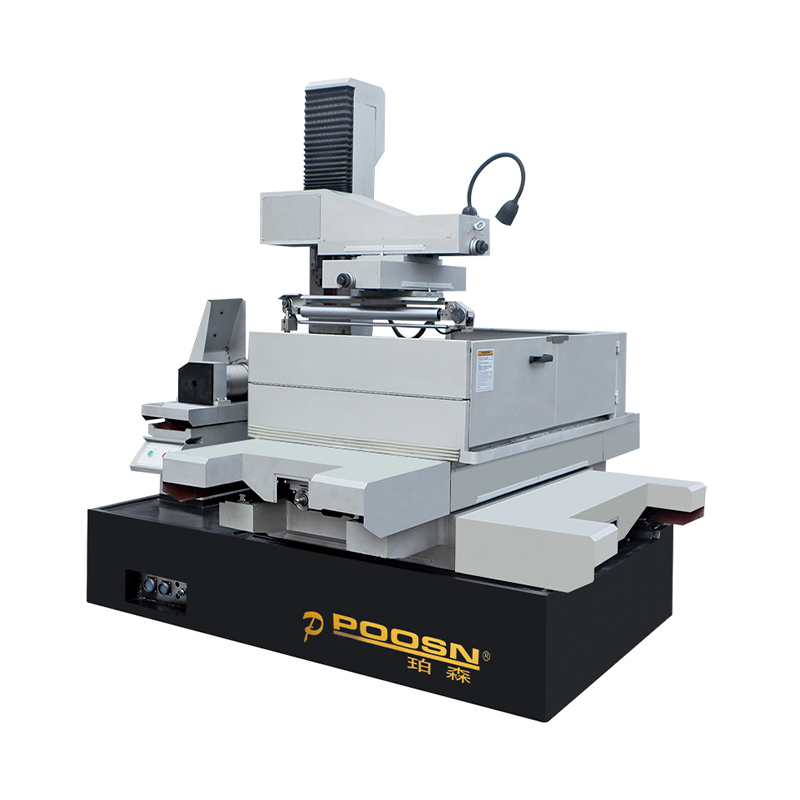
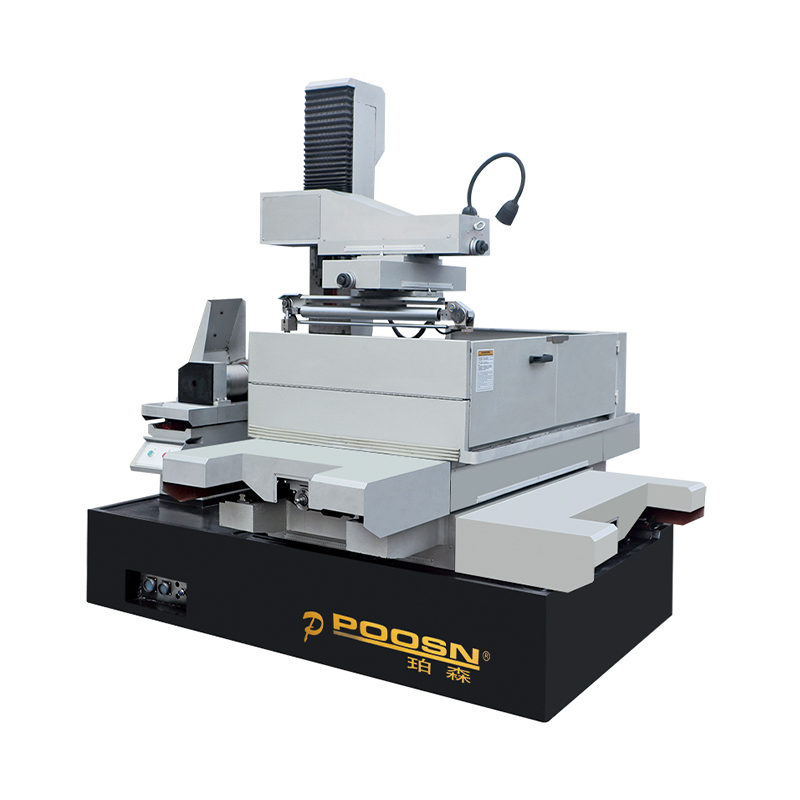
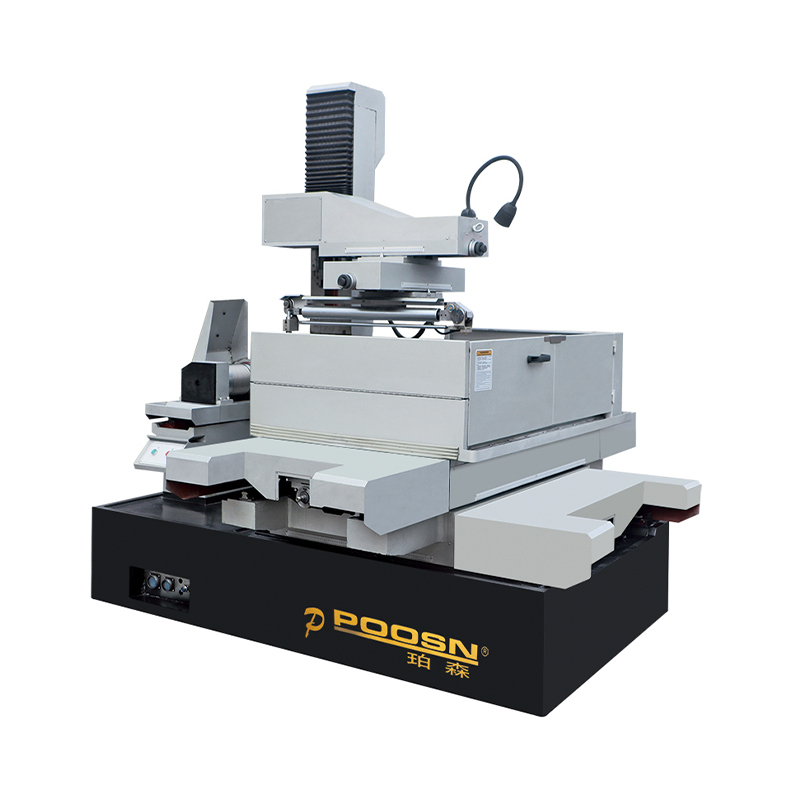
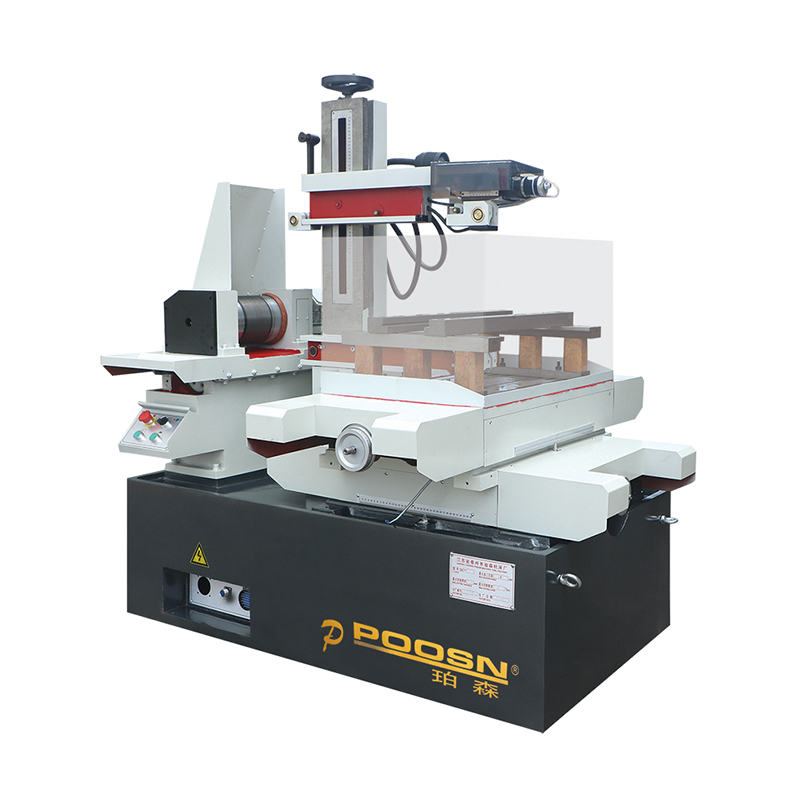
- 19 Product: DK45D CNC Large Taper Wire Cut EDM Machine for Precision Mold Machining
Introduction
Modern mold manufacturing increasingly requires machine tools that can combine large-angle cutting, reliable long-duration operation, high geometric accuracy, and flexible production capability. Conventional wire-cut electrical discharge machining equipment can deliver excellent results in two-dimensional profiles and moderate taper applications, but many demanding components require more advanced control of the wire electrode. Large stamping dies, precision mold inserts, aerospace components, automotive transmission parts, and specialized mechanical components may contain inclined surfaces, variable taper profiles, narrow slots, and complex contours that cannot be produced efficiently with a basic wire-cut EDM system.
The DK45D CNC Large-Taper Wire-Cut EDM Machine is designed for this category of difficult machining work. As part of the DKD Large Cutting Taper WEDM series, it combines four-axis X, Y, U, and V linkage, a maximum cutting taper of ±30° per 40 mm, a maximum cutting thickness of 450 mm, and a maximum worktable load of 400 kg. Its configuration is intended to provide a practical balance between workpiece capacity, large-taper capability, accuracy, operating stability, and production efficiency.
The machine is manufactured by Taizhou Xinchengyang Machinery Manufacturing Co., Ltd., a specialized Chinese producer of wire-cut electrical discharge machining equipment. The company has focused on electrical discharge wire cutting since 1999 and has developed product lines covering medium-speed, high-speed, high-medium-speed, and large-taper wire-cut EDM applications. Its experience in machine development, structural manufacturing, assembly, inspection, and customer support provides the technical foundation for the DK45D.
This article examines the DK45D in detail, including its machining logic, structural design, control system, process advantages, manufacturing standards, application areas, and comparison with conventional wire-cut EDM equipment. It also explains how the machine can help manufacturers reduce secondary operations, improve production consistency, and process complex profiles more efficiently.
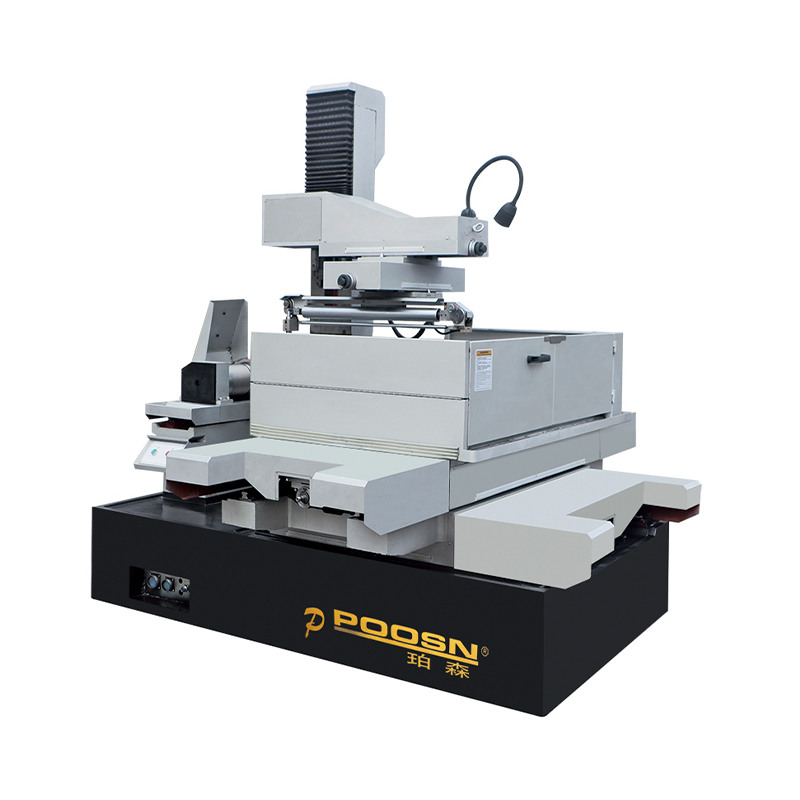
DK45D CNC Large Taper Wire Cut EDM Machine for Precision Mold Machining
Product Positioning and Main Capabilities
The DK45D is positioned as a large-taper wire-cut EDM machine for medium-sized workpieces and high-precision components. Its primary advantage is the ability to control the inclination of the wire electrode through a coordinated four-axis motion system. Instead of limiting the wire to a vertical or nearly vertical position, the machine can generate inclined and tapered profiles while maintaining synchronized movement between the upper and lower wire guides.
The machine provides a maximum cutting angle of ±30° per 40 mm. This capability makes it suitable for workpieces requiring steep taper geometry, especially in precision molds, blanking dies, forming tools, aerospace profiles, and complex mechanical components. The maximum cutting thickness is 450 mm, allowing the DK45D to accommodate substantial workpiece heights while maintaining a usable cutting envelope.
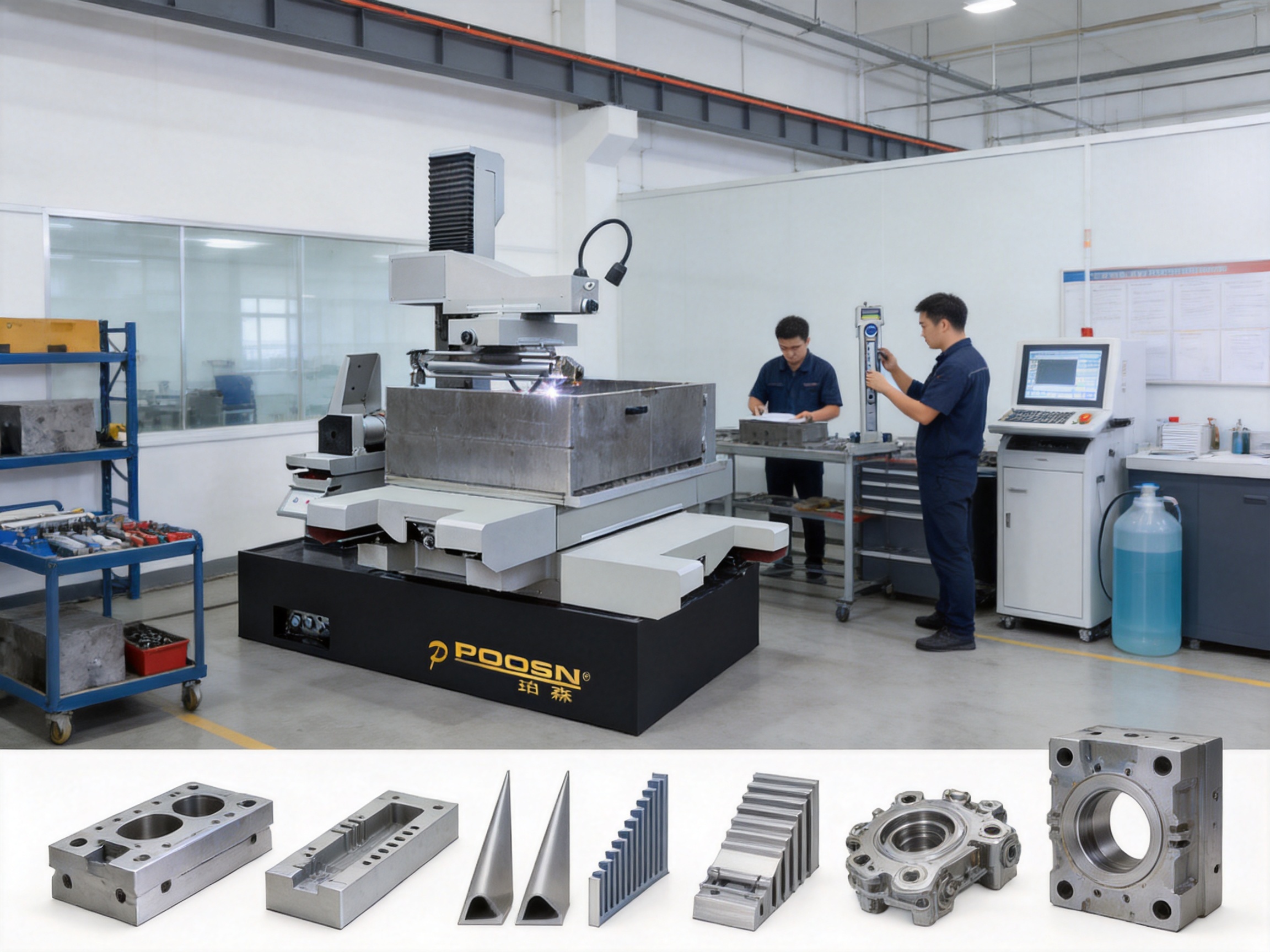
The CNC worktable measures 570 × 950 mm, while the X and Y travel size is 450 × 650 mm. The processing slot size is 630 × 990 mm. These dimensions provide sufficient working space for many medium-sized dies, plates, inserts, and irregularly shaped components. The maximum worktable load is 400 kg, allowing the machine to process relatively heavy workpieces without requiring a separate heavy-duty platform.
The DK45D uses an X8/AUTOCUT control system. Its operating interface is intended to simplify programming, machine setup, taper configuration, and routine production tasks. The system reduces the amount of manual calculation required from the operator and supports the synchronized movement necessary for four-axis taper machining.
Additional performance specifications include a maximum cutting efficiency of 10,000 to 16,000 mm²/h and an optimal surface roughness of Ra ≤ 2.5 μm under suitable process conditions. The machine uses a Φ0.18 mm electrode wire with a wire guider, a wire feed speed of 1 to 11 m/s with frequency control, and approximately 350 m of maximum wire storage length.
Why Large-Taper Wire Cutting Matters
In a standard two-dimensional wire-cutting operation, the electrode wire remains substantially vertical as it follows a programmed contour. This approach is effective for profiles that are identical at the top and bottom of the workpiece. However, many industrial parts require the upper profile to differ from the lower profile. A die may require a tapered cutting edge, a mold insert may contain an inclined cavity wall, or an aerospace component may require a changing profile through its thickness.
Large-taper wire cutting solves this problem by tilting the wire while the machine simultaneously controls the horizontal position of the worktable and the upper wire guide. The upper and lower wire positions can be coordinated to produce an angled, tapered, or variable contour. This process is more complex than ordinary profile cutting because the machine must account for wire diameter, wire deflection, guide position, workpiece thickness, taper angle, and the geometric relationship between the upper and lower contours.
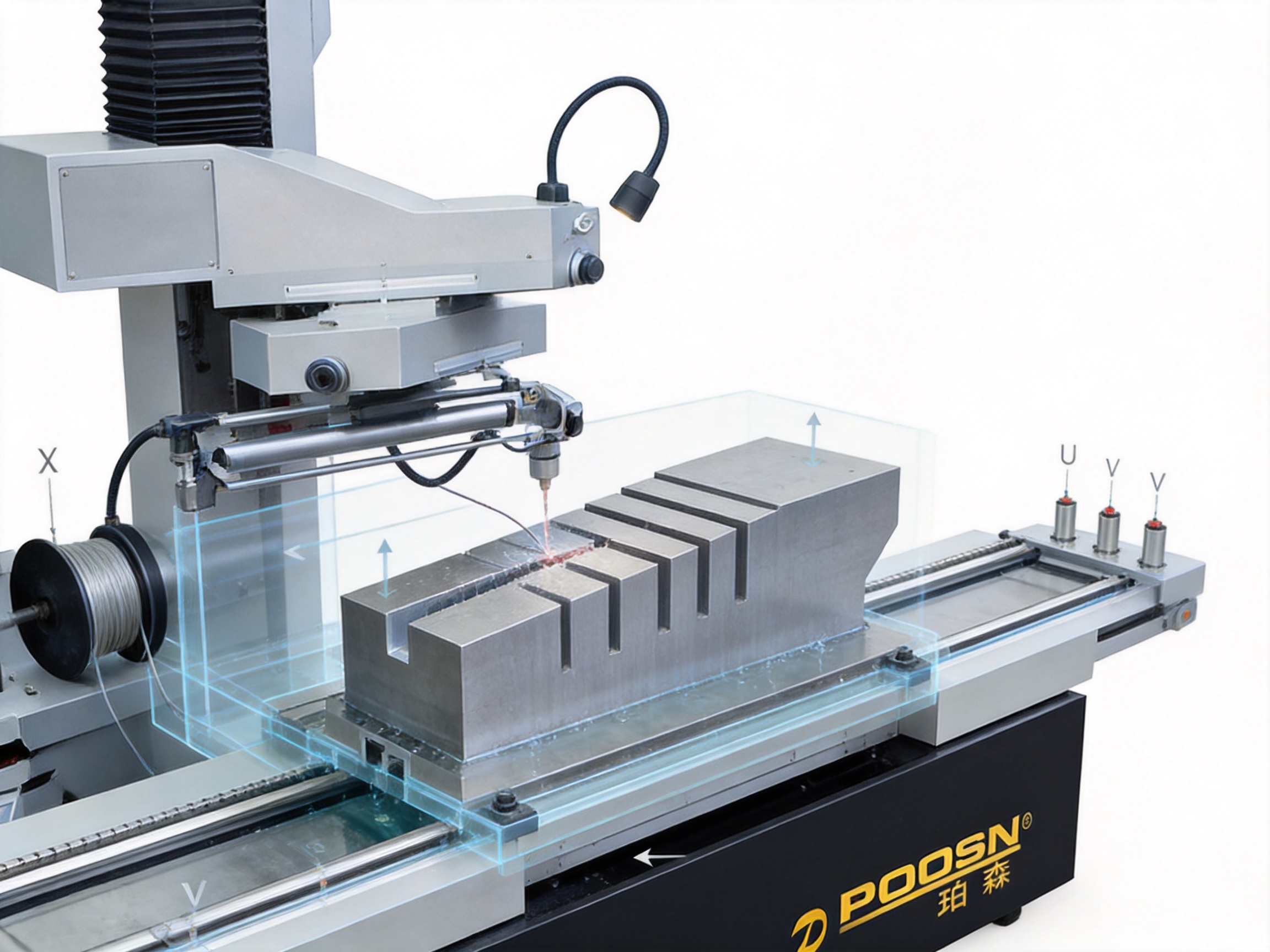
The DK45D is built specifically for this type of work. Its U and V axes control the tapering device, while the X and Y axes control the main worktable. The four axes operate in linkage, allowing the wire path to be adjusted across the workpiece height. This makes it possible to cut complex spatial geometries rather than only flat two-dimensional shapes.
For manufacturers, the practical benefit is a reduction in secondary operations. A tapered edge that would otherwise require milling, grinding, hand fitting, or an additional EDM process may be produced directly on the wire-cut machine. Reducing these operations can shorten manufacturing lead times, improve dimensional continuity, and reduce the risk of transferring errors between machines.
Core Technical Design
Four-Axis X, Y, U, and V Linkage
The DK45D uses four-axis linkage consisting of the X, Y, U, and V axes. The X and Y axes control the worktable movement, while the U and V axes control the upper wire guide and tapering motion. Coordinated movement enables the electrode wire to follow programmed upper and lower profiles while maintaining the required inclination.
This configuration provides greater flexibility than a basic two-axis wire-cut EDM machine. A conventional system may be limited to straight vertical cutting or simple fixed tapering. In contrast, a four-axis system can support different profile relationships at the upper and lower surfaces, variable taper changes, and more complex spatial trajectories.
The DK45D uses standard XY stepper drives, with optional XY AC servo drives available for applications requiring enhanced motion control. The U and V axes use three-phase stepper drives. The combination provides a practical machine configuration for precision taper cutting while allowing customers to select options according to their process requirements and budget.
Tapering Device
The tapering device is one of the most important components of the DK45D. The machine provides a UV travel size of 290 × 290 mm for the DK45D configuration. This travel range supports the movement needed to create large-angle cuts across the specified workpiece thickness.
Large taper cutting places greater demands on the mechanical structure than ordinary vertical cutting. As the wire inclines, the effective cutting position changes across the workpiece height. The wire is also exposed to different flushing conditions and may experience increased lateral forces. For this reason, the tapering device must move accurately and remain stable during long cutting cycles.
The DK45D is designed with high-precision linear rail support and a rigid machine structure. The use of precision guides helps reduce unwanted movement and supports smooth axis response. Stable guide movement is particularly important when machining small radii, narrow slots, sharp corners, and profiles with frequent directional changes.
Worktable and Workpiece Capacity
The DK45D has a 570 × 950 mm worktable and an X/Y travel of 450 × 650 mm. The processing slot size is 630 × 990 mm, providing space for workpieces that extend beyond the nominal axis travel while remaining within the machine’s operating area.
A maximum worktable load of 400 kg makes the machine suitable for medium-sized molds, die plates, inserts, mechanical components, and other substantial workpieces. The workpiece must still be properly supported and positioned according to the machine’s installation and operating requirements. Correct fixturing is essential for maintaining accuracy during heavy or high-taper cutting operations.
The 450 mm maximum cutting thickness provides a broad range of application possibilities. Manufacturers can process thick tool steel, alloy components, precision plates, and other conductive materials that are difficult to machine economically by conventional cutting methods. The machine is especially useful when a thick workpiece contains a profile that must remain accurate through its full height.
Wire Feed and Electrode Management
The DK45D uses a Φ0.18 mm electrode wire with a wire guider. Its wire feed speed can be adjusted from 1 to 11 m/s through frequency control. The maximum wire storage length is approximately 350 m, supporting extended cutting cycles and reducing the need for frequent operator intervention.
Consistent wire transport is essential to EDM stability. Irregular wire movement can result in dimensional deviation, visible wire marks, unstable discharging, or wire breakage. A controlled feed system helps maintain a stable relationship between wire tension, flushing, and electrical discharge conditions.
For large-taper cutting, wire management becomes even more important because the wire is not operating vertically. The wire guides and flushing system must maintain suitable alignment as the wire angle changes. Proper wire guidance helps preserve cutting geometry and reduces the risk of vibration marks on the workpiece surface.
Accuracy, Stability, and Surface Quality
The DK45D is specified with a machining accuracy of 0.08 mm and is manufactured according to GB/T 7926-2015 accuracy requirements. Actual results depend on workpiece material, thickness, taper angle, programming, wire condition, flushing, thermal conditions, and operator setup. Nevertheless, the machine’s structure and control system are designed to provide repeatable cutting performance in demanding applications.
Stability is a fundamental requirement for wire EDM. The process is based on controlled electrical discharges across a small gap between the electrode wire and the workpiece. If the gap changes unpredictably because of vibration, thermal deformation, poor flushing, or unstable wire movement, cutting quality can deteriorate quickly.
The DK45D addresses these challenges through several design features. High-precision linear guides support accurate axis movement. A rigid casting-based machine structure helps resist deformation and vibration. The wire guiding and flushing arrangement is calibrated for inclined cutting. The control system manages the movement of the axes and supports stable process execution.
The optimal surface roughness is specified as Ra ≤ 2.5 μm. Surface quality is influenced by the number of cutting passes, electrical parameters, material type, workpiece thickness, flushing conditions, and wire selection. In precision mold manufacturing, a suitable roughness level can reduce polishing requirements and help maintain the intended geometry of the cut profile.
One significant benefit of stable wire EDM is repeatability. When a production process is properly established, multiple workpieces can be cut using consistent programs and parameter settings. This is valuable for mold components, punch and die sets, precision inserts, and replacement parts that must match existing components.
Machine Structure for Heavy and Large-Angle Cutting
Large-angle cutting creates mechanical conditions that differ from those of ordinary wire EDM. The inclined wire introduces lateral forces, and the upper guide may move farther from the centerline of the machine. The workpiece may also create different fluid-flow conditions at the upper and lower surfaces. If the structure lacks rigidity, the result can be wire vibration, taper deviation, poor surface finish, or dimensional inconsistency.
The DK45D uses a high-rigidity bed structure made from high-grade castings. The supplied technical analysis describes natural aging treatment intended to reduce internal stress in the castings. Stress relief is important because residual stress can contribute to distortion over time, particularly when a machine is exposed to repeated thermal cycles and heavy axis movement.
The machine’s structural design is intended to provide a stable foundation for the worktable, wire guides, and tapering mechanism. A strong foundation reduces the impact of vibration and helps maintain the geometric relationship between the machine components. This is particularly important in deep cutting, steep-angle cutting, and long-duration production.
The DK45D also uses an eco-friendly waterproof cover as standard equipment. The cover helps protect machine components from the dielectric working environment and supports cleaner operation around the work area. A high-pressure water tank and linear scale are available as optional configurations, allowing the machine to be adapted to different process requirements.
Discharge Control and Flushing Performance
Wire EDM quality depends not only on mechanical precision but also on electrical discharge control. Each discharge removes a small amount of material from the workpiece. The energy of the pulse, the timing between pulses, the discharge gap, and the condition of the dielectric fluid all influence cutting speed and surface integrity.
The DK45D uses a maximum processing current of 6 A and an electrical capacity of 2.5 KVA. Its X8/AUTOCUT programming and control system is designed to coordinate the machine’s movement and cutting process. The system helps reduce manual intervention and allows operators to establish repeatable cutting procedures.
During large-taper machining, the effective cutting thickness may vary along the wire path. The upper and lower sections of the wire may not encounter identical material conditions at the same moment. A suitable discharge control strategy must therefore respond to changes in the discharge gap and maintain stable erosion.
Pulse energy regulation helps prevent excessive thermal concentration. If too much energy is applied in a small area, the workpiece may experience corner damage, overburn, or a rougher surface. If the energy is too low, cutting efficiency may decline or the wire may become unstable. The control system is intended to adjust process behavior so that the discharge remains effective without compromising the workpiece.
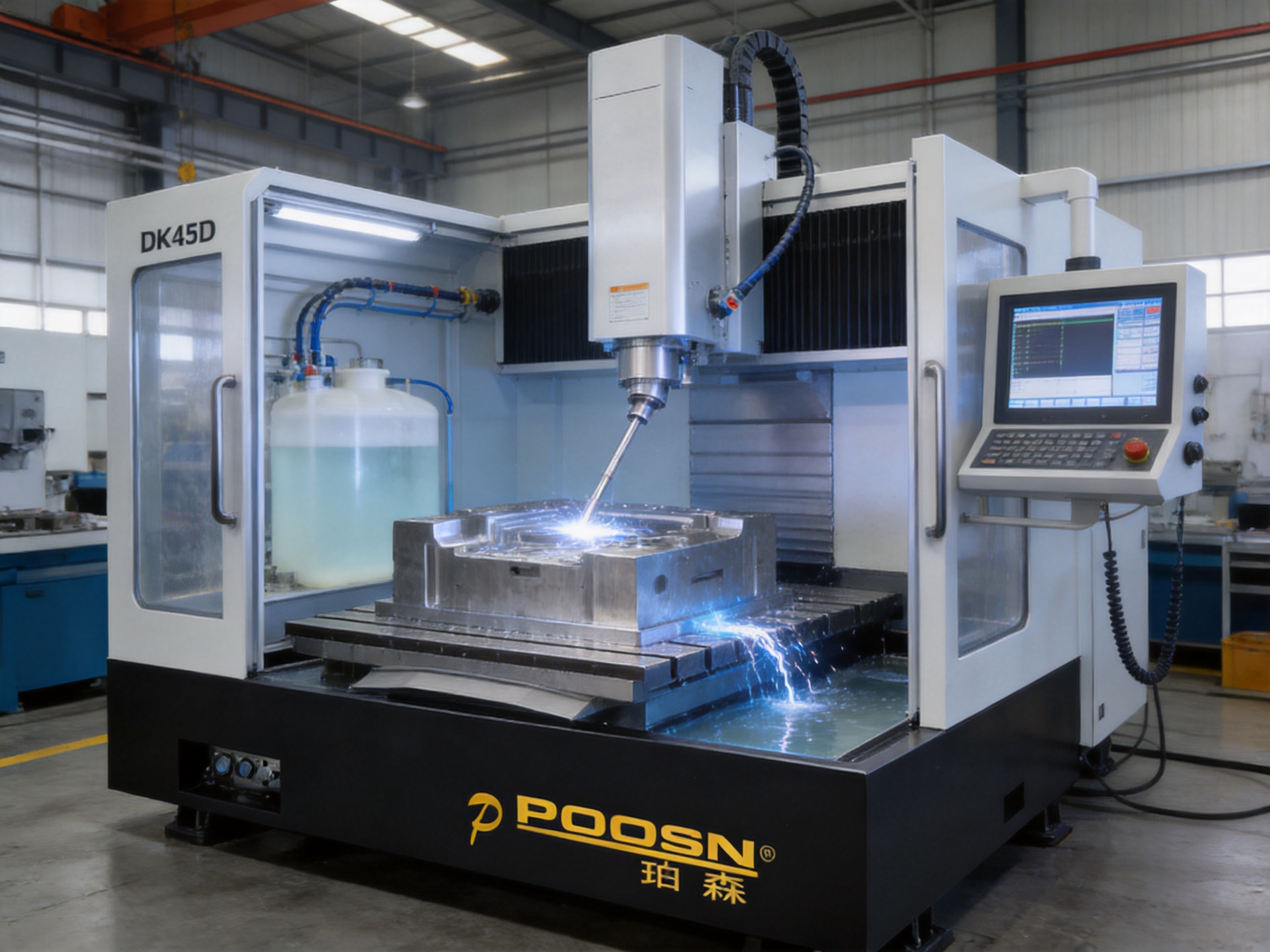
Flushing is equally important. EDM debris must be removed from the cutting gap. If debris accumulates, it can cause secondary discharges, unstable current, short circuits, poor surface quality, and wire breakage. The DK45D’s dielectric circulation and flushing arrangement is designed to maintain a more consistent discharge environment, including during inclined and deep cutting.
For operators, this means that machine setup should include careful attention to flushing direction, nozzle position, dielectric condition, workpiece support, and cutting parameters. The machine provides the necessary platform, but process discipline remains essential for achieving the best results.
Advantages Compared with Conventional Wire-Cut EDM Equipment
Expanded Taper Capability
The most obvious advantage of the DK45D over ordinary wire-cut EDM equipment is its large taper capability. Basic machines are generally optimized for vertical cutting or limited taper angles. The DK45D can reach a maximum cutting taper of ±30° per 40 mm, enabling the production of much steeper profiles.
This expanded capability allows manufacturers to move more operations onto one machine. Instead of cutting a profile vertically and then completing the taper on a milling machine or grinder, the taper may be produced directly during wire EDM. This can reduce handling, decrease setup time, and improve the relationship between related surfaces.
Complex Spatial Machining
Conventional wire EDM machines may be limited when the upper and lower profiles are different. The DK45D’s X/Y/U/V four-axis linkage supports spatial trajectory control. It can produce variable taper profiles and more complex contour relationships, making it better suited to advanced tooling and specialized components.
The ability to control upper and lower geometry is especially useful in molds and dies. It can help create draft angles, inclined cutting edges, nonparallel walls, and profiles that change along the cutting height. For aerospace and automotive components, the same capability can support irregular geometries that would be difficult to reproduce using only two-dimensional cutting.
Large Workpiece Thickness
With a maximum cutting thickness of 450 mm, the DK45D can process thick workpieces beyond the practical range of many general-purpose wire-cut machines. Thick workpieces often require careful flushing and stable wire guidance. The machine is designed to provide the mechanical and process support required for these conditions.
Reduced Secondary Processing
When a machine can produce the required taper and contour in one controlled operation, the need for secondary grinding, milling, or manual fitting may be reduced. Fewer operations can mean lower labor costs, shorter throughput time, and fewer opportunities for dimensional errors.
Reducing secondary work is particularly valuable for components with difficult-to-measure profiles. Every additional setup creates a possibility of misalignment. Direct wire cutting from a carefully prepared CNC program can help preserve the intended relationship between features.
Improved Production Flexibility
The DK45D can process a wide range of conductive metals and alloys with different hardness levels. Unlike conventional cutting tools, the EDM wire does not rely on mechanical contact to remove material. This makes the process suitable for hardened tool steels and other difficult-to-cut conductive materials.
The machine is appropriate for prototype production, small and medium batch manufacturing, replacement parts, precision tooling, and specialized high-value components. Its flexibility allows a manufacturer to handle different workpiece sizes and geometries without investing in several separate machines.
Manufacturing Strengths of the Equipment Producer
The quality of a precision machine tool depends heavily on the capabilities of its manufacturer. Taizhou Xinchengyang Machinery Manufacturing Co., Ltd. has specialized in electrical discharge wire cutting since 1999. This long-term focus provides experience in the areas most relevant to the DK45D, including wire transport, control systems, taper mechanisms, machine structures, discharge stability, and production support.
The POOSN brand originated in 2003, and the company has continued to expand its manufacturing and technical capabilities. In 2007, cooperation with Bingfeng CNC supported the company’s development in the southern market. In 2009, the company was recognized as an Advanced Unit for Quality and Reputation. In 2017, Taizhou Xinchengyang Machinery Manufacturing Co., Ltd. was established with registered capital of 60 million yuan and constructed its own factory.
The company’s product portfolio includes PS-C and DK77-BC medium-speed wire-cut EDM machines, DK77-A and DK77-B high-speed wire-cut EDM machines, and DK77-D large-taper wire-cut EDM machines. This range allows the manufacturer to serve different production needs, from general wire cutting to high-speed processing and large-angle machining.
Its technical capabilities include advanced processing equipment, comprehensive testing methods, and product designs developed for industrial use. The company states that all products are manufactured according to national standards and that machine tools undergo positioning accuracy testing. These practices are important because machine geometry, axis positioning, and assembly quality directly affect the accuracy of the final workpiece.
Full-Process Quality Control
The manufacturing process for a large-taper EDM machine should include more than a final visual inspection. Accuracy can be affected by casting quality, guide installation, axis alignment, electrical cabinet assembly, wire guide positioning, software configuration, and machine leveling. A comprehensive quality system must therefore extend from component preparation through final acceptance.
According to the supplied company information, finished machines undergo metrological verification and simulated machining trials tailored to customer application scenarios. The company also describes in-process self-inspections, final product inspections, full-load operational testing lasting several hours, and precision calibration using a laser interferometer.
These procedures help verify that the machine operates correctly under conditions closer to actual production. A simulated cutting trial can reveal issues that may not appear during a simple idle run. Testing axis positioning, wire movement, taper operation, flushing, and control functions together provides a more complete assessment of machine readiness.
Customer-Oriented Customization
The company provides customization services for worktable size, cutting angle, and machine configuration. This is useful for customers whose workpieces do not fit a standard machine envelope or whose process requires special loading, flushing, motion, or measurement options.
Optional XY AC servo drives, linear scales, and high-pressure water tanks can be selected according to application requirements. The company also provides larger DKD models, including the DK55D, DK63D, and DK80D, for customers requiring greater worktable size, cutting thickness, workpiece load, or production capacity.
Technical Parameter Overview
| Parameter | DK45D |
| Product category | DKD Large Cutting Taper WEDM |
| CNC worktable size | 570 × 950 mm |
| X/Y travel size | 450 × 650 mm |
| Processing slot size | 630 × 990 mm |
| Maximum cutting thickness | 450 mm |
| Maximum worktable load | 400 kg |
| UV travel size | 290 × 290 mm |
| Maximum cutting taper | ±30° per 40 mm |
| Electrode wire diameter | Φ0.18 mm with wire guider |
| Wire feed speed | 1–11 m/s, frequency controlled |
| Maximum wire storage length | Approximately 350 m |
| Maximum cutting efficiency | 10,000–16,000 mm²/h |
| Optimal surface roughness | Ra ≤ 2.5 μm |
| Controlled axes | X, Y, U, and V four-axis linkage |
| Programming system | X8/AUTOCUT control system |
| Maximum processing current | 6 A |
| Electrical capacity | 2.5 KVA |
| Power supply | 3N 380 V ±10% |
| Machine weight | Approximately 1,600 kg |
| Machine dimensions | Approximately 1,780 × 1,500 × 1,700 mm |
| Standard configuration | High-precision linear rail support and eco-friendly waterproof cover |
| Optional configuration | High-pressure water tank, linear scale, and AC servo drives |
The specifications show why the DK45D occupies a useful position between general-purpose wire EDM equipment and larger heavy-duty machines. It offers a substantial cutting thickness and workpiece load while maintaining a relatively compact footprint compared with the larger DK55D, DK63D, and DK80D models.
Industrial Applications
Precision Mold Manufacturing
Mold manufacturing is one of the most important application areas for the DK45D. Molds often require accurate cavities, narrow slots, sharp internal corners, draft angles, and hardened materials. Large-taper cutting is particularly valuable when the mold design includes inclined walls or when the cutting edge must have a specific taper through the workpiece.
The DK45D can be used for mold inserts, cavity components, punch elements, die plates, guide components, and precision mold parts. Its four-axis motion supports complex profiles, while its wire EDM process allows hardened conductive materials to be machined without applying significant mechanical cutting force.
In stamping die production, the machine may be used to cut blanking edges and tapered profiles. Producing the tapered cutting edge in one wire-cutting operation can reduce the requirement for secondary grinding and help preserve the geometric relationship between the die components.
Aerospace Components
Aerospace parts often involve specialized profiles, lightweight structures, heat-resistant alloys, and strict dimensional requirements. The DK45D can support the machining of conductive aerospace components that contain irregular contours or inclined surfaces.
Its large-taper capability is useful for components in which the upper and lower profiles are not identical. The noncontact nature of EDM can also be beneficial when machining delicate or complex shapes that might deform under conventional cutting forces. Proper process qualification, material evaluation, and inspection remain necessary for aerospace production.
Automotive Components
The machine is suitable for precision automotive components, including irregular parts associated with steering, transmission, forming, and specialized tooling. Automotive manufacturers and suppliers often require repeatable production of components with complex profiles and tight process control.
The DK45D can support both prototype and medium-scale production. Once a program and process have been verified, the machine can repeat the profile across multiple workpieces. This is useful for components that require consistent dimensional relationships and reliable surface quality.
Precision Machinery
Precision machinery manufacturers can use the DK45D to process metal parts, custom machine components, precision plates, and specialized gears. Its ability to cut hard conductive materials and complex contours can provide an alternative to more labor-intensive machining routes.
The machine is also suitable for low-volume and customized production. In these environments, flexibility and setup efficiency may be more important than the very highest continuous throughput. The DK45D provides a broad operating range while retaining the capability needed for advanced taper work.
Production Efficiency and Cost Control
A machine’s economic value is determined by more than its cutting speed. The complete production cycle includes programming, setup, workholding, cutting, inspection, secondary processing, cleaning, and operator involvement. The DK45D can contribute to cost control by reducing the number of separate operations required for complex tapered profiles.
The maximum cutting efficiency is specified at 10,000 to 16,000 mm²/h under appropriate conditions. Actual productivity varies according to material, thickness, cutting height, taper, required surface finish, and the number of passes. A roughing pass may prioritize speed, while finishing passes may prioritize accuracy and surface quality.
The X8/AUTOCUT control system supports intelligent operation and reduces manual intervention. An intuitive interface can shorten programming and setup time, particularly for operators who are familiar with wire-cut EDM but have limited experience with large-taper calculations.
Reduced downtime is another potential advantage. Approximately 350 m of wire storage length allows longer unattended or semi-attended operation. Stable wire feeding, reliable axis movement, and suitable flushing reduce interruptions caused by wire breakage or unstable discharge.
For a complete cost evaluation, buyers should consider the machine price, installation, training, wire consumption, dielectric maintenance, electrical consumption, spare parts, service response, and the value of reduced secondary machining. The appropriate machine is the one that produces the required components reliably over its full operating life.
Operation and Process Considerations
Although the DK45D is designed to simplify large-taper machining, successful operation still requires careful preparation. The workpiece should be inspected for material condition, thickness, flatness, and conductivity. Workholding must be rigid and should allow dielectric fluid to reach the cutting region effectively.
Programming should define the upper and lower profiles, taper direction, taper angle, wire compensation, entry and exit conditions, and cutting sequence. When a variable taper is required, the relationship between the profiles must be checked carefully before machining begins. Simulation or verification functions should be used where available to detect collisions and geometric inconsistencies.
Wire alignment is critical. The wire guides should be clean, correctly installed, and suitable for the selected wire diameter. The flushing nozzles should be positioned to support effective debris removal without interfering with the wire or workpiece. In deep or steep-angle cuts, poor flushing can quickly affect both surface quality and cutting stability.
Operators should monitor wire tension, wire feed, dielectric condition, conductivity, filtration, and temperature. Thermal variation can influence machine geometry and workpiece accuracy, especially during extended machining. A stable workshop environment and correct machine leveling help support repeatable results.
Maintenance should include cleaning the work area, inspecting wire guides, checking the wire transport system, maintaining the dielectric filtration system, verifying electrical connections, and following the recommended lubrication schedule. Preventive maintenance protects accuracy and reduces unexpected downtime.
Model Selection Guidance
The DK45D is designed for medium-sized components, precision molds, and parts requiring large taper and high accuracy. Its 450 mm maximum cutting thickness and 400 kg worktable load make it appropriate for many general industrial applications.
The DK55D is intended for larger workpieces and more complex components. It provides a larger worktable, greater XY travel, a maximum cutting thickness of 600 mm, and a maximum worktable load of 600 kg.
The DK63D is suitable for extra-large workpieces and heavy components. It provides a maximum worktable load of 800 kg and a maximum cutting thickness of 600 mm, making it suitable for larger aerospace, mold, and industrial applications.
The DK80D is designed for heavy-duty molds and extra-large workpieces. It provides a maximum cutting thickness of 800 mm and a maximum worktable load of 1,000 kg. Customizable options are available for the DK80D and larger machines according to the supplied product information.
When choosing between the models, customers should evaluate workpiece envelope, maximum thickness, loading weight, taper angle, required accuracy, production volume, workshop space, and future expansion plans. Selecting a machine with sufficient capacity is generally preferable to operating continuously at the limit of its travel or load range.
Technical Support and Service
Technical support is an important consideration when purchasing advanced EDM equipment. Large-taper machining involves more variables than conventional vertical wire cutting, and operators may need assistance with programming, setup, parameter selection, wire alignment, and maintenance.
Taizhou Xinchengyang Machinery Manufacturing Co., Ltd. provides rapid response and professional technical support for equipment operation and maintenance. The company also provides operation training to help users become familiar with the control system and production procedures.
An intuitive control interface reduces the learning curve, but training remains valuable. Operators should understand how taper geometry is generated, how wire compensation affects the result, how flushing influences stability, and how to respond to wire breakage or abnormal discharge. Proper training helps customers use the DK45D efficiently and safely.
For overseas customers, service planning should include installation guidance, spare parts availability, remote technical assistance, documentation, and communication procedures. A machine tool is a long-term production asset, so support capability should be evaluated alongside technical specifications.
Q&A
Q1: What is the main advantage of the DK45D?
The main advantage is its large-taper cutting capability combined with four-axis X, Y, U, and V linkage. The machine can produce steep and variable taper profiles that are difficult or impossible to complete efficiently on a conventional vertical wire-cut EDM machine.
Q2: What maximum taper can the DK45D cut?
The DK45D provides a maximum cutting taper of ±30° per 40 mm. The actual usable taper depends on workpiece thickness, profile geometry, wire condition, programming, and process parameters.
Q3: What is the maximum workpiece thickness?
The maximum cutting thickness is 450 mm. Customers should confirm the complete workpiece dimensions, fixture arrangement, flushing access, and taper requirements before production.
Q4: Can the machine process heavy workpieces?
Yes. The DK45D has a maximum worktable load of 400 kg. Heavy workpieces must be supported and clamped correctly, and the total load should remain within the machine’s specified capacity. Customers requiring greater load capacity can consider the DK55D, DK63D, or DK80D models.
Q5: What control system does the DK45D use?
The machine uses the X8/AUTOCUT control system. The system provides an operator-oriented interface and supports the control requirements of four-axis large-taper machining.
Q6: Is the DK45D suitable for inexperienced operators?
The intuitive control interface helps new operators learn the basic procedures more quickly. However, operators should receive training in wire EDM safety, workpiece setup, taper programming, flushing, parameter selection, and maintenance. The manufacturer provides detailed operation training and technical support.
Q7: What materials can be processed?
The DK45D can process conductive metals and alloys across a broad range of hardness levels. Typical applications include tool steels, die steels, alloy materials, and other conductive workpiece materials. The exact cutting strategy should be established according to material composition, thickness, required finish, and dimensional requirements.
Q8: Can the DK45D reduce secondary grinding?
Yes, in suitable applications. By cutting a tapered profile directly, the machine may reduce or eliminate certain secondary milling, grinding, or manual fitting operations. The extent of reduction depends on the drawing requirements and the required final surface condition.
Q9: What surface roughness can the machine achieve?
The specified optimal surface roughness is Ra ≤ 2.5 μm. The final result depends on the material, workpiece thickness, cutting parameters, number of passes, wire type, flushing, and inspection conditions.
Q10: What optional configurations are available?
Optional configurations include a high-pressure water tank, linear scale, and AC servo drives for the XY worktable. Customers can discuss these options with the manufacturer according to the desired accuracy, automation level, and production requirements.
Q11: How does the machine maintain accuracy during high-load cutting?
The DK45D uses a rigid machine structure, high-precision linear rail support, controlled four-axis movement, and an EDM control system designed for stable discharge. Correct leveling, workholding, wire alignment, flushing, and thermal management are also essential for maintaining accuracy.
Q12: How does the DK45D compare with larger models?
The DK45D is intended for medium-sized components and has a 400 kg worktable load and 450 mm maximum cutting thickness. The DK55D, DK63D, and DK80D provide progressively larger worktables, greater load capacity, and increased cutting thickness for larger or heavier workpieces.
Conclusion
The DK45D CNC Large-Taper Wire-Cut EDM Machine is engineered for manufacturers that require more than conventional two-dimensional wire cutting. Its large taper capability, four-axis X/Y/U/V linkage, 450 mm maximum cutting thickness, 400 kg worktable load, and X8/AUTOCUT control system provide a practical solution for complex molds, dies, aerospace components, automotive parts, and precision machinery.
Its advantages are most evident when a component contains steep slopes, variable taper, different upper and lower profiles, deep contours, or hardened conductive material. By bringing these operations into a single wire-cutting process, the machine can reduce secondary machining, improve dimensional consistency, and support more efficient production.
The DK45D’s performance is supported by structural rigidity, precision linear guideways, controlled wire transport, optimized flushing, and a manufacturing process that includes accuracy testing, simulated machining, full-load operation, and final inspection. These capabilities reflect the technical experience of Taizhou Xinchengyang Machinery Manufacturing Co., Ltd., a company with a long history in EDM and wire-cutting technology.
For companies seeking a flexible and cost-effective large-taper WEDM solution, the DK45D offers a balanced combination of cutting capacity, precision, stability, and application versatility. Proper machine selection, professional installation, operator training, and disciplined process control will allow users to obtain the greatest value from the equipment throughout its service life.
References
1. Technical specification materials for the DKD Large Cutting Taper WEDM series.
2. Product information for the DK45D CNC Large-Taper Wire-Cut EDM Machine.
3. GB/T 7926-2015, Accuracy of Wire-Cut Electrical Discharge Machines.
4. General principles of electrical discharge machining and wire electrical discharge machining.
5. Manufacturer-provided information concerning X8/AUTOCUT control, machine configuration, quality inspection, and technical support.
6. Manufacturer-provided company profile and development history for Taizhou Xinchengyang Machinery Manufacturing Co., Ltd.
Product: DK45D CNC Large Taper Wire Cut EDM Machine for Precision Mold Machining
-
Phone
+86-0523-86268788 +86-13815960366 +86-13912191163Email
[email protected]Address
No. 366, Yusheng Road Jiulong Town, Hailing District Taizhou City, China
Copyright © Taizhou Xinchengyang Machinery Manufacturing Co., Ltd. All Rights Reserved.
Custom edm machine for sale
wholesale edm machine manufacturers
