

 English
 русский
 عربى
عربى

Shen Yiru — After-Sales Service Engineer
Home / Author / Shen Yiru — After-Sales Service Engineer / DK-7745 High-Speed Wire EDM Machine: Precision, Productivity, and Heavy-Duty Cutting Capability
DK-7745 High-Speed Wire EDM Machine: Precision, Productivity, and Heavy-Duty Cutting Capability
2026-08-09
In modern mold manufacturing, aerospace production, automotive engineering, and precision component processing, manufacturers require cutting equipment that can combine dimensional accuracy, stable operation, high productivity, and practical operating costs. The DK-7745 CNC high-speed wire electrical discharge machining machine is designed to meet these requirements through a large working range, four-axis coordinated movement, a rigid machine structure, a high-speed reciprocating wire system, and an intelligent control platform.
As a high-speed wire-cut EDM solution, the DK-7745 is intended for companies that need reliable performance when machining difficult-to-cut conductive materials, complex profiles, hardened steels, cemented carbide, precision molds, and large workpieces. Its design balances the advantages of high-speed wire cutting with the need for dependable accuracy during demanding production cycles.
The machine is positioned within the DK-77 high-speed WEDM series and is suitable for both individual precision jobs and repeat production. It provides a maximum cutting efficiency of up to 16,000 square millimeters per hour under appropriate processing conditions, a maximum cutting thickness of 450 millimeters in the standard DK-7745 configuration, and a maximum worktable load of 400 kilograms. Its four-axis linkage system supports the machining of straight contours, angled profiles, and complex geometries that require coordinated movement of the X, Y, U, and V axes.
Content
- 1 1. Product Overview
- 2 2. Main Technical Capabilities
- 3 3. Machine Structure and Manufacturing Quality
- 4 4. Advantages Compared with Alternative Cutting Equipment
- 5 5. Productivity and Cost-Effectiveness
- 6 6. CNC Operation and User Experience
- 7 7. Applications in Key Industries
- 8 8. Manufacturing Strengths of the Supplier
- 9 9. Quality Assurance and Long-Term Reliability
- 10 10. Recommended Selection and Installation Considerations
- 11 11. Technical Specification Summary
- 12 12. Service, Technical Support, and Custom Solutions
- 13 13. Frequently Asked Questions
- 13.1 Q1: What type of machine is the DK-7745?
- 13.2 Q2: What is the maximum worktable load?
- 13.3 Q3: What is the maximum cutting efficiency?
- 13.4 Q4: Can the machine cut hardened steel?
- 13.5 Q5: Does the DK-7745 support taper cutting?
- 13.6 Q6: What surface finish can the machine achieve?
- 13.7 Q7: Is high-speed wire EDM economical for production?
- 13.8 Q8: How difficult is the machine to operate?
- 13.9 Q9: What control cabinet options are available?
- 13.10 Q10: Can the machine process large molds?
- 13.11 Q11: What maintenance is required?
- 13.12 Q12: Can the supplier provide customized solutions?
- 13.13 Q13: What industries use the DK-7745?
- 13.14 Q14: What should customers confirm before ordering?
- 14 14. Conclusion
- 15 References
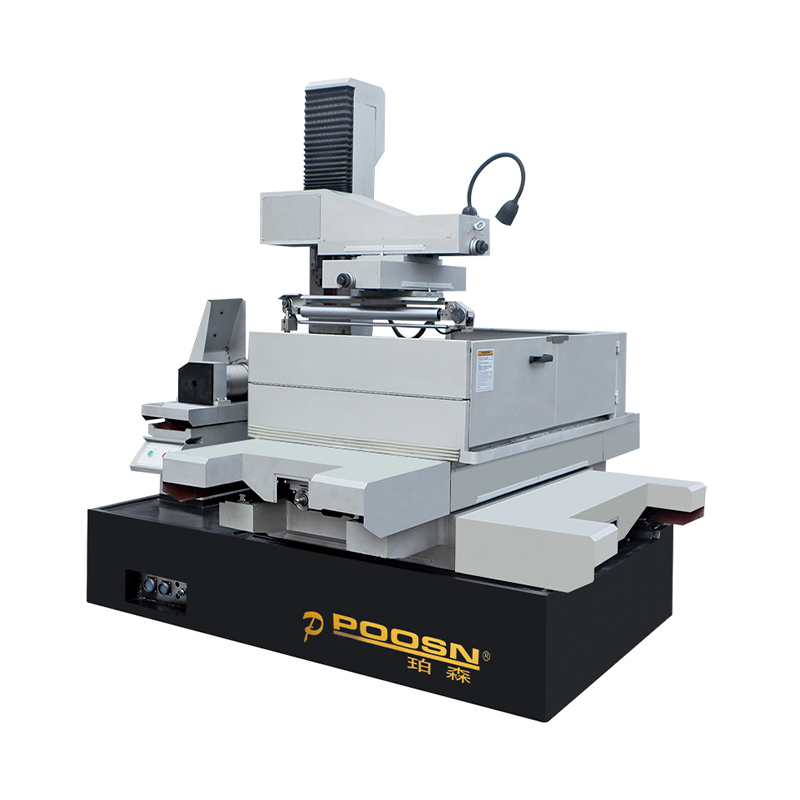
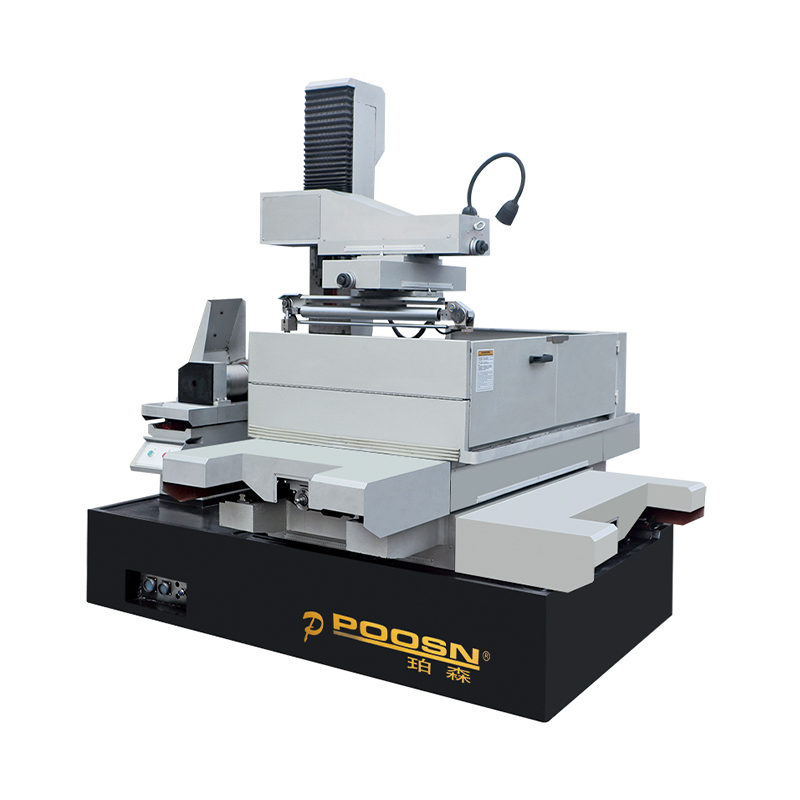
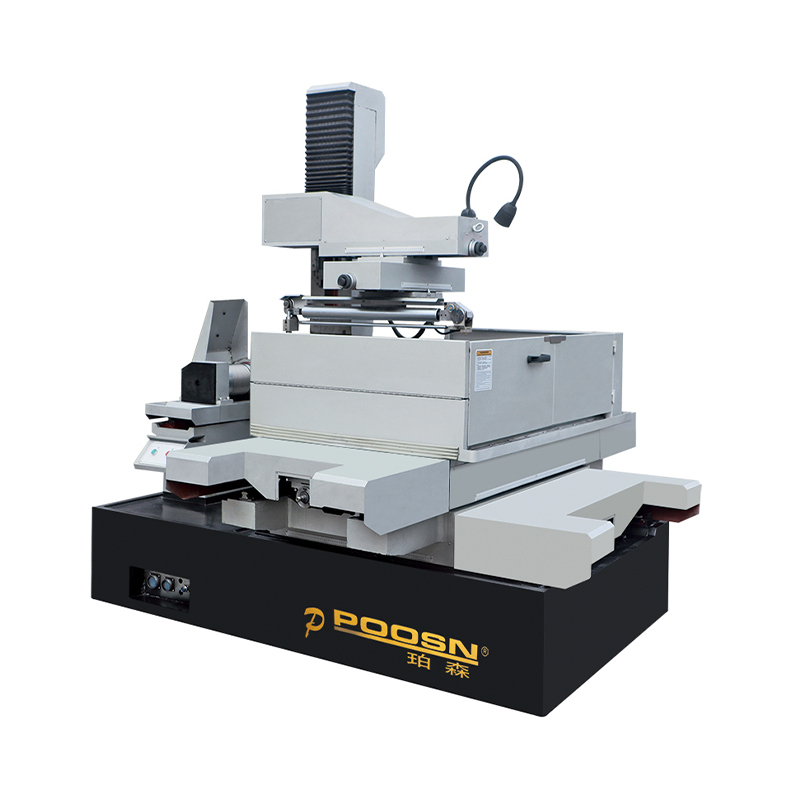
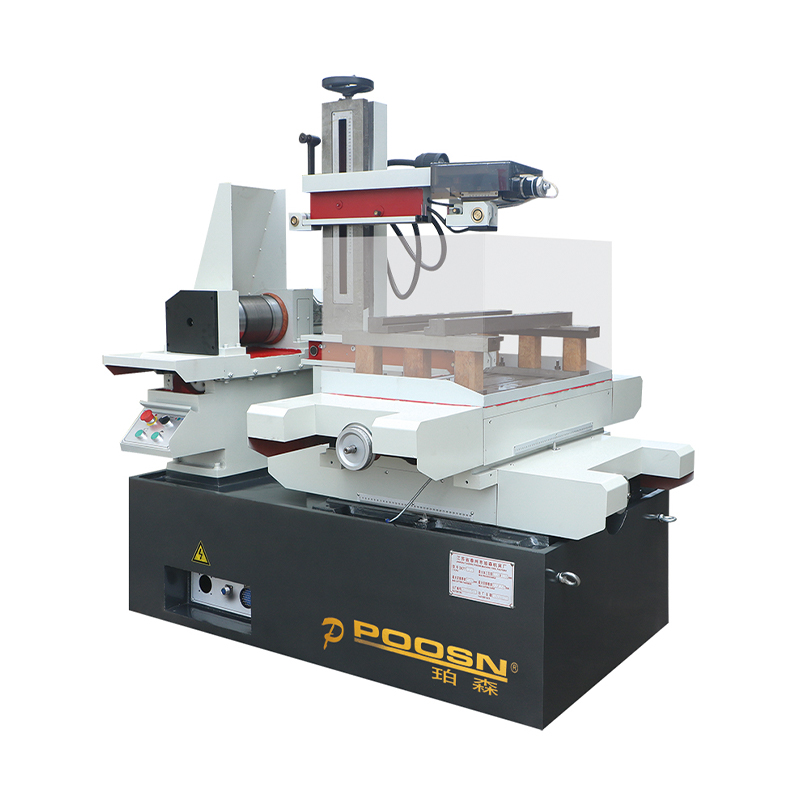
- 16 Product: DK-7745 CNC High-Speed Wire EDM Machine (4-Axis, 400×600mm Travel)
1. Product Overview
The DK-7745 is a CNC high-speed wire EDM machine developed for large and medium-to-large workpieces requiring dependable contour accuracy. The machine uses a continuously reciprocating electrode wire and controlled electrical discharges to remove material without direct mechanical contact between the cutting tool and the workpiece.
This non-contact cutting principle gives the DK-7745 several important advantages. It eliminates conventional cutting forces, reduces the risk of mechanical distortion, and allows the processing of electrically conductive materials regardless of their hardness. Hardened tool steel, die steel, carbide, and other difficult materials can be machined after heat treatment, which can simplify the overall manufacturing process.
The DK-7745 is particularly useful when a component contains narrow slots, internal contours, sharp corners, irregular profiles, deep sections, or shapes that would be difficult to produce with milling, sawing, or conventional turning. Because the electrode wire follows a programmed path, the same machine can be used for a wide variety of component geometries without requiring a large collection of dedicated cutting tools.
Its design also emphasizes production stability. The high-strength machine frame, precision guide system, ball screw transmission, electrical control system, dielectric circulation system, and wire transport mechanism work together to support consistent cutting performance. This integrated design is important because the quality of a wire-cut EDM process depends not only on CNC positioning but also on wire tension, flushing, pulse control, thermal stability, and the rigidity of the machine structure.
The product is available as part of a broader model family. Smaller DK-7725 and DK-7735 models can be selected for small and medium workpieces, while the DK-7745F and larger DK-7755F, DK-7763F, DK-7780F, and DK-77100F machines are designed for larger or heavier components. This model range allows customers to choose a suitable machine size without paying for unused capacity.
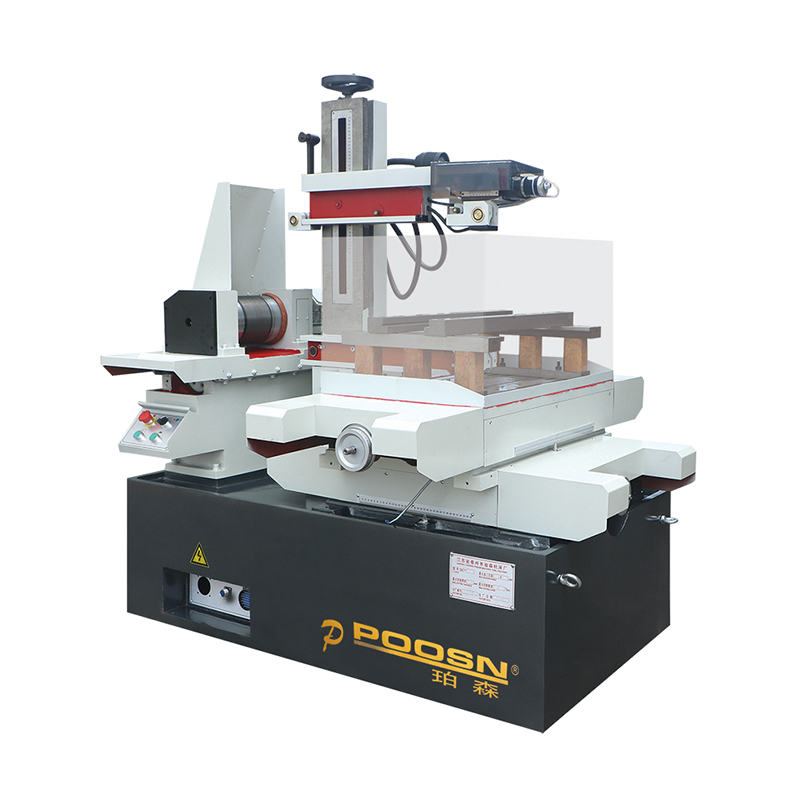
DK-7745 CNC High-Speed Wire EDM Machine (4-Axis, 400×600mm Travel)
2. Main Technical Capabilities
2.1 Large Working Range
The DK-7745 is configured for large workpieces and offers a substantial working table. The standard product data lists a worktable size of approximately 570 by 850 millimeters and an X/Y travel of approximately 450 by 550 millimeters. Product configurations may also be described according to a nominal 400 by 600 millimeter travel designation. Because machine specifications can vary according to configuration, control cabinet, and customer requirements, the final technical proposal should be confirmed before ordering.
This working range gives the machine a practical advantage over compact wire EDM equipment. A larger table reduces the need to divide a workpiece into multiple setups, which can improve consistency between sections and reduce alignment errors. Fewer setups also lower fixture preparation time and make production planning more efficient.
The 400-kilogram maximum worktable load listed for the DK-7745 allows the machine to support substantial molds, plates, dies, and mechanical components. A strong load capacity is especially valuable for workpieces that are not only large but also thick or dense. Proper workholding remains essential, but the machine’s structural design provides a stable foundation for heavy-duty cutting applications.
2.2 High Cutting Efficiency
The DK-7745 can achieve a maximum cutting efficiency of up to 16,000 square millimeters per hour under suitable material, thickness, wire, flushing, and power conditions. Depending on the selected CNC cabinet and actual process parameters, the operating range is generally stated as approximately 10,000 to 16,000 square millimeters per hour.
High cutting efficiency can shorten production cycles, increase machine utilization, and improve the output of a workshop without requiring a proportional increase in floor space. For manufacturers producing multiple cavities, inserts, punch components, or repeated profiles, even a small reduction in cutting time can create significant annual savings.
Actual performance depends on many factors, including material grade, workpiece thickness, required surface quality, corner geometry, wire type, dielectric condition, flushing pressure, and the selected electrical parameters. The maximum figure should therefore be understood as a performance reference rather than a guaranteed result for every application. Professional process preparation is necessary to achieve the best balance between speed, precision, surface finish, and wire consumption.
2.3 Four-Axis Linked Movement
The DK-7745 uses X, Y, U, and V axis stepper drives with four-axis linkage. The X and Y axes control the primary worktable movement, while the U and V axes coordinate the upper wire guide. This configuration allows the machine to produce taper cuts and other profiles in which the upper and lower contours are different.
The listed maximum cutting taper is up to plus or minus 6 degrees over 80 millimeters, subject to the material, thickness, machine setup, and process conditions. Taper cutting is valuable in die manufacturing, punch production, mold inserts, and components that require draft angles or nonparallel sidewalls.
Four-axis interpolation also helps the machine process more complex shapes than a basic two-axis system. It can support the production of angled surfaces, transition profiles, and components whose upper and lower geometries must remain coordinated. This expands the range of work that can be completed on one machine and reduces reliance on secondary operations.
2.4 Surface Finish and Accuracy
The DK-7745 is designed to achieve an optimal surface roughness of Ra 2.5 micrometers or better under appropriate finishing conditions. Surface roughness depends on the number of finishing passes, electrical parameters, wire condition, flushing stability, material characteristics, and the required dimensional tolerance.
The product information identifies linear accuracy of up to 0.005 millimeters and taper accuracy of approximately 0.015 millimeters for suitable processing conditions. The machine accuracy is referenced to GB/T 7926-2015. These values position the DK-7745 as a practical solution for high-precision molds, mechanical components, and production parts that require controlled contour quality.
In industrial production, accuracy is not determined by the nominal specification alone. Thermal behavior, installation, leveling, workpiece clamping, dielectric temperature, wire tension, and maintenance all influence final results. The DK-7745 addresses these variables with a rigid structure, precision transmission components, controlled wire movement, and a process-oriented design intended to support repeatable results.
3. Machine Structure and Manufacturing Quality
3.1 High-Strength Machine Bed
A wire EDM machine must remain geometrically stable while supporting the workpiece, table, wire transport system, and dielectric system. The DK-7745 uses a heavy-duty structure intended to resist vibration and deformation during long machining cycles.
The machine bed is manufactured from high-strength cast material and subjected to aging treatment to reduce internal stress. Stress relief is an important manufacturing step because residual stress can gradually cause deformation, especially when a large casting is exposed to temperature changes or continuous mechanical loading.
A stable bed supports the alignment of the guide rails and ball screws. It also helps maintain the relative position between the worktable, wire guides, and workpiece. When the structure remains stable, the machine is better able to preserve geometric accuracy over extended operating periods.
3.2 Precision Guideways and Ball Screws
The drive system uses precision ball screws and high-rigidity linear guides to support the X and Y axes. Ball screws help convert motor rotation into controlled linear motion with low friction and limited backlash. Linear guides provide smooth movement and support the table under load.
These components are important for both absolute positioning and repeatability. A machine may produce an accurate first cut, but production value depends on its ability to reproduce that accuracy across multiple workpieces and different travel positions. Smooth transmission and rigid guidance contribute to more consistent contour machining and reduce the risk of dimensional variation.
The long-travel capability of the DK-7745 makes the quality of its guide and transmission system particularly important. Deflection, vibration, or friction over a long stroke can affect corner accuracy and surface quality. The combination of precision ball screws, rigid guideways, and a stress-relieved structure is intended to address these challenges.
3.3 High-Speed Reciprocating Wire System
The high-speed reciprocating wire system is central to the machine’s operation. The electrode wire travels through the workpiece zone at high speed, discharges electrical energy into the material, and is then collected or returned according to the machine’s wire transport design.
The wire drum is dynamically balanced to limit vibration during high-speed operation. Precision guide rails help maintain stable wire travel, while the wire tension system supports controlled positioning in the cutting zone. Reduced vibration can improve the quality of the machined surface and lower the risk of irregular discharge conditions.
High-speed wire EDM can reuse the electrode wire through reciprocating operation. This is one of its major economic advantages compared with single-use wire systems. Reusable wire can reduce consumable expenditure and make the process attractive for mold shops and general precision machining companies that require a balance between accuracy and operating cost.
3.4 Electrical Discharge and Pulse Control
The DK-7745 uses a high-frequency pulse power system with variable electrical control. In wire EDM, material removal occurs when controlled electrical discharges form between the energized wire and the conductive workpiece. The dielectric fluid provides insulation between pulses and helps carry away eroded particles.
Stable pulse energy is essential when cutting thick or difficult materials. Excessive or unstable energy can increase wire breakage, damage the workpiece surface, or create undesirable dimensional errors. Insufficient energy can reduce cutting speed and lead to inefficient processing. The DK-7745’s power control system is designed to adjust discharge conditions according to the cutting stage and material response.
The product design includes a responsive internal power control module intended to reduce the impact of pulse fluctuations. Stable electrical output supports a more consistent discharge gap and helps maintain the balance between removal rate, surface quality, and wire reliability.
3.5 Dielectric Circulation and Flushing
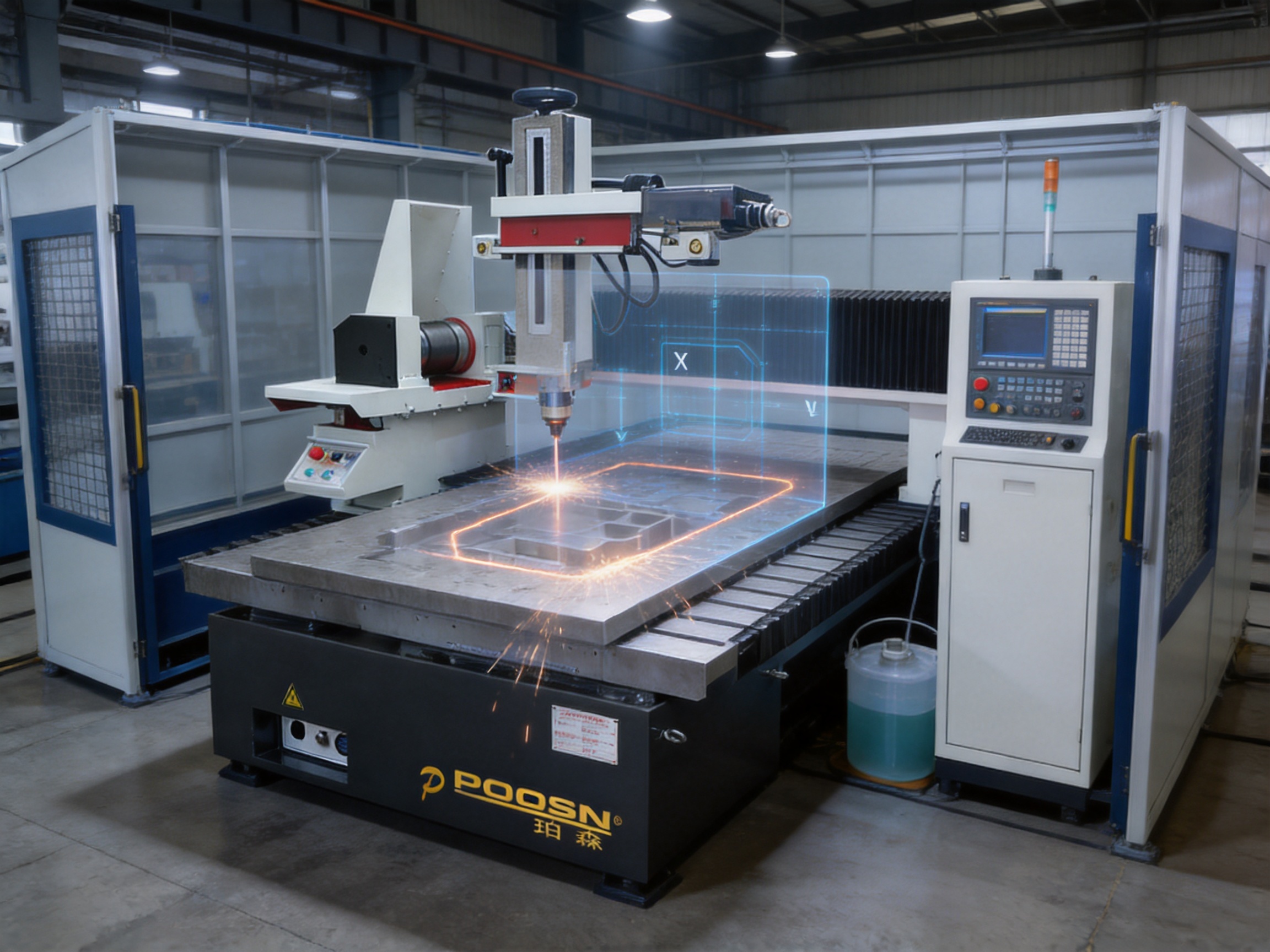
Efficient flushing is necessary to remove eroded particles from the cutting gap. If debris remains in the machining zone, it can cause unstable discharges, short circuits, wire breakage, poor surface finish, and dimensional errors. The DK-7745 includes a dedicated dielectric fluid circulation system to support cooling and chip evacuation.
The flushing system also helps control thermal accumulation. Although the EDM process does not use direct mechanical cutting force, electrical energy produces heat in the discharge zone. Stable fluid circulation helps remove heat and maintain more consistent machining conditions.
For thick workpieces, flushing becomes even more important because the cutting gap is deeper and debris removal is more difficult. Correct nozzle adjustment, clean dielectric fluid, appropriate filtration, and regular maintenance are necessary to achieve the best performance.
4. Advantages Compared with Alternative Cutting Equipment
4.1 Compared with Conventional Milling
Milling machines remove material through direct contact between a rotating tool and the workpiece. This method is highly versatile, but it can become difficult when the material is extremely hard, the profile is narrow, or the component contains deep internal features.
The DK-7745 uses electrical discharge rather than mechanical cutting force. As a result, it can process hardened steel and cemented carbide without requiring the cutting tool to withstand the same mechanical loads encountered in milling. It can also produce narrow slots and intricate internal contours that may be difficult to reach with a milling cutter.
Wire EDM is not intended to replace milling in every application. Milling is often faster for bulk material removal and can process nonconductive materials. However, the DK-7745 is highly effective for final contour cutting, precision profiling, hardened components, and geometries where milling would require specialized tools or multiple setups.
4.2 Compared with Sawing and Mechanical Profiling
Sawing and mechanical profiling are suitable for relatively simple shapes, but they are limited when the workpiece requires tight contour control, fine internal openings, sharp transitions, or taper geometry. Mechanical contact can also create burrs, tool deflection, and cutting forces that affect thin or delicate workpieces.
The DK-7745 provides a non-contact process capable of following programmed complex profiles. The absence of direct tool pressure helps reduce distortion, particularly when the workpiece has delicate sections or low structural rigidity. The machine can also produce internal shapes after a starting hole has been prepared.
4.3 Compared with Low-Speed Wire EDM
Low-speed wire EDM systems generally use a continuously supplied single-use wire and are often selected for very high precision, excellent surface finish, and demanding finishing operations. High-speed wire EDM systems such as the DK-7745 use a reciprocating wire, which can reduce wire consumption and operating costs.
The DK-7745 is therefore attractive to manufacturers that need high productivity and reliable precision while maintaining practical consumable costs. It can be especially suitable for domestic mold shops, general toolrooms, production workshops, and companies that need to process a broad range of components rather than only ultra-high-precision finishing work.
High-speed wire EDM may require careful process optimization to achieve the highest surface quality. However, the DK-7745 supports multiple passes and controlled finishing strategies, allowing users to select a suitable balance between rough cutting speed and final surface quality.
4.4 Compared with Smaller Wire EDM Machines
Compact wire EDM machines are useful when floor space, workpiece size, and load requirements are limited. However, a smaller machine may require additional setups for large molds or heavy components. Repositioning a workpiece can introduce alignment errors and increase preparation time.
The DK-7745 offers a larger working area and a 400-kilogram worktable capacity, making it more suitable for large dies, mold plates, aerospace components, and automotive tooling. Its greater capacity allows more workpieces to be processed in one setup, which can improve efficiency and reduce the need for auxiliary fixtures.
5. Productivity and Cost-Effectiveness
5.1 Reduced Production Cycle Time
The combination of high cutting efficiency, large travel, and four-axis operation allows the DK-7745 to reduce the number of process steps required for many components. A single machine can perform rough cutting, contour machining, taper cutting, and finishing passes within one controlled setup.
Fewer transfers between machines reduce waiting time and make production scheduling easier. They also reduce the possibility of errors caused by repeated clamping, manual alignment, or the transfer of workpiece coordinates between different machines.
For batch production, the benefit becomes more significant. Once a program and workholding method have been verified, similar parts can be processed with repeatable settings. The machine’s CNC control system supports a more standardized workflow, helping operators move from drawing review to program preparation and machining with fewer manual interventions.
5.2 Lower Electrode Wire Consumption
The reciprocating wire system enables the electrode wire to be reused during machining. This can provide a meaningful cost advantage over single-use wire processes, particularly when the machine is used for extended production runs or a wide variety of mold components.
Wire consumption is influenced by wire diameter, tension, cutting speed, material thickness, electrical settings, and the number of wire changes. Even so, the reusable wire principle remains one of the defining economic benefits of high-speed wire EDM.
5.3 Efficient Use of Floor Space
The DK-7745 is designed to provide a substantial machining range without requiring a disproportionately large installation footprint. Its layout is optimized to accommodate long travel and a large workpiece while maintaining practical access for loading, setup, operation, and maintenance.
Efficient floor-space utilization is important for manufacturers expanding production capacity. A machine that can process larger workpieces without occupying excessive floor area can improve output per square meter and delay the need for facility expansion.
5.4 Flexible Model Selection
The DK-77 series includes several sizes so that customers can select equipment according to workpiece dimensions, load, accuracy, and production volume. The DK-7745 is intended for large-sized components and high-precision molds, while the DK-7745F is designed for extra-large or heavy workpieces.
The available model range includes the following representative configurations:
| Model | Worktable Size | X/Y Travel | Maximum Worktable Load | Machine Weight |
| DK-7725 | 410 × 600 mm | 250 × 320 mm | 250 kg | 800 kg |
| DK-7735 | 500 × 750 mm | 350 × 450 mm | 300 kg | 1,100 kg |
| DK-7745 | 570 × 850 mm | 450 × 550 mm | 400 kg | 1,250 kg |
| DK-7745F | 570 × 950 mm | 450 × 650 mm | 500 kg | 1,350 kg |
The table demonstrates the position of the DK-7745 within the model range. It offers more worktable capacity and travel than the DK-7725 and DK-7735, while remaining more compact and economical than the larger heavy-duty models.
6. CNC Operation and User Experience
6.1 Intuitive Control Interface
The DK-7745 is equipped with a CNC control system designed to simplify programming, setup, and daily operation. The control interface supports the management of coordinated four-axis movement and provides access to cutting parameters, machining stages, wire operation, and process monitoring.
An intuitive interface is important because wire EDM operators must coordinate several variables at once. These include workpiece positioning, wire threading, cutting direction, electrical settings, flushing, taper values, and finishing passes. A clear control structure can reduce training time and help operators identify abnormal conditions more quickly.
The machine can support the import and conversion of graphic data, helping streamline the transition from design drawings to machining programs. Depending on the selected control configuration and software package, users may also benefit from graphic verification, program checking, and power-loss memory functions.
6.2 Simplified Training
The DK-7745 is intended to be accessible to operators who receive systematic training in wire EDM principles, machine safety, workholding, programming, and process control. The CNC system reduces the need for extensive manual calculations and provides a more structured operating procedure.
New operators still require proper instruction. They must understand dielectric management, wire threading, electrical hazards, workpiece conductivity, grounding, cutting parameters, and emergency procedures. However, an integrated interface and repeatable machine layout can shorten the learning curve and reduce dependence on highly specialized manual skills.
6.3 Four-Axis Programming
Four-axis programming allows the machine to coordinate the lower and upper wire guides. For a straight cut, both guide systems may follow a consistent path. For a tapered or three-dimensional profile, the upper guide can move relative to the lower guide according to the programmed geometry.
This capability is useful for stamping dies, injection mold inserts, punches, guide components, and other parts that require taper or coordinated upper and lower contours. Correct programming must account for workpiece thickness, wire offset, taper direction, entry and exit conditions, and the desired final dimensions.
7. Applications in Key Industries
7.1 Precision Mold Manufacturing
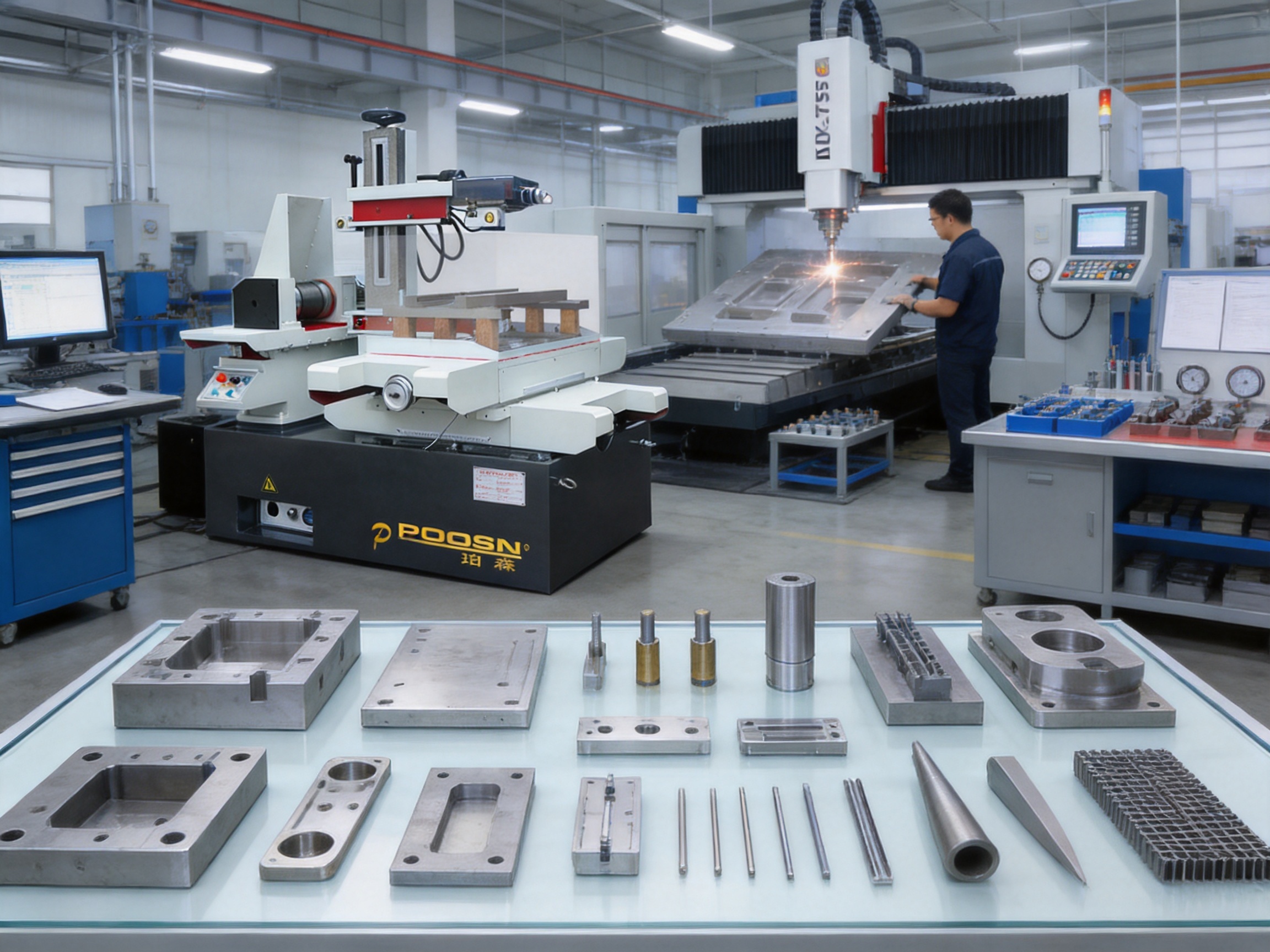
Mold manufacturing is one of the most important applications for the DK-7745. The machine can cut mold inserts, cavities, cores, punches, stripper plates, guide components, and complex die sections.
Many molds are made from hardened tool steel and contain narrow slots, sharp corners, internal openings, or intricate profiles. The non-contact EDM process allows these features to be produced without the cutting forces associated with conventional machining. The machine’s taper capability is also valuable when mold components require draft or angled surfaces.
For mold shops, the DK-7745 can support both prototype and production work. It can process one-off components according to a customer drawing and can also repeat programmed contours for multiple cavities or standardized tooling components.
7.2 Stamping Dies and Punches
Stamping die components often require high contour precision and excellent alignment between complementary parts. The DK-7745 can machine punches, die plates, inserts, and other components used in progressive dies, blanking dies, forming dies, and precision stamping tools.
The ability to process hardened material after heat treatment can simplify the manufacturing sequence. Instead of machining a softer material and relying on later correction, a manufacturer may perform final contour cutting after hardening, subject to its process plan and required tolerance.
7.3 Aerospace Components
Aerospace components may combine high-strength alloys, complex geometries, and demanding dimensional requirements. The DK-7745 is suitable for selected conductive aerospace parts, tooling, fixtures, and precision components that can be processed by wire EDM.
Its large worktable and load capacity support substantial components, while the four-axis system can produce taper and complex contour features. Aerospace manufacturers must qualify the process carefully, including material certification, dimensional inspection, surface integrity, and traceability. The machine provides the underlying cutting capability, while application-specific procedures determine final compliance.
7.4 Automotive Components
The automotive industry uses numerous dies, molds, precision plates, gears, inserts, and specialized components. The DK-7745 can support the production of automotive tooling and conductive components that require complex profiles or hardened-material machining.
High cutting efficiency is particularly beneficial in automotive tooling because manufacturers often need to produce multiple similar components under strict delivery schedules. A machine that combines repeatable programming, large workpiece capacity, and economical wire consumption can contribute to shorter lead times.
7.5 Precision Mechanical Parts
Precision machinery manufacturers can use the DK-7745 for keyways, narrow slots, intricate profiles, special gears, cutting tools, and components that are difficult to produce with standard machining methods.
Because the wire follows a programmed contour, the machine is suitable for low-volume and medium-volume production. It can also support engineering development, where product designs may change frequently and dedicated tooling would not be economical.
7.6 Electrical and Electronic Components
Electrical and electronic equipment often requires small, precise conductive parts, connector components, stamping tools, and miniature mold elements. The DK-7745 can process these components when their dimensions and material requirements fall within the machine’s operating range.
For production environments with demanding repeatability, the machine’s CNC control, stable wire movement, and multi-pass cutting capability can help maintain consistent component quality.
8. Manufacturing Strengths of the Supplier
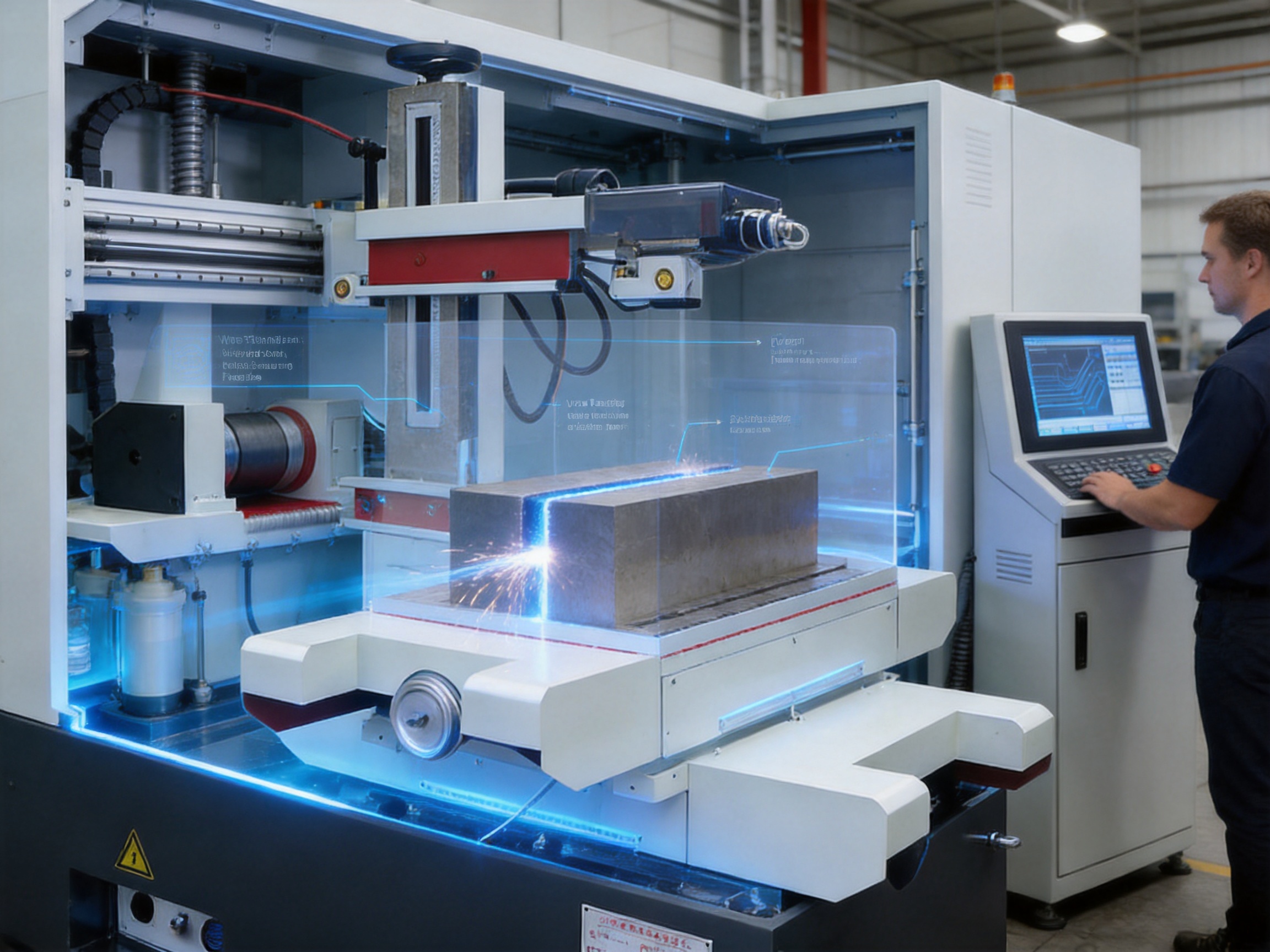
The manufacturer behind the DK-7745 has specialized in electrical discharge wire cutting since 1999. Its POOSN brand was established in 2003, and the company later developed its own manufacturing base and expanded its product lines across medium-speed, high-speed, and large-taper wire-cut EDM equipment.
Taizhou Xinchengyang Machinery Manufacturing Co., Ltd. combines research and development, production, testing, and technical service. The company manufactures wire-cut EDM machines for domestic and international markets and has supplied selected models to customers in Southeast Asia, West Asia, Europe, and the Americas.
8.1 Experience in EDM Technology
Long-term specialization in electrical discharge wire cutting gives the manufacturer practical experience in the areas that directly influence machine performance. These areas include machine-bed design, wire transport, pulse power, guideway alignment, dielectric circulation, CNC integration, and process support.
EDM equipment is not simply a mechanical structure with a control panel. Its performance depends on the relationship between electrical discharge behavior, fluid circulation, wire tension, mechanical accuracy, and software control. A manufacturer focused on EDM can develop these systems as an integrated platform rather than treating them as separate components.
8.2 Production and Inspection Capabilities
The company maintains advanced processing equipment and comprehensive testing methods. Each machine tool undergoes positioning accuracy testing, and the manufacturing process is organized around national technical standards and quality requirements.
Inspection of a wire EDM machine should include mechanical geometry, axis movement, positioning behavior, repeatability, wire alignment, electrical operation, dielectric circulation, and control-system functionality. Such testing helps confirm that the machine is ready for installation and production use.
The manufacturer also emphasizes final assembly inspection and quality control before shipment. This approach helps reduce commissioning time and gives customers greater confidence that the machine will operate as expected after installation.
8.3 Product Development and Innovation
The company has developed a range of wire-cut EDM products for different workpiece sizes and processing requirements. Its product lines include PS-C and DK77-BC medium-speed models, DK77-A and DK77-B high-speed models, and DK77-D large-taper models.
The company has also obtained a patent related to a fully automatic CNC machine tool using plate-type winding and suction-type adhesive technology. This development reflects its interest in improving machine automation and specialized wire-cutting functions.
In 2021, the company was recognized as a high-tech enterprise in Taizhou. Such recognition reflects the importance of continuous engineering development, although customers should always evaluate the specific technical capability, service response, and application suitability of the machine being purchased.
8.4 Customization and OEM/ODM Support
The DK-7745 series can be customized to meet different production requirements. Customization may include machine configuration, control cabinet selection, worktable arrangement, process support, application adjustments, and other technical options agreed during the project stage.
The standard control cabinet is identified as the ZH-K68 desktop cabinet, while the ZHZK-03 vertical cabinet is available as an option. The cabinet choice may depend on workshop layout, operator preference, installation conditions, and the desired control configuration.
OEM and ODM support can be valuable for distributors, machine-tool integrators, and industrial buyers who require specific branding, documentation, electrical standards, or application configurations. Each customized project should be reviewed technically to ensure that the requested options remain compatible with the machine’s structure and control system.
9. Quality Assurance and Long-Term Reliability
9.1 Structural Stability
Long-term EDM accuracy depends heavily on structural stability. Aging treatment of castings helps reduce the effects of internal stress, while a heavy-duty frame reduces vibration during table movement and wire operation.
A stable structure is especially important for the DK-7745 because it is intended for large and heavy workpieces. The machine must maintain the relationship between the workpiece, wire guides, table, and axes throughout the cutting cycle. Structural rigidity supports this relationship and helps prevent accuracy loss caused by vibration or deformation.
9.2 Accuracy Verification
Machine accuracy should be verified through positioning tests, repeatability tests, geometric inspection, and test cutting. The manufacturer states that each machine undergoes positioning accuracy testing before delivery. In demanding applications, customers may also request additional inspection documentation and sample-cutting verification.
Some product information refers to laser interferometer inspection before shipment. This type of measurement can help evaluate axis positioning behavior and identify deviations along the travel range. The final result at the customer site still depends on transportation, installation, leveling, environmental conditions, and commissioning.
9.3 Maintenance Requirements
Regular maintenance is necessary to protect the machine’s accuracy and productivity. Operators should inspect wire guides, wire tension components, dielectric filters, pumps, nozzles, electrical connections, ball screws, linear guides, and protective covers according to the maintenance schedule.
Dielectric fluid should be kept clean and replaced or filtered as necessary. Contaminated fluid can reduce flushing efficiency and destabilize the discharge process. Wire guides and contact components should be checked for wear because their condition directly affects wire positioning.
The machine should also be installed in a suitable environment with stable temperature, adequate ventilation, appropriate electrical supply, and sufficient space for loading and maintenance. Environmental control is particularly important when customers require tight tolerances over long cutting cycles.
10. Recommended Selection and Installation Considerations
10.1 Confirm Workpiece Dimensions
Before selecting the DK-7745, customers should confirm the maximum workpiece length, width, thickness, and weight. The workpiece must fit not only within the table dimensions but also within the usable cutting range after considering clamping fixtures, wire access, starting holes, and flushing requirements.
The standard DK-7745 specification lists a maximum cutting thickness of 450 millimeters. Components approaching the maximum thickness may require special process parameters, extended cutting time, and carefully designed flushing. Customers processing extra-thick workpieces should evaluate the DK-7745F or a larger model if the application requires additional clearance or load capacity.
10.2 Evaluate Required Surface Quality
Customers should define whether the application requires rough cutting, general precision cutting, or multiple finishing passes. The DK-7745 can support different process strategies, but cutting speed and surface finish are normally balanced against each other.
For example, a mold insert may require rapid rough cutting followed by several finishing passes to achieve the desired surface quality. A production plate may prioritize throughput and dimensional repeatability. Establishing the required outcome before purchase helps determine the appropriate CNC configuration, consumables, and process-support package.
10.3 Consider Material and Conductivity
Wire EDM requires an electrically conductive workpiece. Common materials include hardened steel, tool steel, stainless steel, copper alloys, and cemented carbide. Nonconductive materials cannot normally be processed by standard wire EDM without specialized treatment or alternative technology.
Material composition and heat treatment affect cutting speed, wire wear, surface response, and flushing behavior. Sample testing is recommended when customers plan to process unfamiliar alloys or unusually thick sections.
10.4 Prepare Utilities
The listed power supply is 3N 380 volts with a tolerance of plus or minus 10 percent. Customers should confirm local electrical standards, grounding, protection devices, transformer requirements, and workshop capacity before installation.
Installation also requires appropriate dielectric fluid, drainage or recycling arrangements, lifting equipment, access routes, and a stable foundation. The machine’s dimensions and weight should be reviewed against the workshop layout and transport path.
11. Technical Specification Summary
| Item | DK-7745 Reference Specification |
| Product Type | CNC high-speed wire-cut EDM machine |
| Axis Configuration | X, Y, U, and V axes; four-axis linkage |
| Worktable Size | Approximately 570 × 850 mm |
| X/Y Travel | Approximately 450 × 550 mm; nominal product designation may reference 400 × 600 mm |
| Maximum Cutting Thickness | 450 mm |
| Maximum Cutting Taper | Plus or minus 6 degrees over 80 mm |
| Maximum Cutting Efficiency | 10,000 to 16,000 square millimeters per hour |
| Optimal Surface Roughness | Ra 2.5 micrometers or better under suitable conditions |
| Linear Accuracy | Up to approximately 0.005 mm under stated conditions |
| Taper Accuracy | Approximately 0.015 mm under stated conditions |
| Maximum Worktable Load | 400 kg |
| Control Cabinet | ZH-K68 standard; ZHZK-03 vertical cabinet optional |
| Power Supply | 3N 380 V plus or minus 10 percent |
| Machine Weight | Approximately 1,250 kg |
| Machine Dimensions | Approximately 1,825 × 1,400 × 1,830 mm |
| Accuracy Standard | GB/T 7926-2015 reference |
Specifications may vary according to the final configuration, control cabinet, customer options, and technical agreement. Buyers should confirm the final machine data, installation drawing, power requirements, included accessories, and acceptance criteria in the commercial and technical documents.
12. Service, Technical Support, and Custom Solutions
For a wire EDM machine, technical support extends beyond delivery. Customers may require assistance with installation, leveling, wire threading, dielectric preparation, programming, parameter selection, troubleshooting, and operator training.
The manufacturer provides professional technical support intended to maintain operational stability. Support can include process optimization, consumable selection, cutting strategies for special workpieces, and recommendations for improving productivity or surface quality.
Customization services are available for customers with specific production requirements. A technical review should consider workpiece size, material, tolerance, taper, production quantity, surface finish, automation expectations, electrical standards, and workshop conditions. This information allows the supplier to propose a more suitable machine configuration rather than relying solely on a standard catalog specification.
After-sales support is particularly important for customers purchasing their first high-speed wire EDM machine. A structured training program can help operators understand the relationship between cutting parameters and results. Timely technical communication can also reduce downtime when a customer encounters wire breakage, unstable discharge, poor flushing, or unexpected dimensional variation.
13. Frequently Asked Questions
Q1: What type of machine is the DK-7745?
The DK-7745 is a CNC high-speed wire electrical discharge machining machine with X, Y, U, and V axes and four-axis linkage. It is designed for precision contour cutting, taper cutting, mold manufacturing, and the processing of large conductive workpieces.
Q2: What is the maximum worktable load?
The maximum worktable load listed for the DK-7745 is 400 kilograms. The workpiece, fixture, and any supporting tooling must be evaluated together to ensure that the total load remains within the permitted limit.
Q3: What is the maximum cutting efficiency?
The maximum reference cutting efficiency is up to 16,000 square millimeters per hour. A practical operating range of approximately 10,000 to 16,000 square millimeters per hour is indicated, depending on material, thickness, electrical settings, flushing, wire condition, and the selected control cabinet.
Q4: Can the machine cut hardened steel?
Yes. Wire EDM is suitable for electrically conductive hardened steels and other difficult-to-cut materials. Because it uses electrical discharges rather than direct mechanical cutting, the DK-7745 can process hardened tool steel, die steel, and selected carbide materials without softening them first, subject to application requirements.
Q5: Does the DK-7745 support taper cutting?
Yes. Its U and V axes support four-axis coordinated movement and taper cutting. The listed maximum taper is up to plus or minus 6 degrees over 80 millimeters, subject to workpiece thickness, material, setup accuracy, and process conditions.
Q6: What surface finish can the machine achieve?
The optimal surface roughness is listed as Ra 2.5 micrometers or better under suitable machining conditions. The final surface quality depends on the material, cutting thickness, number of passes, electrical parameters, wire condition, dielectric cleanliness, and flushing stability.
Q7: Is high-speed wire EDM economical for production?
High-speed wire EDM can be economical because the reciprocating wire system allows wire reuse. The DK-7745 also supports high cutting efficiency, large workpiece capacity, and repeatable CNC operation. These features can reduce consumable costs and production cycle time compared with some alternative wire EDM processes.
Q8: How difficult is the machine to operate?
The DK-7745 uses an integrated CNC control system with an intuitive interface. Operators still need training in safety, programming, workholding, dielectric management, wire threading, and process adjustment, but the CNC system can reduce the learning curve and standardize daily operation.
Q9: What control cabinet options are available?
The standard configuration uses a ZH-K68 desktop cabinet. A ZHZK-03 vertical cabinet is available as an option. The appropriate cabinet depends on the workshop layout, operator requirements, and final technical configuration.
Q10: Can the machine process large molds?
Yes. The DK-7745 is designed for large workpieces and high-precision molds. Its worktable, travel range, and 400-kilogram load capacity make it suitable for many mold components, die plates, punches, inserts, and similar applications. Extra-large or heavier workpieces may require the DK-7745F or a larger model.
Q11: What maintenance is required?
Routine maintenance includes checking wire guides, wire tension, dielectric fluid, filters, pumps, nozzles, electrical connections, ball screws, linear guides, and protective components. Regular cleaning and correct fluid management are necessary to protect accuracy and maintain stable discharge conditions.
Q12: Can the supplier provide customized solutions?
Yes. Customization can be discussed according to workpiece dimensions, material, required accuracy, taper, surface quality, production volume, control cabinet, and special process requirements. The final options should be confirmed through a technical review before purchase.
Q13: What industries use the DK-7745?
The machine is suitable for precision mold manufacturing, stamping dies, aerospace components and tooling, automotive components, precision mechanical parts, electrical and electronic equipment, and other industries that process conductive materials with complex profiles.
Q14: What should customers confirm before ordering?
Customers should confirm workpiece size, thickness, weight, material conductivity, required tolerance, surface finish, taper, production volume, machine configuration, power supply, installation conditions, included accessories, training, warranty, and acceptance-test requirements.
14. Conclusion
The DK-7745 high-speed wire EDM machine is designed for manufacturers seeking a practical combination of large-workpiece capacity, high cutting efficiency, four-axis taper capability, precision control, and economical operation. Its high-strength structure, stress-relieved castings, precision guideways, ball screws, balanced wire system, controlled pulse power, and dielectric circulation system support stable machining across a broad range of industrial applications.
Compared with conventional mechanical cutting, the machine offers the advantages of non-contact processing, hardened-material capability, complex contour cutting, and reduced mechanical distortion. Compared with smaller wire EDM equipment, it provides a larger working range and greater load capacity. Compared with single-use wire systems, its high-speed reciprocating wire design can reduce electrode consumption and improve operating economics.
The machine’s value is strengthened by the manufacturer’s long experience in EDM technology, in-house production and inspection capabilities, broad product range, customization services, and technical support. Through careful selection, correct installation, disciplined maintenance, and application-specific process development, the DK-7745 can become a dependable production asset for mold shops, precision machining companies, and industrial manufacturers.
For buyers evaluating a high-speed wire-cut EDM machine, the most important considerations are not only the headline cutting speed or travel specification. Structural stability, control integration, wire management, electrical reliability, flushing performance, inspection procedures, service capability, and long-term technical support all contribute to the total value of the equipment. The DK-7745 is engineered around these combined requirements and provides a strong solution for high-precision, medium-to-large workpiece processing.
References
1. Taizhou Xinchengyang Machinery Manufacturing Co., Ltd., DK-77 High-Speed Wire EDM Product Information and Technical Specification Data.
2. Taizhou Xinchengyang Machinery Manufacturing Co., Ltd., DK-7745 Product Application, Maintenance, and Service Materials.
3. GB/T 7926-2015, Machine Tools—Test Conditions for Wire Electrical Discharge Machines.
4. International Organization for Standardization, General Principles of Electrical Discharge Machining and Machine Tool Accuracy Verification.
5. Manufacturing Engineering Reference Materials, Electrical Discharge Machining Processes, Dielectric Circulation, Pulse Control, and Wire Transport Systems.
6. Industrial Machine Tool Maintenance Guidelines, Precision Guideways, Ball Screws, Workholding, and Environmental Control.
Product: DK-7745 CNC High-Speed Wire EDM Machine (4-Axis, 400×600mm Travel)
-
Phone
+86-0523-86268788 +86-13815960366 +86-13912191163Email
[email protected]Address
No. 366, Yusheng Road Jiulong Town, Hailing District Taizhou City, China
Copyright © Taizhou Xinchengyang Machinery Manufacturing Co., Ltd. All Rights Reserved.
Custom edm machine for sale
wholesale edm machine manufacturers
