

 English
 русский
 عربى
عربى

Shen Yiru — After-Sales Service Engineer
Home / Author / Shen Yiru — After-Sales Service Engineer / High-Speed Wire-Cut EDM for Precision Molds and Efficient Metalworking
High-Speed Wire-Cut EDM for Precision Molds and Efficient Metalworking
2026-07-30
Content
- 1 Introduction to High-Speed Wire-Cut Electrical Discharge Machining
- 2 Product Positioning and Main Advantages
- 3 Technical Specification Overview
- 4 Engineering Design of the DK-7725
- 5 Manufacturing Strengths of the Equipment Supplier
- 6 Competitive Advantages in Practical Production
- 7 Applications of the DK-7725
- 8 Process Workflow for Reliable Results
- 9 Installation, Maintenance, and Operating Environment
- 10 Customization and Model Selection
- 11 Quality, Reliability, and Total Cost of Ownership
- 12 Q&A: Frequently Asked Questions
- 12.1 What is the cutting accuracy of the DK-7725?
- 12.2 What materials can the machine process?
- 12.3 What is the maximum workpiece size?
- 12.4 Can the machine cut tapered parts?
- 12.5 Is the DK-7725 suitable for mass production?
- 12.6 What surface finish can be achieved?
- 12.7 What type of control cabinet is supplied?
- 12.8 How can wire service life be extended?
- 12.9 What maintenance system does the machine use?
- 12.10 Does the manufacturer provide installation and training?
- 12.11 What environmental conditions are recommended?
- 12.12 How should a buyer choose between the DK-7725 and larger models?
- 13 Conclusion
- 14 References
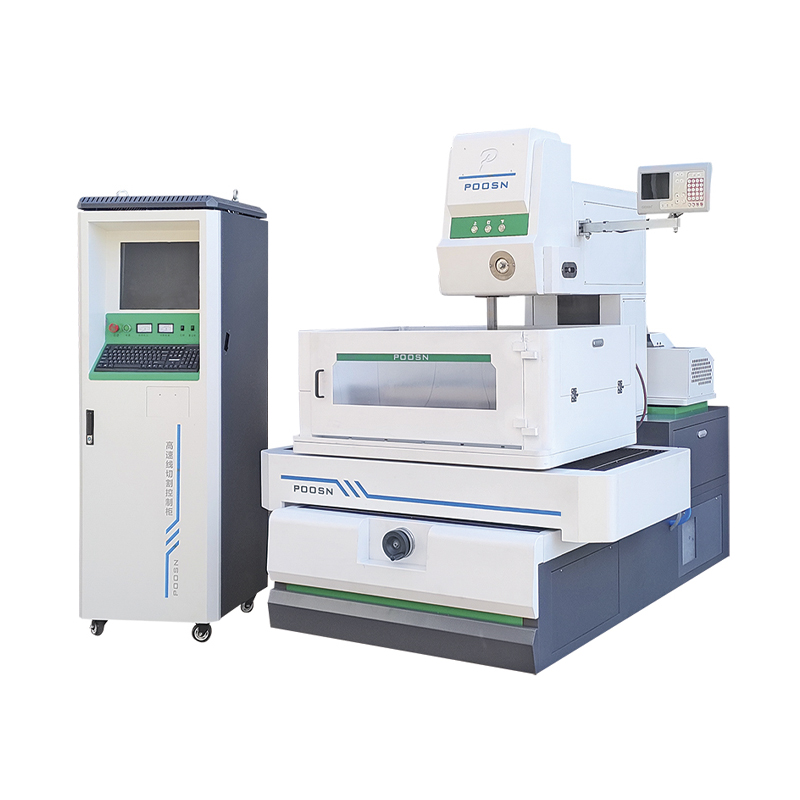
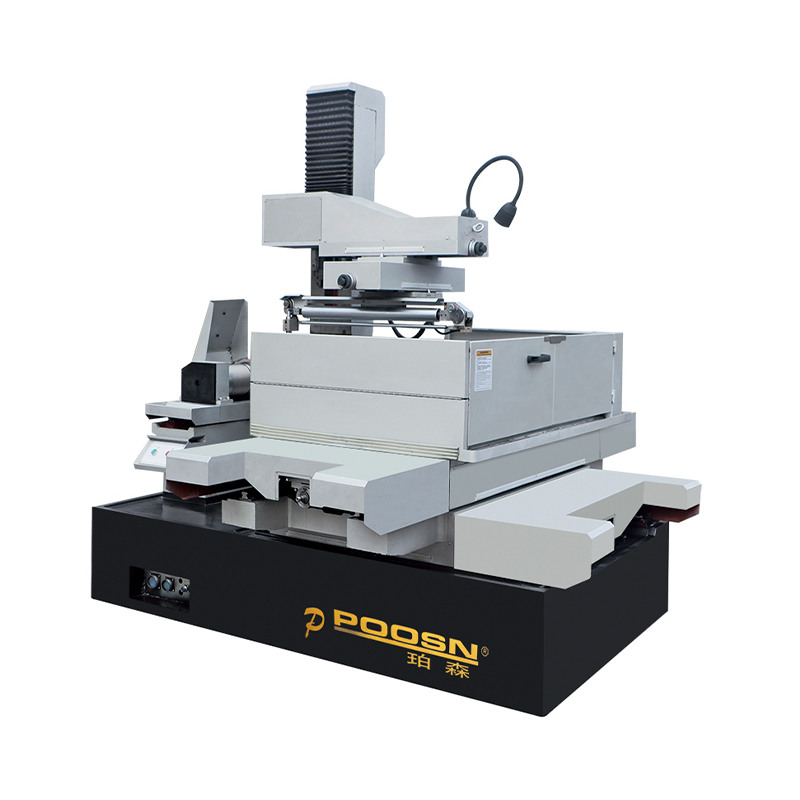
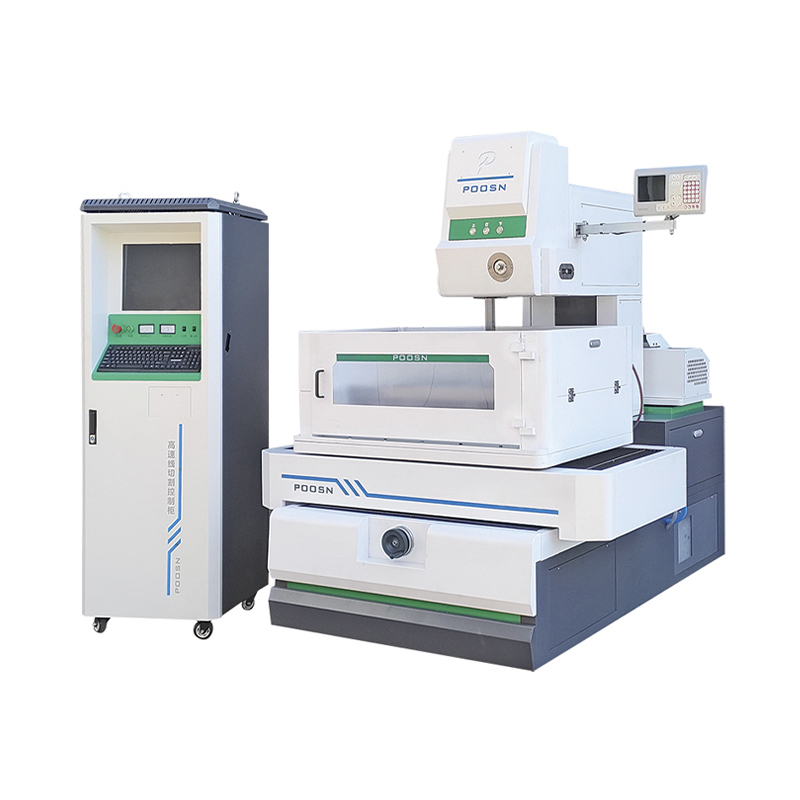
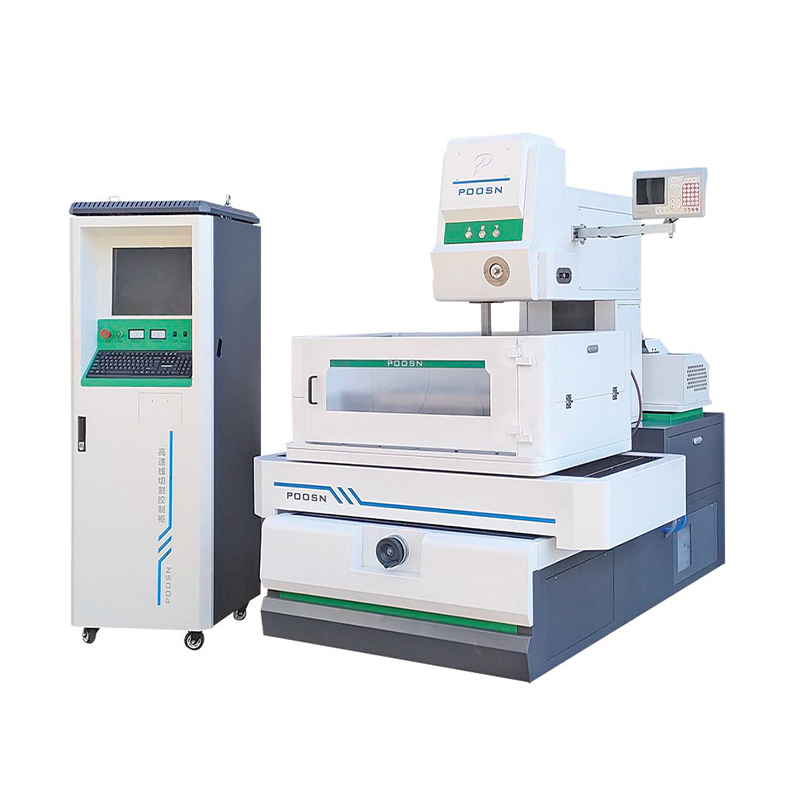
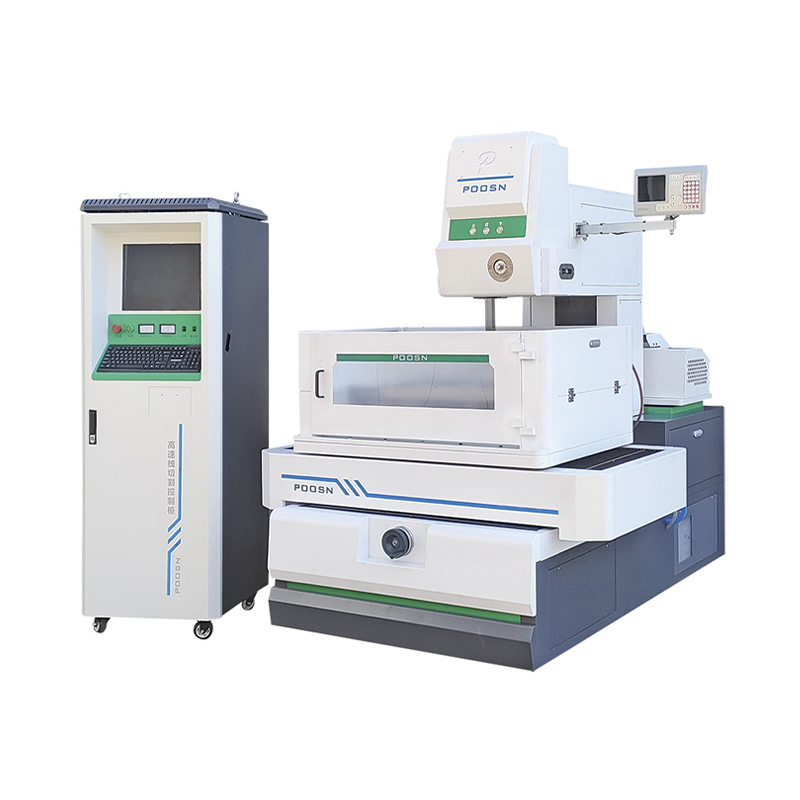
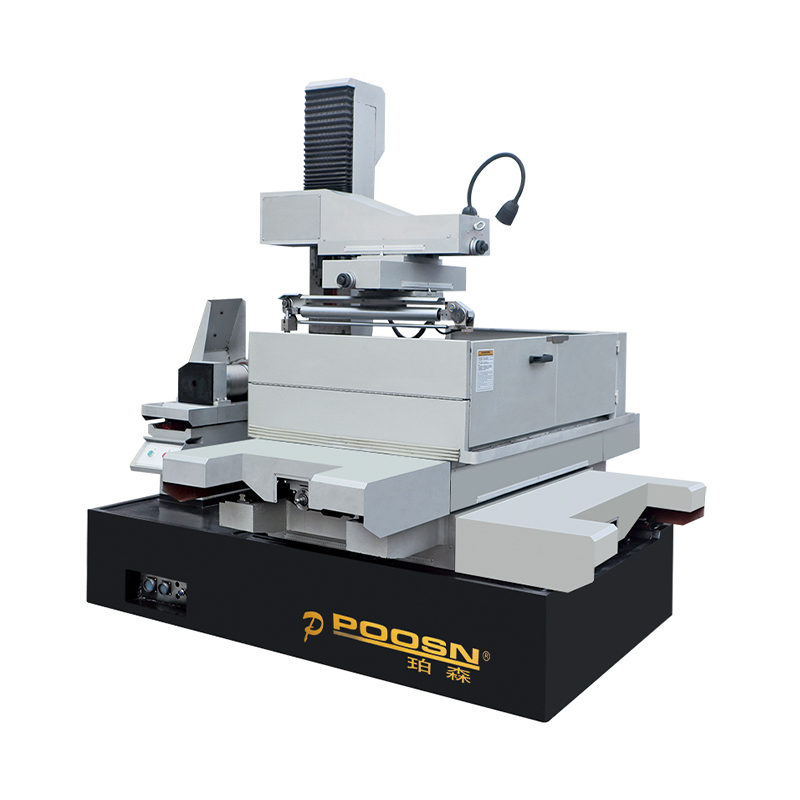
- 15 Product: DK-7725 CNC High-Speed Wire EDM Machine (4-Axis, 250kg Load)
Introduction to High-Speed Wire-Cut Electrical Discharge Machining
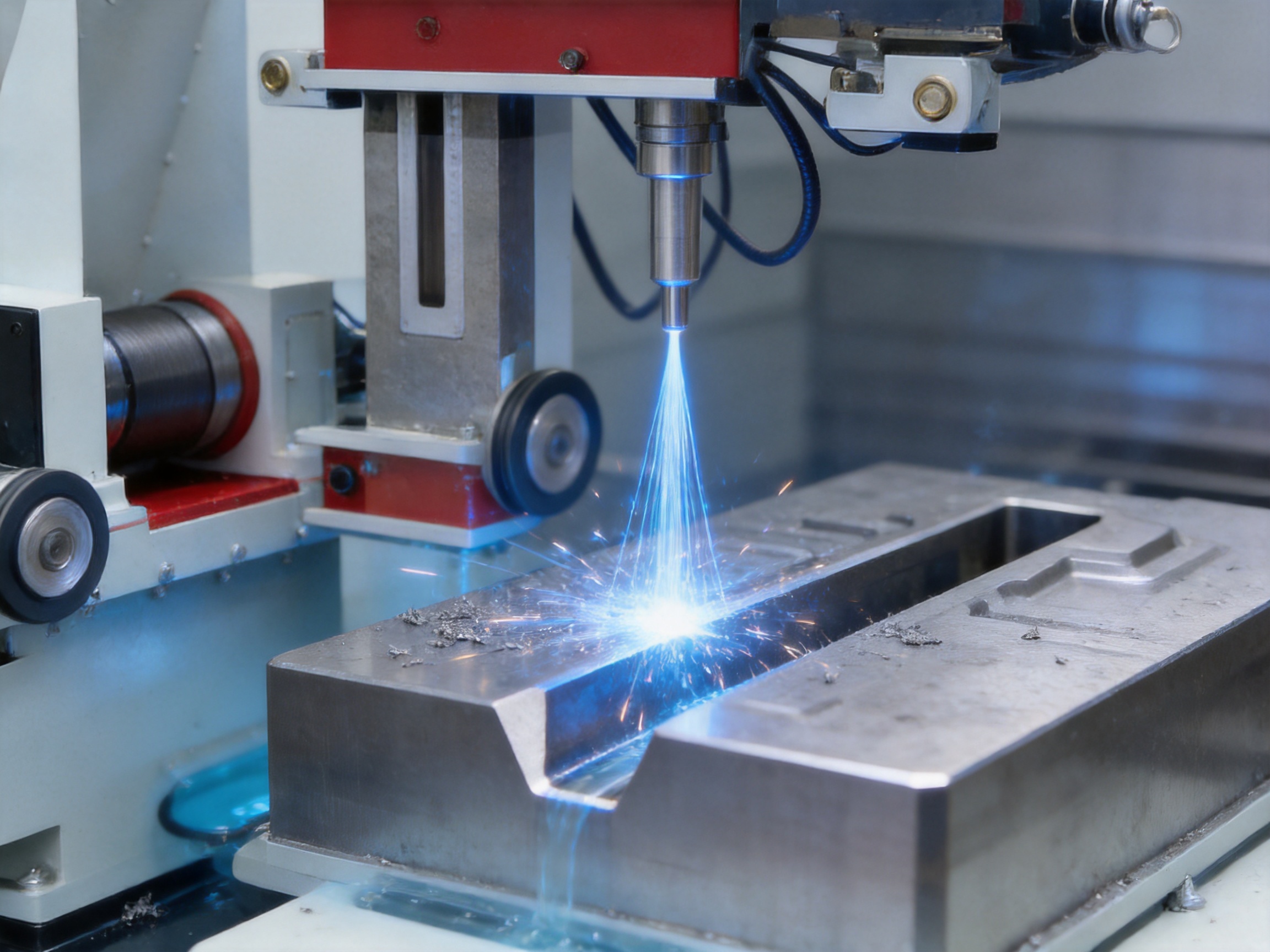
Wire Electrical Discharge Machining, commonly called WEDM or wire-cut EDM, is one of the most important non-traditional machining technologies for producing complex contours, narrow slots, precision dies, punches, inserts, and conductive components. Unlike conventional milling, turning, or grinding, wire-cut EDM removes material through controlled electrical discharges between a continuously moving electrode wire and a conductive workpiece. Because the cutting force is extremely low, the process can machine hardened materials and intricate profiles without creating the mechanical distortion commonly associated with heavy-contact cutting.
The DK-7725 CNC High-Speed Wire EDM Machine is designed for manufacturers that require a practical combination of cutting speed, precision, load capacity, stability, and production flexibility. It provides four-axis linkage control through the X, Y, U, and V axes, supports worktable loads of up to 250 kilograms, and offers a maximum cutting efficiency of 10,000 to 16,000 square millimeters per hour when paired with a suitable CNC control cabinet. Its working envelope is well suited to small and medium-sized parts, precision molds, mechanical components, and batch production.
The machine is part of a wider high-speed wire EDM platform that also includes larger models for medium, large, and extra-large workpieces. This product range allows users to select equipment according to worktable size, travel distance, cutting thickness, workpiece weight, and production requirements. The DK-7725 is especially suitable where workshop space, operating cost, and machining precision must be balanced without sacrificing useful cutting performance.
Taizhou Xinchengyang Machinery Manufacturing Co., Ltd. combines long-term experience in electrical discharge machining with modern CNC control, precision mechanical production, testing, and technical support. The company has developed and manufactured wire-cut EDM equipment since 1999 and has continued to improve its products for mold manufacturing, precision engineering, automotive components, aerospace parts, electronics, and general metalworking.
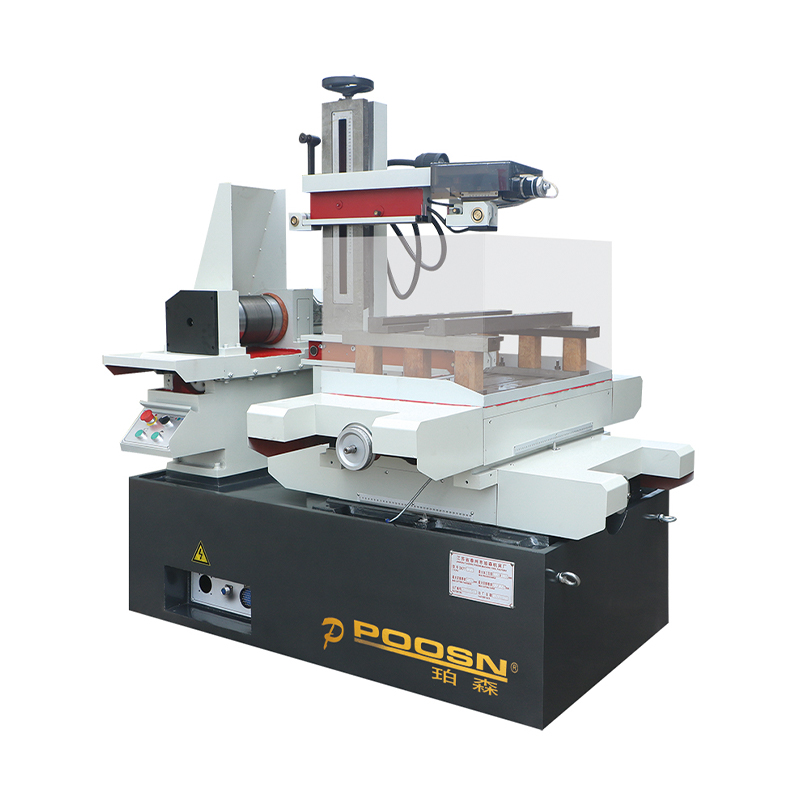
DK-7725 CNC High-Speed Wire EDM Machine (4-Axis, 250kg Load)
Product Positioning and Main Advantages
The DK-7725 is positioned as a high-speed wire-cut EDM machine for precision-oriented and efficiency-focused production. Its design is not limited to one type of customer. Tool and die manufacturers can use it to produce complex mold profiles, while precision component manufacturers can use it for slots, contours, small holes, and parts requiring high dimensional consistency. Its 250-kilogram maximum table load provides sufficient capacity for many small and medium-sized workpieces without requiring the larger floor space or higher investment associated with heavy-duty machines.
High Cutting Efficiency
One of the machine’s main advantages is its rated maximum cutting efficiency of 10,000 to 16,000 square millimeters per hour. Actual performance depends on the selected CNC cabinet, workpiece material, thickness, wire condition, flushing conditions, and machining strategy. Nevertheless, this range gives the DK-7725 a strong position for rapid production and short delivery cycles.
Higher cutting efficiency reduces the time required for rough cutting and can improve the utilization rate of the machine. In a production environment, shorter machining cycles allow more workpieces to be processed during each shift. The result can be increased output without adding another complete machining cell. Faster processing also helps manufacturers respond to urgent mold repairs, replacement components, and small-batch orders.
Efficiency is not determined by speed alone. A high-speed EDM machine must maintain a stable discharge gap, control wire tension, remove debris, and prevent wire breakage. The DK-7725 is therefore designed as an integrated system in which the power supply, wire transport mechanism, mechanical structure, cooling and filtration equipment, and CNC software work together. This coordinated approach helps convert electrical energy into productive cutting rather than excessive downtime or unstable machining.
Four-Axis Linkage for Taper and Complex Profiles
The DK-7725 uses X, Y, U, and V axis control with four-axis linkage. X and Y control the main worktable movement, while U and V control the upper and lower wire-guide positions. By coordinating these axes, the machine can cut tapered profiles and contours whose upper and lower shapes are different.
The maximum cutting taper is specified as plus or minus six degrees over 80 millimeters. This capability is valuable for die components, punches, inserts, sloped surfaces, and parts that require a controlled angular profile. Four-axis interpolation also provides greater flexibility than a basic two-axis wire-cut system, particularly when the workpiece contains transitions, corner details, or varying upper and lower geometries.
For mold manufacturers, taper control can reduce the need for additional operations after wire cutting. Instead of cutting a straight profile and then relying on manual fitting or another machine to create the angle, the required geometry can be programmed directly into the EDM process. This can reduce setup changes, improve repeatability, and simplify the overall production route.
Micron-Level Machining Capability
The DK-7725 is specified with a linear cutting accuracy of 0.005 millimeters and a taper accuracy of 0.015 millimeters, subject to proper installation, environmental control, workpiece preparation, and process conditions. These values make the machine appropriate for many high-precision mold and mechanical component applications.
Precision is supported by the mechanical structure as well as the controller. The machine bed uses a high-rigidity cast iron structure intended to damp vibration and maintain geometric stability. Castings are subjected to aging treatment to help release internal stress before precision machining and assembly. Rigid guideways and accurately produced lead screws support smooth worktable movement, while the control system manages coordinated axis motion and discharge parameters.
In practical operation, accuracy also depends on factors such as thermal variation, worktable leveling, wire-guide condition, dielectric cleanliness, electrical grounding, and correct programming. The manufacturer’s installation and commissioning service is therefore an important part of the total equipment solution. Proper leveling and accuracy testing at the customer’s site help the machine achieve more consistent performance during daily production.
Strong Load Capacity in a Compact Product Class
The DK-7725 supports a maximum worktable load of 250 kilograms. This capacity enables users to process steel plates, mold inserts, dies, fixtures, and other workpieces that would be unsuitable for a lightweight precision machine. The table size is 410 by 600 millimeters, with X and Y travel of 250 by 320 millimeters.
The combination of a 250-kilogram load rating and a relatively compact work envelope is useful for workshops that need structural strength but have limited installation space. It also provides a practical entry point for manufacturers whose workpieces are too heavy for small machines but do not justify the cost and space requirements of a large-format EDM system.
The DK-7725 has a listed maximum cutting thickness of 350 millimeters. This allows the machine to work with substantial mold plates and thick conductive material. In thick-section cutting, stable flushing, appropriate discharge parameters, and correct wire tension are essential. The machine’s power supply and wire transport design are intended to support stable cutting conditions over a range of workpiece thicknesses.
Technical Specification Overview
The following table summarizes the principal specifications of the DK-7725 and places the model within the related machine family. The larger models are included to help buyers understand the available capacity range.
| Specification | DK-7725 | DK-7735 | DK-7745 | DK-7745F |
| Worktable Size | 410 × 600 mm | 500 × 750 mm | 570 × 850 mm | 570 × 950 mm |
| X/Y Travel | 250 × 320 mm | 350 × 450 mm | 450 × 550 mm | 450 × 650 mm |
| Maximum Cutting Thickness | 350 mm | 450 mm | 450 mm | 450 mm |
| Maximum Cutting Taper | ±6°/80 mm | ±6°/80 mm | ±6°/80 mm | ±6°/80 mm |
| Maximum Cutting Efficiency | 10,000–16,000 mm²/h | 10,000–16,000 mm²/h | 10,000–16,000 mm²/h | 10,000–16,000 mm²/h |
| Optimal Surface Roughness | Ra ≤ 2.5 μm | Ra ≤ 2.5 μm | Ra ≤ 2.5 μm | Ra ≤ 2.5 μm |
| Drive Type | X, Y, U, V stepper drive; four-axis linkage | X, Y, U, V stepper drive; four-axis linkage | X, Y, U, V stepper drive; four-axis linkage | X, Y, U, V stepper drive; four-axis linkage |
| Maximum Worktable Load | 250 kg | 300 kg | 400 kg | 500 kg |
| Machine Weight | 800 kg | 1,100 kg | 1,250 kg | 1,350 kg |
| Machine Dimensions | 1,300 × 1,080 × 1,625 mm | 1,650 × 1,250 × 1,830 mm | 1,825 × 1,400 × 1,830 mm | 1,825 × 1,550 × 1,830 mm |
The DK-7725 is supplied with the ZH-K68 standard desktop control cabinet. The ZHZK-03 vertical cabinet is available as an optional configuration. The power requirement is three-phase, five-wire, 380 volts with a tolerance of plus or minus ten percent, subject to confirmation before installation and shipment.
Engineering Design of the DK-7725
High-Frequency Pulse Power Supply
The pulse power supply is central to the performance of any wire-cut EDM machine. During machining, controlled electrical pulses create small plasma channels between the molybdenum wire and the conductive workpiece. Each discharge removes a minute amount of material. The quality of the finished surface and the stability of the cutting process depend on the frequency, duration, energy, and spacing of these pulses.
The DK-7725 uses a high-frequency pulse power supply designed to maintain a stable discharge gap during high-speed wire travel. The control system samples machining conditions and adjusts discharge behavior to limit abnormal sparking. This is particularly important when cutting thick workpieces, complex corners, narrow slots, or materials with varying electrical characteristics.
A stable pulse system can also reduce the likelihood of wire breakage. Wire breakage interrupts the process, requires operator intervention, and can create dimensional errors if the machine must be restarted from an unsuitable position. By controlling discharge energy and maintaining effective debris evacuation, the DK-7725 is intended to support continuous cutting and reliable production.
Rigid Cast-Iron Machine Structure
Mechanical rigidity directly affects EDM accuracy. Although wire-cut EDM is a non-contact process, the worktable, guide system, wire guides, and workpiece support must remain stable during movement and flushing. Vibrations or gradual structural movement can influence contour accuracy, taper consistency, and surface quality.
The DK-7725 uses a high-rigidity HT250 cast iron bed. Cast iron provides useful vibration-damping characteristics and a stable foundation for the guideways and worktable. Aging treatment is applied to help reduce the effect of residual casting stress. The result is a structure designed for long-term operation under changing thermal and machining conditions.
Accurate guide rails and lead screws are selected to provide low-friction movement and repeatable positioning. Smooth motion is especially important when cutting small radii, sharp corners, and long contours. When the axes move without excessive backlash or vibration, the CNC system can follow the programmed path more accurately.
Constant-Tension Wire Transport
The electrode wire must travel through the workpiece at a controlled speed and tension. Excessive tension can increase the risk of breakage, while insufficient tension may cause wire deflection, inaccurate corners, and inconsistent taper. The DK-7725 incorporates a constant-tension wire transport concept intended to maintain more stable wire behavior during machining.
The wire transport system works together with guide wheels, wire guides, conductive blocks, and flushing nozzles. These components must be kept clean and correctly aligned. Regular inspection is important because wear on guide wheels or guide nozzles can affect surface finish and dimensional accuracy. Proper positioning of conductive blocks also helps limit abnormal wear on the molybdenum wire.
The use of continuously moving wire allows each cutting section to receive a fresh electrode surface. This is a major advantage of wire EDM compared with fixed-electrode EDM methods. The moving wire carries away heat and replenishes the discharge surface, supporting stable cutting over long machining paths.
Cooling and Filtration
Dielectric fluid performs several functions during wire EDM. It cools the workpiece and wire, supports controlled discharge, and carries machining debris away from the cutting gap. If the fluid becomes excessively contaminated, discharge stability may decline and the quality of the finished surface may suffer.
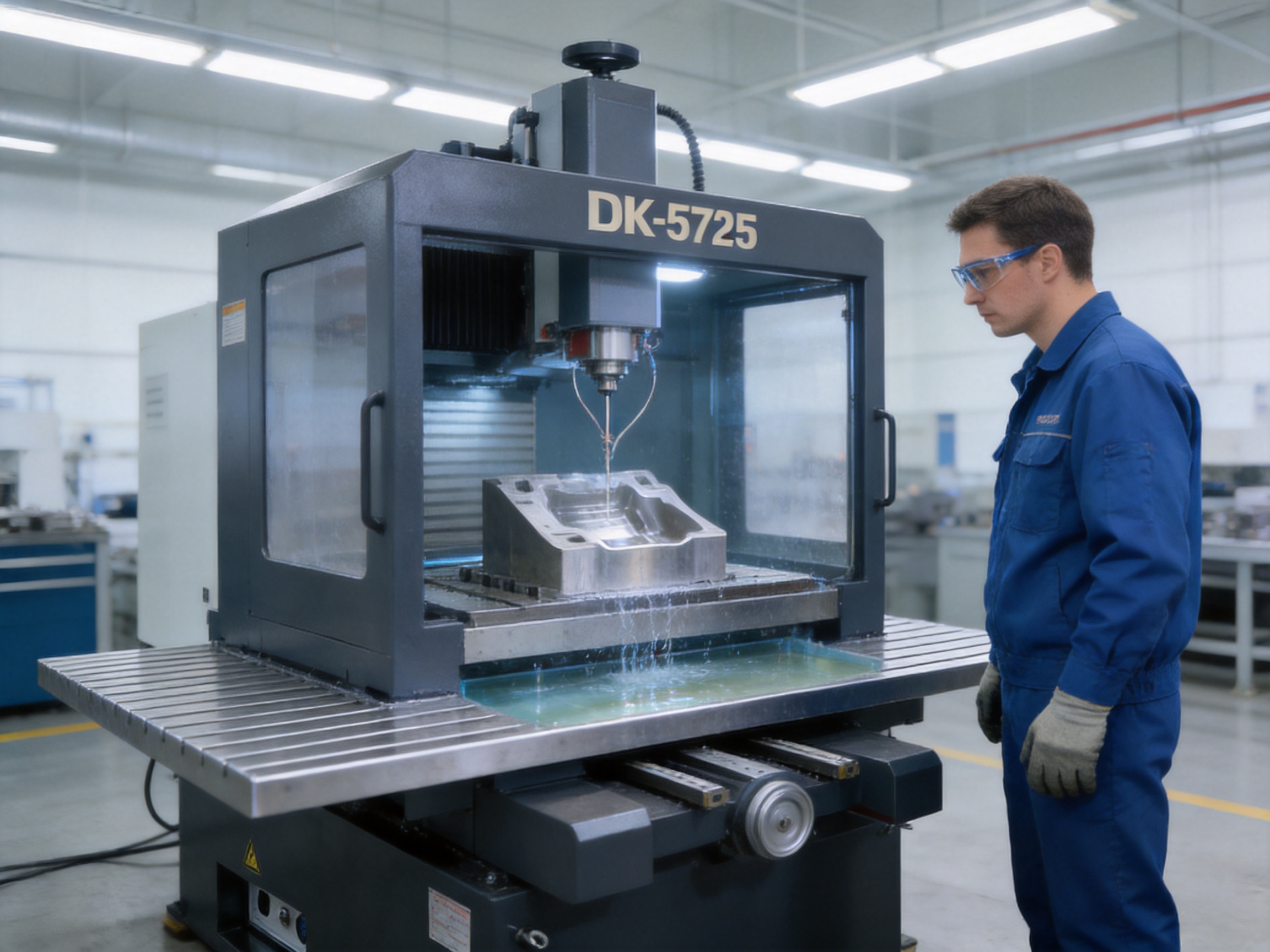
The DK-7725 is designed with industrial cooling and filtration functions to help maintain a clean and stable machining environment. Multi-stage filtration can reduce the concentration of suspended particles in the working fluid. Stable temperature control also helps reduce thermal variation during extended production cycles.
For best results, operators should monitor fluid condition, inspect filters, maintain pumps, and follow a regular cleaning schedule. Proper flushing pressure must be selected according to the workpiece thickness and cutting geometry. Excessive or insufficient flushing can both create problems, so process settings should be adjusted according to the actual application.
CNC Control and Four-Axis Interpolation
The DK-7725 is equipped with a CNC system that supports four-axis simultaneous control. The operating interface is intended to be accessible to operators with different levels of technical experience. Programs can be prepared from CAD data and converted into machining paths appropriate for the selected workpiece and cutting strategy.
The control system does more than execute a programmed trajectory. Path algorithms can analyze changes in direction, corners, arcs, and taper requirements. Discharge parameters may be adjusted to support more uniform cutting conditions around complex profiles. This can help reduce visible differences in surface texture and decrease the amount of secondary grinding or fitting required after EDM.
Four-axis control also provides flexibility in managing upper and lower wire-guide movement. When the upper and lower profiles differ, the control system coordinates the U and V axes with X and Y movement. This capability is useful for tapered punches, dies, sloped inserts, and other components where a straight vertical cut is insufficient.
Manufacturing Strengths of the Equipment Supplier
Machine performance depends not only on the published specification but also on how the machine is designed, manufactured, assembled, calibrated, and supported. Taizhou Xinchengyang Machinery Manufacturing Co., Ltd. has specialized in electrical discharge wire cutting since 1999. This long-term focus allows the company to build experience around the complete EDM process rather than treating wire-cut machines as a secondary product line.
Experience in Specialized Electrical Discharge Machining
The company’s product portfolio includes PS-C and DK77-BC medium-speed wire-cut EDM machines, DK77-A and DK77-B high-speed wire-cut EDM machines, DK77-D large-taper wire-cut EDM machines, and the DK-77 high-speed series. This range covers different requirements for speed, taper, workpiece size, load capacity, and production scale.
A broad product family provides two important advantages for customers. First, users can select a model that matches their actual workpieces instead of overbuying a machine with unnecessary capacity. Second, companies with expanding production can move to a larger model while remaining within a familiar product platform and service system.
Structured Production and Quality Testing
The company reports that its products are manufactured according to national standards and that each machine tool undergoes positioning accuracy testing. Quality control is especially important for EDM machines because their performance depends on the relationship between mechanical accuracy, electrical stability, software control, and fluid management.
Manufacturing quality begins with the machine bed and major castings. High-rigidity components must be properly aged, machined, inspected, and assembled. Guide rails, lead screws, wire transport components, electrical cabinets, and control interfaces must then be integrated without introducing alignment errors. Final testing verifies that the machine can move accurately and operate reliably before delivery.
Inspection should include axis positioning, repeatability, table movement, wire-guide alignment, electrical functions, flushing, control response, and safety-related operating conditions. This type of systematic verification helps reduce installation problems and gives customers a clearer basis for acceptance testing.
Research, Development, and Technical Innovation
Taizhou Xinchengyang has continued to invest in the development of special processing equipment and automated control technologies. The company obtained a patent in 2018 for a fully automatic CNC machine tool featuring plate-type winding and suction-type adhesive technology. This development history reflects an effort to improve automation and the integration of mechanical and electrical systems.
Modern wire EDM manufacturing requires more than conventional machine-tool construction. Users expect efficient programming, stable automatic operation, reduced maintenance, dependable spare parts, and consistent results across different workpiece materials. Research and development must therefore cover power electronics, motion control, wire transport, software, filtration, structural design, and process optimization.
Factory and Testing Capabilities
The company established its own factory after the formation of Taizhou Xinchengyang Machinery Manufacturing Co., Ltd. in 2017. Its stated capabilities include advanced processing equipment, comprehensive testing methods, rational product design, and strong technical resources. These capabilities support more direct control over manufacturing quality, assembly standards, and product improvement.
Internal production and testing can also improve customization efficiency. Customers may require a different control cabinet, special workholding arrangement, modified table configuration, or processing solution for a particular material and geometry. A manufacturer with experience across mechanical and electrical disciplines is better positioned to assess whether a requested modification is technically practical and how it may affect accuracy, safety, delivery, and maintenance.
International Supply and Service Orientation
The company’s machines are sold throughout China, with selected models exported to Southeast Asia, West Asia, Europe, and the Americas. International supply requires attention to packaging, electrical standards, documentation, installation conditions, operator training, spare parts, and communication across different technical environments.
For overseas buyers, the value of a machine is determined by its complete ownership experience. A competitively priced machine may not provide good value if commissioning is difficult, technical information is incomplete, or replacement components are unavailable. Taizhou Xinchengyang emphasizes installation, commissioning, operator training, maintenance records, technical response, and software support as part of its service assurance system.
Competitive Advantages in Practical Production
Balanced Investment for Small and Medium Workpieces
Compared with a large-format wire EDM machine, the DK-7725 requires less installation space and is more appropriate for shops working mainly with small and medium-sized parts. Its 800-kilogram machine weight and compact dimensions allow it to fit into a wider range of workshops, while its 250-kilogram table load supports substantial workpieces.
Compared with a small, low-capacity machine, the DK-7725 provides stronger structural support, greater cutting thickness, and better load capacity. This balance is useful for manufacturers that want to increase production capability without immediately moving to a heavy industrial machine.
Efficiency Without Abandoning Precision
Some high-speed machining solutions emphasize productivity but require compromises in surface quality or dimensional control. The DK-7725 is designed to combine high-speed cutting with four-axis control, micron-level positioning capability, stable wire transport, and a target optimal surface roughness of Ra no greater than 2.5 micrometers under suitable conditions.
In actual production, the best balance between speed and finish is usually achieved through multiple cutting strategies. A high-efficiency rough cut can remove the majority of the material, followed by one or more skim cuts that improve surface quality and contour accuracy. The DK-7725’s control and power systems can be configured for this type of staged process.
Four-Axis Flexibility Compared with Basic Two-Axis Equipment
Basic two-axis wire-cut machines are suitable for vertical profiles and certain straightforward contours. However, many modern molds and components require taper, relief, or different upper and lower geometries. Four-axis linkage gives the DK-7725 a broader application range and reduces the need for separate operations.
This flexibility is especially valuable when a manufacturer processes different types of parts. The same machine can be used for straight punches, tapered dies, complex inserts, precision slots, and profiles with coordinated upper and lower contours. Such versatility can improve machine utilization and reduce the need to dedicate separate equipment to individual product categories.
Reduced Dependence on Manual Finishing
Accurate wire cutting and consistent surface texture can reduce manual polishing, fitting, and corrective grinding. Manual finishing is often time-consuming and may introduce variation between operators. When the EDM process produces a more consistent profile, the downstream workload becomes easier to predict.
Reduced finishing does not mean that every application can eliminate secondary operations. Mold fitting, polishing, heat treatment, and inspection may still be necessary. However, accurate four-axis cutting and stable discharge control can reduce the amount of material that must be removed manually and improve the repeatability of the final component.
Lower Maintenance Burden
The DK-7725 includes an automatic lubrication system intended to reduce manual intervention. Its modular design philosophy allows core circuit boards and mechanical transmission components to be disassembled and replaced more easily. These features can reduce repair time and help keep the machine available for production.
Maintenance cost is influenced by both component life and service accessibility. A machine that is easy to inspect and repair can reduce the labor associated with scheduled maintenance. The manufacturer’s spare-parts inventory and technical support further help users respond to wear or unexpected equipment issues.
Applications of the DK-7725
Mold and Die Manufacturing
Precision mold manufacturing is one of the primary applications for the DK-7725. The machine can process mold inserts, punches, dies, guide components, cavity plates, and other conductive steel parts. Wire EDM is particularly useful after heat treatment because it can cut hardened material without applying significant mechanical force.
Complex mold profiles often include narrow corners, small radii, deep sections, and tapered surfaces. Four-axis linkage allows the machine to address these geometries more effectively than a simple vertical cutting process. The 350-millimeter maximum cutting thickness also supports a broad range of mold plates and die components.
Precision Mechanical Components
Manufacturers of precision machinery can use the DK-7725 for gears, fixtures, thin sections, special washers, precision plates, and custom profiles. The machine is capable of cutting conductive materials such as carbon steel, hardened steel, stainless steel, aluminum, copper, and cemented carbide, provided that the selected process parameters are appropriate.
Because wire EDM produces little cutting force, it is useful for delicate or slender sections that may deform under milling pressure. The workpiece must still be securely supported, and stress relief should be considered when processing materials with significant internal stress.
Automotive Components
Automotive production frequently requires repeatable precision components, stamping dies, forming tools, and prototype parts. The DK-7725 can support both development work and small-to-medium batch production. Its cutting speed helps reduce lead times for replacement tooling, while its four-axis control supports complex die geometry.
For automotive suppliers, production flexibility is important because product designs and tooling requirements may change frequently. A versatile wire EDM machine can process different part families without extensive mechanical reconfiguration. It can also support repair and modification work when an existing tool must be updated.
Aerospace and High-Precision Parts
Aerospace components often involve complex profiles, high-strength alloys, and strict dimensional requirements. Wire EDM can be beneficial for conductive materials that are difficult to machine with conventional cutting tools. The DK-7725 is suitable for small and medium-sized aerospace tooling and components when the workpiece dimensions and load remain within its specifications.
For aerospace applications, process qualification and inspection remain essential. Users should establish documented cutting parameters, verify material condition, control temperature, and inspect finished parts with suitable measuring equipment. The machine provides the platform for precision machining, but application-specific quality procedures determine final compliance.
Electronic and Small Precision Parts
Electronic equipment production uses miniature conductive components, connector elements, stamping tools, and precision fixtures. The DK-7725 can produce small slots, intricate profiles, and thin sections without the same mechanical forces associated with conventional machining.
When processing small components, careful wire alignment, stable fluid filtration, accurate programming, and appropriate skim-cut parameters are especially important. The machine’s four-axis control also allows manufacturers to produce specialized profiles for connectors and precision tooling.
Process Workflow for Reliable Results
Workpiece Preparation
Before machining, the operator should confirm that the workpiece is electrically conductive and suitable for wire EDM. The material should be cleaned, securely clamped, and supported to prevent movement during cutting. For thick plates or heat-treated components, stress condition and flatness should be evaluated before programming.
The workpiece should be positioned so that the required profile falls within the machine’s X and Y travel. Clearance must be provided for wire threading, flushing nozzles, clamps, and the movement of the upper and lower guide systems. Correct setup reduces the risk of collision and helps maintain consistent cutting conditions.
Programming and Geometry Verification
CAD geometry should be checked for open contours, duplicate lines, unsuitable radii, incorrect offsets, and unintended intersections. The operator should also verify the required cutting direction, entry point, exit point, taper angle, and compensation value. A program simulation can help identify potential errors before the wire enters the workpiece.
For four-axis cutting, the upper and lower geometries must be defined correctly. The U and V axis movements should correspond to the intended taper or three-dimensional contour. A small programming error can produce a dimensional difference between the top and bottom of the workpiece, so geometry verification is an important part of the process.
Rough Cutting and Skim Cutting
Rough cutting is normally performed at a higher material-removal rate. The objective is to separate the component or remove most of the unwanted material efficiently. Rough-cut parameters should be selected according to the material, thickness, wire speed, flushing condition, and required stability.
Skim cutting follows the rough cut when higher accuracy or better surface finish is required. Lower discharge energy and controlled path compensation remove a small amount of material from the previously cut surface. Additional skim cuts may be used for high-precision molds or components with demanding surface requirements.
The operator should avoid choosing maximum speed as the only production target. Excessive speed under unsuitable conditions may lead to unstable discharges, wire breakage, corner errors, or poor surface quality. The most productive process is the one that delivers acceptable quality with minimum total cycle time, including setup, inspection, rework, and finishing.
Inspection and Process Documentation
Finished workpieces should be inspected according to the application. Important characteristics may include overall dimensions, contour accuracy, taper, surface roughness, corner radius, flatness, and positional relationships. Inspection results can be recorded alongside material type, thickness, wire condition, discharge settings, and cutting time.
Process documentation helps operators reproduce successful results. It also allows the production team to identify recurring problems such as guide wear, fluid contamination, thermal drift, or incorrect offset values. Over time, a documented database of cutting conditions can improve productivity and reduce dependence on individual operator experience.
Installation, Maintenance, and Operating Environment
Installation Requirements
High-precision EDM equipment should be installed on a stable foundation with adequate load-bearing capacity. The machine must be leveled accurately, and the surrounding area should be free from excessive vibration. Strong temperature fluctuations should be avoided because thermal expansion can affect dimensional accuracy during long machining cycles.
The electrical supply must meet the machine’s specified requirements. Proper grounding is essential for operator safety, control stability, and discharge performance. The installation area should also provide sufficient access for loading workpieces, maintaining the filtration system, servicing the control cabinet, and replacing consumable components.
Routine Maintenance
Daily maintenance should include cleaning the worktable, checking the working fluid, inspecting wire guides and conductive blocks, and confirming that the wire transport system operates smoothly. Operators should monitor unusual vibration, abnormal noise, unstable discharge, reduced flushing, or repeated wire breakage.
Scheduled maintenance should include lubrication checks, filter replacement, pump inspection, guide-wheel inspection, electrical cabinet cleaning, cable inspection, and accuracy verification. The automatic lubrication system reduces manual work but does not eliminate the need to check lubricant levels and distribution.
Guide wheels and wire guides are wear components. Even small amounts of wear can influence wire position and cutting accuracy. Replacing worn components before they cause repeated dimensional errors is normally more economical than continuing to run an unstable process and correcting defective workpieces later.
Working Fluid Management
Clean working fluid supports stable discharge and improves surface quality. Filters should be cleaned or replaced according to operating hours and contamination level. The fluid tank and circulation system should be cleaned periodically to prevent sediment accumulation.
The operator should also monitor fluid temperature and flow. Inadequate cooling can increase thermal variation, while insufficient flushing may allow debris to remain in the discharge gap. The correct balance depends on the workpiece thickness and geometry, so process conditions should be adjusted based on actual machining results.
Operator Training
Taizhou Xinchengyang provides technical training covering machine operation, CAD modeling and drafting, programming, process selection, inspection, and maintenance. Training is important because the quality of a wire-cut EDM process depends on both machine capability and operator decisions.
A trained operator can select practical cutting conditions, recognize early signs of instability, maintain the wire path, verify taper settings, and respond correctly to wire breakage. Training also improves safety by ensuring that operators understand workholding, electrical requirements, fluid handling, emergency procedures, and access restrictions around moving components.
Customization and Model Selection
The DK-7725 is suitable for small and medium-sized parts and precision mold processing. It is a practical choice for high-precision and small-batch production where a 250-kilogram worktable load and 250 by 320 millimeters of X/Y travel are sufficient.
The DK-7735 provides a larger worktable and increased travel for medium-sized components. The DK-7745 is designed for larger parts and molds, while the DK-7745F offers additional worktable length for larger or heavier applications. The wider DK77 platform also includes models such as the DK7755F, DK7763F, DK7780F, and DK77100F for progressively larger workpieces, higher loads, and greater cutting thickness.
Customers should select a model based on more than the largest part they expect to process. Important factors include regular workpiece dimensions, fixture size, loading method, maximum weight, cutting thickness, required taper, available floor space, crane access, power supply, production volume, and future expansion plans.
Customization services are available for customers with specialized workpieces or industry-specific standards. Possible options may include the control cabinet configuration, production programming support, workholding approach, process recommendations, and machine configuration for particular applications. Any customized requirement should be reviewed technically before order confirmation to ensure that it does not compromise machine safety or accuracy.
Quality, Reliability, and Total Cost of Ownership
A wire EDM machine should be evaluated according to its total cost of ownership rather than purchase price alone. Important cost elements include cutting time, wire consumption, working fluid, filters, electricity, maintenance, spare parts, operator labor, downtime, and secondary finishing.
The DK-7725 contributes to cost control through high cutting efficiency, automatic lubrication, stable electronic control, modular maintenance, and a machine structure intended for long-term operation. When stable cutting reduces wire breakage and rework, the effective cost per part can decrease. When accurate cutting reduces manual finishing, labor productivity can improve.
Reliability is also linked to the manufacturer’s support capability. Installation, commissioning, operator training, technical response, spare-parts availability, maintenance records, and software updates all affect the useful life of the equipment. Taizhou Xinchengyang presents these services as part of a complete industrial processing solution rather than as separate after-sales activities.
Manufacturers should establish a preventive maintenance schedule from the first day of operation. Recording cutting hours, wire consumption, filter condition, guide replacement, lubrication, and accuracy checks makes it easier to predict service needs. This approach can prevent minor wear from becoming major production downtime.
Q&A: Frequently Asked Questions
What is the cutting accuracy of the DK-7725?
The listed linear cutting accuracy is 0.005 millimeters, with a taper accuracy of 0.015 millimeters. Actual results depend on installation accuracy, temperature stability, workpiece condition, wire-guide wear, machine maintenance, programming, and selected cutting parameters.
What materials can the machine process?
The DK-7725 can process conductive metals including steel, hardened steel, stainless steel, aluminum, copper, quenched materials, and cemented carbide. The cutting parameters should be adjusted according to the material’s electrical and thermal characteristics, thickness, hardness, and required surface quality.
What is the maximum workpiece size?
The DK-7725 has a worktable size of 410 by 600 millimeters and X/Y travel of 250 by 320 millimeters. Its maximum cutting thickness is 350 millimeters, and its maximum worktable load is 250 kilograms. The actual usable size must also account for clamps, fixtures, wire threading, flushing, and required clearance.
Can the machine cut tapered parts?
Yes. The machine uses X, Y, U, and V axis stepper drives with four-axis linkage. Its maximum specified cutting taper is plus or minus six degrees over 80 millimeters. The operator must prepare correct upper and lower geometry and select suitable taper compensation in the CNC program.
Is the DK-7725 suitable for mass production?
Yes. Its high cutting efficiency and stable control make it suitable for repeated production, especially small-to-medium batch manufacturing. For continuous mass production, users should establish standardized programs, inspection procedures, wire and fluid management, preventive maintenance, and optimized loading and unloading methods.
What surface finish can be achieved?
The listed optimal surface roughness is Ra no greater than 2.5 micrometers under suitable machining conditions. Surface roughness depends on the number of cutting passes, discharge parameters, material, thickness, wire condition, fluid cleanliness, and flushing stability. Additional skim cuts may be required for demanding applications.
What type of control cabinet is supplied?
The standard configuration includes the ZH-K68 desktop control cabinet. The ZHZK-03 vertical cabinet is available as an optional configuration. Customers should confirm the preferred cabinet and electrical requirements during the technical specification stage.
How can wire service life be extended?
Operators should maintain constant and appropriate wire tension, inspect guide wheels and wire guides, keep the working fluid clean, and correctly position the conductive blocks. Excessive discharge energy, poor flushing, misalignment, and worn guide components can all increase abnormal molybdenum wire wear.
What maintenance system does the machine use?
The machine includes an automatic lubrication system and is designed with a modular approach for easier maintenance. Routine inspections remain necessary for the lubrication system, filtration system, pumps, wire path, guide components, electrical cabinet, and machine accuracy.
Does the manufacturer provide installation and training?
Yes. The service program includes installation and commissioning, precision leveling, accuracy testing, operator training, maintenance guidance, technical support, performance inspections, and software-related assistance. The exact scope should be confirmed in the purchase and delivery agreement.
What environmental conditions are recommended?
The machine should be installed in an area with limited temperature fluctuation, minimal vibration, proper grounding, and protection from strong magnetic interference. A clean, stable environment supports better dimensional consistency and reduces stress on the control and electrical systems.
How should a buyer choose between the DK-7725 and larger models?
The DK-7725 is appropriate when the workpieces fit within its travel, thickness, and load limits. Buyers should select the DK-7735, DK-7745, DK-7745F, or larger models when they require greater travel, table size, cutting thickness, or load capacity. The decision should be based on regular production requirements and future needs rather than only on one unusually large workpiece.
Conclusion
The DK-7725 CNC High-Speed Wire EDM Machine is a versatile precision-processing solution for manufacturers that need efficient cutting, four-axis taper control, stable operation, and practical workpiece capacity. Its 10,000 to 16,000 square millimeters per hour maximum cutting efficiency, 0.005-millimeter linear cutting accuracy, 250-kilogram load capacity, 350-millimeter maximum cutting thickness, and plus or minus six-degree taper capability make it suitable for a broad range of demanding applications.
The machine’s advantages come from the interaction of several systems: a high-frequency pulse power supply, rigid aged cast-iron structure, accurate mechanical transmission, constant-tension wire transport, cooling and filtration, four-axis CNC control, and automatic lubrication. This integrated design gives manufacturers a balanced alternative to equipment that focuses only on speed, only on precision, or only on low initial cost.
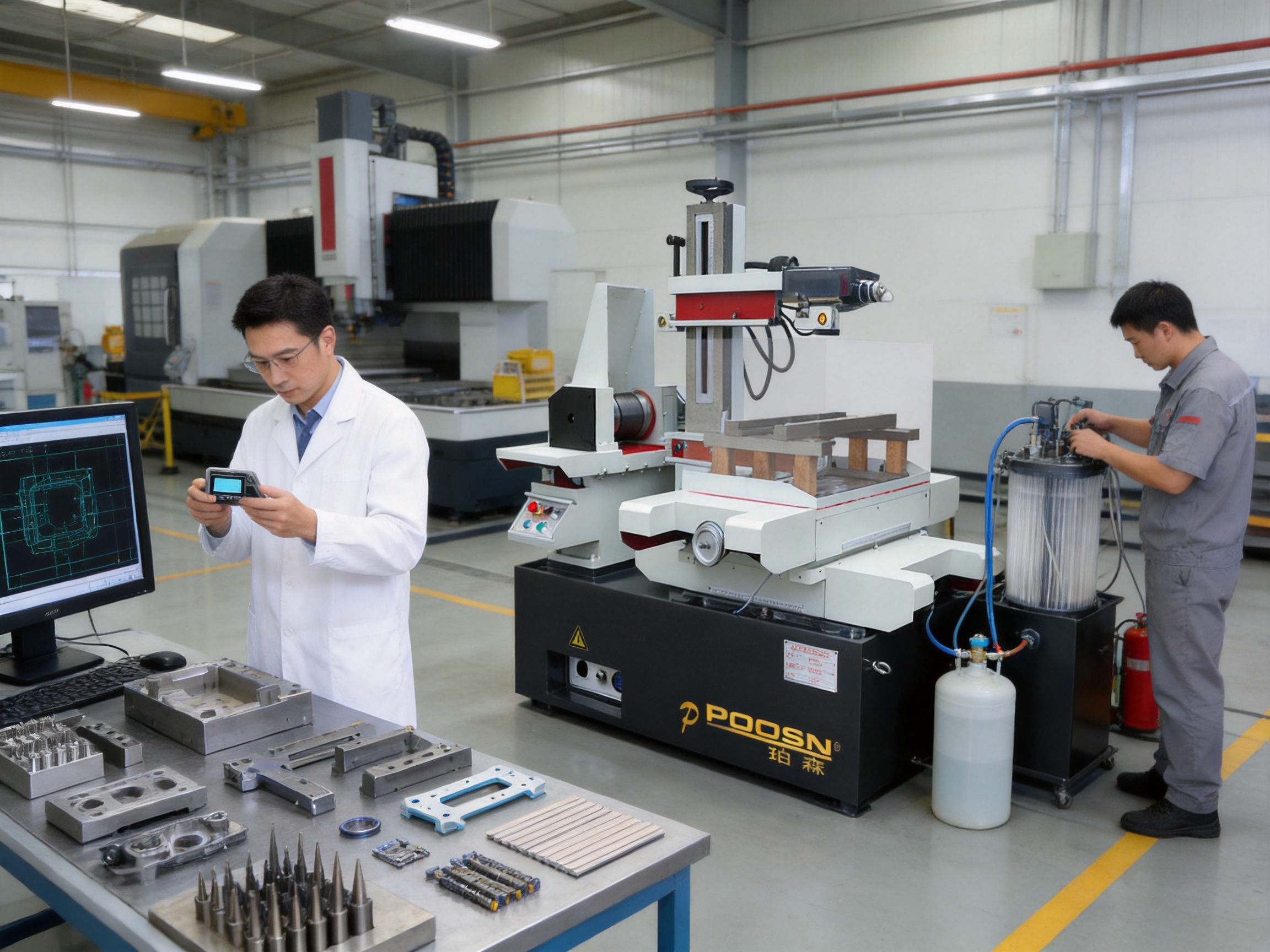
Taizhou Xinchengyang Machinery Manufacturing Co., Ltd. strengthens the product through long-term EDM specialization, a broad machine portfolio, factory production, accuracy testing, technical development, customization, installation, training, and continuing service. These capabilities are important for customers seeking dependable equipment rather than a standalone machine purchase.
For precision mold manufacturing, mechanical components, automotive tooling, aerospace parts, electronic components, and small-to-medium batch production, the DK-7725 provides a strong combination of productivity and process flexibility. With correct installation, operator training, preventive maintenance, and application-specific parameter optimization, it can help manufacturers shorten production cycles, control operating costs, improve repeatability, and achieve reliable long-term performance.
References
1. Manufacturer-provided DK-77 High-Speed Wire EDM product specifications and model selection data.
2. Manufacturer-provided information regarding the DK-7725 CNC control system, four-axis linkage, cutting efficiency, accuracy, load capacity, and maintenance functions.
3. Manufacturer-provided company profile and development history of Taizhou Xinchengyang Machinery Manufacturing Co., Ltd.
4. General technical principles of Wire Electrical Discharge Machining, including pulse discharge, wire transport, dielectric filtration, taper cutting, and CNC interpolation.
5. GB/T 7926-2015, accuracy-related standard referenced for wire-cut electrical discharge machining equipment.
6. Manufacturer-provided service information covering machine installation, commissioning, operator training, technical support, spare parts, and maintenance assistance.
Product: DK-7725 CNC High-Speed Wire EDM Machine (4-Axis, 250kg Load)
-
Phone
+86-0523-86268788 +86-13815960366 +86-13912191163Email
[email protected]Address
No. 366, Yusheng Road Jiulong Town, Hailing District Taizhou City, China
Copyright © Taizhou Xinchengyang Machinery Manufacturing Co., Ltd. All Rights Reserved.
Custom edm machine for sale
wholesale edm machine manufacturers
