

 English
 русский
 عربى
عربى

Zhou Meiling — Technical Sales Consultant
Home / Author / Zhou Meiling — Technical Sales Consultant / DK60BC High-Performance Medium-Speed Wire EDM for Large and Heavy Workpieces
DK60BC High-Performance Medium-Speed Wire EDM for Large and Heavy Workpieces
2026-08-19
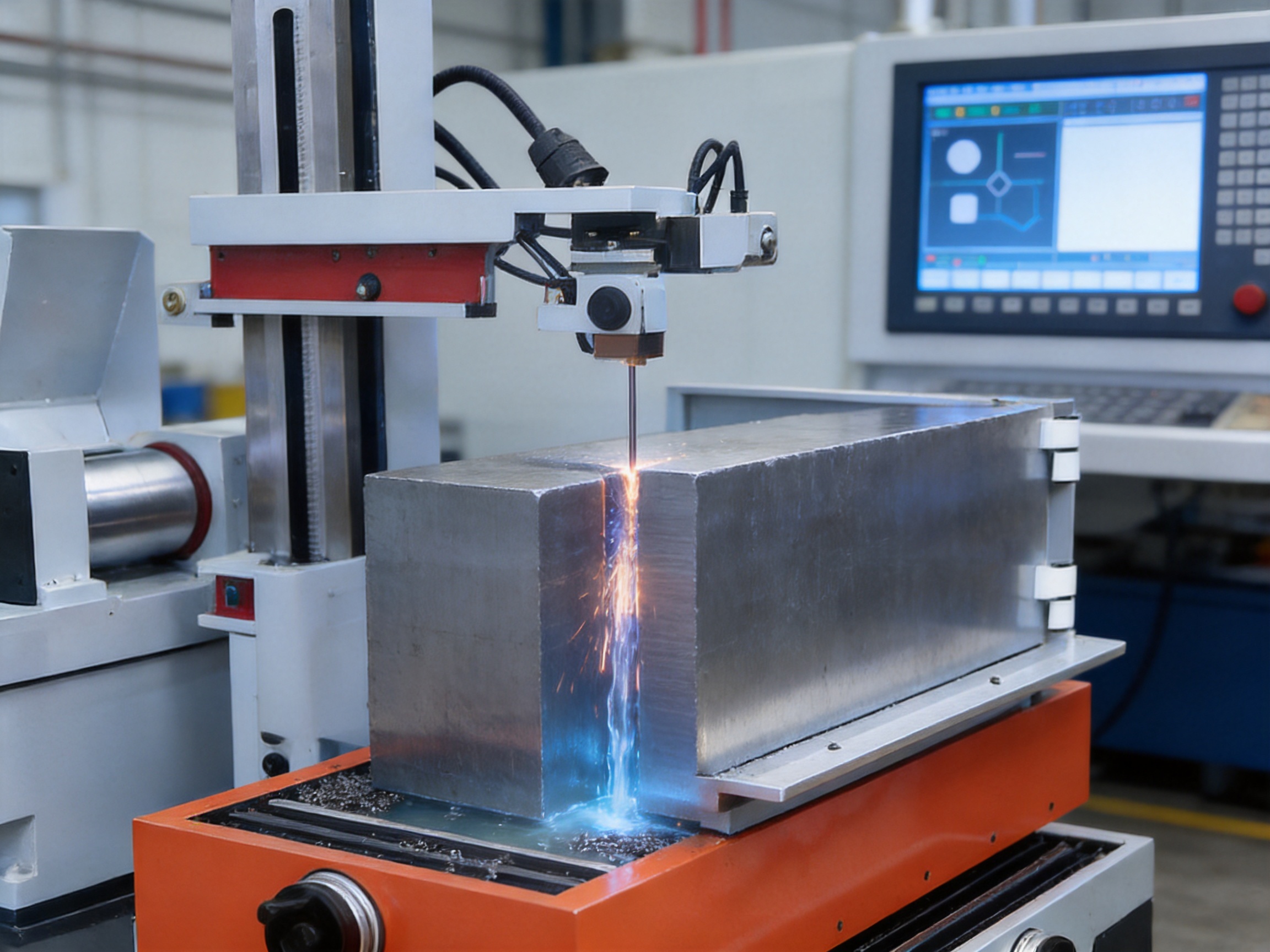
Modern mold manufacturing, aerospace production, heavy machinery, and precision tooling increasingly require machining systems that can combine large workpiece capacity with dependable dimensional control. Conventional cutting tools may struggle when components are exceptionally hard, thick, heavy, or geometrically complex. Wire Electrical Discharge Machining (WEDM) addresses these challenges by removing electrically conductive material through controlled electrical discharges rather than direct mechanical contact. This makes it possible to machine hardened steels, carbide, titanium alloys, stainless steels, and other difficult materials without applying conventional cutting forces to the workpiece.
The DK60BC CNC Medium-Speed Wire EDM Machine is the largest model in its DK-BC high-medium-speed WEDM range. It is designed for oversized workpieces, deep cutting operations, heavy molds, and industrial components weighing up to 800 kg. With a maximum cutting thickness of 800 mm, an X/Y travel of 600 × 800 mm, four-axis X, Y, U, and V linkage, and a maximum cutting efficiency of 10,000–16,000 mm²/h, the machine is positioned for demanding production environments that require both capacity and precision.
Its design combines a rigid machine structure, linear guide support, an X8/AUTOCUT control system, frequency-controlled wire feeding, taper-cutting capability, optional servo drives, and optional linear scale feedback. These features allow the DK60BC to serve as more than a basic rough-cutting machine. It can support multiple cutting operations, complex profiles, large molds, thick sections, and precision finishing tasks while maintaining an efficient production rhythm.
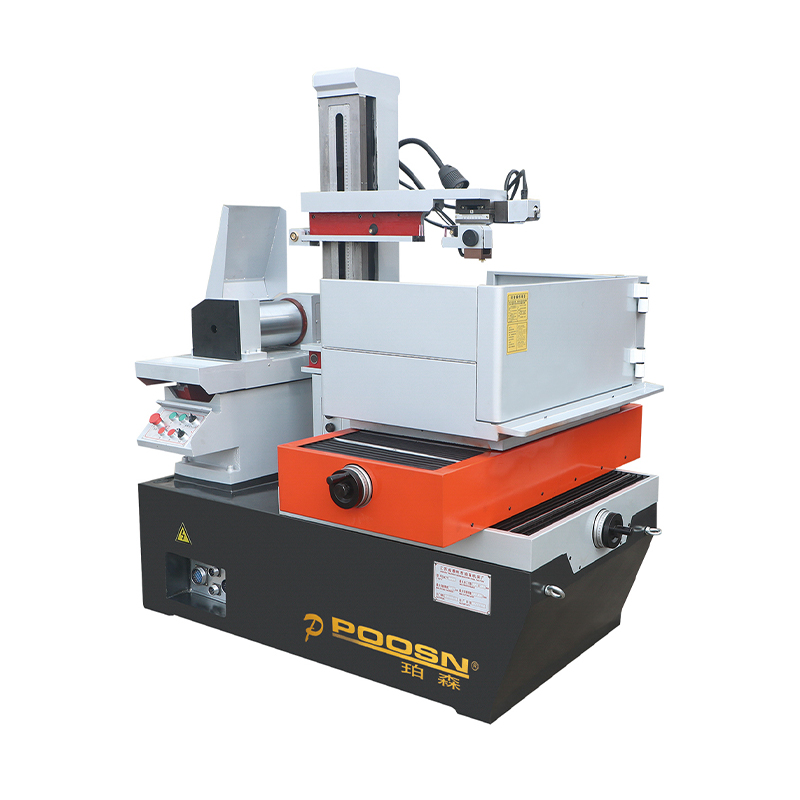
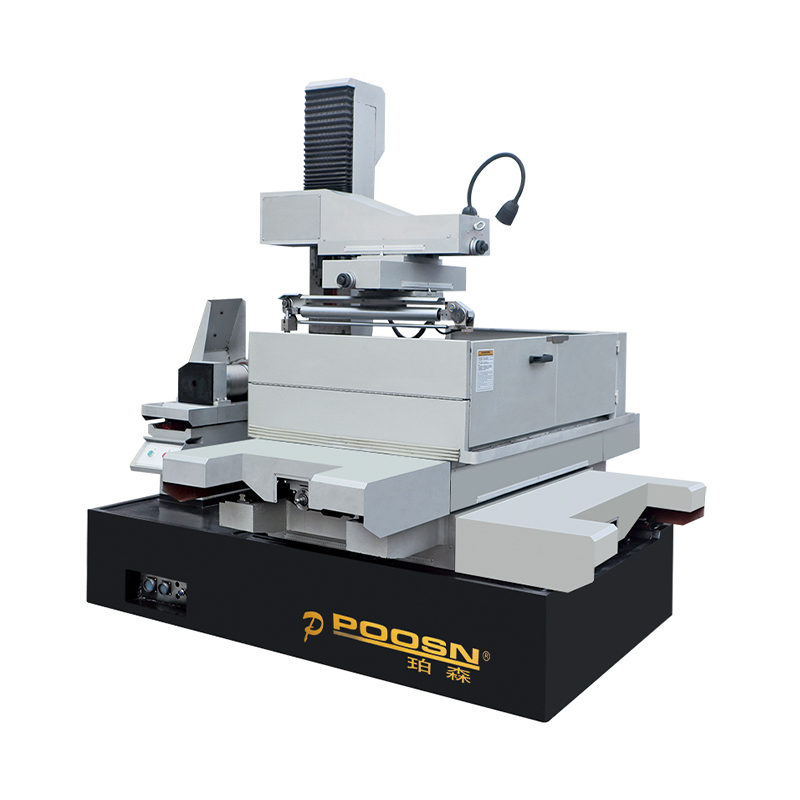
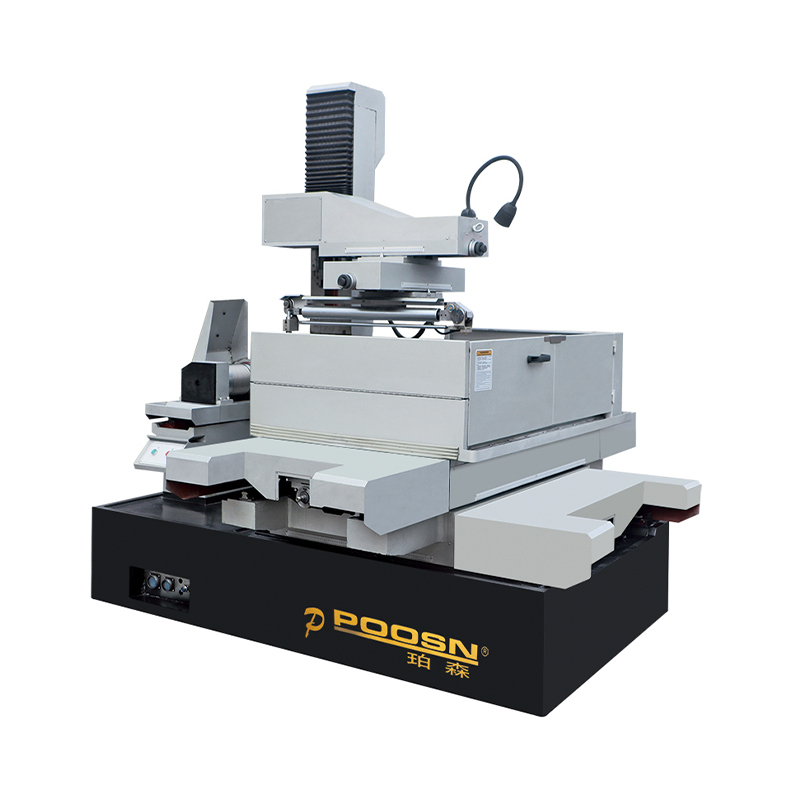
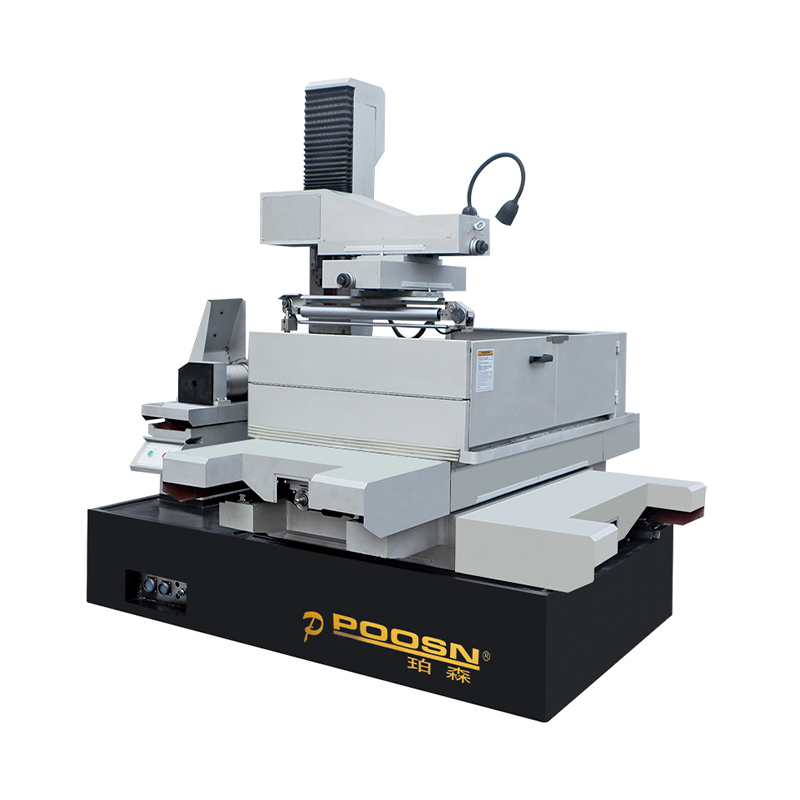
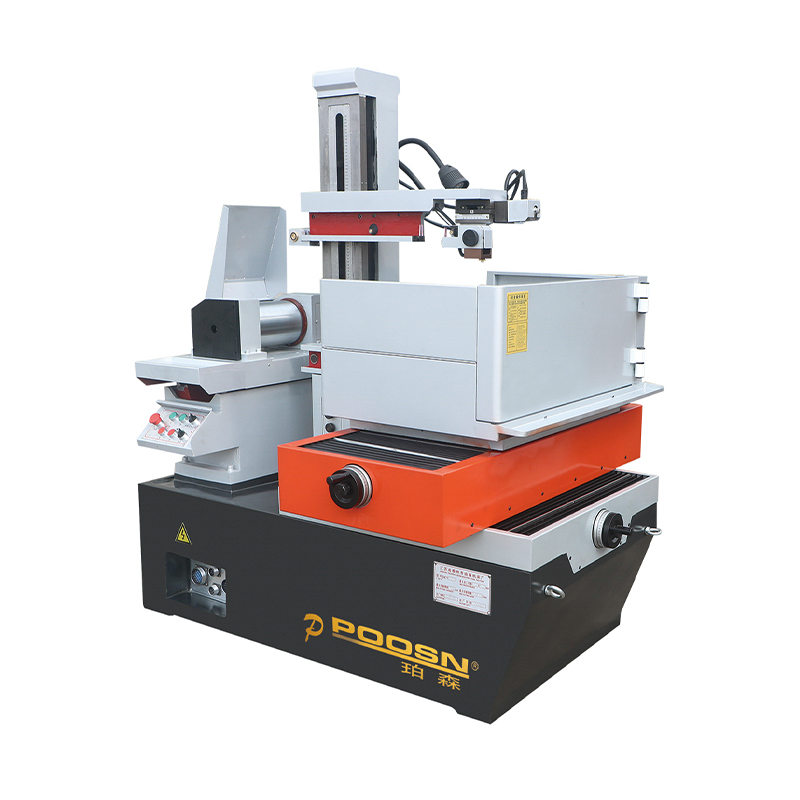
DK60BC CNC Medium-Speed Wire EDM Machine (800kg Load, 800mm Thickness)
Content
- 1 Designed for Oversized and Heavy-Duty EDM Applications
- 2 Core Technical Specifications
- 3 Medium-Speed WEDM: A Practical Balance Between Speed and Finish
- 4 Mechanical Structure and Long-Term Stability
- 5 Wire Feeding and Tension Control
- 6 Adaptive Pulse Power and Discharge Management
- 7 Control System and Operator Efficiency
- 8 Accuracy, Taper Cutting, and Profile Quality
- 9 Processing Thick Workpieces
- 10 Material Compatibility
- 11 Comparison with Other Wire EDM Categories
- 12 Manufacturing Processes and Quality Assurance
- 13 Applications in Key Industries
- 14 Productivity and Operating Economy
- 15 Installation, Environment, and Maintenance
- 16 Options and Custom Configuration
- 17 Why Choose the DK60BC for Competitive Production?
- 18 Recommended Selection Procedure
- 19 Q&A: DK60BC Application and Technical Questions
- 19.1 Q1: What type of manufacturer should consider the DK60BC?
- 19.2 Q2: What is the maximum cutting thickness?
- 19.3 Q3: Can the DK60BC perform taper cutting?
- 19.4 Q4: What materials can the machine process?
- 19.5 Q5: Is the DK60BC suitable for finishing work?
- 19.6 Q6: What control system is supplied?
- 19.7 Q7: Does the machine require a climate-controlled workshop?
- 19.8 Q8: What maintenance is required?
- 19.9 Q9: What are the main advantages over a basic high-speed wire EDM?
- 19.10 Q10: Can the machine be customized?
- 19.11 Q11: What support is available after delivery?
- 19.12 Q12: How should a customer request a quotation?
- 20 Conclusion
- 21 References
- 22 Product: DK60BC CNC Medium-Speed Wire EDM Machine (800kg Load, 800mm Thickness)
Designed for Oversized and Heavy-Duty EDM Applications
The principal advantage of the DK60BC is its ability to accommodate workpieces that exceed the practical limits of many compact or standard WEDM machines. The worktable measures 840 × 1160 mm, while the nominal X/Y travel reaches 600 × 800 mm. The processing slot is approximately 860 × 1200 mm, providing additional space for workholding arrangements and larger components.
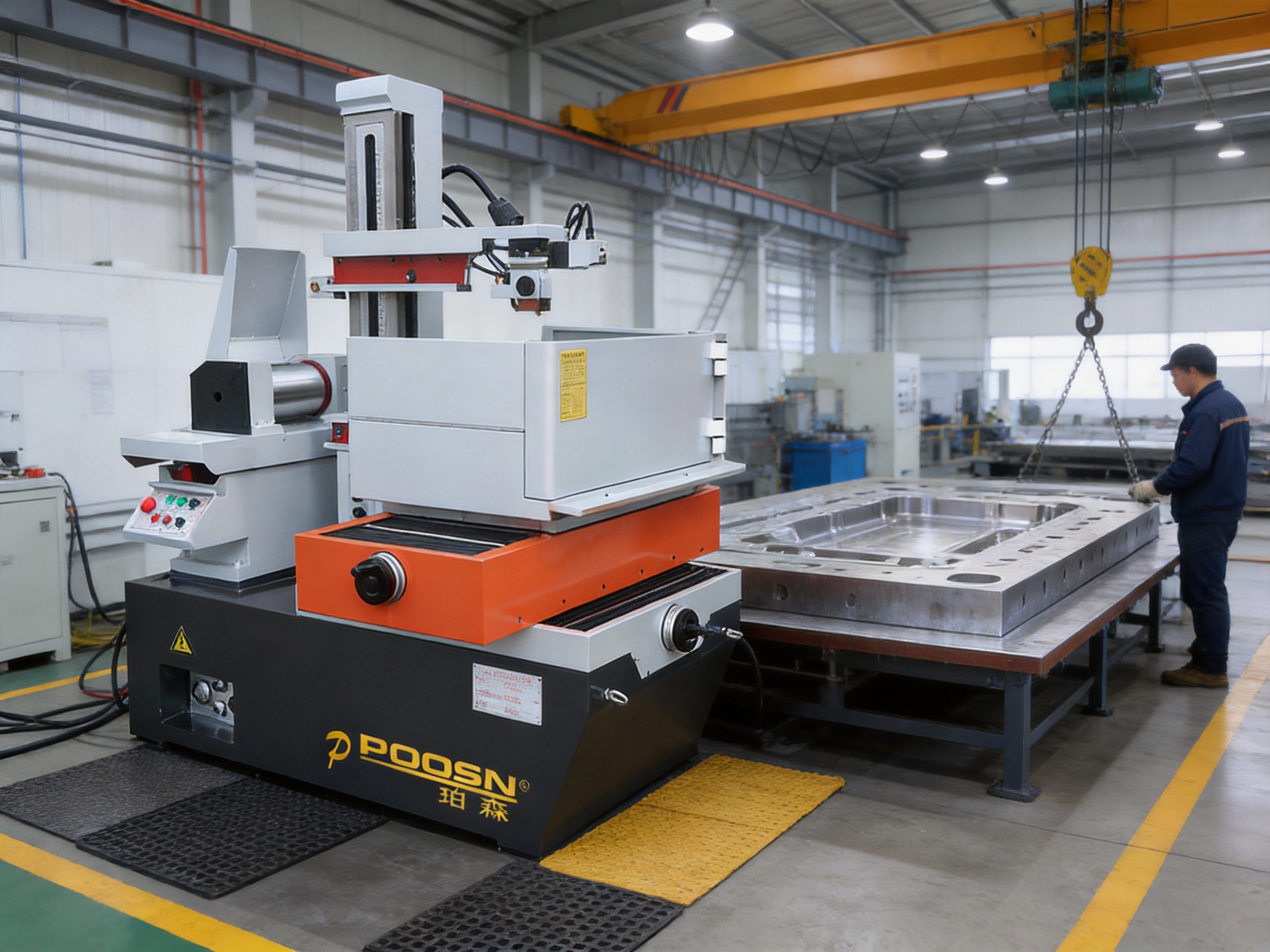
The machine supports a maximum cutting thickness of 800 mm and a maximum worktable load of 800 kg. This capacity makes it particularly suitable for large mold plates, heavy stamping dies, oversized inserts, thick mechanical components, and large conductive parts used in industrial production. The generous load rating also reduces the need to divide or reposition workpieces, which can help minimize setup time and reduce the possibility of alignment errors between separate operations.
Large workpieces present several challenges beyond simple table size. Their weight can influence machine deformation, their thickness can increase wire deflection and flushing difficulty, and their mass can make repositioning costly and time-consuming. The DK60BC addresses these issues through a reinforced machine body, a stable worktable, high-precision linear rail support, and a wire transport system developed for consistent electrode-wire movement.
The large-capacity configuration is especially valuable for manufacturers that frequently process workpieces thicker than 400 mm. Instead of relying on a smaller machine with restricted access or multiple setups, the operator can position the component on the DK60BC and perform the cutting operation within a single coordinated machining environment.
Core Technical Specifications
| Item | DK60BC Specification |
| Machine category | High-medium-speed wire-cut EDM |
| Worktable size | 840 × 1160 mm |
| X/Y travel | 600 × 800 mm |
| Processing slot size | 860 × 1200 mm |
| Maximum cutting thickness | 800 mm |
| Maximum worktable load | 800 kg |
| U/V travel | 60 × 60 mm |
| Maximum taper | ±6°/80 mm |
| Electrode wire diameter | 0.18 mm with wire guide |
| Wire feed speed | 1–11 m/s, frequency controlled |
| Maximum wire storage length | Approximately 350 m |
| Maximum cutting efficiency | 10,000–16,000 mm²/h |
| Optimal surface roughness | Ra ≤ 2.5 μm |
| Controlled axes | X, Y, U, and V four-axis linkage |
| Control system | X8/AUTOCUT |
| Standard control cabinet | ZHZK-03 |
| Optional control cabinet | ZHZ-09G |
| Maximum processing current | 6 A |
| Electrical capacity | 2.5 KVA |
| Power supply | 3N 380 V ±10% |
| Machine weight | Approximately 2,500 kg |
| Overall dimensions | 2,400 × 2,065 × 2,200 mm |
The specifications indicate that the DK60BC is intended for a substantial industrial installation rather than a light workshop environment. Its approximately 2,500 kg machine weight contributes to structural stability and vibration resistance. The large footprint should be considered during factory planning, including floor loading, access routes, electrical installation, fluid management, and maintenance clearance.
Medium-Speed WEDM: A Practical Balance Between Speed and Finish
Wire EDM machines are often classified according to their wire transport and cutting strategy. High-speed wire machines commonly use reciprocating molybdenum wire and are valued for economical operation and productive rough cutting. Low-speed wire machines typically use continuously traveling brass wire and are recognized for fine finishing performance, but they may involve higher wire consumption and operating costs. Medium-speed wire EDM occupies a practical position between these two approaches.
The DK60BC uses a medium-speed wire-cutting architecture with multiple-cut capability. The first pass can be configured for efficient material removal, while subsequent passes can improve profile accuracy and surface quality. This approach gives manufacturers more flexibility than a single-pass process and can reduce the need for secondary finishing operations.
For production environments, the value of multiple cutting passes extends beyond surface appearance. A controlled roughing pass can leave a more consistent allowance for finishing. Semi-finishing can correct part of the deformation or recast influence generated during rough cutting. The final finishing pass can then focus on dimensional control and surface quality. This staged process is useful for molds, punches, dies, and precision inserts where mating clearance and profile consistency are important.
The machine is specified with an optimal surface roughness of Ra ≤ 2.5 μm under suitable processing conditions. Actual results depend on material type, thickness, flushing, wire condition, cutting strategy, pulse parameters, and the selected control cabinet. The important point is that the DK60BC is designed to support a finishing-oriented process rather than being limited to rough blanking.
Compared with a conventional high-speed machine that is primarily used for one-pass cutting, a medium-speed machine can offer a stronger balance between throughput and finish. Compared with a low-speed wire EDM system, it may offer lower operating complexity and more economical wire management for users who need large-capacity cutting and repeatable production rather than ultra-fine specialty finishing alone.
Mechanical Structure and Long-Term Stability
Precision in WEDM depends heavily on mechanical stability. Electrical discharge control cannot compensate indefinitely for a machine body that moves, twists, or vibrates under load. For this reason, the DK60BC uses a high-rigidity structure and reinforced cast components intended to maintain geometric accuracy during heavy-duty machining.
The supplied technical description identifies high-strength resin-sand casting with reinforced ribbing as a key structural feature. Reinforced ribbing helps distribute load and can improve resistance to deformation. A stable cast structure also supports vibration damping, which is important when the electrode wire is moving at high speed and the workpiece is subjected to continuous dielectric flushing.
Long-duration aging treatment is used in the manufacturing process to relieve internal stresses in castings. Cast iron and other structural materials can change dimensionally if residual stress remains after casting or rough machining. Aging allows the material to stabilize before final precision processing. This is particularly important for a large machine such as the DK60BC, where even small structural movements can influence positioning, straightness, taper, and repeatability over a long travel range.
The transmission system is optimized to reduce mechanical lag and maintain smooth movement. Stable transmission is important when the machine changes direction, follows small-radius contours, or coordinates X/Y movement with U/V taper motion. A reduction in backlash and motion irregularity supports more consistent kerf positioning and improves the machine’s ability to follow complex programmed profiles.
The high-precision linear rail system provides guided movement for the worktable. Compared with sliding guide arrangements, linear guides can reduce friction and provide smoother motion when correctly installed, lubricated, and protected. They also support fast response during coordinated axis movement and contribute to consistent positioning over the worktable’s large travel range.
Wire Feeding and Tension Control
The electrode wire is the active cutting tool in WEDM, and its stability directly affects the finished profile. Wire vibration, uneven tension, guide-wheel wear, and poor flushing can cause dimensional variation, taper errors, stripes, or wire breakage. The DK60BC therefore places significant emphasis on the wire feeding path.
The standard electrode wire diameter is 0.18 mm with a guide device. The wire feed speed is frequency controlled over a range of 1–11 m/s, allowing the operator or control system to adapt the wire movement to the workpiece material, thickness, cutting strategy, and desired production rate.
The wire system provides a maximum wire storage length of approximately 350 m and a maximum travel size of the wire drum of 180 mm. These specifications support continuous reciprocating operation and help the machine maintain a practical wire circulation path during long cutting cycles.
An optimized wire feeding process helps maintain stable contact between the wire and the guide system. When wire movement remains uniform, the electrical discharge gap can be controlled more consistently. This supports smoother cutting, more predictable surface texture, and improved repeatability from one workpiece to the next.
The machine’s design also includes an easy wire-threading waterproof guide wheel and a gem water nozzle among its listed configurations. Such components are important for reducing setup difficulty and directing dielectric fluid toward the cutting zone. For large or deep workpieces, effective wire guidance and flushing are essential because the cutting environment becomes more difficult as the kerf length increases.
For particularly thick workpieces, process planning should consider wire type, wire tension, flushing pressure, pulse conditions, and the possibility of using a larger wire diameter where compatible with the machine configuration. The exact process should be validated through test cutting, especially when tight perpendicularity or demanding surface requirements are involved.
Adaptive Pulse Power and Discharge Management
The DK60BC is equipped with a control architecture intended to monitor and adjust the cutting process in real time. In WEDM, the discharge gap changes continuously as material is removed and debris enters the dielectric flow. If the gap becomes unstable, the result may be short circuits, wire breakage, uneven cutting, or a reduction in surface quality.
An adaptive pulse power supply can respond to changes in the discharge condition by adjusting pulse energy and machining behavior. During rough cutting, higher-energy pulses may be used to prioritize material removal. During finishing, lower-energy pulses can reduce the thermal influence on the surface and help produce a more refined profile.
This division between roughing and finishing reflects the practical demands of industrial machining. High removal rates are valuable during the first cut, when a considerable amount of material must be removed. However, the final pass requires greater control of discharge energy, wire position, flushing, and feed rate. A process that uses the same aggressive conditions throughout the entire operation may increase the risk of surface damage and dimensional deviation.
The DK60BC can therefore be configured as part of a staged machining process. Operators may select rough, semi-finish, and finish conditions according to material and geometry. The X8/AUTOCUT control system is intended to simplify these operations through process monitoring and programmable machining parameters.
The machine’s maximum processing current is specified as 6 A, with an electrical capacity of 2.5 KVA. These values provide a reference for facility planning and process selection. Actual cutting performance depends on workpiece conductivity, thickness, wire condition, flushing, electrical parameters, and the control cabinet model selected.
Control System and Operator Efficiency
The control system is a central part of the DK60BC’s usability. A capable mechanical platform can lose productivity if programming is difficult, setup requires excessive manual adjustment, or the operator cannot quickly identify unstable discharge conditions. The X8/AUTOCUT control system is designed to provide an integrated interface for programming, process control, and machining monitoring.
The system supports coordinated X/Y/U/V movement for standard profile cutting and taper operations. By controlling the upper and lower wire-guide positions independently within the available U/V range, the machine can produce tapered profiles and parts with different upper and lower contours. This capability is valuable for extrusion dies, punches, inserts, sloped mold components, and other parts where a straight vertical cut is insufficient.
The control system can also support multiple-pass machining strategies. A typical sequence may include a rough cut, one or more intermediate passes, and a finishing pass. The number of passes should be chosen according to the required accuracy, surface roughness, material, and production schedule. More passes may improve the final result but will increase cycle time, so process engineering should balance quality and throughput.
Real-time discharge monitoring helps identify changing cutting conditions. When the gap becomes unstable, adaptive feed control can reduce the risk of wire breakage. This is especially important when cutting thick sections, narrow slots, corners, small radii, or areas where flushing is restricted.
The control environment is intended to reduce dependence on lengthy manual parameter adjustment. A process database and predefined material-related conditions can help less experienced operators begin production more quickly. Operators still need proper training in workholding, electrical safety, wire threading, flushing, inspection, and process verification, but the machine’s software can make routine operations more systematic.
Optional control cabinet configurations, including the ZHZ-09G, allow buyers to select a control package according to their programming, automation, and production requirements. Control configuration should be confirmed at the quotation stage because available functions, interfaces, and process libraries can vary between cabinet models.
Accuracy, Taper Cutting, and Profile Quality
The DK60BC is specified with linear accuracy of 0.005 mm and taper accuracy of 0.01 mm in the product information. Other supplied technical material refers to a DK-BC series positioning accuracy of 0.002 mm under particular configurations and verification conditions. Because accuracy values can depend on measurement standards, machine configuration, environmental conditions, and test procedures, buyers should confirm the applicable acceptance standard and inspection method before purchase.
The machine is manufactured according to GB/T7926-2015 for processing accuracy. Factory verification includes positioning accuracy testing, and the supplied information also describes laser interferometer inspection before shipment. These procedures are intended to verify the machine’s positioning and repeat positioning performance prior to delivery.
Accuracy in actual production is influenced by more than the nominal specification. Temperature changes can affect the machine structure and workpiece. The stability of the foundation, the quality of workholding, guide-wheel condition, wire tension, flushing, electrical settings, and correct compensation values all contribute to final results. A controlled workshop environment is recommended for especially demanding tolerances.
The standard taper device provides U/V travel of 60 × 60 mm and a maximum cutting taper of ±6°/80 mm. This allows the machine to produce inclined profiles while maintaining coordinated movement between the main table and the upper wire guide. Taper cutting is useful for die relief, mold inserts, angled punches, and components requiring a controlled difference between top and bottom contours.
Some DK-BC configurations may be offered with larger taper capabilities or DKD-style upgrades. These options should be treated as configuration-specific rather than assumed as standard on every DK60BC machine. Users requiring extreme taper angles should provide drawings and workpiece details so that the manufacturer can evaluate guide-frame travel, wire path requirements, flushing, and achievable accuracy.
Processing Thick Workpieces
Cutting an 800 mm-thick workpiece requires more than a large vertical opening. As the wire passes through a deep kerf, debris removal becomes more difficult and the wire can experience greater deflection or lag. The electrical discharge path must remain stable, and the wire guides must maintain alignment over the entire cutting depth.
The DK60BC is designed around this type of application. Its high-capacity wire frame, reinforced guide-wheel assemblies, stable tension control, and high-pressure flushing options support deep cutting operations. The available high-pressure water tank can help move debris away from the discharge zone and maintain a cleaner cutting gap.
Flushing must be adjusted carefully. Excessive pressure can influence wire position, while insufficient pressure may allow debris to accumulate in the kerf. The correct condition depends on thickness, slot geometry, workpiece material, cutting direction, and electrical energy. For critical jobs, operators should verify perpendicularity at multiple points and inspect the cut surface after the roughing pass.
Thick workpiece processing can also benefit from a dedicated machining mode or optimized process library. Such settings may adjust feed rate, pulse duration, flushing behavior, wire speed, and compensation parameters. The appropriate values should be validated rather than copied without checking, because materials with different conductivity and melting characteristics respond differently to the same electrical conditions.
When a workpiece is very thick, the operator should also consider workpiece preparation. The material must be securely supported, the cutting path should be planned to minimize unnecessary wire travel, and the worktable load must remain within the rated 800 kg capacity. Heavy components should be lifted and positioned using suitable factory equipment and approved safety procedures.
Material Compatibility
Because WEDM removes material through electrical discharge, the workpiece must be electrically conductive. Mechanical hardness is not the primary limitation. This makes wire EDM particularly useful for materials that are too hard, tough, or wear-resistant for efficient conventional machining.
Typical compatible materials include tool steels such as D2, A2, H13, and SKD11; stainless steels including 304, 316L, and 17-4PH; cemented carbide; titanium alloys such as Ti-6Al-4V; copper and copper alloys; aluminum alloys; and high-temperature alloys such as Inconel and Hastelloy. PCD and CBN tool blanks may also be processed where the specific workpiece structure and electrical conductivity are suitable.
Material hardness generally does not prevent cutting, but conductivity, melting point, thermal properties, thickness, and composition influence cutting speed and surface condition. A highly conductive material may respond differently from a high-resistance alloy. Composite materials and layered materials require additional process evaluation because the discharge behavior can change when the wire passes from one material phase to another.
For production use, parameter libraries can shorten setup time, but trial cuts and inspection remain important for new materials. Operators should assess cutting speed, surface roughness, dimensional change, recast layer, corner quality, and wire stability before releasing a new process for continuous production.
Comparison with Other Wire EDM Categories
The DK60BC’s competitive position is best understood by comparing it with different machine categories rather than treating all wire EDM systems as equivalent. A compact high-speed wire machine may be economical for small components and rough cutting. A large-taper machine may be optimized for extreme angular profiles. A low-speed wire machine may be selected for highly demanding surface and accuracy requirements. The DK60BC is aimed at the large-capacity, medium-speed segment, where manufacturers need a combination of size, productivity, multiple cutting, and manageable operating cost.
| Feature | DK60BC Medium-Speed WEDM | Typical High-Speed WEDM |
| Primary strength | Large workpieces, thick cutting, precision finishing | Economical rough cutting and general production |
| Workpiece capacity | Up to 800 kg and 800 mm thickness | Usually lower, depending on model |
| Guide arrangement | High-precision linear rail support and reinforced wire-guiding system | Often sliding guide arrangements on conventional models |
| Cutting strategy | Multiple passes from roughing to finishing | Single pass primarily, depending on machine |
| Surface finish potential | Ra ≤ 2.5 μm under suitable conditions | Typically coarser for single-pass work |
| Maximum taper | ±6°/80 mm standard specification | Varies by model and configuration |
| Large mold suitability | Strong suitability for oversized molds and heavy components | More suitable for smaller or medium-sized workpieces |
| Wire management | Frequency-controlled feed with approximately 350 m storage length | Varies according to machine design |
The DK60BC is not intended to replace every other EDM technology. Instead, it offers a practical solution for users whose workpieces are too large for many standard machines but who still require more than basic blanking performance. Its ability to combine deep cutting, multiple passes, taper movement, and a substantial load rating gives it a broad application range.
Compared with high-end imported systems, the DK60BC can provide a cost-conscious alternative for manufacturers that need large working dimensions and reliable production features without accepting the full capital and consumable costs associated with premium global brands. The final comparison should include machine configuration, service coverage, installation, training, spare parts, accuracy verification, and the specific workpiece process rather than purchase price alone.
Manufacturing Processes and Quality Assurance
The performance of a large WEDM machine depends on the consistency of its manufacturing process. The manufacturer’s production capabilities include casting, mechanical processing, assembly, testing, and positioning accuracy verification. Integrating these steps within an experienced EDM manufacturing organization helps maintain control over the relationship between machine structure, transmission, electrical system, and software.
Machine castings are produced using high-strength resin-sand casting methods and reinforced structural designs. After casting, long-duration aging treatment helps reduce residual stress. The purpose is to improve dimensional stability before precision machining and final assembly. This is particularly significant for a large machine whose bed, column, and worktable must maintain alignment over long operating periods.
Precision mechanical processing is used to prepare mounting surfaces, guide rail locations, transmission interfaces, and other critical reference features. The accuracy of these surfaces affects the installation of linear rails, the alignment of the table, the movement of the wire frame, and the consistency of the cutting path.
During assembly, the machine’s mechanical, electrical, fluid, and control systems are integrated. The wire path, guide wheels, water nozzles, pumps, filtration components, control cabinet, and drive system must operate together. Correct alignment and adjustment of the wire transport assembly are especially important because small deviations can become more noticeable in thick cutting or taper operations.
Before shipment, each machine undergoes functional testing and positioning accuracy inspection. Laser interferometer verification is described as part of the factory inspection process for positioning and repeat positioning accuracy. Test cutting can also be used to confirm that the machine performs consistently under practical machining conditions rather than only during static measurement.
Manufacturing according to national standards and maintaining full-process quality inspection provides a structured basis for reliability. Incoming components, intermediate assemblies, final machine alignment, electrical functions, and machining performance all require attention. This process-oriented approach supports the manufacturer’s goal of delivering equipment that remains effective over a long service life.
Applications in Key Industries
Large-Scale Mold Manufacturing
Large molds frequently contain hardened steel sections, deep cavities, narrow ribs, sharp corners, and complex profiles. WEDM can machine these features after heat treatment, reducing the risk of distortion associated with post-hardening conventional cutting. The DK60BC’s large worktable and 800 kg load capacity make it suitable for mold bases, large inserts, stamping dies, and oversized cavity components.
Multiple-pass cutting is useful when the mold requires accurate mating surfaces and controlled surface texture. Rough cutting can remove the majority of the material, while finishing passes refine the profile. Taper capability can also support mold features that require an intentional angle or clearance between the upper and lower sections.
Aerospace Components
Aerospace manufacturing often involves difficult-to-machine alloys, demanding traceability, and complex component geometries. Titanium and nickel-based high-temperature alloys can be challenging for traditional tools because of their strength and thermal behavior. WEDM eliminates direct tool contact and can produce intricate profiles without imposing conventional cutting forces on the workpiece.
The DK60BC can be considered for conductive aerospace tooling, fixtures, thick structural components, turbine-related parts, and precision inserts where its worktable capacity and deep-cutting ability are advantageous. Aerospace production typically requires documented inspection and process validation, so the machine should be integrated with the customer’s own quality system and approved process parameters.
Heavy Machinery
Heavy machinery components may be large, thick, and difficult to move between machines. The DK60BC is suited to applications such as large mechanical plates, wear-resistant components, heavy-duty dies, gear-related tooling, and thick conductive parts. The 800 kg load rating allows the machine to support substantial workpieces while maintaining a stable cutting setup.
For heavy machinery manufacturers, reducing repositioning can improve productivity. A large machine can complete more of the work in one setup, reducing alignment checks and helping maintain profile continuity. This is valuable when the component contains several related features that must be positioned accurately relative to one another.
Tool and Die Production
Tool and die shops require flexibility because production may involve prototypes, replacement parts, small batches, and repeat orders. The DK60BC can process hardened tool steels, carbide, and other conductive materials used in punches, dies, forming tools, and precision components.
The control system’s programming functions and multiple-pass capability can help a toolroom change between different jobs. With appropriate workholding and process libraries, the machine can support both one-off precision work and repeat production. Its large capacity is particularly valuable for toolrooms that manufacture components exceeding the dimensions of ordinary WEDM equipment.
Productivity and Operating Economy
The maximum cutting efficiency is specified at 10,000–16,000 mm²/h. This range provides an indication of the machine’s removal capability, but actual production time depends on thickness, material, profile length, cutting conditions, number of passes, flushing, and required finish. Manufacturers should calculate cycle time using representative workpieces rather than relying only on a catalogue maximum.
Medium-speed wire cutting can offer an economical balance between productivity and finish. The reciprocating wire system allows the electrode wire to be used through repeated movement, while multiple cuts reduce the need for separate finishing operations. Properly managed, this can lower consumable use and simplify production planning.
Running cost is influenced by wire, guide wheels, guide nozzles, dielectric water management, filters, resin, electricity, and routine maintenance. The expected service life of consumables varies with cutting hours, material, thickness, flushing pressure, and operator practice. Guide components should be inspected regularly because wear can affect wire alignment and dimensional accuracy long before a visible failure occurs.
The listed standard configuration includes high-precision linear rail support and an eco-friendly waterproof cover. Optional equipment includes a high-pressure water tank and linear scale feedback. Selecting the right options at the beginning can improve long-term productivity, particularly when the machine will be used for thick cutting, high utilization, or demanding dimensional work.
Installation, Environment, and Maintenance
Because the DK60BC weighs approximately 2,500 kg and measures about 2,400 × 2,065 × 2,200 mm, installation planning should begin before delivery. The factory must confirm door and aisle dimensions, lifting equipment, floor capacity, machine foundation requirements, drainage or fluid handling arrangements, electrical supply, and maintenance access.
The specified power supply is 3N 380 V ±10%. Electrical installation should be completed by qualified personnel and should comply with local regulations. A clean and stable power supply helps protect control electronics and supports consistent machine operation. Grounding and electrical safety should be verified before commissioning.
The machine can operate in general workshop environments, but temperature stability remains important when tight tolerances are required. Sudden temperature changes can affect the machine structure, dielectric water, wire tension, and workpiece dimensions. A clean environment with limited vibration, adequate ventilation, and controlled humidity can improve reliability and accuracy.
Routine maintenance includes cleaning the worktable and water tank, checking filters, monitoring dielectric water quality, inspecting guide wheels and nozzles, lubricating mechanical components, checking wire tension, and backing up CNC programs. The flushing system should be kept free of contamination because poor water flow can destabilize the discharge gap and reduce cutting performance.
Operators should also inspect the wire path after long cutting cycles. Abnormal vibration, uneven wire wear, unusual noise, or repeated wire breakage can indicate guide-wheel wear, misalignment, excessive debris, unsuitable electrical conditions, or unstable flushing. Early diagnosis prevents small issues from developing into dimensional defects or extended downtime.
Options and Custom Configuration
The DK60BC can be configured according to application requirements. The standard machine includes stepper drives for the X/Y table, while AC servo drives are available as an option. Servo drives may be considered when the user requires specific response characteristics, enhanced feedback, or integration with a broader automation strategy.
Linear scale feedback is another optional upgrade. Glass scale or linear encoder systems can provide direct position feedback and may be advantageous for applications requiring tighter repeatability or improved compensation of mechanical transmission effects. The suitability of this option should be evaluated together with the desired tolerance, workshop environment, calibration procedure, and control system.
The high-pressure water tank is recommended for demanding deep-cutting applications where debris removal is a priority. A different control cabinet, such as the optional ZHZ-09G, may provide additional operating or programming features depending on the selected configuration.
Other possible customizations in the DK-BC platform include extended travel, large-taper wire-frame upgrades, automatic wire threading, rotary-table integration, and certification packages for specific markets. These options are not automatically included in the standard DK60BC configuration. Buyers should specify the required material, maximum thickness, taper angle, workpiece weight, tolerance, surface finish, and production volume when requesting a customized quotation.
For export projects, certification and documentation requirements should be discussed at the beginning of the purchasing process. Electrical standards, safety guarding, manuals, spare parts, packaging, installation support, and customs documentation can differ between destinations.
Why Choose the DK60BC for Competitive Production?
The DK60BC offers a combination of features that is difficult to obtain from smaller or simpler machines. Its most important competitive advantage is capacity: an 800 mm maximum cutting thickness and 800 kg worktable load allow it to address oversized jobs that many conventional WEDM systems cannot accept.
Its second major advantage is process flexibility. The machine is not limited to one-pass rough cutting. Its medium-speed wire system, multiple-cut strategy, adaptive control, taper capability, and optional feedback systems allow it to support a wider range of precision work.
The third advantage is the relationship between machine structure and manufacturing process. A large WEDM must be rigid, stable, and carefully aligned. Resin-sand castings, reinforced ribbing, aging treatment, linear guide support, precision assembly, and factory accuracy inspection work together to provide a reliable foundation for production.
The fourth advantage is serviceability. The machine uses a practical configuration with accessible wire-feeding components, replaceable guide elements, standard electrical capacity, and remote technical support. The manufacturer maintains experience in EDM research, development, production, and export service, with products supplied to domestic and international markets.
Finally, the DK60BC can help manufacturers consolidate operations. When a large component can be cut in one setup, the user may reduce workpiece handling, alignment time, intermediate inspection, and the risk of errors caused by transferring the part between machines. The resulting benefit depends on the individual process, but the potential is significant for large molds and heavy industrial parts.
Recommended Selection Procedure
Before purchasing, users should prepare representative workpiece information. This should include maximum length and width, total thickness, weight, material, conductivity, required taper, smallest internal radius, desired surface roughness, dimensional tolerance, quantity per month, and whether multiple finishing passes are required.
The DK60BC is particularly appropriate when the workpiece approaches or exceeds the capacity of smaller models. Within the DK-BC range, the DK35BC is intended for smaller workpieces, the DK45BC for medium-sized components, the DK50BC for larger and heavier jobs up to approximately 650 mm thickness, and the DK60BC for extra-large workpieces up to approximately 800 mm thickness and 800 kg load.
Users should also consider future production requirements. Selecting a machine only for today’s largest job may leave insufficient capacity for future orders. Conversely, an oversized machine may require more floor space and investment than necessary for a small-part operation. The best selection balances present workpiece dimensions, expected growth, required precision, production volume, and available facility resources.
Q&A: DK60BC Application and Technical Questions
Q1: What type of manufacturer should consider the DK60BC?
The DK60BC is intended for manufacturers that process oversized, thick, or heavy electrically conductive workpieces. Typical users include large mold manufacturers, aerospace tooling suppliers, heavy machinery producers, stamping-die manufacturers, and precision toolrooms. It is especially suitable when the workpiece thickness can reach 800 mm or the workpiece weight can approach 800 kg.
Q2: What is the maximum cutting thickness?
The maximum specified cutting thickness is 800 mm. Actual cutting capability depends on workpiece geometry, wire-guide access, flushing conditions, material, required taper, and process parameters. Thick workpieces should be evaluated through a process test when tight perpendicularity or demanding surface quality is required.
Q3: Can the DK60BC perform taper cutting?
Yes. The standard taper device provides U/V travel of 60 × 60 mm and a maximum taper specification of ±6°/80 mm. Larger taper capabilities may be available through optional or customized wire-frame configurations. The required taper angle and workpiece thickness should be confirmed before ordering.
Q4: What materials can the machine process?
The DK60BC can process electrically conductive materials, including tool steels, stainless steels, cemented carbide, titanium alloys, copper alloys, aluminum alloys, nickel-based high-temperature alloys, and suitable PCD or CBN blanks. Cutting speed and surface quality depend on conductivity, melting behavior, thickness, and the selected electrical parameters.
Q5: Is the DK60BC suitable for finishing work?
Yes. Its medium-speed architecture supports multiple cutting passes, allowing roughing, intermediate, and finishing operations. The listed optimal surface roughness is Ra ≤ 2.5 μm under appropriate conditions. Final results depend on the workpiece, wire, flushing, pulse parameters, number of passes, and machine configuration.
Q6: What control system is supplied?
The machine is supplied with an X8/AUTOCUT control system. The standard control cabinet is identified as ZHZK-03, with ZHZ-09G available as an option. Buyers should confirm the selected cabinet, software functions, programming interfaces, and available process libraries in the final technical specification.
Q7: Does the machine require a climate-controlled workshop?
A stable workshop is recommended for high-precision work. The machine is designed for general industrial environments, but temperature fluctuations, vibration, contaminated water, and unstable power can affect accuracy and reliability. For demanding tolerances, temperature control and optional linear scale feedback should be considered.
Q8: What maintenance is required?
Routine maintenance includes cleaning the tank and worktable, maintaining dielectric water quality, inspecting filters and resin, checking guide wheels and nozzles, lubricating moving components, monitoring wire tension, and verifying flushing performance. Preventive inspection is particularly important for large and thick workpieces because unstable wire guidance or poor flushing can affect the entire cut.
Q9: What are the main advantages over a basic high-speed wire EDM?
The DK60BC provides a larger work envelope, higher load capacity, deeper cutting capability, multiple-pass finishing, linear guide support, adaptive discharge control, and taper-cutting functions. A basic high-speed machine may be more economical for small, simple, single-pass jobs, while the DK60BC is better suited to large components that require capacity and precision together.
Q10: Can the machine be customized?
Possible options include AC servo drives, linear scale feedback, a high-pressure water tank, upgraded control cabinets, extended travel, automatic wire threading, large-taper configurations, rotary-table integration, and market-specific certification packages. Each option should be evaluated against the workpiece and confirmed in the purchase contract.
Q11: What support is available after delivery?
The supplied company information indicates remote technical support, spare-parts assistance, operating guidance, and professional service for export customers. Warranty terms, response times, installation services, training, and spare-parts availability should be confirmed for the destination country before shipment.
Q12: How should a customer request a quotation?
A quotation request should include workpiece drawings, material, maximum thickness, weight, required accuracy, surface finish, taper angle, production volume, electrical standard, destination, and any automation or certification requirements. Complete information allows the engineering team to recommend the appropriate control cabinet, options, and process configuration.
Conclusion
The DK60BC CNC Medium-Speed Wire EDM Machine is engineered for a demanding segment of precision manufacturing: large, thick, heavy, and complex conductive workpieces. Its 600 × 800 mm X/Y travel, 800 mm maximum cutting thickness, 800 kg worktable load, four-axis linkage, multiple-cut capability, and adaptive control system provide a strong combination of capacity and process flexibility.
Its advantages are supported by a manufacturing approach that emphasizes rigid cast structures, aging treatment, precision mechanical processing, linear guide installation, stable wire feeding, integrated electrical control, and factory accuracy verification. These elements help the machine address the practical challenges of deep cutting, taper cutting, heavy workholding, and consistent profile production.
For manufacturers comparing the DK60BC with smaller WEDM machines or basic high-speed models, the key question is not only maximum cutting speed. The more important considerations are workpiece size, load, thickness, number of setups, required finish, process repeatability, and future production demands. When these factors point toward a large-capacity medium-speed system, the DK60BC offers a capable and economical solution for advanced mold, aerospace, tooling, and heavy-machinery applications.
References
1. GB/T 7926-2015, Accuracy of Wire-Cut Electrical Discharge Machines.
2. Product technical specifications for the DK-BC High-Medium-Speed Wire EDM Series.
3. X8/AUTOCUT control system and process-management information supplied for the DK60BC.
4. Manufacturer-provided information on machine casting, aging treatment, precision assembly, and factory inspection procedures.
5. General principles of Wire Electrical Discharge Machining, including pulse discharge, dielectric flushing, wire tension, taper cutting, and multiple-pass finishing.
Product: DK60BC CNC Medium-Speed Wire EDM Machine (800kg Load, 800mm Thickness)

-
Phone
+86-0523-86268788 +86-13815960366 +86-13912191163Email
[email protected]Address
No. 366, Yusheng Road Jiulong Town, Hailing District Taizhou City, China
Copyright © Taizhou Xinchengyang Machinery Manufacturing Co., Ltd. All Rights Reserved.
Custom edm machine for sale
wholesale edm machine manufacturers
