

 English
 русский
 عربى
عربى

Zhou Meiling — Technical Sales Consultant
Home / Author / Zhou Meiling — Technical Sales Consultant / DK80D Heavy-Duty CNC Large-Taper Wire-Cut EDM Machine for Oversized Workpieces
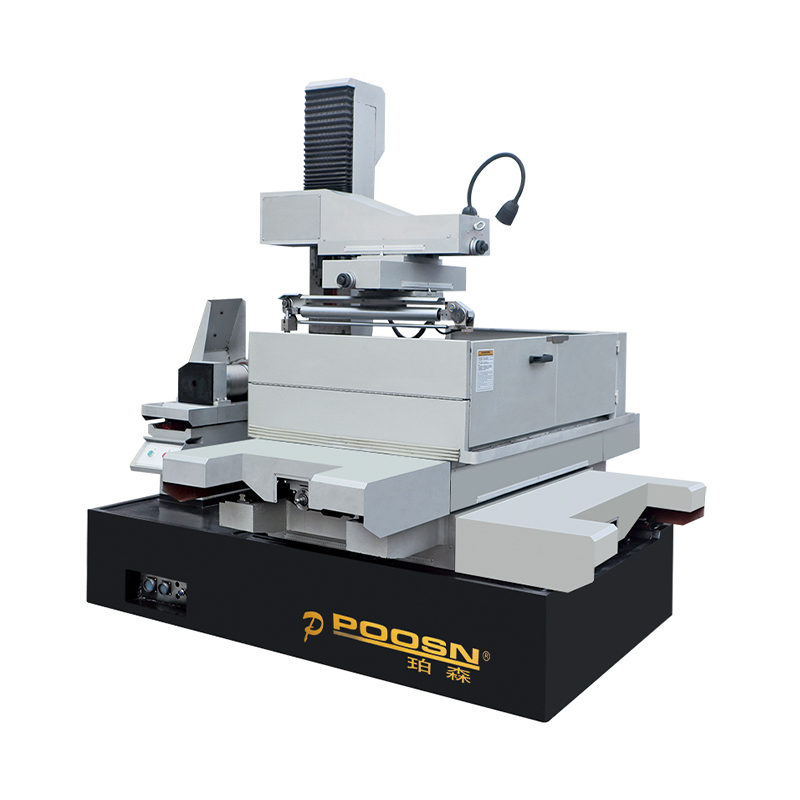
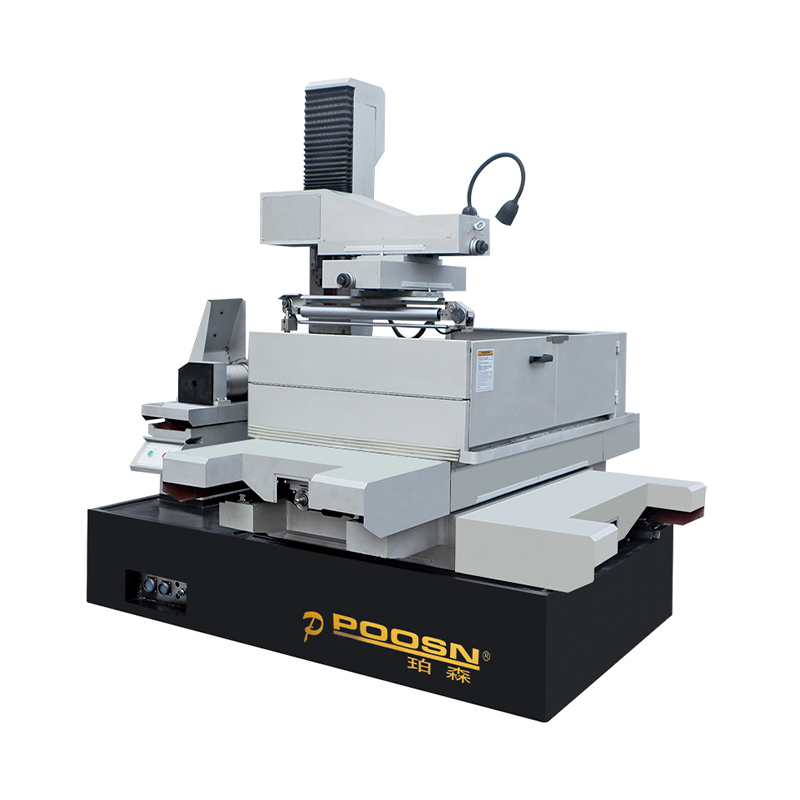
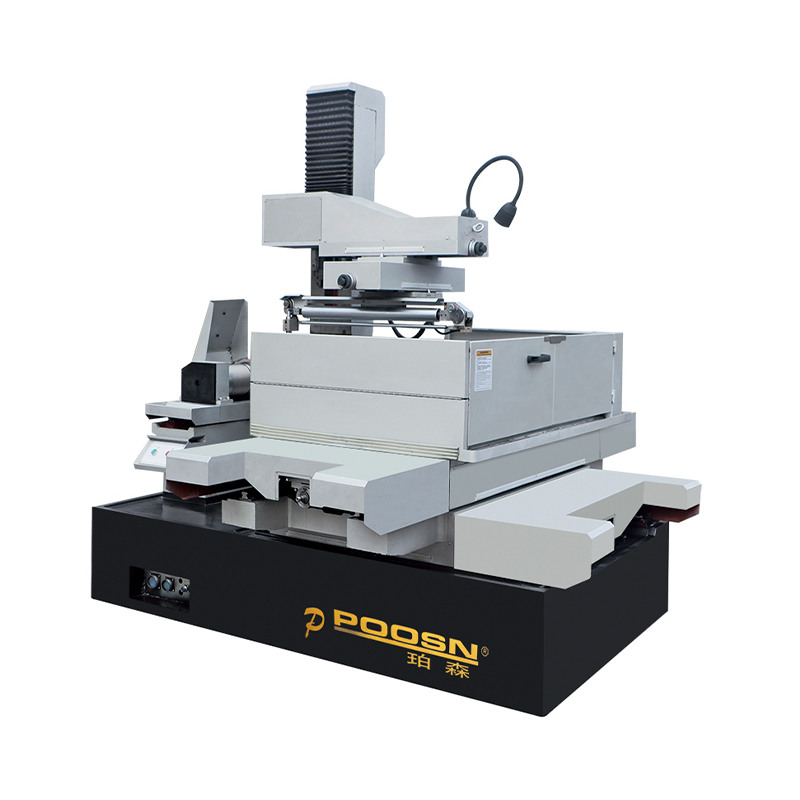
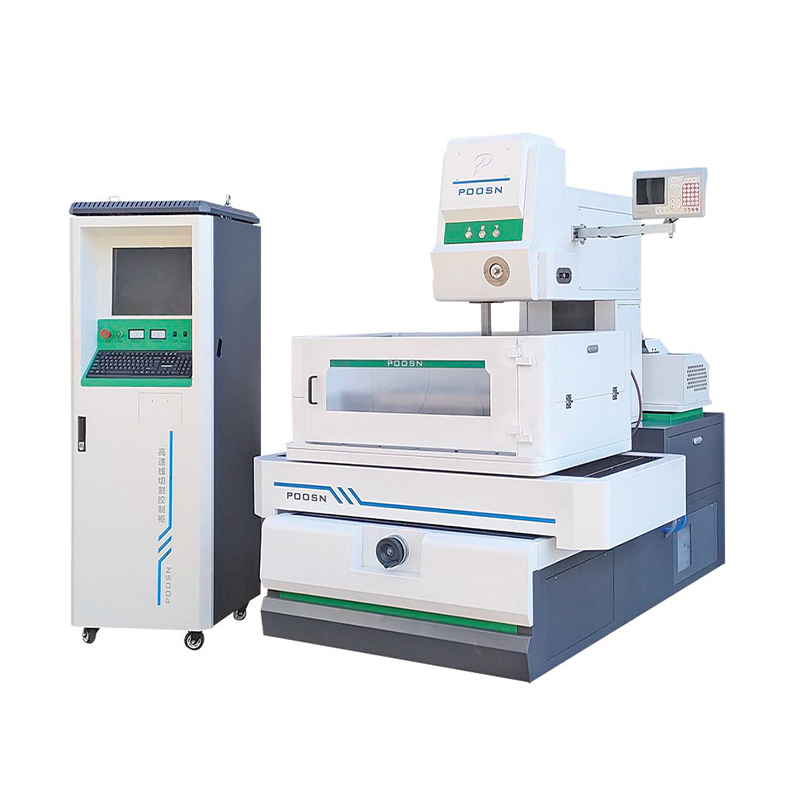
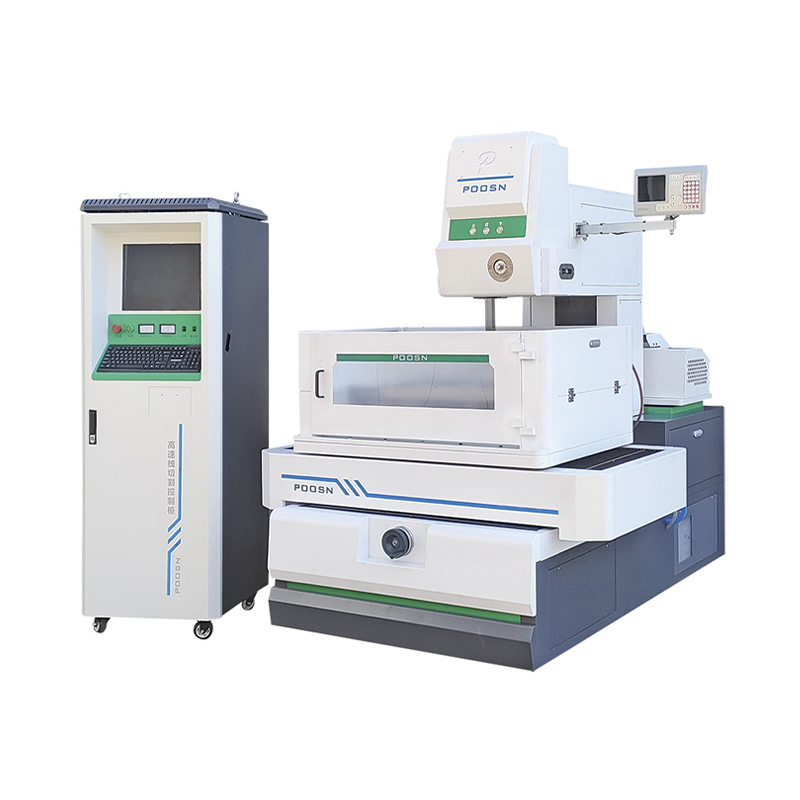
DK80D Heavy-Duty CNC Large-Taper Wire-Cut EDM Machine for Oversized Workpieces
2026-08-03
In precision manufacturing, some workpieces exceed the practical limits of conventional wire-cut electrical discharge machining equipment. Large mold bases, thick alloy plates, aerospace components, heavy mechanical parts, and complex profiles may require substantial cutting capacity, wide working travel, high load-bearing strength, and reliable taper control at the same time. The DK80D Heavy-Duty CNC Large-Taper Wire-Cut EDM Machine is designed for precisely this class of machining challenge.
As the largest model in the DKD large-cutting-taper WEDM range, the DK80D combines an oversized worktable, a maximum cutting thickness of 800 mm, a maximum worktable load of 1,000 kg, and large-angle taper cutting capability. Its X-axis travel of 800 mm and Y-axis travel of 1,200 mm provide a substantial machining envelope for oversized components. At the same time, its U- and V-axis tapering system enables the controlled cutting of sloped, inclined, variable-taper, and irregular geometries.
The machine is intended for manufacturers that require more than basic contour cutting. Its design addresses the integrated requirements of large workpiece handling, complex spatial geometry, long-duration operation, precision control, wire stability, dielectric flushing, and production efficiency. These capabilities make the DK80D suitable for heavy-duty mold manufacturing, aerospace component production, high-end equipment processing, large mechanical parts, and other demanding applications.
This article examines the DK80D’s technical capabilities, structural design, manufacturing strengths, application value, and differences from smaller models. It also explains why large-taper wire EDM technology is important for modern manufacturers and how the machine can contribute to production efficiency, process flexibility, and long-term operating value.
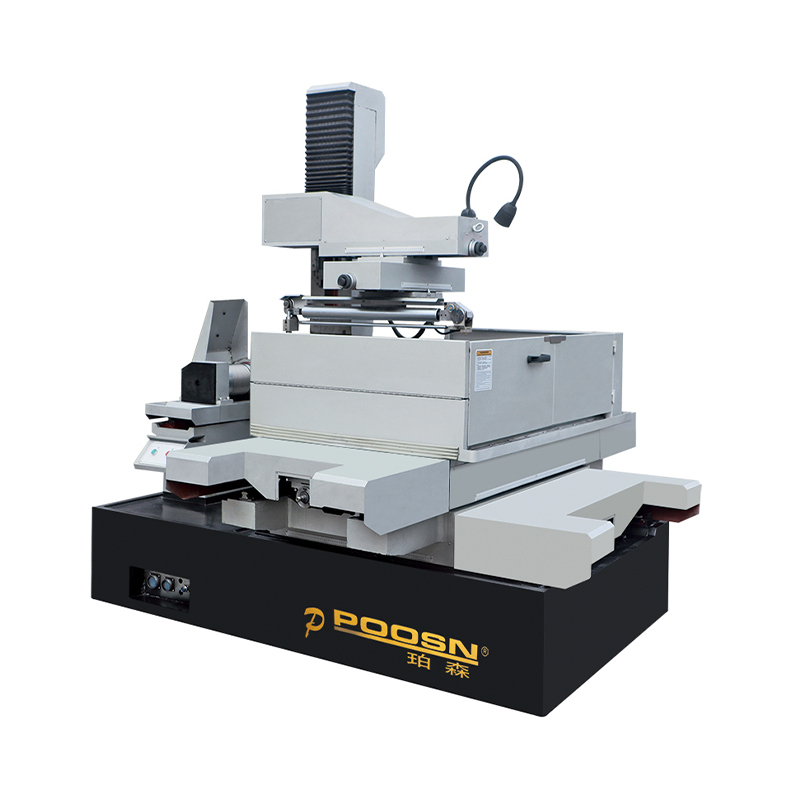
DK80D Heavy-Duty CNC Large Taper Wire Cut EDM Machine for Oversized Workpieces
Content
- 1 1. The Role of Large-Taper Wire EDM in Modern Manufacturing
- 2 2. Core Capacity of the DK80D
- 3 3. Large-Taper Cutting Performance
- 4 4. Structural Stability for Heavy-Duty Machining
- 5 5. Wire-Feed and Electrode-Wire Control
- 6 6. Electrical Discharge and Cutting Efficiency
- 7 7. Manufacturing Processes Behind the Machine
- 8 8. Advantages for Heavy-Duty Mold Manufacturing
- 9 9. Aerospace and High-End Equipment Applications
- 10 10. Comparison with Smaller Models in the DKD Series
- 11 11. Production Efficiency and Return on Investment
- 12 12. Technical Support and Service Value
- 13 13. Recommended Operating Practices
- 14 14. Company Manufacturing Strengths
- 15 15. Application Selection Guide
- 16 16. Frequently Asked Questions
- 16.1 Q1: What is the main advantage of the DK80D over smaller models?
- 16.2 Q2: What maximum taper can the DK80D cut?
- 16.3 Q3: Can the DK80D process hardened steel and cemented carbide?
- 16.4 Q4: Is the DK80D suitable for mass production?
- 16.5 Q5: How does the machine support thick-workpiece cutting?
- 16.6 Q6: Can the DK80D be customized?
- 16.7 Q7: What surface finish can the DK80D achieve?
- 16.8 Q8: What drive system does the DK80D use?
- 16.9 Q9: What programming system is included?
- 16.10 Q10: What should buyers prepare before requesting a quotation?
- 17 17. Conclusion
- 18 References
- 19 Product: DK80D Heavy-Duty CNC Large Taper Wire Cut EDM Machine for Oversized Workpieces
1. The Role of Large-Taper Wire EDM in Modern Manufacturing
Wire-cut electrical discharge machining removes electrically conductive material through controlled electrical discharges between a continuously moving electrode wire and the workpiece. Because the cutting process is non-contact, it does not impose the same mechanical cutting forces associated with milling, sawing, or conventional turning. This characteristic is especially valuable when machining hardened steels, cemented carbides, complex contours, narrow slots, delicate profiles, and components that would be difficult to secure or cut using conventional tools.
Standard wire EDM machines are generally optimized for moderate workpiece sizes and relatively limited taper angles. However, heavy-duty applications introduce additional difficulties. A thick workpiece may require longer cutting cycles, more stable dielectric circulation, stronger structural support, and more consistent wire tension. A large taper angle introduces another layer of complexity because the electrode wire must maintain an accurate spatial position while its upper and lower guide points move according to the programmed geometry.
Large-taper machining is therefore not simply a matter of increasing the travel of the U and V axes. The complete machine must coordinate the X, Y, U, V, and Z-related functions with sufficient stability. The worktable must support the mass of the workpiece without excessive deformation. The guide rails and drive system must maintain smooth movement. The wire-feed system must control tension and reduce vibration. The control system must compensate for the spatial relationship between the upper and lower wire positions.
The DK80D is developed around these integrated requirements. It is not only a large machine with a larger worktable. It is a dedicated large-taper WEDM platform intended to address thick, heavy, oversized, and geometrically complex workpieces. Its value comes from the interaction of its cutting capacity, mechanical structure, tapering system, control architecture, wire transport, and manufacturing quality.
2. Core Capacity of the DK80D
The DK80D provides the highest working capacity within the DKD series. Its CNC worktable measures 1,020 × 1,620 mm, while its X- and Y-axis travel reaches 800 × 1,200 mm. The processing slot size is approximately 1,050 × 1,660 mm, creating a working area suitable for large molds, oversized plates, structural parts, and other components that cannot be comfortably accommodated by medium-sized wire EDM equipment.
The machine supports a maximum cutting thickness of 800 mm. This capability is particularly important for manufacturers processing thick mold steels, heavy mechanical blocks, carbide components, and large die structures. Thick-section cutting places greater demands on wire stability, dielectric flow, flushing effectiveness, and machine rigidity. A machine designed for this work must maintain performance over long cutting paths rather than only deliver short-term peak output.
With a maximum worktable load of 1,000 kg, the DK80D is designed to handle heavy workpieces without requiring the operator to divide the component into multiple setups whenever possible. Reducing the number of setups can improve positional consistency, simplify workholding, and reduce the risk of alignment errors between separately machined sections.
The DK80D also offers a maximum cutting angle of up to ±45° over an 80 mm reference condition, according to the stated technical configuration. This capability supports the machining of large inclined surfaces, tapered cavities, slanted punches, variable-angle profiles, and other components in which the upper and lower contours do not share the same shape or position.
| Parameter | DK80D Specification | Production Significance |
| Worktable size | 1,020 × 1,620 mm | Accommodates large molds, plates, and heavy components |
| X-axis travel | 800 mm | Provides broad horizontal cutting movement |
| Y-axis travel | 1,200 mm | Supports long and oversized workpiece profiles |
| Processing slot size | 1,050 × 1,660 mm | Offers practical clearance for large workpieces |
| Maximum cutting thickness | 800 mm | Suitable for thick mold steels and heavy-duty components |
| Maximum worktable load | 1,000 kg | Supports heavy workpieces and robust fixtures |
| Maximum cutting taper | Up to ±45°/80 mm | Enables large-angle and complex taper machining |
| Maximum cutting efficiency | 10,000–16,000 mm²/h | Helps shorten production cycles when conditions are suitable |
| Optimal surface roughness | Ra ≤ 2.5 μm | Reduces the amount of subsequent finishing work |
| Machine weight | Approximately 3,500 kg | Provides a substantial structural base for heavy cutting |
3. Large-Taper Cutting Performance
The central advantage of the DK80D is its ability to combine a large working envelope with substantial taper-cutting capability. In a conventional straight cut, the electrode wire remains approximately vertical and the upper and lower wire guides follow a similar projected path. During taper cutting, the wire is intentionally inclined. The upper and lower guide positions must move in a coordinated manner so that the desired geometry is generated through the thickness of the workpiece.
As the taper angle increases, the machine becomes more sensitive to guide alignment, wire tension, axis synchronization, workpiece thickness, thermal conditions, and control compensation. A small positional error at the upper or lower guide can produce dimensional variation, an incorrect taper, or a profile mismatch between the top and bottom surfaces. These challenges become more serious when the workpiece is thick and the cutting path is long.
The DK80D addresses this challenge through coordinated X, Y, U, and V movement. The machine uses a four-axis linkage configuration for the principal CNC cutting motion, allowing the worktable and tapering device to work together. Its U- and V-axis tapering system provides the necessary offset movement for large-angle cutting. The stated advanced configuration also emphasizes simultaneous spatial coordination and compensation, which are important for maintaining accuracy across complex profiles.
Large-taper cutting can reduce the need for separate machining operations. A component that might otherwise require a combination of wire EDM, milling, manual fitting, or secondary profiling may be produced more directly when the machine can generate the required inclined or irregular geometry in a single setup. Fewer setups can reduce handling time and improve the relationship between related surfaces.
Typical applications include tapered punches, inclined mold inserts, large die components, sloped cavities, angled wear plates, aerospace profiles, and parts with different upper and lower contours. The machine can also be considered for components in which the taper varies along the contour, provided that the workpiece geometry, control programming, wire diameter, flushing conditions, and process parameters are within the machine’s applicable range.
3.1 Maintaining Geometry Through Thick Sections
Maintaining consistent geometry from the top surface to the bottom surface is one of the most important requirements in thick-section taper cutting. The DK80D’s process depends on accurate coordination between the programmed contour and the movement of the upper and lower wire guides. Compensation algorithms can account for the intended taper relationship, while precision positioning and stable mechanical movement help limit deviations during cutting.
The mechanical condition of the wire guides is also important. The wire must pass through a stable guiding system that supports a repeatable pivot position while allowing the wire to maintain the required angle. Guide wear, contamination, excessive vibration, or unstable wire tension can all influence final accuracy. For this reason, proper maintenance of guide components and consumables is an essential part of achieving the machine’s best performance.
For high-precision work, manufacturers may select optional linear scales and servo drives. These options can provide enhanced feedback and control depending on the required production standard, workpiece size, and process conditions. The appropriate configuration should be selected according to the customer’s material, tolerance, taper angle, production volume, and quality objectives.
4. Structural Stability for Heavy-Duty Machining
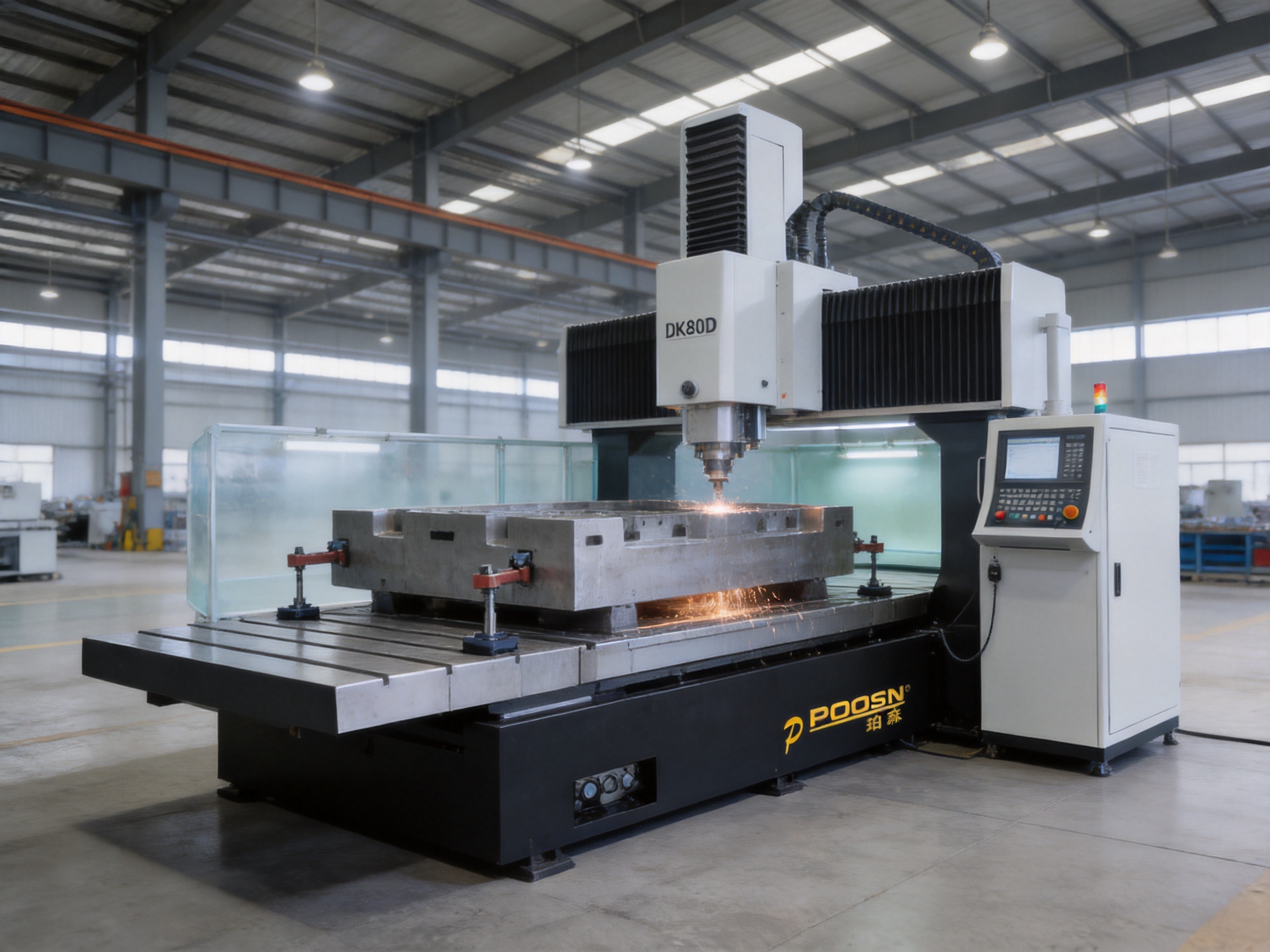
Large workpieces create static and dynamic loads that are significantly higher than those encountered in smaller wire EDM applications. The machine bed, worktable, guide rails, drive system, and supporting structures must remain stable while the workpiece is loaded, positioned, and machined. Any unwanted movement or vibration can affect the cut, particularly during extended taper operations.
The DK80D is built as a heavy-duty machine, with a listed machine weight of approximately 3,500 kg. A substantial machine structure can improve resistance to vibration and help create a stable foundation for precision movement. Mass alone does not guarantee accuracy, but it can contribute to damping when combined with appropriate casting design, guide support, assembly quality, and drive control.
High-strength aging treatment for major castings is an important manufacturing process for large machine tools. Casting components may contain internal stresses that can gradually be released through time, temperature changes, machining, or operational loading. If these stresses are not properly controlled, dimensional stability may deteriorate. A suitable aging process helps reduce the risk of structural movement after machining and assembly.
The DK80D’s design emphasizes reinforced guide rail support and a stable bed structure. High-precision linear rails provide controlled movement for the CNC worktable, while the machine’s mass and structural layout help support heavy workpieces during long cutting cycles. For manufacturers processing large molds or thick components, this stability can be more valuable than a short-term increase in nominal speed.
Structural stability is also linked to surface finish. Wire vibration, workpiece movement, and machine resonance can produce visible striations, uneven discharge conditions, or localized quality changes. A stable base helps the wire transport system and electrical discharge process operate more consistently, contributing to the stated optimal surface roughness of Ra ≤ 2.5 μm under suitable machining conditions.
4.1 Worktable Design and Load Management
The large worktable is designed to provide practical support for oversized parts and fixtures. However, the stated maximum load should be considered together with how the weight is distributed. A concentrated load, an uneven fixture, or a workpiece positioned too far from the ideal support area may create different mechanical conditions from a uniformly distributed load. Correct loading procedures and appropriate workholding remain important even when the machine has a high rated capacity.
Operators should verify the workpiece dimensions, center of gravity, clamping method, dielectric clearance, and required travel before starting a job. Large components may require lifting equipment, dedicated fixtures, additional supports, or a carefully planned loading sequence. These practices protect the machine, improve setup repeatability, and support safe operation.
5. Wire-Feed and Electrode-Wire Control
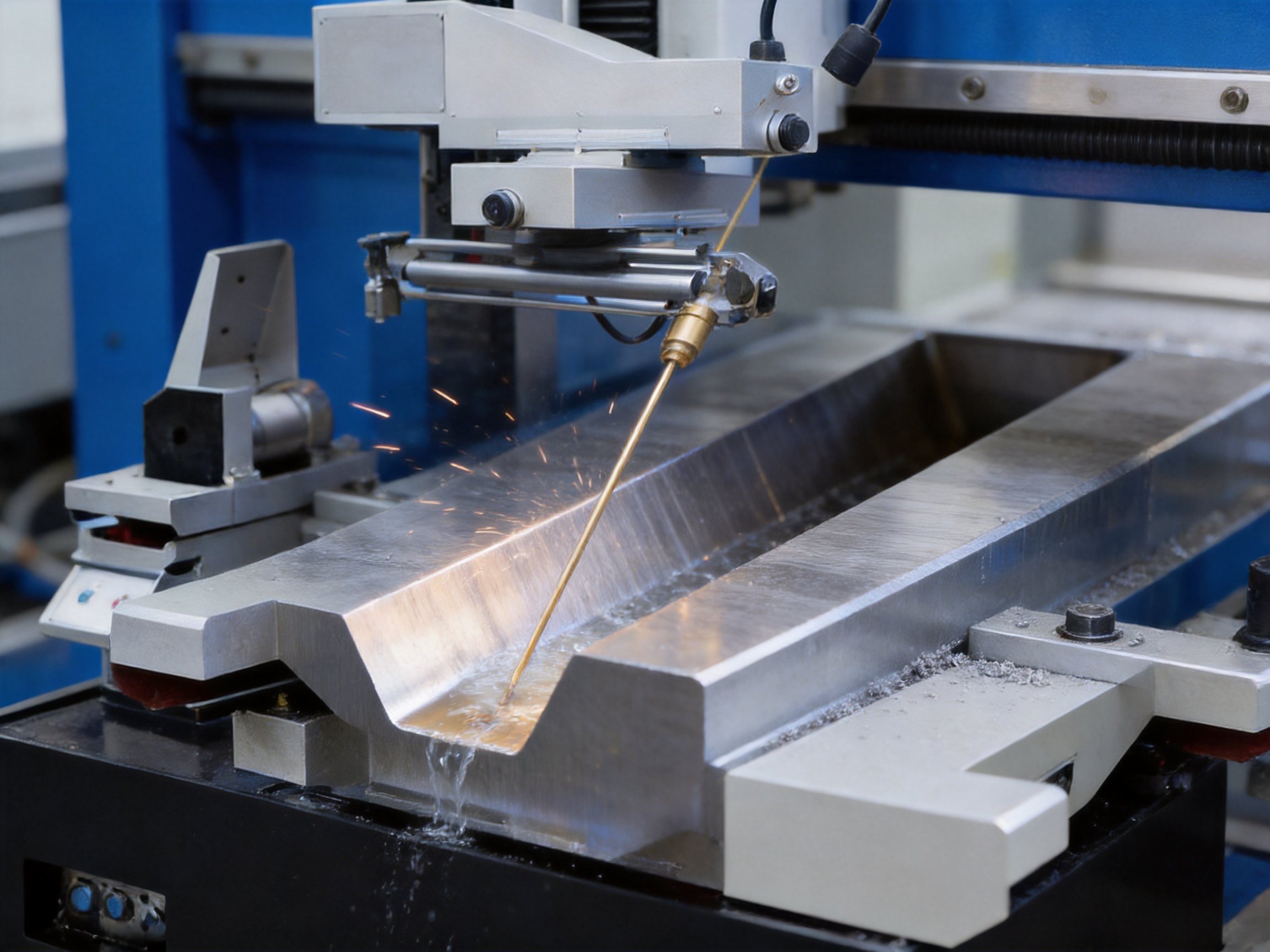
The electrode wire is the active cutting tool in WEDM. It must travel through the work zone with controlled speed and tension while maintaining stable electrical discharge conditions. The challenge becomes greater in large-taper and thick-workpiece applications because the wire path may span a considerable distance and the cutting cycle may continue for many hours.
The DK80D uses a wire-feed system with a maximum wire drum travel of 180 mm. Its standard electrode wire diameter is Φ0.18 mm when used with a wire guider. The wire-feed speed is specified as 1–11 m/s with frequency control, and the maximum wire storage length is approximately 350 m. These parameters provide flexibility for selecting a suitable wire transport condition according to the material, thickness, taper, surface finish, and cutting efficiency requirements.
Stable tension control helps reduce wire vibration, especially when the wire is inclined at a large taper angle. Excessive vibration may affect dimensional accuracy, surface texture, and discharge stability. A controlled wire path also helps reduce the risk of wire breakage during extended machining operations.
Wire guides, guide wheels, nozzles, and related consumables have a direct effect on process quality. Their condition influences the wire’s position, tension, and ability to remain stable near the discharge gap. High-quality consumables and timely replacement are therefore important elements of the machine’s total operating system. The manufacturer’s experience in component sourcing and supply-chain management supports consistent access to suitable core parts and consumables.
Wire-feed performance must also be considered with dielectric flushing. If eroded particles are not removed effectively, secondary discharges can occur and interfere with the intended cutting process. In thick or strongly tapered workpieces, fluid access to the gap may be uneven. The DK80D’s optional high-pressure water tank and multi-angle flushing approach can help improve the delivery of dielectric fluid to challenging cutting zones, subject to the selected machine configuration.
6. Electrical Discharge and Cutting Efficiency
The DK80D has a maximum cutting efficiency range of 10,000–16,000 mm²/h under applicable machining conditions. Actual performance depends on workpiece material, thickness, taper angle, wire type, electrical parameters, flushing quality, required surface finish, and the number of finishing passes. It is therefore more useful to view the stated range as a production capability indicator rather than a universal result for every job.
High cutting efficiency is valuable in large-part machining because the total cutting path can be extensive. A long production cycle ties up equipment, labor, fixtures, and floor space. When the machine can maintain a stable discharge process at a suitable speed, it can help reduce total processing time and improve equipment utilization.
The machine’s maximum processing current is listed as 6 A, with an electrical capacity of 2.5 KVA. Its programming system is identified as an X8/AUTOCUT control system, and the standard control cabinet model is ZHZK-03, with an optional ZHZ-09G configuration. These systems support the programming and control functions required for CNC wire cutting, contour management, taper cutting, and process operation.
For demanding work, cutting efficiency should always be balanced against surface finish and dimensional accuracy. Rough cutting may prioritize material removal, while finishing passes use more conservative conditions to improve the final profile. The DK80D’s stated optimal surface roughness of Ra ≤ 2.5 μm indicates its ability to support a relatively fine finish when the material, programming, wire condition, flushing, and electrical settings are properly matched.
The machine can therefore serve both high-volume production and specialized job-shop work. In large-scale production, its cutting capacity can shorten cycle times for repeated parts. In low-volume or custom production, its large work envelope and taper capability allow the manufacturer to accept complex jobs that may be beyond the capacity of smaller machines.
7. Manufacturing Processes Behind the Machine
The performance of a large wire EDM machine depends on more than its published specifications. Manufacturing processes, assembly control, inspection methods, component selection, and after-sales support all influence the equipment’s practical value. The producer of the DK80D has established experience in the research, development, and production of electrical discharge machining equipment and related special processing technologies.
One key strength is the use of organized production and supply-chain management. Large machine tools require a coordinated flow of castings, precision rails, lead screws, drive components, electrical systems, wire-feed elements, control cabinets, and consumables. Maintaining stable sources for these parts helps improve consistency between machines and supports reliable service after installation.
Specialized cast iron and precision mechanical components must be selected and processed with attention to dimensional stability. Major castings may undergo aging treatment before precision machining. Guide rail mounting surfaces require careful preparation. Lead screws, support structures, and positioning components must be assembled with suitable alignment and preload. These steps are especially important for a machine intended to handle high loads and large taper angles.
Assembly quality is another major factor. Large-taper machining requires accurate coordination between the worktable, tapering device, wire guides, and control system. During assembly, geometric relationships must be checked rather than assumed. Positioning accuracy, straightness, squareness, guide alignment, and axis synchronization all contribute to final cutting performance.
The manufacturer reports the use of comprehensive testing methods and positioning accuracy inspection for each machine tool. The DK80D is designed according to applicable national standards, including GB/T7926-2015 for machine accuracy. Such standards provide a reference framework for evaluating geometric accuracy and positioning behavior.
Before delivery, equipment can be tested under conditions that simulate demanding cutting requirements, including large taper angles and heavy workpiece loads. Testing under challenging conditions is valuable because it helps identify issues that may not appear during a short no-load movement test. It also provides an opportunity to verify the relationship between machine mechanics, wire transport, electrical control, and software operation.
7.1 Customization and Configuration Flexibility
Large workpieces vary considerably in size, mass, material, taper requirement, and production volume. A standardized machine may meet the majority of needs, but some customers require additional configuration. The DK80D supports customization options for worktable requirements, cutting depth, cutting angle, drive systems, linear scales, high-pressure water tanks, and other relevant functions.
The standard worktable drive uses XY stepper drives, while XY AC servo drives are available as an option. Servo drives may be selected when the customer requires enhanced feedback, higher dynamic response, or a specific automation and control arrangement. Linear scales are also available as an option for applications where direct position feedback is desirable.
The machine supports a three-phase stepper drive for the U- and V-axis tapering device, while the Z-axis lift uses an electric motor with AC 220 V power. This configuration provides a practical foundation for the machine’s primary functions while allowing selected options to be matched to production requirements.
Customization should be based on a detailed review of the intended workpieces. Important factors include maximum length and width, thickness range, workpiece mass, material type, required taper, tolerance, surface finish, daily operating hours, production quantity, available power, and facility layout. Proper configuration planning helps ensure that the machine delivers useful capacity rather than unused features.
8. Advantages for Heavy-Duty Mold Manufacturing
Large molds are among the most demanding applications for wire EDM. They often involve thick hardened steels, deep profiles, complex cavities, inclined surfaces, and tight relationships between multiple components. A large mold may also be expensive and difficult to replace, so process stability and dimensional consistency are essential.
The DK80D provides a combination of thickness capacity, worktable size, load capacity, and taper control that suits large mold production. With a maximum cutting thickness of 800 mm and a maximum table load of 1,000 kg, the machine can accommodate heavy mold bases and large inserts. Its large taper range allows the production of angled or sloped features without relying exclusively on secondary machining.
Reducing secondary operations can lower handling time and improve process continuity. When a mold component is cut in one setup, the relationship between its key features can be preserved more effectively. This may reduce the need for repeated alignment, manual fitting, or corrective machining.
The machine is also useful for high-hardness mold materials. Wire EDM does not depend on the mechanical hardness of a conventional cutting tool in the same way as milling or turning. Cemented carbides, hardened steels, and other electrically conductive hard materials can be processed when appropriate electrical and flushing conditions are selected.
For mold manufacturers, the DK80D can function as both a production machine and a capacity-expansion asset. It allows a company to pursue larger molds, more complex taper requirements, and workpieces that may otherwise need to be subcontracted or divided among multiple machines.
9. Aerospace and High-End Equipment Applications
Aerospace manufacturing places strong emphasis on material integrity, dimensional control, traceability, and repeatable process performance. Components may contain complex contours, thin sections, difficult-to-machine alloys, or geometries that require specialized access. Wire EDM can be valuable in these situations because it generates profiles without direct cutting pressure and can process many conductive high-strength materials.
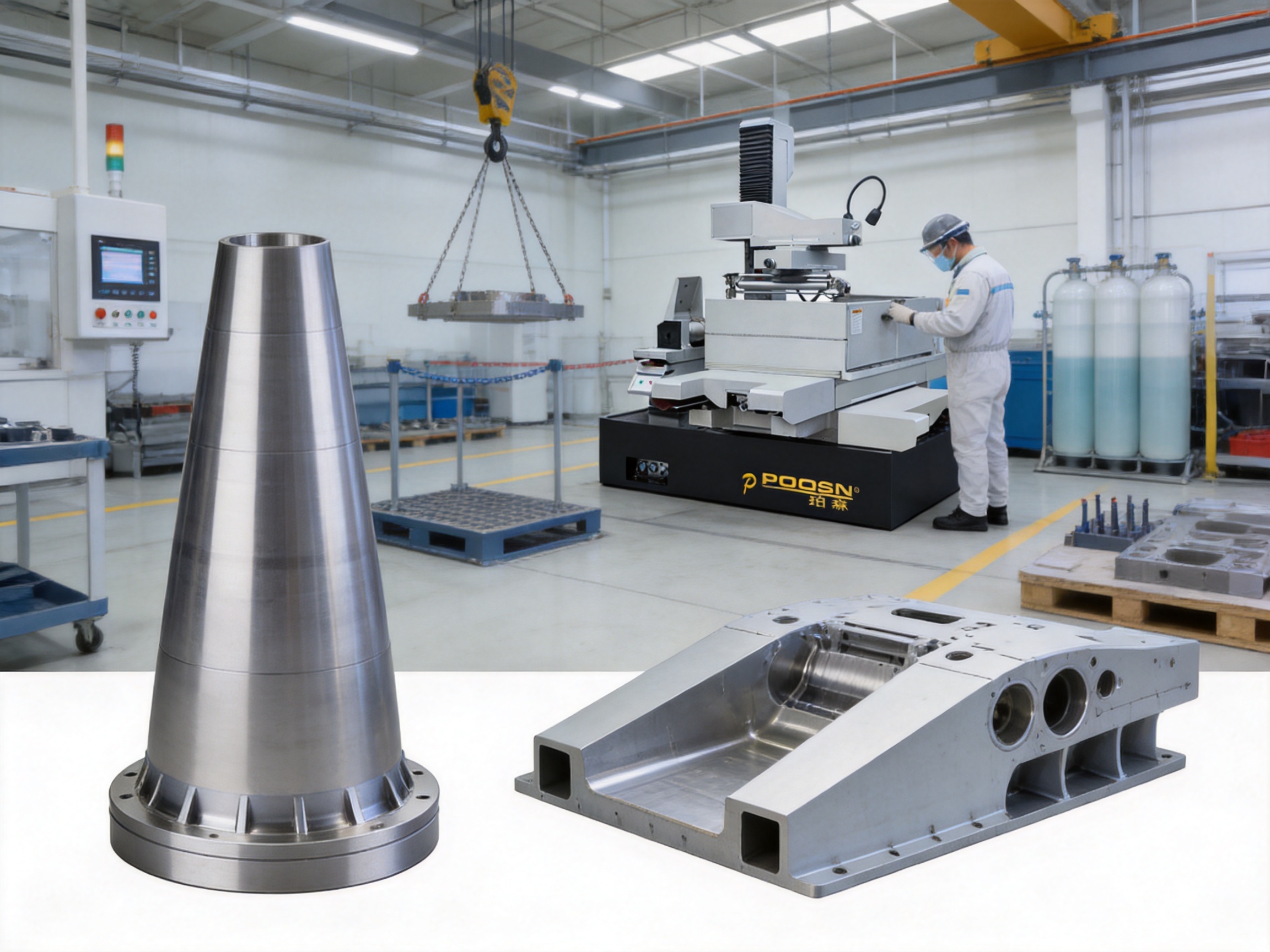
The DK80D’s large work envelope is suited to oversized aerospace tooling, structural components, fixtures, and specialized parts. Its taper capability can support angled profiles and complex sections. The machine’s heavy-duty structure is also advantageous when the part itself is large or when a substantial fixture is required.
High-end equipment manufacturers may use the machine for large mechanical components, wear-resistant parts, precision plates, special tooling, and components for energy, transportation, and industrial systems. In these fields, the ability to process a broad range of materials and geometries can be as important as maximum speed.
Manufacturers should validate each aerospace or high-end equipment application through sample cutting and process qualification. Workpiece conductivity, material composition, tolerance, surface integrity, and customer-specific inspection requirements must be included in the process plan. The DK80D provides the machine platform, while the final result depends on the complete combination of programming, wire, dielectric, electrical settings, fixturing, and inspection.
10. Comparison with Smaller Models in the DKD Series
The DKD series includes several models intended for different workpiece sizes and production requirements. The DK45D is suitable for medium-sized components and precision molds requiring large taper cutting. The DK55D expands the work envelope and load capacity for larger workpieces. The DK63D is intended for extra-large workpieces and heavy-duty components. The DK80D represents the highest-capacity option for the largest and most demanding jobs.
The main difference is not only the nominal taper angle. Worktable dimensions, axis travel, maximum thickness, table load, machine footprint, and weight all increase as the model size grows. This allows customers to select a machine according to actual workpiece requirements rather than paying for capacity that is not needed.
| Model | Worktable Size | XY Travel | Maximum Thickness | Maximum Load | Typical Positioning |
| DK45D | 570 × 950 mm | 450 × 650 mm | 450 mm | 400 kg | Medium components and precision molds |
| DK55D | 740 × 1,160 mm | 550 × 800 mm | 600 mm | 600 kg | Large workpieces and complex components |
| DK63D | 844 × 1,360 mm | 630 × 1,000 mm | 600 mm | 800 kg | Extra-large workpieces and heavy-duty parts |
| DK80D | 1,020 × 1,620 mm | 800 × 1,200 mm | 800 mm | 1,000 kg | Oversized workpieces and high-difficulty production |
The DK80D is the appropriate choice when the workpiece size, thickness, weight, or taper requirement approaches the practical limit of smaller models. It is especially suitable for customers that expect to process heavy-duty molds, large mechanical components, or oversized parts on a regular basis.
However, selecting the largest model is not always necessary. Customers whose workpieces fall within the capacity of the DK45D, DK55D, or DK63D may obtain a more compact and economical solution with an appropriate smaller machine. The correct selection depends on current production and realistic future requirements.
11. Production Efficiency and Return on Investment
Investment in a large wire EDM machine should be evaluated through total production value rather than purchase price alone. The DK80D can create value in several ways: by enabling larger jobs, reducing the number of setups, shortening cutting cycles, reducing outsourcing, supporting unattended operation, and lowering the need for secondary finishing.
Its stated cutting efficiency of 10,000–16,000 mm²/h can contribute to shorter production cycles when applied to suitable materials and geometries. The large table and load capacity can also make it possible to process multiple smaller components in one setup, depending on the fixture arrangement and electrical requirements.
Large-taper capability may provide an additional economic advantage. A complex sloped part that would require several machines or a combination of roughing, milling, fitting, and correction can potentially be produced more directly by wire EDM. Reducing intermediate handling lowers labor requirements and decreases the risk of cumulative alignment errors.
Energy-saving design is another stated advantage. Although actual energy consumption depends on operating conditions, cutting current, auxiliary equipment, duty cycle, dielectric circulation, and facility utilities, efficient machine design can support lower operating costs over the equipment’s service life. The economic result should be evaluated using real production data, including machine utilization, labor, consumables, maintenance, and scrap reduction.
For large-scale production, the machine’s reliability is especially important. Unexpected wire breakage, unstable flushing, inaccurate tapering, or extended downtime can affect delivery schedules. A stable wire transport system, strong mechanical structure, suitable control system, and access to technical support can all contribute to improved equipment availability.
12. Technical Support and Service Value
Large and specialized machines require more than installation. Operators need guidance on programming, workholding, taper calculation, wire selection, flushing, electrical parameters, maintenance, and troubleshooting. The manufacturer provides rapid response and professional technical support intended to maintain operational stability and long-term equipment effectiveness.
Process support is particularly valuable when customers begin cutting ultra-thick workpieces or complex high-angle profiles. Cutting parameters may need to be adjusted according to material hardness, thickness, conductivity, required surface finish, wire diameter, taper angle, and flushing conditions. Technical guidance can help reduce trial-and-error time and accelerate the transition from installation to productive machining.
Training should include safe loading procedures, machine coordinate systems, CNC programming, taper programming, wire threading, guide maintenance, dielectric management, alarm handling, and routine inspection. For advanced users, training may also cover cutting strategies for variable taper, multi-pass machining, difficult materials, and production scheduling.
Long-term maintenance is equally important. Operators should inspect wire guides, guide wheels, nozzles, filters, pumps, electrical connections, linear rails, lubrication points, and drive components according to the recommended schedule. Dielectric quality should be monitored because contaminated or poorly conditioned fluid can affect surface finish, wire stability, and discharge performance.
13. Recommended Operating Practices
Before machining, the workpiece should be checked for electrical conductivity, dimensional suitability, internal stress, and secure positioning. The worktable and fixture must be clean, stable, and capable of supporting the full load. The operator should confirm that the programmed travel remains within the machine’s available range and that the selected taper is compatible with the workpiece thickness and guide movement.
For large parts, the loading plan should be prepared before the machine is occupied. Lifting equipment must be rated for the workpiece and fixture combination. The center of gravity should be considered, and the workpiece should be supported to prevent movement during dielectric circulation or cutting.
Wire condition should be verified before a long cycle begins. The wire path must be correctly threaded, and the guides should be free from excessive wear or contamination. A short trial cut can be useful for confirming taper direction, coordinate orientation, flushing, and electrical behavior before committing to a long production program.
During machining, operators should monitor wire tension, dielectric flow, conductivity, temperature, filter condition, and alarm status. Thick workpieces may require special attention to fluid penetration and chip evacuation. If the cutting gap becomes unstable, reducing the cutting load or improving flushing may be more effective than simply increasing electrical power.
After machining, the part should be inspected at relevant top, bottom, and side locations. For taper work, inspection should verify both the intended angle and the relationship between upper and lower profiles. Recording process conditions and inspection results creates a useful reference for future jobs and supports continuous improvement.
14. Company Manufacturing Strengths
Taizhou Xinchengyang Machinery Manufacturing Co., Ltd. has specialized in electrical discharge wire cutting since 1999. The POOSN brand originated in 2003, and the company later expanded its manufacturing activities through cooperation, factory development, product innovation, and technical investment. In 2017, the company established its current corporate structure with registered capital of 60 million yuan and built its own factory.
The company’s product portfolio includes PS-C and DK77-BC medium-speed wire-cutting EDM machines, DK77-A and DK77-B high-speed wire-cutting EDM machines, and DK77-D large-taper wire-cutting EDM machines. This product range allows the manufacturer to serve customers with different cutting speeds, workpiece sizes, taper requirements, and investment levels.
Its manufacturing strengths include advanced processing equipment, comprehensive testing methods, rational product design, and strict production according to national standards. The company reports that each machine tool undergoes positioning accuracy testing before delivery. This inspection approach supports product consistency and gives customers a defined quality reference.
Vertical control of the supply chain is another stated advantage. By managing the sourcing and quality of materials such as specialized cast iron, precision lead screws, drive elements, and other core parts, the company can coordinate component quality with its machine design. Stable sourcing can also support replacement parts and after-sales service over the equipment life cycle.
The company has also developed customized process solutions for challenging materials, including high-hardness alloy steels and ultra-thick mold steels. This is important because machine performance is only one part of successful WEDM production. The correct combination of machine configuration, consumables, parameters, programming, flushing, and inspection is required to achieve reliable results.
Its products are sold across China, with selected models exported to Southeast Asia, West Asia, Europe, and the Americas. This distribution experience provides exposure to different application requirements, factory environments, standards, and customer expectations.
15. Application Selection Guide
The DK80D is best suited to customers whose workpieces are too large, heavy, thick, or geometrically complex for smaller wire EDM machines. It is particularly appropriate when the workpiece approaches 800 mm in thickness, weighs near the 1,000 kg table-load limit, requires an extensive X-Y travel range, or includes large-angle taper features.
Customers should consider the DK80D when they frequently process heavy-duty mold bases, large mold inserts, aerospace tooling, thick hardened plates, high-end equipment components, or complex mechanical parts. The machine is also appropriate when reducing secondary operations and maintaining dimensional relationships in one setup are important production goals.
For customers processing medium-sized components, the DK45D may provide sufficient capacity. The DK55D may be more appropriate for large workpieces that do not require the full DK80D envelope. The DK63D offers an intermediate heavy-duty solution for extra-large workpieces and loads up to 800 kg.
When selecting among models, manufacturers should provide the machine supplier with representative drawings and process information. A proper evaluation should include the largest workpiece dimensions, maximum thickness, total weight, required taper angle, tolerance, surface finish, material type, production quantity, and expected daily operating hours.
16. Frequently Asked Questions
Q1: What is the main advantage of the DK80D over smaller models?
The DK80D offers the largest worktable, longest X-Y travel, highest worktable load, and greatest maximum cutting thickness within the DKD range. It is designed for workpieces up to approximately 800 mm thick and 1,000 kg in table load, with X-Y travel of 800 × 1,200 mm. Its larger taper capability also makes it suitable for more difficult oversized and complex-shaped parts.
Q2: What maximum taper can the DK80D cut?
The stated maximum cutting taper is up to ±45° over an 80 mm reference condition. Actual cutting capability depends on the workpiece thickness, profile, wire guide condition, programming method, material, and selected machine configuration. A sample test is recommended for critical geometries.
Q3: Can the DK80D process hardened steel and cemented carbide?
Yes. The machine is designed to process electrically conductive metals and materials such as hardened steels and various cemented carbides. The final result depends on material composition, thickness, cutting parameters, wire selection, dielectric conditions, and the required surface finish.
Q4: Is the DK80D suitable for mass production?
Yes. Its high cutting efficiency, large work envelope, stable structure, and CNC control system support repeated production. It can also reduce handling and setup time for large components. For mass production, the customer should optimize fixtures, programming, wire consumption, flushing, inspection, and preventive maintenance.
Q5: How does the machine support thick-workpiece cutting?
The DK80D combines a maximum cutting thickness of 800 mm with a heavy-duty structure, large worktable, controlled wire-feed system, and suitable dielectric circulation options. High-pressure flushing can be selected where improved fluid delivery is needed. Proper setup and process parameter selection remain essential for stable deep cutting.
Q6: Can the DK80D be customized?
Customization options are available for DK80D and larger machines. Depending on the project, options may include worktable arrangements, cutting depth and angle requirements, AC servo drives, linear scales, high-pressure water tanks, and control cabinet configurations. The final configuration should be based on the customer’s workpiece and production requirements.
Q7: What surface finish can the DK80D achieve?
The stated optimal surface roughness is Ra ≤ 2.5 μm under suitable machining conditions. Surface finish depends on the material, wire, electrical settings, number of passes, flushing, taper angle, workpiece thickness, and machine maintenance. Rough cutting and finishing passes should be planned according to the required result.
Q8: What drive system does the DK80D use?
The standard configuration uses XY stepper drives, while XY AC servo drives are available as an option. The CNC tapering device uses three-phase stepper drives for the U and V axes. The machine uses four-axis linkage for X, Y, U, and V control, with an electric motor AC 220 V system for Z-axis lifting.
Q9: What programming system is included?
The machine is specified with an X8/AUTOCUT control system. It supports CNC wire-cutting operation and taper programming. Operators should receive appropriate training in coordinate systems, contour programming, taper parameters, wire threading, and process verification.
Q10: What should buyers prepare before requesting a quotation?
Buyers should prepare representative drawings, maximum and minimum workpiece dimensions, material information, maximum thickness, workpiece weight, required taper angle, accuracy, surface roughness, production volume, available power, factory space, and preferred options. This information enables the supplier to recommend the correct configuration and assess whether a sample-cutting trial is advisable.
17. Conclusion
The DK80D Heavy-Duty CNC Large-Taper Wire-Cut EDM Machine is designed for a specialized but increasingly important segment of precision manufacturing. Its 1,020 × 1,620 mm worktable, 800 × 1,200 mm X-Y travel, 800 mm maximum cutting thickness, 1,000 kg maximum worktable load, and large taper-cutting capability give it the capacity required for oversized and complex workpieces.
Its advantages extend beyond size. The machine combines coordinated taper movement, a reinforced heavy-duty structure, high-precision linear rail support, controlled wire feeding, optional high-pressure flushing, configurable drive systems, and CNC programming. These features help address the practical challenges of thick-section cutting, large-angle tapering, long cutting cycles, and heavy workpiece handling.
For mold manufacturers, aerospace suppliers, high-end equipment producers, and heavy mechanical component manufacturers, the DK80D can expand available production capacity while reducing the need for multiple setups or secondary machining. Its value is further supported by the manufacturer’s experience in EDM development, component sourcing, structural manufacturing, assembly inspection, customization, and technical support.
The best results will come from treating the DK80D as a complete production system rather than simply a machine purchase. Correct model selection, suitable options, accurate workholding, stable wire and dielectric conditions, qualified programming, preventive maintenance, and operator training all contribute to performance. When these factors are managed together, the DK80D offers a strong solution for high-capacity, large-taper, precision wire EDM production.
References
1. Taizhou Xinchengyang Machinery Manufacturing Co., Ltd., DK-D Large Cutting Taper WEDM Technical Parameters.
2. Taizhou Xinchengyang Machinery Manufacturing Co., Ltd., DK80D Product Description and Application Information.
3. GB/T7926-2015, Accuracy of Wire-Cut Electrical Discharge Machines.
4. General principles of electrical discharge machining and wire-cut EDM process control.
5. Technical guidelines for CNC machine tool accuracy, workholding, dielectric filtration, and preventive maintenance.
Product: DK80D Heavy-Duty CNC Large Taper Wire Cut EDM Machine for Oversized Workpieces
-
Phone
+86-0523-86268788 +86-13815960366 +86-13912191163Email
[email protected]Address
No. 366, Yusheng Road Jiulong Town, Hailing District Taizhou City, China
Copyright © Taizhou Xinchengyang Machinery Manufacturing Co., Ltd. All Rights Reserved.
Custom edm machine for sale
wholesale edm machine manufacturers
