

 English
 русский
 عربى
عربى

Zhou Meiling — Technical Sales Consultant
Home / Author / Zhou Meiling — Technical Sales Consultant / Heavy-Duty Large-Taper Wire Cut EDM Machine for Oversized Precision Workpieces
Heavy-Duty Large-Taper Wire Cut EDM Machine for Oversized Precision Workpieces
2026-07-18
The DK80D heavy-duty CNC large-taper wire cut EDM machine is engineered for manufacturers that must cut oversized, thick, heavy, and geometrically complex workpieces with dependable accuracy. In industries where conventional wire cutting equipment may struggle with large taper angles, extended machining thickness, or high worktable loads, this machine provides a practical production solution by combining large-stroke capability, reinforced mechanical structure, precision vector motion, and stable high-speed wire feeding. It is designed for demanding applications such as large molds, aerospace components, heavy machinery parts, high-end equipment manufacturing, and high-hardness alloy processing.
As the flagship model within the large cutting taper WEDM category, the DK80D focuses on three essential industrial needs: capacity, stability, and precision. Its worktable size reaches 1020×1620 mm, its XY travel reaches 800×1200 mm, and its maximum worktable load reaches 1000 kg. These specifications allow users to process large and heavy workpieces that are difficult to accommodate on smaller EDM machines. Its maximum cutting thickness of 800 mm further expands machining possibilities for thick mold bases, large structural parts, and complex tapered cavities.
Beyond size alone, the DK80D is distinguished by its large-taper cutting capability. With a maximum cutting taper of ±30°/80 mm and ±45°/80 mm depending on configuration and processing conditions, it can handle complex angled profiles that are often required in precision molds, die-casting tools, aerospace parts, and non-standard machinery components. For manufacturers seeking to reduce secondary processing, improve one-time forming capability, and increase production reliability, the DK80D offers a competitive balance of performance and cost-effectiveness.
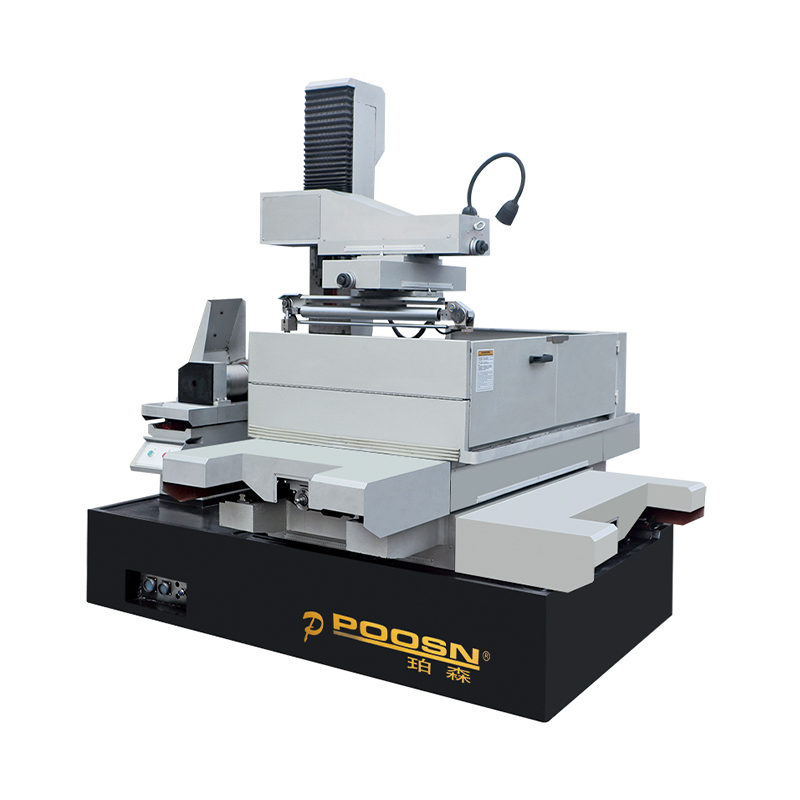
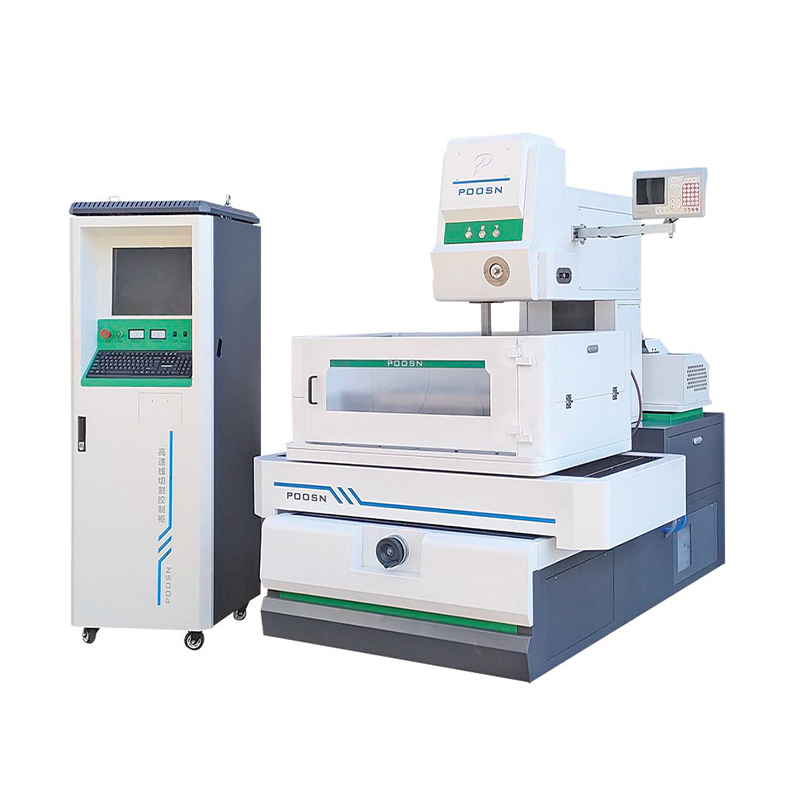
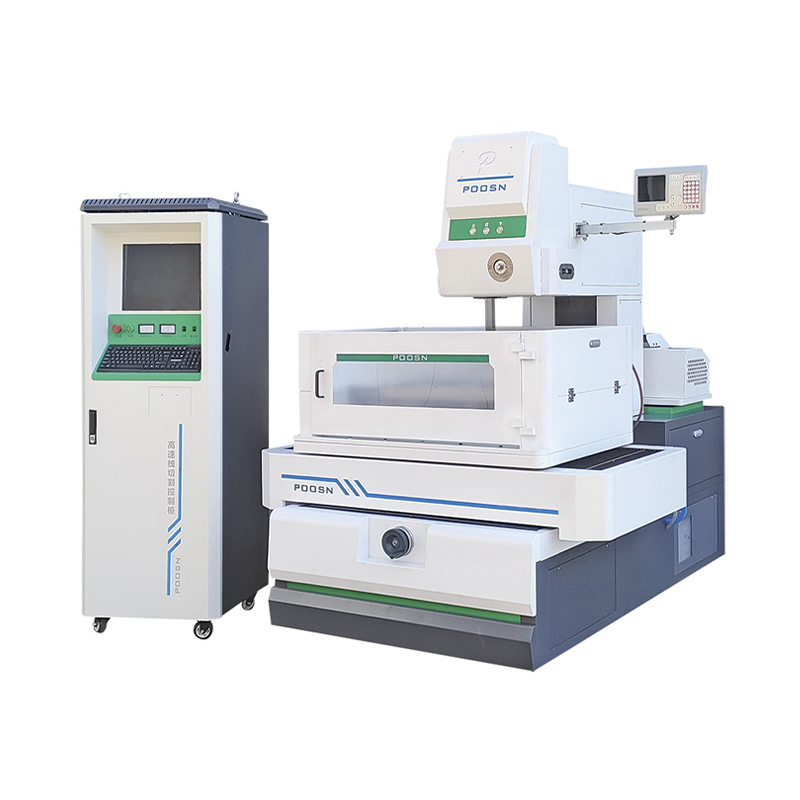
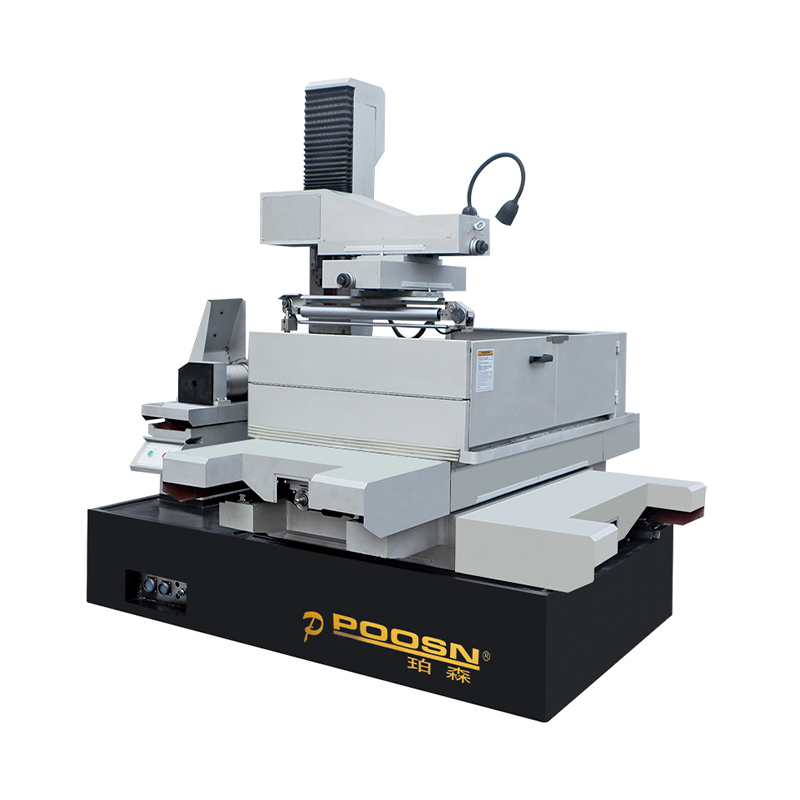
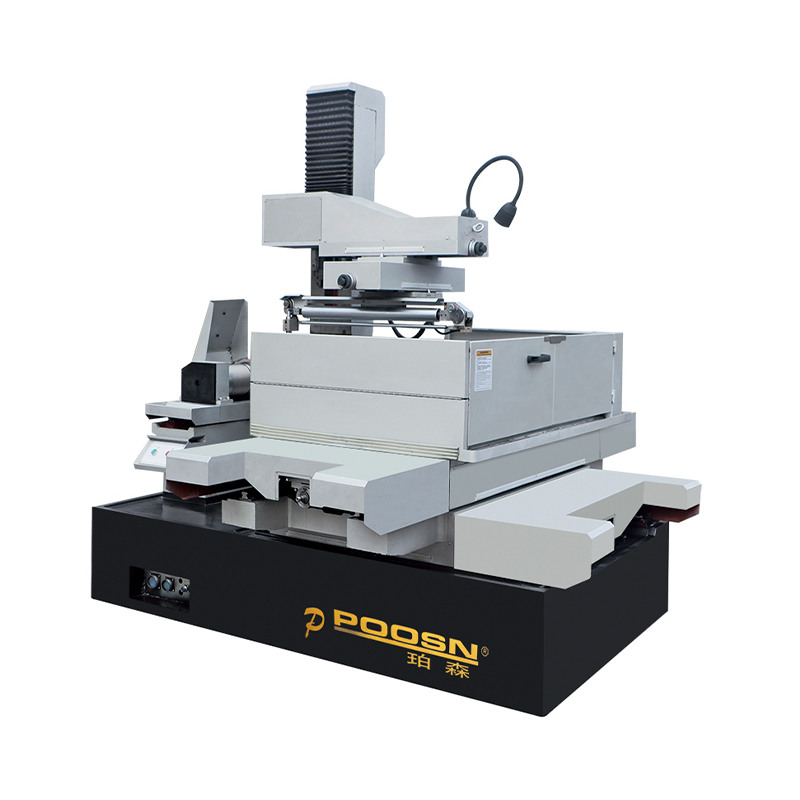
DK80D Heavy-Duty CNC Large Taper Wire Cut EDM Machine for Oversized Workpieces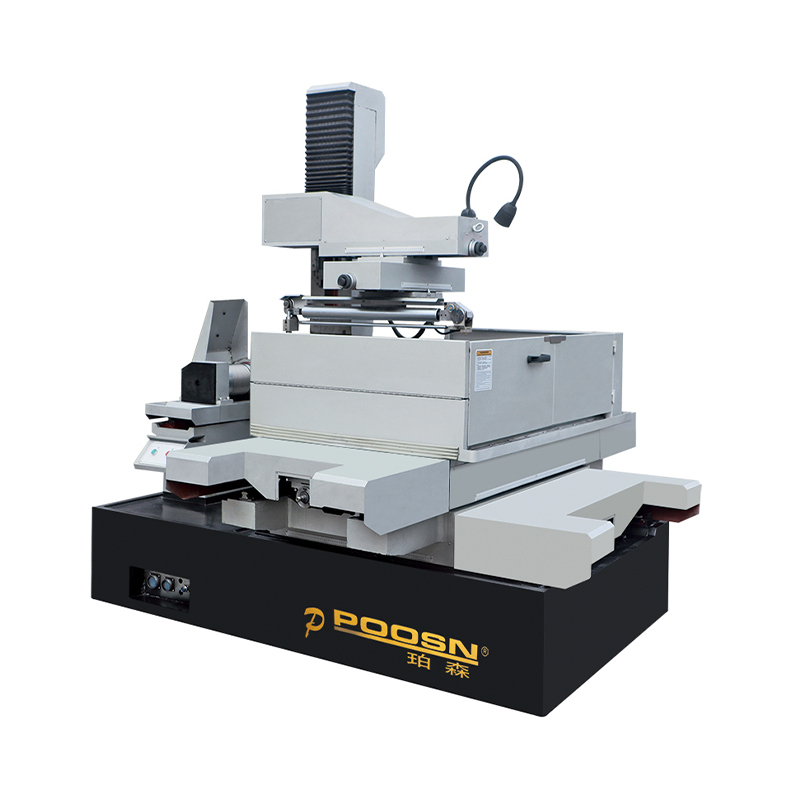
Content
- 1 Product Positioning in Modern Large-Taper EDM Manufacturing
- 2 Core Technical Advantages of the DK80D
- 3 Technical Parameter Overview
- 4 Advantages Over Conventional and Competing EDM Machines
- 5 Advanced Manufacturing Strength Behind the Machine
- 6 Large-Taper Cutting Technology in Detail
- 7 Application Fields
- 8 Customization and Adaptability
- 9 Production Efficiency and Return on Investment
- 10 Quality Control and Service Support
- 11 Operational Considerations for Best Performance
- 12 Model Selection Guidance
- 13 Q&A Section
- 13.1 Q1: What is the main advantage of the DK80D compared with smaller large-taper WEDM models?
- 13.2 Q2: Why is large-taper cutting important for mold manufacturing?
- 13.3 Q3: Can the DK80D process high-hardness materials?
- 13.4 Q4: How does the machine maintain stability during heavy-duty cutting?
- 13.5 Q5: What industries are most suitable for the DK80D?
- 13.6 Q6: How does the DK80D help improve production efficiency?
- 13.7 Q7: Is operator training necessary for large-taper machining?
- 13.8 Q8: What optional configurations can improve performance?
- 14 Conclusion
- 15 References
- 16 Product: DK80D Heavy-Duty CNC Large Taper Wire Cut EDM Machine for Oversized Workpieces
Product Positioning in Modern Large-Taper EDM Manufacturing
Wire cut electrical discharge machining has become a core process in precision manufacturing because it can cut hard conductive materials without applying the mechanical force associated with milling, drilling, or sawing. Instead of removing material through direct tool contact, WEDM uses controlled electrical discharge between an electrode wire and the workpiece. This makes it especially suitable for hardened steels, cemented carbides, high-strength alloys, mold steels, and other difficult-to-machine metals.
The DK80D addresses the upper end of this application field. Many standard high-speed or medium-speed wire cut EDM machines are optimized for general contour cutting, small and medium molds, dies, punches, templates, and precision parts. However, as workpiece size increases, the requirements become more demanding. A larger part needs a larger worktable, longer travel, higher machine rigidity, better flushing, stronger wire path stability, and a more robust motion system. When the workpiece also requires a large taper angle, the difficulty increases further because the electrode wire must remain stable while operating at a significant inclination.
This is the core operating environment of the DK80D. It is not merely a scaled-up wire cutting machine. It is built as a heavy-duty large-taper EDM platform for users who need strong load capacity, large stroke, wide processing range, and dependable accuracy over long machining cycles. Its configuration is especially valuable for mold manufacturers that process large cavity molds, automotive tooling, die-casting molds, plastic molds with angled release surfaces, and equipment components with irregular profiles.
Compared with smaller machines in the same large-taper family, the DK80D offers the greatest capacity. The DK45D is suitable for medium-size components and precision molds. The DK55D expands cutting range and load capacity for larger parts. The DK63D is designed for extra-large workpieces and heavy-duty components. The DK80D is the most powerful option for heavy molds and oversized workpieces requiring high-precision cutting and large-scale production capability.
Core Technical Advantages of the DK80D
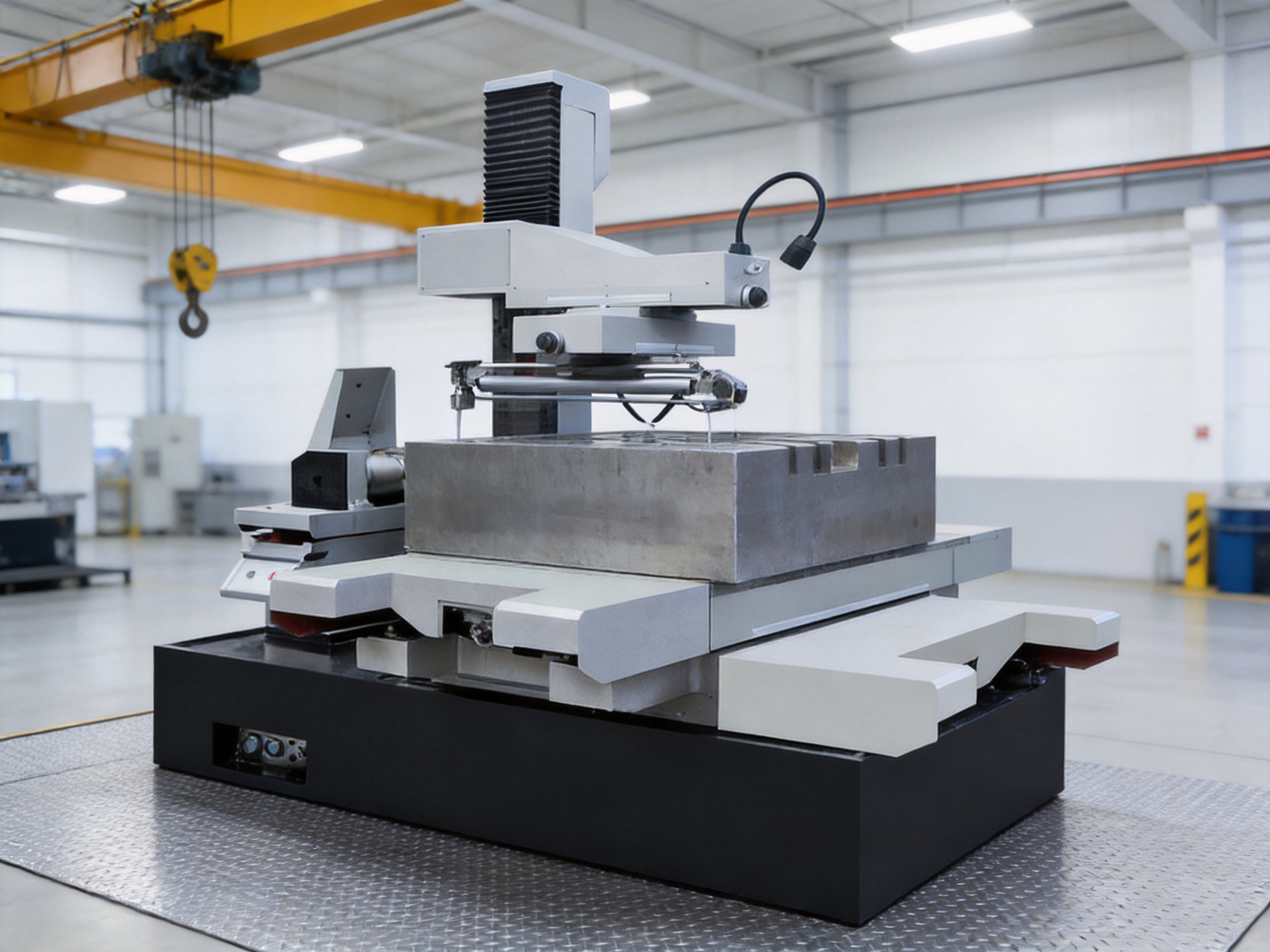
The value of a large-taper WEDM machine depends on the coordination of several systems rather than a single specification. Worktable size alone is not enough. Cutting thickness alone is not enough. True performance comes from the interaction of the machine bed, guide rail system, CNC control, tapering device, wire feed system, dielectric flushing, electrical discharge power supply, and manufacturing accuracy. The DK80D is built around this integrated logic.
Extra-Large Taper Cutting Capability
Large-taper cutting is one of the most important technical highlights of the DK80D. The machine supports large angular cutting tasks, including taper requirements up to ±45°/80 mm in suitable configurations. This allows the electrode wire to generate inclined surfaces and spatial profiles that are difficult or inefficient to create with ordinary wire cut EDM equipment. In many mold and component applications, taper cutting is not an optional feature; it is essential for producing functional geometry.
For example, mold components often require draft angles, tapered cavities, angled slots, and variable-section contours. Aerospace and equipment components may require non-parallel profiles, internal relief structures, or special mating surfaces. A machine with limited taper range may force the user to split the process into multiple setups or transfer the part to another machine. This increases labor, setup time, cumulative positioning error, and production risk. The DK80D helps reduce these problems by enabling complex tapered shapes to be processed in a more complete and efficient manner.
Oversized Worktable and Heavy Load Support
The DK80D worktable size of 1020×1620 mm provides a broad support area for oversized parts. Its XY travel of 800×1200 mm gives manufacturers a large cutting envelope for substantial workpieces. The processing slot size of 1050×1660 mm further supports the handling of large components in demanding production environments. These specifications make the machine especially suitable for large mold bases, heavy precision plates, and components that would exceed the practical capacity of smaller models.
The maximum worktable load of 1000 kg is equally important. In heavy mold and machinery manufacturing, a workpiece may weigh hundreds of kilograms before machining begins. If the machine bed and worktable cannot support this mass with stability, cutting accuracy will suffer. The DK80D is designed for such heavy-duty use, allowing manufacturers to process large and complex parts while maintaining dependable structural support throughout long operating cycles.
High Cutting Thickness for Thick Workpieces
The machine can process workpieces with a maximum cutting thickness of 800 mm. This is a major advantage for users who manufacture thick molds, tooling blocks, heavy mechanical components, and specialized industrial parts. Cutting thick material with wire EDM requires more than vertical clearance. It also requires stable discharge, effective dielectric flushing, consistent wire tension, and durable mechanical alignment. A thick workpiece increases the length of the discharge gap and makes debris removal more difficult, so machine stability is crucial.
The DK80D is configured to address this challenge by combining a reinforced structure, optimized wire transport, precision guide rail support, and stable electrical discharge performance. For industries that frequently work with thick mold steel or high-hardness alloys, this capability helps improve production flexibility and reduce dependence on multiple machines or secondary cutting processes.
Precision Performance for Demanding Quality Standards
The DK80D provides high-precision machining performance, including linear accuracy listed at 0.08 mm and manufacturing standards aligned with GB/T7926-2015. In practical production, precision depends on both machine construction and process control. The machine’s high-precision linear rail support, reinforced mechanical platform, and coordinated X, Y, U, and V axis linkage help maintain controlled wire positioning even during large-taper operations.
For large workpieces, maintaining accuracy is often more difficult than on small parts because thermal effects, mechanical deflection, and long cutting times can influence the final result. The DK80D is designed to maintain stability under these conditions. Its structural rigidity and motion control help ensure that every workpiece meets required quality standards, especially when used with appropriate cutting parameters, wire quality, dielectric management, and operator training.
Technical Parameter Overview
The following table summarizes the DK80D in comparison with other large-taper models in the same product category. It helps clarify why the DK80D is positioned as the heavy-duty option for oversized workpieces and difficult production tasks.
| Item | DK45D | DK55D | DK63D | DK80D |
| Worktable Size | 570×950 mm | 740×1160 mm | 844×1360 mm | 1020×1620 mm |
| XY Travel Size | 450×650 mm | 550×800 mm | 630×1000 mm | 800×1200 mm |
| Processing Slot Size | 630×990 mm | 770×1180 mm | 890×1400 mm | 1050×1660 mm |
| Maximum Cutting Thickness | 450 mm | 600 mm | 600 mm | 800 mm |
| Maximum Worktable Load | 400 kg | 600 kg | 800 kg | 1000 kg |
| Maximum Cutting Taper | ±30°/40 mm | ±30°/80 mm or ±45°/80 mm | ±30°/80 mm or ±45°/80 mm | ±30°/80 mm or ±45°/80 mm |
| Maximum Cutting Efficiency | 10000–16000 mm²/h | 10000–16000 mm²/h | 10000–16000 mm²/h | 10000–16000 mm²/h |
| Optimal Surface Roughness | Ra≤2.5 μm | Ra≤2.5 μm | Ra≤2.5 μm | Ra≤2.5 μm |
| Machine Weight | 1600 kg | 2000 kg | 2500 kg | 3500 kg |
| Machine Dimensions | 1780×1500×1700 mm | 2210×2030×2335 mm | 2420×2240×2370 mm | 2600×2590×2900 mm |
From the table, the DK80D stands out in three major areas: larger worktable, longer XY travel, and higher load capacity. Its 3500 kg machine weight also reflects a more substantial mechanical foundation, which contributes to damping, rigidity, and operational stability during heavy cutting. For customers who need a machine that can accommodate extra-large and heavy components, these differences are not simply numerical; they directly affect what can be produced and how reliably it can be produced.
Advantages Over Conventional and Competing EDM Machines
In the wire cut EDM market, many machines can perform standard vertical contour cutting, but not all can perform stable large-taper cutting on thick and heavy workpieces. The DK80D’s competitive advantage comes from its ability to integrate large capacity with practical precision and production efficiency. It is not limited to small mold inserts or medium tooling parts. It is designed for workpieces that demand more space, more support, and more robust motion control.
Greater Capacity for Oversized Workpieces
One of the most obvious advantages over many competing machines is processing capacity. A smaller machine may advertise precision, but if its worktable, travel, or load capacity is insufficient, it cannot handle large components. The DK80D solves this issue with its 1020×1620 mm worktable, 800×1200 mm travel, and 1000 kg load capacity. This enables manufacturers to process workpieces that would otherwise require outsourcing or investment in multiple pieces of equipment.
Improved Large-Taper Processing Efficiency
Large-taper cutting places special demands on the U and V axis travel, wire guide structure, wire tension, and control system. Conventional machines often have limited taper capacity, which restricts their use in angled mold cavities and complex spatial contours. The DK80D supports a much broader taper range, helping users reduce repeated setups and secondary machining. By completing more geometry in one operation, it can shorten the production cycle and improve dimensional consistency.
Heavy-Duty Rigidity for Long Cutting Cycles
Many large EDM operations involve long unattended or semi-attended cutting cycles. During these cycles, the machine must maintain consistent wire movement, discharge stability, and geometric accuracy. The DK80D’s reinforced structure and substantial machine weight improve resistance to vibration and deformation. This advantage becomes especially significant when the machine processes thick materials, high-hardness alloys, or large molds requiring continuous cutting over many hours.
Stable Wire Feeding and Reduced Wire Breakage Risk
Wire stability is a decisive factor in large-taper EDM cutting. When the wire is inclined at a large angle, changes in spatial distance and tension can cause vibration, unstable discharge, poor surface finish, or wire breakage. The DK80D uses an optimized high-speed wire-feeding system with frequency-controlled wire feed speed from 1 to 11 m/s. Its maximum wire storage length is approximately 350 m, and it uses an electrode wire diameter of Φ0.18 mm with a wire guider. These features support continuous and stable machining in demanding scenarios.
Balanced Cost-Effectiveness
High-capacity equipment must also be economically practical. The DK80D is designed with production efficiency and operating cost in mind. Its cutting efficiency, stable performance, and energy-saving design help reduce production cost per workpiece. For factories processing large quantities of heavy molds or complex components, the machine can improve return on investment by reducing outsourcing, minimizing rework, shortening production cycles, and increasing internal machining capability.
Advanced Manufacturing Strength Behind the Machine
The performance of an EDM machine depends not only on its design but also on the manufacturing discipline behind it. Taizhou Xinchengyang Machinery Manufacturing Co., Ltd. has years of experience in the research, development, and production of electrical discharge machining equipment and related special processing technologies. The company’s manufacturing approach emphasizes strict standards, strong technical capability, advanced processing equipment, complete testing methods, and rational product design.
Every machine tool is manufactured according to national standards, and each machine undergoes positioning accuracy testing before delivery. This is particularly important for a machine such as the DK80D because its large structure and complex taper motion require careful assembly, alignment, and verification. Precision in a heavy-duty machine cannot be achieved by design alone. It must be built into the machine through casting treatment, guide rail installation, transmission adjustment, electrical configuration, CNC calibration, and final inspection.
Structural Casting and Stress Control
Large-taper cutting creates dynamic loads because the wire path, U/V axis movement, and flushing conditions vary during operation. The machine base must remain stable throughout these changes. The company applies high-strength aging treatment to machine bed castings to help eliminate internal stress and improve long-term dimensional stability. This process is important because untreated or poorly treated castings may deform gradually, affecting machine accuracy over time.
A stable base provides the foundation for precision guide rails, worktable movement, and tapering accuracy. When the DK80D processes a 1000 kg workpiece or performs long-hour cutting, the machine bed must resist vibration and maintain geometric alignment. The robust structure is therefore one of the hidden but essential reasons for the machine’s performance.
Precision Guide Rail and Motion Assembly
The DK80D uses high-precision linear rail support as a standard configuration. Linear rail quality, installation accuracy, and lubrication conditions directly influence travel smoothness and repeatability. During manufacturing, careful rail alignment helps ensure that the worktable can move predictably along the X and Y axes. The U and V axes of the tapering device must also coordinate accurately with X and Y movement so that taper geometry is generated correctly.
Compared with basic machines that rely on less refined motion components, the DK80D’s reinforced guide rail arrangement and careful assembly improve cutting stability. This is especially valuable during large-angle cutting, where small positioning deviations may become more visible on the final workpiece surface. The machine’s four-axis linkage capability supports the coordinated motion required for complex taper profiles.
Control System and Programming Capability
The machine is equipped with an X8/AUTOCUT control system and a standard ZHZK-03 control cabinet, with ZHZ-09G available as an optional configuration. The CNC worktable uses standard XY stepper drives, with optional XY AC servo drives for customers requiring enhanced drive performance. The CNC tapering device uses U and V axis three-phase stepper drives, while the Z-axis lift uses an AC 220 V electric motor.
For operators, programming convenience is a practical advantage. Large-taper machining may appear complex because it requires the system to calculate the relationship between top and bottom profiles, taper angle, wire offset, and cutting path. A capable programming system helps simplify these tasks. By allowing users to input contour data and taper requirements, the system can execute the necessary vector decomposition for coordinated cutting. This reduces the burden on operators and supports more consistent production results.
Large-Taper Cutting Technology in Detail
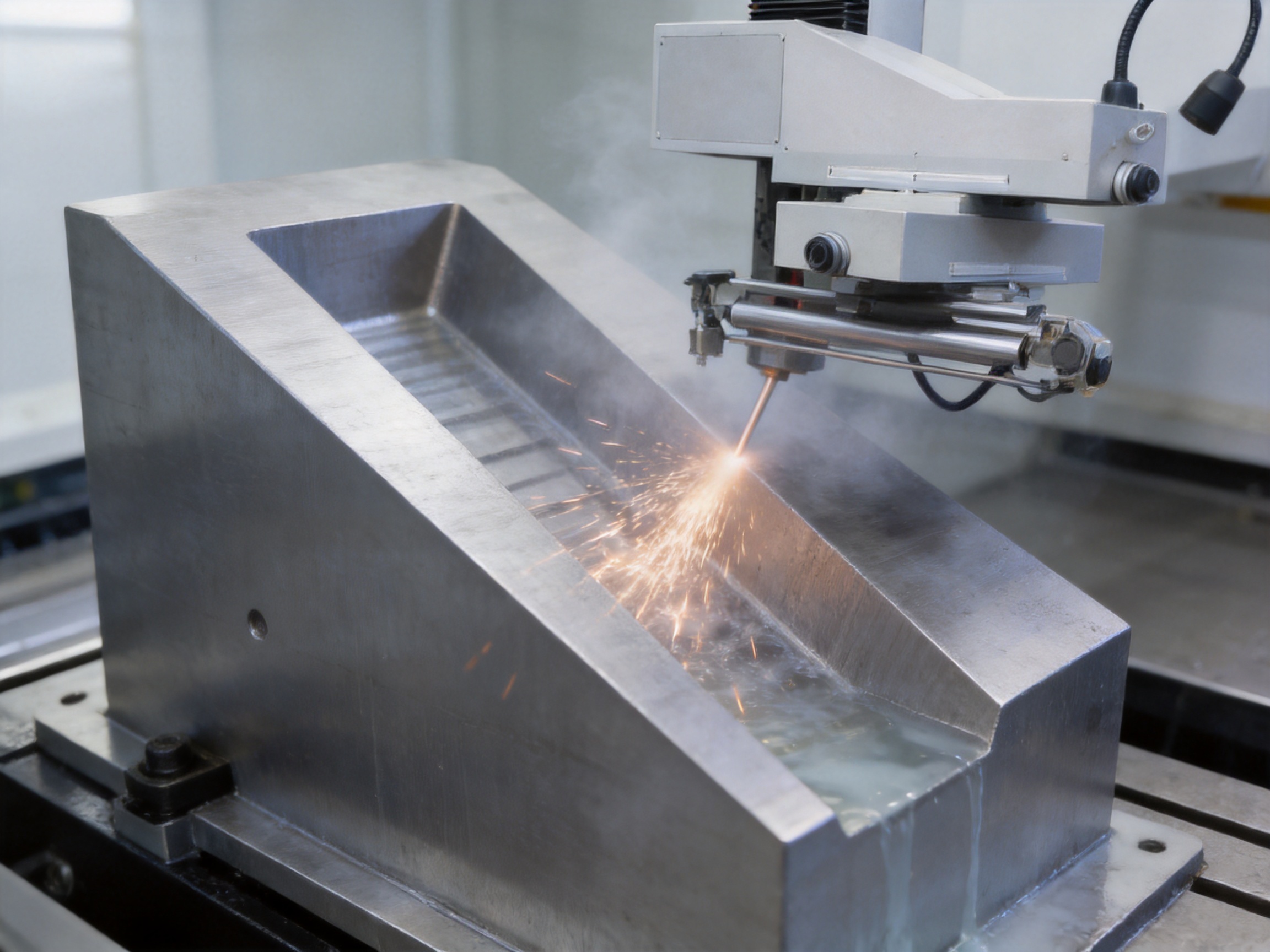
Large-taper cutting is a specialized capability within wire EDM. In ordinary straight cutting, the wire remains vertical or close to vertical, and the upper and lower profiles of the workpiece are similar. In taper cutting, the wire is tilted so that the top and bottom paths differ. This allows the machine to cut angled walls, conical shapes, draft surfaces, and variable cross-sections. The challenge is that wire behavior becomes more complex as the angle increases.
The DK80D addresses this through coordinated motion of the X, Y, U, and V axes. The X and Y axes control the worktable path, while the U and V axes control the upper wire guide offset. By coordinating these axes, the machine generates the required spatial wire angle. The Z-axis lift provides vertical adjustment support for different workpiece heights and cutting conditions. In practical machining, this coordinated spatial vector control is the heart of large-taper performance.
Wire Tension and Discharge Stability
During large-taper cutting, the electrode wire travels through a longer and more angled path. This can increase the risk of vibration or unstable discharge if wire tension is not controlled properly. The DK80D’s optimized wire feed system is designed to maintain stable wire movement under such conditions. A stable wire path supports consistent spark discharge, better surface quality, and lower risk of wire breakage.
Discharge stability also affects cutting efficiency. If debris accumulates in the discharge gap or if the wire vibrates excessively, the machine may need reduced cutting parameters, increasing cycle time. The DK80D’s structure, wire guiding system, and flushing configuration work together to maintain efficient machining even in thick or angled cuts.
Debris Removal in Thick Workpieces
Chip evacuation is one of the biggest difficulties in thick workpiece EDM. The term “chip” in EDM refers to tiny eroded particles created by electrical discharge. These particles must be flushed away by dielectric fluid. If they remain in the cutting gap, they can cause secondary discharges, unstable cutting, short circuits, wire marks, or reduced accuracy. Thick workpieces make flushing more difficult because the cutting gap is deep and narrow.
The DK80D can be equipped with a high-pressure water tank as an optional configuration, which supports improved flushing for demanding materials and thick sections. Effective dielectric circulation and filtration are essential for maintaining cutting quality. In large-taper cutting, flushing is even more complex because the gap is angled, so proper nozzle positioning and fluid management are important process considerations.
Surface Roughness and Post-Processing Reduction
The DK80D offers optimal surface roughness of Ra≤2.5 μm under appropriate conditions. For mold and precision component manufacturers, surface finish is economically important. A smoother EDM surface can reduce manual polishing, grinding, and fitting work. This is particularly valuable in large molds, where manual finishing can require significant labor and time.
Large-taper surfaces are often difficult to polish uniformly because their angles and shapes may restrict tool access. By producing a more consistent cut surface directly on the EDM machine, the DK80D helps reduce downstream workload. This supports higher overall productivity and more predictable delivery schedules.
Application Fields
The DK80D is suitable for a wide range of industries that require large, accurate, and complex metal cutting. Its combination of large worktable, heavy load capacity, high cutting thickness, and large taper angle makes it particularly valuable in sectors where standard machines are insufficient.
Large Mold Manufacturing
Large molds are among the most important applications for the DK80D. Mold manufacturing often involves hardened mold steel, thick plates, and complicated cavities. The machine can cut large-sized and complex-shaped molds, including metal molds, die-casting molds, plastic injection molds, and tooling components requiring tapered surfaces. Its ability to process thick workpieces and heavy loads helps mold manufacturers expand their production capacity.
In mold production, accuracy and repeatability are essential. A small geometric error can cause assembly problems, poor part release, flash, or dimensional inaccuracy in the final molded product. The DK80D supports mold quality by providing stable movement, reliable taper control, and sufficient machine rigidity for long cutting cycles.
Aerospace Component Processing
Aerospace manufacturing requires precision, reliability, and stable processing of difficult materials. Components may use high-strength alloys and complex geometries. The DK80D is suitable for precision component cutting in aerospace applications where large parts, angled profiles, or high-hardness materials are involved. Its non-contact EDM cutting method is advantageous because it reduces mechanical stress on the workpiece.
Although aerospace parts must always be produced under strict process control and inspection standards, the DK80D provides the mechanical and electrical foundation needed for demanding EDM operations. Its ability to cut complex profiles in hard conductive materials makes it a valuable machine for specialized aerospace manufacturing tasks.
High-End Equipment and Heavy Machinery Parts
High-end equipment manufacturing often requires custom components, large plates, mechanical structures, and precision slots or profiles. Heavy machinery parts may be too large or too hard for conventional cutting methods. The DK80D allows manufacturers to cut these parts with controlled electrical discharge rather than mechanical force. This helps improve flexibility when processing difficult materials or intricate shapes.
For heavy machinery, reliability is often more important than cosmetic appearance alone. Components must fit correctly, withstand load, and meet functional specifications. The DK80D supports these goals by combining large processing capacity with stable cutting performance.
High-Hardness Materials
The machine can process various cemented carbides and metals, making it suitable for high-hardness material cutting. EDM is naturally well suited to hard conductive materials because cutting performance is less dependent on mechanical hardness than milling or drilling. This makes the DK80D useful for hardened tool steel, alloy steel, carbide-related applications, and other materials where traditional tools may wear quickly.
Customization and Adaptability
Different manufacturers have different workpiece sizes, production habits, quality standards, and material requirements. The DK80D supports customization options for users with special machining needs. Customizable options are available for DK80D and above machines, including configurations related to worktables, cutting depth, cutting angles, and supporting systems. Optional equipment such as a high-pressure water tank and linear scale can be selected according to process requirements.
This flexibility is important because heavy-duty EDM users often have specialized production conditions. One factory may focus on thick mold steel, another may process large aircraft-related parts, and another may produce heavy mechanical components. A machine configured for one environment may not be ideal for another. By offering adaptable configurations, the manufacturer helps customers build a machine solution that better matches real production needs.
Production Efficiency and Return on Investment
Large EDM equipment represents a significant investment, so customers must consider not only purchase price but also productivity, maintenance, reliability, and operating cost. The DK80D improves return on investment in several ways. First, it expands in-house capability, allowing users to process large and complex parts without outsourcing. Second, it reduces repeated setups by supporting large-taper cutting in one machining process. Third, its stable structure and optimized wire feed system reduce downtime risks during long cutting cycles.
The machine’s maximum cutting efficiency of 10000–16000 mm²/h supports practical production speed for heavy-duty applications. While actual efficiency depends on material, thickness, taper angle, surface requirement, wire condition, dielectric quality, and operator settings, the machine is built to provide strong production capability. Its energy-saving design also helps reduce long-term operating costs.
For mass production, the DK80D offers a strong combination of high cutting efficiency and precision control. It can perform high-load machining while optimizing cutting time and shortening production cycles. For factories producing repeated mold components or heavy parts, this can improve delivery reliability and increase overall capacity.
Quality Control and Service Support
Machine quality is only complete when supported by testing, service, and technical guidance. Taizhou Xinchengyang Machinery Manufacturing Co., Ltd. provides rapid response and professional technical support to help ensure stable operation. The company is committed to long-term effectiveness and reliability for every delivered machine. This is especially important for users operating heavy-duty equipment, where downtime can affect large production schedules.
Before delivery, each machine tool undergoes positioning accuracy testing. This confirms that the machine meets required standards and provides customers with a reliable starting point for production. In addition, the company can provide process guidance for large-taper cutting of challenging materials such as high-hardness alloy steels and ultra-thick mold steels. Such support helps users select practical cutting parameters, improve surface quality, reduce wire breakage, and increase efficiency.
The company’s vertically integrated supply chain is another strength. Control over raw materials and core components helps maintain consistency in machine quality. For a product such as the DK80D, component consistency is important because a small difference in guide wheel quality, drive behavior, or structural material can influence long-term performance. Strong supply chain management helps the manufacturer maintain stable production quality while offering competitive cost-effectiveness.
Operational Considerations for Best Performance
To obtain the best results from the DK80D, users should consider the complete machining environment. Large-taper EDM is a high-precision process, and results depend on machine condition, workpiece clamping, programming, wire quality, dielectric fluid, and operator practice.
Workpiece Setup
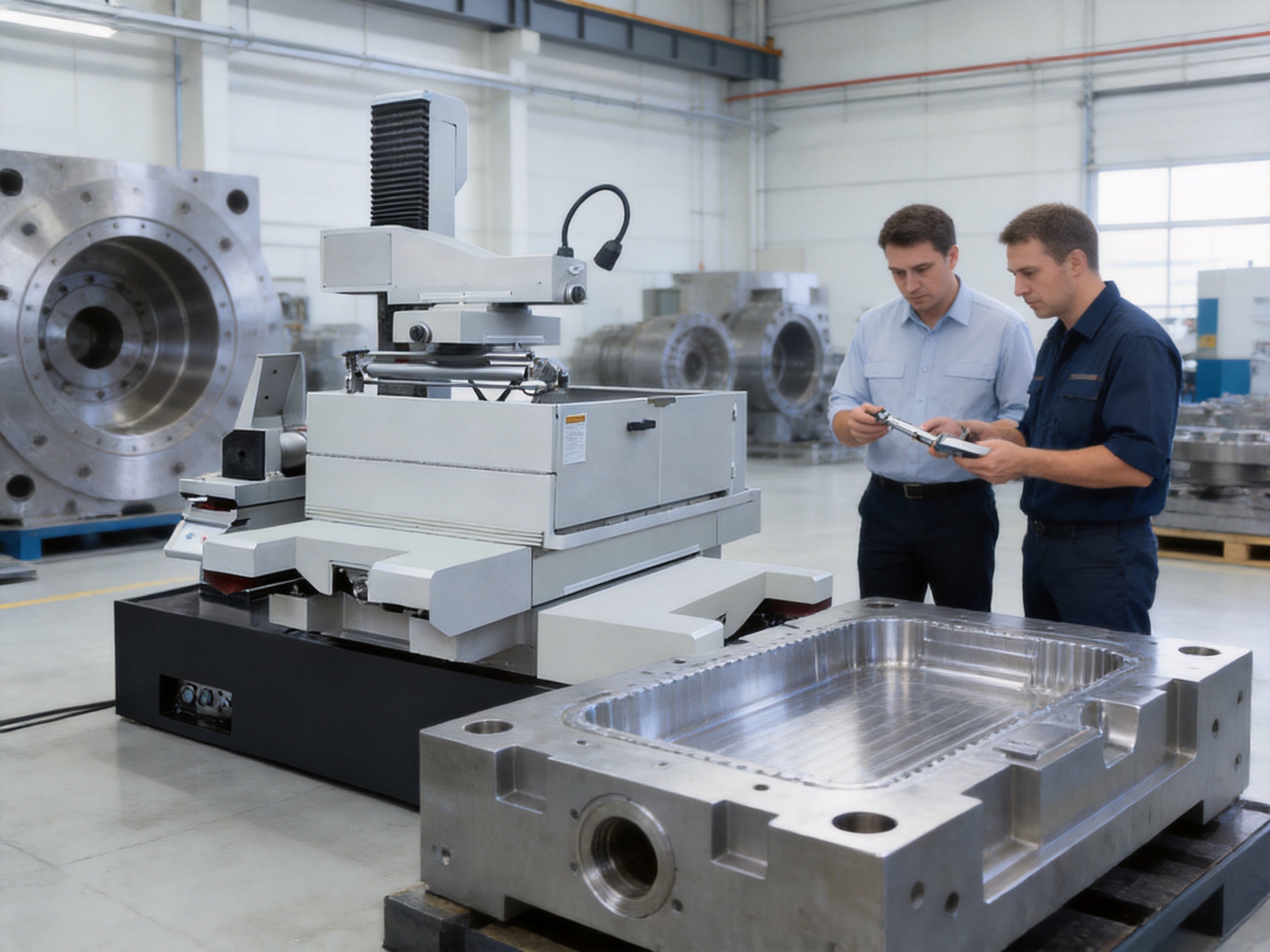
Heavy workpieces must be placed and clamped securely. Because the DK80D can support up to 1000 kg, users often process large parts that require cranes, lifting devices, or specialized fixtures. Proper loading procedures protect the machine worktable and help maintain positioning accuracy. The workpiece should be aligned carefully before cutting, especially when taper geometry must match other surfaces or assembly references.
Programming and Taper Compensation
Large-taper cutting requires accurate programming of top and bottom contours, taper angles, and offsets. Operators should verify programs before cutting valuable workpieces. Compensation settings must consider wire diameter, discharge gap, workpiece thickness, and taper angle. The X8/AUTOCUT control system supports programming tasks, but process knowledge remains important for high-value parts.
Wire and Dielectric Management
Wire condition affects cutting quality. Users should select appropriate electrode wire and maintain proper wire tension and feed speed. Dielectric fluid should be filtered and maintained to ensure stable discharge and effective debris removal. For thick or high-taper cutting, flushing conditions should be checked carefully. Optional high-pressure water tank configuration may be valuable for difficult workpieces.
Preventive Maintenance
Like all precision equipment, the DK80D requires regular maintenance. Guide rails, wire drums, guide wheels, nozzles, electrical cabinets, filtration systems, and drive components should be inspected according to operating schedules. Preventive maintenance reduces the risk of unexpected downtime and helps preserve long-term accuracy.
Model Selection Guidance
Choosing the correct machine depends on workpiece size, required taper, material thickness, load, production volume, and future expansion needs. The DK45D is suitable for medium-sized components and precision molds, especially parts requiring large taper cutting and high precision. The DK55D is suitable for larger workpieces and complex-shaped components, offering larger cutting angles and higher load capacity. The DK63D is applicable for precision cutting of extra-large workpieces and heavy-duty components, particularly in aerospace and mold manufacturing. The DK80D is best suited for heavy-duty molds and extra-large workpieces with high-precision requirements, making it the preferred choice for large-scale production and high-difficulty tasks.
Customers who regularly process smaller parts may not need the full capacity of the DK80D. However, manufacturers planning to expand into large molds, thick plates, heavy components, or complex taper work should consider the DK80D because its larger capacity provides future flexibility. In many factories, machine capacity becomes a limiting factor as customer demands increase. Selecting the DK80D can help avoid that limitation.
Q&A Section
Q1: What is the main advantage of the DK80D compared with smaller large-taper WEDM models?
A1: The main advantage is capacity. The DK80D provides the largest worktable, longest XY travel, highest worktable load, and greatest cutting thickness in its model group. With a 1020×1620 mm worktable, 800×1200 mm travel, 1000 kg load capacity, and 800 mm maximum cutting thickness, it is better suited for oversized, heavy, and complex workpieces.
Q2: Why is large-taper cutting important for mold manufacturing?
A2: Mold components often require draft angles, tapered cavities, angled grooves, and complex internal profiles. Large-taper cutting allows these geometries to be produced more directly, reducing the need for secondary processing and repeated setups. This improves dimensional consistency and shortens production cycles.
Q3: Can the DK80D process high-hardness materials?
A3: Yes. The machine can process various conductive metals and cemented carbide materials. Because wire EDM removes material through electrical discharge rather than mechanical cutting force, it is suitable for hardened steels, alloy steels, mold steels, and other hard conductive materials.
Q4: How does the machine maintain stability during heavy-duty cutting?
A4: Stability comes from the reinforced machine structure, high-strength treated castings, precision linear rail support, substantial machine weight, optimized wire feed system, and coordinated CNC control. These features help reduce vibration, maintain alignment, and support long cutting cycles.
Q5: What industries are most suitable for the DK80D?
A5: The DK80D is suitable for large mold manufacturing, aerospace component processing, heavy machinery, high-end equipment manufacturing, precision tooling, die-casting mold production, and any application involving oversized workpieces, thick materials, high-hardness metals, or complex taper geometry.
Q6: How does the DK80D help improve production efficiency?
A6: It improves efficiency by supporting large workpieces in one setup, reducing secondary machining, maintaining stable cutting over long cycles, and offering cutting efficiency of 10000–16000 mm²/h under suitable conditions. Its stable performance and energy-saving design also support lower production costs.
Q7: Is operator training necessary for large-taper machining?
A7: Yes, training is recommended. Although the control system simplifies programming and operation, large-taper EDM involves compensation, wire behavior, flushing, and process parameter selection. Professional training helps operators achieve better accuracy, surface quality, and machining efficiency.
Q8: What optional configurations can improve performance?
A8: Optional configurations include a high-pressure water tank and linear scale. A high-pressure water tank can improve flushing in thick and difficult cuts, while a linear scale can support enhanced positioning feedback depending on the customer’s precision requirements.
Conclusion
The DK80D heavy-duty CNC large-taper wire cut EDM machine is a powerful solution for manufacturers that need to process oversized, thick, heavy, and complex workpieces. Its large worktable, 800×1200 mm XY travel, 1000 kg load capacity, 800 mm cutting thickness, and large-taper capability up to ±45°/80 mm make it highly suitable for demanding applications in mold manufacturing, aerospace, heavy machinery, and high-end equipment parts processing.
Its advantages over conventional machines are clear: greater capacity, stronger structural rigidity, better suitability for large-taper cutting, stable wire feeding, practical production efficiency, and strong adaptability to high-hardness materials. At the same time, the manufacturing strength behind the machine adds further value. Taizhou Xinchengyang Machinery Manufacturing Co., Ltd. applies strict production standards, advanced processing equipment, complete testing methods, positioning accuracy inspection, structural casting treatment, and supply chain quality control to ensure dependable machine performance.
For companies seeking to improve internal machining capability, reduce outsourcing, shorten production cycles, and process larger or more complex workpieces, the DK80D provides a compelling balance of heavy-duty capacity, precision machining, and cost-effectiveness. It is not simply a larger wire EDM machine; it is a specialized production platform for large-taper precision cutting in modern manufacturing.
References
1. GB/T7926-2015, Accuracy Standards for Wire Electrical Discharge Machining Equipment.
2. Electrical Discharge Machining Technology Handbook, Industrial Manufacturing Reference Series.
3. Advanced Wire EDM Process Control and Taper Cutting Methods, Precision Manufacturing Studies.
4. Mold Manufacturing with Wire Electrical Discharge Machining, Tooling Engineering Reference.
5. High-Speed Wire Cut EDM Machine Design and Application, Mechanical Processing Technical Review.
6. Dielectric Flushing and Debris Removal in Thick Workpiece EDM, EDM Process Engineering Notes.
Product: DK80D Heavy-Duty CNC Large Taper Wire Cut EDM Machine for Oversized Workpieces
-
Phone
+86-0523-86268788 +86-13815960366 +86-13912191163Email
[email protected]Address
No. 366, Yusheng Road Jiulong Town, Hailing District Taizhou City, China
Copyright © Taizhou Xinchengyang Machinery Manufacturing Co., Ltd. All Rights Reserved.
Custom edm machine for sale
wholesale edm machine manufacturers
